Buyer Fit Snapshot
| Best fit | Custom Divider Inserts Wholesale for Better Packaging projects where brand print, material claims, artwork control, MOQ, and repeat-order consistency need to be specified before quoting. |
|---|---|
| Quote inputs | Share finished size, material target, print colors, finish, packing count, annual reorder estimate, ship-to region, and any compliance wording. |
| Proofing check | Approve dieline scale, logo placement, barcode or warning zones, color tolerance, closure strength, and carton packing before bulk production. |
| Main risk | Vague material claims, crowded artwork, missing packing details, or unclear freight terms can make a low unit price expensive after revisions. |
Fast answer: Custom Divider Inserts Wholesale for Better Packaging should be specified like a repeatable production item. The safest quote records material, print method, finish, artwork proof, packing count, and reorder notes in one written spec.
Production checks before approval
Compare the actual filled-product size with the drawing, then confirm tolerance on folds, seals, hang holes, label areas, and retail display edges. Reserve space for logos, QR codes, warning copy, and material claims before decorative graphics fill the panel.
Quote comparison points
Review material grade, print process, finish, sampling route, tooling charges, carton quantity, and freight assumptions side by side. A quote is only useful when the supplier can repeat the same color, closure quality, and packing count on the next order.
Custom Divider Inserts Wholesale for Better Packaging starts with a simple shipping truth I have seen hold up across a lot of different product lines: if one item has room to drift inside a carton, the box is already working against you. Scuffs, cracked closures, bent corners, and returns usually begin with movement, not with a dramatic failure. Custom divider inserts wholesale gives each product a defined space, which is why it shows up again and again in packs for glass, candles, bottles, cosmetics, components, and gift sets that have to arrive looking orderly and intact.
Packaging buyers usually care about more than protection alone, and they should. Custom Divider Inserts wholesale can speed up pack-out, keep carton loading consistent, and make the unboxing feel deliberate instead of improvised. For teams that ship the same products all week long, that repeatability matters. A divider insert is a small part, but it has a big say in how the whole packaging system behaves.
Why custom divider inserts wholesale matters for fragile shipments
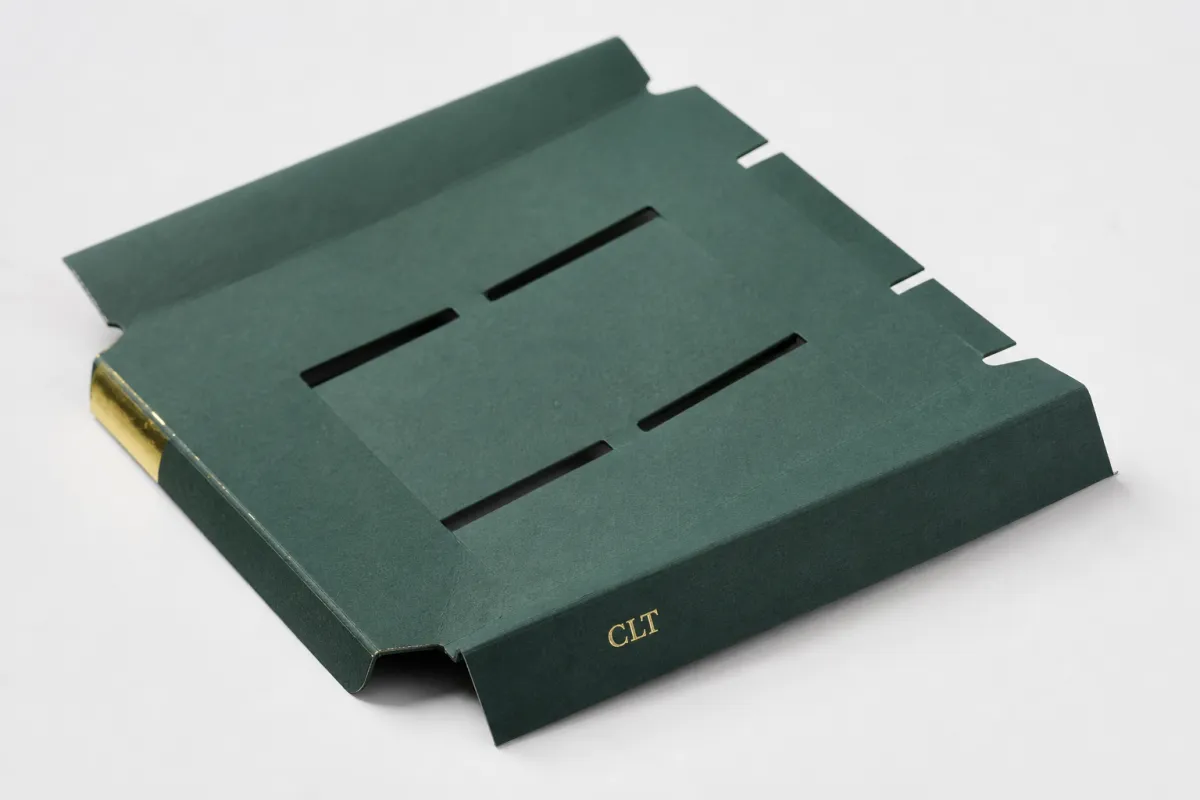
Fragile shipments tend to fail in familiar ways. A bottle leans, a jar rubs the wall, a candle bumps its neighbor, and the carton ends up absorbing impact where the product should have been protected. Custom divider inserts wholesale cuts down that motion by placing each item in a fixed cell, which helps limit rubbing, corner crush, and sideways pressure during transport.
That separation becomes even more valuable for products with hard surfaces and tight cosmetic tolerances. Glass fragrances, beverage bottles, skincare jars, and boxed accessories all benefit from custom divider inserts wholesale because the insert holds the unit upright and stable even when a carton gets handled roughly. A glossy finish or a printed label can show wear faster than people expect, and even light contact can leave marks that spoil the presentation.
Warehouse teams usually notice the difference right away. When packers work with custom divider inserts wholesale, they are not guessing where each unit belongs or stopping to add loose fill after the fact. That typically means faster pack-out, fewer repacks, less labor interruption, and more predictable carton loading. A box that loads cleanly once tends to load cleanly thousands of times. That is the kind of boring reliability good operations people actually want.
A divider should do more than fit the carton. It should keep the load quiet through vibration, stacking, and the hard stops that happen on a real delivery route.
From a cost-control standpoint, custom divider inserts wholesale is often cheaper than the damage it prevents. One broken bottle can wipe out the savings from a stack of cartons, and one wave of returns can knock labor planning off balance for days. Good packaging design is not just about the first impression at the door; it is also about how reliably the warehouse can run the pack without constant cleanup.
Load consistency matters just as much. When every unit sits in the same place each time, pallet patterns stay cleaner, the top load behaves better, and carton walls are less likely to bow. Custom divider inserts wholesale helps keep that repeatability intact, which is useful for long distribution lanes, subscription programs, and product packaging that has to survive storage, stacking, and vibration without drifting out of shape.
Custom divider inserts wholesale: styles, materials, and use cases
There is no single divider style that fits every carton, and anyone who has priced a few of these knows that pretty quickly. Custom divider inserts wholesale can be made from single-wall corrugated, double-wall corrugated, chipboard, kraft board, folding partitions, or custom die-cut cell structures, and each option brings its own balance of strength, appearance, and cost. The right choice depends on product weight, surface sensitivity, and whether the insert will stay hidden or remain visible in the final unboxing.
Single-wall corrugated is a familiar workhorse for lighter bottles, candles, and general shipping cartons. It gives enough structure for many day-to-day packs without adding unnecessary bulk, and custom divider inserts wholesale in this format often keeps pricing within reach for recurring orders. Double-wall corrugated handles heavier items and tougher transit routes because it adds crush resistance and stiffness. When a carton will be stacked or moved through several handoffs, that extra wall can matter a great deal.
Chipboard and kraft board are often chosen for lighter retail packaging or presentation-focused kits. They are flatter, cleaner looking, and easier to pair with branded packaging or Custom Printed Boxes when the insert is meant to be seen during opening. Custom divider inserts wholesale in these materials works well for cosmetics, small electronics accessories, and gift sets where the visual impression matters as much as the protective function.
Folded partitions and die-cut cell structures help when the product mix is more complex. If one box holds mixed-height bottles, a premium sampling kit, or a combination of jars and accessories, custom divider inserts wholesale can be built to create different cell sizes inside the same carton. That allows each item to sit securely without leaving unnecessary empty space. The design should follow the product family, not just the outside carton dimensions.
| Material option | Best for | Typical wholesale unit range | Notes |
|---|---|---|---|
| Single-wall corrugated | Light bottles, candles, jars, general shipping | $0.18-$0.35 at 5,000 pieces | Good balance of protection and price for standard runs |
| Double-wall corrugated | Heavier glass, dense parts, rougher shipping lanes | $0.28-$0.60 at 5,000 pieces | Higher crush resistance and stack strength |
| Chipboard / kraft board | Cosmetic kits, retail presentation, lighter items | $0.12-$0.26 at 5,000 pieces | Cleaner look for visible retail packaging |
| Die-cut cell insert | Mixed-product kits, premium presentations, tight fit requirements | $0.25-$0.75 at 5,000 pieces | More tooling and design work, but strong presentation value |
If fiber sourcing matters to your procurement team, ask about certified board options and recycled content. The FSC framework is useful for understanding how certified materials are tracked, and it can fit brands that want the inside of the box to match the sustainability story printed on the outside. That matters especially for custom divider inserts wholesale in branded packaging programs where the inner structure is part of the message.
Common use cases are easy to spot on a production floor. Beverage bottle packs need vertical separation and top-load support. Subscription boxes often need dividers that help with presentation and consistent fill. Cosmetics kits may need precise cells for bottles, droppers, and jars. Electronics accessories benefit from neat compartmentalization, and seasonal gift packaging often uses custom divider inserts wholesale to make a small assortment look intentional instead of crowded.
From a buyer’s point of view, the smartest divider is the one that fits the real product stack height and the real handling pattern. Custom divider inserts wholesale should be shaped around how the product lands in the carton, how much clearance the packers need, and whether the insert must look clean enough to stay visible after opening. A divider that is too tight slows the line down; one that is too loose stops doing its job.
Specifications that define a reliable fit
The most important specification in custom divider inserts wholesale is the inside dimension of the carton, not the outside size of the box. Internal length, width, and height show how much room the insert actually has to work with. After that, measure the finished product itself: diameter for bottles and jars, width and depth for boxes or accessories, and the tallest point if the item is irregular. A good fit is usually snug, but not so tight that workers have to force the product into the cell.
Clearance matters more than many buyers expect. In custom divider inserts wholesale, a little breathing room helps with faster pack-out, but too much room invites movement. Many programs are designed with a small tolerance around the product so the item can drop in easily while still staying locked once the carton is closed. That balance depends on surface finish, product weight, and whether the carton will travel by parcel, freight, or mixed distribution.
Structural details shape performance as much as the cut pattern does. Cell count, divider orientation, flute direction, board caliper, and whether the insert is hand-assembled or machine-folded all affect the finished result. In custom divider inserts wholesale, a board that runs the wrong way across the load may flex when it should resist, and a cell pattern that ignores the product’s center of gravity can leave weak points where the carton gets squeezed.
Performance targets should be practical, not vague. If the pack needs to survive vibration and drops, talk about transit testing such as ISTA procedures and internal compression expectations. For carton stack strength, many teams also reference ASTM-style compression and drop logic so the design is not guessed at by feel alone. That kind of discipline is one reason custom divider inserts wholesale performs better than loose fill or a generic partition.
Moisture exposure is another detail that can change the spec. A cold chain lane, a humid warehouse, or a carton that sits on a dock for hours may need more resistant board or tighter storage discipline. If the insert is part of retail packaging and will be visible after opening, then appearance matters too. Natural kraft gives a clean, earthy look, white board supports a brighter presentation, and unprinted utility packaging keeps the cost down. Custom divider inserts wholesale can work in all three directions, but the design should match the brand story instead of fighting it.
That is also where branded packaging and package branding enter the conversation. If the insert is visible in the customer experience, the buyer may want the interior to feel aligned with the exterior carton, the label system, and the rest of the product packaging. Custom divider inserts wholesale does not need full print coverage to feel polished; sometimes a clean white board or a natural kraft finish is enough. The real goal is coherence, not decoration for its own sake.
For products with unusually shaped corners, glossy surfaces, or fragile closures, testing should happen before the full run. A prototype can reveal whether the wall thickness is too aggressive, whether the cell depth is right, and whether the product moves after closure. Custom divider inserts wholesale benefits from that kind of proofing because it prevents expensive changes after production has already started. A bad guess gets costly fast.
Custom divider inserts wholesale pricing, MOQ, and quote basics
Pricing for custom divider inserts wholesale usually comes down to five things: material grade, board thickness, number of cells, die-cut complexity, and total order volume. A simple partition made from standard corrugated board will almost always cost less than a tightly engineered die-cut insert with unusual slotting or mixed cell sizes. Print adds cost too, especially if the insert needs high coverage, color matching, or an exterior that must align with the rest of the branded packaging program.
The order size changes the price curve quickly. Setup and tooling are spread over the whole run, so custom divider inserts wholesale gets cheaper per unit as quantity rises. Lower MOQs are possible, but buyers should expect a higher unit price because the design, cutting, and setup costs do not disappear just because the run is smaller. That is not a penalty; it is the reality of making something to spec instead of buying a stock part.
| Order scenario | Typical use | Indicative unit price | What drives the cost |
|---|---|---|---|
| Simple partition, mid-volume run | Standard bottles or candles | $0.15-$0.30 | Basic die cutting and common board grades |
| Double-wall insert, mid-volume run | Heavier glass or stacked packs | $0.28-$0.60 | More board, more stiffness, higher freight protection |
| Die-cut presentation insert | Retail kits and premium product packaging | $0.25-$0.75 | Custom geometry, tighter tolerances, better presentation |
| Short-run prototype or pilot order | Testing fit before volume production | $0.35-$0.90 | Setup cost spread over fewer units |
Those numbers are planning ranges, not promises. Carton size, product shape, waste in the cut pattern, and the need for print or finishing all move the price around. Even so, the table gives a workable starting point for custom divider inserts wholesale so the buyer can compare insert cost against the cost of returns, replacement product, and damaged labor time.
That last point is easy to underestimate. A business may save a few cents on the insert and lose dollars on the back end through product replacement, reshipment, or customer service handling. A packaging design that prevents damage often pays for itself in fewer claims and fewer interruptions. That is why custom divider inserts wholesale should be evaluated as part of the whole packaging system, not as an isolated line item.
If you want a quote to move quickly, send the carton inside dimensions, the product dimensions, the quantity per box, the target order quantity, and the preferred substrate. If the product is irregular, send photos or sketches too. For custom divider inserts wholesale, the fastest quotes usually come from buyers who have already decided whether the insert is for shipping protection, retail presentation, or both. That one decision clears up a lot.
In a lot of programs, the quote conversation also reveals hidden savings. A lower-cost insert that fails in transit is not truly cheaper than a slightly heavier insert that protects the load. Good procurement looks at the whole equation, including freight lane severity, return rate, and warehouse labor. Custom divider inserts wholesale works best when the buyer is willing to compare total cost, not just unit price.
Custom divider inserts wholesale process and timeline
The production path for custom divider inserts wholesale usually starts with discovery. That is the stage where carton dimensions, product measurements, product weight, and shipping expectations are collected. From there, the packaging team recommends a structure: corrugated, chipboard, kraft board, folding partitions, or a die-cut cell format. The goal is to match the insert to the product and the lane, not to force a generic pattern into an unsuitable box.
Once the structure is selected, the quote is prepared and reviewed. If the project moves forward, the proof or sample stage follows. That stage matters because it shows whether the fit is actually usable on a line. Custom divider inserts wholesale is much easier to approve when the buyer can see the cell spacing, the board thickness, and the actual loading behavior before production starts in volume.
Lead time depends on how many moving parts are involved. Straightforward custom divider inserts wholesale orders can often move through approval and production faster than complex multi-cell layouts, especially if the board is standard and the dimensions are clear. More intricate layouts can take longer because the tooling, sample revision, and structural testing all need to settle before the full run starts. A simple insert can move in roughly 10-15 business days after proof approval, while a more complicated build may need additional time for revision and material scheduling.
Delays usually come from avoidable issues. Missing carton specs, uncertain product dimensions, and late changes after the proof stage can all stretch the schedule. In custom divider inserts wholesale, a clear approval path saves real time because the design can be archived and repeated without rebuilding the logic from scratch. That is especially useful for repeat orders and procurement teams that want consistent inventory planning.
Testing should match the shipment risk. If the carton travels through a rough parcel network, ask whether the pack should be checked against ISTA-style transit testing or another internal drop and vibration standard. If the insert is meant to hold a heavy bottle set, compression and stacking matter more than cosmetic opening. Custom divider inserts wholesale should always be designed with the real use case in mind, because a beautiful insert that fails under load is still a failure.
For repeat programs, the best process is the one that keeps the spec locked. Once the design is approved, store the drawing, the product dimensions, the board grade, and the approved carton size together. That makes reordering easier and protects against accidental changes from one purchase order to the next. Custom divider inserts wholesale becomes far more efficient when the exact spec is treated as a controlled asset instead of a one-time purchase.
Why choose us for wholesale divider inserts
What matters most in custom divider inserts wholesale is not a flashy promise; it is practical packaging knowledge that holds up on the floor. The right partner measures the carton correctly, considers how the product actually lands in the cell, and builds the insert so it moves smoothly through packing operations. That kind of attention keeps the design useful instead of merely theoretical.
Technical guidance matters because many divider problems begin with assumptions. A buyer may think a thinner board will save money, only to discover that the pack flexes too much or arrives looking messy. Another buyer may want a tight fit for protection, then realize the line slows down because the product is hard to load. With custom divider inserts wholesale, the real job is to balance fit, strength, speed, and customer presentation in one spec.
Consistency matters just as much as the first order. Procurement teams need packaging that repeats cleanly, and operations teams need a pack-out that behaves the same week after week. Custom divider inserts wholesale should support inventory planning, reorder stability, and predictable labor, because those are the pieces that keep the whole packaging program steady. If the insert changes every time, the warehouse ends up paying the price. That is the kind of thing that looks small on paper and turns into a headache in the building.
We also focus on clear specs and realistic support, which is the part buyers appreciate after the first quote. If the project needs sample support, structural guidance, or a comparison between material grades, that discussion should be direct and concrete. Custom divider inserts wholesale is not the place for vague language; it works best when dimensions, board choice, and shipping expectations are stated plainly and reviewed carefully.
For broader sourcing, you can review our Wholesale Programs if you are planning recurring volume, or browse Custom Packaging Products if you want matching cartons and inserts designed as a set. That is often the cleaner route for custom divider inserts wholesale because the divider, the shipper, and the visual package can be planned together instead of patched together later.
There is also a brand side to all of this. If the insert is visible during unboxing, it contributes to the impression of order and care, which supports package branding even before the customer sees the main product. In retail packaging, that matters. Custom divider inserts wholesale can help the presentation feel deliberate, and deliberate packaging usually reads as more trustworthy to the end customer.
Our approach is simple: clear measurements, honest material recommendations, and repeatable production. That is what keeps a packaging program from drifting. When the design is sound, custom divider inserts wholesale becomes one of the least dramatic parts of the supply chain, and that is exactly what most buyers want.
What to do before requesting a custom divider inserts wholesale quote
The cleanest quote starts with clean information. Before you request custom divider inserts wholesale pricing, measure the carton interior, measure one finished product, count how many units go in each box, and decide whether the insert is meant for shipping protection, retail presentation, or both. Those four details eliminate a lot of back-and-forth and make the first recommendation much more accurate.
It also helps to know the handling environment. Is the carton going into a parcel network, a palletized freight lane, or a retail shelf? Will it sit in storage for weeks, or move quickly through fulfillment? Custom divider inserts wholesale can be designed for different levels of abuse, but the designer needs to know what kind of abuse to expect. A product that ships locally has different needs from one that travels cross-country in mixed temperature conditions.
- Measure the carton inside length, width, and height.
- Measure the product at its widest points, not just the label size.
- Count the units per carton and note any mixed sizes.
- Decide whether the insert must support retail packaging or only shipping protection.
- Share material preferences, print needs, and any storage limitations.
If the product is fragile or oddly shaped, ask for a pilot configuration before moving to the full run. A sample can confirm whether the walls are stiff enough, whether the loading process is practical, and whether the final box still closes correctly with the insert in place. Custom divider inserts wholesale is much easier to approve after a pilot, because the team can see the actual fit instead of debating drawings alone.
One practical habit saves a lot of trouble: keep product drawings, carton specs, and approved insert layouts in the same file or folder. That makes reorder planning easier and prevents small changes from slipping in unnoticed. Once the spec is locked, custom divider inserts wholesale becomes a repeatable supply item instead of a new project every time the box needs replenishment. That alone can save a surprising amount of time.
If you are comparing vendors, look beyond the first unit price. Ask how they handle proofing, whether they can recommend a different board grade if needed, and how they support repeat production once the structure is approved. The best custom divider inserts wholesale programs are not built on guesswork; they are built on measured data, clear approvals, and a realistic view of how the carton will be handled in the real world.
When the measurements are ready, the route is straightforward: compare specs, request the quote, and move forward with custom divider inserts wholesale once the carton and product data are in hand. That is the point where packaging design turns into a usable production tool instead of a set of assumptions.
What information do I need to request custom divider inserts wholesale pricing?
Provide the carton inside dimensions, the product dimensions, the quantity per box, your target order quantity, and a material preference if you already have one. If you know whether the insert is for shipping protection, retail presentation, or both, that helps narrow the structure immediately. Photos or sketches are useful for irregular shapes, and they can make custom divider inserts wholesale pricing far more accurate on the first pass.
What is the usual MOQ for divider inserts wholesale orders?
MOQ depends on the board type, tooling, and cell complexity, but custom work usually needs enough volume to spread setup cost across the run. Simple corrugated partitions can often support lower MOQs than highly detailed die-cut structures. If you need a smaller run, ask whether a standard structural pattern can be adapted; that can make custom divider inserts wholesale much easier to launch without overstretching the budget.
How long does custom divider inserts wholesale production usually take?
Lead time depends on sample approval, material availability, and how complex the divider layout is. Straightforward jobs can move quickly once the proof is approved, while new structures with revisions take longer. The fastest custom divider inserts wholesale orders usually come from buyers who send complete measurements, answer proof questions promptly, and avoid late changes after the structure is locked.
Which material is best for fragile products?
Corrugated board is often the first choice for heavier or more delicate items because it adds strength and cushioning. Paperboard or chipboard can work well for lighter products, presentation-focused kits, or retail packaging that needs a cleaner visual finish. The best choice depends on product weight, fragility, and the protection already built into the carton, so custom divider inserts wholesale should always be matched to the actual shipping risk.
Can divider inserts be customized for bottles, jars, or mixed-product kits?
Yes, divider cells can be sized for uniform bottles, mixed heights, or combinations of products in one carton. Mixed kits usually need custom spacing so each item sits securely without rubbing against its neighbors. The design should follow the largest stress point in the pack, not just the outside carton size, which is why custom divider inserts wholesale is so effective for bottle packs, gift sets, and other product packaging that has to stay organized from warehouse to customer.
A practical takeaway
If you are pricing a run this week, write down four things before anything else: the carton interior size, the product’s widest dimensions, the number of units per box, and the shipping lane. That one sheet gives you a real starting point for custom divider inserts wholesale, keeps the quote honest, and makes the sample stage a lot less fussy. In my experience, that is usually the difference between a divider that just fills space and one that actually protects the product.

