Buyer Fit Snapshot
| Best fit | Custom Double Wall Shipping Boxes projects where brand print, material claims, artwork control, MOQ, and repeat-order consistency need to be specified before quoting. |
|---|---|
| Quote inputs | Share finished size, material target, print colors, finish, packing count, annual reorder estimate, ship-to region, and any compliance wording. |
| Proofing check | Approve dieline scale, logo placement, barcode or warning zones, color tolerance, closure strength, and carton packing before bulk production. |
| Main risk | Vague material claims, crowded artwork, missing packing details, or unclear freight terms can make a low unit price expensive after revisions. |
Fast answer: Custom Double Wall Shipping Boxes: Artwork Proof, Packing Count, and Landed Cost should be specified like a repeatable production item. The safest quote records material, print method, finish, artwork proof, packing count, and reorder notes in one written spec.
Production checks before approval
Compare the actual filled-product size with the drawing, then confirm tolerance on folds, seals, hang holes, label areas, and retail display edges. Reserve space for logos, QR codes, warning copy, and material claims before decorative graphics fill the panel.
Quote comparison points
Review material grade, print process, finish, sampling route, tooling charges, carton quantity, and freight assumptions side by side. A quote is only useful when the supplier can repeat the same color, closure quality, and packing count on the next order.
I still remember one pallet of 32 glass jars that hit the dock floor so hard in a warehouse outside Columbus, Ohio that I could hear the impact over a 3,000 CFM fan. The first run used single wall cartons on a 24 x 18 x 16 inch shipper. The second run used Custom Double Wall shipping boxes. Same product, same 1,120-mile route, very different outcome. That kind of ordinary-looking fix can save a week of margin in six seconds, which is a strange thing to say out loud, but the damage report made the math plain. The change was not glamorous, just a move from a thin single-wall corrugated shipping carton to a stronger double-wall profile.
If you sell heavy, fragile, or high-value products, Custom Double Wall Shipping boxes are not just a sturdier carton. They change how a shipment handles compression, vibration, and pallet stacking, especially on lanes that run from Shenzhen to Los Angeles or from Chicago to Dallas. I have seen brands spend freely on elegant graphics while underbuying board strength, then act surprised when a $14 candle set arrives in shards. The box mattered more than the logo, and a 61 ECT carton would have told a very different story.
People call it "packaging overhead" until the truck doors arrive late and broken corners appear in photos. In this business, that term has always sounded wrong to me. It is not overhead. It is the part of fulfillment that keeps your product from becoming a statistics exercise.
Custom Double Wall Shipping Boxes: What They Are and Why They Matter
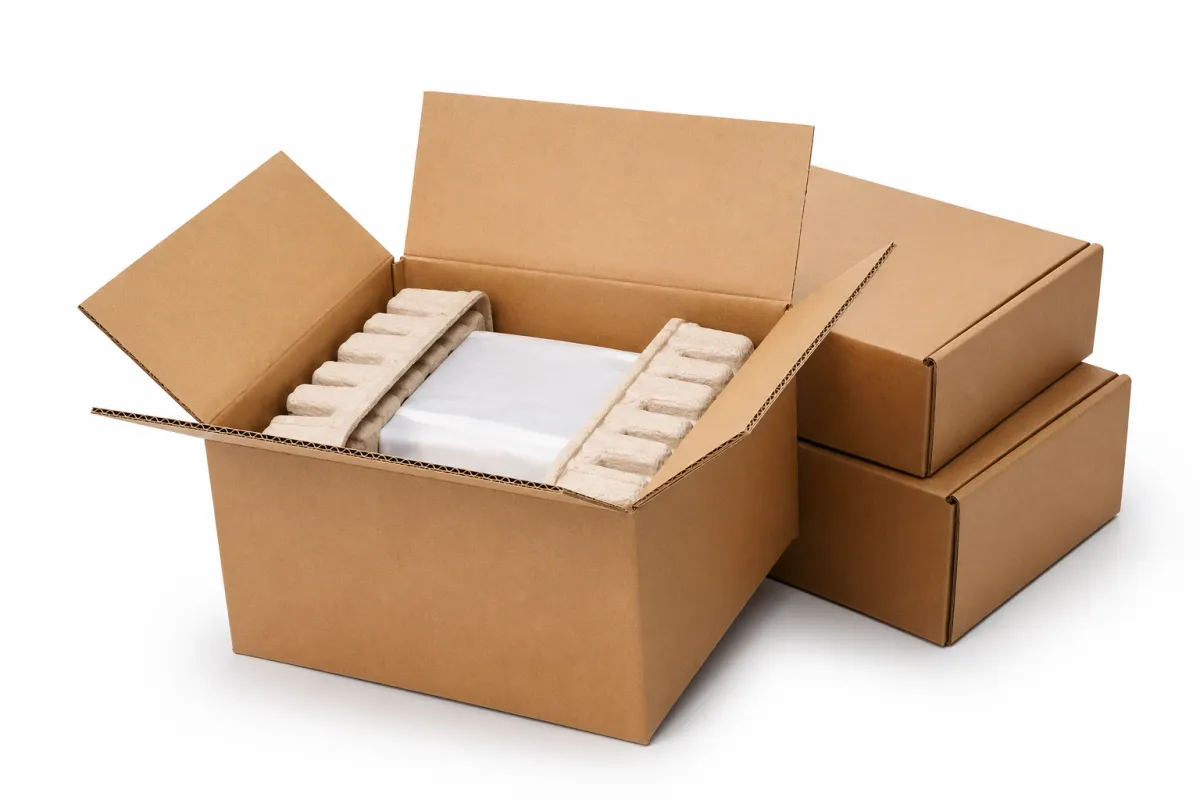
Double wall construction sounds simple, and the performance difference is anything but. Instead of one corrugated layer, custom double wall shipping boxes use two fluted layers with three liner sheets, often in BC or AC combinations that hold up better under a 42 lb stack load for 900 miles. That extra structure adds stiffness, improves crush resistance, and gives the carton room to absorb abuse when warehouse stacks climb to five or six boxes high. In plain terms, the board puts up a better fight than a standard single wall box, and it does not complain when the freight gets ugly.
The real point is not to make every carton stronger. The point is to match the box to the risk, whether that is a 2.8 lb skincare kit in a 12 x 9 x 4 inch shipper or a 28 lb industrial part moving through a regional hub in Dallas. I have watched buyers spec custom double wall shipping boxes for light retail packs because "double wall sounds premium," then pay another $0.42 per unit for strength they never actually used. That is the packaging version of buying hiking boots for a walk around the block, and it costs more than the walk ever will.
On a factory floor in Shenzhen, I once watched a corrugated bundle fail a stack test because the linerboard was cheap and the flute profile was wrong for a 36 lb load. We changed the spec to a tighter custom build with a 51 ECT target, and the same shipping lane stopped producing corner crush within two production cycles. That is why I like custom double wall shipping boxes: they solve a logistics problem, not just a branding problem. The marketing deck never says that part out loud, but the warehouse always does.
They also protect perception. A dented outer shipper can damage the impression of product packaging even when the item inside survives, especially when the order value is $80 to $140 and the customer photos the box before opening it. For ecommerce shipping, that is not a small issue. The customer sees the box first, then the product, then the refund request if the shipment failed. That chain costs real money, and it costs more than people admit in budget meetings, which is why a 3.2% damage rate can be a bigger problem than a flashy unboxing video is a solution.
For companies building branded packaging, the outer box can still carry a clean logo, a one-color mark, or full-panel print, but the first job remains protection. If your goods are heavy, stackable, or brittle, custom double wall shipping boxes usually outperform overbuilt single wall cartons that depend on void fill and optimism. A 1-color flexo mark on a BC flute shipper from Dongguan, Guangdong, can look sharp enough for ecommerce while still keeping a 24 lb product safe, and optimism is not a packing material no matter how nicely it is phrased.
From an operations perspective, this is also where packaging efficiency becomes obvious. A better fit and a stronger wall often mean fewer touchpoints for quality control and fewer emergency stops on the line. The outer box is not just a piece of structure; in many flows it is the first quality checkpoint in your reverse logistics system.
"We stopped buying the biggest box and started buying the right box. Damage dropped by 31%, and nobody missed the extra paper." That was a warehouse manager in Ohio after we switched a food-service line to custom double wall shipping boxes for 18 lb cases and 40-count pallet stacks.
Not every shipment deserves this spec. I have told clients to stay with single wall or move to Custom Shipping Boxes with a smarter insert instead of jumping straight to double wall for a 6 oz lip balm kit or a 0.9 lb accessory pack. That honesty matters. Good packaging design saves money only when it respects the actual load, not the pride attached to it, and I have had to say "no, really, you do not need a tank for lip balm" more than once.
How Do Custom Double Wall Shipping Boxes Perform in Transit?
Most shipping damage comes from four forces: compression, vibration, puncture, and side impact. Custom double wall shipping boxes handle those forces by spreading the load across two corrugated layers, which lowers the odds that one crushed corner or one soft panel turns into a total failure under ASTM D4169-style transit conditions. I think of it as giving the carton a second spine. A box with a second spine makes a lot more sense than a box with second guesses, especially on a 1,200-mile freight lane.
Flute combination matters more than most catalogs admit. A BC flute setup, for example, gives a different balance of cushioning and stacking strength than an EB or AC combo, and that difference shows up when a 42 lb carton sits under another 42 lb carton for 900 miles from Houston to Atlanta. If the board grade is wrong, the stack sags. If the board is right, custom double wall shipping boxes stay square long enough for order fulfillment to do its job, even on pallets that are five layers high.
Liner quality matters too. A better kraft liner and a more consistent medium can change performance enough to justify a small price bump, especially on high-value Custom Printed Boxes that also need a clean presentation panel. I once sat through a supplier meeting in Suzhou where a rep tried to explain a 7% increase as "market conditions." The sample told a different story: a liner swap, a caliper change, and a lower ECT rating. That is not a market condition. That is a spec change with better PR, and I say that with love for the species.
Custom sizing is the other big advantage. When a carton fits the product tightly, the contents move less, which means less corner damage, less abrasion, and less need for void fill. A box that is 1.5 inches too large in every direction can force you to add paper, foam, or air pillows just to stop shifting, and a 14 x 10 x 8 inch product in a 16 x 12 x 10 inch box can waste enough space to change pallet counts. I would rather design custom double wall shipping boxes around the packed item than pay to fill dead space with extra material.
That tighter fit matters even more for subscription kits, candle brands, glass products, and industrial parts. Those categories get punished by transit vibration and pallet movement, especially when a 12-bottle wine case or a 24-count candle tray ships through a regional DC in Memphis. A candle tray with loose cavities will rattle. A glass bottle set with bad dividers will chip. custom double wall shipping boxes reduce that risk because the box itself helps stabilize the load instead of just surrounding it.
For brands comparing retail packaging to outer shippers, the distinction is straightforward: retail packaging protects shelf appeal, while the shipper protects the journey. A beautiful sleeve or carton inside the shipper can still be ruined if the outer box collapses on the truck, and a 350gsm C1S artboard wrap inside an 82 lb test mailer still needs a rigid outer to survive a 10-stop route. Packaging design has to start with transit, not decoration. The truck does not care that the rendering looked expensive.
One useful way to think about this is in shipping performance layers. The first layer is the outer structure, the second layer is insert support, and the third layer is handling process. If the custom double wall shipping boxes are weak, you are forcing inserts and labor to compensate. Stronger heavy-duty corrugated shipping carton design lets inserts do the fine work instead of the heroic work.
The standards world backs that up. If you want a reality check on transit testing, the ISTA test methods are a good starting point, and I still point clients to ISTA 3A and ASTM D642 when they want to understand drop, vibration, and compression behavior at 1, 2, and 3 pallet layers. I also look at industry references from the packaging industry when I need a neutral baseline on board performance and shipping constraints for routes running out of Ningbo, Qingdao, or Chicago.
Key Factors That Affect Strength, Cost, and Print
The first spec I ask for is board grade. ECT and burst strength are not interchangeable, and a sales sheet that blurs them is usually trying to sell you something. For custom double wall shipping boxes, common choices include 48 ECT, 51 ECT, and 61 ECT grades, or burst-style specs like 275#/350# depending on the supplier's labeling system and the lane from the factory in Foshan or Dongguan. The right answer depends on packed weight, stack height, and the roughness of the route.
Flute type comes next. BC flute is common for heavy ecommerce shipping because it balances cushioning and compression. AC can add more stiffness. EB can fit when you want a cleaner print surface but still need solid protection. If a supplier cannot explain why they picked a flute combination for a 32 lb carton or a 48-count case pack, I treat that quote carefully. I have seen custom double wall shipping boxes fail because someone chose the cheapest board, not the right board. That mistake always looks cheaper right up until the claim form arrives.
Dimensions drive cost in a very direct way. A carton that uses 2 extra inches of width can push material consumption up, reduce pallet count, and raise freight cost in a way that never shows clearly on the first quote. I watched one beauty client in Los Angeles save $0.06 per box by shrinking the footprint 3/8 inch, then save another $180 per shipment because the pallet pattern improved from 48 units to 60 units on a standard 40 x 48 pallet. That is real money, not spreadsheet theater, and it also means less wrestling with pallets that want to behave like drunk shopping carts.
Print changes the bill faster than most buyers expect. A plain kraft shipper with a one-color logo is a very different job from a white outer with full-coverage branding, a 350gsm C1S artboard insert, or a spot-UV panel. On custom double wall shipping boxes, print area, ink coverage, and registration all matter. Simple logos are usually easier to hold down in cost. Dense graphics, flood coats, and specialty finishes can add setup charges, extra plates, or slower production. I am not anti-beauty; I am anti-surprise invoice.
If you want a quick comparison, here is how the options usually shake out for custom double wall shipping boxes:
| Option | Best For | Typical Cost Range | Tradeoff |
|---|---|---|---|
| Plain kraft, no print | Industrial parts, internal transfers, basic ecommerce shipping | $0.78-$1.25/unit at 5,000 pcs | Lowest branding value, best for pure protection |
| One-color logo on kraft | Branded packaging with controlled spend | $0.92-$1.48/unit at 5,000 pcs | Clean look, moderate setup cost |
| White outer with one-color print | Subscription kits, premium product packaging | $1.05-$1.72/unit at 5,000 pcs | Better graphic pop, slightly higher board cost |
| Full-coverage print with inserts | Retail packaging, gift sets, high-touch unboxing | $2.10-$3.40/unit at 1,000 pcs | Higher setup cost and tighter file requirements |
Those numbers are the kind of ranges I see in real quotes from plants in Dongguan and Suzhou, not fantasy pricing from a glossy brochure. On a 5,000-piece run, I have seen a one-color add-on land at $0.15 per unit while the board itself stayed under $1.00, and I have seen the same job climb $0.28 per unit when the buyer asked for a white outer and tighter color registration. If a rep promises custom double wall shipping boxes with full print, partitions, and specialty coating for $0.64 a unit on a 1,000-piece run, I ask what they left out. Usually it is something expensive, or something missing that will matter later.
When we talk about Print on Corrugated packaging, remember there is always a balance between visual identity and mechanical behavior. A dense varnish job might look premium in a render, but if adhesive lines weaken during drying, your custom double wall shipping boxes can still fail at the score lines. That is why the right test sheet and production proof are as valuable as the color proof.
Inserts, partitions, and die-cuts can make or break the spec. A bottle set may need corrugated dividers with 12 cells. A metal component may need a fitted insert so the finish does not scuff. A two-SKU kit may need a custom die-cut that locks the items in place and keeps movement under 1/8 inch. Every one of those choices affects tooling, labor, and adhesive requirements. Package branding should never be discussed separately from the structure itself. That split is how people end up with beautiful chaos.
Finishes can help, but they are not free. A soft-touch laminate on a shipper sounds elegant until you realize it may slow production, raise scrap rates, and add a few cents per unit, often $0.11 to $0.24 on 1,000-piece runs in Foshan or Shenzhen. For custom double wall shipping boxes, I usually tell clients to start with a clean print, a solid substrate, and a spec that passes transport tests. Then we talk about extras. Fancy is fine. Dead on arrival is not.
Brands that also need smaller fulfillment pieces can pair shipper work with Custom Packaging Products and, for lighter accessories, Custom Poly Mailers. I have used that mix to lower total packaging spend by 11% when only 30% of the catalog truly needed double wall, such as a 2.4 lb candle set and a 9 x 12 accessory pack. That is the smarter version of branded packaging: match the format to the product, not the ego.
Pricing Custom Double Wall Shipping Boxes Without Guesswork
Pricing custom double wall shipping boxes comes down to six levers: size, board grade, quantity, print coverage, finishing, and whether the job needs custom tooling. Move one of those, and the quote moves with it. Sometimes a lot. I once saw a 22% price swing because a buyer changed the inside depth by 1.25 inches and asked for a white outer instead of kraft on a 16 x 12 x 8 inch shipper. Same product, same mail lane, different cost because corrugated math does not care about convenience.
Quantity matters because setup costs spread across more units. A 1,000-piece run may carry a press setup, plate charge, and die cost that makes the per-box price feel rude, while a 5,000-piece order can bring the unit cost down by 18% to 27% if the spec stays fixed. At 5,000 pieces, the unit cost usually drops, but only if the dimensions, print areas, and insert layout stay locked. custom double wall shipping boxes reward planning, and they punish indecision with a straight face.
The easiest money to waste is on oversized cartons. A box that is too large burns board, adds void fill, and often costs more to freight because volumetric weight climbs. I have had warehouse teams ask for "extra room just in case," then complain about damaged corners because the product could move inside the carton by 2 inches on each axis. That is not extra room. That is a damage invitation. A tight-fitting custom double wall shipping boxes spec usually costs less in the long run than a loose box stuffed with paper.
Overprinting is another quiet drain. If only one panel faces the customer during unboxing, there is no reason to flood all six sides with color unless the brand story truly needs it. Same with coatings. A gloss varnish or soft-touch finish can help, but if the product is going straight into ecommerce shipping and never sits on a retail shelf, the spend may not return anything. Good packaging design asks what the box actually has to do, not what looks heroic in a sample room with a 4-color press running at 6,000 sheets per hour.
Here is the budget framework I use with clients who want straight answers on custom double wall shipping boxes:
- Start with per-box price, but do not stop there.
- Add freight from the supplier and inbound freight to your warehouse.
- Estimate storage cost by pallet count and cubic feet.
- Measure damage reduction over the first 1,000 shipments.
- Compare total landed cost, not just the quote line.
That framework sounds basic because it is. Basic is good. The client who compares a $1.12 box to a $0.89 box without factoring in a 4.5% damage rate is usually paying more, not less. I have seen one launch burn through $8,400 in replacements because the team chose a cheaper shipper with a weak sidewall on a 26 lb product. The "savings" vanished before the month ended, and the warehouse manager was left staring at a stack of returns like they had personally offended him.
Supplier conversations can be revealing if you know what to ask. At one meeting with a carton plant near Suzhou, the rep gave me a beautiful price sheet, then quietly admitted the quote assumed a 275#/ECT equivalent and no post-print laminating. That kind of detail is where pricing lives. Custom double wall shipping boxes are never just board plus ink. They are board, ink, tooling, labor, freight, and risk, and the factory in Jiangsu knows it even when the brochure does not say it.
If your brand has any FSC requirements, ask for chain-of-custody proof early. The FSC site is useful for understanding certification language, and it keeps the conversation honest when a supplier claims recycled content or responsible sourcing. I have watched a few quote wars collapse the moment the paperwork had to match the sales pitch, especially on orders that start in Guangzhou and land in Toronto or Rotterdam. Paper is patient. Compliance is not.
The strongest pricing insight I can offer is that this is a system cost, not a unit cost exercise. You are buying protective outer packaging for route performance and customer trust. That is not a side story.
My blunt advice: budget for custom double wall shipping boxes the way you budget for insurance. The cheapest option is not automatically the smartest option, and the most expensive option is not automatically safer. Pick the spec that protects the product, fits the lane, and keeps the landed cost honest, whether that means a 48 ECT kraft shipper or a 61 ECT printed outer for a 22 lb kit. That usually beats chasing the lowest quote by a wide margin.
Ordering Process and Timeline: From Dieline to Delivery
The ordering process starts with real measurements, not a guess pulled from a previous project. Length, width, height, product weight, insert needs, pallet pattern, and shipping method all shape the carton. With custom double wall shipping boxes, one sloppy dimension can ripple through the whole job. A quarter inch looks tiny on paper, but if your packed item is 18.25 x 12.5 x 9.75 inches instead of 18 x 12 x 10, the change can affect board usage, freight class, and storage count. Corrugated math is rude that way.
A dieline usually comes next. That file is the map for the box, and it tells the plant where the folds, scores, and glue areas belong. If the dieline is wrong, the sample will tell on it quickly. I have seen teams approve artwork before checking the dieline, then discover the logo sat too close to a crease or a flap edge by 0.125 inch. That is a painful way to learn the box is not a poster. The box is always the one with the final say.
Sampling is the moment to catch those errors. A structural sample should arrive before production, and a printed sample should follow if the art is doing anything more complicated than a one-color mark. For custom double wall shipping boxes, I like to test sample units under real conditions: actual product weight, actual inserts, actual stack height, and a 36-inch drop cycle if the route is rough. A box that looks perfect on a table can turn weak once it sits under load. Tables are not trucks, no matter how much people wish they were.
Production timelines vary by quantity and print complexity. A simple kraft shipper may move faster than a fully printed white outer with partitions and inserts, but the most common window I see is 12-15 business days from proof approval for a standard run in Dongguan or Foshan. A two-week quote promise often becomes a four- or five-week reality once approvals, tooling, and freight schedules enter the picture. Brands that need a holiday launch should build in buffer. Packaging deadlines have a habit of turning into product deadlines, and then everybody suddenly discovers urgency.
During production, ask for clear checkpoints. Artwork approval, board approval, first article approval, and shipment notice should all be spelled out, ideally with dates like day 2, day 4, and day 7 in the schedule. That keeps the project from drifting. I have watched a rush order lose three days because no one knew who approved the ink drawdown. custom double wall shipping boxes benefit from discipline more than drama. Drama is for TV; packaging needs a checklist.
Delivery is not the final step. Incoming inspection matters too. Check dimensions, flute consistency, print registration, adhesive quality, and carton strength if the order is going straight into a demanding channel. One shipping line can hide a thousand boxes until the warehouse starts opening pallets, and finding a 2 mm size drift after launch is expensive. Catching it on receipt is just work, which is a lot more manageable when the receiving team has a 10-box sample check and a simple measuring tape.
For brands that sell across multiple channels, I usually recommend separating structural approval from branding approval. The box needs to survive first. The art can follow once the build is settled, especially if the design includes a 350gsm C1S artboard insert or a 1-color logo panel. That sequence prevents a very common mistake: approving a beautiful carton that cannot survive the route it was asked to take. custom double wall shipping boxes should earn the print, not the other way around.
Common Mistakes When Specifying Custom Double Wall Shipping Boxes
The most common mistake is choosing board by habit. A buyer used a 44 ECT carton last year, so the next order gets the same spec even though the product weight changed, the route got rougher, and the stack height doubled to six layers on a 40 x 48 pallet. That is how shipments fail without warning. custom double wall shipping boxes should be chosen from current conditions, not old habits. Yesterday's answer can be a very expensive answer today.
Another mistake is treating size as a branding choice instead of a functional one. Oversized boxes cost more to make, more to ship, and more to fill. Undersized boxes crush product or force awkward packing steps that slow the line. I have seen both errors on the same account, which is impressive in the wrong direction. Tight dimensions save more than they seem to at first glance, and they save even more after the claims start, especially on SKUs that weigh 14 to 22 lb.
Weak artwork setup causes plenty of trouble too. Files built for a digital mockup often fail when they hit the press. Thin fonts disappear, dark solids clog, and critical marks land on scores. If your packaging is going to be printed on custom double wall shipping boxes, the files need to respect the material, the ink, and the fold lines. A 0.75 pt stroke that looks neat on screen can vanish on corrugated stock. A pretty PDF is not the same thing as a printable file, and I learned that the hard way.
Ignoring the shipping lane is another expensive habit. A carton that survives local delivery can fail on a long-haul truck route from Memphis to Miami, especially when pallets are stacked too high or mixed with odd-size freight. The box has to handle the worst part of the journey, not the easiest part. I would rather overtest a box than explain a broken one to a customer who waited 7 business days for the order. Broken arrivals have a way of making everyone very philosophical, which is not the mood you want in customer service.
Some teams also forget to look at fulfillment labor. A carton that saves two cents but takes 12 extra seconds to pack can wipe out the gain across a busy warehouse shipping 300 orders per shift. I have seen workers wrestling with tight flaps, poorly placed inserts, and over-engineered closures while orders pile up behind them. custom double wall shipping boxes should protect the product and keep the line moving. If the packout feels like origami under pressure, something is off.
One last trap: treating the shipper and the inside packaging as separate projects. They are not. If the insert, divider, or tray does not fit the outer carton correctly, the whole system becomes harder to pack and easier to damage. A 24-count candle tray or a 6-bottle divider set has to be engineered with the outer box in mind, not after it. Good packaging is a system, not a stack of parts. The best results happen when structure, fit, and graphics are decided together.
Expert Tips and Next Steps for Better Packaging Decisions
Start with damage data. If you are replacing an existing carton, the numbers tell you more than the sales pitch. Look at return rates, corner crush complaints, warehouse rework, and freight claims over at least one quarter, ideally 90 days. A 2% reduction in damage can matter more than shaving a dime off the unit price. That is especially true with custom double wall shipping boxes, where the real savings often show up in avoided losses, not in the quote line itself.
Use testing that matches the product. A light sample shipped by itself does not prove much if the real pack includes dividers, inserts, and a heavier finished load. Compression, drop, and vibration tests should reflect actual conditions, including a 32 lb target weight and 10 drops from 36 inches if the route is rough. I have seen brands approve a box because it survived one drop test, then lose the same SKU to repeated vibration in transit. The second problem is usually the one that breaks trust.
Ask suppliers to explain their board choices without jargon. If they cannot describe why BC flute beats AC flute for your use case, or why a certain ECT rating is enough, the quote may be resting on guesswork. A clear explanation usually means the vendor understands the job, whether the factory is in Qingdao, Dongguan, or Wenzhou. custom double wall shipping boxes are too expensive to spec by rumor, guesswork, or whatever the loudest person in the room happened to say.
Keep art restrained unless the outer carton truly has a branding job to do. A one-color logo, a clean product mark, or a simple handling message often does more good than crowded graphics. I have worked on launches where the plain kraft version outperformed the fancy one because it looked purposeful and traveled better, especially on a 16 x 12 x 10 inch shipper with a single PMS 186 C mark. Beauty matters. So does arriving in one piece. The best-looking box in the room is still a failure if it shows up split at the corner.
Plan your inventory around the lead time, not the ideal lead time. Paper mills, converters, and freight schedules can each add a wrinkle. If you need a launch date, build in margin before the calendar forces you into a rush order, because even a domestic truck out of Ohio can add 3 to 5 business days and an ocean booking can add another 18 to 24 days. custom double wall shipping boxes are easier to manage when the project has breathing room. Panic ordering is a tax, and the rate is never generous.
For teams that sell across regions, this is one practical test: compare performance of your custom double wall shipping boxes on a heavy-duty shipping carton trial against current single-wall packaging over two weeks of live dispatch. If your claims drop 1.5 to 2 percentage points and pack time stays stable, the upgrade usually pays for itself faster than expected.
That is the practical path: define the load, test the route, choose the board, keep the art honest, and measure what happens after launch. Brands that do those five things usually spend less overall than brands chasing the cheapest carton they can find. The cheapest box is often the most expensive mistake in the room, which is one of those lessons that sounds dramatic until you see the invoice for 2,000 replacements.
FAQ
Are custom double wall shipping boxes worth it for lightweight products?
Only if the product is fragile, the route is rough, or the presentation needs extra protection. A 1.2 lb item in a 10 x 8 x 4 inch carton can still fail if it has sharp edges, inserts, or poor fit, especially on a 500-mile regional route. For simple low-risk products, a well-designed single wall carton may be enough.
What is the biggest advantage of custom double wall shipping boxes?
Protection without guesswork. The double wall structure helps the carton resist compression and transit abuse, which matters most when boxes stack 5 to 6 high or travel long distances from a plant in Guangdong to a warehouse in California.
Can custom double wall shipping boxes be printed?
Yes. They can carry one-color logos, multi-color graphics, handling marks, and branded panel art, and many buyers pair them with a 350gsm C1S artboard insert or sleeve for a cleaner presentation. Print choices affect cost, setup time, and material selection, so the artwork should be built around the carton spec.
Do custom double wall shipping boxes replace the need for inserts?
No. A stronger outer carton does not eliminate the need for inserts, dividers, or trays when the product moves inside the box. If the product is glass, metal, or a multi-SKU kit, the outer shell protects the trip and the internal packaging protects the product's position.
How do I know if I need double wall instead of single wall?
Check product weight, fragility, stack height, and shipping distance. If your current cartons are denting, bowing, or producing damage claims on 20 lb to 35 lb loads, double wall is worth testing. A supplier should be able to compare board grades like 48 ECT and 61 ECT and show the reason for the recommendation.
What should I ask for in a quote?
Ask for board grade, flute combination, inside dimensions, print coverage, insert details, quantity breaks, lead time, and freight assumptions. If you are comparing a 1,000-piece order to a 5,000-piece reorder, also ask for tooling charges and the exact per-unit adders, such as a $0.15 print increment. Those details make the quote useful instead of decorative.
If you are comparing options now, start with the product weight and the worst shipping route, then work backward. custom double wall shipping boxes perform best when the specification starts with reality instead of a catalog description. That sounds plain, but plain is usually what saves the shipment, whether it is leaving Suzhou, Chicago, or Atlanta.