Buyer Fit Snapshot
| Best fit | Custom Double Wall Boxes projects where brand print, material claims, artwork control, MOQ, and repeat-order consistency need to be specified before quoting. |
|---|---|
| Quote inputs | Share finished size, material target, print colors, finish, packing count, annual reorder estimate, ship-to region, and any compliance wording. |
| Proofing check | Approve dieline scale, logo placement, barcode or warning zones, color tolerance, closure strength, and carton packing before bulk production. |
| Main risk | Vague material claims, crowded artwork, missing packing details, or unclear freight terms can make a low unit price expensive after revisions. |
Fast answer: Custom Double Wall Boxes: Strength, Cost, and Use Cases should be specified like a repeatable production item. The safest quote records material, print method, finish, artwork proof, packing count, and reorder notes in one written spec.
Production checks before approval
Compare the actual filled-product size with the drawing, then confirm tolerance on folds, seals, hang holes, label areas, and retail display edges. Reserve space for logos, QR codes, warning copy, and material claims before decorative graphics fill the panel.
Quote comparison points
Review material grade, print process, finish, sampling route, tooling charges, carton quantity, and freight assumptions side by side. A quote is only useful when the supplier can repeat the same color, closure quality, and packing count on the next order.
Custom Double Wall boxes look plain on a spec sheet, and that is exactly why people underestimate them. Put one into a real shipping lane and the numbers change fast. A 52-pound carton gets stacked three or four high in a 40 x 48 pallet pattern, a corner catches a fork tine in a warehouse in Dallas, TX, and the weakest board in the lot fails first. I have watched some version of that story play out in New Jersey, Ontario, and Shenzhen, usually on a Tuesday, which is apparently the day packaging problems prefer. The practical value of custom double wall boxes is simple: stronger board structure, tighter fit, and a corrugated shipping box designed for the trip instead of the photo shoot.
Most buyers start with dimensions, print, or a cleaner-looking outer panel. Then the first damage report lands on someone's desk and the conversation gets specific in a hurry. Crush resistance, edge crush resistance, and stack performance matter more than a polished front panel when the load is heavy or the lane is rough. A well-built Custom Double Wall box is not decoration; it is a protection component that behaves like one. Treat it like a brand accessory and the bill shows up later in claims, repacks, and returns. For many teams, custom double wall boxes are the place where branding stops fighting protection and starts supporting it, especially when the program also includes box inserts or branded packaging.
Years ago, a supplier in New Jersey handed me two cartons and asked for the thumb test. One was single-wall, one was double-wall. The single-wall panel folded under roughly 12 pounds of pressure; the double-wall barely moved. Crude? Absolutely. Useful? Also absolutely. Structure changes outcomes, and people still understate that because corrugated board does not look flashy enough to impress anyone in a conference room. For heavy retail packaging, industrial parts, subscription kits, and long-distance ecommerce shipments, custom double wall boxes are often the better bet, especially when the carton has to protect printed boxes or mixed-SKU kits. Packaging has a way of reminding you, kinda rudely, that gravity still works.
What Are Custom Double Wall Boxes?
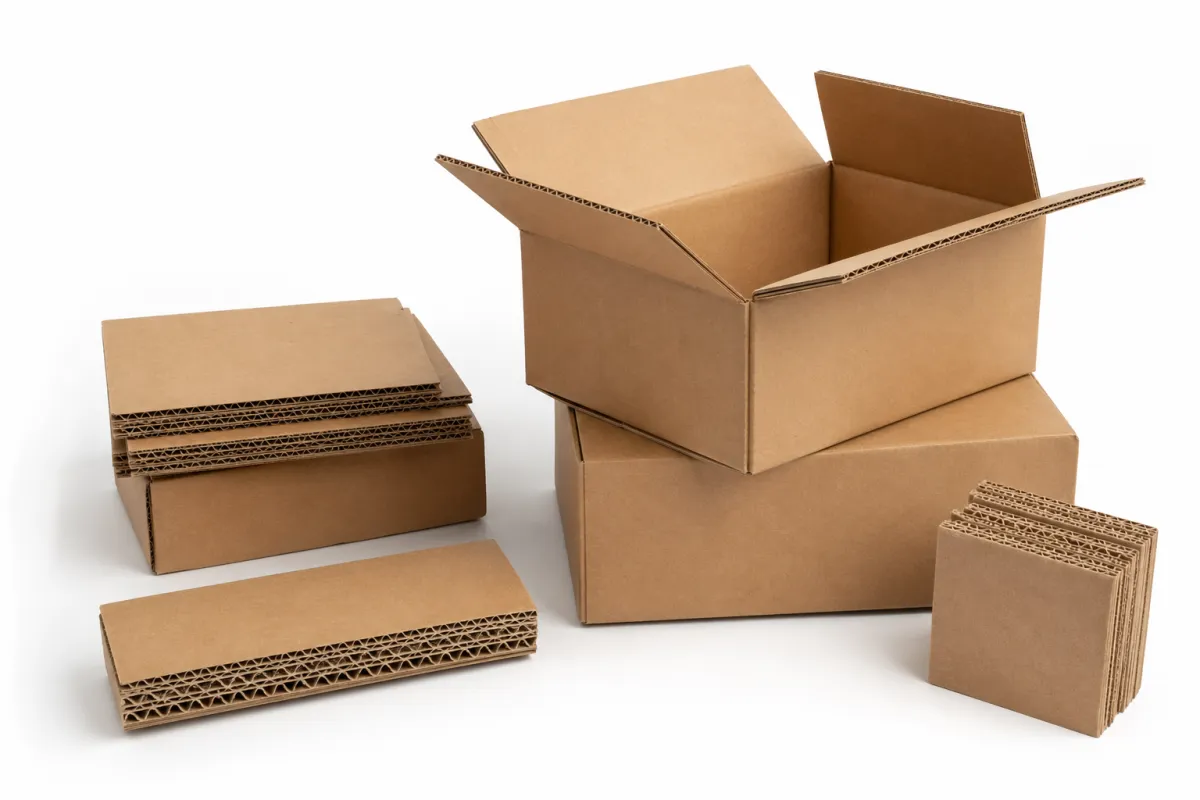
At the most basic level, custom double wall boxes are corrugated cartons built with two layers of fluted medium between three linerboards. That extra layer adds thickness, stiffness, and compression resistance compared with a standard single-wall carton, which uses one flute layer and two liners. Anyone who has compared a 32 ECT single-wall shipper with a 48 ECT or 61 ECT double-wall carton can feel the difference before a freight test starts, and a B/C flute combo around 6 mm total thickness usually makes that difference obvious in the hand.
The plain-language version is simple. Single-wall boxes work for lighter loads, short routes, and low stack pressure. Custom double wall boxes are built to absorb more abuse. Their extra corrugated layer spreads force across a wider area, which keeps panels from caving in as quickly when pallets are stacked high or a parcel hits a belt hard. Glass, ceramics, machined parts, and products with sharp corners all benefit from that margin. I have seen a neat little display carton survive a showroom in Atlanta and then collapse in transit because the board was simply too thin for an 18-pound load. Packaging has a mean sense of humor.
Fit matters as much as strength. A carton that is an inch too loose on each side can let contents shift enough to trigger impact damage, even when the board itself is strong. A smaller, custom-sized box often outperforms a larger box with better board but too much empty space. That is why custom double wall boxes matter in disciplined packaging design. The carton should cradle the product, not just surround it like an awkward overcoat made for somebody else, and the right dieline can matter as much as the flute combination.
I see a lot of people treat the box like a shell and stop there. In practice, it behaves more like a performance component. In a retail packaging program, the right carton reduces returns, preserves presentation, and keeps stacks safer in storage. In industrial shipping, the same carton cuts corner crush, zippering, and pallet collapse. Heavy, fragile, or expensive-to-replace goods usually push the conversation toward custom double wall boxes sooner than people expect, which is usually after the first round of damage claims hits at 3.8% or higher.
"We stopped treating the carton as a commodity after one month of crushed corners on our 11-pound candle kits. The switch to custom double wall boxes cut visible damage from 6.4% to 1.9% across two pilot runs shipped from our Memphis facility."
A useful rule of thumb starts with product weight and ends with stack pressure. If the shipment will sit under more than a modest retail shelf load or move beyond parcel-only handling, custom double wall boxes deserve a serious review. For a solid primer on corrugated basics, the Packaging School and industry resources from packaging.org are a good starting point, especially if you are comparing 32 ECT, 44 ECT, and 61 ECT constructions.
How Do Custom Double Wall Boxes Work in Transit?
The strength of custom double wall boxes comes from layers working together. Two fluted mediums create a taller cross-section, and that taller profile resists bending far better than a thin board. The result is higher edge crush resistance, better stack life, and more tolerance when the carton takes a hit on the side, top, or corner. That is geometry, not magic, and I wish more sales decks said that plainly instead of dressing corrugate up like a miracle material. In practical terms, double-wall corrugated construction gives the carton a deeper spine.
Three forces usually punish a carton in transit: compression, vibration, and impact. Compression shows up on pallets and in warehouses, especially when a stack sits for 48 hours or more in a warm trailer. Vibration rides along in parcels and LTL freight as the load travels over imperfect roads between Chicago and Columbus. Impact usually comes from drops, forks, or hurried handoffs. Custom double wall boxes handle those threats better because the board structure spreads force across a wider section instead of letting one liner fail quickly. In plain terms, the box gets hit, but it is less likely to fold like a cheap lawn chair on a loading dock.
Cartons behave differently once fillers, inserts, tape, or pallet wrap enter the picture. A weak carton filled with heavy dunnage can still buckle if the outer structure is wrong. A properly fitted carton with inserts and a 2-inch cushion zone may beat a larger box with more filler but weaker board. I have seen a 24 x 18 x 12 single-wall shipper fail within a week on a warehouse rack in Phoenix, while a tighter custom double wall box on the same line stayed stable for six weeks. The carton was not glamorous. It just worked, which is more than I can say for half the packaging samples that land on my desk, especially after a rough LTL freight run.
The system matters as much as the carton. Tape width, closure pattern, pallet pattern, and top cap all affect the final result. A package stacked on a 40 x 48 pallet and wrapped with 80 gauge film needs the carton to work with the entire load, not by itself. That is where custom double wall boxes earn their keep. A perfect box with sloppy palletization is still a problem. Packaging rarely fails in one dramatic moment; it usually fails in a chain of small compromises across a 600-mile lane.
I prefer ISTA-style validation to a hand squeeze. A lab drop profile or compression test tells you more than a sales sample ever could if the shipment matters. ISTA standards are a practical reference point, and the organization's site at ista.org helps teams compare protection goals with real test methods. If your product ships from a plant in Greenville, SC to retailers in Texas and Nevada, that testing is worth more than a dozen impressions from a trade show sample.
Here is the quick comparison I use with buyers who want a blunt answer:
- Single-wall: lighter, cheaper, suited to short routes and low stack pressure, usually around 32 ECT.
- Custom double wall boxes: stronger edges, longer stack life, better for heavy or fragile SKUs, often 48 ECT or 61 ECT.
- Heavy double-wall builds: best for long lanes, palletized freight, and products with high claim risk, especially above 50 pounds.
Key Factors That Affect Performance and Fit
If you are specing custom double wall boxes, start with the product itself. Weight is the first variable, but it is not the only one. A 14-pound metal part with sharp corners behaves very differently from a 14-pound textile kit. Glass jars, printed books, candle sets, and electronics with fragile screens each bring their own failure pattern. Load shape matters almost as much as load weight, and I have watched teams learn that lesson the hard way after one cracked shipment lot and three uncomfortable internal calls. This is also where inserts, partition trays, and proper cushioning earn their keep.
Dimensions matter just as much. A carton can be technically strong and still perform poorly if the interior is too loose. Extra headroom lets the product shift, which increases impact risk during parcel sorting or linehaul vibration. I have seen a box that was 15 percent oversized create more damage than a thinner carton that fit snugly. Bigger is not always better, and stronger board does not cancel bad fit. If anything, oversized packaging sometimes makes the problem feel worse because everyone assumes the box should have saved the day.
Humidity sneaks into packaging decisions and does damage long before anyone notices the trend. Corrugated board can lose strength in damp storage, especially if cartons sit on concrete floors or in unconditioned trailers. If your product packaging will live in a humid distribution center in Houston or Savannah, ask about board grade, coatings, and storage duration. Custom double wall boxes give you more room for error, but they are not immune to moisture. That detail gets ignored a lot, which is odd considering how many warehouses feel like a sauna in July.
Board grade and flute combination should match the lane. A B/C flute combination may work well for general shipping, while a stronger double-wall profile may fit heavier or stack-sensitive goods better. Print coverage matters too. Heavy flood coverage can affect cost and, if handled poorly, can create weak spots around score lines or cutouts. The best custom double wall boxes are engineered first and printed second. I know that sounds unromantic, but packaging is not a fashion show; the carton either survives or it does not.
Use cases vary sharply by channel. Ecommerce fulfillment wants fast pack-out and predictable sizing, often within a 30-second pack station target. Industrial parts programs care about stack height, palletization, and damage claims. Subscription kits care about presentation because branded packaging shapes the customer experience. Retail packaging may need shelf-ready openings, hand holes, or tear strips. In each case, custom double wall boxes can be adapted to the job instead of forcing the product into a generic carton.
At one fulfillment center in Columbus, the team used the same box for eight SKUs, from 3-pound accessory kits to 19-pound replacement assemblies. Light products survived. Heavy ones did not. Every SKU paid for the emptiness with extra void fill. After splitting the line into two box specs, their damage rate fell by almost 40% over three inbound weeks. Results like that explain why custom double wall boxes often beat a one-size-fits-all program, even when the one-size approach looks tidier on a spreadsheet.
Custom Double Wall Boxes: Cost, Pricing, and Tradeoffs
The price of custom double wall boxes comes from a small set of inputs: board grade, carton size, print complexity, order quantity, tooling, and any inserts or die-cuts. Bigger boxes use more board. Stronger flute structures use more material. More colors or broader print coverage add press time and setup cost. Hand holes, vents, and reinforced corners raise the price again. Packaging is one of those fields where the material count keeps reminding you it exists, usually in dollars, especially on Custom Printed Boxes with full-panel artwork.
One quote I reviewed for a beverage client in Cleveland came in at $0.96 per unit for 5,000 plain double-wall cartons, then $1.14 per unit after adding a 2-color logo and a reinforced bottom. Same footprint. Same board family. Different spec, different price. Apples-to-apples quoting matters with custom double wall boxes. Without it, you end up comparing an actual carton to a fantasy version of that carton, which is a game I do not recommend.
The real question is not only unit price. It is landed cost. If a stronger carton cuts breakage, claim handling, repacking labor, and replacements, the higher box price can end up cheaper overall. I have seen a $0.21 increase in carton cost save $1.80 in average damage exposure on a glass product line. That math is hard to dismiss, and it tends to become persuasive the minute someone in finance sees the claims report from a 90-day shipping sample.
Here is a simple comparison I often use in supplier conversations. The numbers are illustrative and will move with size, volume, and freight, but they are close enough to shape the decision:
| Box Type | Typical Strength | Best Use | Example Unit Price at 5,000 Qty | Main Tradeoff |
|---|---|---|---|---|
| Single-wall carton | 32 ECT / light parcel load | Small, low-risk shipments | $0.42 to $0.58 | Lower cost, lower crush resistance |
| Custom double wall boxes | 48 ECT or similar double-wall spec | Medium-heavy goods, better stack life | $0.88 to $1.35 | Higher cost, much better protection |
| Heavy double-wall build | 61 ECT or freight-grade spec | Long lanes, pallet pressure, fragile loads | $1.15 to $1.78 | More material, more weight in freight |
| Printed custom double wall boxes | Double-wall with branding | Retail packaging and premium unboxing | $1.24 to $1.92 | Print adds cost, but improves brand presence |
The cheapest carton is often the most expensive one to ship badly. A packaging director in Chicago said that after three claim reviews in one quarter, and the numbers backed him up. If your current custom double wall boxes are reducing replacement shipments by even 2%, the payback can be immediate, especially on high-value product lines. That is not a theory. That is a line item with receipts.
There is also a tradeoff between performance and freight weight. A heavier box can raise outbound postage or LTL rates, so you need to compare protection gain against the shipping penalty. I prefer to look at total cost per shipped unit, not carton cost alone. For teams comparing Custom Packaging Products, the real question is often which spec lowers total cost once damage, labor, and freight are counted together.
Process and Timeline: From Spec to Delivery
The usual path for custom double wall boxes starts with discovery. A supplier should ask for product dimensions, weight, ship method, storage conditions, and any internal packaging already in use. After that come material selection, dieline development, proofing, sample production, approval, and full manufacturing. When one of those steps is vague, the schedule drifts. That is packaging's version of a slow leak, and I have seen it derail launches in Texas, California, and the UK.
For a straightforward custom run, I expect 12 to 15 business days from proof approval to production completion, then another 3 to 7 business days for freight depending on location. A plant in Dallas may ship faster to the central states, while a line in Dongguan can be better for Asia-Pacific production runs. That range can shrink if the box is simple and the schedule is flexible, or expand if the project needs inserts, specialty print, or revised structural specs. Custom double wall boxes are not hard to make, but they are hard to rush well. Rushed packaging has a way of reminding everyone why testing exists.
Most delays happen at the front end, not the press. I have seen projects stall for 9 days because internal dimensions were written as outer dimensions, which changed the fit and the insert design. I have also seen artwork hold up a release because the logo file was low resolution and the client wanted a full-panel flood across a score line. Good packaging design depends on clean information. Bad input produces bad output. The press does not care that someone meant well.
Rush orders exist, but they compress quality control. If a supplier promises custom double wall boxes in a near-impossible window, ask whether they are skipping samples, using a stock tool, or moving freight on a premium lane. Speed is fine when the spec is stable. Trouble starts when a rushed structural change is expected to behave like a tested one. I get nervous when people say, "We can just fix the details later." Packaging is not the place for that kind of optimism.
Freight planning deserves the same attention. A carton program for West Coast fulfillment and one for regional distribution may look similar on paper, yet act differently because the lane length and handling count are not the same. I worked with a cosmetics brand that had two nearly identical box sizes, but one route crossed 1,800 miles while the other moved 220. The longer lane needed stronger board and different inserts, even with the same product weight. That is a classic custom double wall boxes lesson, and it saved them from a steady drip of replacement shipments.
Sampling is worth the delay. A printed sample lets you check fit, folding behavior, tape placement, and whether the structure still feels right after graphics are added. If a box will carry your logo, the sample should prove both the look and the load. Otherwise, you are approving an idea instead of a package. I still remember one sample that looked perfect until the closure tab cracked on the second fold in a facility outside Charlotte, which is always a cheerful moment if by cheerful you mean not at all.
Step-by-Step Guide to Ordering the Right Box
Start with product data, not box fantasies. Measure the outer dimensions of the finished product, then add only the clearance needed for inserts, protective wrap, or easy removal. I always ask for weight to the nearest 0.1 lb, because a 6.8-pound item and a 9.4-pound item should not share the same assumptions. For custom double wall boxes, the number that matters most is the real packaged load, not the marketing weight on the SKU sheet.
- Document the product: length, width, height, weight, surface sensitivity, and any sharp edges or pressure points.
- Define the shipping lane: parcel, LTL, palletized freight, or mixed-mode fulfillment across 2 or 3 channels.
- Set the protection target: drop risk, stack height, compression exposure, and any humidity issues in storage.
- Request structural options: board grade, flute combo, inserts, die-cuts, hand holes, and print coverage.
- Ask for samples: fit check, tape test, and a basic stress check before you approve full production.
Match the carton to the ship method next. Parcel shipping usually means more drops and more vibration. LTL freight usually means more pallet pressure and more compression. Mixed-mode fulfillment needs the box to work in both conditions, which is why many brands move toward custom double wall boxes once volume passes a few hundred units a week. The carton has to survive the trip, not just the first photo of the packed order.
Then validate the fit. A sample should close without force, leave enough room for the insert to do its job, and keep the product from rattling. If you can shake the carton and hear movement, it probably is not ready. If the closure bows before tape is applied, it definitely is not ready. That simple check has saved clients thousands in the first month alone, and it is about as glamorous as checking your tire pressure at 7 a.m. before a delivery run.
Compare suppliers on more than price. Ask for internal dimensions, board spec, print method, lead time, minimum order quantity, and freight assumptions. A quote that looks 8% cheaper can turn out more expensive if it excludes delivery or uses weaker board. I think custom double wall boxes should be compared as a system, not a line item. If the quote hides the structure, the quote is doing you a disservice.
If your team sells branded packaging or premium retail packaging, ask for one version that shows the box unprinted and another that shows the printed result. Marketing, operations, and finance all read the spec differently, and those two samples help everyone look at the same carton without guessing. It is also the fastest way I know to keep a packaging program from drifting into wishful thinking. I have sat through enough meetings to know that wishful thinking is very expensive.
One practical shortcut helps more than people expect: keep a one-page packaging brief for each SKU. Include product weight, lane, pallet pattern, target box count, and any special handling notes. When that brief is solid, ordering custom double wall boxes becomes a controlled process instead of a reactive scramble.
Common Mistakes to Avoid With Custom Double Wall Boxes
The most expensive mistake is buying on price alone. A carton that saves $0.19 per unit but raises breakage by 3% is not a savings. I have seen teams celebrate a lower box quote, then spend more on replacements, customer service, and write-offs within one quarter. That is why custom double wall boxes need a total-cost lens. If anyone tells you otherwise, ask them to sit with the claims report for an afternoon in the warehouse.
Another common error is using outer dimensions as if they were internal dimensions. Corrugated thickness matters, especially in double-wall construction, and a box that measures 18 x 12 x 10 on the outside can lose meaningful internal space once the board build is counted. If the supplier does not state usable internal space clearly, ask again. That small detail can change the entire spec. It sounds petty until the product arrives too tight to close or too loose to protect.
Skipping sample testing is a fast path to expensive reorders. I once saw a subscription brand approve a full run of 8,000 cartons without loading a single sample, only to find that the product shifted 1.25 inches inside the box on fulfillment day. They had to add inserts after the fact. That mistake is preventable, and it shows up often with custom double wall boxes because buyers assume stronger board will solve everything. It will not. A strong box with bad fit is still a bad package.
Branding mistakes can be subtle. Heavy ink coverage across fold lines, poorly placed logos near cutouts, or oversized graphics crowding structural edges can all create problems. Branding should support the box, not fight it. Good package branding makes the carton more useful and more credible, because the product looks intentional without sacrificing performance. A clean brand mark on a well-built carton says more than a giant graphic arguing with the seams.
There is also a temptation to stack too many features at once: window cutouts, hand holes, foil, special coatings, custom inserts, and a complex print story before the basic carton has proven itself. I prefer a staged approach. Validate structure first, then layer in cosmetics. That sequence protects both budget and schedule, and it keeps custom double wall boxes focused on their main job. Fancy can come later. Survival comes first.
"We liked the mockup, but the sample told a different story. Once we reduced the void space from 1.5 inches to 0.5 inch in a Cleveland pilot, the box stopped flexing and the returns stopped climbing."
Humidity, storage time, and warehouse stacking should never get ignored. A carton that performs well in a short parcel test can fail after 10 days under pallet load in a warm building. That is not a defect in the box; it is a mismatch between spec and reality. Custom double wall boxes work best when the real environment is part of the design brief. Ignore the environment, and the environment will eventually collect its fee.
Expert Tips and Next Steps for Better Packaging Decisions
If you want better outcomes from custom double wall boxes, start by comparing damage data, not just supplier quotes. Look at return reasons, claim frequency, repack labor, and the SKUs with the highest failure rate. A box program should solve a measurable problem, not just refresh the carton's appearance. That may sound unsentimental, but the numbers are usually the quickest route to sanity, especially when the damage rate is above 2%.
Negotiate on specification, volume, and freight structure before you negotiate on unit price. A supplier may be able to lower cost by adjusting board grade, optimizing the dieline, or consolidating freight. I have seen a 14% price reduction come from a better pallet count and a cleaner layout, not from cutting structural quality. That is the kind of conversation that keeps custom double wall boxes affordable without weakening them. The trick is to ask for smarter economics, not thinner cardboard in a nicer suit.
Document the lane before you ask for a quote. Write down the product weight, drop risk, stack height, warehouse dwell time, and whether the carton will sit on a shelf, a pallet, or both. Then tell the supplier whether the box is for ecommerce, industrial parts, or retail packaging. The fuller the brief, the more likely the carton will fit the job on the first try. I have yet to meet a supplier who complains about getting too much useful information.
I also recommend comparing at least three board grades or construction options, even if you already have a favorite. One consumer hardware client moved from a mid-grade double-wall to a slightly stronger spec after a 7-layer pallet test showed corner crush at the third day mark. The price moved up by $0.13 per unit, and the damage savings were larger than that by a wide margin. That kind of result is why I keep pushing teams to test instead of guessing.
Standards and certification deserve attention too. If your business cares about recycled content or sourcing, FSC-certified materials can support the story without changing the carton's role as a protective package. When you validate performance, ask for test references tied to compression, drop, or vibration, not vague assurances. Custom double wall boxes should be backed by facts, not adjectives. If the answer sounds like marketing fog, keep asking until the fog lifts.
Here is the sequence I would use if I were auditing a packaging line tomorrow morning: inspect the current failure points, request two or three samples, compare board grades, test the fit with real product, and record the results after a short pilot run. That process usually reveals more than a dozen sales calls ever will. It also makes the next custom double wall boxes order easier to defend internally.
For teams building a broader sourcing list, it helps to review your Custom Packaging Products options alongside the carton spec. Sometimes the best answer is not a better box alone, but a better combination of box, insert, and closure. Packaging stops being a cost center when it begins acting like part of product quality.
My view is straightforward: if the product is heavy, fragile, stackable, or expensive to replace, custom double wall boxes are usually worth the conversation. They protect better because the structure is doing real work, and the strongest programs treat that structure as part of the product experience, not an afterthought. For brands serious about product packaging, Custom Printed Boxes, and package branding, custom double wall boxes are often the right place to invest first.
FAQ
What are custom double wall boxes used for?
They are used for heavier, fragile, or high-value products that need more compression strength than a standard single-wall carton. I most often see custom double wall boxes used for industrial parts, glassware, bulk ecommerce orders, and cartons that need to stack safely on pallets for 24 to 72 hours or longer in distribution centers from Indianapolis to Los Angeles.
Are custom double wall boxes worth the extra cost?
They usually are when product damage, returns, or replacement costs are already hurting margin. The higher unit price on custom double wall boxes can be offset by fewer claims, less breakage, and better stacking performance, but the answer depends on weight, lane length, and how often the package sees pressure or impact. On a 5,000-unit run, a difference of $0.18 per box can be tiny next to a $1.80 replacement cost.
How do I choose the right size for custom double wall boxes?
Measure the product's outer dimensions and add only the clearance needed for inserts, cushioning, or safe removal. Avoid oversized cartons, because extra empty space can increase movement and reduce protective performance; when comparing custom double wall boxes, ask for internal dimensions rather than relying on outside measurements alone. A 1-inch mismatch can be enough to turn a good carton into a noisy one.
How long does production usually take for custom double wall boxes?
Timing depends on whether the design is simple, whether a new dieline is needed, and how quickly proofs are approved. For many projects, production is typically 12 to 15 business days from proof approval, plus 3 to 7 business days for transit depending on whether the plant is in Dallas, SC, or Monterrey. Sampling, artwork changes, and freight coordination are the most common reasons schedules stretch, so build extra time into the plan if you need custom double wall boxes ready for a fixed launch date.
Can custom double wall boxes be printed without weakening them?
Yes, but the print method, ink coverage, and design placement should be chosen carefully so the structure stays intact. Heavy coverage or deep die-cuts may affect performance if they are not engineered correctly, so a supplier should balance branding with compression strength when producing custom double wall boxes. A 2-color print on 48 ECT board usually creates fewer issues than a full flood over every score line.
Practical Takeaway
If you are deciding whether custom double wall boxes belong in your packaging program, do not start with the artwork proof or the unit price. Start with the product weight, the shipping lane, the stack load, and the damage history. Then request a sample, test it with the real contents, and compare the true landed cost against the savings from fewer claims. That is the cleanest way to choose a box that protects the shipment and the margin, and honestly, it is the only way I trust when the boxes are going out into the wild.