Buyer Fit Snapshot
| Best fit | packaging buyers who need clearer specs, stronger internal paths, and repeatable quote decisions where brand print, material, artwork control, and repeat-order consistency matter. |
|---|---|
| Quote inputs | Share finished size, material target, print colors, finish, packing count, annual reorder estimate, and delivery region. |
| Proofing check | Approve dieline scale, logo placement, barcode or warning zones, color tolerance, and any recyclable or compostable wording before bulk production. |
| Main risk | Vague material claims, crowded artwork, or missing packing details can create delays even when the unit price looks attractive. |
Fast answer: Custom Ecommerce Cartons with Tape: Cost, Fit, and Speed should be specified like a repeatable production item. The safest quote includes material, print method, finish, artwork proof, carton packing, and reorder notes in one written spec.
What to confirm before approving the packaging proof
Check the product dimensions against the actual filled item, not only the sales mockup. Ask for tolerance on folds, seals, hang holes, label areas, and retail display edges. If the package carries a logo, QR code, warning copy, or legal claim, reserve that space before decorative graphics fill the panel.
How to compare quotes without losing quality
Compare board or film grade, print process, finish, sampling route, tooling charges, carton quantity, and freight assumptions side by side. A lower quote is only useful if the supplier can repeat the same color, closure quality, and packing count on the next order.
Custom ecommerce cartons with tape do a plain but punishing job well: they protect the product, close quickly, and keep the packing line moving without turning every order into a small engineering problem. Pretty packaging may photograph better, yet it often loses the fight the moment a parcel gets tossed, stacked, or dragged through a sorting center. Treat the carton, the tape, and the pack-out as one system, and the whole thing starts making practical sense.
Packaging buyers usually want the same thing in different words. A carton sized around the product, sealed with the right tape pattern, cuts down on void fill, trims labor, and reduces the number of last-minute fixes at the bench. Cleaner product packaging follows. Better branded packaging follows too. So does a better chance that the box arrives intact instead of arriving with a split corner and a frustrated customer.
There is also a less glamorous benefit that finance teams tend to appreciate: predictability. A package that packs the same way every time is easier to cost, easier to train for, and easier to audit. That matters more than glossy finish on a busy fulfillment floor, where one bad closure can ripple into rework, returns, and wasted time.
Why Custom Ecommerce Cartons with Tape Still Win
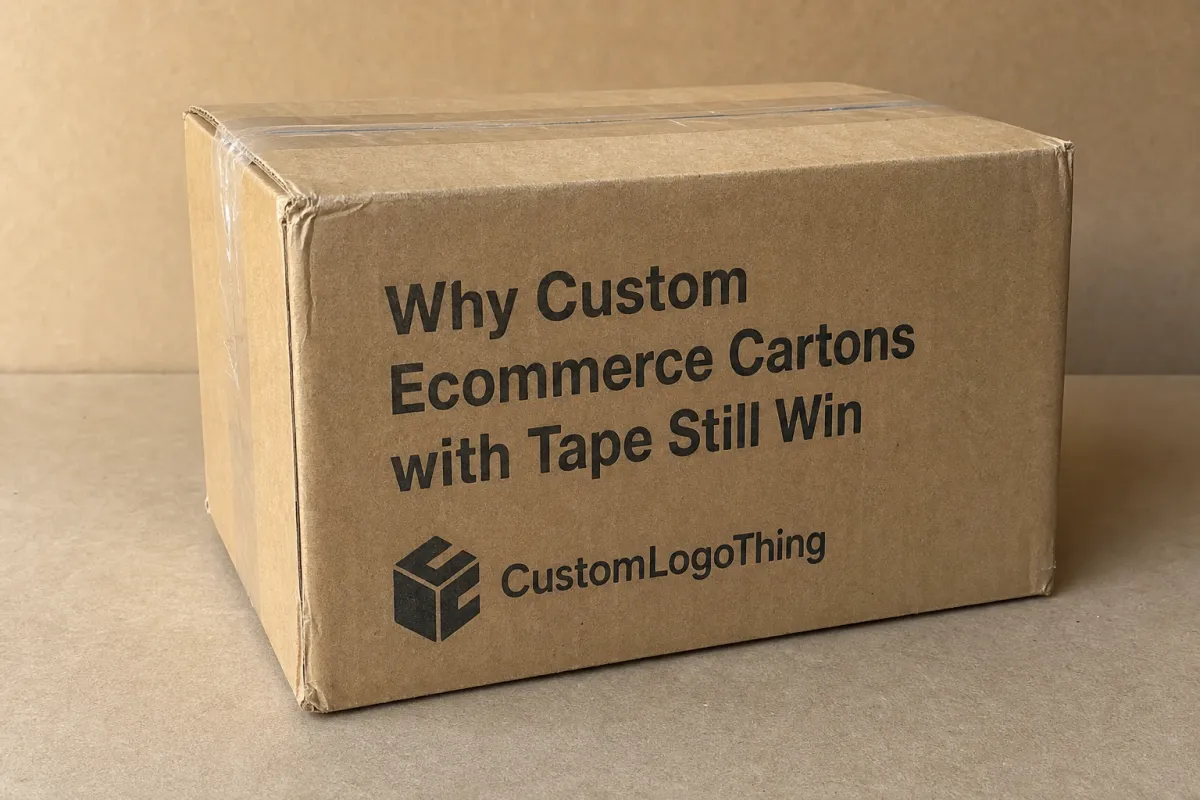
Damage usually shows up at the weak points: flap edges, corners, and the closure line. The center of the box tends to survive just fine. The seam is where packages open, bulge, or tear under pressure. That is the simple reason custom ecommerce cartons with tape keep their place in ecommerce. They address the part of the package that actually gets stressed in transit, not the part that just looks nice in a product photo.
Picture the format clearly. The carton is cut for the product, the closure is designed for parcel handling, and tape becomes part of the structure rather than a last-second fix. Basic ideas often save the most money. A well-sized carton with a dependable tape seam can outperform custom printed boxes that look polished but close badly, waste filler, or leave too much empty space for the contents to move around.
Tape does more than keep the flaps shut. It helps block dust, resists accidental opening, and lowers the odds of a blown-out return. Anyone who has opened a box with a split seam and filler spilling out already knows how fast a closure issue turns into a support ticket. A stronger seal costs little compared with the damage it prevents. Not glamorous. Very effective.
Brands see the payoff in the quiet places: fewer packing materials, faster line speed, more predictable labor, and a neater unboxing. Brand expression can stay in the mix. It just has to stop fighting the shipping process. That is why custom ecommerce cartons with tape fit DTC apparel, cosmetics, supplements, electronics accessories, and other lightweight hard goods so well.
"The nicest box in the world is still a bad box if the closure is weak." Packaging teams repeat that line for a reason, usually after the first ugly returns report lands.
For a broader view of protective packaging and shipping performance, the ISTA testing standards are worth reading. They are not a mood board. They are a reality check, which tends to be more useful.
How Custom Ecommerce Cartons with Tape Work
The pack-out flow is straightforward. Product goes in. Internal protection appears only where it earns its keep. Flaps close cleanly. Tape creates the final seal. The closer the carton size matches the product, the less filler the team needs and the fewer chances the contents have to shift in transit. A carton that fits well closes faster and tapes more consistently, especially on a busy line where nobody has time to admire the geometry.
Dimensions shape tape performance more than many buyers expect. A box that is too large wastes filler and leaves a sloppy closure line. A box that is too tight can crush the product, force the flaps to bow, or make tape application awkward. Neither choice is clever. Both create avoidable labor. A clean fit usually creates a clean tape path, which lowers the chance of missed seals and rework piles near the packing station.
Common tape setups are easy to explain and surprisingly easy to overthink. A single center seam works for many light shipments. H-tape gives better coverage for heavier loads or cartons that flex at the flap edges. Reinforced tape helps when the board is weaker or the shipment is at the edge of its load range. Tamper-evident tape matters when security or first-open confidence is part of the product promise. None of these options is magic. Each one simply matches a different risk profile.
Carton construction and tape choice have to move together. Board grade, flute type, and closure method should match the weight, shape, and fragility of the product. A thin decorative carton with a strong tape pattern is still a thin carton. Tape is not a substitute for structure. It is the final line that keeps the structure honest.
This format works well for brands that want repeatable packing without drifting into bulky retail packaging. It also helps when product variations stay close in footprint but differ slightly in accessories or inserts. In practice, many teams settle on one or two custom printed boxes and let the tape system finish the job. That is usually smarter than building a different solution for every SKU just because the spreadsheet makes variation look orderly.
Supplier selection matters here. Find a vendor who can handle the carton and the closure spec together, not as separate quotes stitched together later. A page like Custom Packaging Products becomes useful during the quote stage for that reason. A supplier that understands the box, the print, and the tape requirement in one pass usually gets to a tighter spec and a shorter trial cycle.
Key Factors That Shape the Build
Size and fit come first. Decide how much clearance the product needs, whether an insert belongs in the build, and how much movement is acceptable before the item feels loose. A few millimeters can matter. A carton that holds one item snugly behaves very differently from one that has to support a nested set, a pouch, and a small accessory card. When the product rattles, the customer notices. When the carton bulges, the packer notices first.
Board strength should follow the product, not the marketing deck. Single-wall board works for many light ecommerce items. Heavier or denser products may need a stronger grade or a different flute profile. 32 ECT can suit lighter use cases, while 44 ECT or a double-wall structure can be more appropriate for heavier or more fragile shipments. The goal is not to chase the biggest number. The goal is to avoid paying for tape to cover weak board.
Tape compatibility depends on carton finish, adhesive chemistry, and warehouse conditions. Hand tape, water-activated tape, and machine-applied pressure-sensitive tape all behave differently. Dusty recycled surfaces, cold rooms, and high-speed lines change the picture again. A tape that performs beautifully in a sample test can act very differently in a real packing area. Real-pack testing beats a sample sitting on a desk.
Branding choices shape the build more than many teams admit. Print coverage, inside printing, and color count all affect cost, but they also affect sourcing and speed. Heavy ink coverage and special coatings may look sharp while making the carton harder to source at scale. Clean branded packaging often wins because it repeats well and stocks well. Pretty is fine. Repeatable is better.
Operational reality runs the show in the background. Warehouse speed, packer comfort, product variability, and inventory discipline matter every single day. One carton size that handles most of the line usually beats a complicated box library that only looks efficient on a spreadsheet. Fewer sizes often mean fewer picking errors, better labor flow, and less dead inventory sitting around.
Sustainability targets can influence the build too. Recycled content, fiber sourcing, and end-of-life claims all belong in the conversation before approval. The Forest Stewardship Council is one place to verify responsible fiber sourcing. That does not make a package "green" by itself, because packaging claims rarely stay simple for long, but it does tighten the sourcing story.
One practical caution: recycled board and specialty coatings can improve the brand story while changing adhesion, stiffness, and print behavior. A carton that looks identical on paper may feel different in hand. That is exactly why packaging samples should travel through the same storage and packing conditions as the finished run.
| Option | Best For | Typical Tape Spend Per Carton | Strength Profile | Tradeoff |
|---|---|---|---|---|
| Standard pressure-sensitive tape | Light parcels, low-to-moderate volume | $0.01-$0.03 | Good for routine sealing on clean carton surfaces | Lowest cost, but less forgiving on dusty or recycled board |
| Reinforced tape | Heavier loads, more flex at the flap line | $0.03-$0.07 | Better pull resistance and seam integrity | Costs more and can slow hand application a bit |
| Water-activated tape | Tamper resistance, premium fulfillment standards | $0.04-$0.09 | Strong bond, clean closure, good carton reinforcement | Needs the right equipment and a little more process control |
Custom Ecommerce Cartons with Tape: Cost, Pricing, and MOQ
Cost starts with the carton itself. Size, board grade, print complexity, tape style, die-line changes, coatings, and any tamper feature all shape the quote. A small box with one-color print and standard tape can look very different from a larger carton with full coverage print, inside graphics, and a reinforced closure spec. There is no hidden formula here. More material, more setup, more cost.
Unit pricing usually falls as volume rises. That part is normal. The surprise for some teams is how quickly setup costs make small runs expensive. If the press, tooling, or die-line needs adjusting, the first thousand pieces may carry a large share of the job cost. A quote that looks attractive at first glance can become less so once freight, setup, and waste show up in the total. Factory math is not glamorous, but it does stay consistent.
MOQ decisions tend to follow tooling, print-run economics, and the way the board is sourced. Lower minimum quantities may be available, but the price per unit usually climbs. Higher MOQ commitments can bring better unit cost, but they tie up cash and storage space. The right number depends on sell-through rate and how quickly the product line changes. Seasonal launches and giant orders are not natural friends.
To compare quotes fairly, insist on like-for-like specs: same dimensions, same board grade, same print method, same tape requirement, and same shipping terms. A 32 ECT box and a 44 ECT box are not the same quote. Freight included in one offer and excluded in another is not a real comparison either. Buyers get burned most often by apples-to-oranges bidding that looks neat until the invoices arrive.
Hidden costs matter too. Storage, freight, pack-line downtime, and returns all belong in the calculation. A carton that is slightly cheaper per unit but slower to seal can cost more after a month of live fulfillment. A box that fails and comes back in pieces costs even more. Nobody wants to pay twice for the same order because the packaging was optimized for the quote sheet instead of the shipping lane.
Early in the process, ask for a sample pack and a production quote at the same time. That lets you test fit, tape closure, and print quality before you commit to scale. The full spend becomes easier to judge than any single number floating on its own.
What a fair quote should include
- Carton dimensions, board grade, and flute type
- Print method, ink coverage, and whether the inside is printed
- Tape style, tape width, and whether the seal is hand-applied or machine-applied
- MOQ, setup charges, freight terms, and sample cost
- Expected lead time and any assumptions about packaging design changes
The cleanest way to buy custom printed boxes is to write the spec once, then compare every supplier against the same sheet. It sounds boring because it is. Boring is how surprise costs stay out of the room.
If a quote leaves out closure details, ask for them explicitly. Tape width, adhesive type, and application method affect both cost and performance, and they should be treated as part of the packaging spec rather than a footnote.
Process, Timeline, and Lead Time for Production
The production path usually starts with a brief, then moves into carton design, prototype, approval, print setup, production, packing, and shipment. Guessing about dimensions or tape requirements slows the schedule immediately. Clear specs speed things up. Vague briefs create email threads. Email threads create delays. Delays become your problem even when they started with one missing measurement.
Most timeline damage comes before manufacturing really starts. Missing dimensions, low-resolution artwork, late sample feedback, and changes after tooling has started can all stretch the calendar. A box revised twice is no longer on a clean schedule. It is on a repair schedule, which is rarely cheap.
Simple unprinted cartons usually move fastest. Printed custom jobs take longer, and cartons with specific tape or structural requirements take longer again because the supplier has to confirm performance, not just appearance. A realistic planning window often lands around 10 to 15 business days for straightforward production after proof approval, with longer schedules for more complex print or structural work. Busy season adds its own tax. Busy lines become very patient with customers, right up until they do not.
Lead time can stretch unexpectedly when material supply tightens or freight gets messy. That happens more often than many brands like to admit. Recycled board, specialty finishes, and very specific sizes can all create sourcing constraints. Aligning the carton spec with available material families helps more than inventing a one-off build that only one mill can support.
Sample review and a packing test deserve time before the full run is approved. One pilot order can expose a weak closure line, a tape issue, or a clearance problem that would be far more expensive to discover after several thousand units are already in inventory. The test does not need to be academic. It needs to be real. Put the product in the box, tape it, shake it, stack it, and see what happens.
For parcel-heavy programs, ask whether the supplier can talk through ISTA test methods or a similar drop-and-vibration approach. Not every order needs a formal lab report. Every order does need enough discipline to show the carton can survive ordinary handling before it carries a customer's name.
That testing step is also where packers reveal the truth that mockups hide. If the closure takes two hands, if the tape refuses to bite, or if the carton flexes during sealing, the sample is telling you something useful. Believe it.
Common Mistakes With Tape-Sealed Ecommerce Cartons
The first mistake is trying to fix a bad carton design with more tape. That move saves money in the short term and creates a labor problem later. Wrong size or weak board does not disappear because the seam has more adhesive on it. The failure just waits. Better to Choose the Right dimensions and board from the start.
The second mistake is obsessing over print quality while ignoring closure strength. A beautiful carton that opens in transit is not a win. It is a return label wearing makeup. Custom ecommerce cartons with tape need to be judged as a package system, not as a print sample. Visual polish matters, but it stops mattering quickly when the seam fails.
The third mistake is choosing tape without testing the actual carton surface. Dusty board, recycled surfaces, cold storage, and glossy coatings all affect adhesion. A tape that looks excellent on paper may behave badly on the real carton. Test the adhesive on the actual finish, in the actual packing area, at the actual temperature. That is the difference between a spec and a guess.
The fourth mistake is ordering too many sizes too early. Too many carton SKUs complicate inventory, confuse packers, and slow fulfillment without improving protection. Most brands do better with a tight size set and a clear packing rule. One or two well-chosen custom printed boxes usually outperform a sprawling box library nobody wants to manage.
The fifth mistake is skipping drop tests, edge crush checks, or real warehouse trials before placing the full order. Even a short trial can show whether the closure holds after handling, whether the product shifts, and whether the tape pattern is enough. If you want fewer surprises, test like the shipment will be handled by a tired stranger having a normal day. That is close enough to reality.
Red flags during approval
- The carton fits "fine" in a photo but needs extra filler in person
- The tape peels up on cold or dusty board
- The flaps bow upward before sealing
- The artwork forces a structurally awkward die-line
- The packer has to slow down to make the box behave
Any of those should stop the job until the spec is fixed. Sending it to production and hoping for the best is not a strategy.
One more warning sign is a supplier that treats the tape as an afterthought. If the box and the seal are quoted by different teams that never speak to each other, the final result often reflects that disconnect.
Expert Tips and Next Steps
Start with the product, not the box. Measure the item, any insert, and the movement tolerance before you ask for a quote. A carton spec based on the actual product footprint is easier to price, test, and repeat. It also keeps the conversation grounded in something useful, which is rare enough in packaging meetings to deserve notice.
Ask for a sample set that includes the carton, the tape type, and the actual packed product. A flat sample alone does not tell you how the pack line will feel. You need to know whether the closure is fast, whether the tape sticks properly, and whether the finished package can survive the usual handling events: short drops, small stacks, and a bit of corner abuse. That is the real test of product packaging.
Standardize where possible. Fewer box sizes usually mean less inventory chaos, fewer picking errors, and better pricing. If one size can cover 70 percent of your orders, that is usually a better business decision than chasing a perfect fit for every SKU. Perfect fit is charming in theory. Operational simplicity wins more often in practice.
Document your packing spec on one sheet. Include dimensions, board grade, tape type, print requirements, target MOQ, and the damage standard you will accept. A clean spec sheet helps suppliers quote properly and helps your warehouse team pack consistently. It also protects the brand when new staff join and nobody can remember why a certain box was chosen in the first place.
Before you place the full order, run a short pilot in the real packing area. Time the pack-out. Check closure quality. Watch what happens when the line gets busy. Then lock the final spec based on what actually saves time and holds up. That is how custom ecommerce cartons with tape earn their keep: by making the live process easier, not just the sample prettier.
For brands balancing branding and operations, this sits in the useful middle ground of practical package branding. You can keep the look sharp, protect the goods, and avoid the expensive habit of overdesigning a box that only had to do one job. A useful carton is quiet. It arrives, seals properly, and does not create extra work.
For teams that want custom ecommerce cartons with tape to pull their weight, the smartest next step is simple: write the spec, test the seal, compare quotes on equal terms, and choose the build that fits both the product and the packing line. That separates a box that looks good on a sample table from custom ecommerce cartons with tape That Actually Work in the real world.
Are custom ecommerce cartons with tape better than standard mailers?
Yes, when the product needs more crush resistance, a tighter fit, or a stronger closure than a basic mailer can provide. Mailers can be cheaper for light items, but cartons usually win for heavier, fragile, or irregular products. If damage is driving returns, the stronger carton format often pays back faster than people expect.
What tape is best for custom ecommerce cartons with tape?
Match the tape to the carton surface and shipping environment. Standard pressure-sensitive tape works for general use, reinforced tape suits heavier loads, and water-activated tape brings stronger tamper resistance. Cold rooms, dusty conditions, and high-volume lines all deserve testing before commitment. The best tape is the one that seals reliably on your actual carton, not the one with the nicest brochure.
How do I estimate pricing for custom ecommerce cartons with tape?
Price depends on carton size, board grade, print coverage, tape type, and order quantity. Ask suppliers to quote the same spec set so you can compare apples to apples instead of chasing the lowest-looking number. Unit cost usually falls with volume, but total spend can rise if the design is overcomplicated or the freight terms are poor.
How long does production usually take?
Simple cartons can move faster, while printed custom runs or cartons with structural changes need more time for sampling and setup. Lead time can stretch if artwork is incomplete, samples need revisions, or the supplier is running peak capacity. Build in buffer time for testing so you are not approving a box based on guesswork.
What is the biggest mistake brands make with taped ecommerce cartons?
They try to save money on the carton and then overuse tape, filler, or labor to compensate. That usually creates a slower pack line, weaker protection, and a higher all-in cost. A well-sized carton with the right tape spec is usually cheaper in practice than a messy workaround. Short version: custom ecommerce cartons with tape work best when the box fits, the seam holds, and the warehouse does not have to fight the package.

