Buyer Fit Snapshot
| Best fit | Custom Embossed Box Seals projects where brand print, material claims, artwork control, MOQ, and repeat-order consistency need to be specified before quoting. |
|---|---|
| Quote inputs | Share finished size, material target, print colors, finish, packing count, annual reorder estimate, ship-to region, and any compliance wording. |
| Proofing check | Approve dieline scale, logo placement, barcode or warning zones, color tolerance, closure strength, and carton packing before bulk production. |
| Main risk | Vague material claims, crowded artwork, missing packing details, or unclear freight terms can make a low unit price expensive after revisions. |
Fast answer: Custom Embossed Box Seals: Board, Finish, Dieline, and Unit Cost should be specified like a repeatable production item. The safest quote records material, print method, finish, artwork proof, packing count, and reorder notes in one written spec.
Production checks before approval
Compare the actual filled-product size with the drawing, then confirm tolerance on folds, seals, hang holes, label areas, and retail display edges. Reserve space for logos, QR codes, warning copy, and material claims before decorative graphics fill the panel.
Quote comparison points
Review material grade, print process, finish, sampling route, tooling charges, carton quantity, and freight assumptions side by side. A quote is only useful when the supplier can repeat the same color, closure quality, and packing count on the next order.
Custom embossed box seals can change how a package feels in the hand before a customer reads a single word. That is the part people miss. A raised detail often does more for perceived quality than a louder print design because it adds touch, depth, and a slight pause in the unboxing moment. For brands that care about branded packaging, that pause can separate a box that looks decorated from one that feels deliberate.
From a packaging buyer's point of view, this is not just decoration. It is package branding, material behavior, and the way a detail survives shipping, handling, and presentation. Some seals live on luxury retail cartons. Others sit on subscription mailers, gift packaging, cosmetics, specialty food gifts, or short-run launches that need to look premium without blowing up the whole budget. The effect is usually bigger than the footprint.
Here, I break down how these seals work, what drives cost, where brands usually get tripped up, and how to plan the artwork and timeline so production does not turn into guesswork.
A seal is tiny on the dieline and huge in the hand. That is why a clean emboss often outperforms a busier print effect.
Why Custom Embossed Box Seals Stand Out
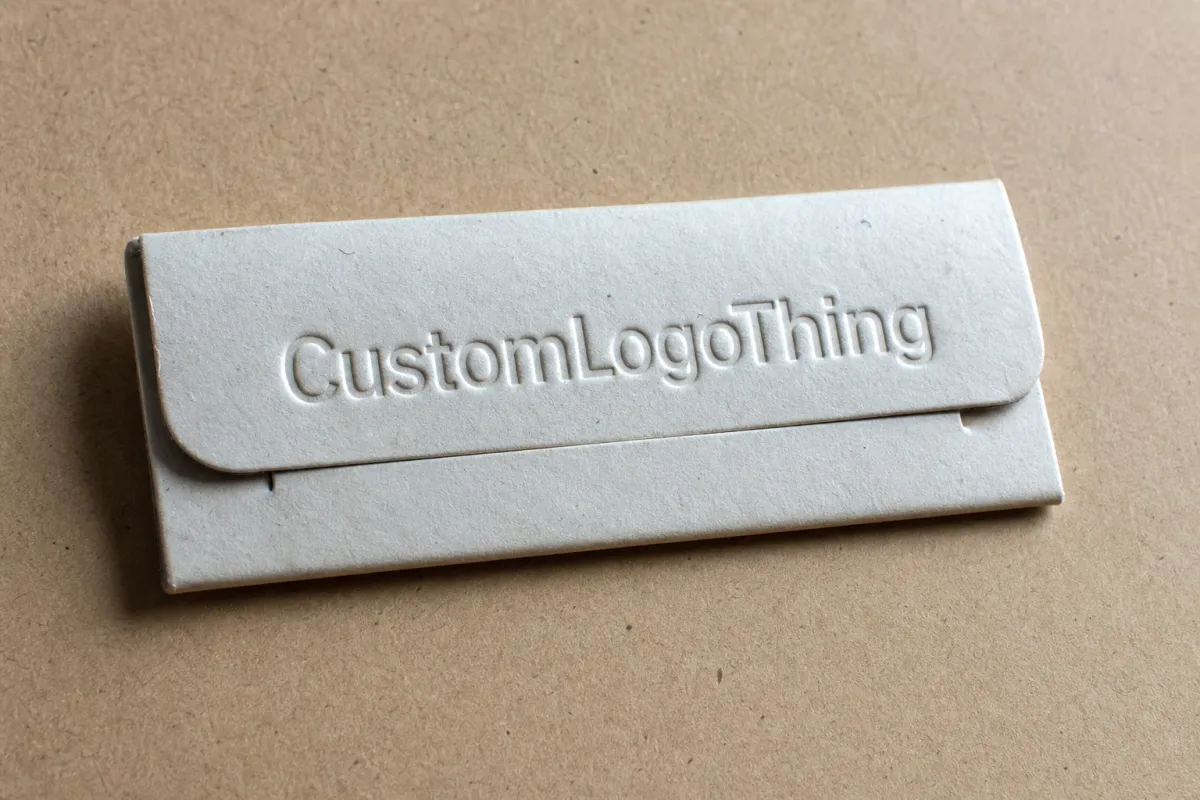
People notice texture fast. Sight matters, sure, but touch turns a box from a flat graphic object into something physical. That is why custom embossed box seals can shape perceived quality more than an extra ink color or a louder pattern. The finish does not shout. It signals care.
In retail packaging, that quiet signal carries weight. A raised monogram on a rigid carton, a pressed crest on a gift sleeve, or a closure seal on a premium mailer all suggest restraint and intention. Customers read that as confidence. The brand did not cover every surface. It chose one detail and let it carry the message.
These seals show up across a wide spread of product packaging formats:
- Luxury retail cartons for apparel, accessories, and fragrance.
- Subscription mailers where the unboxing experience affects retention.
- Gift packaging for seasonal sets, event kits, and limited editions.
- Cosmetics and skincare boxes that need a refined tactile accent.
- Food gifts and specialty assortments where presentation matters as much as protection.
That range matters because the same emboss does not behave the same way everywhere. On a rigid box, the impression can feel crisp and deliberate. On a folding carton, it may read softer. On a seal label, it can function as a closing gesture instead of a structural detail. The best results happen when the embossed element supports the broader package design instead of sitting on top of it like an afterthought.
That is the strategic upside. A seal can reinforce a logo, a crest, or a signature mark without demanding heavy ink coverage. It can also make Custom Printed Boxes feel more premium with one added process rather than a full redesign. In practice, this is where the return usually shows up: better shelf presence, stronger unboxing content, and a cleaner repeat impression when customers recognize the same tactile cue again.
How Custom Embossed Box Seals Work in Packaging
At its core, embossing is a mechanical process. A matched die applies pressure to a substrate, pushing material into a raised or recessed shape. The result depends on the die, the press, the stock thickness, the coating, and the amount of detail in the artwork. If the material is too thin, the impression can crush the fibers instead of lifting cleanly. If it is too coated or too glossy, the texture may not read as strongly as expected.
There are a few versions of the effect worth separating:
- Blind embossing uses pressure only, with no foil or ink added to the impression.
- Foil embossing combines a raised or recessed shape with metallic or pigmented foil.
- Debossing presses the design inward rather than lifting it outward.
- Combination finishes add varnish, foil, or spot print alongside the embossed area.
For custom embossed box seals, the application method matters just as much as the finish. Some are pressed directly into the box surface. Others are produced as adhesive seal labels or closure badges. A third option is a separate panel element that gets attached during final assembly. Each route affects cost, line speed, and durability in a different way.
The substrate choice also shapes the outcome. Paperboard, kraft board, coated stock, rigid greyboard, and laminated surfaces all respond differently. A 16pt SBS carton will not behave like a 1.5mm rigid board wrapped in printed paper. Neither will a matte-laminated surface behave like a high-gloss box. The emboss depth that looks elegant on one stock may disappear on another.
That is why simplified artwork usually performs better. Thin script, hairline borders, and tiny internal details are risky because the material can swallow them. Bold shapes, clear negative space, and strong line weights are more reliable. If the seal is supposed to be seen at arm's length and felt at fingertip distance, the design should hold up in both conditions.
If you are building a broader packaging program, it can help to pair the seal with other custom packaging products so the full presentation feels planned rather than assembled from separate parts.
Design Factors That Change the Look and Durability
Seal size is the first variable most teams argue about, but it is not the only one. Placement, artwork complexity, substrate, finish, and shipping stress all affect whether the result feels premium or merely busy. A 1.25-inch seal on a clean panel can look more expensive than a 2.5-inch seal crowded near a fold line. Scale alone does not create impact.
Artwork complexity deserves real attention. Fine type and intricate filigree can work in digital mockups and fail in production. When the press applies pressure, tiny details can blur, fill in, or flatten. A better rule: if a design needs a magnifier to read clearly, it is probably too detailed for an embossed seal. The rare exception usually involves a stable substrate, a controlled press, and enough footprint to hold the form.
Placement matters just as much. A seal that bridges a fold, seam, curve, or tuck flap may not sit evenly. That can create broken edges or a visibly distorted impression. On boxes that open and close repeatedly, the seal should also avoid wear zones where fingers, friction, or adhesives will strain the surface. Presentation should feel intentional. Durability should not be an accident.
Surface finish changes the visual read more than many buyers expect. Matte and soft-touch surfaces often make the raised detail easier to see because light breaks across the texture. Gloss and heavy coating can flatten contrast, even if the emboss itself is technically sharp. On laminated packaging, the impression may need more depth or a bolder outline to register clearly.
There is also a brand language question. A crest-shaped emboss can feel heritage-driven. A simple monogram can feel modern and restrained. A geometric seal can read more graphic and retail-ready. The same process can create very different emotional signals depending on how the mark is shaped and where it sits. That is useful. It means the seal can support package branding without forcing the rest of the box to do all the work.
Durability is not just about the emboss staying visible. It is also about scuffing, cracking, adhesive failure, and edge lift. If the box has to survive distribution, stack pressure, or e-commerce transit, the seal should be tested under realistic handling. Some finishes look perfect in a prototype and dull quickly in shipping. Others hold up well but need a stronger substrate or a larger die to avoid fatigue.
For shipment-heavy programs, many teams use transit testing as a benchmark. The ISTA test framework is useful here because it gives packaging teams a way to judge how materials behave under vibration, compression, and drop conditions rather than relying on appearance alone.
Production Process, Timeline, and Lead Time Basics
Most production delays are not mysterious. They usually begin with missing information. The path from brief to ship date tends to follow a familiar sequence: artwork review, die creation, proofing, sampling, production, finishing, and packing. The faster a team clears the first two steps, the smoother the rest usually goes.
Artwork review starts with file quality. Vector files are the standard because they keep edges crisp at any size. If the logo is only available as a low-resolution image, the die maker may need to redraw it or request new art. That adds time. So does an incomplete dieline, a missing size reference, or a file that does not show which areas should emboss and which should stay flat.
Die creation is where the physical work begins. A steel or brass embossing die is made to the approved shape, and in many cases a counter-die or matching tool is needed on the opposite side of the board. For simpler seal projects, this stage may take a few business days. For more detailed multi-process work, it may take longer, especially if a sample round is needed before full production.
Lead time shifts with complexity. A basic blind embossed seal on standard stock may move through in roughly 10-15 business days after proof approval, depending on supplier capacity and quantity. A foil-and-emboss combination, or a project involving custom cut shapes, specialty board, and hand assembly, can stretch closer to 15-25 business days or more. Seasonal demand matters too. Peak gifting periods can add congestion that never shows up in the quote until schedule talks begin.
Quantity changes the schedule as well. Larger runs usually give the press team more to batch efficiently, but they may add finishing, drying, or packing time. Smaller runs may be faster to set up but slower on a per-unit basis because the press time and setup cost get spread across fewer pieces. Either way, the most common mistake is assuming the first proof is the final proof.
That is where planning discipline matters. Build time for corrections. Build time for sample review. If the seal is going onto a new substrate, ask for a physical sample or press proof before committing to a full run. A screen rendering can hide problems that the press will reveal instantly: weak contrast, crushed detail, or a die size that feels too small in hand.
For teams coordinating a larger launch, matching the seal timing with the rest of the order is often easier if the supplier is already handling other custom packaging products. That gives you one production calendar instead of three disconnected ones.
Cost, Pricing, MOQ, and Quote Drivers
Pricing for embossed packaging is rarely a single number. It is a stack of variables. Tooling, die complexity, substrate choice, finish type, order volume, and finishing steps all push the price in different directions. A buyer who understands those variables can make better tradeoffs instead of chasing the lowest line item and discovering the hidden costs later.
The biggest driver is usually tooling. A simple embossing die may cost less than a more detailed or larger-form die, but once foil, multiple passes, or special registration are involved, setup can rise quickly. That setup is easier to absorb on higher volumes. On small runs, the entry cost matters more because it sits across fewer pieces.
MOQ and unit price move in opposite directions. As quantity increases, the per-piece cost usually falls because setup gets spread out. At the same time, a custom solution can still have a meaningful minimum because the supplier needs to cover die making, press setup, and material waste. The lowest possible price per unit is not always the best value if the seal is supposed to strengthen retail packaging or support a premium launch.
Here is a practical comparison of common approaches. These are planning ranges, not quotes, but they help buyers understand where the money tends to go.
| Option | Typical Setup Cost | Typical Unit Cost at 5,000 Pieces | Best For | Tradeoff |
|---|---|---|---|---|
| Blind embossed seal | $120-$300 | $0.05-$0.16 | Minimal, tactile branding | Less visual contrast than foil |
| Foil embossed seal | $250-$650 | $0.10-$0.30 | Premium launch packaging | Higher setup and tighter registration needs |
| Die-cut adhesive seal label | $150-$400 | $0.08-$0.22 | Mailer closures and gift seals | Adhesive performance must be tested |
| Direct embossed box panel | $200-$500 | Varies with box structure | Rigid cartons and display boxes | Requires more careful board selection |
Those ranges are not absolute, and they should not be treated like a quote. They are useful because they show where the money goes. A highly detailed seal on specialty stock can cost more than a simpler embossed mark on a standard board, even if the finished size is smaller. Likewise, a larger order can lower the unit price substantially without reducing setup costs at all.
Ask about hidden charges early. Setup fees. Sample charges. Plate storage. Shipping. Re-run fees if artwork changes after proof approval. Some suppliers also charge for extra revisions or for a rush schedule that disrupts line planning. If you are comparing proposals, make sure the quote separates tooling from production so the differences are visible.
Material choice changes value as much as price. A basic embossed seal may be ideal for a short seasonal run, while a foil-enhanced seal can make sense for a hero SKU or a launch kit where the packaging has to carry more of the brand story. If sustainability matters, ask whether the paper or board carries FSC documentation and whether the finish choices affect recyclability in your market. The current guidance at the Forest Stewardship Council site is a good reference point when sourcing claims need to be accurate.
For brands that care about both performance and presentation, custom embossed box seals need to be judged as part of the whole system. Not just by unit cost, but by how much they improve the customer's first impression and the package's overall perceived value.
Common Mistakes That Make Seals Look Cheap
The fastest way to weaken an embossed seal is to overload it. Tiny type. Thin lines. Too many internal details. A crowded crest or a micro-pattern that looked elegant on screen can turn muddy in production because the press cannot hold every line equally. Simplicity usually wins.
Placement mistakes are just as common. Sealing over a fold or seam can distort the shape. Putting the seal on a curved or flexible panel can make the impression uneven. Positioning it too close to a box edge can also create a rushed look, even if the die itself is clean. A premium detail needs breathing room. Otherwise it feels squeezed in.
Another mismatch appears when the seal is too refined for the box it sits on. A delicate embossed mark on lightweight board can feel inconsistent, almost as if the packaging design and the substrate were chosen by different teams. Buyers notice that tension instantly, even if they cannot explain why. The finish may be expensive, but the structure does not support it.
Proofing errors create avoidable damage. Approving a digital mockup without checking a physical sample is a common trap. Screen images cannot show depth, pressure, ink spread, adhesive behavior, or how light moves across the surface. A seal that looks strong in a PDF can disappear on a matte stock or read as overworked on a glossy one. A sample is not a nice-to-have. It is the real decision point.
Brand consistency matters too. If the seal style clashes with the typography, color palette, or other branded packaging elements, it can make the whole box feel patched together. This is especially visible in product packaging where the seal is the first tactile interaction but not the only visual cue. The box, insert, label, and closure should speak the same language.
One more subtle problem: chasing contrast in the wrong way. Some teams try to force visibility through overly shiny foil or oversized shapes, when texture and placement would have worked better. A restrained seal on a well-chosen stock can feel richer than a louder version on a weaker one. That is one reason packaging design should be evaluated by touch as well as by image.
Expert Tips for Better Custom Embossed Box Seals
Start by simplifying the mark. If the logo has a detailed version and a simplified version, the simplified one is often the better emboss candidate. Strong silhouettes read more clearly once raised or recessed. The eye can complete the shape, and the hand can confirm it.
Test more than one stock if the budget allows it. A matte coated sheet and a soft-touch laminated sheet can produce very different results. So can a kraft liner versus a bright white board. Under the same lighting, one may make the seal feel subtle and refined while the other makes it feel bold. That comparison is cheap compared with a reprint.
Align the seal with the brand story, but do not force symbolism that does not fit. A monogram works well for a legacy-inspired label. A crest can support a heritage look. A clean geometric seal can suit modern retail packaging. The question is not whether the motif is attractive. It is whether it feels like the same brand customers meet everywhere else.
Use contrast through placement and texture, not only color. A centered seal on a quiet field of board can feel more premium than a heavily colored panel with no pause. Negative space is part of the design. In some cases, it is the part customers remember because it lets the tactile effect do the talking.
Version the system if your packaging line needs flexibility. A hero version can go on the main carton or launch box. A simpler version can be used on shipping cartons, secondary sleeves, or smaller formats. That gives the brand consistency without forcing every format to carry the same cost. It also helps teams scale the idea across custom packaging products without repeating the same production burden everywhere.
If you are ordering for e-commerce, ask how the seal interacts with transit stress. If the box will be opened on camera, the tactile detail needs to survive shipping and still look crisp at unboxing. If it will be handled on shelves, the detail should remain visible under store lighting and during repeated touch. That is where a proof plus a transit test can save a lot of disappointment.
One more practical point: if your packaging supplier asks for a vector file, send it in clean form. Do not embed low-resolution graphics inside a PDF and hope the result will magically sharpen later. Include the dieline, final size target, finish notes, and substrate spec. Those details save time and usually lead to a better quote.
What to Prepare Before You Order Custom Embossed Box Seals
The cleanest projects start with a short, specific brief. Not a mood board alone. Not a vague description of "premium." A real production brief that tells the supplier what the seal needs to do, where it will live, and how much risk the packaging can tolerate. The more precise the brief, the fewer surprises in proofing.
Before you request pricing, gather these items:
- Vector logo or artwork files.
- Target seal size and acceptable range.
- Substrate details, including board weight or thickness.
- Desired finish, such as blind emboss, foil emboss, or adhesive seal label.
- Quantity range and expected reorder volume.
- Target in-hand date and any launch deadline.
- Notes on packaging structure, closure area, and whether the seal must survive shipping.
If possible, ask for a physical sample or press proof. A digital rendering can confirm proportion. It cannot confirm touch. That matters because the tactile result often decides whether the piece reads as elevated packaging or merely decorated packaging. A sample also helps teams compare the effect under real light, not just on a monitor.
Ask suppliers for a quote that separates tooling, materials, and turnaround. Side-by-side pricing makes tradeoffs easier to see. For example, a slightly larger seal may cost more in tooling but feel far more balanced on the box panel. A softer finish may add a little expense but improve the reading of the emboss. These are the kinds of adjustments that make branded packaging feel intentional instead of cost-driven.
There is also a sequence worth following. First, define the packaging goal. Second, narrow the seal style. Third, confirm budget. Fourth, lock the production timeline. That order sounds obvious, but many late-stage problems come from reversing it. Teams pick a finish before deciding how much the seal needs to do. Then they discover the box needs a different stock, a different die depth, or a different schedule.
For brands comparing options across a product launch, this is a good point to review broader custom packaging products so the seal sits naturally inside the overall package system. A seal works best when it supports the full unboxing experience, not when it carries the whole job alone.
Custom embossed box seals are most effective when they are planned as part of the complete package, not dropped in at the end because the box "needed something." The right seal gives the customer a tactile cue, a visual cue, and a memory cue all at once. That is a small asset with an unusually high return for the right brand.
If you are spec'ing custom embossed box seals, start with three decisions and do not skip the order: choose the substrate, set the seal size for production reality, then approve the proof on the actual board or finish you plan to run. That sequence catches most of the expensive surprises before they become expensive mistakes.
For brands that want package branding to feel disciplined, tactile, and memorable, custom embossed box seals remain one of the strongest tools available. They are quiet. They are physical. And when the artwork, substrate, and timeline line up, they make the package feel finished instead of merely decorated.
What are custom embossed box seals used for?
They add tactile branding to boxes, sleeves, and closures so the packaging feels more premium at first touch. Brands use them to reinforce logos, monograms, crests, or launch marks without relying on heavy ink coverage. They work especially well when the goal is a memorable unboxing moment rather than loud shelf graphics.
Do custom embossed box seals work on coated or glossy boxes?
Yes, but the surface finish changes the result and can reduce visible depth. Thicker, more stable substrates usually hold the impression better than lightweight or highly flexible material. A sample or proof is the safest way to confirm whether the seal reads cleanly on the chosen stock.
How much do custom embossed box seals cost per piece?
Unit cost depends on quantity, tooling, material, and whether the seal is blind embossed or paired with foil or special stock. Setup cost can matter more than unit cost on small runs, so ask for a quote that separates those items. Larger orders usually lower the per-piece rate, but the cheapest option is not always the best brand fit.
How long does production take for embossed box seals?
Simple orders can move faster than multi-step projects, but artwork approval and tooling usually drive the schedule. Expect extra time if you need sample rounds, specialty finishes, or changes to the box structure. Build buffer into the timeline so the seal can be approved before the packaging run begins.
What file should I send for a custom embossed box seal design?
Vector artwork is best because it preserves clean edges and scales without losing detail. Simple shapes, strong line weights, and clear spacing usually emboss more reliably than fine textures or tiny type. Send the dieline, size target, and any finish notes so the supplier can check feasibility before quoting.

