Buyer Fit Snapshot
| Best fit | Custom Embossed Sleeves Bulk Order projects where brand print, material claims, artwork control, MOQ, and repeat-order consistency need to be specified before quoting. |
|---|---|
| Quote inputs | Share finished size, material target, print colors, finish, packing count, annual reorder estimate, ship-to region, and any compliance wording. |
| Proofing check | Approve dieline scale, logo placement, barcode or warning zones, color tolerance, closure strength, and carton packing before bulk production. |
| Main risk | Vague material claims, crowded artwork, missing packing details, or unclear freight terms can make a low unit price expensive after revisions. |
Fast answer: Custom Embossed Sleeves Bulk Order: Pricing & Specs should be specified like a repeatable production item. The safest quote records material, print method, finish, artwork proof, packing count, and reorder notes in one written spec.
Production checks before approval
Compare the actual filled-product size with the drawing, then confirm tolerance on folds, seals, hang holes, label areas, and retail display edges. Reserve space for logos, QR codes, warning copy, and material claims before decorative graphics fill the panel.
Quote comparison points
Review material grade, print process, finish, sampling route, tooling charges, carton quantity, and freight assumptions side by side. A quote is only useful when the supplier can repeat the same color, closure quality, and packing count on the next order.
Some packaging needs a full rethink. Most do not. If the base container already works and the brand story just needs more presence, a custom embossed sleeves bulk order is usually the cleaner move. A raised sleeve can make a carton, bottle, tray, or jar feel more premium without forcing a new structure, a new mold, or a new round of operational headaches.
The appeal is practical. Better package branding. Better hand-feel. Better shelf impact. Better performance in photos and unboxing clips, too. The original pack keeps doing the job. The sleeve handles the visual lift. That split matters because it protects the line while giving marketing something worth showing.
Done properly, embossed sleeves deliver the look of custom packaging without the usual rebuild cost. The buying process still has to be disciplined. Clear specs, accurate dielines, and honest quantity planning keep the project on track. Treat those as separate problems and the quote usually gets messier than it needs to be.
Why a Custom Embossed Sleeves Bulk Order Can Beat a Full Rebuild
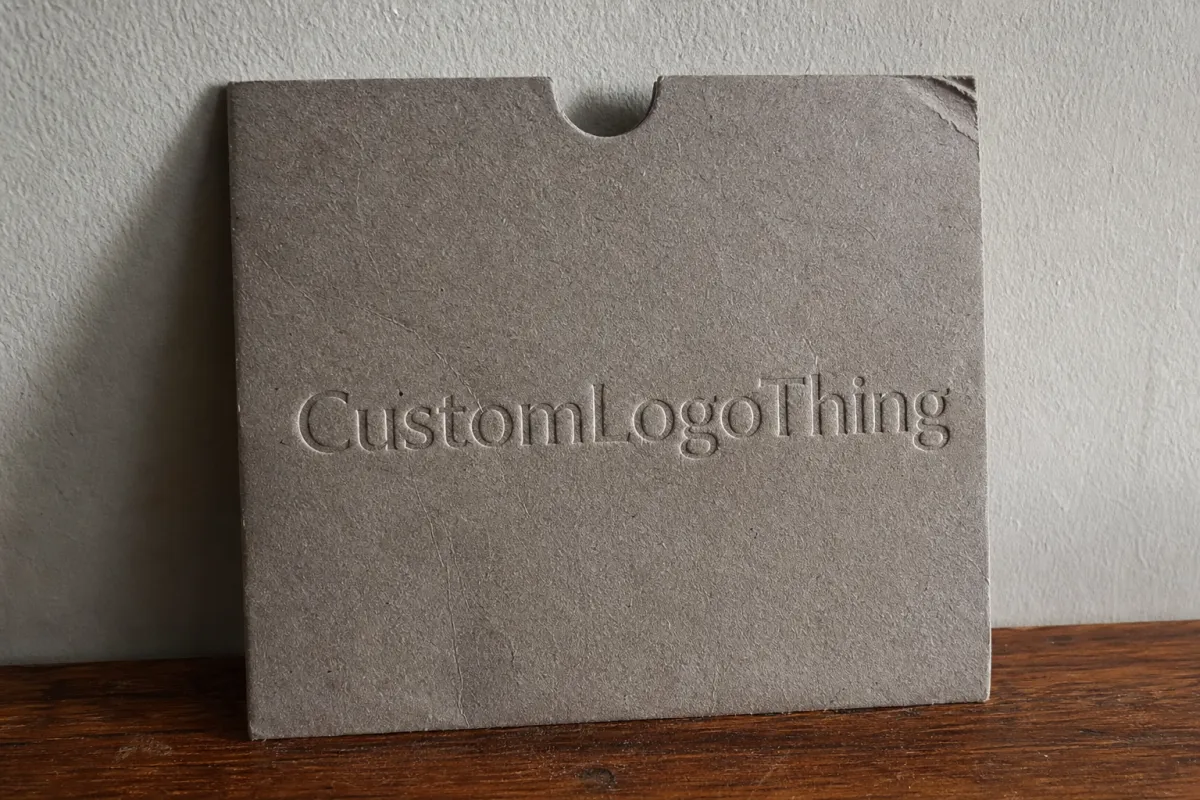
Many launches start with a base pack that is already approved. The problem is not structure. It is presentation. The pack can function perfectly and still feel plain. An embossed sleeve solves that without asking the team to redo the bottle mold, carton layout, or tray format the line already knows how to run.
That matters for cost control. New tooling for rigid boxes, custom molds, or structural changes can add expense fast. It also adds time, and time tends to be the part nobody has enough of. A sleeve usually uses less material, simpler conversion, and a smaller design surface. The texture comes from the emboss itself, not from piling on more packaging complexity. That is useful when the calendar is already tight.
From a merchandising angle, the sleeve does several jobs at once. It adds physical depth that catches light. It gives typography and graphics more room to breathe. It can make a standard pack feel more deliberate, which is often what premium retail packaging needs. That is why embossed sleeves show up so often in cosmetics, candles, gift sets, and specialty food lines that need to look crafted instead of generic.
"If the base pack is approved and the line is stable, an embossed sleeve is often the fastest way to raise perceived value without inviting structural risk."
There is also a supply chain advantage. Sleeves are easier to rerun than a primary package that depends on new tooling. That gives purchasing teams more flexibility if demand shifts or a retailer wants a second wave. For wholesale accounts, seasonal programs, and subscription shipments, that flexibility can matter as much as the look.
In real buying scenarios, the strongest candidates for a custom embossed sleeves bulk order are products with a stable container and a branding problem rather than a packaging problem. A holiday refresh, a retail reset, or a premium relaunch are all good moments to use the sleeve as the visible update while the underlying pack keeps production predictable.
Product Details: What Embossed Sleeves Are and Where They Work
An embossed sleeve is a wrap, band, or partial jacket that surrounds a package and uses raised detail to create texture and dimension. The effect can be subtle or dramatic depending on the stock, the die, and the artwork. A good sleeve does not feel ornamental for the sake of it. It feels built into the pack.
Brands use embossed sleeves across a wide range of packaging programs. Cosmetic boxes rely on them for a higher-end finish. Candle brands use them to add warmth and texture. Specialty food companies use them to make simple cartons look giftable. Beverage sleeves, apparel presentation bands, and subscription packaging inserts also benefit from the extra depth, especially when the product has to read well in photos and on shelf.
The format changes with the application. A sleeve may be a full wrap, a partial wrap, a belly band, or a tamper-evident band. A full wrap gives more room for storytelling and graphic treatment. A belly band works well when the primary container already carries strong branding and only needs an accent layer. Tamper-evident bands help when first-open protection has to be part of the customer experience rather than hidden in the background.
Operations teams usually prefer sleeves because they fit around an existing primary package instead of forcing a total redesign. That makes them easier to introduce into an existing production flow than Custom Printed Boxes or rigid cartons that may need more assembly, inserts, or warehouse changes. If the container dimensions stay stable, the sleeve becomes a repeatable branding element instead of a one-off exception that slows the line.
Another benefit: sleeves can be adapted across multiple SKUs. One design system can span several sizes or scents with only minor dimensional changes. That helps maintain package branding while keeping the family look consistent. For product lines with different flavors, fragrances, or sizes, that consistency matters more than people usually admit. It keeps the shelf easier to scan and stops the product family from looking scattered.
Specifications That Matter: Board, Depth, Artwork, and Fit
The numbers behind the sleeve matter just as much as the artwork. If the substrate is too light, the emboss can flatten during handling. If the stock is too heavy for the application, the sleeve may resist folding, feel awkward in the hand, or push the cost higher than necessary. Many programs start with paperboard or carton stock in the 14pt to 24pt range, but the right choice depends on sleeve size, emboss depth, and the finish the brand wants.
A common mistake is approving artwork before the dieline is final. It sounds harmless. It is not. That is usually where production trouble starts. Raised areas need safe zones. Fine type may need to stay flat. Thin rules can disappear if they sit inside a deep emboss. Clean results usually call for slightly stronger line weights than a print-only design, and type should stay large enough to remain legible once texture enters the picture.
Fit matters just as much. A sleeve that wraps too tightly can distort the embossed areas or leave pressure marks in the board. A sleeve that is too loose can feel cheap, rattle in transit, or shift during assembly. Accurate pack measurements are non-negotiable: width, height, depth, corner style, and any taper need to be captured before the quote goes out. If the sleeve sits over a jar, bottle, tray, or carton, the tolerance window should be known from the start.
Typical emboss depth varies with the stock and the design, but many practical programs sit in the 0.3 mm to 1.0 mm range. Smaller raised details can look excellent on the right board. Deep sculpted texture needs more planning, especially if the surface also carries foil or heavy ink coverage. A deep emboss with heavy finishing can look impressive, but only if the build holds the detail instead of crushing it into a blur.
Artwork should be planned with print and finishing sequence in mind. Soft-touch coating, matte varnish, foil stamping, and spot UV all change how the embossed surface reads. Some finishes sit on top of the texture and sharpen the contrast. Others can mute the tactile effect if they are overdone. A capable supplier should explain what goes first, where the emboss sits in relation to it, and which elements need to stay flat so the final design stays crisp.
If the sleeve will be used on fiber-based packaging, ask whether the board can be sourced as FSC-certified material. For brands with sustainability claims or retailer requirements, that documentation often becomes part of the approval path. The FSC site at fsc.org is a useful reference for certification language and chain-of-custody basics. It does not replace spec review, but it helps procurement and compliance speak the same language.
For products that take a beating in transit, test before launch. The International Safe Transit Association at ista.org publishes methods many packaging programs use to simulate drops, vibration, and handling. If the sleeve is part of a retail-ready pack or a subscription shipment, that testing can expose fit or scuff issues before they reach customers. Finding the problem after launch usually costs more than the test ever did.
One rule saves a lot of time: request the dieline early, then design around the real package instead of the imagined one. That single step cuts rework, helps the print file match the die, and gives the emboss room to do its job without fighting the structure.
Custom Embossed Sleeves Bulk Order Pricing, MOQ, and Unit Cost
Pricing for a custom embossed sleeves bulk order depends on a few variables buyers should compare carefully: quantity, board grade, emboss complexity, print coverage, finishing, tooling, packing method, and shipping destination. Change one and the quote can move more than expected. That is why the cleanest sourcing process compares vendors against the same spec set, not a loose mix of different stocks and finishes that only appear cheaper on paper.
The minimum order quantity usually tracks press setup, die creation, and the economics of running enough sheets to keep unit cost reasonable. There is no universal MOQ for every sleeve. A small band with one emboss die behaves differently from a large wrap with multiple finishing steps. Many bulk programs begin around 1,000 to 2,500 units, while better pricing usually starts to show up once a run reaches 3,000 pieces or more. Lower quantities can work for simple sleeves, but the per-piece cost usually climbs.
After tooling and setup are absorbed, the per-unit price drops more predictably at higher volumes. Buyers care about that because launch budgets and reorder budgets are rarely the same thing. A first run may carry more setup cost. A later reorder can look much better if the die is already in place and the artwork stays unchanged. That is normal in print production, and it is why bulk purchasing gets more attractive once forecasts are stable.
The table below gives a practical way to think about common order bands. These are illustrative ranges, not promises, because stock choice, emboss depth, and finish selection can move pricing either way. Still, it helps to see how the economics usually behave as quantity rises.
| Run Size | Typical Unit Price | Setup and Tooling Impact | Best Fit |
|---|---|---|---|
| 1,000 units | $0.45-$0.85 each | Highest share of die and prepress cost per piece | Launch tests, short campaigns, limited seasonal runs |
| 3,000 units | $0.28-$0.55 each | Setup cost begins to spread more efficiently | Regional rollout, early wholesale programs, pilot-scale retail packaging |
| 5,000 units | $0.18-$0.40 each | Balanced economics for many branded packaging programs | Core SKUs, reorders, multi-channel launches |
| 10,000 units | $0.12-$0.28 each | Best absorption of tooling and production setup | Established product lines, higher-volume wholesale distribution |
Tooling is often its own line item. A simple emboss die may fall around $80-$300, while larger or more complex dies can run higher depending on the build. If foil, spot UV, or additional cutting dies are needed, those add to the total too. Buyers should ask whether tooling is included, amortized, or billed separately, because that changes how the unit price should be read. A quote can look friendly until the setup line shows up with a surprise.
The best way to compare bids is to ask every supplier to quote the same details: exact dimensions, board type, emboss depth, finish, quantity, and shipping location. If one quote uses 16pt C1S with matte coating and another uses 24pt artboard with soft-touch lamination, the prices are not truly comparable. A lower number may only mean a different build, not a better deal.
Packaging teams should also request price breaks at multiple quantities. A good quote usually shows what happens at 1,000, 3,000, 5,000, and 10,000 units, because launch volume and reorder volume are rarely identical. That helps procurement decide whether to buy a little more now or wait for a later release. It also makes planning for wholesale replenishment easier, which often matters more than shaving a few cents off the first run.
Shipping can change the final landed cost more than many buyers expect, especially if the sleeves are packed flat and shipped internationally. Carton count, palletization, and freight method all affect the final number. A quote that looks attractive at the factory door may stop looking attractive once transit and duties are included. A realistic buying decision should look at landed cost, not just ex-works price.
Process, Timeline, and Lead Time for Bulk Production
The production path for embossed sleeves is straightforward, but each step has to be finished cleanly before the next one starts. It usually begins with inquiry and specification review, then moves to dieline confirmation, artwork placement, proofing, die setup, production, finishing, cutting, packing, and transit. Rush one step or skip it, and the order usually pays later through rework or schedule drift.
Most delays come from predictable problems. Missing dimensions slow the dieline stage. Unapproved artwork stalls proofing. Late revisions create new plates or new die work. Unclear finishing notes lead to back-and-forth that nobody wants. The good news is that all of those issues are avoidable if the buyer sends a complete spec sheet and answers proof questions quickly.
For embossed work, the approval stage deserves real attention. A proof should be checked for registration, readability, emboss position, and the way raised areas interact with print and finish. If a logo sits too close to a fold or score line, it may distort during conversion. If the lettering is too fine, it may disappear once the emboss goes on. Careful review here saves time later, because embossing mistakes are not the sort of surprise anyone wants after production is done.
Typical lead times vary with complexity, but many bulk orders follow a pattern like this: 2-5 business days for dieline and proof preparation, 2-5 business days for die making or setup, 7-15 business days for production and finishing, plus freight time. Simple runs can move faster. More involved sleeves with special coatings, foil, or multiple setup stages will usually take longer. If the order is international, transit can become the longest part of the schedule.
A reasonable planning window for a first run is often 3-5 weeks from approved artwork to delivery, though that depends on supplier capacity and destination. If the sleeve supports a launch, trade show, holiday promotion, or coordinated product packaging release, build in extra time. The cushion gives room for proof corrections, freight delays, and the occasional production adjustment that can happen even when the specs are solid.
Line application matters too. A sleeve applied manually has different tolerance needs than one inserted by semi-automatic equipment. If the sleeve has to fit a pack that moves quickly through a bottling or cartoning line, discuss insertion geometry early. That matters especially in high-volume retail packaging programs where a few millimeters decide whether the sleeve flows cleanly or turns into an operational bottleneck.
One practical habit helps more than people expect: ask for the approval deadline in writing. If the proof window closes on a certain date and the artwork keeps changing, the schedule moves. Clear deadlines protect both sides and give the production team a better chance of holding the promised ship date. For bulk orders, that discipline often separates a clean launch from a frantic one.
Why Choose Us for Custom Embossed Sleeves Bulk Orders
For buyers sourcing a custom sleeve program, the best supplier is usually the one that keeps the conversation clear from the first quote to the final pack-out. Price matters. Clarity matters too. Dimensions, materials, finish order, and production method need to be explained plainly. A supplier should be able to tell you what will emboss cleanly, what will distort, and what has to change if the design will not hold up at scale.
That support becomes especially useful when the sleeve is part of a larger branding system. Many brands are not buying the sleeve in isolation. They are coordinating it with cartons, labels, inserts, and other custom packaging products. If the sleeve has to fit inside a broader product packaging program, the supplier should think about the whole system instead of obsessing over one component and pretending that counts as strategy.
Consistency is another reason buyers choose a capable manufacturing partner. A bulk order only works if the first thousand pieces look like the last thousand pieces. Registration, fold quality, emboss alignment, and finish consistency all matter. Small variations can show up on shelf, and they can influence how a retailer or distributor judges the line. Packaging has a way of saying more than people intended.
Technical guidance also helps with cost control. A transparent supplier will explain where spending belongs and where it does not. Maybe a deep sculpted emboss is unnecessary if a lighter texture gives the same shelf effect. Maybe a soft-touch coating adds more to the customer experience than a second finish pass. Maybe the size should tighten so board usage drops without hurting presentation. Those practical tradeoffs are where a real sourcing partner earns its keep.
For larger buyers, wholesale readiness matters too. A packaging partner that can handle repeat orders, maintain dielines, and keep replenishment simple saves time over the life of the product. That is one reason many teams review our Wholesale Programs early in the buying process. It keeps the conversation focused on repeatability, not just the first shipment.
If your team is still comparing formats, the broader Custom Packaging Products range can help you decide whether a sleeve, a carton, or another branded packaging structure is the better fit. And if you need a quick answer on artwork or file prep, our FAQ is a practical place to start before final approval.
Fit is what matters most. A supplier should match the package, the line speed, the budget, and the look you need in market. That is the real value behind a custom embossed sleeves bulk order: not hype, just a well-specified piece of packaging that does its job cleanly and consistently.
Next Steps to Lock Your Custom Embossed Sleeves Bulk Order
The easiest way to move a sleeve project forward is to gather the core information before asking for quotes. Start with the product dimensions, the target quantity, the artwork files, the preferred finish, and the shipping destination. If the sleeve goes over an existing container, include a photo or sample so the fit can be checked against the real package instead of a rough guess dressed up as a spec.
Once the information is in hand, ask each vendor to quote the same specification set. That makes price comparison much cleaner and avoids the classic mistake of comparing unlike builds. You want the same stock, the same emboss depth, the same finish, and the same quantity on every quote. Otherwise, the lowest number may just be quoting a lighter version of the sleeve.
It also helps to confirm the proof method before the order is released. Some buyers want digital proofing only. Others want a physical sample or production proof before full run approval. Neither path is wrong, but it should be decided in advance. The same goes for approval deadlines and reorder expectations. If the sleeve will be reordered later in the season, the supplier should know that from the start so tooling and files can be managed properly.
A sensible action sequence looks like this:
- Send the dieline or request one from the supplier.
- Confirm exact dimensions and package type.
- Choose stock, emboss depth, and finish.
- Request price breaks at several quantities.
- Review the proof for fit, readability, and registration.
- Approve the schedule only after timing and freight are clear.
That process keeps the order grounded in facts instead of assumptions. It also helps with launch timing, inventory, and replenishment. Whether the sleeve supports a premium cosmetics launch, a seasonal gift pack, or a higher-end food line, the same principle holds: the more complete the spec, the smoother the production.
If you are comparing vendors now, treat the quote as the start of the production conversation, not the end of it. A well-built sleeve should fit the package, support the brand, and survive the supply chain without creating extra work for operations or sales. A custom embossed sleeves bulk order should make the pack look better and the run easier to manage. If it does not do both, the spec needs another look.
What is the MOQ for a custom embossed sleeves bulk order?
MOQ usually depends on die setup, sheet size, and how efficiently the press can run the job, not on one universal number. Many sleeve programs start around 1,000 to 2,500 units, but the exact minimum depends on sleeve size, the number of finishing steps, and whether tooling is already in place. As quantity rises, the share of setup cost per piece drops, which is why bulk pricing becomes more attractive at higher volumes.
How do I get accurate pricing for custom embossed sleeves in bulk?
Send exact dimensions, target quantity, artwork files, finish preferences, and the shipping destination so the quote reflects the real build. Ask vendors to quote the same specification set, because changes in board grade, emboss depth, or coating can make one price look better than another even when the products are not the same. A clean spec sheet is the fastest path to a fair comparison.
How long does a custom embossed sleeves bulk order usually take?
Lead time depends on proof approval, die setup, production capacity, and freight method. Simple runs may move through production in about 2-3 weeks after approval, while more complex programs can take longer, especially if foil, soft-touch, or special folding steps are involved. Orders move faster when the dieline is approved early and the artwork is print-ready with no late revisions.
Can custom embossed sleeves work with my existing packaging line?
Often yes, but the fit and application method must match your current pack size and handling process. Share line speed, insertion method, package tolerances, and any constraints from your current equipment so the sleeve can be designed for smooth use in production. A sleeve that looks great in a mockup still needs to run cleanly in the real line environment.
What files do you need for a custom embossed sleeves bulk order quote?
A dieline, finished dimensions, artwork files, target quantity, and any embossing or finishing notes are the most useful starting points. If possible, include a sample or photo of the current package so fit and placement can be checked before quoting. The more complete the file set, the more accurate the pricing and schedule will be.

