Buyer Fit Snapshot
| Best fit | Custom Embossed Stickers for Bottles projects where brand print, material claims, artwork control, MOQ, and repeat-order consistency need to be specified before quoting. |
|---|---|
| Quote inputs | Share finished size, material target, print colors, finish, packing count, annual reorder estimate, ship-to region, and any compliance wording. |
| Proofing check | Approve dieline scale, logo placement, barcode or warning zones, color tolerance, closure strength, and carton packing before bulk production. |
| Main risk | Vague material claims, crowded artwork, missing packing details, or unclear freight terms can make a low unit price expensive after revisions. |
Fast answer: Custom Embossed Stickers for Bottles: Design, Cost, Timing should be specified like a repeatable production item. The safest quote records material, print method, finish, artwork proof, packing count, and reorder notes in one written spec.
Production checks before approval
Compare the actual filled-product size with the drawing, then confirm tolerance on folds, seals, hang holes, label areas, and retail display edges. Reserve space for logos, QR codes, warning copy, and material claims before decorative graphics fill the panel.
Quote comparison points
Review material grade, print process, finish, sampling route, tooling charges, carton quantity, and freight assumptions side by side. A quote is only useful when the supplier can repeat the same color, closure quality, and packing count on the next order.
Custom Embossed Stickers for Bottles: Design, Cost, Timing
Custom embossed stickers for bottles work for a simple reason: texture is hard to ignore. A flat label can look fine. A raised logo edge, seal, or border catches light, catches fingers, and gives the bottle a more deliberate presence. That is not branding magic. It is physical reality doing its job.
For buyers, the tradeoff is familiar. You want a package that reads premium on shelf, but you also need it to survive refrigeration, handling, and the usual abuse that comes with shipping and retail display. You do not want a label that looks expensive only in a mockup. You want one that still looks sharp after a cooler door has been opened fifty times.
That is where custom embossed stickers for bottles earn their place. They can elevate spirits, water, cosmetics, specialty sauces, bath and body products, and limited-edition launches without forcing a full bottle redesign. The trick is knowing where embossing helps, where it fails, and where the budget can quietly disappear.
Why custom embossed stickers for bottles grab attention fast
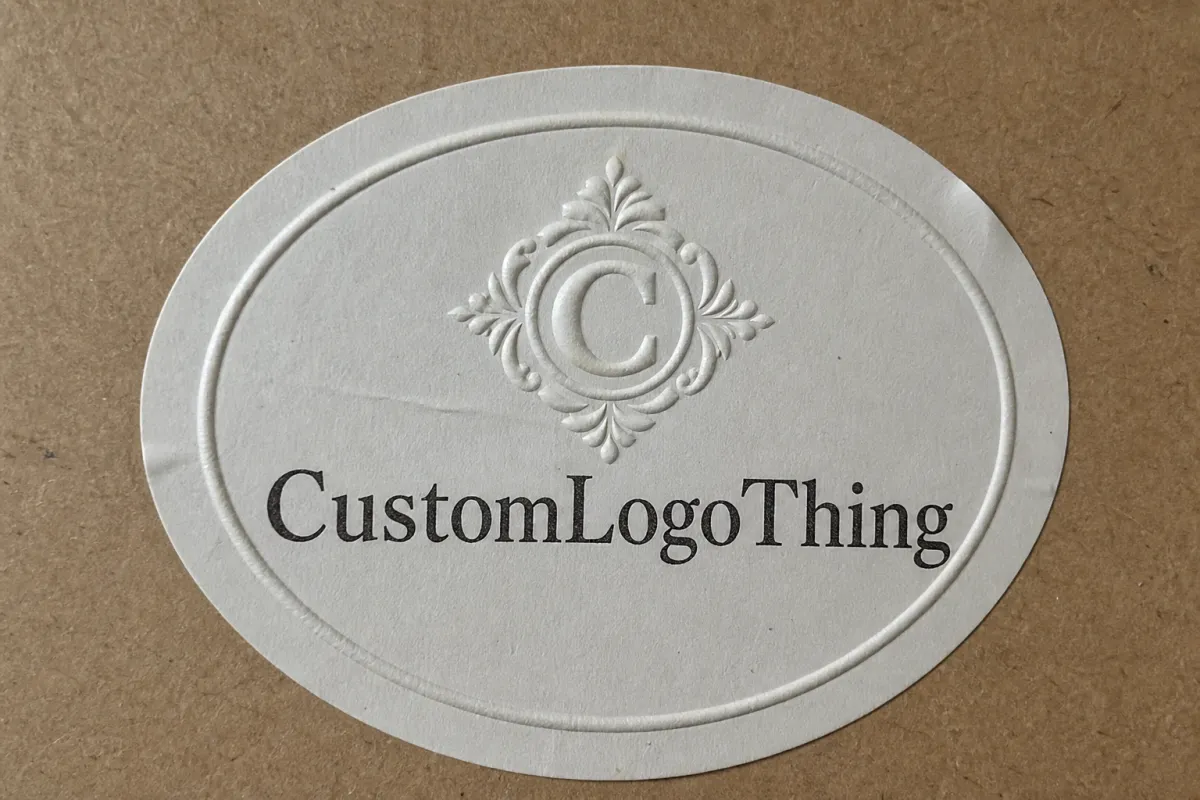
Walk into a beverage aisle or open a refrigerated case and the problem shows up immediately. There are too many bottles. Most of them are fighting with color, copy, or both. A raised detail changes the read. It creates shadow, depth, and contrast without needing loud graphics or oversized branding.
Bottles get seen in motion. A shopper glances once, lifts the bottle, turns it under a light, and sometimes runs a thumb over the surface before making a decision. Raised detail performs across all of those moments. It reads from a distance, but it also rewards a closer look.
That matters in premium categories. A gin bottle with an embossed crest feels more considered than the same bottle with a flat label. A skincare bottle with a raised monogram feels more intentional. A craft soda with a tactile neck seal stands apart from the shelf of generic gloss prints around it. The difference is not subtle to the buyer, even if the design itself is restrained.
For packaging teams, embossed labels also help the rest of the system hold together. Bottle decoration, Custom Printed Boxes, inserts, and secondary packaging all need to speak the same visual language. If the bottle says “premium” and the carton says “we ordered whatever was fastest,” the package loses trust fast. Customers notice inconsistency before they notice typography.
Embossing is not a rescue plan for weak design. A crowded layout stays crowded. Thin type stays hard to read. A bad bottle shape still causes problems. Raised detail can improve presence, but it cannot fix a label that was poorly planned from the start.
If a label only looks premium in a render, it is not premium. It is a render with ambition.
The best custom embossed stickers for bottles feel understated. The texture supports the brand instead of trying to perform for it. That restraint is usually what makes the package look expensive. Loud embossing tends to look cheaper than a cleaner label with one strong focal point and enough breathing room around it.
How the embossing process works on bottle labels
Embossing sounds fancy. The production logic is not. Artwork gets prepared, tooling gets made, the label stock gets selected, and pressure pushes chosen areas above the surface. The label changes. The bottle does not. That is one reason custom embossed stickers for bottles are popular for launches and short runs: they give you a premium finish without committing to a decorated container.
The process usually starts with vector artwork. If the file is sloppy, the relief will be sloppy too. After that, the supplier checks line weight, spacing, and whether the embossed area is realistic for the label size. Then the die gets produced. Depending on the method and quantity, tooling may be engraved metal, brass, magnesium, or another option chosen for detail and run length.
This is also the point where a buyer learns whether a design was built for production or just for a presentation deck. Not every detail that looks elegant on a screen survives embossing. Hairline strokes, tiny text, and fragile decorative edges are usually the first to fail. Strong shapes survive. Weak ones flatten or blur.
Blind embossing vs registered embossing
Blind embossing raises a shape without direct print or foil alignment. The result is clean, minimal, and controlled. It works well for seals, crests, monograms, and labels that rely on texture rather than color. Registered embossing aligns the raised area with printed artwork, so the print and relief work together. That is useful when the logo needs both color and depth.
There is also the mixed route: emboss plus foil, emboss plus spot UV, or emboss plus soft-touch lamination. Those combinations can look excellent. They can also add registration risk, setup cost, and lead time. More layers mean more things to align. More things to align mean more chances for a production headache.
Where detail starts to break down
Small text is where optimism usually fails. Tiny serifs, hairline strokes, and dense patterns often flatten during embossing or become unreadable once pressure and material stretch enter the picture. Simple marks hold up better. A monogram, badge, icon, or bottle neck seal usually survives far better than a paragraph pretending to be a logo.
Think in terms of relief, not illustration. The emboss should create a shape the hand can register, not a sculpture packed with microscopic excuses. Too much detail turns muddy. Too little detail gets ignored. The middle ground usually wins.
A circular logo on the shoulder label of a gin bottle is a good example. The outer ring embosses cleanly, the center stays printed, and the contrast between flat color and raised edge carries the design. The same logic works for monograms on skincare bottles, seals on sparkling water, and neck badges on premium sauces.
Embossing also changes the way the surface reflects light. A matte stock with raised detail gives soft shadow and depth. A gloss stock reflects harder, which can make the embossed area pop, but it also exposes flaws faster. That is why sampling matters. A file can look good on screen and still fall apart once it meets paper grain, coating, and pressure.
Key factors that affect durability, look, and feel
Durability starts with the substrate. Paper labels are usually the cheapest option, but they are also the weakest in wet or refrigerated environments. Film labels such as BOPP or PET handle moisture better and stay presentable on bottles that live in coolers or get touched by damp hands. Vinyl can work in some applications, though it is not always the first choice for a premium bottle finish if the goal is a crisp, refined look.
Adhesive choice matters just as much as the face stock. A beautiful embossed label that peels after condensation is not premium. It is a problem. On glass bottles, pressure-sensitive adhesives often perform well, but the exact adhesive should match the container surface and the storage conditions. On plastic bottles, especially HDPE or PET, the supplier should confirm adhesion on the actual bottle, not a random test sheet that pretends to mean something.
Cold storage creates its own issues. Bottles pulled from refrigeration sweat, and condensation changes adhesion quickly. If the product will sit in ice buckets, chilled shelves, or washdown environments, ask for a material recommendation built for that use case. A supplier that cannot speak clearly about moisture, temperature, and dwell time is probably not the supplier you want handling your order.
Emboss depth is another variable that changes both feel and durability. A shallow relief gives a refined result and keeps legibility intact. A deeper relief can look richer, but it also raises the risk of cracked ink, distorted edges, or a label that feels heavy-handed for the brand. A deep embossed crest on a craft spirits bottle can look expensive. The same depth on a small skincare label may just look crowded.
Bottle shape changes the result more than people expect. A label that reads beautifully on a straight-sided bottle can warp on a curved body or disappear into a shoulder transition. Narrow necks and tapered containers shrink the usable space quickly. The more unusual the bottle, the more important it is to check the dieline against the actual container dimensions.
Finish options also change how the label feels in hand and how it reads under retail lighting. Matte often looks quieter and more premium. Gloss gives color more punch. Soft-touch adds a velvet-like feel, though it does not belong on every bottle. Metallic accents can lift the design, but too much shine can drown the emboss. The right finish depends on whether the brand wants elegance, energy, or restraint.
For production and transit planning, standards beat hope every time. The ISTA testing framework is worth reviewing if bottles are shipping in cartons and need to survive vibration, stacking, and handling. If sustainable sourcing matters, FSC certification is worth asking about for paper-based stocks. Neither one makes a weak design stronger. Both can prevent avoidable failures from eating the budget.
The rest of the packaging system matters too. A premium bottle label can get undercut by a generic carton, weak shipping protection, or inconsistent print on other components. That is why brands often review bottle decoration alongside Custom Packaging Products and matching Custom Labels & Tags so the package does not look assembled by different teams working in different time zones.
Custom embossed stickers for bottles: cost, pricing, MOQ, and quote drivers
Price depends on more variables than most buyers expect. The main ones are die creation, material choice, print method, emboss complexity, size, finish, and quantity. If someone gives you a number without asking about those pieces, they are guessing. Guessing is not a purchasing strategy.
Setup cost is the first thing to understand. Custom tooling for embossing can add a one-time charge that ranges from modest to annoying, depending on complexity and supplier. For simple label work, that may mean a relatively small die fee. For detailed multi-layer effects, it can climb quickly because the tooling has to hold tighter detail and better registration. The final unit price then depends on how many labels spread that setup cost across the order.
The practical rule is simple: the more special the effect, the more the economics reward larger quantities. A basic embossed label on paper stock may be cost-effective at a few thousand pieces. A foil-plus-emboss build with specialty coating is a different animal. It may look fantastic, but the per-unit price stays higher because more production steps are involved.
That does not mean small orders are impossible. It means short runs need honest expectations. If you only need 250 or 500 labels for a market test, ask for short-run pricing explicitly. Do not assume the quote you received for a larger retail rollout applies to a test batch. The math does not work that way.
| Option | Typical use | Setup cost | Unit price at 5,000 pieces | Notes |
|---|---|---|---|---|
| Simple embossed paper label | Craft beverages, small-batch food, gift bottles | $75-$200 | $0.08-$0.16 | Best for dry use and tighter budgets |
| Embossed film label | Refrigerated drinks, bath and body, moisture-prone bottles | $100-$250 | $0.12-$0.24 | Better moisture resistance, stronger durability |
| Foil plus emboss | Premium spirits, skincare, special editions | $150-$350+ | $0.18-$0.40+ | Higher shelf impact, more setup sensitivity |
| Soft-touch or specialty stock with emboss | Luxury product packaging, gift sets, high-end retail packaging | $125-$300+ | $0.16-$0.32+ | Tactile, but not always ideal for wet environments |
Quote comparisons should be built from the same spec sheet. Size, shape, quantity, substrate, adhesive, finish, emboss depth, roll direction, and application conditions all need to match. If one quote is for loose sheets and another is for roll labels with the correct unwind, the numbers are not comparable. Apples-to-apples saves money. Apples-to-oranges creates fake winners.
Ask for the following before approving anything:
- Exact label dimensions and dieline format
- Substrate type and adhesive type
- Emboss method and whether it is blind or registered
- Print method, finish, and any foil or coating layers
- Quantity thresholds for unit price breaks
- Turnaround time for proof, sample, and final production
If the bottle might change after approval, say so early. That sounds obvious, but it is one of the easiest ways to blow a budget. A bottle dimension change can trigger a dieline revision, which can trigger a new proof, which can trigger new tooling. Suddenly the tidy order is not tidy anymore. That is not the supplier being difficult. That is production doing what production does.
Process and timeline: from artwork to delivery
The fastest orders are the ones that show up prepared. The process usually begins with a brief: what bottle, what environment, what quantity, what finish, and what the label needs to say in three seconds on shelf. After that comes artwork review. The supplier checks whether the design can actually be embossed, whether the bottle dimensions are known, and whether the chosen substrate fits the application.
Then the proofing cycle starts. This is where details get cleaned up. Small type may need to grow. Emboss areas may need to be simplified. A foil layer may need to move if registration looks risky. If the file is already clean and vector-based, this stage moves faster. If the file is a low-resolution PNG built by someone who thought “close enough” was a production strategy, expect delays.
Die making comes next. That tooling step can be quick for simple work and slower for complicated relief or multi-pass finishing. After the die is made, sampling or a digital proof may be produced. This is the point where texture, registration, and legibility should be checked against the actual bottle shape whenever possible. A flat mockup helps. An actual sample helps more.
Production and finishing follow. Depending on the order, that can mean printing, embossing, die-cutting, slitting, roll winding, or sheet finishing. Then the labels get packed for shipment. If the labels will be machine-applied, say so upfront. Core size, winding direction, and label spacing all matter. If the applicator gets the wrong configuration, the labels may be perfect and still useless on the line.
Timelines vary, but a practical range helps. A clean short run with simple embossing may move in about 7-12 business days after proof approval. A more complex job with custom tooling, specialty stock, or foil may run 12-20 business days, sometimes longer if samples or revisions are involved. International freight or custom packaging bundles can add more time. Design turnaround is not the same thing as production turnaround, and buyers get burned when they treat them like the same clock.
Several things speed the process up:
- Vector artwork with outlined fonts
- Exact bottle dimensions and photos of the container
- Approved copy and final barcode information
- A clear answer on matte, gloss, soft-touch, or metallic finish
- One decision-maker who can approve proofs without waiting a week
One useful habit is to treat the label like part of the packaging architecture. If the launch also needs outer cartons, inserts, or display pieces, keep the schedule aligned with your other custom printed boxes or retail-ready components. That keeps product packaging from drifting in five directions because three vendors and one intern each had a different opinion.
Common mistakes when ordering embossed bottle stickers
The most common mistake is overdesigning the artwork. Thin lines, tiny serif text, dense patterns, and miniature decorative flourishes look clever on a screen and turn into mush once pressure and material limits show up. If the label depends on microscopic detail, embossing will punish it. A strong embossed label usually favors bold shapes and clean spacing over decorative overload.
The second mistake is ignoring the bottle itself. People approve a beautiful design on a flat file and only later discover that the bottle has a curve, a shoulder, or a taper that changes the reading angle. A label that looks elegant on paper may stretch awkwardly on the real container. Deep curves also affect adhesion, which means the issue is not only visual. It is mechanical.
Skipping samples is a classic budget error. Mockups are useful, but they do not tell you everything. You cannot reliably judge emboss depth, adhesive grab, print contrast, or finish behavior from a screen render alone. Cold storage, wet hands, and retail lighting are rude to weak decisions. Test the label under real conditions if the product will live in them.
Another mismatch shows up in style. A rough, matte bottle with understated branding should not be pushed into a flashy metallic label just because someone thinks premium means shiny. A good label supports the bottle’s personality. A bad one fights it. That tension shows up quickly on shelf.
The final mistake is comparing only unit price. That is how people get fooled by quotes that look cheap until tooling, waste, reprints, setup, and application time show up. A label that costs two cents less but fails during application is not saving money. It is renting regret.
From an operations angle, I watch for one thing buyers forget: application method. Hand-applied labels tolerate a little more variance. Machine-applied labels need tighter specs on spacing, roll winding, and release liner. If the job is for a bottling line, mention the applicator model early. If not, the labels can be technically correct and still create production headaches.
Expert tips for a cleaner premium result
Put the emboss where the eye should land first. That might be the logo, a monogram, a border, or a seal. Do not spread embossing across every line of artwork. The strongest labels usually have one tactile focal point and enough breathing room around it. Negative space is not empty. It is part of the design.
Keep critical reading copy flat if legibility matters. That sounds boring, and it is, but boring beats unreadable. Let the emboss support the identity while printed text carries the facts. The best bottle labels usually split the job clearly: texture for brand recognition, print for information, finish for mood.
Test under ugly conditions. Put the bottle in a fridge. Hold it with wet hands. Look at it under bright retail lighting and then in softer light. Rotate it. If the embossed detail only reads in perfect studio conditions, the design still needs work. Premium labels should survive normal abuse. They do not need a velvet rope.
If the launch matters, ask for a prototype or sample sheet before full production. That matters even more with new bottle shapes, new adhesives, or special effects like foil plus emboss. Sampling takes time. It also keeps expensive mistakes out of the run. That tradeoff usually pays for itself unless the deadline is already on fire.
For brands trying to balance shelf impact and waste, a controlled test run usually makes more sense than a huge first order. Produce a smaller batch, place it on actual bottles, and check consumer response, line performance, and storage behavior. Then adjust the label structure before scaling up. Mature brands do this because it saves money without flattening the premium feel.
A few design rules hold up well across categories:
- Use one strong type family, not four
- Keep the emboss shape simple enough to read from arm’s length
- Reserve foil for a clear highlight, not the whole label
- Match the finish to the bottle and category mood
- Keep the label size generous enough to breathe on curved glass or plastic
Those choices sound small. They are not. In practice, they decide whether the label reads as premium or just expensive.
What to do next before you request a quote
Start with measurements. Bottle height, diameter, shoulder curve, neck size, and the exact flat label area should all be on the brief. If you can, provide photos of the actual bottle from the front, side, and back. Better yet, send the bottle sample or a dimensioned drawing. That removes a lot of guesswork.
Then prepare the artwork in vector format and decide what the label needs to do. Is the main goal shelf impact? Cold-chain durability? A premium feel for a gift set? Faster turnaround? Lowest unit cost? You can get a strong result in any one of those directions, but not all of them at once without tradeoffs. That is packaging buying, not wishful thinking.
It also helps to define the format early. Do you need labels in rolls for an applicator, sheets for hand application, or kiss-cut pieces for a small run? Do you want matte, gloss, soft-touch, or a metallic accent? Do you need moisture resistance, or is this a dry-shelf product? The clearer the answers, the cleaner the quote.
Before full production, ask for a proof or sample round and inspect the basics: emboss depth, edge sharpness, adhesive performance, and finish consistency. If any of those look off, fix them before the full run. Once the die is made and the order is moving, small changes get expensive fast.
If you want custom embossed stickers for bottles that actually look premium, start with a sample run, not a blind bulk order. That one decision usually saves more money than shaving a few cents off the unit price. It also gives you a better label, which tends to help the bottle sell. Funny how that works.
FAQ
Are custom embossed stickers for bottles waterproof?
They can be, but only if the substrate and adhesive are chosen for moisture. Film-based labels usually handle condensation and refrigeration better than paper. If the bottles will be chilled, washed, or stored in damp conditions, ask the supplier to confirm performance for that exact use case instead of assuming all labels behave the same.
Do embossed bottle stickers work on curved bottles?
Yes, but the bottle shape changes both the look and the adhesion. Shallow curves are easier to label and easier to read. Deep shoulders, tight radiuses, and tapered bodies need more careful sizing and often a sample on the actual container. A mockup may look fine; the bottle will not care.
What is the minimum order quantity for custom embossed bottle labels?
MOQ varies by supplier, material, and tooling needs. Short runs are possible, but setup costs can make them expensive per label. If you only need a small test batch, ask for sample pricing and short-run options up front so you do not get trapped by a price structure built for larger orders.
How much do custom embossed stickers for bottles cost?
Cost depends on label size, quantity, material, emboss depth, print method, and finish. Simple embossed labels are usually cheaper than foil-plus-emboss or specialty-stock builds. A clear spec sheet is the fastest way to get comparable quotes because every supplier is quoting the same thing instead of a vague version of it.
How long does production usually take?
Timeline depends on artwork readiness, die making, proofing, and final production capacity. Clean vector files and fast approval cycles save time. A simple run may move in roughly 7-12 business days after approval, while more complex work can take 12-20 business days or more. If there is a launch date, say it early and ask for sample and production lead times separately.
Is embossing the same as debossing?
No. Embossing raises the design above the surface. Debossing presses it inward. Both can look premium, but they behave differently on labels for bottles. Embossing usually creates a stronger tactile read, while debossing can feel quieter and more restrained. The right choice depends on the brand and the bottle shape.
Will embossing work on a waterproof film label?
Yes, but film chemistry matters. Some films hold detail well and some fight the emboss process by springing back or softening edges. The adhesive and finish matter too. If the bottle will sit in condensation, ask for a material built for that environment and request a physical sample before approving the full run.
One last practical takeaway: define the bottle, define the environment, define the finish, and ask for a sample before you talk about scale. That sequence keeps custom embossed stickers for bottles grounded in actual production needs instead of optimistic assumptions. It also gives you a label that can survive the shelf, the fridge, and the person who keeps picking the bottle up and putting it back down.

