Custom Euro Tote Bags: Buyer’s Guide to Smarter Ordering
Custom euro tote bags carry the product, but they also carry the first visible proof that a brand paid attention to the handoff. In retail, gifting, and event settings, that matters more than many teams expect. A bag that feels structured, looks balanced, and holds up in use can lift the perceived value of everything inside it.
Buyers usually judge these bags on more than print quality alone. They look at how the tote sits on a counter, how it opens, whether the handles feel comfortable, and whether the bag still looks composed after it has been filled. A well-made euro tote should support the sale rather than compete with it or cheapen it.
The practical side matters just as much. These bags are often chosen for boxed cosmetics, apparel, fragrance, accessories, candles, and gift sets, which means the construction has to match the product weight and dimensions with a bit of room to spare. If the spec is off by even a little, the bag can look strained, and that undercuts the whole presentation.
Why custom euro tote bags stand out on the shelf
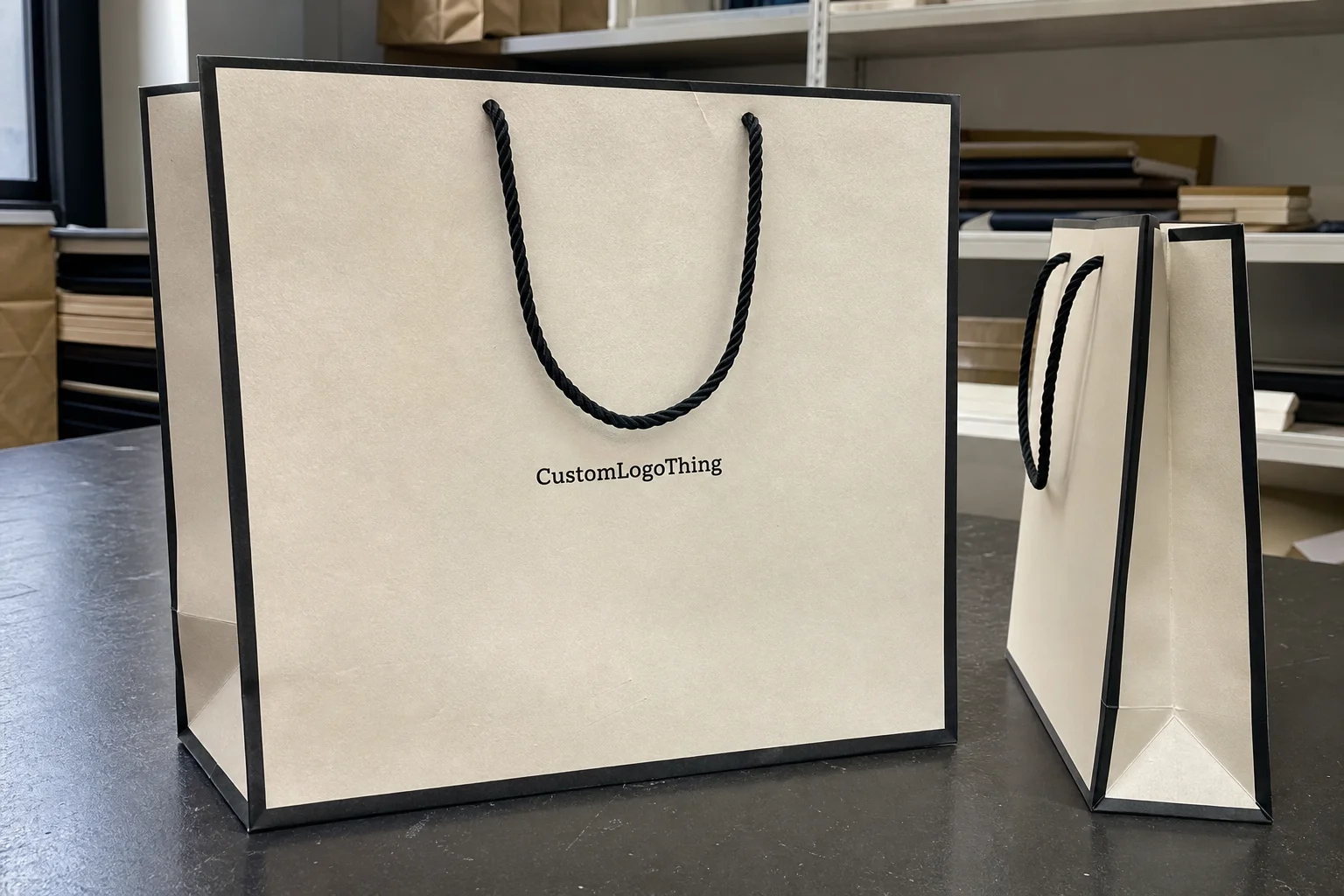
A rigid euro tote behaves differently from a standard paper carrier. The board structure keeps the walls upright, the front panel stays flatter for print, and the bag keeps its shape long enough to feel intentional in the customer’s hand. That shape control is the reason these bags are common in premium retail packaging and higher-touch gifting programs.
The visual effect is immediate. Clean edges, square corners, and centered handles create a sense of order before the shopper even looks at the logo. That gives design more room to breathe. Foil, embossing, and restrained typography read better on a surface that stays flat, and the bag feels more expensive simply because it behaves with less slouch and drift.
There is also a practical marketing effect that is easy to overlook. The bag travels. It appears in store aisles, on sidewalks, at events, in transit, and in the background of ordinary moments. If the branding is clear and the structure is polished, it becomes a mobile extension of the retail environment. That kind of exposure is not identical to paid media, but it can be surprisingly effective because it looks earned instead of placed.
If the bag is visible outside the store, it is part of the product experience. The spec should reflect that from the start.
That is also why euro totes show up so often in fashion, fragrance, jewelry, wine gifting, and event merchandise. They are not just containers. They are part of package branding, and they are usually the first branded item a customer touches after purchase.
How the construction and print process works
Most custom euro tote bags start with a printed wrap over rigid board. The outer sheet is usually wrapped around grey board or cardboard panels, then reinforced where the handles and top edge take the most load. For planning purposes, buyers often see board in the 1000 to 1500 gsm range, with an outer paper stock around 157 to 200 gsm. Those numbers are not fixed rules, but they are a useful baseline when comparing quotes.
Handle choice changes both the look and the functional feel. Rope handles are common when the goal is a more premium, gift-ready appearance. Ribbon handles lean softer and more elegant. Cotton cord can feel more tactile in hand, while twisted paper often supports a leaner budget and a more retail-utility look. The best option depends on product weight, target audience, and how often the bag is expected to be reused.
Finishing is where a lot of the personality gets added. Matte or gloss lamination changes how the print behaves under light and also affects scuff resistance. Soft-touch film gives the surface a quieter feel, but it can add cost and, in some cases, slow production. Foil stamping, embossing, debossing, and spot UV can add depth and contrast, though each one needs enough room in the layout to avoid crowding the artwork.
The weak points are usually not the center panel. They are the places where the bag is folded, glued, or stressed: corners, seams, handle anchors, and the top edge. A logo too close to a fold line can distort once the bag is assembled. Heavy foil near a bend can crack. Handle placement that looks fine on a flat proof can feel awkward if the bag is loaded with a boxed item or dense gift set.
Quality control should be practical rather than abstract. Buyers should ask how the factory checks squareness, handle alignment, glue coverage, surface scuffing, and print registration. On a good run, the bag should open cleanly, sit level, and carry without pulling unevenly. If a sample feels soft in the corners or the handles sit slightly off center, that is not a cosmetic detail. It usually shows up at scale.
Cost, pricing, and MOQ drivers that change your quote
Pricing for custom euro tote bags moves with a handful of practical variables. Size is one of the biggest. So are board thickness, handle style, print coverage, and finish complexity. Even the way the bags are packed for shipping can influence cost if it changes labor time or carton efficiency.
As a rough planning range, a simpler rigid tote at a mid-volume run might land around $0.95 to $1.80 per unit. A more polished build with heavier board, better handles, and a clean decorative finish often sits closer to $1.80 to $3.50 per unit. Small runs usually cost more per piece because setup time is spread across fewer bags.
| Spec tier | Typical build | Indicative unit cost | Best fit |
|---|---|---|---|
| Economy rigid tote | Standard board, simple print, paper handle or basic rope | $0.95 to $1.80 | Retail handoffs, small launches, tighter budgets |
| Mid-tier branded tote | Heavier board, laminated wrap, rope or ribbon handles, full-color print | $1.80 to $2.80 | Boutiques, seasonal campaigns, premium gifting |
| Premium presentation tote | Soft-touch lamination, foil, embossing or spot UV, reinforced handles and top edge | $2.80 to $3.50+ | Luxury retail packaging, high-value gifting, visible event use |
MOQ, or minimum order quantity, has a direct impact on both price and decision quality. A 500-piece order can make sense for a launch or a targeted event, but a 5,000-piece order usually lowers unit cost and makes press setup easier to justify. The catch is that larger quantities only help if the size, finish, and artwork are already locked.
For buyers comparing packaging formats, the tote should be evaluated alongside any custom printed boxes or related product packaging components. Matching paper tone, lamination sheen, and color temperature across formats tends to matter more than people expect. Small differences are visible when the customer receives the bag and box together.
It also helps to think beyond the quote line item. Freight, warehousing, carton packing, and any special insert work can change the real cost of the program. A lower unit price that creates more damage in transit or more manual handling is not actually cheaper.
For teams that want to compare options across formats, our Custom Packaging Products page is a useful starting point before the spec hardens.
Process and timeline from artwork approval to delivery
A clean order usually follows the same path: brief, dieline, artwork, proof, revision, approval, production, packing, and shipment. The sequence sounds simple. The delays usually happen in the gaps between those steps, especially when the dieline is still moving or the color expectations were never defined in a concrete way.
For standard builds, a reasonable production timeline is often 12 to 18 business days after proof approval. Add more time for foil, embossing, specialty handles, unusual sizes, or larger quantities. Freight sits on top of that. Air freight is faster but expensive. Sea freight lowers the landed cost but asks for more lead time and better planning.
Artwork review deserves more attention than it usually gets. A file that looks clean on a screen still has to be checked against the actual dieline, including fold lines, gusset depth, handle anchors, and bleed. A centered logo on a flat mockup can shift once the tote is formed. That shift may be small, but small shifts are exactly what make a premium bag look slightly off.
Revisions are fastest when the approvals are specific. Color should be tied to a reference where possible. Finish choices should be named, not described loosely. Handle style should be selected before the final proof, not after. The more the team settles early, the less likely the project is to slide into another review cycle.
For broader branded packaging programs, a single approval window for the bag, box, and any inserts usually keeps the finish language more consistent. When those pieces are approved at different times, the result often feels assembled instead of designed.
Step-by-step ordering checklist for buyers
The easiest way to avoid a messy order is to start with the use case. A tote for luxury gifting does not need the same structure as one for boxed cosmetics or trade show giveaways, and those two use cases behave differently in the hand. Product size, weight, and presentation all need to be clear before artwork starts.
- Define the use case: retail sale, promotional handoff, luxury gifting, or event distribution.
- Measure the product: width, height, depth, and any inserts or tissue that change the footprint.
- Choose the core structure: board thickness, gusset depth, paper stock, handle type, and lamination.
- Prepare artwork files: vector logos, approved colors, bleed, and a dieline-safe layout.
- Set the delivery target: allow time for proofing, sampling, production, and freight.
- Ask for a sample or pre-production proof before locking the full run.
When sending a quote request, include dimensions, quantity, artwork files, finish preferences, handle style, and the target delivery date. Leaving any of those out usually slows the reply and creates a second round of questions.
Proof review should be more than a color check. Confirm the dimensions, the safe zones around folds and seams, the handle placement, and how the logo reads once the bag is assembled. A design that looks centered in PDF form can still feel too high, too low, or too close to the edge once the tote is in hand.
Sample evaluation is where practical buyers save money later. Put the actual product inside the sample. Carry it. Check whether the top edge stays square, whether the handles feel comfortable, and whether the surface scuffs too easily under normal handling.
Common mistakes that inflate waste and reorders
Undersizing is the most expensive quiet mistake. If the bag is too small for the product, the customer notices immediately. The tote may bulge, the top edge may lean, and the handles may pull at an awkward angle. The bag still exists, but it no longer behaves like premium packaging.
Another common problem is approving artwork before the dieline is final. Designers can do a lot with a placeholder, but the final fold lines and handle anchors determine where the artwork can safely live. Once the structure changes, the logo placement and spacing often need to be adjusted, and that can delay the run.
Finish creep is a subtler issue. One premium choice becomes two, then three. The budget starts with a matte wrap, then soft-touch gets added, then foil, then spot UV. The final bag may look attractive, but the quote can drift beyond the useful range. Strong packaging does not need every effect.
Skipping samples is still one of the biggest avoidable risks. Printed color is not the same as screen color. Board stiffness is hard to judge from a PDF. Handle comfort only becomes obvious when the bag is actually carried. If the first production run is the first time anyone sees the tote in physical form, the team is accepting unnecessary risk.
There is also a shipping mistake that shows up more often than it should. Some bags leave the factory looking fine, then arrive with corner crush, surface rub, or slight warping because the outer cartons were not built or packed for the route. Ask how the bags are packed, how many per carton, and whether the cartons are tested against the expected freight method.
Expert tips and next steps before you request samples
Order samples against the actual product, not a placeholder. A tote that looks generous in a mockup may be too tight for a fragrance set with inserts or a folded garment with tissue. Fit is the first test. Carry comfort is the second.
It helps to compare two versions side by side: a cost-efficient baseline and an upgraded sample. The baseline shows the minimum acceptable build. The upgraded version shows how much value the extra finish or stronger structure actually adds.
Before production starts, document the standards you care about. Lock down the approved color references, the finish expectations, the handle tone, and the acceptable variation range. If the program needs paper that supports an FSC claim, request chain-of-custody documentation from FSC. If the tote is part of a larger pack-out, review general packaging guidance from the packaging industry association so the bag, carton, and shipper work as a system instead of separate guesses.
If you are early in the process, gather the measurements, set a budget band, request two or three sample variations, and review them with the actual product inside. That is usually the fastest path to a premium result without forcing a second run.
What sizes are most common for custom euro tote bags?
Most buyers start with small, medium, and large retail proportions, then adjust width and gusset depth to match the product. The right size depends on whether the bag needs to hold apparel, cosmetics, gift sets, or heavier boxed items.
How do custom euro tote bags compare on price to standard paper bags?
Euro tote construction usually costs more because of the reinforced build, premium finishes, and presentation-focused structure. The value is in how the bag carries, how it holds its shape, and how well it supports the brand after the sale.
What affects the turnaround time for a custom euro tote bag order?
Artwork revisions, material availability, finishing complexity, and order volume are the main timing variables. Fast approvals and a final dieline will usually shorten the schedule more than switching freight methods at the end.
Can I order a small quantity for a launch or event?
Yes, but small runs usually carry a higher unit cost because setup time is spread across fewer bags. If the budget is tight, simplify the finish and confirm the MOQ before artwork is finalized.
What should I check before approving a proof?
Check dimensions, logo placement, color expectations, handle style, and safe zones around folds and seams. Also confirm the final use case, since a bag that looks right on screen can still be the wrong size in hand.