If you need a Custom Event Hats with logo patch quote, the fastest path is a clean brief: quantity, hat style, patch type, event date, shipping destination, and any color limits. Leave those out and the first number usually includes assumptions; include them and the quote is more likely to reflect real production cost.
Patch hats solve two practical problems at once: they make teams easy to identify and keep the brand visible in photos, queues, and post-event social posts. A plain cap can disappear in a crowd. A good patch adds contrast and distance read, which matters when the logo has to be seen quickly in a busy venue. The decoration also needs to survive packing, transit, and repeat wear, so fit and construction matter as much as the artwork.
A hat that survives the event is useful. A hat that survives the season is branding with a longer shelf life.
Why logo-patch event hats beat plain caps for branded giveaways
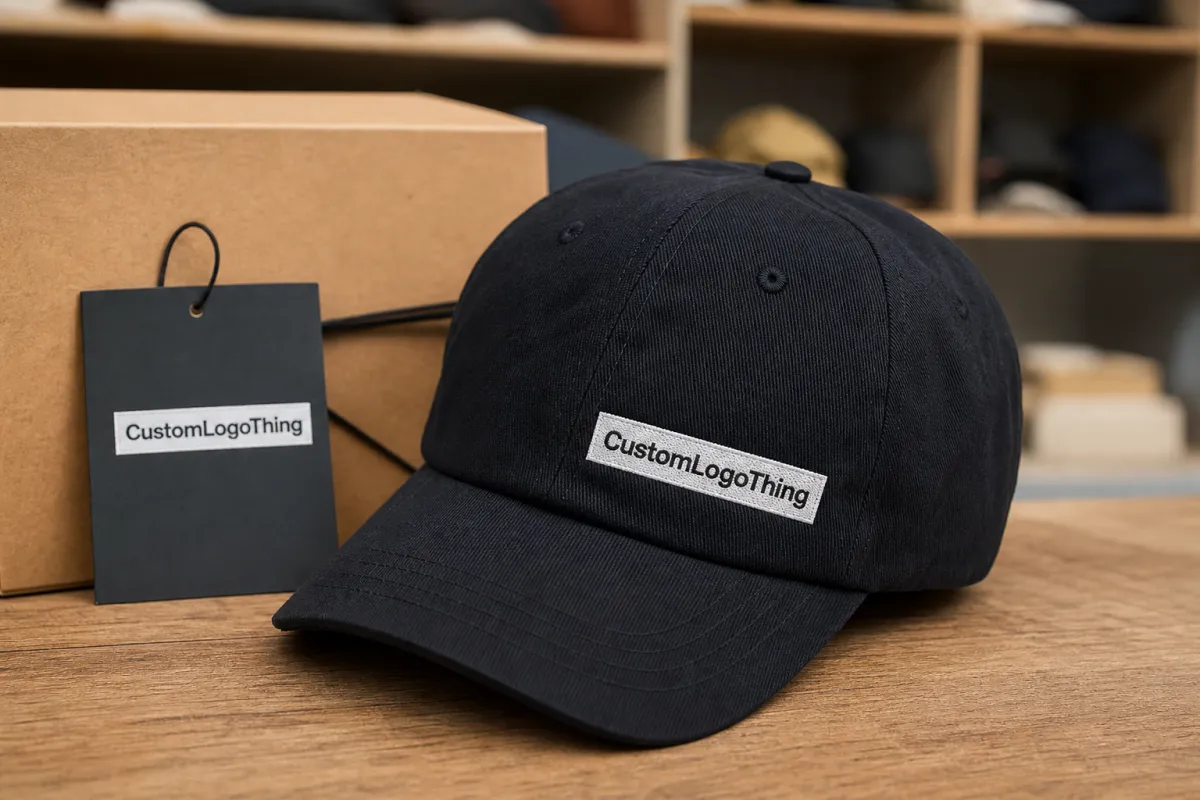
Plain hats are easy to source, but they are also easy to ignore. A patch adds dimension and sharper logo edges, which helps in photos and from a distance. That is useful for stage crews, volunteers, sponsor staff, and field teams that need quick identification without wearing something loud or disposable.
Patch construction also gives buyers more control over detail. Woven patches hold small type better than many embroidery setups. Embroidered patches add texture. PVC patches read bold and modern. Leather patches sit in a more premium lane. Direct embroidery still works for simple logos, but thin lines, small lettering, and multiple color transitions often survive better as a patch.
Handling is another reason event teams lean toward patches. Caps get packed, stacked, tossed into totes, and shipped in bulk. A patch sewn or heat-applied correctly tends to hold up better than decoration that relies only on thread density. If the cap cannot survive cardboard, heat, and compression, it is not a strong event option.
For branded giveaways, the real comparison is not plain versus decorated. It is disposable versus worth keeping. A cap with a centered patch, stable crown shape, and decent hand feel often ends up in the second group, which is the outcome buyers want even when they do not say it directly.
Logo-patch hat styles, crown shapes, and decoration options
Most buyers start with the hat body, then narrow the patch. That order makes sense. A trucker cap, a dad hat, and a snapback do not communicate the same thing. A five-panel cap gives a broader front panel for oversized art. Performance caps breathe better for outdoor crews. Beanies work for winter events, but they need different sizing and decoration assumptions.
The patch drives both look and cost. Woven patches are best for crisp detail and smaller text. Embroidered patches have a thicker, traditional feel. Leather patches suit premium, outdoor, or heritage-themed programs. PVC patches hold bright color well. Sublimated patches are useful when the art includes gradients or dense color transitions that do not translate cleanly into thread.
Crown profile matters more than many first-time buyers expect. A deep crown reads more classic. A low-profile hat sits closer to the head and feels casual. Snapbacks are easy to size across a team. Strapbacks look cleaner on premium drops. For all-day wear, especially for staff, the sweatband and panel structure matter as much as the logo. If the cap pinches or collapses, the decoration will not fix it.
Placement should stay disciplined. Center-front is still the most readable option. Side-panel marks work for sponsor names or role labels. Back arches can carry an event title or date, but they should stay short. Once the hat carries too many messages, the result is visual noise. A cap is not a brochure.
| Hat style | Best patch type | Typical use | Rough unit range |
|---|---|---|---|
| Trucker cap | Woven or PVC | Giveaways, outdoor events, sponsor tents | $4.00-$7.50 |
| Dad hat | Embroidered or woven | Staff wear, merch drops, casual activations | $4.50-$8.00 |
| Snapback | Woven or leather | Premium giveaways, branded retail tie-ins | $5.00-$9.50 |
| Five-panel cap | Woven or sublimated | Large front logos, modern event branding | $5.50-$10.00 |
| Performance cap | PVC or woven | Outdoor crews, sports events, hot venues | $6.00-$11.00 |
Specs buyers should confirm before approving a patch hat order
Clean quotes begin with clean specs. If the hat body is vague, the patch size is vague, or the attachment method is missing, the supplier has to guess. Start with the hat itself: material, crown depth, brim shape, closure type, and whether the front panel is structured or soft. Those details affect fit and how the patch sits on the cap.
Then define the patch. Ask for size range, border style, stitch density, backing, and attachment method. A patch can be sewn only, heat-applied only, or both. For event hats that will be packed and worn hard, both attachment methods are often worth the small extra cost. Saving a little on application and losing patches in transit is a false economy.
Artwork format matters too. Vector files are the safest way to quote and produce accurately. AI, EPS, and PDF usually move the process faster. Low-resolution PNGs and screenshots slow everything down because someone has to redraw the logo before production can be discussed. If the logo contains fine text, ask early whether it needs simplification for patch conversion.
Color is another place where expectations need to stay realistic. Pantone matching is often possible, but different materials behave differently. Thread, woven surfaces, leather, PVC, and coated finishes all have limits. If exact color is critical, say so early. If close match is acceptable, the supplier has more room to work with stock and timing.
Durability should be checked against the actual use case. Are the hats going into hot trucks, packed in cartons, handed out at a stadium gate, or stored for weeks before the event? Those answers matter. Patch backing, stitch pattern, and carton pack-out all affect how the caps arrive. For transit and packaging concerns, standards used by groups like ISTA offer a useful benchmark.
Pricing, MOQ, and quote factors for custom patch caps
Pricing usually comes down to five variables: hat style, patch type, patch size, decoration method, and quantity. Logo complexity matters too, but those five drive most of the number. A simple trucker cap with a small woven patch costs less than a structured snapback with a leather patch and extra finishing.
MOQ changes the economics fast. Lower quantities spread setup costs across fewer pieces, so unit pricing rises. That is why 48 pieces and 500 pieces can sit in very different price bands. Common minimums often fall around 48 to 100 units depending on the blank inventory and patch method. If you need a small run, ask for tiered pricing so the break points are visible.
A useful way to think about budget is to sort the order by finish level:
- Entry-level event caps: simple blank, small woven patch, basic closure, best for broad giveaways.
- Mid-range premium caps: cleaner construction, better fabric, larger patch, more reliable fit, suitable for staff and sponsor teams.
- High-end retail-ready caps: tighter stitching, more refined patch detail, and a finish that can sit beside premium packaging without looking out of place.
Ask for line-item pricing. Sample cost, setup charge, patch fee, decoration fee, freight, rush charges, and split-shipment fees should all be visible. If one of those is hidden, the final invoice can move far from the first number. That is not a surprise; it is just incomplete quoting.
For planning purposes, a simple event run often lands around $4.00-$6.50 per unit at mid quantities. Cleaner premium caps often sit around $6.50-$9.50, and small orders or specialty builds can go higher. Those ranges are only a starting point. The real number moves with quantity, blank availability, patch material, and how much art cleanup is needed.
If you want a more accurate custom event Hats with Logo patch quote, send the logo file, preferred cap style, patch material, quantity, and event date in the first message. If the hats are part of a larger packaging or retail program, say that too so the quote matches the actual finish level.
Process, proofing, and turnaround for event hat production
The production path is usually straightforward: inquiry, spec confirmation, artwork review, digital proof, revisions if needed, approval, production, quality check, and shipment. The trouble starts when buyers expect a firm number before the artwork is readable. The cleaner the inputs, the faster the response.
Proof approval is the point where details stop being negotiable. Patch size, placement, border style, colors, and attachment method should all be visible on the proof. If a logo needs cleanup, the supplier should flag it before the file is locked. A strong proof leaves very little room for interpretation.
Turnaround depends on complexity. Simple artwork cleanup may take one to three business days. Straightforward production often runs about 10 to 15 business days after approval. More complex logos, special materials, or sample requests can extend that. Freight adds its own timing risk, especially if the event date is fixed and the order has to move across a long shipping route.
Rush orders always come with tradeoffs. The supplier may limit revision rounds, reduce material choices, or simplify decoration. That is the cost of speed. Buyers who want the fastest result usually get it by approving simpler art and locking the spec early.
For larger programs, map the order backward from the event date and leave room for kit assembly. If the hats are being packed with printed inserts, apparel, or custom boxes, add buffer time. The same discipline used in packaging workflows applies here: lock the spec, protect the schedule, and do not treat production like a guessing game.
What separates a reliable patch-hat supplier from a cheap one
A low quote can look attractive until the caps arrive crooked, flimsy, or off-color. The cheapest supplier often cuts the exact things that make bulk event hats usable: stitch registration, patch adhesion, panel structure, carton packing, and final inspection. Those details are not optional extras. They are the product.
Reliable suppliers give clear proof notes and answer revision questions without forcing the buyer to chase multiple people. They flag logo risks early. If the art is too detailed, they say so. If the chosen patch material will blur a small line, they say so. If the blank cap varies too much between lots, they say so before approval.
Communication also matters during the schedule. A good supplier explains timing changes instead of hiding them. Many buyers still end up with several email threads, multiple artwork versions, and no certainty about what is actually going into production. Clear communication is part of quality control, not a bonus.
There is a sourcing angle too. If the project includes broader packaging materials or event kit components, ask for traceability and clear material specs. For paper-based components, FSC is a familiar reference point for responsible sourcing. The same principle applies here: buyers should expect defined specs, consistent supply, and honest production talk rather than vague promises.
Paying a little more for better construction often reduces reorders, complaints, and wasted inventory. That matters whether the order is for volunteers, sponsor staff, or a premium launch where the cap has to sit comfortably beside branded packaging.
What to send for an accurate quote and faster next steps
If the goal is a tight quote, send the full picture at once. Start with the logo file, then add the hat style, patch preference, quantity, event date, shipping zip code, and any color restrictions. If the caps are for staff, VIPs, or giveaways, mention that too. The use case helps narrow the finish level and keeps the quote from drifting toward the wrong product tier.
A reference image helps more than most people realize. Even a past hat or a similar style from another event gives the supplier a better target than a handful of adjectives. “Clean” is not a spec. “Like this sample, but with a woven patch and a slightly deeper crown” is useful. Vague requests cost time because someone has to interpret them before production can begin.
If budget is tight, decide where to save before asking for pricing. Maybe the blank can be standard so the money goes into a better patch. Maybe the patch size can come down a little to protect the unit cost. Those tradeoffs belong in the quote request, not after the first draft arrives.
Once the quote comes back, review the spec, approve the proof, confirm the production window, and lock the delivery date. If the hats are part of a larger kit or packaging program, align the timing now rather than trying to fix it later.
How do I get a custom event hats with logo patch quote quickly?
Send the logo file, target quantity, hat style, patch preference, and event date in one message. Include shipping location and any must-have color matches so the first quote is not padded with assumptions.
What patch type is best for logo patch event hats?
Woven patches work well for fine detail and small text. Embroidered patches feel more textured and premium for bold logos. Leather and PVC patches suit outdoor, streetwear, or sponsor-heavy events when the logo needs more visual weight.
What is the usual MOQ for patch hats?
MOQ depends on the hat style, patch type, and whether matching blanks are already in stock. Lower quantities usually cost more per unit because setup is spread across fewer pieces. Ask for tiered pricing so the break points are visible before you choose a quantity.
Can I mix hat colors in one custom order?
Usually yes, though mixed colors can change pricing if the blanks come from different inventory pools. Mixing colors works best when the patch and thread colors stay consistent across the run. If the event needs different team roles or attendee groups, ask for one quote across the color variants before placing separate orders.
How long does production usually take for patch hats?
Timeline depends on artwork approval, patch type, quantity, and whether samples are required. Simple orders move faster than complex logos with multiple revisions or custom materials. If your event date is fixed, share it early so the supplier can confirm whether standard or rush production is realistic.

