Buyer Fit Snapshot
| Best fit | Custom Flat Pouches With Logo projects where brand print, material claims, artwork control, MOQ, and repeat-order consistency need to be specified before quoting. |
|---|---|
| Quote inputs | Share finished size, material target, print colors, finish, packing count, annual reorder estimate, ship-to region, and any compliance wording. |
| Proofing check | Approve dieline scale, logo placement, barcode or warning zones, color tolerance, closure strength, and carton packing before bulk production. |
| Main risk | Vague material claims, crowded artwork, missing packing details, or unclear freight terms can make a low unit price expensive after revisions. |
Fast answer: Custom Flat Pouches With Logo: Branding, Costs, and Use should be specified like a repeatable production item. The safest quote records material, print method, finish, artwork proof, packing count, and reorder notes in one written spec.
Production checks before approval
Compare the actual filled-product size with the drawing, then confirm tolerance on folds, seals, hang holes, label areas, and retail display edges. Reserve space for logos, QR codes, warning copy, and material claims before decorative graphics fill the panel.
Quote comparison points
Review material grade, print process, finish, sampling route, tooling charges, carton quantity, and freight assumptions side by side. A quote is only useful when the supplier can repeat the same color, closure quality, and packing count on the next order.
Custom flat Pouches With Logo can make a sample pack look retail-ready before the product has earned that status. That sounds small. It is not. Custom Flat Pouches with logo have to protect the product, carry the brand, and hold up in real fulfillment, which is a lot to ask from a flat piece of film with a seal on it.
From a packaging buyer's point of view, the appeal is obvious. A rigid carton can feel premium, sure. It also adds weight, eats cube, and bumps freight. Custom flat pouches with logo keep the front panel clean, put the brand mark where people actually see it, and usually move through picking and shipping with less drama. The math is dull. The savings are not.
Practical packaging rule: if the pouch has to protect the product and sell it, the logo should read quickly, the layout should stay simple, and the print has to survive a rough trip through the supply chain.
What Custom Flat Pouches With Logo Actually Are
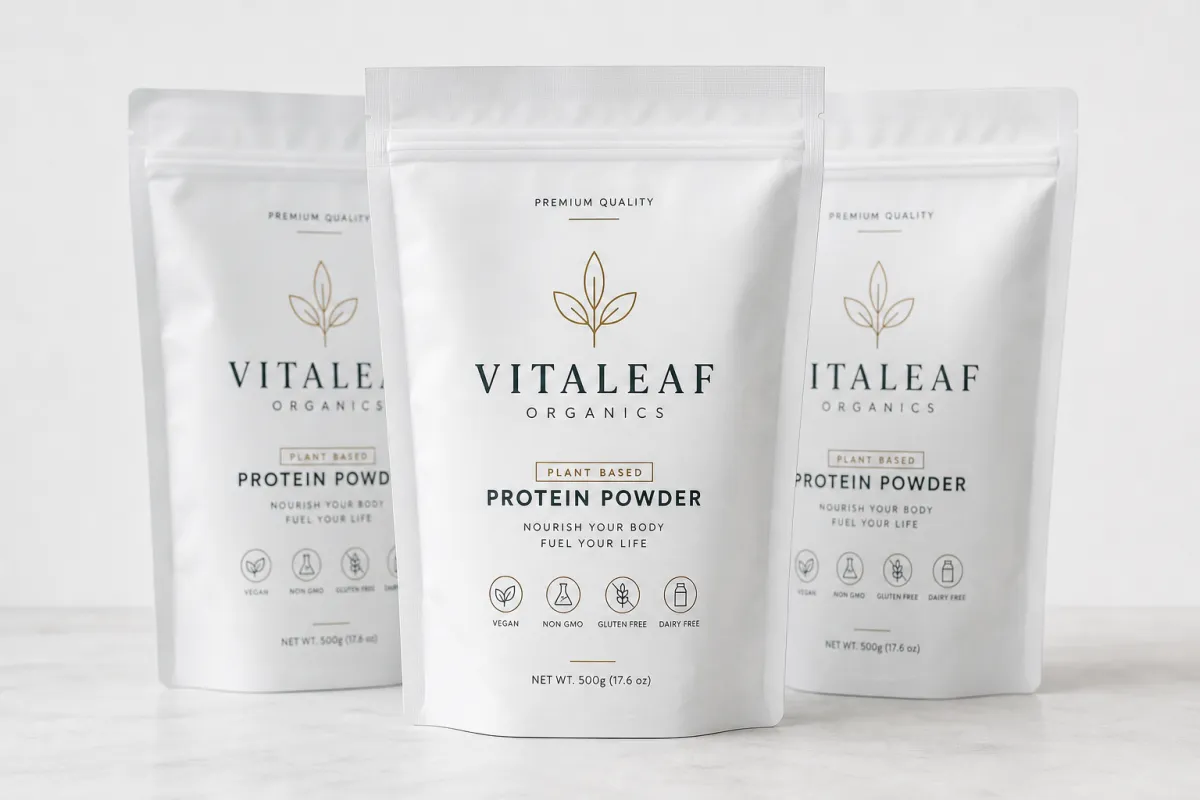
Custom flat pouches with logo are flexible pouches sealed on three or four sides, depending on the construction. They work well for portioned fills, single-use servings, trial sizes, and lightweight retail packs. Unlike stand-up pouches, they do not need a gusset to sit upright, so they stack cleaner, mail easier, and take up less room in inventory. That simple shape is a big part of the appeal, and honestly, it is usually the thing that wins the conversation.
The format shows up everywhere: snacks, coffee samples, supplements, cosmetics, seasoning blends, and promotional kits. A food brand might use custom flat pouches with logo for a one-ounce spice blend. A skincare brand might use them for a cleanser sample or a mask sachet. A nutraceutical company might use them for powder portions or stick packs. The uses are broad because the pouch is efficient, and efficiency quietly powers a lot of good packaging.
Branding works so well on this format because the logo is not fighting a bulky structure. There is no lid, no shoulder, no deep carton panel system stealing attention. There is just a flat face, a back panel, and maybe a small amount of room for ingredients, claims, and compliance copy. Color, finish, contrast, and negative space do most of the visual lifting. For custom flat pouches with logo, that is a gift.
Boxes still make sense for products that need structure, gifting, or a more elaborate unboxing moment. But many brands land on custom flat pouches with logo because they use less material, are easier to pack, and reduce freight volume. Quiet packaging can still pull its weight. Sometimes more, actually.
- Common uses: snacks, coffee, powders, cosmetics, samples, and travel-size products.
- Typical benefit: low cube, easy storage, and a clean front panel for package branding.
- Branding advantage: fewer visual interruptions means the logo, finish, and substrate do the heavy lifting.
Buyers usually start asking for custom flat pouches with logo after a product line moves past the proof-of-concept stage. A sample becomes a sales tool. A sales tool becomes retail packaging. A good pouch can handle that shift without forcing the brand to rebuild everything from scratch. That is the kind of boring efficiency teams end up loving.
I have seen brands spend weeks agonizing over a carton structure only to end up using a flat pouch for launch because it printed faster, packed better, and cost less to move. That result is kinda predictable once the product stops being a pitch deck item and starts being something that has to ship on time.
How Custom Flat Pouches With Logo Are Produced
The production path for custom flat pouches with logo usually starts with a dieline and an artwork file. The converter needs dimensions, fill weight, seal allowances, label zones, and the exact placement of barcodes, nutrition facts, tear notches, or hang holes. If the file gets built before the structure is confirmed, the artwork tends to fight the pouch instead of fitting it. That mistake looks small on a screen. It gets expensive fast.
Printing method matters a lot. Digital printing often works best for shorter runs or multiple SKUs because it skips plates and sets up faster. Flexographic printing fits larger runs where unit economics improve as quantity rises. Gravure belongs in very high-volume programs, where cylinder cost can be spread over tens of thousands of units or more. For custom flat pouches with logo, the print method is not a side note. It changes budget, timeline, and how much rework you can afford.
The logo gets onto the film by color separation, registration checks, substrate selection, and ink or toner application with a target finish. On clear or metallic films, white ink often becomes the critical layer because it keeps the logo readable instead of letting it disappear into the background. Skip that underprint and a strong mark can look thin, muddy, or flat-out wrong. That is a production problem, not just a design problem.
After print comes lamination or film conversion, depending on the construction. The layers are combined for barrier, puncture resistance, and sealability. Then the material is slit, formed, filled, or converted into flat pouches, and sealed. Good converters inspect seal integrity, alignment, barcode readability, and color consistency across the run. They also watch for wrinkles, pinholes, and registration drift, because those defects jump out the moment the pouch hits a shelf or slips into a mailer.
For brands shipping through distribution, test plans should not be built on hope and a nice mockup. The International Safe Transit Association publishes widely used transit test protocols at ISTA, and those standards matter more than people sometimes admit. If custom flat pouches with logo are going into parcel shipping or warehouse handling, testing against real distribution conditions is a better bet than assuming the film will behave just because it looks sturdy.
The workflow also has a human side. Brands usually hand the technical work to the converter, but they still need to stay involved during proof review and sample approval. A barcode shifted too close to a seal is easier to fix before the run starts. Same with a logo that feels cramped. In practice, that is the stage where many custom flat pouches with logo projects stay calm or get expensive.
If the project uses paper-based elements, FSC certification can support sourcing claims without leaning on vague eco language. The Forest Stewardship Council explains certification and sourcing standards clearly at FSC. Useful, direct, and better than making up a green story because it sounds nice in a pitch deck.
One detail worth watching: a film structure can print beautifully and still fail if the seal window is wrong for the fill. I have seen powders creep into the seal area and weaken the closure, which is the kind of thing nobody wants to discover after palletizing. So yes, the art matters. The mechanical spec matters more.
Cost and Pricing Factors for Custom Flat Pouches With Logo
Pricing for custom flat pouches with logo comes down to a handful of variables that push and pull on one another. Size changes film usage. Film structure changes barrier and material cost. Print method changes setup cost. Finish changes the look and the process. Extra features like zippers, tear notches, windows, or matte soft-touch coatings change both the bill of materials and the manufacturing sequence. There is no single normal price. Only a range that makes sense for the exact spec.
Quantity matters because setup costs get spread across the run. A 2,000-piece order and a 20,000-piece order might use the same art, but they do not produce the same unit economics. That is why custom flat pouches with logo often get much cheaper per unit as volume rises. Plates, proofing, machine time, and setup costs do not care whether the run is tiny or huge. They get distributed either way.
For budgeting, think in construction levels instead of chasing a magic number. A simple printed film pouch sits in one tier. A high-barrier laminate with a matte finish and specialty features sits in another. If the product is sensitive to oxygen, moisture, or aroma, the packaging has to pay for that performance somehow. Cheap packaging that fails is not cheap. It is just delayed damage.
| Print Method | Typical Sweet Spot | Illustrative Unit Price | Setup Notes |
|---|---|---|---|
| Digital | 500 to 5,000 units | $0.24 to $0.52 each | Lowest setup friction; useful for short runs and multiple SKUs |
| Flexographic | 5,000 to 50,000 units | $0.12 to $0.30 each | Plate costs usually apply; better economics as volume increases |
| Gravure | 50,000+ units | $0.08 to $0.20 each | Cylinder costs are higher, but unit price can be strong on very large runs |
Those figures are directional. Any supplier worth trusting should say the same thing. Material thickness, print coverage, number of colors, seal shape, and freight distance all move the final quote. For custom flat pouches with logo, the best quote is the one that spells out the assumptions instead of hiding them in a single number that looks tidy and tells you almost nothing.
Hidden costs deserve attention too. Plates or cylinders are obvious. Less obvious items include artwork cleanup, dieline revisions, proof rounds, test prints, freight, rush fees, and special sampling. If you are comparing suppliers, ask them to quote the same spec sheet. Otherwise you are not comparing the same pouch. You are comparing three different guesses dressed up as one product.
That is where Custom Packaging Products can help as a reference point. Looking at adjacent formats beside custom flat pouches with logo makes it easier to see where a small shift in structure changes the budget, lead time, or brand presentation. Packaging rarely gets cheaper in a vacuum. It gets cheaper when the structure actually fits the job.
One practical budgeting habit works better than most: ask for pricing at three volume tiers, such as 2,500, 5,000, and 10,000 units. That shows the breakpoint where unit cost starts to improve. In many programs, the jump from 2,500 to 5,000 matters more than the jump from 5,000 to 7,500 because setup charges get spread out faster. That is the kind of math that turns custom flat pouches with logo from a loose idea into a usable planning tool.
Also, don't let a low unit price trick you into ignoring freight. A cheap pouch that ships from far away, arrives late, and forces a second order is not cheap. It is just cheap-looking on paper. Packaging budgets have a way of telling on people.
Materials, Barrier Levels, and Branding Choices
The material stack behind custom flat pouches with logo does two jobs at once. It protects the product, and it shapes how the brand feels in the hand. A metallic laminate suggests more barrier and usually more contrast. A kraft-look film can signal a natural position, even if the actual performance comes from an internal film layer. A clear window can show the product itself. Each choice changes the story before anyone reads the copy.
Barrier is the technical side of that story. Products that oxidize, absorb moisture, lose aroma, or break down in light need a more careful structure. Snacks often care about oxygen and moisture. Coffee cares about aroma. Powders may need moisture protection and puncture resistance. Some cosmetic formulas need compatibility testing so the film does not interact with the fill. Custom flat pouches with logo work well only when the barrier spec matches the product risk.
Many flat pouches are built from layered films such as PET/PE, PET/AL/PE, BOPP/CPP, or paper-look laminates with a functional seal layer. A high-barrier structure can preserve freshness and reduce complaints, but it can also push cost higher. A lighter structure can be economical, but only if the product tolerates it. In packaging, the cheapest option is the one that still protects the product through real shelf life. Not the one that wins the spreadsheet and loses in the warehouse.
Finish changes how the logo reads. Matte softens reflections and can feel more premium under bright retail lighting. Gloss pushes color harder and makes graphics pop, especially on bold retail packaging. A lot of brands choose matte for skincare, supplements, and premium snacks because the finish helps the logo feel controlled and deliberate. Custom flat pouches with logo often look better when the finish matches the brand position instead of fighting it.
Logo placement matters more than many teams expect. A pouch is not a poster. There are seals, folds, clearance zones, and print tolerances to respect. Keep critical artwork away from the seal edges. Leave quiet space around the logo so the eye has somewhere to land. If the product has a regulation-heavy front panel, think hard about hierarchy: brand first, product type second, claims third. That is not a style preference. It is package branding discipline.
Brands sometimes try to cram everything onto the front panel and the result looks busy. A cleaner layout usually wins. With custom flat pouches with logo, the job is not to fill every square inch. The job is to make the logo, the product identity, and the compliance copy easy to absorb in two seconds on a crowded shelf.
- Use a matte finish if glare is a problem or the brand wants a restrained premium feel.
- Use gloss if the design depends on color saturation and high visual punch.
- Use a clear panel only if the product itself helps sell the pack.
- Use a metalized layer when aroma, oxygen, or light protection needs to be stronger.
For teams comparing custom flat pouches with logo against custom printed boxes, the real question is not which one looks nicer in a vacuum. It is which structure supports the product and channel better. A box may be better for gifting or assembly. A pouch may be better for portioning, sampling, or high-turn product packaging. The right answer depends on the item, not the trend. Packaging likes reality. It ignores vibes.
When a brand asks me which finish to choose, I usually ask a boring question first: what is the product actually doing on the shelf, in transit, and in the customer's hand? That answer usually decides the material stack faster than any trend board does.
Step-by-Step Ordering Process and Timeline
A smooth order for custom flat pouches with logo starts before anyone asks for a quote. The first step is defining the product itself: what is going inside, how much of it, how sensitive it is to oxygen or moisture, and whether the pouch must survive shipping, retail display, or both. A 0.5 oz sample sachet and a 3 oz supplement fill are not the same packaging problem. The fill drives the pouch, not the other way around.
Once the product is clear, the supplier needs dimensions, closure features, artwork format, expected volume, and shipping destination. If there is a finished sample or an existing pack, that helps a lot. It cuts guesswork and gives the converter a realistic target. In practice, the best quotes on custom flat pouches with logo come from buyers who send complete information the first time instead of making the supplier play detective.
The proofing stage is where discipline saves money. A digital proof should be checked for logo placement, spelling, copy fit, color expectations, barcode contrast, legal text, and seal clearance. If the project needs a physical sample, ask for one before the full run, especially if the product is expensive or the launch is tied to a retailer deadline. A sample is cheaper than a carton of reprints. That is true almost every time.
- Define the fill: product type, weight, texture, and shelf-life needs.
- Confirm the pouch size: account for seals, headspace, and fill behavior.
- Choose the structure: barrier film, finish, and any special features.
- Approve artwork: check the dieline, copy, and color targets.
- Review samples: test seal integrity, readability, and fit with real product.
- Schedule production: lock the run, shipping window, and receiving plan.
Lead times vary, but a useful planning range is often 10 to 15 business days from proof approval for smaller digital runs, 15 to 25 business days for flexographic work, and longer for complex or high-volume jobs. Add time for freight, customs if applicable, and any sampling rounds. Custom flat pouches with logo usually run on a tighter clock than people expect because every revision resets part of the process. Packaging is polite that way. It punishes delay quietly.
Inventory planning matters just as much as artwork. If your product sells through seasonal peaks or promotional windows, reorder earlier than your instincts suggest. A lot of brands wait until they are down to a few weeks of stock, then discover freight delays or proof revisions push them into emergency mode. That is the worst time to be waiting on custom flat pouches with logo.
If you are comparing suppliers, this is a good moment to use flat pouch packaging options as a broader reference. Even if you stay with custom flat pouches with logo, looking at adjacent formats can clarify whether a small change in size or structure would reduce cost and simplify fulfillment. Sometimes the answer is not a better quote. It is a better spec.
For larger programs, many teams also create a reorder calendar. It can be as simple as one spreadsheet row per SKU with current stock, average weekly usage, lead time, and a reorder trigger. That sounds basic because it is. Basic works. It keeps packaging from turning into a crisis when the product starts moving faster than expected. Good package branding should be visible to customers, not painful to operations.
One more operational detail: if you sell through multiple channels, build your timeline around the slowest one, not the happiest one. Retail buyers, ecommerce teams, and warehouse teams do not care that the artwork was approved on time if the product arrives in the wrong month. Packaging only looks simple until a launch date gets real.
Common Mistakes When Ordering Custom Flat Pouches With Logo
The first mistake is designing too early. If the artwork gets built before the pouch structure is confirmed, the layout can end up fighting the seals, barcode zone, or fill volume. The better sequence is to define the product, choose the structure, and then build the design around the dieline. With custom flat pouches with logo, the physical format should steer the creative. Not the other way around.
The second mistake is chasing the lowest quote without checking barrier performance. A cheaper pouch can be a bad deal if it allows moisture pickup, product oxidation, or puncture damage. I have seen teams save a few cents per unit and then spend far more on waste, complaints, or relaunches. That is not savings. That is a bill with better branding.
The third mistake is skipping sample testing. Even if the proof looks perfect, the real pouch may reveal a seal issue, an off-color print result, or an awkward fit in a carton or mailer. A sample run can catch those problems early. For custom flat pouches with logo, one round of testing is usually cheaper than one round of apologies.
The fourth mistake is vague communication. If the supplier does not know where the barcode should sit, whether nutrition facts need a specific panel, or how much copy has to fit on the back, they will make assumptions. Assumptions are expensive in packaging. Strong packaging design is detailed design. No mystery, no drama, fewer errors.
The fifth mistake is imbalance in ordering. Overordering ties up cash and warehouse space. Underordering creates rush fees and emergency reprints. Both are wasteful, just in different ways. The best volume is the one that matches sell-through, cash flow, and lead time. That is especially true for custom flat pouches with logo because the conversion cost rewards planning more than improvisation.
- Do not approve artwork before the dieline is final.
- Do not ignore barrier needs just to save a few cents.
- Do not skip physical samples on high-risk SKUs.
- Do not leave barcode or copy placement to guesswork.
- Do not buy too much or too little without a reorder plan.
One more subtle issue: brands sometimes copy the same layout logic they use on custom printed boxes and expect it to translate to a flexible pouch. That usually fails. The pouch has different proportions, different print constraints, and different shelf behavior. If the design team treats custom flat pouches with logo like miniature cartons, the pack usually looks cramped instead of premium. Different format. Different rules.
I usually tell teams to print the dieline and tape it flat on a desk. If the copy feels crowded on paper, it will feel crowded in production. Packaging does not get less honest when it gets expensive.
What to Do Next With Custom Flat Pouches With Logo
The cleanest next step is to build a one-page spec sheet. Include product type, fill weight, dimensions, target finish, barrier needs, closure features, and whether the pouch has to support retail packaging, e-commerce, or sampling. That single page gives suppliers enough information to quote accurately and keeps custom flat pouches with logo from turning into an open-ended design conversation that eats a week.
Then gather the files that usually slow projects down: logo artwork in vector form, brand colors, barcode files, copy for ingredients or claims, and any required legal text. If a product has regulatory language, get it approved before proof stage. Rewriting copy after artwork is laid out can push schedules back by days or weeks, and there is no glamorous way to explain that to a launch team.
Next, compare at least two or three suppliers on identical terms. Ask each one to quote the same size, the same material structure, the same print method, and the same quantity. That lets you compare total landed cost rather than a misleading unit number. For custom flat pouches with logo, landed cost is usually the better truth.
A pilot run makes sense for new products or risky artwork. Even 500 to 1,000 units can tell you a lot about seal behavior, visual impact, and fill efficiency. The first production may not be perfect, and that is fine. It is better to learn on a controlled batch than on a warehouse full of inventory. Good branding should survive the real world, not just the proof file.
If your timeline is still flexible, use that breathing room to plan the reorder now. The best time to order custom flat pouches with logo is not when the shelf is almost empty. It is before pressure starts distorting the decision. That is how brands protect margin, keep the artwork clean, and make packaging feel like a business asset instead of a recurring headache.
For brands expanding their range, the same planning logic applies across matching branded packaging formats as well. Whether the next step is a pouch, a carton, or another flexible format, the goal is the same: packaging that protects the product and makes the brand easier to trust.
If you are starting a project this week, write the spec first, then request a sample, then compare quotes on the exact same structure. That order keeps custom flat pouches with logo from turning into guesswork, and it usually saves enough time and money to matter.
Frequently Asked Questions
What is the minimum order for custom flat pouches with logo?
It depends on the print method, material, and the converter's setup costs. Digital production often supports lower minimums, while flexographic work usually makes more sense at larger quantities. A practical approach is to ask for pricing at several volume tiers so you can see where custom flat pouches with logo become more efficient.
How do I choose the right size for custom flat pouches with logo?
Start with the real fill weight or volume, not the ideal marketing size. Leave room for seals, product shape changes, and any headspace needed for filling. The safest move is to test a sample with actual product before approving the final dieline for custom flat pouches with logo.
Are matte or gloss finishes better for custom flat pouches with logo?
Matte often feels more premium and reduces glare under bright lighting, while gloss can make colors look richer and more saturated. The better choice depends on the category, the shelf environment, and the visual personality the brand wants to own. For custom flat pouches with logo, finish should support the story, not just decorate it.
What affects turnaround time for custom flat pouches with logo?
Artwork readiness is usually the biggest variable because revisions slow proof approval. Print method, production queue, sampling, and shipping distance all influence the schedule as well. Rush orders can happen, but they usually narrow options and increase cost. If the launch matters, build time into custom flat pouches with logo planning early.
How can I lower pricing without weakening my branding?
Use a standard size where possible, keep the structure simple, and limit special finishes that do not support the product story. Order enough volume to improve unit pricing without overbuying inventory. That balance is usually the best way to keep custom flat pouches with logo efficient and visually strong.
Handled well, custom flat pouches with logo give a brand the rare mix of cleaner branding, practical protection, and sane operating costs. The smart move is simple: define the fill, confirm the structure, test with real product, and order from the same spec every time. That is how the packaging stays useful instead of becoming a recurring headache.

