Buyer Fit Snapshot
| Best fit | Custom Foam Inserts for Cartons projects where brand print, material claims, artwork control, MOQ, and repeat-order consistency need to be specified before quoting. |
|---|---|
| Quote inputs | Share finished size, material target, print colors, finish, packing count, annual reorder estimate, ship-to region, and any compliance wording. |
| Proofing check | Approve dieline scale, logo placement, barcode or warning zones, color tolerance, closure strength, and carton packing before bulk production. |
| Main risk | Vague material claims, crowded artwork, missing packing details, or unclear freight terms can make a low unit price expensive after revisions. |
Fast answer: Custom Foam Inserts for Cartons: Board, Finish, Dieline, and Unit Cost should be specified like a repeatable production item. The safest quote records material, print method, finish, artwork proof, packing count, and reorder notes in one written spec.
Production checks before approval
Compare the actual filled-product size with the drawing, then confirm tolerance on folds, seals, hang holes, label areas, and retail display edges. Reserve space for logos, QR codes, warning copy, and material claims before decorative graphics fill the panel.
Quote comparison points
Review material grade, print process, finish, sampling route, tooling charges, carton quantity, and freight assumptions side by side. A quote is only useful when the supplier can repeat the same color, closure quality, and packing count on the next order.
Custom Foam Inserts for cartons solve a very ordinary shipping headache: the carton can look fine, the label can scan, and the product still arrives scratched, cracked, or rattling around like it never heard of restraint. Brands that care about product packaging, package branding, and lower return rates need more than a decent box. They need an insert that locks the item in place, softens impact, and opens the package in a way that feels deliberate instead of improvised.
That makes these inserts part of the packaging system, not a last-minute add-on. The product, the outer carton, the packing sequence, and the shipping lane all shape the result. Miss one piece and you get damage, slower packing, or an unboxing moment that feels half-finished.
A good insert does two jobs at once: it protects the product during transit and it keeps the pack-out repeatable.
What custom foam inserts for cartons actually are
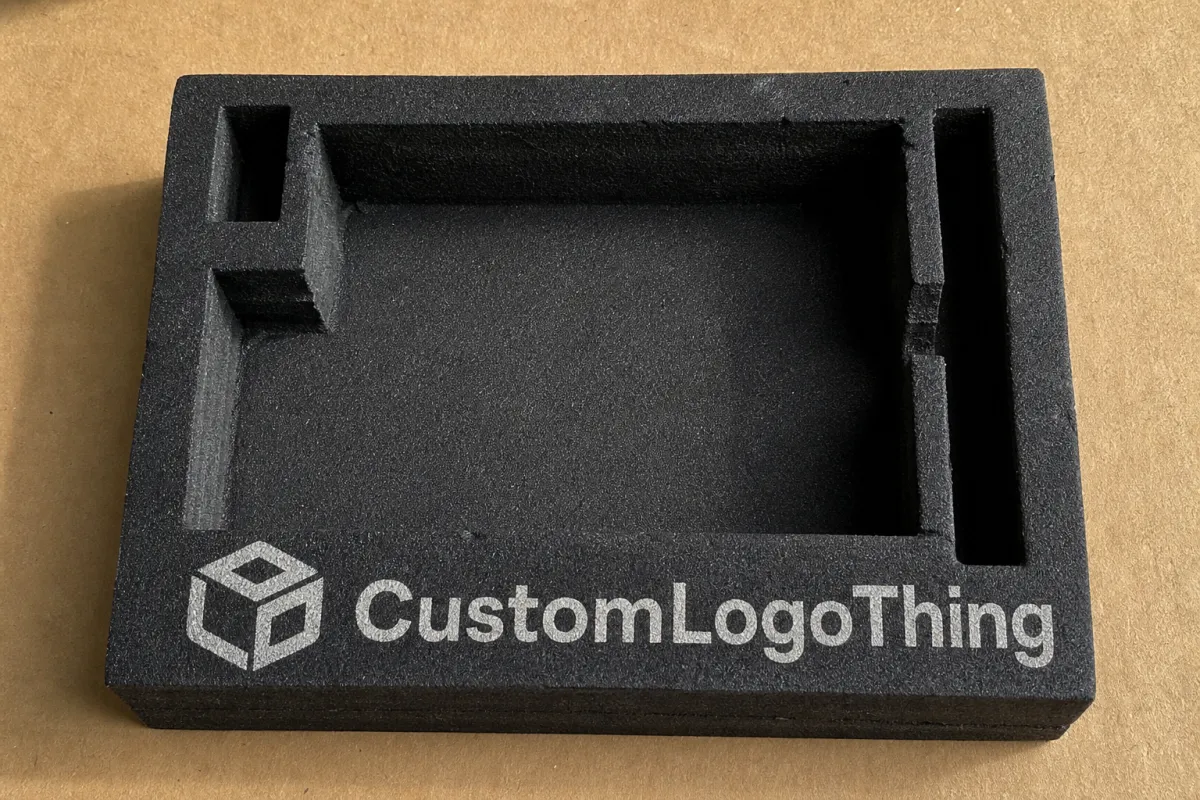
Custom Foam Inserts for cartons are shaped cushioning components that hold a product steady inside an outer carton. They may be die-cut, water-jet cut, CNC-cut, laminated from layers, thermoformed into a profile, or molded to shape depending on the product and the protection target. The point is not to stuff empty space and call it engineering. The point is to control how the product sits, how it loads into the box, and how it behaves when the package is dropped, vibrated, stacked, or shoved across a conveyor.
A carton can pass a visual check and still fail in transit. Loose fill may make the box look full, but it shifts under vibration. The product then bangs into corners or rubs against hard surfaces. A custom foam insert gives the carton a fixed internal structure. It acts more like a fitted support system than a pile of padding, which is why it shows up so often with electronics, glass, instruments, medical parts, premium consumer goods, and anything else that hates impact.
There is a real difference between protective foam inserts, basic void fill, and retail-ready presentation inserts. Void fill, such as kraft paper or loose dunnage, mainly occupies space and slows movement. Protective foam inserts are cut to immobilize the product and spread impact force. Presentation inserts do that too, but they also support the look of retail packaging or premium branded packaging, so the item arrives looking organized instead of thrown together. In a subscription box, a high-end electronics mailer, or a gift-ready carton, that visual order matters.
Think of the carton, the foam, and the product as one assembly. The outer carton is not carrying the whole job by itself. The insert has to work with board strength, internal clearance, shipping method, and the way the product is removed. A beautiful insert that slows the packing line is a bad trade. A fast one that lets the item move is worse. Good product packaging balances both sides without pretending either one is optional.
How custom foam inserts for cartons work in transit
The protection mechanism is simple enough. A foam insert controls movement by creating a snug cavity, cradle, or perimeter support system that limits side-to-side shift, vertical bounce, and corner impact. When a carton is dropped, the energy transfer happens in a blink. The foam compresses, then recovers, spreading the force over a wider area so the product does not take one hard, concentrated hit.
Density matters here. A very soft foam can feel nice in the hand and still fail if it bottoms out too quickly. The product then reaches the carton wall or another hard surface, and the damage shows up later. A denser foam carries more load and rebounds better after repeated compression, though it has to be designed carefully so it does not scuff finishes or make the pack-out too tight. Polyurethane foam is common for lighter cushioning and presentation builds, polyethylene foam is often chosen for stronger structure and recovery, and cross-linked or specialty foams may be specified for cleaner appearance, tougher environments, or static-sensitive applications when the material formulation fits the product.
Practical details matter just as much as material choice. Finger notches, lead-in cuts, layered builds, and perimeter walls all make the pack-out easier. A packer can seat the product faster if the cavity is easy to read and easy to load. A two-layer insert can hold both the product and its accessory kit. A perimeter wall can stabilize an odd shape that would otherwise twist inside the carton during vibration. Small details. Big difference.
Here is a simple way to compare common insert styles:
| Foam style | Typical use | Main strength | Watchout | Relative cost |
|---|---|---|---|---|
| Polyurethane foam | Lighter products, presentation packs, general cushioning | Soft hand feel, easy fit, good for visual unboxing | Can compress more under load and may not suit heavy items | Lower to mid |
| Polyethylene foam | Electronics, instruments, moderate to heavier products | Better structure, cleaner cut edges, stronger recovery | Usually higher material cost than basic PU foam | Mid |
| Cross-linked foam | Premium product packaging, cleaner appearance, tighter tolerances | Very consistent finish and good dimensional stability | Can raise cost and may require more careful sourcing | Mid to higher |
| Anti-static foam | Electronics and components sensitive to static discharge | Helps reduce static build-up during handling and packing | Must match the product's real static risk and storage environment | Mid to higher |
The best insert does more than cushion. It also reduces assembly friction. If the product lands in the same place every time, the cartoning step becomes repeatable, easier to train, and easier to inspect. That lowers the odds of damage caused by people packing under pressure or trying to make a bad fit work. This is one reason custom foam inserts for cartons are common in Custom Printed Boxes and other higher-value retail packaging where protection and presentation both matter.
For validation, many teams test against the shipment profile using standards from groups like ISTA. If a package has to survive a defined distribution environment, testing helps show whether the insert actually holds the product steady under vibration and drop conditions instead of just looking polished on a bench.
Key factors that shape the right insert design
Three questions do most of the work at the design stage: what is the product, how does it move, and what does the shipping lane look like. A heavy item needs a different support strategy than a light one. A glossy finish needs a different contact approach than a rough tool body. A short regional route is not the same thing as a long parcel lane with handoffs, sorting, and pallet transitions.
Weight and center of gravity carry a lot of influence. A top-heavy product can rock inside a cavity even if the dimensions look right on paper. That shows up often with bottles, countertop devices, and products with accessories sitting on one side. The insert may need a deeper base pocket, side supports, or a two-piece design that braces the item where the load actually sits. If the weight is off-center, the foam has to correct for it.
Geometry matters just as much. Sharp corners, protrusions, handles, screens, caps, trigger heads, cords, and irregular housings all change the fit. A foam shape that protects a smooth rectangular device may fail once a cable, stand, or charger gets added. Sample-based development usually catches that faster than a drawing ever will. Real products do not care what the nominal dimensions say. They care about the tolerances nobody mentioned.
The carton structure matters too. Internal clearances, corrugated board grade, flute choice, and pack orientation all affect performance. A weak outer box can crush or flex enough to reduce the foam's effectiveness. A carton that is too large invites movement even with a good insert. A carton that is too tight creates loading problems and can scuff decorative finishes. For brands using Custom Packaging Products, reviewing the insert and carton together is the sane move. Treating them as separate purchases is how people end up blaming the wrong part.
Environmental exposure deserves more attention than it usually gets. Heat can soften some foams, cold can change feel and recovery, humidity can affect the outer carton, and long warehouse dwell times can flatten low-resilience materials. If the product sits on a hot dock or in a humid storage lane, the package needs enough margin to survive that reality. Sustainability belongs in the same conversation. Buyers want protection that uses less material, nests efficiently, and supports responsible sourcing without turning the packing line into a small disaster.
If the outer package is part of a broader branded packaging program, the insert should support that story. A clean foam layout can complement package branding, while a messy fit can make even strong custom printed boxes feel less finished. That does not mean every insert has to look luxurious. It does mean the visual and functional sides should agree.
For teams evaluating paperboard sourcing for the outer pack, FSC certification can help document responsible fiber sourcing for the carton component. Foam follows its own material and recycling realities, so the outer and inner pieces should be discussed separately. They do not magically share the same recovery stream just because the spreadsheet says packaging.
What usually drives the final design choice
- Fragility: glass, lenses, screens, and precision components need tighter control than durable housings.
- Surface finish: gloss, painted surfaces, and plated parts can show rub marks from a poor fit.
- Load profile: parcel, LTL, and palletized shipments expose the package to different forces.
- Assembly speed: a great insert still has to be practical for production staff.
- Customer experience: the first opening should feel tidy, not like the brand packed in a hurry.
Process, timeline, and lead time from concept to production
The usual path starts with product review, carton measurements, and a direct conversation about what the insert has to do. A packaging engineer or supplier will usually want dimensions, weight, photos from several angles, notes on fragile areas, any accessory parts that ship with the main item, and the shipping method. If the item has moving parts, loose cables, or a delicate surface treatment, say that early. Those details change the fit.
From there, the design stage moves into foam selection and a first-fit concept. That might be a CAD drawing, a sample cut, or a prototype assembly depending on the supplier and the complexity of the part. The goal is to see how the product loads into the cavity and how much motion remains after pack-out. If the item drops in too freely, the cavity is too large. If it tears packaging film, scuffs a corner, or takes a lot of force to load, the cavity is too tight.
Prototypes are where the schedule gets saved or wasted. A simple project with clean dimensions may move quickly. A project with irregular geometry, decorative finishes, or multiple accessories can take several revisions. Each pass checks a different question: does the product fit, does the carton close correctly, can the packer load it quickly, and does the assembly survive transit testing. Skip those checks early and the project starts drifting. That drift always shows up later, usually in the least convenient way possible.
Lead time depends on quantity, foam availability, cutting method, and revision count. A straightforward sample can turn around in a short window. A production release takes longer because setup, nesting, and quality checks need to be locked in. Buyers can shorten the schedule by sending real product samples instead of drawings only, confirming carton internal dimensions up front, and being clear about whether the insert is for parcel shipping, retail packaging, or a mixed distribution plan.
Transit validation is not optional theater. If the package has meaningful value or a fragile surface, the team should consider drop, vibration, and compression testing before production gets approved. That kind of validation can align with ISTA procedures, which are widely used for shipped products. The exact protocol depends on the product and route, but the logic stays the same: verify the package against realistic handling, not against hope.
The fastest projects usually start with the real product, the real carton, and a clear answer to what damage risk actually looks like.
One mistake shows up over and over: waiting until the insert is almost done before sharing critical information. If the product has an extra accessory, a protective cap, a cable tie, or a molded edge that varies a little, that detail belongs in the brief from day one. Good lead time usually comes from good information, not from wishing the supplier worked faster.
Custom foam inserts for cartons: cost, pricing, and quote drivers
Cost is usually driven by a handful of variables rather than foam alone. Material type matters, but thickness, density, cut complexity, cavities, lamination, and the number of separate pieces all matter too. A one-piece insert with a simple cavity is usually cheaper to make than a multi-layer set with tight tolerances and multiple product recesses. Add finger notches, beveled edges, accessory pockets, and selective cutouts and the production cost climbs because the cutting and assembly work gets more involved.
Order quantity changes the math. At low volumes, setup costs have a bigger effect on unit price. At higher volumes, those costs spread out and the insert becomes more economical per piece. That is why buyers often see a real gap between a pilot run and a full production order. A small quote often reflects the setup and cutting effort more than the foam itself.
Sampling and tooling also show up in the quote. If the project needs a custom die, CNC programming, several sample revisions, or a specialized cutting method, that work may appear as a separate line or get rolled into the total. Ask whether the sample cost is a one-time engineering expense or whether it gets credited back when production starts. Suppliers do not all structure quotes the same way, and that is where comparison gets messy if you do not ask direct questions.
Here is a useful way to compare quote drivers:
| Quote driver | What changes the price | How buyers can control it |
|---|---|---|
| Foam type and density | Higher density and specialty materials usually cost more | Match the material to the actual load, not the highest assumed risk |
| Cut complexity | More cavities, angles, and layered parts increase labor and programming time | Simplify the geometry where protection does not suffer |
| Order quantity | Lower quantities carry more setup cost per unit | Consolidate SKUs where possible and forecast demand early |
| Sample iterations | Each revision can add engineering time and materials | Send accurate product samples and lock the brief before first cut |
| Assembly efficiency | Slow pack-outs raise labor cost even if the foam price is low | Choose a design that loads quickly and consistently |
Some programs see the savings only after the quote is approved. A slightly better insert can reduce damage claims, cut rework, and speed packing enough to offset a higher unit cost. That matters a lot in high-value product packaging, where one broken item can erase the savings from dozens of cheap inserts. Buyers should compare total landed packaging cost, not just the line item for foam.
As a rough planning range, simple custom foam inserts at moderate volume may be manageable, while highly detailed or premium designs with specialty materials can land in a higher bracket. The exact number depends on product size, cut method, quantity, and finish expectations. That is why a serious quote request should ask for foam type, density, thickness, sample cost, MOQ, setup charges, revision terms, and production lead time. Clear inputs make cleaner numbers.
Common mistakes that lead to poor protection
The most common mistake is also the simplest: making the cavity too loose or too tight. A loose cavity allows movement, which creates abrasion and impact risk. A cavity that is too tight can scuff polished surfaces, stress fragile parts, or make packing so difficult that operators start forcing the product into place. Neither option is acceptable, and both usually come from trying to solve fit with a drawing instead of a real sample.
Another mistake is choosing foam by price without checking density, recovery, compression set, or chemical compatibility. Some finishes react badly to certain materials. Some products need a more resilient foam because the package will be compressed in stacking or handled repeatedly during distribution. Pick the wrong foam and the insert can look fine on day one, then quietly lose performance after a short time in storage. Cheap is only cheap until it fails.
Ignoring the carton itself causes problems too. A strong insert cannot fully compensate for a weak outer box, crushed corners, bad board selection, or poor internal dimensions. The carton and insert need to support each other. If the outer shipper flexes too much, the foam ends up doing more work than it should. If the carton is oversized, voids remain. If the board is too light, corner crush can undermine the fit and make a good insert look bad.
Designing from drawings only is another trap. Real products have tolerances. They also have accessories, molded seams, buttons, cables, and closure features that are easy to miss in CAD files. A cable tucked into a corner might add several millimeters. A decorative coating can change surface sensitivity. A prototype sample catches those details before they become production scrap or customer complaints. Drawings are useful. Reality is better.
Skipping transit testing gets expensive later. A package that has never been drop-tested or vibration-tested may fail only after it reaches the field, and that is the worst time to discover a packaging issue. Testing does not guarantee perfection, but it removes guesswork. For premium retail packaging and higher-risk shipments, that step usually pays for itself.
- Do not over-rely on loose fill if the product can rotate or bounce.
- Do not assume a dense foam is always better than a softer one.
- Do not approve a design without checking the real pack-out flow.
- Do not treat the carton and insert as separate systems.
- Do not skip transit validation if the item is fragile or high value.
Expert tips and next steps for custom foam inserts for cartons
Start with a real sample pack-out. Put the actual product into the actual carton using the intended packing sequence and the intended accessories. That one step usually shows more than a stack of drawings, especially if the product has a delicate finish, a moving part, or a closure that changes how it sits in the cavity. If the packer has to twist the item into place, the insert probably needs a revision.
Ask for a prototype that can be tested in a realistic way. A simple bench fit helps, but it should not be the only check. Drop testing, vibration exposure, and compression checks show how the design behaves in transit. If the project is tied to shipping standards, align the validation plan with the proper ISTA method and document the failure mode you are trying to eliminate. That makes the result easier to approve and easier to defend later.
Document the product dimensions carefully, including handles, buttons, cords, caps, and any accessories that must ship together. Photograph the product from multiple angles. Note finish sensitivity, surface coating, and any area that scratches easily. Record the shipping profile too: parcel, LTL, palletized, store transfer, or direct-to-consumer. A package for short internal distribution may need something very different from one that crosses multiple carriers and spends a few too many hours getting bounced around along the way.
Compare packaging options on more than unit cost. Look at protection, labor time, unboxing quality, storage efficiency, and how well the insert fits the broader branding story. In a premium launch, the insert can reinforce the look of the carton, support custom printed boxes, and make the first opening feel intentional. In a utility-driven program, it may need to be simple, stackable, and quick to pack. Both are valid. The right choice is the one that fits the business case instead of the one that just sounds nice in a meeting.
If you are putting together a brief, gather the basics first: product data, carton dimensions, protection goals, target volume, and any testing requirement. Then request a fit sample before committing to production. That sequence saves time and usually cuts down on revision cycles. For teams building a broader packaging program, this is also a good moment to review the rest of the system and browse Custom Packaging Products that may support the carton, the insert, and the final presentation.
Bottom line: custom foam inserts for cartons work best when they are designed as part of the full shipment, not as an afterthought. If the product is fragile, valuable, or presentation-sensitive, the right insert can reduce damage, improve unboxing, and make the pack-out more consistent. The practical next step is simple: send the real product, the real carton dimensions, and the actual shipping profile to your packaging supplier, then ask for a fit sample and transit validation before production is approved.
What products are best suited for custom foam inserts for cartons?
Fragile, high-value, or precision items usually benefit most, especially when movement could cause scratches, breakage, or calibration problems. Electronics, glass items, medical components, cosmetics, tools, and premium consumer goods are common fits because they need stable placement and clean presentation. If the item has delicate finishes or an irregular shape, a custom insert usually outperforms loose fill or generic stock packaging.
How do I measure a product for custom foam inserts for cartons?
Measure the full product, including buttons, handles, cords, lids, protrusions, and any shipping accessories that must travel with it. Use the actual internal carton dimensions and account for foam thickness, clearance, and the way the product will be loaded and removed. A real sample is ideal because production tolerances and finish details can affect fit more than nominal drawing dimensions.
How long does the process usually take for custom foam inserts for cartons?
A straightforward project may move from brief to sample quickly, while complex fit requirements or multiple revisions can extend the timeline. Lead time depends on design complexity, quantity, foam availability, and how fast the team can approve samples. Supplying clear product specs and carton data early is one of the best ways to shorten the overall timeline.
Are custom foam inserts for cartons recyclable or reusable?
Some foam types are reusable for return shipments or internal storage, but durability depends on the density and the load level. Recyclability varies by foam material and local recycling streams, so it is important to confirm the specific material specification. If sustainability matters, ask for options that reduce material use, improve nesting, or pair with recycled-content outer packaging.
What should I ask for in a quote for custom foam inserts for cartons?
Ask for foam type, density, thickness, unit cost, MOQ, sample cost, and whether setup or tooling charges are included. Request information on production lead time, revision limits, and how the insert will be tested or validated for fit. Compare quotes by protection performance and labor savings as well as by price, because the cheapest insert is not always the lowest total cost.

