Buyer Fit Snapshot
| Best fit | Custom Folding Box Manufacturer projects where brand print, material claims, artwork control, MOQ, and repeat-order consistency need to be specified before quoting. |
|---|---|
| Quote inputs | Share finished size, material target, print colors, finish, packing count, annual reorder estimate, ship-to region, and any compliance wording. |
| Proofing check | Approve dieline scale, logo placement, barcode or warning zones, color tolerance, closure strength, and carton packing before bulk production. |
| Main risk | Vague material claims, crowded artwork, missing packing details, or unclear freight terms can make a low unit price expensive after revisions. |
Fast answer: Custom Folding Box Manufacturer: Board, Finish, Dieline, and Unit Cost should be specified like a repeatable production item. The safest quote records material, print method, finish, artwork proof, packing count, and reorder notes in one written spec.
Production checks before approval
Compare the actual filled-product size with the drawing, then confirm tolerance on folds, seals, hang holes, label areas, and retail display edges. Reserve space for logos, QR codes, warning copy, and material claims before decorative graphics fill the panel.
Quote comparison points
Review material grade, print process, finish, sampling route, tooling charges, carton quantity, and freight assumptions side by side. A quote is only useful when the supplier can repeat the same color, closure quality, and packing count on the next order.
Custom Folding Box Manufacturer: What Buyers Need to Know A custom folding box manufacturer can make a carton look polished on shelf and still miss the details that matter most once the order leaves the pressroom. Transit, packing speed, retailer receiving, and shelf durability all expose weaknesses fast. That is why structure, board grade, and finish deserve the same attention as artwork. A box that cracks at the score, bows under load, or slows hand-packing turns packaging into a cost center instead of an asset.
The better question is not simply how the box will look. Ask how the custom folding box manufacturer plans to build it, run it, and ship it. That answer reaches into product protection, labor time, freight spend, and the first impression your customer gets when the carton lands in front of them. I have seen brands spend weeks perfecting a glossy mockup and then get surprised when the carton starts fighting the line; that part is avoidable if the brief is grounded in the real workflow.
At Custom Logo Things, that practical side is part of Custom Packaging Products: branded packaging that still has to survive real use, not just a mockup screen. If you want a sense of the team behind that approach, the About Custom Logo Things page gives useful context.
Why a custom folding box manufacturer matters on crowded shelves
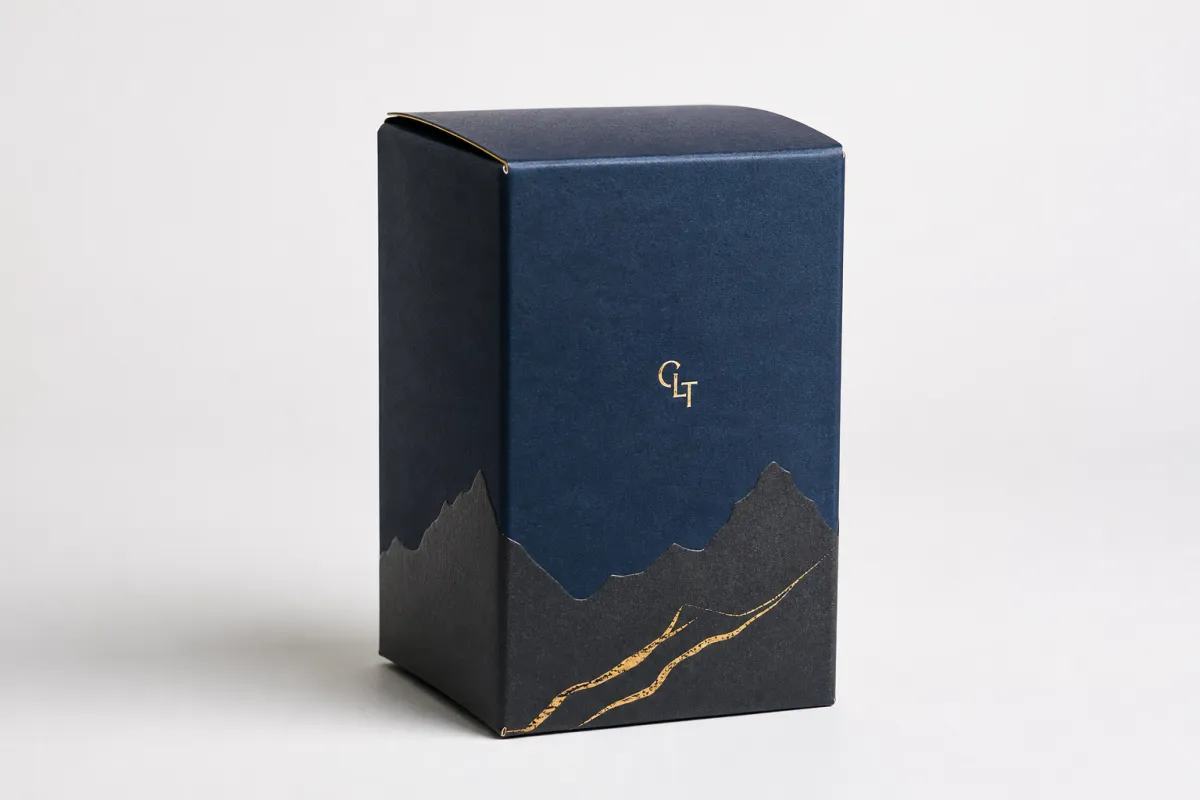
Many buyers learn this the hard way: a folding carton often fails long before a shopper sees it. A box can look clean in a rendering and still split at the corners after a few compressive loads in transit. That is why a custom folding box manufacturer is not just a print supplier. It is a structural partner, and in many categories the structure is the quiet reason a package succeeds or fails.
Cosmetics, supplements, food, and electronics all need branded packaging, yet none of them want the same carton behavior. A lightweight serum box may call for an SBS board with a crisp matte finish and a tight tuck. A supplement carton may need a scuff-resistant surface that keeps UPC placement sharp. Food packaging may need material choices that help with compliance and keep moisture or grease from showing through the paper. Electronics usually need a stronger wall, tighter fit control, and better corner protection through distribution. One custom folding box manufacturer can serve all of these categories, but the spec should not be copied from one line to the next and expected to behave the same way.
Generic cartons hide costs in plain sight. They waste space, waste labor, and sometimes waste product. A box that is only a few millimeters too loose can rattle, collapse on display, or look cheap beside a tighter competitor. A box that is too snug can slow packing crews and crush corners during insertion. Multiply a few extra seconds by thousands of units and the labor impact shows up quickly. For brands building retail packaging at scale, those seconds are not small.
“Custom” reaches far beyond artwork. The right custom folding box manufacturer adjusts board grade, fold style, closure method, coating, glue pattern, and finishing steps so the carton behaves properly in production and shipping. Packaging design is really a series of decisions about how the box feels in hand, stacks on a pallet, opens at the shelf, and closes again after inspection.
That is why folding boxes sit at the intersection of marketing, logistics, and protection. Graphics carry the brand story. Structure supports the packing line. Board supports the product itself. If one of those pieces misses, the whole package feels less deliberate, even when the print is excellent.
Brands also underestimate shelf competition. In a crowded aisle, a carton is competing against dozens of nearly identical shapes. The difference is rarely dramatic. It tends to be a subtle mix of caliper, finish, contrast, and structural confidence. A custom folding box manufacturer helps turn those subtle cues into something a shopper can read in a few seconds.
For sustainability-minded teams, the same decision tree matters. A thinner board may reduce fiber use, yet if it creates more damage claims or extra wrap, the environmental math gets less attractive. The better question is not “What is the lightest carton?” It is “What carton protects the product, fits the process, and still supports the brand’s sustainability goals?” That is the kind of conversation a capable custom folding box manufacturer should be ready to have.
How a custom folding box manufacturer turns specs into a box
A good job starts with numbers, not adjectives. The first briefing a custom folding box manufacturer needs is direct: product dimensions, weight, fill method, target quantity, launch timing, compliance needs, and brand goals. If the item is fragile, oily, powdered, hot-filled, or sold in a retail display, that belongs in the brief early. If the carton has to fit a tray, carry a tamper-evident feature, or survive distribution testing, that detail matters too.
From there, the structural phase begins. This is where the dieline is created, score placement is adjusted, and the tuck style is selected. Straight tuck end, reverse tuck end, auto-lock bottom, and snap-lock styles each affect speed and strength in different ways. A custom folding box manufacturer will often recommend one based on how the pack line works. If workers are filling by hand, a carton that opens cleanly and closes with little resistance can save seconds on every unit. If the product is heavy, the bottom closure may need reinforcement so the box does not sag under load.
Material choice comes next. SBS gives a clean print surface and crisp folding characteristics. CCNB can offer a more economical path, often with recycled fiber content that fits certain brand positions. Kraft board brings a natural look that suits organic, earthy, or minimalist branding. Specialty boards support premium visual effects or unusual performance requirements. The wrong substrate can create curl, cracking at the score, weak glue bonds, or image distortion. A competent custom folding box manufacturer compares substrate choices against the print method and the final use, not just against price.
Printing and finishing shape the customer experience. Foil stamping raises perceived value, embossing adds tactile depth, soft-touch coating gives a muted hand feel, and spot UV directs attention to logos or claims. Those finishes are not free in production terms. Each one adds setup time, may require extra handling, and can influence pack-out speed. The best custom folding box manufacturer explains where finish adds value and where it only adds cost.
That balancing act is more technical than many buyers expect. The manufacturer has to match brand expectations with machine compatibility, packing speed, shipping durability, and the realities of a folding carton production line. A design that looks elegant in a presentation can still be awkward if the glue flap is too small, the reverse tuck fights the hand motion, or the finish scuffs during stacking. Packaging conversations get better when they stay practical. They ask what the box does, not just how it looks.
Two standards help keep that conversation grounded. For shipping performance, many teams reference ISTA test methods to simulate distribution hazards. For environmental claims, FSC chain-of-custody documentation can matter when board source is part of the brand story. If you want to see how test protocols are framed, the International Safe Transit Association is a useful reference: ista.org. For responsible forest sourcing, the Forest Stewardship Council explains certification basics here: fsc.org.
Strong manufacturers do not lead with finishes. They start by asking what the box must do in the hands of a packer, a carrier, and a shopper. That difference separates a carton that simply exists from a carton that earns its place in the supply chain.
Process and timeline: what a custom folding box manufacturer needs
Most delays do not start at the press. They start with missing information. A custom folding box manufacturer can move quickly when the brief is complete, but if the dimensions are uncertain, the copy is still changing, or the finish is undecided, the schedule stretches right away. Speed usually depends on clarity.
The process often begins with a quote request. A buyer sends product dimensions, quantity, artwork goals, and any special requirements. The manufacturer reviews the request and may ask for more detail if the carton has unusual folds, precise fit requirements, or regulated claims. Dieline creation comes next, followed by proofing. If structural sampling is needed, the timeline grows a bit. That is normal. A custom folding box manufacturer that skips the sample stage for a complex pack is usually cutting corners somewhere else.
A practical timeline for a standard job might look like this:
- Quote request and review: 1-3 business days, assuming the brief is complete.
- Dieline and structure setup: 2-5 business days for common carton styles.
- Digital proof or prepress review: 1-3 business days, depending on revision count.
- Sample approval: 3-7 business days if a prototype is required.
- Production: often 10-20 business days for a typical custom order.
- Finishing and packing: 2-4 business days, depending on coating or embellishment.
- Freight: variable by lane and mode; domestic ground is faster, while ocean transit can add weeks.
Those figures are not fixed. A simple straight tuck box on standard board may move faster. A premium carton with foil, embossing, soft-touch coating, and a special insert will take longer. Peak-season scheduling can also stretch lead times because the line is already full. A reliable custom folding box manufacturer will tell you what is affecting the schedule and where the real bottleneck sits.
Revisions matter too. One small artwork correction can trigger another proof, another approval round, and another place in the queue. That is why brands should ask for milestone dates rather than a single vague turnaround estimate. Ask for the proof date, sample date, production start, production finish, and freight estimate separately. That breakdown gives you something real to manage.
There is also a planning habit that saves headaches: build buffer time before launch. If the product launch is tied to a trade show, retail reset, or seasonal shipment, a two-week buffer usually is not enough. Three to four weeks gives room for a corrected file, a reproof, or a freight delay. A custom folding box manufacturer cannot control port congestion or carrier schedules, but a good plan can absorb them.
Even a beautiful box can become a liability if the score depth, board caliper, or glue area is not matched to the product and the pack line.
Experienced buyers ask more than “How long will it take?” They ask “What can stretch the timeline?” That question tends to produce a better answer. It also shows whether the manufacturer understands the practical rhythm of packaging production or is just repeating a sales script.
Custom folding box manufacturer pricing, MOQ, and quote basics
Pricing for a custom folding box manufacturer quote comes down to a handful of factors, and none of them are mysterious once you know where to look. Board choice, box size, print colors, finish, structural complexity, and run length drive most of the cost. Freight and shipment packaging can matter too, especially if the cartons are large, dense, or moving a long distance. When you compare quotes, those inputs have to match, or the comparison gets distorted.
MOQ, or minimum order quantity, is another term buyers meet quickly. In plain language, it means the smallest run a manufacturer can produce economically. A larger order usually lowers the unit cost because setup expenses are spread across more boxes. A smaller order can still make sense, but it often carries a higher per-unit price because the fixed costs do not disappear. A good custom folding box manufacturer should explain where the break points are so you can decide whether to run a pilot batch or commit to a larger volume.
First-time buyers sometimes compare quotes only by the lowest unit number. That is risky. A careful comparison should match:
- Exact dimensions and board thickness
- Print coverage and number of ink colors
- Coating or lamination type
- Included setup charges, die costs, and plate costs
- Sampling assumptions
- Freight terms and destination
Here is a simple pricing snapshot for a typical 5,000-unit folding carton run. These are broad working ranges, not fixed quotes, but they help buyers see how features change the economics:
| Option | Typical material | Approx. unit cost at 5,000 | Best for | Notes |
|---|---|---|---|---|
| Basic retail carton | 16pt SBS, 4-color print, aqueous coating | $0.18-$0.30 | Mass retail packaging, cosmetics, supplements | Good balance of print quality and cost; standard structural shapes are fastest. |
| Natural-look carton | Kraft board, 1-2 color print, matte finish | $0.22-$0.36 | Organic brands, wellness, artisan products | Can feel premium with simple graphics; darker solids may cost more to print cleanly. |
| Premium branded packaging | 18pt SBS or specialty board, foil, embossing, soft-touch | $0.38-$0.75+ | Luxury product packaging, gifts, electronics | Finishes add setup, handling, and more quality control time. |
Those numbers shift with quantity. At 10,000 units, the per-box price may come down noticeably because the die, plates, and setup spread out further. At 1,000 units, the same carton can cost much more per piece. A savvy custom folding box manufacturer will usually show you that slope instead of pretending every quantity behaves the same.
Hidden charges are where many first orders get strained. Custom dies, printing plates, mockups, rush fees, and reprint costs after artwork errors can all appear if they were not discussed early. None of those are unusual. The issue is surprise. A transparent custom folding box manufacturer should tell you what is included and what is separate before you approve the job.
One more comparison deserves attention: a design change that looks small can change the freight bill. If a carton grows in width by a few millimeters, the pallet pattern may shift. That can reduce units per pallet, increase cube, and raise landed cost more than expected. A modest change in fold style can also affect labor because a packer may need a second hand motion to close the carton. The cheapest carton on paper is not always the cheapest carton at dock level.
Step-by-step: choosing the right custom folding box manufacturer
The clearest way to choose a custom folding box manufacturer is to begin with your own specs. Before you ask for quotes, write down the product dimensions, product weight, fill method, shipping method, shelf position, target audience, and any compliance requirements. If the carton must support a barcode, ingredient panel, warning copy, or country-of-origin statement, include that too. The cleaner the brief, the cleaner the quotes.
Next, shortlist manufacturers by fit. Category experience matters. A supplier that knows beauty packaging may understand premium finishes and small-format retail cartons better than a supplier that mostly handles food cartons. Equipment fit matters as well. Some shops are better at short runs. Others are built for larger volumes. If you need a carton with specialty finishing, ask whether the shop runs that process in-house or outsources it. A strong custom folding box manufacturer is usually comfortable answering that directly.
Then ask for structural recommendations and samples. Printed samples tell you something, but not everything. You want to see the carton’s fold behavior, closure tension, and stiffness under real handling. Ask for a sample that is close to your final structure. If you are considering a soft-touch finish or foil, ask to see those effects on a similar substrate. That tells you more about execution quality than a polished sales deck ever will.
Communication deserves real weight. If a manufacturer explains trade-offs clearly, it usually means they understand production reality. If they only repeat the price and promise speed, pay attention. A good custom folding box manufacturer points out where a carton may need a stronger board, a different glue pattern, or a slightly larger allowance for artwork tolerances. That kind of candor prevents expensive surprises later.
Ask these questions before you commit:
- What similar products have you produced?
- What board do you recommend, and why?
- Can you show a sample or prototype?
- What parts of the quote are fixed, and what could change?
- How do you handle proof revisions and final approval?
- What is your test or inspection process during production?
If you are comparing several suppliers, build a comparison grid with columns for price, communication, sample quality, lead time, and structural confidence. A custom folding box manufacturer that is slightly higher in price can still be the better buy if it reduces errors, protects the product, and keeps the launch on schedule. That is especially true for brands whose retail packaging has to do more than hold the item. It has to carry the story of the brand.
Package branding matters here. If the box is part of the product experience, you need a partner that treats every square inch as a decision, not an afterthought.
Common mistakes brands make when working with a custom folding box manufacturer
Most box problems are avoidable. The first mistake is underestimating product tolerances. A carton can be dimensionally correct on paper and still feel wrong in production if the product varies slightly from unit to unit. A bottle with a label seam, a jar with a cap overhang, or a device with a charging cable can all change the fit. A thoughtful custom folding box manufacturer will ask about those variations, not just the nominal product size.
The second mistake is approving artwork before checking the dieline. That is how logos land too close to a fold, copy drifts into a glue area, or a warning statement disappears into the tuck flap. Bleed and safe zones are not decorative terms; they are the line between a clean carton and a costly reprint. If the manufacturer provides a template, build the artwork to that template, not the other way around.
The third mistake is ignoring palletization and freight. Brands often focus on print and finish, then discover that the final carton size changes the pallet count, storage footprint, or retailer receiving requirements. For some buyers, that is the difference between a manageable launch and a logistical scramble. A dependable custom folding box manufacturer should be able to talk about cartons per case, cases per pallet, and how the chosen structure affects ship cost.
Another trap is choosing the lowest quote without checking board grade or print method. A thinner board can make a carton look less substantial. Lower-quality print can flatten the artwork, dull the brand color, or create registration issues that show up immediately under store lighting. A bargain quote sometimes turns into a false economy, especially when damage claims, rework, or unsold stock show up later.
Skipping a prototype is also risky. A sample or short production run often reveals issues that are invisible in flat artwork files. Maybe the closure needs more tension. Maybe the fold sequence is awkward for the pack crew. Maybe the finish looks great but scuffs too easily when cartons slide in transit. A custom folding box manufacturer that encourages sampling is usually protecting both sides of the deal.
Some brands also treat the carton as if it ends at the shelf. It does not. Product packaging has to move through procurement, packing, transportation, retail handling, and consumer use. Each stage creates friction. The better your carton is at absorbing that friction, the less often it becomes a problem.
For teams that want a practical benchmark, ask whether the carton has been tested against distribution realities such as vibration, drop, and compression. Many brands reference ISTA procedures or ASTM methods to frame that discussion. The exact code may vary, but the principle stays the same: if the packaging must travel, it should be tested like it travels.
Expert tips and next steps for working with a custom folding box manufacturer
The simplest way to get better quotes is to make every vendor quote the same job. Build a one-page spec sheet with dimensions, quantity, substrate, print method, finish, freight destination, and target launch date. That gives a custom folding box manufacturer a clean brief and cuts the back-and-forth that slows everything down. It also helps you compare apples to apples later.
Request at least one prototype or short production run before you place a large order, especially if the carton has unusual folds or premium finishes. A prototype can reveal a surprising amount: score behavior, closure tension, print clarity, fold memory, and how the carton looks under store lighting. A smart custom folding box manufacturer should welcome that step, not treat it as a nuisance. If a supplier acts annoyed by a prototype request, that is usually a signal worth paying attention to, kinda more than the quote itself.
Build a launch checklist that includes artwork approval, inventory timing, freight booking, and reorder thresholds. Packaging often becomes the bottleneck for a launch because teams assume cartons will arrive “in time” without a buffer. A better habit is to set a latest acceptable dock date and work backward from that. If the schedule is tight, add time rather than remove it. A strong custom folding box manufacturer can help estimate the real path, but only if the target date is realistic.
It also helps to rank suppliers with a simple scoring grid. Use cost, communication, sample quality, lead time, and category experience. A quote can be low and still be a poor fit. Another can be a little higher and save you from rework, freight pain, or production delays. In packaging, the cheapest solution is often the most expensive one later.
From a brand standpoint, consider how the carton fits the rest of your packaging system. Does it align with labels, inserts, trays, and the outer shipper? Does the visual language stay connected across channels? Does the box reinforce the same promise your website, ads, and product copy make? A custom folding box manufacturer is one piece of that system, but the carton still has to do its part inside the larger product packaging strategy.
For many buyers, the next steps are simple:
- Collect exact product specs and quantity targets.
- Request three quotes from a custom folding box manufacturer with comparable inputs.
- Ask for a prototype or sample if the structure is new.
- Review the quote for board, finish, setup, freight, and revision terms.
- Select the partner that fits both the product and the schedule.
If you stay disciplined about those steps, the process becomes much less chaotic. A good custom folding box manufacturer will not just print Custom Printed Boxes. It will help you make packaging that fits the product, supports retail packaging goals, and protects your margin. That is the real win: a carton that works on the line, on the pallet, and on the shelf.
Frequently Asked Questions
What does a custom folding box manufacturer do for a brand?
They turn product specs into a box structure that fits the item, protects it in shipping, and supports shelf appeal. A capable custom folding box manufacturer usually handles dielines, material recommendations, print setup, finishing, and production coordination. A strong partner also flags design issues early, which can prevent costly rework after proofs are approved.
How long does a custom folding box manufacturer usually take?
Timeline depends on complexity, revisions, and whether a sample is needed before production. Simple jobs may move quickly, while premium finishes, unique structures, or peak-season demand can extend lead time. Ask for milestone dates for proofing, approval, production, and freight so you can plan the launch window realistically.
How do I compare quotes from a custom folding box manufacturer?
Compare the same dimensions, board type, print coverage, finish, quantity, and freight assumptions across every quote. Check whether setup charges, dies, plates, mockups, and rush fees are included or billed separately. A cheaper quote can be more expensive if it uses thinner board, lower-quality print, or adds hidden charges later.
What MOQ should I expect from a custom folding box manufacturer?
MOQ varies by material, print method, and setup complexity, so there is no universal number. Higher quantities usually reduce unit cost because setup is spread across more boxes. If your volume is uncertain, ask about staged runs or pilot quantities before committing to a large order.
What should I ask before hiring a custom folding box manufacturer?
Ask what products they have made before, what stock they recommend, and whether they can provide samples or references. Ask how they handle revisions, approval steps, lead times, and quality checks during production. The best answer is not just a low price; it is a clear process, transparent pricing, and proven category experience.
For a buyer, the smartest move is rarely the flashiest one. It is the carton that arrives on time, runs cleanly on the pack line, protects the product, and still looks like it belongs on a shelf. That is what a good custom folding box manufacturer should deliver, and it is what makes the difference between packaging that merely exists and packaging that does real work. Start with a precise brief, confirm the structure with a sample, and pick the partner who can explain the trade-offs plainly before production begins.

