Buyer Fit Snapshot
| Best fit | Custom Folding Carton Boxes projects where brand print, material claims, artwork control, MOQ, and repeat-order consistency need to be specified before quoting. |
|---|---|
| Quote inputs | Share finished size, material target, print colors, finish, packing count, annual reorder estimate, ship-to region, and any compliance wording. |
| Proofing check | Approve dieline scale, logo placement, barcode or warning zones, color tolerance, closure strength, and carton packing before bulk production. |
| Main risk | Vague material claims, crowded artwork, missing packing details, or unclear freight terms can make a low unit price expensive after revisions. |
Fast answer: Custom Folding Carton Boxes: Board, Finish, Dieline, and Unit Cost should be specified like a repeatable production item. The safest quote records material, print method, finish, artwork proof, packing count, and reorder notes in one written spec.
Production checks before approval
Compare the actual filled-product size with the drawing, then confirm tolerance on folds, seals, hang holes, label areas, and retail display edges. Reserve space for logos, QR codes, warning copy, and material claims before decorative graphics fill the panel.
Quote comparison points
Review material grade, print process, finish, sampling route, tooling charges, carton quantity, and freight assumptions side by side. A quote is only useful when the supplier can repeat the same color, closure quality, and packing count on the next order.
Custom Folding Carton Boxes: Sustainable Packaging Guide
The last time I sat in on a packaging review for a beauty brand, the most heated debate was not about color. It was about whether a 1 mm change in carton depth would slow the filling line. That sounds minor until a plant manager points out that a tiny fit issue can turn into a palletizing problem, a rework problem, and then a margin problem. Custom Folding Carton boxes live in that space between design and operations, which is why they matter more than they look from across a conference table.
Custom folding carton boxes look modest from a distance. Up close, they are doing a lot of work. They hold the product, carry the legal copy, shape the shelf impression, and help freight stay under control. That combination makes them one of the most practical formats in retail packaging and product packaging, even if they rarely get the attention reserved for rigid boxes or oversized display kits.
There is a persistent habit in packaging meetings: people equate thickness with quality. That instinct is understandable, and often wrong. A carton built on the right board, with a clean structural spec and print that behaves well under light handling, can outperform a heavier package that uses more fiber, more ink, and more shipping cost without improving the customer experience. Custom folding carton boxes earn their place by doing enough, not by pretending to be everything at once.
For brands that depend on branded packaging, the carton becomes a structural tool, a marketing surface, a compliance panel, and a logistics decision all at once. One piece of paperboard has to do the work of several departments. That is a strange amount of pressure for a box, yet it is also the reason custom folding carton boxes matter so much. They let brands balance cost, shelf impact, and sustainability in a way that rigid packaging usually cannot, and in a way corrugated mailers often do not.
Custom Folding Carton Boxes: Why the Smallest Pack Matters
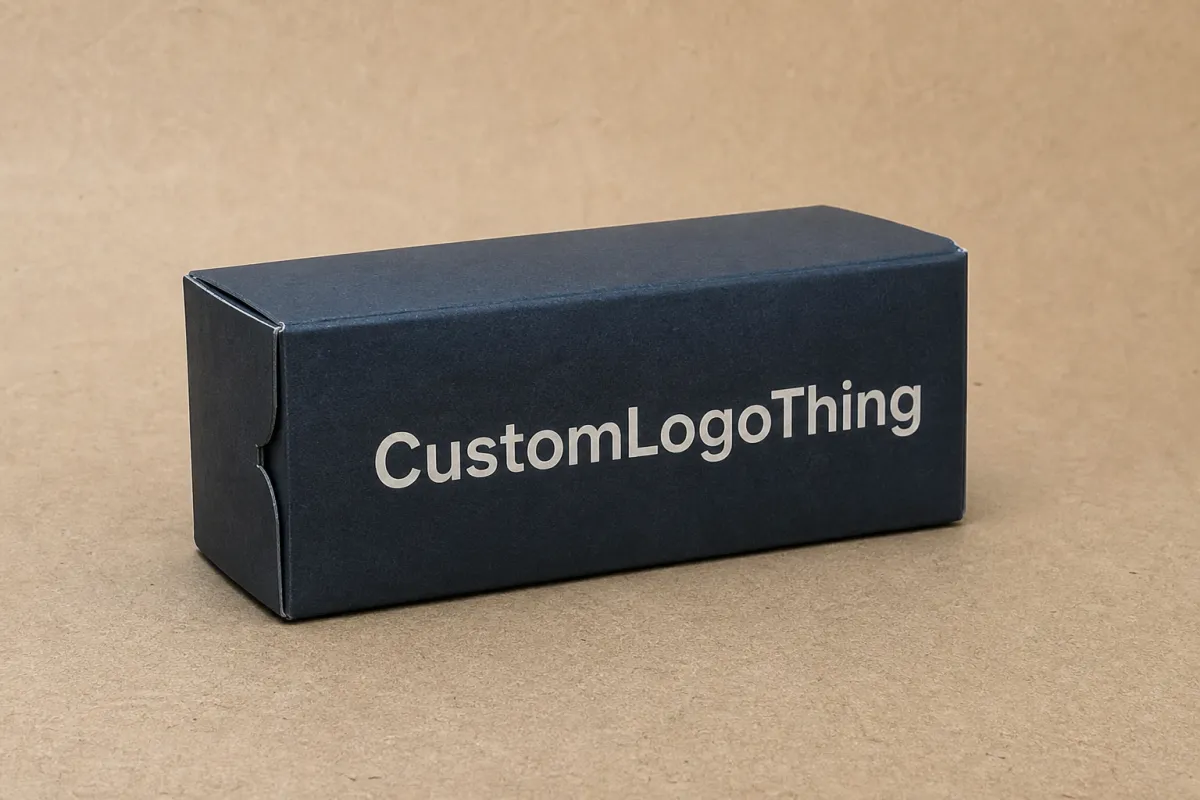
Custom folding carton boxes are printed paperboard cartons that ship flat and convert into a finished package at the packing line, the co-packer, or the filler. In practical terms, they are the default choice for a wide range of retail packaging: cosmetics, supplements, candles, teas, soaps, small electronics, gift sets, and many products that need a clean printed face without the cost or weight of rigid packaging.
The material efficiency is easy to overlook. A carton may use nothing more than a few panels of 16pt to 24pt board, yet it can hold legal copy, barcodes, ingredient information, customer-facing messaging, and the visual language that makes a product feel established instead of improvised. That matters on shelf, where a package has seconds to prove it belongs. It matters in a warehouse too, because flat-packed custom folding carton boxes take up a fraction of the space of assembled cartons.
The tradeoff is straightforward. Folding cartons are not corrugated shippers, and they are not rigid presentation boxes. Corrugated handles transit abuse better. Rigid packaging brings a premium unboxing moment. Custom folding carton boxes sit between those two poles, which explains why they show up so often in retail packaging. They are light enough to keep shipping costs in check, polished enough to support brand perception, and adaptable enough to cover a wide range of product sizes.
If a team asks me which format usually delivers the cleanest ratio of print appeal to storage efficiency, folding carton is near the top of the list. The answer changes if the product is heavy, fragile, or repeatedly shipped on its own. That is not a flaw in the carton. It is a reminder that packaging should match the actual route the product takes.
If you want a starting point before committing to a spec, our Custom Packaging Products page helps compare structural options before artwork gets too far ahead of the engineering. That step saves time. It also prevents the common mistake of designing a beautiful package that folds badly.
Sustainability belongs in the same conversation. Lower weight usually means lower freight impact. Flat storage reduces warehouse demand. Paper-based formats are easier to recover than mixed-material packaging when the finish stays simple and the structure avoids unnecessary plastic. Custom folding carton boxes are not automatically the green choice, and a bad spec can waste more material than a stronger corrugated alternative. A careful spec does the opposite. It trims waste in places buyers can see on the invoice and in the recycling stream.
From a packaging buyer's point of view, the carton is a combined decision about print quality, protection, and handling speed. If a box does its job well, the conversation usually ends there. That silence is often the best sign that the custom folding carton boxes were specified with care.
A carton that looks premium but ships badly is not premium. It is expensive paper with a branding problem.
Custom Folding Carton Boxes: Process and Lead Time Basics
The production path for custom folding carton boxes is predictable when the brief is clean. It usually starts with the product dimensions and structural plan, then moves through dieline development, artwork setup, proofing, printing, die cutting, folding, gluing, and final quality control. None of that is especially mysterious. Delays usually enter through the buyer side, not the pressroom.
The usual time sinks are familiar. Dimensions change after the dieline is already drawn. Artwork arrives without bleed. A barcode lands too close to a fold. A coating choice gets finalized after the quote is already in motion. Each late adjustment creates a little drag. If the structure needs a new die or a special glue pattern, the schedule stretches again, and the stretch is rarely subtle.
For a straightforward run of custom folding carton boxes, turnaround may land around 10 to 15 business days after proof approval. Larger quantities, specialty finishes, and more complex structures often move into the 15 to 25 business day range. Some jobs take longer still if the board needs to be sourced or if shipping capacity gets tight. Those numbers are not decorative. They are what happens when setup, press time, finishing, inspection, and freight all have to line up.
Sample time and production time are different animals. A physical sample or digital proof helps catch fit, print, and layout issues before the full order starts. It does not mean the bulk custom folding carton boxes are already on the way. The production run still has to pass through printing, cutting, folding, gluing, inspection, and packing.
Transit testing belongs in the early conversation too. If the carton is moving through distribution centers, retail back rooms, or direct-to-consumer packing lines, it needs to survive the kind of stress those environments create. The ISTA framework helps teams think about vibration, drop, and compression before a carton is blamed for a shipping problem it was never meant to solve.
Lead time behaves like a chain. Artwork readiness, board inventory, finish complexity, and freight scheduling all pull in the same direction. If one link slips, the rest follow. That is why the strongest custom folding carton boxes programs begin with the spec and the schedule, not with a polished mockup and a hopeful calendar.
Cost, Pricing, and MOQ for Custom Folding Carton Boxes
Pricing for custom folding carton boxes comes down to a small group of variables: board grade, size, print coverage, coating, finish complexity, quantity, and packing requirements. A plain carton with one-color print and aqueous coating sits in a completely different cost bracket from a carton with full-coverage graphics, foil, embossing, and a custom insert. The quote should reflect that spread. If it does not, something is missing from the brief or from the supplier's assumptions.
MOQ exists because setup has a floor. Plates, dies, press setup, finishing prep, and quality checks all happen before the first box gets shipped. That means small runs carry a much higher unit cost. The fixed cost gets divided across fewer pieces, and the math can look unforgiving very quickly. A buyer ordering 250 custom folding carton boxes almost always pays more per unit than a buyer ordering 5,000 or 10,000.
For a simple structural carton, it helps to think in broad price bands. These are directional ranges, not promises, and they assume standard paperboard, uncomplicated print, and no extreme finishing work.
| Quantity | Typical Unit Cost | Setup Pressure | Best Fit |
|---|---|---|---|
| 500 to 1,000 | $0.55 to $1.20 | High | Launch tests, local batches, limited product trials |
| 2,500 to 5,000 | $0.22 to $0.55 | Moderate | Growing SKUs, seasonal runs, retail packaging refreshes |
| 10,000 to 25,000+ | $0.10 to $0.28 | Lower per unit | Stable demand, multi-channel product packaging, repeated reorders |
The table above is the kind of thing buyers wish they had seen before the first quote call. Savings in custom folding carton boxes usually appear once quantity crosses a threshold and setup cost starts to flatten. Sometimes the difference between 2,500 and 5,000 pieces is large enough to change the buying plan entirely. The unit price drops, but so does the friction around production.
Watch the quote structure closely. Some vendors include dieline work, proofing, and basic shipping prep in the base price. Others split those items into separate line items, which makes the quote look lower until the add-ons appear. If you want a real comparison, ask each supplier to quote the same board, the same print coverage, the same finish, and the same packing standard for custom folding carton boxes.
My practical rule is simple: ask for three price points every time. Try 2,500, 5,000, and 10,000 units. Those numbers reveal where the unit cost starts to break in your favor and where extra inventory stops making sense. They also show whether the vendor is pricing with discipline or just tossing a number onto the page.
If you are comparing multiple packaging vendors, give them the same brief and require the same custom folding carton boxes spec. That is the only way to tell whether the price gap is real or just a different interpretation of the job.
Materials, Coatings, and Sustainability Tradeoffs
Material choice is where custom folding carton boxes either work beautifully or turn into a slow-moving annoyance. Common board options include recycled paperboard, virgin fiber board, and FSC-certified stock. Recycled content can support a strong environmental story, though it often shows more variation in color and surface finish. Virgin board usually prints cleaner and handles edges more crisply. FSC-certified options help brands document responsible sourcing without treating certification as a substitute for performance.
The Forest Stewardship Council is a useful reference if you need chain-of-custody or certification language for branded packaging. It does not make the carton stronger. It does not guarantee scuff resistance. It does not tell you whether the box is fit for your product. It only covers one part of the material story, and that part still matters.
Coatings deserve more attention than they usually get. Aqueous coating is common because it protects print and tends to play better with recyclability than heavy plastic lamination. UV coating can produce a sharper surface, though it behaves differently in recycling streams. Soft-touch film looks and feels premium, but it can raise cost and complicate recovery. Foil stamping can be striking in small doses, yet too much of it pushes a carton farther from simple paper recovery.
If your product is moisture-sensitive, food-adjacent, or likely to be handled repeatedly, the sustainability conversation needs to include performance. A box that fails in transit is not sustainable just because it is paper-based. That is marketing copy, not packaging logic. Custom folding carton boxes for supplements, teas, and some food products may need barrier layers, special coatings, or internal liners. Those choices can be correct. They just should not be made blindly.
Common board and finish combinations usually fall into patterns like these:
- 16pt to 18pt SBS or C1S for lightweight retail packaging with strong print fidelity.
- 18pt to 24pt recycled board for a more natural look and a lower-material feel.
- Aqueous coating for general protection and better everyday handling.
- Soft-touch or foil accents for premium branding, with higher cost and more complicated recovery.
The better move is to match the material to the use case instead of chasing the cleanest-sounding label. If the product is fragile, a heavier board or an insert may be the right answer. If the item is stable and the carton mainly serves presentation, lighter stock may be enough. That is how custom folding carton boxes stay efficient without becoming fragile, wasteful, or overdesigned.
Some finish combinations do make custom folding carton boxes harder to recycle. That is not a moral failure. It is a design decision. The aim is to use the smallest amount of finish that still protects the product and supports the brand.
Step-by-Step: How to Spec in Custom Folding Carton Boxes
If you want a clean production run, build the spec before you chase the artwork. That order feels backward to some teams. It saves money anyway. With custom folding carton boxes, the spec is the foundation, and the artwork is the structure sitting on top of it.
- Measure the product first. Get the exact length, width, height, weight, and any irregular features. If the item has a cap, corner, accessory, or taper that changes the footprint, include it. A few millimeters can shift the whole carton decision more than most teams expect.
- Decide how the product will sit inside. Will it float, press against the walls, or need an insert? A loose product creates scuffing and noise. An insert adds cost, but it can improve presentation and reduce movement inside the carton.
- Choose the carton style. Tuck end cartons, auto-bottom cartons, crash-lock bottoms, and reverse tuck cartons behave differently. Select the style based on retail display, opening experience, and the amount of stress the carton will see during packing and transit.
- Request the dieline before final artwork. This step is not optional. The dieline tells the design team where the folds, glue flap, and trim edges live. Without it, artwork drifts into the wrong place and creates rework later.
- Set print and copy rules early. Confirm brand color targets, barcode placement, ingredient copy, warnings, and regulatory text. Product packaging usually needs more real estate than the design team expects. Crowding the panel creates bad layout, and bad layout creates press-day problems.
- Choose the finish with the product in mind. Aqueous coating, matte varnish, gloss, foil, embossing, and soft-touch all change cost and recyclability. Pick the smallest finish package that still supports the brand and the handling requirements.
- Approve a physical sample or digital proof. Test the fit, shelf presence, seal behavior, and opening experience. A pretty proof is helpful. A carton that actually works matters more. If the product needs packaging QA or internal review, finish that before the full run begins.
One habit helps almost every team: write the spec in plain language and keep it in one place. Board grade, dimensions, finish, artwork version, proof date, and reorder contact all belong in the same document. That makes reorders faster and reduces drift. Custom folding carton boxes tend to degrade over time when teams rely on memory instead of a documented spec.
Another practical detail gets missed constantly. Keep key graphics away from the glue flap, fold lines, and trim zone. The most common visual errors are ordinary, not dramatic. Text lands on a crease. A barcode sits too close to the edge. A legal line disappears under a tuck flap. Those failures are avoidable, and they usually happen because someone skipped the dieline review.
For teams juggling multiple SKUs, standardize as much as possible. Use the same board family, the same coating, and the same carton family, then vary the artwork as needed. That keeps setup changes under control and makes custom folding carton boxes easier to reorder without restarting the approval cycle every time a new flavor, scent, or size appears. It also keeps the packaging system from fracturing into a pile of exceptions.
If you need to compare structural options before the design phase, our Custom Packaging Products page is a practical reference point. Pick the structure first, then build the artwork around the actual box. That sequence is less glamorous and far smarter.
Common Mistakes That Waste Money and Material
The quickest way to waste money on custom folding carton boxes is to design first and measure later. That usually ends with a reprint, a loose fit, or a carton that needs extra padding because the product drifts inside the box. It is boring advice, and boring advice saves budgets.
Artwork placement causes another round of avoidable mistakes. A bold graphic can get sliced by a crease. A barcode can end up on a curved edge. Fine print can vanish near the glue flap. None of those mistakes looks catastrophic in isolation. Put them together and the box feels careless instead of deliberate.
Too many finishes create their own mess. A carton with foil, soft-touch film, embossing, and a heavy spot gloss treatment might look impressive in a sample room. It also costs more, complicates recycling, and often adds little value to the product. Custom folding carton boxes should support the item, not drain the margin because someone liked five surface effects in the same mockup.
Quote confusion wastes time too. Buyers compare two prices that seem similar, then discover that one quote included samples, proofing, and freight while the other did not. Or one quote assumes basic white board while the other assumes premium SBS. That is not a fair comparison. Ask each supplier to spell out exactly what is included in the quote for custom folding carton boxes, then compare line by line.
Here is the mistake people miss most often: a pretty carton can still be a bad carton. If it crushes too easily, slips on the line, or forces manual rework during packing, it costs money every day. Custom Printed Boxes are not artwork first. They are operational tools first. When the structure causes friction, the brand problem surfaces later in returns, damage claims, and slower fulfillment.
A carton that forces the packing line to babysit it is not premium. It is a production problem wearing a nice print job.
Shipping stress matters even when custom folding carton boxes are not the primary shipper. They still need to survive warehouse handling, pallet stacking, and carton-to-carton contact. If the product moves through a rough supply chain, consider stronger board, inserts, or transit testing before the design is locked. Paperboard can do a great deal, but it cannot ignore physics.
One more failure mode shows up after launch. Teams reorder the same box months later, but the artwork file, coating note, or barcode version changed quietly in the meantime. The cartons print fine and still create a mess at receiving or on shelf. That is why file control matters as much as print control.
Expert Tips and Next Steps for a Better Box Run
If there is one rule worth keeping, it is this: simplify wherever possible. Fewer panels, fewer finish layers, fewer exceptions. Custom folding carton boxes get cheaper, cleaner, and easier to reorder when the structure is straightforward and the spec is disciplined.
Standardization helps more than most teams predict. If you manage multiple SKUs, keep the base carton family consistent and change only the artwork where needed. That makes the brand look organized and keeps production from turning into a custom exercise every time a new scent, flavor, or size appears. Good package branding should feel intentional and repeatable, not scattered.
Build an approval checklist and use it every time. Dimensions. Board. Finish. Dieline. Artwork version. Proof. Carton count. Freight method. Reorder contact. The list looks basic because it is basic. Basic is useful when the cost of missing one item is a delayed production run. Custom folding carton boxes are easier to manage when everyone signs off on the same facts.
For vendor comparison, send the same brief to every supplier. Same dimensions. Same board. Same print coverage. Same coating. Same target quantity. Then compare price, responsiveness, proof accuracy, and willingness to answer practical questions. The lowest quote is not always the best value if the vendor cannot explain how the carton will perform.
Test the sample like a real package, not like a display object. Drop it, stack it, open it, pack it, label it, and inspect it under real lighting. Retail packaging has to survive more than one environment. The more honest the test, the fewer surprises later.
My recommended action plan is simple: request samples, confirm lead time, lock the spec, and document the approved custom folding carton boxes for the next run. If you want to narrow structural options before committing to print, our Custom Packaging Products page can help. That small step usually saves a revision cycle and a pile of unnecessary waste.
Custom folding carton boxes work best when they are treated as part of the packaging system, not as an afterthought. Get the dimensions right, choose the material carefully, keep the finish honest, and the result is a box that ships flat, prints cleanly, and protects the product reliably. That is the kind of custom folding carton boxes program that pays for itself instead of arguing with the budget every quarter.
What products are best suited for custom folding carton boxes?
Custom folding carton boxes work best for lightweight to mid-weight products such as cosmetics, supplements, candles, specialty food items, and small electronics. They fit situations where you need retail shelf appeal, printed branding, and a box that arrives flat to save storage space. If the item is fragile, oddly shaped, or likely to shift in transit, a stronger board or an internal insert is usually the better choice.
Are custom folding carton boxes recyclable?
Usually yes, if they are made from paperboard and do not rely on heavy plastic lamination or mixed-material layers. Aqueous coatings and simple print finishes tend to be more recycling-friendly than foil-heavy or soft-touch treatments. Check local recycling rules and confirm whether the coating, ink coverage, or insert changes the recovery path.
How much do custom folding carton boxes cost per unit?
Unit cost depends on size, board grade, print complexity, finish, and especially quantity. Small runs are expensive because setup costs get spread across fewer boxes, while larger runs usually drop the unit price quickly. Ask for pricing at several quantities so you can see the break points instead of guessing at them.
What is the typical lead time for custom folding carton boxes?
Simple orders can move quickly once artwork is approved, while custom structures, specialty finishes, or large quantities take longer. Sample time and bulk production time are different, so plan for both instead of treating a proof like a finished order. Delays usually come from artwork revisions, dieline changes, or waiting on approval rather than press speed alone.
What artwork files do I need for custom folding carton boxes?
Start with the vendor's dieline and build artwork on it, not around it. Use print-ready vector files, outlined fonts, and linked images at proper resolution, usually in PDF format unless the printer requests otherwise. Keep key copy away from folds, glue tabs, and trim edges so nothing disappears during production.
The practical takeaway is simple: lock the dimensions, choose the board and finish for the real use case, and approve the dieline before final artwork starts. That order prevents most of the expensive mistakes in custom folding carton boxes, and it gives the next reorder a clean, reliable starting point.

