Custom frosted Bags for Apparel create a more considered first impression than clear poly or plain sleeves. The matte, semi-translucent finish reduces glare, softens wrinkles, and makes a folded tee, hoodie, or lingerie set look intentionally packed rather than simply covered.
They are used across retail, e-commerce, and subscription programs because they balance presentation and protection. A frosted poly bag can help with dust and incidental moisture, but it is not waterproof packaging. For many apparel lines, though, it offers a useful middle ground: more polished than generic poly, less costly than rigid packaging, and easier to process at scale than a box for every item.
For brands already using Custom Packaging Products elsewhere in the line, the same packaging logic applies here. The bag has to fit the garment, support the brand, and survive folding, packing, sorting, and delivery.
Why frosted apparel bags feel premium the moment they’re handled
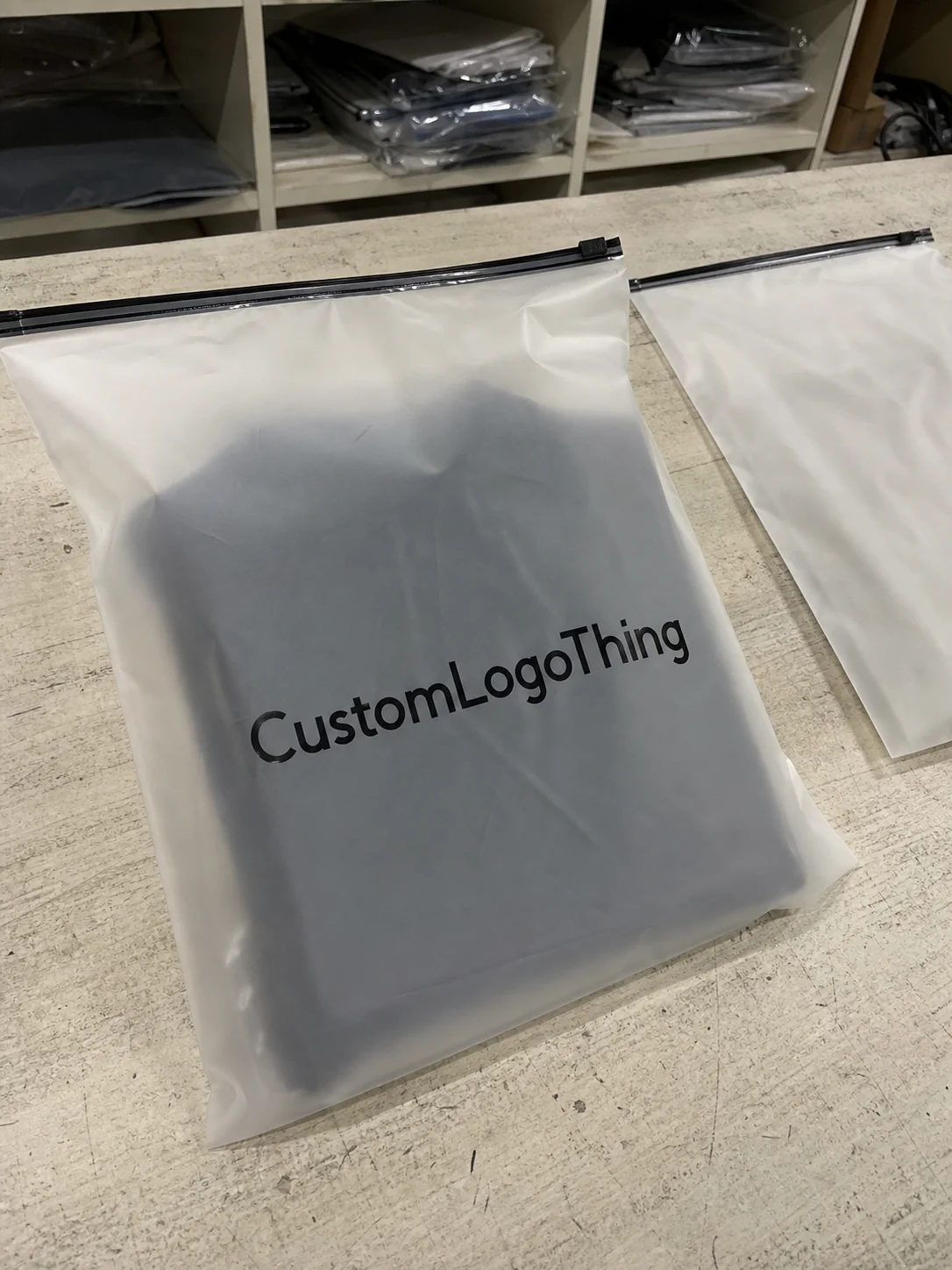
Clear poly is practical, but visually harsh. It reflects overhead light, shows folds sharply, and can make seam lines look more pronounced. Frosted film immediately changes that first impression by diffusing reflection and creating a quieter look on shelf, in transit, or inside a mailer.
That softer appearance matters. A folded T-shirt looks tidier, a hoodie looks less bulky, and lingerie or athleisure can show through just enough to suggest the product without exposing every tag and seam. For DTC brands, that restraint can support a more elevated packaging story without adding much complexity.
The functional side matters too. Apparel usually passes through multiple hands before reaching the customer. Frosted bags help keep garments cleaner during packing and provide a small barrier against dust and incidental moisture. That is enough for standard product packaging applications when items are folded, sealed, and shipped quickly after packing.
“The finish changes perception more than most buyers expect. The same garment feels more composed in frosted film than in glossy clear poly, even when the construction is identical.”
For brands that care about presentation as much as protection, frosted apparel bags are a practical way to improve the unboxing moment without overengineering the packout.
How frosted poly bags are made and printed
Most frosted apparel bags are made from low-density polyethylene (LDPE) or linear low-density polyethylene (LLDPE). The frosted appearance usually comes from an extrusion process that changes how light passes through the film, either through additives or surface treatment. The result is semi-translucent rather than fully clear or opaque.
Construction matters. Some bags are side-sealed, some are bottom-sealed, and some use both. Thickness is usually measured in mils. For light apparel, 1.5 to 2 mil is often enough. Heavier garments, or bags handled repeatedly in a warehouse, may benefit from 2.5 to 3 mil or more. Extra thickness adds material cost, but it reduces split risk and improves hand feel.
Closures vary as well. Common options include a flap with pressure-sensitive adhesive, a resealable strip, a zipper closure, or a hang hole for retail presentation. A hang hole is useful if the bag will remain on display, but it may not matter for a warehouse-only format. The right choice depends on how the item moves through the operation.
Printing is usually flexographic on larger runs. That works well for simple logos, size callouts, website addresses, and basic branding. On frosted film, white ink is often the difference between a logo that reads clearly and one that fades into the background. Without a white underprint, darker colors can look muted because the film is semi-translucent. Fine detail can soften more than expected, so artwork should be built for visibility first.
Functional details also matter in production:
- Suffocation warnings for retail and e-commerce compliance
- Vent holes for garments that should not trap moisture
- Barcode or SKU panels for warehouse scanning
- Resealable closures for premium apparel or returns-friendly programs
Those details should fit the broader packaging system. The bag should work with labels, hang tags, care cards, and any outer shipping format rather than competing with them.
Key specs, cost, and MOQ factors that change the quote
Pricing usually comes down to a few predictable variables. Size is one of the biggest. A standard 10 x 13 inch bag uses less film and is easier to convert than an oversized custom format, so it usually costs less. Thickness is the next driver. More material means a higher unit price and more shipping weight, even before printing is added.
Print setup can change the quote quickly. One-color printing on one side is the simplest arrangement. Add a second side, a second color, or white underprint, and the job gets more expensive because it requires more setup and tighter press control. Fine text and complex layouts also take more care. In practice, a simple logo often delivers better value and better legibility than a crowded design.
Minimum order quantity, or MOQ, is tied to how the job is run. Plates, film width, press setup, and conversion efficiency all influence the minimum. Custom sizes usually need a higher MOQ than stock dimensions because the factory cannot always optimize material use as efficiently. If your bag size is only slightly different from a common format, a small adjustment can sometimes reduce cost without affecting fit.
| Option | Typical unit cost | Best for | Notes |
|---|---|---|---|
| Stock size, 1-color print | $0.08-$0.15 | Basic tees, standard folds | Usually the lowest MOQ and fastest setup |
| Custom size, 1-color print | $0.12-$0.22 | Brands with specific folded dimensions | More flexible fit, moderate setup cost |
| Custom size, 2-color print with white ink | $0.18-$0.35 | Premium retail presentation | Higher setup and tighter registration control |
| Custom size with zipper or specialty closure | $0.22-$0.45 | Reclosable apparel or elevated gifting | Better functionality, but more parts and labor |
Those numbers are directional, not universal. Freight, carton pack-out, and destination can move landed cost enough to make a low factory quote less attractive. A lightweight bag packed efficiently in master cartons ships differently from a job with loose pack-out or oversized boxes. Lead time can also affect price if the factory has to reserve material, plates, or press time. Compare the full landed cost, not just the unit price.
Production steps and timeline from artwork to shipment
The production sequence is straightforward, but it leaves little room for missing information. It usually starts with artwork review. The supplier checks the logo format, number of colors, line thickness, and how the artwork fits the bag dimensions. If a custom dieline is needed, or if the bag dimensions have to be confirmed against a folded garment, that happens early. Once the design is approved, the supplier prepares the proof and, for printed jobs, the plates.
After that, the material is scheduled or extruded depending on the factory’s setup. The film is printed, converted into bags, sealed, cut, and packed. For many standard runs, a typical timeline is about 12-15 business days from proof approval. That said, the clock can move quickly if revisions are slow, if the material grade is unusual, or if the order lands during a busy season. A complicated job can easily take longer than the first estimate.
What should be ready before the order is placed? A clean spec sheet saves time and prevents a lot of back-and-forth:
- Vector logo files, usually AI, EPS, or PDF
- Bag dimensions based on the folded garment
- Pantone targets or approved color references
- Closure preference, such as adhesive flap or zipper
- Any warning language, barcode, or retailer-specific requirements
Sample approval is one of the best ways to catch problems early. A physical sample shows fit, opacity, and seam behavior in a way a digital proof never can. A virtual proof is still useful, but it will not tell you how a white logo reads against frosted film or how much room the garment really has once folded. Rushing that step is one of the most common reasons for avoidable rework.
There is also a compliance layer to keep in view. If the bags are used for retail or e-commerce, check suffocation-warning rules and any retailer-specific packaging standards before the order is approved. For sustainability planning, many brands also pair plastic packaging decisions with paper-based components elsewhere in the system, and the U.S. EPA’s guidance on materials and waste reduction is a useful reference point: EPA recycling and materials guidance.
How to choose the right frosted bag for your apparel line
The right bag starts with the garment, not the packaging catalog. Measure the folded item first, then add enough room for a clean fit. If the bag is too tight, it can crease the fabric, stress the seams, and make even a premium item look rushed. If it is too large, the garment can move around and arrive with a loose, undersized appearance.
Thickness should match handling conditions. Lightweight tees and basic tops often do fine in thinner film. Hoodies, knitwear, and layered sets usually benefit from a heavier gauge. If the bag will move through a busy warehouse or be opened and closed more than once, a little more material can reduce split risk and improve the hand feel. Thicker is not always better, though; for light garments, extra thickness may add cost and bulk without much return.
The use case matters just as much as the garment. Retail display bags need stronger visual appeal and crisp branding. E-commerce shipping bags may prioritize durability and compliance language. Internal warehouse bags may only need size labeling and basic product identification. If one bag has to cover all three jobs, the spec needs to balance visibility, security, and packing speed.
Branding decisions should be made with the full production flow in mind. Some premium fashion labels use a small logo in one corner to keep the look understated. DTC brands often want the website address or brand message larger and easier to read. Multi-SKU programs may need product names, sizes, or color codes placed where fulfillment staff can read them quickly. The best layout is usually not the busiest one.
If you are standardizing across several categories, compare frosted bags with other packaging formats such as poly mailers, garment sleeves, and custom printed boxes. Each format solves a different problem. The right choice depends on product weight, protection needs, presentation goals, and channel.
Common sizing, artwork, and compliance mistakes to avoid
One of the most common sizing mistakes is choosing a bag that is too narrow. Even when the garment technically fits, a tight bag can wrinkle the fold, stress the seams, and create a cramped look that does not match premium positioning. The opposite problem shows up too often as well: oversizing the bag so much that the item slides around and arrives looking less polished than it should.
Artwork issues are just as common. Thin linework, tiny type, and low-contrast logos can print muddy on frosted film, especially when there is no white underprint. What looks crisp on a screen may soften in production if the strokes are too fine or if the design depends on subtle gradients. Strong shapes usually print better than complicated artwork on semi-translucent packaging.
Compliance oversights can create real delays. If a suffocation warning is required, it needs to be placed clearly and in the correct location. If a barcode or SKU panel is needed, it should sit where scanners can read it without awkward handling. Retail buyers may also have their own labeling rules, and those need to be checked before approval, not after cartons are already moving.
Too many print colors can also push a small bag into unnecessary expense. Each added color increases setup, registration control, and the risk of mismatch if the film shifts slightly on press. On compact packaging, two well-chosen colors often look cleaner than four crowded ones. A useful checkpoint is to ask for a proof that shows the logo, warning text, and final dimensions together.
Next steps for ordering custom frosted bags for apparel
Start with the garment. Confirm the folded size, decide whether the bag is for display, shipping, or both, and set the level of visibility you want. Then gather the logo files, preferred dimensions, closure style, and any warning or barcode requirements. The more complete the spec, the faster the quote and proof process tends to move.
Before placing a full run, ask for a sample or a virtual proof to check opacity, print contrast, and fit. A few minutes spent on review can prevent expensive corrections later. It also helps to compare quotes using one spec sheet, so you are not comparing a stock-size bag from one supplier against a custom bag from another supplier with a different thickness or print coverage.
For most apparel brands, frosted bags offer a practical balance of presentation, protection, and cost control. They look polished without being fussy, and they fit naturally into a retail or fulfillment operation without adding unnecessary steps.
FAQ
Are custom frosted bags for apparel better than clear poly bags?
Frosted bags often look more premium because they reduce glare and soften what is visible inside. They still show the garment silhouette while hiding wrinkles and giving the package a cleaner retail presentation. Clear poly can be better when full visibility or easy barcode scanning is the main priority.
What thickness should I choose for frosted apparel bags?
Lightweight tees and folded basics often work well in thinner films, while hoodies and heavier knits may need more thickness for durability. The best choice depends on how the bag will be handled, stored, and shipped. A slightly thicker bag can improve feel and reduce split risk, but it may also raise unit cost.
How does MOQ affect the price of custom frosted bags for apparel?
MOQ usually lowers unit price because setup costs are spread across more bags. Custom sizes, multiple print colors, and special features can push the minimum order higher. If your run is small, ask whether a standard size or simplified print can reduce the MOQ barrier.
How long does production usually take for frosted apparel bags?
Timeline depends on artwork approval, plate-making, material availability, print complexity, and order size. Simple runs move faster than jobs with multiple colors, special closures, or repeated proof revisions. Building in time for sample review helps avoid delays later in the process.
Can frosted bags be printed with logos and care information?
Yes, most custom frosted bags can carry logos, brand names, sizes, QR codes, and select care or warning text. Designs with strong contrast, especially white ink on frosted film, usually print most clearly. Keep the layout simple so the bag still feels premium rather than crowded.


