For a T-shirt, hoodie, or set of socks, the outer shipper is often the first real quality signal a customer sees. That is why custom Poly Mailer Bags for apparel brands can shift perceived value so quickly: they keep shipping weight low, protect soft goods from moisture, and make the parcel feel deliberate instead of improvised. In apparel, that first impression carries more weight than many teams expect.
There is a practical side too. Poly mailers are lightweight polyethylene or recycled-content film bags with heat-sealed seams and pressure-sensitive closures, built for soft goods that do not need crush protection. Used well, they can reduce dimensional weight, speed pack-out, and support branded packaging without the expense of printed cartons. Used badly, they wrinkle, tear, or swallow a garment that should have arrived looking crisp.
What Custom Poly Mailer Bags for Apparel Brands Actually Do
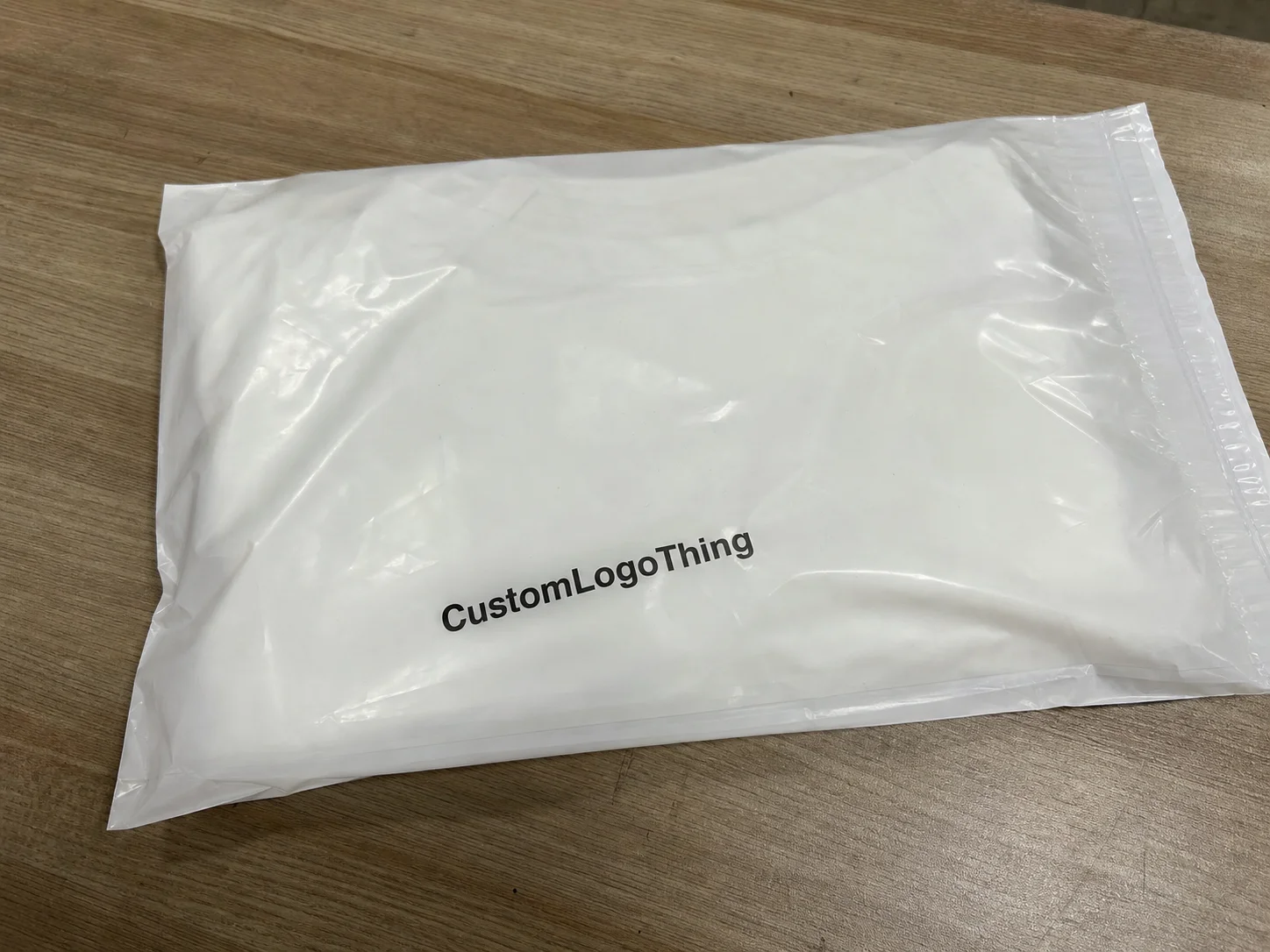
Custom Poly Mailer Bags for apparel brands sit in a very specific lane. They are best for direct-to-consumer basics, subscription apparel, lightweight returns, and multi-item shipments that are soft enough to travel without a carton. Think tees, leggings, loungewear, socks, and lightweight hoodies. They are not the right choice for hard accessories, boxed sets, or anything that needs crush resistance.
From a packaging buyer’s point of view, the value is straightforward: the bag serves as both the branding layer and the shipping container. That means less material, less labor, and often lower postage because the parcel stays slimmer and lighter. The tradeoff is just as straightforward. A mailer has far less structure than corrugated packaging, so bag size and film choice matter more than people tend to realize.
One common mistake is choosing the cheapest bag that technically fits on paper, then wondering why the parcel looks sloppy or the seams stretch during fulfillment. Fit is not only a dimensional issue. It is also a presentation issue, and in apparel packaging those two things are usually tied together.
“A mailer that is technically large enough can still be the wrong mailer if the garment slides around or the closure has to fight the product to close.”
That is why many apparel teams compare mailers with other packaging formats only after they have modeled the actual order profile. If your line is mostly soft goods, the economics usually favor mailers. If the assortment includes chunky knits, embellished pieces, or mixed-SKU bundles, the balance changes quickly.
Brands also need to think about how the outer shipper behaves with returns. A strong adhesive strip, a second seal option, or a peel-and-reseal closure can make a mailer more useful for reverse logistics, but those features add cost and can affect print layout. The best spec is not always the simplest one; it is the one that matches how the package will actually be handled after it leaves the warehouse.
How They Work in Fulfillment
The pack-out sequence is simple, but small process details change the outcome. Typically, the garment is folded, tissue or an inner polybag may be added, excess air is removed, the adhesive strip is sealed, and a shipping label is applied. Some brands print a dedicated label panel. Others keep the artwork on the front and leave the back plain for warehouse use.
The protection mechanism is mostly about barrier and containment. A polyethylene mailer keeps out moisture, keeps the garment from shifting too much, and gives you tamper evidence when the seal is specified correctly. That does not make it protective in the same way a carton is protective. It is more accurate to say it is a containment system with weather resistance.
Branding changes the customer experience more than teams sometimes predict. Color, gloss or matte finish, print coverage, and tear-strip options all affect how premium the parcel feels when it lands on the doorstep. A full-bleed design with a crisp seal reads very differently from a plain white mailer with a slapped-on label.
For many labels, package branding starts at the outer shipper. That is why some teams pair Custom Poly Mailers with tissue, inserts, or branded tape, while others prefer a more minimal look that feels closer to modern retail packaging. Both approaches can work. The right choice depends on the price point, the audience, and how visible you want shipping spend to be in the unboxing.
There are also practical limits. Sharp hardware, heavy embroidery, bulky knits, and mixed-SKU shipments can push a brand toward a stronger film gauge, an inner layer, or even a different shipper. If your order mix changes by season, the mailer spec should change too. A summer basics program and a winter fleece drop rarely need the same film behavior.
Warehouse handling matters more than many procurement teams expect. If bags are overfilled, if the seal strip is narrow, or if the artwork makes the label area hard to find, packers slow down and mispacks rise. A mailer should support the line, not fight it.
Specs That Affect Fit, Feel, and Damage Rates
If you want custom Poly Mailer Bags for apparel brands to perform consistently, the spec stack matters. Dimensions, gusset depth, film thickness, seal strength, and closure style all affect how the bag behaves in the real world. A 10 x 13 inch mailer may be fine for a folded tee, while a 14.5 x 19 inch format may be more sensible for hoodies or bundled sets. The wrong size can cost more in materials and create more damage claims at the same time.
Film choice changes both performance and the customer’s tactile impression. Virgin PE usually feels smoother and more consistent. Recycled-content film can be slightly more variable in stiffness and opacity, though the better grades are getting much closer to virgin performance. Co-extruded blends can improve puncture resistance and give the bag a cleaner surface for printing. None of these is automatically better; the right option depends on order profile, branding goals, and the handling conditions the package will see.
Thickness alone is not a full answer. Two bags with the same nominal mil rating can behave differently if one has a weaker seam, a thinner closure zone, or poorer film consistency. For apparel, that difference shows up as split corners, scuffed print, or a closure that lifts after the bag settles in transit. Those failures are small on paper and expensive in practice.
Print performance deserves more attention than it gets. PMS matching, white underlay, ink density, and fold resistance all determine whether branding still reads cleanly after scuffing and label placement. If your logo sits too close to a fold line, or your artwork depends on a thin one-color stroke, the final result may look weaker than the proof. That is why experienced buyers ask for a physical sample instead of relying only on a flat PDF.
Sustainability claims also influence the spec. Recycled-content film, store-drop-off recyclability, and the buyer perception around material reduction often matter as much as unit cost. If you are using recycled content, make sure the claim is documented and defensible. For reference, the EPA’s guidance on waste reduction and recycling is a useful starting point: EPA recycling resources. If your team is working toward fiber-certified secondary materials elsewhere in the pack, FSC can help inform broader sourcing decisions too: FSC.
| Material / Spec | Typical feel | Best use case | Watch-outs |
|---|---|---|---|
| Virgin PE, 2.5–3.0 mil | Smooth, consistent, flexible | High-volume basics, clean print | Less recycled-content appeal |
| Recycled-content film, 2.5–3.5 mil | Slightly more variable, still usable | Brands with sustainability positioning | Check opacity and seal performance |
| Co-extruded blend, 3.0–4.0 mil | Stiffer, more puncture-resistant | Heavier apparel, better scuff resistance | Can cost more per unit |
From a standards perspective, many brands also ask vendors about test protocols tied to transit abuse. ASTM and ISTA are the names to know here, especially if your pack is being validated for drop, vibration, or compression behavior. You can see the industry’s testing framework at ISTA. Not every apparel order needs formal lab testing, but if a bag failure would trigger refunds or reputation damage, a simple transit test is cheap insurance.
There is one more spec detail that often gets missed: opacity. A thin bag with an attractive print can still expose folding lines, inserts, or the silhouette of the garment inside. Some brands want that softness; others want a cleaner, more private presentation. Ask for opacity samples under warehouse lighting, not just against a white desk, because the difference can be significant.
Custom Poly Mailer Bag Pricing, MOQ, and Unit Cost
Pricing for custom Poly Mailer Bags for apparel brands is driven less by “mailers in general” and more by very specific specs. Size, film gauge, print colors, special finishes, recycled content, and shipping method usually move the quote more than buyers expect. A small shift in bag dimensions can have a bigger cost effect than adding a logo.
In real quotes, a common range for basic custom poly mailers might land around $0.18 to $0.28 per unit at 5,000 pieces, depending on size and print coverage. Add recycled content, more colors, larger formats, or special features like tear notches, and the range can move higher. That is not a fixed market price. It is a practical planning range. Your actual landed cost can differ once freight, duties, and warehousing are included.
MOQ behavior matters because it changes cash flow and inventory risk. Larger runs lower unit cost, but they also lock up capital and take up storage. If your apparel line has stable volume and low SKU churn, that is manageable. If your assortment changes every six weeks, a large order can become expensive shelf stock.
Hidden costs are where buyers get surprised. Setup charges, freight, overrun and underrun tolerances, storage, and replacement samples can shift the real landed unit cost materially. Comparing vendors only on the factory quote is a common mistake. You want the full picture: landed cost, not just production cost.
Here is a simple way to compare offers:
- Base unit price — factory quote before freight.
- Freight allocation — ocean, air, or domestic transport per unit.
- Setup or plate cost — print prep and tooling.
- Overrun tolerance — how many extra bags you may receive or pay for.
- Storage risk — warehousing if you buy ahead of demand.
For apparel brands, the pricing question should also include the cost of handling time. A bag that seals cleanly and stacks well may save labor even if it costs a little more per unit. A cheaper bag that sticks to itself, curls, or slows the line can erase the savings quickly. That is especially true during launch weeks, when pack-out speed matters as much as freight.
If you want a broader view of packaging categories, Custom Packaging Products is a useful place to compare where mailers fit alongside other branded packaging choices. And if you are trying to benchmark presentation across formats, reviewing Case Studies can help you see how different packaging design decisions affect the final customer experience.
Production Process and Lead Time for Launches
The production path for Custom Poly Mailer Bags for apparel brands is not complicated, but it does reward clean paperwork. Step one is artwork prep. Confirm dielines, bleed, safe areas, barcodes, and print limits before anything goes to proof. A surprising number of delays start with artwork files that were “close enough.” Close enough is not enough once a press line is running.
Step two is sampling and approval. A physical sample catches color drift, seam issues, and sizing mistakes that a flat mockup cannot reveal. If your logo crosses a fold or your label panel is too small, you want to know before production. It also helps to test the actual pack-out flow, not a simplified sample, because the way a garment behaves in a real pack station can reveal fit problems that a tabletop test misses.
Step three is manufacturing and QC. Extrusion, printing, bag making, seal testing, and dimension checks should all be part of the vendor’s documented process. A good supplier should be able to explain their inspection points without getting vague. If they cannot describe how they check seams, registration, or bag gauge, that is a warning sign.
Step four is transit planning. Standard lead times, rush options, customs clearance, and port delays all need buffer time if the launch date is fixed. In practice, many apparel teams plan on about 12 to 15 business days from proof approval for production on straightforward runs, then add shipping time on top. Larger or more complex orders can take longer. If your calendar is tied to a product drop, build in margin rather than assuming every stage will land on the earliest possible date.
Most teams underestimate how much packaging design can affect the timeline. A mailer with a multi-color print, custom finishes, or a recycled-content requirement may need more review rounds than a simple single-color bag. That is normal. It just means the schedule has to reflect reality instead of optimism.
Quality control should also cover storage and receiving. Film bags can arrive boxed tightly, and if cartons are crushed or exposed to heat, the bags may stick together or curl. That does not always make them unusable, but it can slow the line and create complaints that are really storage problems rather than print problems. Receiving checks should catch those issues before the bags are unloaded into production.
Common Mistakes That Raise Claims and Reorders
Oversizing the bag is one of the fastest ways to make the parcel look off. It also wastes film and lets garments slide around, which can make the package appear sloppy and increase the chance of corner tears. The customer may not know why the shipment feels cheap, but they will feel it.
Choosing film that is too thin for bulky knits or multi-item orders often leads to split seams, especially when warehouse handling is rough. A bag that works beautifully for a single tee may fail on a two-sweatshirt order. That is why a spec should be based on actual shipment mix, not the lightest item in the collection.
Ignoring print durability can leave branding looking weak after scuffing, folding, or label placement. That is more than a cosmetic issue. It undercuts the premium effect you paid for. If your outer shipper is supposed to carry the brand, faded logo edges or scratched ink work against that goal.
Skipping warehouse-fit testing can create bottlenecks if the bag opens slowly, seals inconsistently, or does not match seasonal fulfillment volume. A design that looks excellent in a render can become annoying on the line. At scale, annoyance becomes labor cost.
- Do not spec one bag for every SKU unless your line is truly uniform.
- Do not approve color from a screen alone if color is central to package branding.
- Do not ignore returns; a mailer that works for outbound may be awkward for reuse.
- Do not assume recycled-content film behaves exactly like virgin film in every print run.
Another costly mistake is approving artwork without checking how it interacts with folds, seals, and labels. A logo can look balanced in a flat proof and still end up hidden under tape or warped near a gusset. For apparel brands, those small layout errors matter because the outer bag is often the only branded surface the customer notices before opening the order.
It also helps to think beyond first shipment quality. If you reorder three months later, the film lot, print density, or adhesive behavior may shift slightly. Reorders should reference the approved master sample, not just the original artwork file, so the next production run stays close to the first one.
Expert Tips and Next Steps Before You Request Quotes
Start with SKU data. Garment dimensions, average order weight, and the mix of single-item versus multi-item shipments should drive the spec, not guesswork. If you know your 80th percentile order size, you can size the mailer more intelligently than if you are only looking at your biggest sweatshirt.
Ask for a sample pack and test it with real products, real labels, and your actual pack-out workflow before you commit to a production run. That one step can save a lot of trouble. It catches issues that look minor in an email thread but turn into major headaches when the fulfillment team is moving hundreds of units an hour.
Build a one-page spec sheet. Include size, film gauge, closure type, print count, artwork needs, delivery window, and replenishment assumptions. This is one of the simplest ways to keep vendors aligned and reduce quote confusion. It also makes comparisons fairer if you are evaluating different suppliers.
For apparel buyers deciding between mailers and other retail packaging formats, the decision usually comes down to this: choose the lightest structure that still protects the product and communicates the brand correctly. Sometimes that will be a mailer. Sometimes it will be a carton. Sometimes it will be a hybrid with inner polybags or inserts. There is no prize for using more material than needed.
Before you request quotes, confirm the artwork file, MOQ, lead time, and reorder trigger. That way, when you place your next order of custom poly mailer bags for apparel brands, it supports the launch instead of turning into a last-minute scramble. The real goal is simple: a package that looks branded, ships efficiently, and stays predictable for the warehouse.
If your team wants a cleaner procurement process, the most useful habit is to treat the mailer like a production component rather than a marketing accessory. That mindset tends to improve specs, reduce claims, and keep the final package closer to what was approved.
What size custom poly mailer bags do apparel brands usually need?
Start with the folded dimensions of your largest common SKU, then add enough room for tissue, inserts, and a clean seal. If your assortment swings between tees and heavier hoodies, test one size for single-item orders and another for bundle orders. A bag that is slightly too large is usually better than one that is tight enough to stress the seal.
Are custom poly mailer bags for apparel brands strong enough for shipping?
Yes, if the film gauge, seam strength, and bag size match the product weight and handling conditions. They work well for soft goods, but sharp hardware, heavy embellishment, or bulky knits may need a stronger spec or an inner layer. Always test the bag with your actual pack-out and transit route before scaling up.
How do custom poly mailer bags compare with boxes for apparel shipments?
Poly mailers usually cost less to ship because they reduce weight and cubic volume. Boxes give more structure and crush protection, which matters for premium kits, rigid accessories, or fragile inserts. For many everyday apparel orders, the lower freight and faster packing time make mailers the better operational choice.
What affects the price of custom poly mailer bags for apparel brands the most?
The biggest drivers are size, film thickness, print complexity, recycled content, and total quantity ordered. Freight and setup costs can change the landed unit cost more than the factory quote suggests. Comparing vendors only on base price hides the real budget impact.
How long does production usually take for custom apparel mailers?
Lead time depends on artwork approval, sampling, production queue, and transit method. A clean proof cycle can save days, while late artwork changes or sample revisions can push the shipment back. Build in buffer time if you are aligning the bags with a product launch or seasonal drop.


