Buyer Fit Snapshot
| Best fit | Custom Game Boxes with Logo projects where brand print, material claims, artwork control, MOQ, and repeat-order consistency need to be specified before quoting. |
|---|---|
| Quote inputs | Share finished size, material target, print colors, finish, packing count, annual reorder estimate, ship-to region, and any compliance wording. |
| Proofing check | Approve dieline scale, logo placement, barcode or warning zones, color tolerance, closure strength, and carton packing before bulk production. |
| Main risk | Vague material claims, crowded artwork, missing packing details, or unclear freight terms can make a low unit price expensive after revisions. |
Fast answer: Custom Game Boxes with Logo: Board, Finish, Dieline, and Unit Cost should be specified like a repeatable production item. The safest quote records material, print method, finish, artwork proof, packing count, and reorder notes in one written spec.
Production checks before approval
Compare the actual filled-product size with the drawing, then confirm tolerance on folds, seals, hang holes, label areas, and retail display edges. Reserve space for logos, QR codes, warning copy, and material claims before decorative graphics fill the panel.
Quote comparison points
Review material grade, print process, finish, sampling route, tooling charges, carton quantity, and freight assumptions side by side. A quote is only useful when the supplier can repeat the same color, closure quality, and packing count on the next order.
A game box starts working long before the first card is drawn or the score is counted. That is the quiet advantage of custom game Boxes with Logo: they introduce the theme, carry the brand, and protect the contents in one object. A box that feels flimsy, prints poorly, or lands even a few millimeters off in size can make a strong game look less finished before play begins.
From a buyer's perspective, the box is the first thing a customer touches, lifts, and judges. It acts as shelf signage, shipping protection, and product proof all at once. A title that arrives in a well-built box feels intentional. A title that comes in a generic carton feels provisional. That difference comes from structure, board quality, print registration, and the discipline to lock dimensions before artwork starts drifting.
Why Custom Game Boxes With Logo Matter More Than You Think
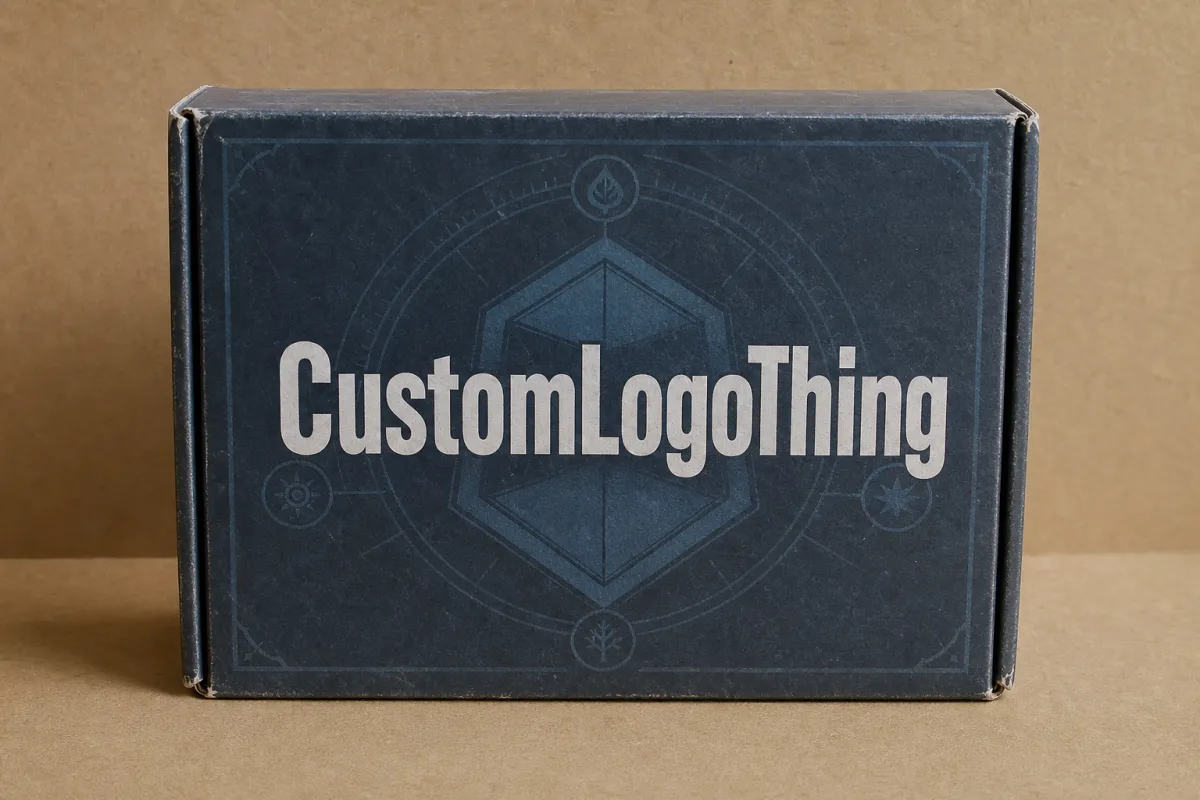
Custom game Boxes with Logo do more than hold a product together. They tell a shopper what kind of experience sits inside. A crisp logo on a clean box signals care. A stretched logo, muddy print, or weak structure signals cost cutting, even if the game itself is excellent. People rarely separate packaging from product when they decide whether to buy.
Game packaging has a difficult job. It must keep oddly shaped components in place, survive warehouse handling, and still look good on a shelf or in a shipping photo. A board game box usually needs room for boards, cards, tokens, and an insert that actually stops everything from rattling. A card game box needs tighter dimensions and less wasted air. Expansion packs need to sit visually and physically close to the parent line so the series feels organized instead of improvised.
Logo placement changes the impression faster than many brands expect. On a larger board game box, the logo can anchor the composition while the title art fills the rest of the space. On a smaller card game box, the logo has less room to breathe, which makes clarity and contrast more important than decoration. Promotional kits and influencer mailers push the idea even further; the box has to create instant recognition because the unboxing moment is often the only chance to make the brand memorable.
The business case is just as strong. Branded packaging improves recall, makes sequel lines easier to spot, and helps retailers present a family of products as one system instead of a stack of separate SKUs. That matters when a distributor is comparing launch titles, and it matters again when a customer returns for an expansion six months later. A strong box carries memory. A weak one makes the brand start over every time.
A logo is not there just to decorate the lid. It helps the package feel owned, stable, and worth picking up. Across 5,000 units, a change of only $0.12 per box turns into $600. That is enough to matter, which is why the design decision needs to be treated as both creative and commercial.
If the component count is still unclear, the box is not ready for a serious quote. Guessing at dimensions usually leads to rework, extra freight, and boxes that are almost right in all the wrong ways.
How the Custom Game Box Process Works From Dieline to Delivery
The process looks tidy on a spreadsheet and much messier in practice. It usually starts with a brief: box size, component list, quantity, print method, finish choice, and shipping destination. Once those basics are set, the supplier creates or confirms the dieline, which maps the folds, panels, glue zones, bleed areas, and closures. A clean dieline matters because even perfect artwork fails if the structure is wrong.
Artwork comes next. The buyer sends brand files, logo assets, copy, legal text, and any warnings that must appear on the package. The supplier then places those elements on the dieline and checks the layout against trim lines, folds, and board thickness. That step sounds routine, yet it is where a surprising number of problems begin. A logo that looks perfectly centered on screen can land too close to a flap once the carton is folded and wrapped.
Proofing is the stage that saves money or burns it. This is where spelling errors, incorrect barcodes, missing language, wrong fold direction, and insert sizes get caught. Inserts deserve extra attention. Cards, minis, punchboards, and tokens do not behave the same way inside a box, and a design that fits the largest item may still let smaller parts drift around like they were never meant to stay put.
Physical samples help when the order is premium, the finish is unusual, or the box shape is not standard. A flat mockup can show placement, but it cannot tell you how a matte coating feels under light, how a foil logo reflects, or whether the lid closes with the right amount of resistance. That kind of judgment only appears when cardboard meets hand.
Mass production begins after approval. Printing, cutting, laminating, finishing, assembly, inspection, packing, and freight all follow. International shipping adds another layer of timing, and domestic delivery still needs a buffer because packaging work rarely fails in a dramatic way. It usually slips quietly: a day here, two days there, and suddenly the launch date looks uncomfortably close.
The chain matters more than any single step. When the brief is complete, the dieline is locked, and the files are clean, the process moves with far fewer surprises. Packaging is not just print production. It is a sequence of decisions that either supports the launch or slows it down.
Cost, Pricing, MOQ, and Quote Traps to Watch
Pricing for custom game Boxes with Logo starts with size, but it does not end there. Board thickness, total print coverage, finishing, insert style, and order quantity all affect the number that comes back. A folding carton and a rigid set-up box may both hold a game, yet they sit in completely different price bands because the material and assembly work are not remotely the same.
Setup costs catch buyers off guard more often than they should. Sampling, plate creation, die cutting, and proofing are fixed expenses, so a small run absorbs more of that cost per unit. A larger order spreads those same steps across more boxes and lowers the per-box price. MOQ shapes the economics, not just the supplier's preference. A run of 1,000 and a run of 5,000 rarely tell the same story about cost efficiency.
Ask for prices at multiple volumes. The difference between 1,000 and 3,000 units may be modest, while the jump to 5,000 can open a much better unit rate. That comparison gives real information when you are deciding between a test batch, a first release, or a full retail push. The cheapest quote at the smallest quantity often looks less impressive once the scale changes.
Quote traps show up in predictable places. One vendor excludes the insert. Another leaves out lamination. Another ignores freight, tooling, or sampling. The most misleading quote is the one built on lighter stock or a stripped-down finish that makes the price seem lower than the true spec. That is not a bargain. It is a comparison error wearing a discount tag.
Every vendor should be measured against the same standard. Same dimensions. Same board grade. Same finish. Same insert type. Same shipping destination. Same quantity. Anything less turns the pricing exercise into a pile of mismatched assumptions, and the gap between quotes starts to mean less than the wording around them.
| Box Style | Best For | Ballpark Unit Cost at 5,000 Units | Usual MOQ | Typical Lead Time | Notes |
|---|---|---|---|---|---|
| Folding Carton | Card games, promo kits, lighter titles | $0.25-$0.75 | 1,000-3,000 | 10-15 business days after proof approval | Good for cost control, less premium feel |
| Tuck-End Box With Insert | Small board games, expansion packs, retail packaging | $0.45-$1.10 | 1,500-5,000 | 12-18 business days after proof approval | Flexible, common, easy to customize |
| Sleeve and Tray | Mid-range titles, giftable sets, collector editions | $0.80-$1.80 | 2,000-5,000 | 14-20 business days after proof approval | Better presentation, slightly higher material cost |
| Rigid Box | Premium board games, deluxe editions, branded packaging | $1.50-$3.50 | 1,000-3,000 | 18-28 business days after proof approval | Best perceived value, heavier freight, more setup |
Those figures are working ranges, not guarantees. Freight, duties, and unusual decoration can push them in either direction. Even so, the table shows the shape of the decision clearly. A rigid box costs more because it takes more material, more assembly time, and more freight space. A folding carton saves money, though it has to earn shelf presence through design rather than structure.
If a supplier will not separate setup charges from unit pricing, ask for the breakdown. Without it, the quote hides where the money actually goes. A vague quote is not efficient. It is just hard to challenge later.
Materials, Finishes, and Structural Choices That Change the Result
Material choice shapes both the feel and the performance of the box. A 350gsm C1S artboard works well for many custom printed boxes because it gives good print clarity and enough stiffness without inflating cost too much. Heavier stock adds substance, but it also raises shipping weight and can push the budget upward faster than expected. Lighter stock holds costs down, though it can feel thin if the game is meant to sit in a premium price tier. Recycled or FSC-certified board can strengthen the brand story, but that value only lands when the claim is real and properly sourced.
Different box constructions behave differently in the field. Folding cartons are efficient and familiar, which makes them useful for card games and smaller retail packaging. Tuck-end boxes are easy to produce and easy to stack. Sleeve-and-tray builds add a presentation layer that works well for gift sets and collector editions. Rigid boxes offer the strongest premium signal, but they are also heavier, more expensive, and less forgiving during packing and shipping.
Finish choice can make the logo look sharper or bury it under visual noise. Matte lamination keeps glare low and often feels more modern. Gloss boosts color and can suit loud artwork. Soft-touch gives a tactile premium effect, though it raises cost and shows wear in its own way. Embossing and debossing add physical depth to the logo. Foil can look striking when used sparingly. Spot UV can highlight the mark, but heavy-handed use turns a clean surface into a reflective distraction.
If the logo is small or detail-heavy, restraint usually wins. Too much foil, texture, or surface noise can swallow the brand mark. A simple, bold logo often looks strongest on a matte surface with one accent treatment. Buyers sometimes want every effect in the catalog. The box usually works better with fewer, better-chosen moves.
Internal structure matters just as much as the outside. Dividers, inserts, locking tabs, and trays keep the components from shifting and getting damaged. That matters for board games with punchboards and tokens, and it matters for card games where bent corners or scuffed decks trigger complaints fast. Outer cartons help only if the inner build already holds together.
For products that may face shipping stress, ask about recognized transit testing. Packaging teams often use ISTA testing methods to check drop, vibration, and compression risk. That conversation tells you far more than a vague claim that the box “feels sturdy.” If the fiber story matters to the brand, check the chain-of-custody rules from FSC before printing any environmental claim on the package. Recycled content and recyclability are not identical claims, and the difference matters once the box reaches a real customer.
The tradeoff stays consistent: more premium structure and finish usually improves shelf appeal, but it also increases cost and production complexity. Good packaging design chooses the few details that support the product instead of loading the box with every effect available.
Production Timeline and Lead Time: What Actually Takes the Longest
Lead time begins with the quote and ends with freight, yet the delays usually hide in the middle. A typical path includes the brief, quote approval, artwork cleanup, dieline confirmation, proof approval, sample review, production, quality control, packing, and shipment. Each stage sounds manageable until one barcode needs to move a few millimeters and the file has to circle back through approval.
Printing is rarely the slowest step. Decisions are. Missing files are. Late revisions are. Clean inputs let a supplier work quickly. A changed box size halfway through artwork, or an insert that is still under debate after the proof is ready, slows the entire schedule. Buyers often treat those revisions like harmless admin. They are not harmless. They create delays that show up late and cost real money.
Standard runs are easier to plan because the materials and methods are familiar. Rush work can happen, but the price of speed is usually visible in fewer finish options, tighter material choices, and less room for revision. Not every project needs every option. Still, buyers should expect the familiar rule: fast, flexible, and inexpensive rarely appear together on the same quote.
Specialty work adds time. Complex inserts need more planning. Foil and embossing add setup. Large rigid boxes need more assembly. Seasonal demand can slow production and freight at the same time. Ocean shipping can turn into a small lesson in patience, while domestic freight still needs delivery windows, warehouse coordination, and enough buffer time for the receiving team to do its job.
Scheduling works better when the packaging brief is locked early. That sounds plain because it is. A launch date means very little if the box spec is still moving. Build in extra time, approve the dieline quickly, and keep the art files organized so nobody has to search through old email threads for the latest version.
If the launch is fixed, the packaging should be fixed first.
Common Mistakes That Make Custom Game Boxes With Logo More Expensive
Designing artwork before the size is final wastes money more often than brands expect. The logo may fit the mockup beautifully, then the real components arrive and the box needs to grow in one direction or another. That change forces a dieline revision, an art update, and usually another round of checking the insert. None of that is glamorous. All of it is expensive.
Over-specifying finishes creates another budget leak. A soft-touch coating, foil stamp, embossing, and spot UV can look impressive in a sample gallery. On the production line, those effects can raise cost without making the box easier to sell. If the title is aimed at families or general retail, a clean matte finish with strong typography may outperform a finish-heavy approach that tries too hard.
Oversized packaging drains money in a quieter way. Bigger boxes cost more to ship, store, and move through the warehouse. Retailers also dislike wasteful dimensions because they eat shelf space. A brand can save a little on unit price and lose far more to freight and storage. Air is not free just because cardboard surrounds it.
Missing details slow production in ways that seem small until the deadline arrives. Barcodes. Safety text. Age grading. Regional language requirements. Insert counts. Those items need to be settled before approval. If they are left loose, production stalls while the art is corrected, and the correction usually costs more than the original fix would have.
Chasing the lowest quote is the last common trap. If the supplier is vague about stock, lead time, sampling, or finishing, the quote is incomplete, not low. I would rather pay a little more to a vendor who can explain the structure and the process than save pennies on paper and spend them later in corrections and reprints.
For brands comparing Custom Packaging Products, the smarter move is usually the best-fit box for the game, the price point, and the launch plan, not the cheapest carton on the list.
Expert Tips and Next Steps Before You Request a Quote
Clean quotes begin with clean input. Give suppliers the three things that drive most of the math: exact box size, component list, and target quantity. Those three set the shape of the rest of the conversation. Without them, the supplier is guessing. With them, the vendor can estimate stock, tooling, fit, and freight with far less back-and-forth.
Ask for a physical sample or finish swatches if the box needs a premium tactile feel. Digital mockups are fine for layout, but they do not show how matte coating behaves under room light, how foil catches reflections, or how thick the board feels in hand. People get burned when they approve a screen and assume the final package will match it perfectly. It usually does not.
A one-page sourcing brief saves time and reduces confusion. Keep it plain: dimensions, component counts, box style, finish preference, insert needs, artwork files, shipping destination, and launch date. If there are multiple SKUs, list them. If the product has an expansion line, mention that too. The goal is to remove assumptions, because packaging projects get expensive when everyone carries a different picture of the same box.
Communication quality matters as much as price. The supplier who spots a die-cut problem before production is worth more than the one who sends a polished quote and disappears for a week. Good partners ask annoying questions early. That usually means they are protecting the order instead of just trying to win it.
Here is the most practical path:
- Confirm the exact game components and internal fit.
- Choose the box style that matches the price point.
- Lock the print finish before artwork finalization.
- Approve the dieline before signing off on visuals.
- Set the shipment plan before production starts.
That sequence keeps the project moving and reduces the chance of a last-minute scramble. It also makes it easier to compare a quote against the real production plan instead of a best-case assumption.
If you need help sorting options, review Custom Packaging Products alongside your brief so the spec follows the product, not a template that happened to be nearby.
Final Takeaway
Good game packaging is part of the product, not an afterthought. The box protects the components, carries the logo, shapes the first impression, and changes how the game feels before the first turn. That is why custom game boxes with logo deserve more attention than a last-minute design tweak and a hopeful email thread.
If the goal is a box that looks right and prices cleanly, keep the brief tight, the structure realistic, and the finish choices deliberate. Let the packaging support the brand instead of trying to compensate for a weak concept. The best custom game boxes with logo balance cost, durability, and shelf appeal without pretending those tradeoffs disappear.
Before approving a quote, lock five items in writing: exact dimensions, confirmed components, insert spec, finish choice, and freight destination. That single step prevents most of the expensive surprises that show up after artwork is already approved.
Frequently Asked Questions
How much do custom game boxes with logo usually cost per unit?
Unit cost depends on size, board stock, print coverage, finish choices, insert complexity, and quantity. Smaller runs usually cost more per box because setup and proofing are spread across fewer units. For a useful estimate, ask for pricing at two or three quantities so you can see where the real break in cost appears.
What MOQ should I expect for custom game boxes with logo?
MOQ depends on the box style and print method. Simpler folding cartons often start lower than rigid or highly customized structures. If you are ordering several SKUs or expansion versions, ask whether the supplier can combine specs to improve efficiency. MOQ is never identical from one vendor to another, so compare the actual build instead of assuming the entry point is standard.
How long does it take to produce custom game boxes with logo?
Lead time usually includes artwork preparation, proof approval, sample confirmation, production, quality checks, and freight. Simple jobs move faster. Complex inserts, specialty finishes, and slow approvals push the timeline out. If launch timing is fixed, add buffer time before you promise inventory to retailers, distributors, or backers.
Which box style works best for board games and card games?
Board games usually need sturdier boxes with inserts that keep cards, boards, and tokens from shifting during shipping. Card games often use smaller tuck boxes, sleeve-and-tray builds, or rigid options depending on the price point. The best structure is the one that protects the components and matches the expected value of the game.
What files do I need to get an accurate quote for custom game boxes with logo?
Send dimensions, component counts, preferred box style, logo artwork, and any finish or insert requirements. Include your target quantity and delivery destination so the supplier can price production and freight realistically. A clear brief cuts down revisions and makes apples-to-apples comparison much easier for custom game boxes with logo.

