Buyer Fit Snapshot
| Best fit | Die Cut Mailer Boxes with Logo for Sustainable Packaging projects where brand print, material claims, artwork control, MOQ, and repeat-order consistency need to be specified before quoting. |
|---|---|
| Quote inputs | Share finished size, material target, print colors, finish, packing count, annual reorder estimate, ship-to region, and any compliance wording. |
| Proofing check | Approve dieline scale, logo placement, barcode or warning zones, color tolerance, closure strength, and carton packing before bulk production. |
| Main risk | Vague material claims, crowded artwork, missing packing details, or unclear freight terms can make a low unit price expensive after revisions. |
Fast answer: Die Cut Mailer Boxes with Logo for Sustainable Packaging should be specified like a repeatable production item. The safest quote records material, print method, finish, artwork proof, packing count, and reorder notes in one written spec.
Production checks before approval
Compare the actual filled-product size with the drawing, then confirm tolerance on folds, seals, hang holes, label areas, and retail display edges. Reserve space for logos, QR codes, warning copy, and material claims before decorative graphics fill the panel.
Quote comparison points
Review material grade, print process, finish, sampling route, tooling charges, carton quantity, and freight assumptions side by side. A quote is only useful when the supplier can repeat the same color, closure quality, and packing count on the next order.
Die Cut Mailer Boxes with Logo for Sustainable Packaging
Die cut mailer boxes with logo are one of the clearest ways to reduce packaging waste without making the parcel look stripped down or improvised. You get a flat-shipped, pre-cut folding carton that locks into shape, carries a branded exterior, and often needs less filler than a loose carton packed with void fill and hope.
The logo is not the main advantage. Fit is. A well-made structure reduces dead space while still giving the customer a package that feels deliberate the moment it arrives. Buyers notice that quickly because it affects freight, damage rates, opening experience, and how the brand is remembered after the unboxing is over.
Why Die Cut Mailer Boxes with Logo Beat Plain Cartons
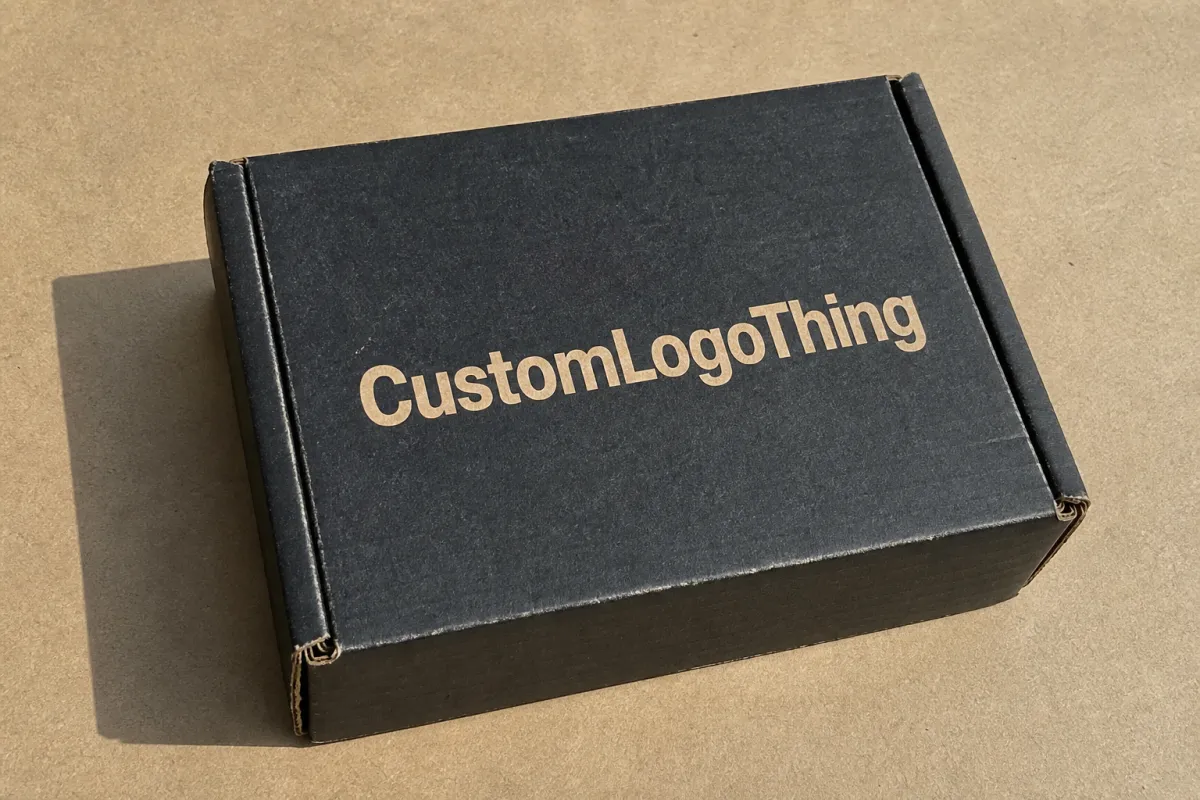
A plain carton can move product from point A to point B. That is the minimum. A die cut mailer box with logo does more: it protects the product, improves presentation, and trims waste by giving you a box sized for the item instead of the usual oversized guesswork. That matters whether you ship subscriptions, cosmetics, candles, apparel, or small retail kits.
There is also a branding effect that gets dismissed too quickly. When the box opens cleanly and the print is sharp, the customer sees a package that feels planned rather than improvised. That matters more than many teams admit. A shipping carton is often the first physical touchpoint a customer has with a brand. If it arrives crushed, rattling, or packed with filler piled to the lid, the whole experience feels rushed. If it opens with a neat reveal and a clear logo, the product starts from a stronger position.
For sustainable packaging, the argument gets stronger. A well-designed die cut mailer box can reduce the amount of paper, tape, inserts, and plastic void fill you need per order. Less material inside the box usually means less material in the waste stream. That does not make the package environmentally perfect. The board still has to be sized correctly, printed sensibly, and built from material that can actually hold up in transit. Compared with a stock carton plus excess fill, though, a custom mailer often wastes less by design.
That is why brands keep moving toward die cut mailer boxes with logo for ecommerce and retail shipping. The box is doing more than one job. It protects the product, carries brand identity, and helps keep the packout tighter. If you only need a transit shell, there are other options, including lighter formats like Custom Poly Mailers. If you need a wider packaging mix, the broader Custom Packaging Products catalog usually gives you a clearer comparison point before you commit to one structure.
In practice, the strongest packages are often the least flashy ones. A die cut mailer box with the right logo placement, the right board, and the right size does exactly that. No drama. No oversized carton pretending to be efficient. Just a clean build that ships flat and folds into shape when needed.
How Die Cut Mailer Boxes Work
The format is simpler than the jargon makes it sound. A die cut mailer box starts as a flat sheet of board that gets cut, creased, and scored into a specific shape using a steel rule die. Those cut lines define the outline. The score lines define where the board folds. Tabs and locking flaps hold the box closed without a separate glue setup in many designs. Once assembled, it behaves like a compact folding carton with enough structure for shipping and enough surface area for branding.
The terminology matters because it tells you where the design limits are. The die line is not just a drawing. It is the actual production map. If the logo sits too close to a fold, it can crack or disappear into a seam. If text lands where a tuck flap closes, it may get hidden. If the lid panel is too busy, the brand message turns into visual noise. That is why dieline review is not an optional admin step. It is the stage where packaging stops being artwork and becomes a physical object.
Most die cut mailer boxes with logo use some combination of front panel, lid panel, side panels, and sometimes inside print. That gives you several branding choices. You can keep the outside restrained and use the inner panel for a reveal, or run full-surface graphics across the exterior if the brand wants more shelf presence. A small logo on the lid can feel premium. A full-wrap print can feel louder. Neither is automatically better. The right answer depends on the product, the channel, and how much visual attention the package should command.
From the manufacturing side, the value is repeatability. The steel rule die produces the same shape over and over, which keeps the fold geometry consistent across the run. That helps with automated or semi-manual packing, especially when the mailer box needs to be filled quickly. Better creasing means less cracking at the fold line. Better cutting means cleaner edges and a cleaner assembly. Small details, real impact.
There is also a sustainability angle in the geometry itself. A mailer box engineered around the product usually uses board more efficiently than a generic carton that needs extra inserts to compensate for poor sizing. It is a little like buying a coat that fits. You do not pay for extra fabric just to gather it into shape later. The box should fit the load as closely as practical, then leave enough tolerance for packing and transport.
For higher-risk shipments, I would also ask whether the packout should be checked against an ISTA test profile or an ASTM shipping protocol. If the box is headed through parcel networks, a carton that looks great on a table is not enough. It has to survive drops, vibration, compression, and handling abuse. That is where the structure proves itself.
Key Factors That Affect Fit, Durability, and Sustainability
The first decision is board. The second is size. The third is whether the finish helps or hurts the package's environmental story. Buyers often obsess over print when the real win or loss sits in the construction.
Kraft and white-top corrugated boards are common choices for die cut mailer boxes with logo. Kraft gives you a natural, earthy appearance and usually works well for brands that want a restrained, recycled look. White-top lets the print pop harder, especially if you need sharp graphics or bright color. Recycled content is worth asking about, but recycled content alone does not guarantee strong performance. You still need the right flute, the right liner weight, and the right proportions.
The flute profile matters more than most buyers expect. E-flute is thinner and tends to print well, which is why it is common for ecommerce mailers and presentation boxes. B-flute is thicker and gives you more cushion and stacking strength, which can help for heavier products or rougher parcel handling. If the product is light and cosmetic, E-flute often makes sense. If you are packing glass, bundled goods, or anything that shifts under load, B-flute may be the smarter call.
Size is where a lot of packaging budgets quietly disappear. Oversized mailers need more board, more filler, and usually higher shipping cost because you are moving extra air. Undersized mailers create assembly headaches and can crush the product or distort the box. A tighter fit reduces void fill and usually improves the unboxing experience because the product does not rattle around like it was packed in a hurry. A lot of packaging waste starts with someone choosing a close enough box size and hoping the filler will solve it. It rarely does.
Finishing is another tradeoff. Aqueous coatings usually preserve recyclability better than heavy plastic lamination, though the exact recyclability of a finished box depends on the board and local recycling rules. Soft-touch laminates, thick spot coatings, and metallic effects can look attractive, but they often add cost and can complicate recovery. If sustainability is part of the promise, do not bury that promise under decorative layers that are hard to justify. If you want to check sourcing and recycling guidance, the EPA's recycling resources at EPA recycling guidance are a useful reference, and FSC certification information at FSC helps when you want verified fiber sourcing.
Insert choice also changes the equation. A molded insert, paperboard insert, or die-cut internal tray can improve product security, but every extra piece has a cost and a disposal impact. Sometimes a snug mailer box does the job on its own. Sometimes the product is too fragile or oddly shaped, and the insert is non-negotiable. The rule is straightforward: use the least amount of material that still protects the product and keeps the presentation intact.
| Board option | Typical use | Print quality | Protection level | Cost impact |
|---|---|---|---|---|
| Kraft E-flute | Natural-looking ecommerce mailers, apparel, subscriptions | Good, with a muted organic look | Moderate | Usually baseline pricing |
| White-top E-flute | Cosmetics, branded kits, retail-ready presentation | Very good for color and fine detail | Moderate | Often 5% to 12% higher than kraft |
| Kraft B-flute | Heavier goods, rougher handling, stacking loads | Fair to good, but less crisp than E-flute | Higher | Often 8% to 15% higher than E-flute |
| Recycled-content E-flute | Brands with stronger sustainability targets | Good, though finish consistency can vary | Moderate | Usually a small premium if the specification is tight |
That table is a starting point, not a law of nature. Exact performance depends on panel size, product weight, how the box is packed, and whether the carton will travel locally or cross-country. A 250 mm wide mailer with a light garment is a different problem from a box carrying candles or glass jars. The structure should follow the load, not the other way around.
One more thing: if your package is only being used as a transit shell and not as a branded unboxing piece, do not force it into a mailer-box format just because it sounds nicer. Sometimes the better package is the simpler one. If the real need is shipping efficiency rather than display, choose accordingly and save the branded die cut box for products where the customer actually sees and keeps it.
Production Process and Timeline for Die Cut Mailer Boxes
The production flow is predictable enough that you can plan around it. A good supplier usually starts with a quote, then a dieline review, then artwork setup, then proofing or sampling, then die cutting, printing, finishing, and final packing. The order can shift slightly depending on the plant, but the sequence stays the same in broad strokes.
The quote stage is where a lot of projects quietly go sideways. If the buyer does not provide exact internal dimensions, product weight, print coverage, board preference, and target quantity, the quote is just a guess in spreadsheet form. That guess may be useful as a rough screen, but it is not the number you should base a final order on. Exact specs matter because a small change in size can alter board usage, die cost, shipping carton count, and pallet efficiency.
Artwork setup is where dieline discipline matters. The printer needs vector logos, clean text, and the correct placement on the flat template. The design team should not assume the box will find its own way into production. It will not. If a logo crosses a fold, that is a layout error. If the artwork bleeds into the glue zone, that is a structural problem. If a QR code is too close to the cut edge, somebody will eventually blame the scanner instead of the layout. Packaging never misses a chance to expose sloppy file prep.
Sampling is the stage buyers try to skip until something looks off. That is usually a bad instinct. A sample tells you whether the board feels too flimsy, whether the print color is too dull, whether the flap tension is right, and whether the product actually fits without forcing the panel. For simple runs, you may be able to approve a digital proof and go straight to production. For heavier goods, unusual shapes, or high-value products, a physical sample is worth the time. It is cheaper to reject one sample than to move a full order of boxes that assemble badly.
Typical timelines vary with complexity. Straightforward die cut mailer boxes with logo in standard sizes can often move in about 10 to 15 business days after proof approval if the supplier already has a matching die and the artwork is final. New custom sizes, new dies, or detailed finishing can push that into the 15 to 25 business day range. Add another few days if the order needs a prototype revision or if shipping lanes are busy. Rush orders are possible in some cases, but rushes are usually expensive because they compress setup, scheduling, and inspection into a tighter window.
Here is the part buyers should ask up front: does the supplier already have a matching die, or does the order require a new one? A matching die can shorten lead time and lower tooling cost. A new die is normal for custom work, but it changes the schedule. Also ask whether the quoted timeline starts after artwork approval, sample approval, or final deposit. Those details sound small until a deadline is one week away and everyone has a different definition of confirmed.
A sample is cheaper than a wrong pallet. If the box fails the packout, the quote was never the real problem.
For brands with regular reorders, the best move is often to standardize the structure early. Once the die line is stable and the packout works, the next runs become easier to manage. That is where custom packaging starts paying back the setup work. A repeatable box means repeatable assembly, cleaner counts, and fewer surprises on the production floor.
Cost and Pricing for Die Cut Mailer Boxes with Logo
Packaging quotes look simple until they are not. The unit price is only part of the story. Quantity, board grade, dimensions, print coverage, finishing, inserts, tooling, and freight all shape the final landed cost. A low headline price can hide expensive shipping, a one-time die charge, or a board spec that is too weak for the actual load.
Quantity is usually the biggest driver after size. Smaller runs cost more per box because setup costs are spread across fewer units. Once the order grows, the die, press setup, and finishing costs get diluted. That is why a 250-unit order can feel expensive on a per-box basis while a 5,000-unit order looks much healthier. It is not magic. It is simple math.
For a rough buying range, simple die cut mailer boxes with logo might land around $0.75 to $1.80 per unit at mid-volume, depending on dimensions, board, and print coverage. Small runs can climb well above that, especially if the project needs custom tooling or special finishes. Large repeat orders can move lower, sometimes into the $0.35 to $0.90 range for simpler specs. Those numbers are not promises. They are the kind of range that helps a buyer judge whether a quote is normal or wildly off.
Tooling and setup are another place where the quote can shift. A new die might run roughly $150 to $450 for common custom mailer shapes, with more complexity pushing higher. That is one-time cost, but it still belongs in the budget. If you are comparing suppliers, make sure each quote includes or excludes the same items. One vendor may bury setup in the unit price. Another may list it separately. That is not automatically bad, but it does make apples-to-apples comparison harder than it should be.
Finishes and inserts can add a surprising amount. Aqueous coating may be mild. Soft-touch lamination, foil stamping, embossing, or a custom paper insert can quickly change the unit economics. If the finish does not help sell the product, it should at least earn its keep by improving protection or perceived value. Decorative extras are nice. Unnecessary extras are just a way to make the finance team sigh.
Shipping cost is often ignored until the end, which is backwards. Box dimensions affect how many units fit on a pallet, how many pallets are needed, and how much air gets hauled around. A box that is 10 mm too large in one direction can reduce pallet efficiency enough to matter. That is why fit is not only a packaging issue; it is a logistics issue. Oversizing a mailer may save design time, but it will cost more in board, freight, and filler every time the product ships.
| Order profile | Typical unit price range | Setup/tooling notes | Best for |
|---|---|---|---|
| Small run, simple print | $1.20 to $3.50 | Higher setup impact, may include sample cost | Launches, test orders, short campaigns |
| Mid-volume, standard box | $0.75 to $1.80 | Tooling spread across more units | Monthly ecommerce shipments, subscription programs |
| Higher volume, basic finish | $0.35 to $0.90 | Better economics if specs stay stable | Repeating shipments, seasonal replenishment |
| Premium finish or insert package | $1.10 to $4.00+ | Special coatings, foil, inserts, or tight tolerances | Retail presentation, gifting, sensitive products |
If a quote looks unusually cheap, ask what is missing. Is the die included? Is the sample included? Is freight included? Is the board spec the same as the competitor's? A cheap price that hides a weak board or a high freight bill is not a bargain. It is a delayed disappointment.
One practical shortcut: compare quotes using the same size, the same board, the same print method, the same finish, and the same delivery terms. If you change three variables at once, you are not comparing suppliers. You are comparing fantasies. That goes for die cut mailer boxes with logo, too.
Common Mistakes When Ordering Die Cut Mailer Boxes with Logo
The most common mistake is oversizing. Buyers do it because they want to be safe, but the result is often the opposite of safe. Extra void space increases movement, weakens presentation, and drives up shipping cost. It can also create the exact kind of premium unboxing experience nobody wanted: the product floating in a box with enough filler to build a second parcel and a logo trying its best to look confident.
Another problem is skipping the sample. A digital proof tells you where the art lands. It does not tell you how the board folds, how the flaps tension, or how the print looks under real light. A sample gives you the truth. The truth is usually more useful than a polished PDF.
Over-designed artwork is a quieter mistake, but it happens often. Brands sometimes fill every panel with color, copy, icons, and claims, then wonder why the box feels noisy. A mailer box should support the product, not shout over it. Clean hierarchy matters. If the box is part of the story, let the brand mark breathe. Leave open space. Resist the urge to cover every millimeter because there is no prize for using all of the ink.
Weak sustainability claims are another easy trap. Recycled content is not the same as fully recyclable. Paper-based is not the same as low waste. Less filler is not the same as environmentally perfect. Packaging claims should be precise or skipped altogether. Buyers and customers both notice the difference between a real material improvement and a green label slapped on a box because it looked convenient in the design deck.
There is also a production mistake that shows up in rushed projects: placing the logo too close to the crease or cut line. That is a design error with a manufacturing cost attached. The artwork should be built around the actual dieline, not pasted on top and hoped through production. If the supplier hands over a template, use it. If the template changes, update the file before someone prints a thousand cartons with the logo half a millimeter into the fold.
Finally, do not ignore the packout. A box can look perfect empty and still fail once the product, insert, tissue, or closure system goes inside. The physical test matters. Shaking a filled sample, stacking a few units, and closing the box ten times in a row often reveals more than a polished mockup ever will.
Expert Tips and Next Steps for a Better Order
Start with the dieline before you start designing. That sounds obvious, which is exactly why people skip it. The template tells you where the folds, cuts, tabs, and glue zones live. If the artwork respects the structure from day one, production moves faster and the final box looks cleaner. If the art is forced onto the structure after the fact, you get awkward logo placement and avoidable revisions.
Ask for a physical sample or prototype if the product is fragile, heavy, oddly shaped, or expensive enough to make a mistake hurt. The sample should confirm not just the look, but the packout. Can the item be inserted quickly? Does the lid close without bulging? Does the printed board scuff during assembly? Does the product shift in transit? Those are the real questions.
Compare at least two or three quotes using the same spec sheet. Same box size. Same board. Same print coverage. Same finish. Same delivery point. That is the only way to see whether a supplier is truly competitive or just quoting a thinner spec and hoping nobody notices. A lower price on a different structure is not a win. It is a different product.
Think about the end use before you finalize the construction. If the mailer is for ecommerce shipments and brand presentation, the priorities are usually fit, print clarity, and easy assembly. If the box is going into retail or gifting, you may care more about feel, shelf appearance, and internal print. If the item is only traveling from warehouse to customer with no reveal moment, then the structure should lean harder toward protection and freight efficiency. That is where the right Custom Packaging Products choice can save money without making the package feel like an afterthought.
Use practical approval gates. First, confirm size and board. Then confirm artwork on the dieline. Then review a proof or sample. Then lock quantity and freight. Do not let procurement approve the order before the sample passes the packout test. That sequence sounds dull because it is. Dull is good. Dull usually means fewer mistakes.
If you want a simple buying checklist, use this:
- Confirm internal dimensions from the actual product, not a guess.
- Choose board based on weight, shipping method, and print needs.
- Place the logo on the dieline only after checking folds and glue areas.
- Request a sample if the product is fragile, premium, or unusual.
- Compare landed cost, not just the unit price.
- Verify whether the quote includes tooling, sampling, and freight.
For brands still deciding between mailers, cartons, and softer shipping formats, the decision should come down to product behavior. Does the product need crush resistance? Does it need a polished opening experience? Does it need to ship flat to save storage space? If the answers point toward a rigid but efficient folding carton, die cut mailer boxes with logo usually make sense. If the answers point toward lightweight transit efficiency, a poly mailer may be the cleaner fit. Packaging only looks simple from a distance. Up close, it is a stack of tradeoffs.
Frequently Asked Questions
What are die cut mailer boxes with logo used for?
They are used for shipping products that need both protection and branded presentation in one folding carton. They work well for subscriptions, cosmetics, candles, apparel, small ecommerce goods, and retail kits. The logo adds recognition without needing extra sleeves, wraps, or decorative add-ons that only increase cost and waste.
Are die cut mailer boxes with logo good for sustainable packaging?
Yes, if the box is sized properly and made from recyclable or recycled-content board. They can reduce filler and excess packaging because the structure is designed around the product instead of sized by guesswork. Sustainability gets better when you avoid unnecessary lamination, heavy coatings, and oversized dimensions that create dead space. The honest caveat is that local recycling rules vary, and some finishes are more recovery-friendly than others.
What affects the price of die cut mailer boxes with logo the most?
Quantity, board type, and box size usually drive the biggest swings in price. Print coverage, special finishes, inserts, and freight can push the landed cost higher than buyers expect. Sampling and tooling can also matter a lot, especially on smaller runs where setup costs are spread across fewer units.
How long does production take for custom die cut mailer boxes?
Simple orders can move in about 10 to 15 business days after artwork and proof approval if the supplier already has the right die. Custom sizes, new tooling, special finishes, and sample revisions add time, and complex orders can stretch into the 15 to 25 business day range or more. The fastest orders are the ones with locked specs and clean files from the start.
What file do I need for the logo on die cut mailer boxes?
Vector artwork is best, usually AI, EPS, or an editable PDF. The logo should be placed on the supplier's dieline so nothing lands on folds, cuts, or glue areas. Ask for a proof before production so you can catch sizing, placement, and color issues early. That step keeps die cut mailer boxes with logo from turning into an expensive typo.
The clearest way to Choose the Right die cut mailer boxes with logo is to start with the product, not the artwork. Measure the item, define the shipping route, test the packout, and build the box around those facts. Once the structure is right, the logo becomes what it should be: a finishing detail on packaging that already does its job.


