The Custom Garment Polybags production timeline is one of those pieces of packaging planning that gets ignored until it starts affecting everything downstream. A polybag is often the last item buyers place, yet it can be the first thing that slows folding, carton packing, freight booking, and store delivery if it arrives late or needs a revision. By the time that happens, the problem is no longer “just packaging”; it has become a scheduling issue.
Custom Garment Polybags sit squarely in the apparel supply chain. They protect folded garments from dust and moisture, keep units organized for fulfillment, and support the look of the finished piece when retail presentation matters. In some programs, they also carry compliance details such as warning copy, recycled content marks, barcodes, or suffocation labels. So no, it is not “just a bag.”
The mistake many buyers make is assuming that a simple-looking bag should be quick by default. Size, film type, print setup, vent holes, hanging holes, resealable closures, and thickness all affect the custom garment polybags production timeline. Miss one of those details, and the result can be a warehouse backlog, a split shipment, or a delivery that lands after the launch date.
This is less about theory and more about practical planning. A clean, accurate order moves through production with fewer pauses. A vague order spends time in proofing, revision, and waiting for someone to answer the simplest question: what exactly are we making?
Why garment polybag timing matters more than most buyers expect
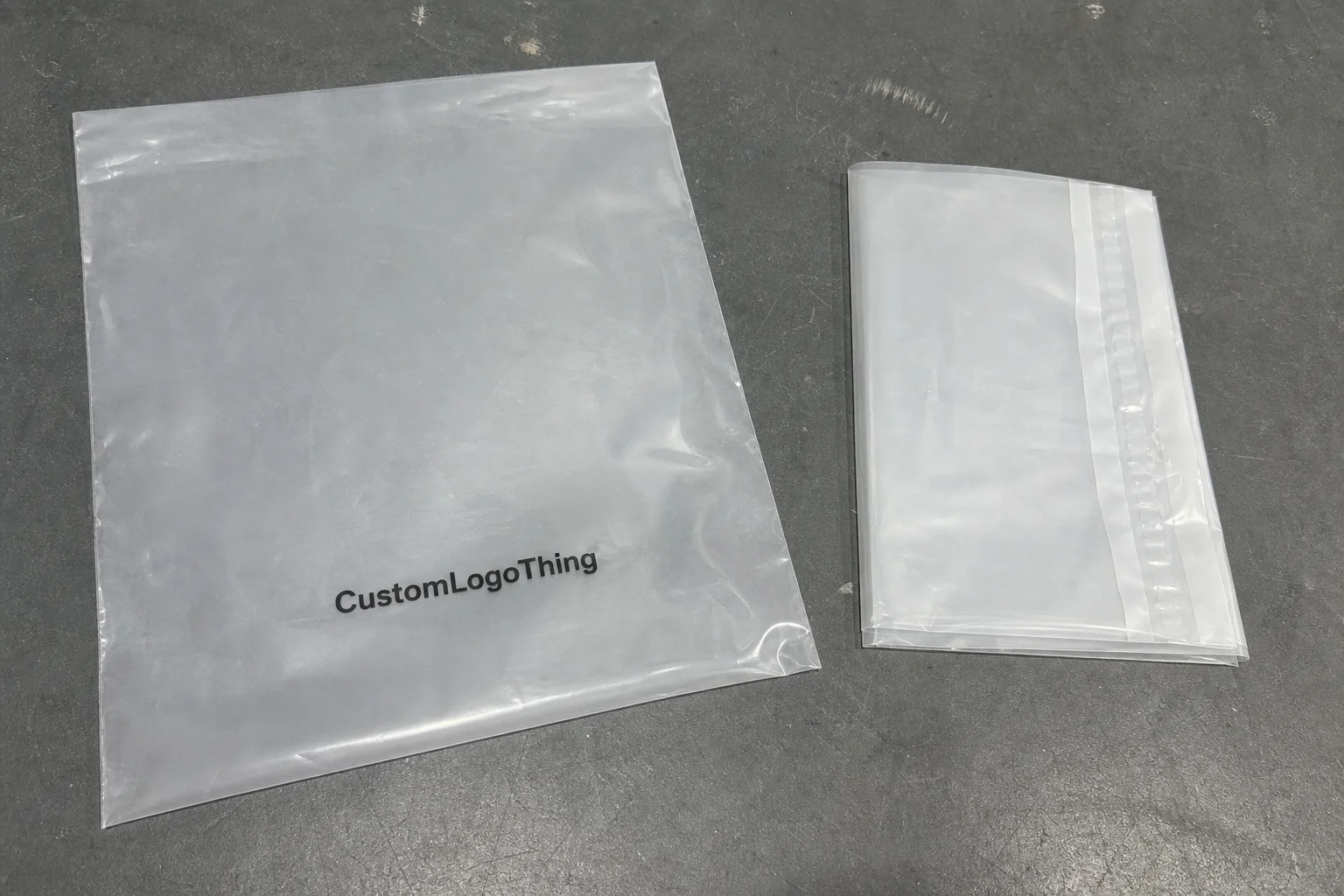
Many buyers treat polybags as a low-risk purchase because the item itself is small and familiar. That assumption is understandable, but it is not always correct. A delay in the bag order can stop the entire fold-and-packout workflow, because the garments cannot be bagged, cartoned, or palletized the way the warehouse planned. A single missed delivery date can ripple into labor overruns, storage pressure, and freight changes.
In practice, the bag belongs to the packaging design, not to the “miscellaneous” pile. It affects how the garment is protected, how the unit displays, and whether the finished product looks polished or rushed. A properly sized bag can also reduce presentation problems such as crushed collars, scuffed fabric, and uneven packing.
Another reason the timeline catches buyers off guard is that the spec seems simple until it is written down. A clear LDPE garment bag with one-color print is not in the same time category as a frosted CPP bag with hang holes, a resealable flap, and warning text in two languages. They both fall under custom garment polybags, but the production path is very different.
When timing slips, the damage is often indirect. You may pay warehouse labor for rework, split the shipment into multiple deliveries, or miss a retail drop and lose the value of the launch window. That is why experienced packaging buyers tend to treat lead time as part of the specification rather than as a separate detail to be filled in later.
“The bag looked simple on paper.” That line shows up a lot right before someone discovers the packing team is waiting on approval.
For buyers who want to cross-check packaging and sustainability terminology, the PMMI packaging resource library and the EPA sustainable materials guidance are useful starting points when reviewing material claims, recycling language, or compliance wording.
The production process and standard timeline
The workflow is straightforward on paper and a little less tidy in production. A typical custom polybag order moves through inquiry, quote review, artwork check, proof approval, material sourcing, printing, converting, quality control, packing, and shipping. If the spec is complete, the process can move with very little friction. If the spec is vague, each stage adds another chance for delay.
Typical stage-by-stage timing
- Inquiry and quoting: 1-3 business days if the dimensions, material, and quantity are already clear.
- Artwork review and proofing: 1-4 business days, depending on how many corrections are needed.
- Material sourcing: Same day to 5 business days for standard films; longer for specialty stock.
- Printing and converting: Often 5-12 business days for standard production.
- Quality control, packing, and carton prep: 1-3 business days.
- Shipping: Domestic transit can take 1-7 days; international transit depends on the lane and customs.
Stock-based jobs usually move faster because the factory is not waiting on uncommon film grades or custom extrusion. Fully custom work takes longer, especially when the order calls for unique dimensions, heavier gauges, or print coverage that needs tighter setup control. That is the difference between a fast turnaround and a realistic one.
Proof approval is the throttle. A clean sign-off can keep the job on schedule. A buyer who keeps changing the size, logo placement, warning text, or closure style can freeze the order for days. Sometimes longer. A quote is only an estimate until the proof is approved and the production slot is locked.
For larger-volume programs, the custom garment polybags production timeline usually stretches because the factory needs more machine time and more packing time. A run of 5,000 pieces may fit into a standard window, while 50,000 pieces can require more coordination across printing, conversion, carton packing, and freight booking. The product category stays the same, but the workload does not.
Production time is only part of the schedule. Transit time, customs clearance, and warehouse receiving matter too. Some buyers celebrate the factory completion date as if it were the finish line, then discover the bags still need another week to reach the receiving dock. The factory is done; the supply chain is not.
| Order type | Typical production window | Common use case | Main tradeoff |
|---|---|---|---|
| Stock size, 1-color print | 7-12 business days | Basic garment packing, repeat SKUs | Faster, but less flexibility |
| Fully custom size, standard print | 10-18 business days | Retail packaging, specific fold dimensions | Better fit, more setup time |
| Special film or multi-color print | 15-25 business days | Premium branding, compliance-heavy programs | More control, higher cost |
| Rush order | 3-7 business days, if accepted | Launch rescue, emergency replenishment | Premium pricing and tighter approvals |
Key factors that affect lead time and turnaround
Material choice has a bigger effect on schedule than many buyers expect. LDPE is common for soft, Clear Garment Bags. HDPE is thinner and crisper. CPP has a different feel and is often chosen for presentation. Recycled content is increasingly popular, but it can narrow sourcing options and add time if the supplier needs a particular resin mix. Specialty films almost always deserve a longer lead time than standard stock.
Thickness also changes the equation. A 1.5 mil bag behaves differently from a 2.5 mil or 3 mil bag during sealing, handling, and packing. Thicker bags usually protect better and feel more substantial, but they can be slower to source or process. Buyers often want that sturdier feel until they see the pricing and the added lead time.
Print complexity is another obvious factor. A single-color logo on one side is usually easier than a full-coverage design with multiple colors, tight registration, or white underprint. If the artwork needs exact Pantone matching, the proofing stage can take longer because color matching requires more checking than a quick visual approval.
Size and structure matter as well. A basic flat bag is simpler than a gusseted bag, a header bag, or a bag with a die-cut hang hole and tear notch. If the garment is folded in an unusual way or the retail team wants a specific shelf look, the packaging design becomes more exact, which usually means more setup and more inspection.
Order quantity changes more than pricing. It also changes machine time, packing time, carton count, and sometimes the way the job is scheduled around other orders. Small runs are not automatically fast. Setup still has to happen. A 500-piece order can take nearly as much preparation as a 5,000-piece order if the spec is custom.
There are also outside variables that are easy to overlook. Seasonal peak periods, factory workload, and shipping congestion can stretch the custom garment polybags production timeline even when the order itself is straightforward. If a supplier is handling holiday demand or a freight lane is backed up, the “standard lead time” may stop being standard very quickly.
Custom garment polybags cost and pricing drivers
Pricing usually breaks down into material cost, print setup, bag dimensions, thickness, quantity tier, and any special finishing. Most quotes are built from those parts whether the supplier lists them separately or folds them into one line. If a quote looks unusually low, a detail is probably missing.
For rough planning, a small run of custom garment polybags may land around $0.12-$0.30 per unit, depending on size, material, and print coverage. Larger runs often drop lower, sometimes into the $0.05-$0.14 per unit range for simpler specifications. Add specialty film, multi-color print, or compliance text, and the number moves up quickly. That is normal, not unusual.
The general rule is simple: the lower the quantity, the higher the unit price usually becomes. Setup costs do not shrink just because the order is urgent or small. Bigger volumes spread setup and prep across more bags, which is why repeat runs often price better on a per-unit basis.
Common add-ons include vent holes, resealable closures, hang holes, frosted finish, anti-static treatment, warning copy, recycle marks, and barcode or SKU space. Some of those are inexpensive. Others are not. Anti-static treatment, specialty finishes, and tightly controlled print requirements can add both cost and sourcing time, especially if consistency matters across several SKUs.
Speed and budget rarely improve at the same time. Rush production usually costs more. Short-run digital methods can help with smaller quantities, but they are not always the cheapest path at scale. Premium film finishes also cost more than standard clear PE. If the launch window is tight, the buyer has to decide what matters more: turnaround, appearance, or lowest possible unit price.
Compare quotes carefully and only after the details match. Same material. Same size. Same print count. Same pack-out. Same shipping basis. If those points differ, the numbers are not directly comparable. They may look similar on a spreadsheet, but they are not the same order.
If your program includes broader Custom Packaging Products or other branded packaging items like Custom Poly Mailers, keep the quote structure consistent so your team can compare total packaging spend instead of looking at each line in isolation.
For material sourcing and sustainability claims, many brands also check FSC guidance when paper components are involved, and some buyers cross-check shipment protection requirements against ISTA testing resources if the packaging needs to survive rough handling in distribution.
Step-by-step ordering guide to keep production on schedule
If you want the custom garment polybags production timeline to stay under control, start with a complete spec sheet. Include garment type, bag size, film type, thickness, print count, closure style, quantity, and delivery destination. “Standard size” is not a specification; it is a guess.
Send print-ready artwork early. That means the correct file format, outlined fonts, and clear color references. If the supplier needs a dieline, a Pantone reference, or white underprint instructions, include that immediately. A missing detail at the beginning is far cheaper than a reprint after production starts.
Approve the proof quickly, but not carelessly. Check spelling, logo placement, warning text, closure placement, and any size notes on the artwork. One typo can become a warehouse problem if the bags are already packed and moving. Correcting a proof is annoying; correcting a finished order is expensive.
Confirm the timeline in writing. Ask for the production start date, estimated completion date, transit method, and a realistic delivery window. Vague promises like “about three weeks” are fine when nobody is depending on them. If the bags are tied to a launch or replenishment date, the schedule needs dates, not loose estimates.
- Lock the spec sheet.
- Submit artwork with all required files.
- Approve the proof or mark corrections immediately.
- Confirm production and shipping dates in writing.
- Reserve receiving time at the warehouse.
Build in buffer time for inspection and repacking. Bags can arrive on the expected delivery date and still miss the real launch if the warehouse needs time to count, sort, and stage them. The schedule is not finished when the truck arrives. It is finished when the last carton is where it needs to be.
Common mistakes that delay custom garment bag orders
The biggest mistake is vague specs. A factory cannot quote, source, or produce accurately if the buyer says “something like a medium clear bag.” Medium according to which garment? Folded how? With a hanger hole or without one? Loose language creates revision cycles, and revision cycles consume time.
Artwork problems come next. Low-resolution logos, missing bleed, unconverted colors, and unclear warning text all create avoidable delays. If the print needs a white base or a specific registration, say so. A proof can look acceptable on screen and still be wrong for production.
Late changes to size or film thickness are especially disruptive because they can force a new quote and a revised timeline. Sometimes tooling stays the same. Sometimes it does not. Either way, the schedule moves backward. A small spreadsheet change can become a big factory change.
Buyers also forget freight. Production is not delivery. Ocean freight, air freight, customs, and domestic delivery can easily add days or weeks depending on the route and the season. If you only track factory completion, you are watching half the schedule.
Another common miss is not requesting a sample or proof when the order is high-stakes. If the bag affects retail presentation or compliance, a sample or digital proof is inexpensive insurance. That does not mean every reorder needs a new sample. It means higher-risk jobs deserve one.
Practical ways to shorten the timeline without wrecking budget
Use stock dimensions when you can. Fully custom sizing makes sense when the garment truly needs it, but many apparel programs can work within a few standard bag sizes. Fewer custom variables usually mean faster production and lower setup cost.
Reduce print complexity. One or two colors is usually easier than a crowded design with full coverage and special effects. If the goal is package branding, keep the logo clear and the copy tight. You are buying a garment bag, not a billboard.
Place repeat orders before inventory hits zero. That sounds obvious until the warehouse is nearly empty and everyone is suddenly asking for a rush. Reordering early gives production room to start before the schedule turns urgent, which is usually how buyers avoid paying for express freight and last-minute labor.
Ask for timeline options during quoting: standard, expedited, and freight-inclusive. Then compare the total landed cost, not just the per-bag number. A slightly higher unit price with better timing can be the cheaper choice once labor, storage, and missed launch risk are included.
Keep a spec archive for repeat SKUs. Save the dimensions, material, thickness, print file, carton pack, and approved proof. Future reorders should not require someone to dig through old emails and half-named PDFs. Good recordkeeping saves real time.
| Way to speed up | Impact on timeline | Impact on cost | Best use case |
|---|---|---|---|
| Use stock dimensions | Shortens setup and quoting | Usually lower | Repeat garment folds, standard sizes |
| Limit print colors | Reduces proofing and print complexity | Lower to moderate | Simple branded packaging |
| Approve proofs fast | Can save several days | No direct cost change | Tight launch schedules |
| Choose expedited freight | Shortens delivery time | Higher | Urgent replenishment |
What to confirm before you place the next order
Before you place the next order, confirm the exact dimensions, material, thickness, print method, quantity, pack-out, and delivery destination. If any of those are unclear, the quote and lead time are unclear too. That is usually how surprises get introduced into the schedule.
Ask for a written timeline with milestone dates rather than a general promise. You want proof turnaround, production start, estimated completion, shipping method, and arrival window. If a supplier cannot provide those details, the custom garment polybags production timeline is probably being estimated loosely instead of managed.
If the bag affects retail presentation, compliance, or premium product packaging, request a sample or a digital proof. That small step helps prevent expensive errors and gives your team a better read on finish, clarity, and sizing before the full run is approved.
Align the order with inventory, fulfillment, and launch calendars before anything is signed off. Bags do not live in isolation. They interact with garment folding, carton pack planning, and outbound freight. If the dates do not line up, the whole apparel program feels it.
A practical approach is simple: gather the specs, compare like-for-like quotes, confirm lead time in writing, and lock production before the shipping window gets tight. That is how you keep the custom garment polybags production timeline under control instead of letting it control you.
How long does the custom garment polybags production timeline usually take?
Standard production is often measured in weeks rather than days once printing, converting, and quality control are included. Simple stock-based specs can move faster, while fully custom sizes, special films, or more complex print setups usually take longer. Shipping time has to be added on top, since freight can change the actual delivery date more than the factory schedule.
What delays the custom garment polybags production timeline the most?
Late artwork approvals, missing specs, and repeated design changes are the biggest avoidable delays. Special materials, higher-volume orders, and busy factory seasons can also stretch lead time. International shipping, customs, and domestic receiving are easy to underestimate, but they are very real schedule risks.
Does ordering a higher quantity make the custom garment polybags production timeline longer?
Usually yes, though not in a straight line. Larger orders need more machine time and more packing time, so the schedule can extend. The upside is that per-bag cost often drops with volume. If the order is urgent, ask whether splitting the order or using a stock format can keep things moving.
Can I speed up custom garment polybags production without overspending?
Yes. Use standard dimensions, fewer print colors, and clean artwork to avoid rework. Approve proofs quickly and give the supplier complete specs the first time. Rush production and express freight still cost more, so the least expensive way to go faster is usually better planning.
What should I ask for in a quote to compare timelines accurately?
Ask for production time, proof time, shipping time, and the total estimated delivery window. Confirm material, thickness, print count, quantity, and whether tooling or setup is included. A quote without those details is just a number with a pleasant attitude.


