If you are sourcing a private label Clear Garment Bags supplier, the challenge is not locating a transparent sleeve. The real challenge is getting a bag that still looks clean after printing, folding, packing, shipping, and being handled by someone who wants the order on a rack five minutes ago. Two bags can look nearly identical in a catalog and perform very differently once they leave the carton.
That gap is where buyers lose money. Film clarity, seam integrity, closure design, and print quality can turn a basic garment bag into a retail-ready package or a weak layer of plastic that makes a brand look cheaper than it is. The bag is part of the product experience, not just a wrapper.
Why private label clear garment bags are not all the same
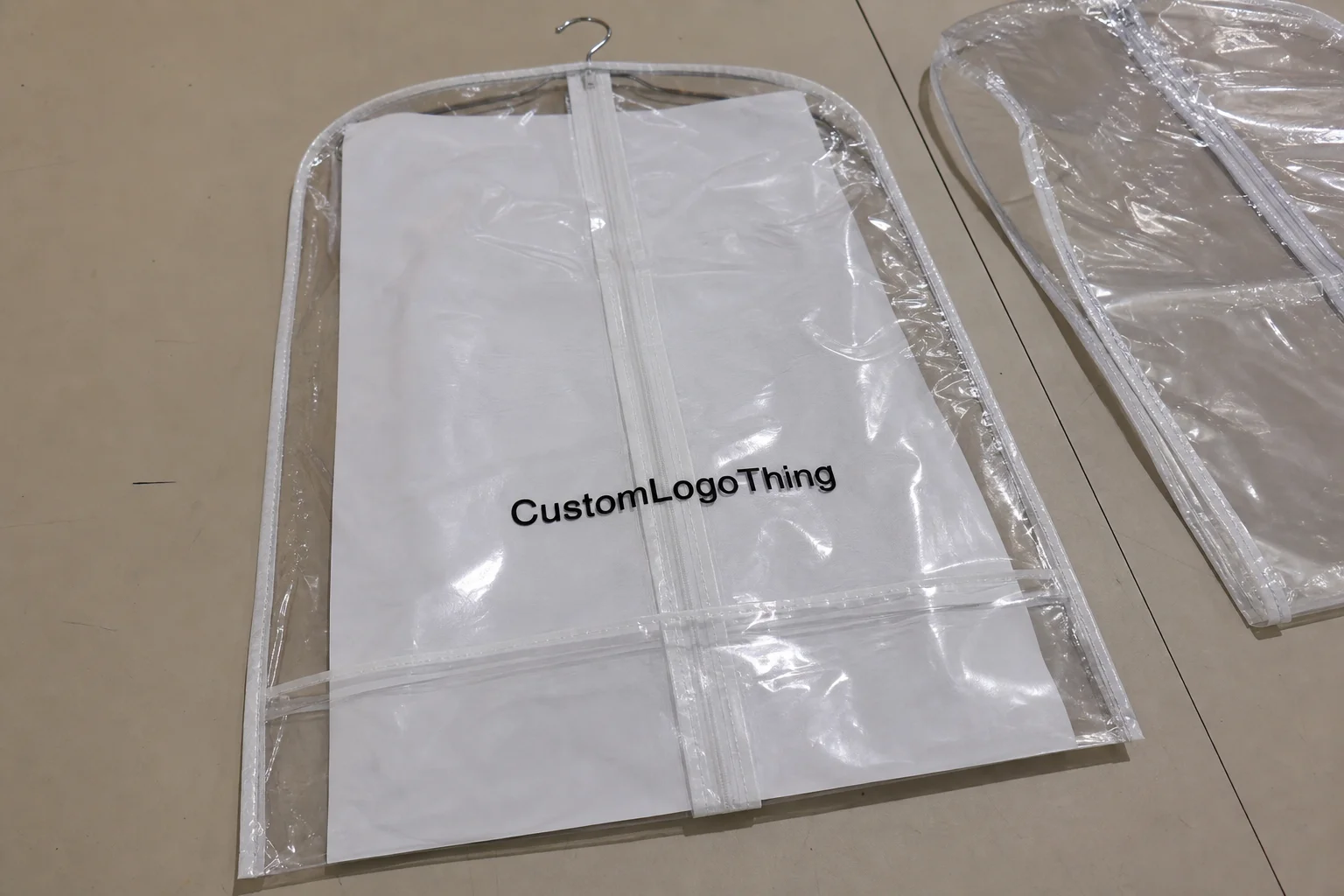
Private label in this category means the bag is built around your brand identity, not just sold as a generic clear cover. That can include logo printing, brand colors, warning text, size specs, packaging format, and sometimes even how the bags are folded and packed into cartons. The base product may still be a standard packaging format, but the details shift the final impression a lot more than most buyers expect.
The customer base is broader than it first appears. Apparel brands usually want presentation and consistency. Dry cleaners need protection and easy handling. E-commerce sellers focus on packing speed and damage control. Uniform suppliers and promotional merch teams tend to care about repeatable sizing and straightforward branding. Same product family, different operating pressure.
There is also a meaningful difference between stock, custom, and fully private label programs. Stock bags are unbranded, ready to ship, and the lowest-cost option for small orders. Custom printed bags add a logo or a short brand message. Private label packaging programs go further with matched specs, recurring reorder support, packaging rules, and tighter control over the finished look. If the bag sits on a retail shelf, stock products are usually a compromise rather than a real fit.
The buyer’s priorities are usually predictable: protection, presentation, cost, and lead time. The problem is that those four rarely move in the same direction. Thicker film costs more. Better print costs more. Faster freight costs more. If a quote promises all four advantages at the lowest price, the sample should be doing the talking, not the salesperson.
In practice, clear garment bags are often judged in the first ten seconds of unboxing. Cloudy film, bad folds, or crooked printing can make the package feel low-grade even when the garment inside is excellent. That effect is stronger in fashion and gifting than in utilitarian categories. Presentation has a measurable business cost.
How the private-label supply process works
The process normally begins with a spec request. A competent private label clear Garment Bags Supplier should ask for size, thickness, closure style, print colors, artwork files, target quantity, and delivery timing. If those questions are missing, the supplier may be overpromising or underqualified. Neither helps much once production starts.
After the first quote, expect a digital proof. That proof is where artwork placement, logo size, print area, and basic proportions get checked. For a simple one-color run, the proof may be enough to move forward. For retail-facing packaging or a larger order, a physical sample is worth the extra time because clear film changes how colors read. Fine type can vanish faster than people assume, and bright colors can appear lighter on transparent material.
Production methods depend on order size and artwork complexity. Flexographic printing is common for larger runs because it handles volume efficiently. Gravure may be used for high-volume repeat orders with stronger detail requirements. Smaller branded orders often use one-color printing or limited coverage to keep setup costs under control. The method should fit the spec, not the other way around.
A good supplier does not just say yes. They explain what the film, print area, and closure can realistically support. That prevents expensive surprises later.
Most delays come from the same few places: unclear artwork, last-minute dimension changes, and deadlines that were aggressive from the start. Buyers send a logo in the wrong format, then expect production to compensate. A supplier can clean up some issues, but it cannot invent missing vector files or stabilize a moving target. The smoother the spec package, the faster the order usually moves.
There is also a difference between a mockup and a production-ready proof. A mockup can show placement and general appearance. It does not tell you how a logo will read on the actual film, whether a thin line will blur, or whether the closure hardware fits the weight of the garment. That is why sample review matters more for premium apparel than for low-value storage use.
Key specs that affect quality, branding, and shelf appeal
Film choice carries more weight than many first-time buyers realize. LDPE is flexible, soft, and common in garment packaging because it handles folding and everyday use well. PE is the broader material family and can vary depending on blend and finish. PP usually feels crisper and can present a cleaner surface in some applications, though it is not the best choice for every garment or handling scenario. If clarity is the priority, compare samples under the same lighting you use for product review.
Thickness is usually listed in microns or mils, depending on the supplier. For lightweight retail use or short-term covering, thinner gauges may be acceptable. For shipping, storage, or repeated handling, a heavier gauge is safer. A common working range is roughly 25–40 microns for lighter use and 50 microns or more for stronger protection, but actual needs depend on garment weight, fold size, and how the bag is handled in the warehouse.
Closure design affects usability more than most buyers expect. Open-top bags are simple and economical. A resealable flap improves reuse and dust protection. Zipper closures feel more premium and can support retail presentation. Hanger holes matter if the bag will move from packing to display without being removed. The right choice depends on the actual workflow, not on whatever looks nicest in a mockup.
Printing on clear film has limits. Fine text, busy artwork, and weak contrast can look muddy very quickly. Simple logos often perform better than elaborate layouts because the film itself is transparent and visually active. A restrained one-color mark or a clean two-color layout can look more polished than trying to fit a full poster onto plastic. On clear packaging, restraint usually improves brand perception.
There are also practical quality checks that experienced buyers ask for before approving production. These include print adhesion, fold memory, seam uniformity, seal strength, and whether the bag stays flat enough to pack consistently. A slightly cloudy film may be acceptable for utility use, but it can undermine premium apparel packaging. A bag that tears easily at the seam may work in a showroom and fail in a distribution center. The use case should set the spec.
Compliance can matter depending on the channel. Some retail programs require warning text, recycling guidance, or content labeling. If sustainability claims are part of the brand story, ask whether the film includes recycled content and whether the supplier can support documentation for chain-of-custody requirements where relevant. If the bags are being used in shipping workflows, packaging test thinking matters too; the ISTA site is a useful reference point for transit and handling standards even when the bag itself is not certified. For broader packaging material considerations, EPA packaging resources are useful as well.
One overlooked detail is odor. Lower-grade film can carry a strong plastic smell, which becomes noticeable in enclosed retail or wardrobe storage. It is not the first spec buyers ask about, but it can be the first thing customers notice after opening the carton. That kind of issue rarely shows up in a glossy photo.
Private label clear garment bags supplier pricing, MOQ, and quote factors
Pricing is driven mostly by five variables: material thickness, bag size, print colors, custom features, and quantity. Change one of those and the number moves. Change three and the quote moves a lot. Larger bags use more film. Thicker film uses more resin. More print colors raise setup cost. Special closures, hanger options, gussets, or custom folding add labor. None of that is mysterious, but it is easy to miss if you are comparing only the headline price.
For budget planning, small custom runs are usually far more expensive per unit than stock products. At larger quantities, the unit price drops quickly. For a simple clear garment bag with one-color print, a rough working range might sit around $0.18–$0.28 per unit at 5,000 pieces, while thicker gauges, larger sizes, or smaller quantities can push that higher. The spread is wide because the spec range is wide. A quote without matching specs is not really a quote; it is a starting point.
MOQ is where many buyers get surprised. Some suppliers advertise a low minimum but offset it with setup charges, so the initial order is not actually inexpensive. Others simplify setup but require more volume. The right structure depends on whether the project is a pilot or a repeated replenishment item. If the order is only a few hundred units, premium pricing is normal. Production economics do not bend just because the deadline is tight.
| Order type | Typical unit price behavior | Best for | Watch out for |
|---|---|---|---|
| Small pilot run | Higher unit cost, higher setup ratio | Testing fit, clarity, and branding | Setup fees can dominate total cost |
| Mid-volume order | More balanced pricing | Seasonal drops and steady ecommerce use | Inventory risk if specs change |
| Large repeat run | Lowest unit cost | Established SKUs and ongoing replenishment | Storage, cash flow, and forecast accuracy |
First-order pricing may also include plate charges, cylinder costs, artwork prep, or sample fees. A sample can be inexpensive, or it can cost more than expected if the supplier is making a true pre-production version rather than a mockup. Paying for a sample is usually worthwhile if the bag touches customers directly. It is much cheaper to find a problem before production than after 20,000 units are packed.
Comparing quotes only works if the specs match exactly. A 30-micron bag and a 50-micron bag are not the same product. Neither are open-top bags and zipper bags. The lowest number on the page is often attached to a smaller bag, thinner film, fewer print colors, or a less demanding finish. That is not bad quoting; it is incomplete comparison.
If you are building a broader packaging system, it helps to align the bag artwork with your Custom Labels & Tags so the brand feels deliberate across touchpoints. Buyers notice visual consistency even when they cannot explain why the package feels more polished.
Production steps, timeline, and lead time expectations
The usual timeline starts with inquiry and spec review, then moves to artwork proofing, sample approval if needed, final sign-off, production, quality inspection, packing, and freight booking. On paper, that looks orderly. In practice, any step can stall if the buyer keeps revising the dimensions or sending artwork that was never ready for print.
For straightforward branded clear garment bags, production often takes around 12–15 business days after proof approval. Complex artwork, special sizes, and heavier film can extend that. If a physical sample is required first, add time for sample making, transit, and revisions. International freight adds another layer: ocean shipping usually saves money but may add weeks, while air freight is faster and significantly more expensive.
Seasonality matters more than some buyers plan for. Holiday peaks, apparel buying cycles, and raw material shortages can stretch lead times without much warning. If the launch date is fixed, build in a buffer of at least one to two extra weeks. For reorder items, it is safer to trigger replenishment before the last carton leaves the shelf. Running out and then asking for a rush order is a reliable way to pay more than planned.
Packaging during shipment deserves attention too. Carton strength, pallet layout, and moisture protection all affect how the bags arrive. A clear bag can be technically manufactured well and still arrive wrinkled, dusty, or crushed if the freight method is careless. If the order is traveling a long distance, ask how cartons are packed, how pallets are stabilized, and whether the supplier has a standard transit protection method. The details matter because clear film shows shipping damage easily.
Lead time should also account for approval behavior on the buyer side. If multiple people need to sign off on color, size, and logo placement, the project can move slowly even when production capacity is available. The fastest orders usually come from teams that know who approves what before the proof is sent. That sounds procedural, but it often determines whether the bags arrive on time.
Common mistakes buyers make when sourcing custom garment bags
The first mistake is chasing the lowest quote without checking the actual specs. Thin film, weak seams, and flat printing look cheap for a reason. The second mistake is skipping samples. A bag can look fine in a digital mockup and still arrive cloudy, wrinkled, or too flimsy for the garment weight.
Artwork problems are just as common. Low-resolution logos, missing bleed, and vague placement notes create back-and-forth that slows the project. A supplier can only print what it receives. If the source file is poor, the finished bag usually is too. Vector artwork is still the safest starting point for clean print results.
Size mistakes happen more often than they should. Buyers sometimes order based on the garment name instead of the actual folded dimensions, hanger width, or gusset needs. That leads to bags that are too tight, too long, or awkwardly shaped. The right way to spec a bag is to measure the finished garment and the packing method, then add clearance for handling.
Another problem is overdesigning the print area. On a transparent substrate, too much ink can make the bag look heavier and less premium. Overcrowded artwork also raises the chance that fine details will blur or disappear. Clear packaging rewards disciplined branding. The bag should support the product, not compete with it.
Finally, people forget the operational details: carton counts, pallet configuration, import documents, bag labeling, and receiving instructions. Then the shipment arrives and the warehouse team is improvising. That is a frustrating way to discover that the production part went fine but the handoff did not. A clean order is not only about how the bag looks; it is also about how it lands in inventory.
Expert tips for selecting the right supplier and next steps
Shortlist suppliers that can show real material options, print samples, and actual production photos. Not polished stock images. Not vague claims that they can handle “all packaging needs.” You want evidence that they understand clear film behavior, print limitations, and repeat-order consistency. A strong private label clear garment bags supplier should provide a written spec sheet and a quote that breaks down the cost drivers before production is approved.
Compare at least two or three suppliers on more than price. Look at communication speed, clarity of documentation, sample policy, and whether questions are answered directly. If a supplier cannot explain thickness options, print method, or the reason behind a quoted MOQ, that is a warning sign. Cheap mistakes still cost money, and packaging mistakes are visible.
Start with a pilot run if the bag is going to market for the first time. A smaller order lets you check clarity, fit, seal performance, and shelf appearance before you commit to a larger quantity. Once the bag performs well under real handling, scaling is easier and far less risky. That is a better path than ordering full volume and hoping the warehouse catches the defects first.
Here is the practical sequence most buyers use:
- Confirm bag size, closure style, and target thickness
- Prepare vector artwork and logo files
- Set quantity target and delivery date
- Request matched quotes with identical specs
- Approve a sample before production if the bag is customer-facing
A final check before ordering is worth the time. Ask whether the supplier can hold consistent film clarity across reorders, whether print registration is repeatable, and whether the carton pack count is stable from run to run. Those are the details that separate a one-time shipment from a packaging program that can actually support growth.
If you want retail-ready packaging without guesswork, start with the spec sheet, not the price. A well-matched private label clear garment bags supplier can save weeks of back-and-forth, but only if the buyer gives the supplier enough information to quote accurately. Bad decisions tend to show up on the invoice later.
FAQ
What should I ask a private label clear garment bags supplier before ordering?
Ask for the exact material, thickness, size, print method, MOQ, setup fees, sample policy, and estimated lead time. Request photos or samples of similar production work rather than only mockups. A supplier that answers these points clearly is usually easier to work with.
How much do custom clear garment bags usually cost per unit?
Unit cost depends on size, thickness, print colors, and quantity. Smaller orders cost more per bag, while larger runs usually reduce the price. For a meaningful comparison, the quotes need identical specs; otherwise, the numbers are not comparable.
What is the typical MOQ for private label garment bags?
MOQ varies by supplier and printing method, but custom runs often start in the low thousands. Some suppliers offer smaller pilot runs with higher unit pricing, which can make sense if you are testing a new style or brand program.
How long does production usually take for branded clear garment bags?
Simple orders can move quickly, while custom printing, sampling, and freight can extend the timeline. A straightforward order may take about 12–15 business days after proof approval, with extra time needed for revisions or overseas shipping.
Can I print a logo on clear garment bags without losing clarity?
Yes, but simple logos and controlled color use usually look cleaner on clear film. Heavily detailed artwork can look cluttered, so the design should suit the material instead of fighting it. Clean branding generally wins here.


