Buyer Fit Snapshot
| Best fit | Custom Gift Boxes for Shipping projects where brand print, material claims, artwork control, MOQ, and repeat-order consistency need to be specified before quoting. |
|---|---|
| Quote inputs | Share finished size, material target, print colors, finish, packing count, annual reorder estimate, ship-to region, and any compliance wording. |
| Proofing check | Approve dieline scale, logo placement, barcode or warning zones, color tolerance, closure strength, and carton packing before bulk production. |
| Main risk | Vague material claims, crowded artwork, missing packing details, or unclear freight terms can make a low unit price expensive after revisions. |
Fast answer: Custom Gift Boxes for Shipping: Design, Cost, and Fit should be specified like a repeatable production item. The safest quote records material, print method, finish, artwork proof, packing count, and reorder notes in one written spec.
Production checks before approval
Compare the actual filled-product size with the drawing, then confirm tolerance on folds, seals, hang holes, label areas, and retail display edges. Reserve space for logos, QR codes, warning copy, and material claims before decorative graphics fill the panel.
Quote comparison points
Review material grade, print process, finish, sampling route, tooling charges, carton quantity, and freight assumptions side by side. A quote is only useful when the supplier can repeat the same color, closure quality, and packing count on the next order.
Custom Gift Boxes for Shipping: Design, Cost, and Fit
Custom Gift Boxes for shipping can look polished on a shelf and still fail in a parcel network if the product has room to slide, rattle, or crush inside the packout. I have opened too many sample kits that looked beautiful on a desk and felt wrong the second I shook them. That is the part many brands miss. The outside may read as premium, but the inside is where damage gets prevented or invited.
From a packaging buyer's seat, custom gift boxes for shipping are not decoration with a mailbox attached. They have to protect the product, control the packout, and still deliver a clean unboxing without wasting material or turning fulfillment into a tangle of extra steps. Good packaging design does all three. Poor packaging design makes you pay twice: once for the box, then again for the replacement unit. And if the insert is fiddly enough to slow down the packing line, somebody on the warehouse side is gonna complain pretty quickly.
A box that photographs well on a desk is not automatically a box that survives a conveyor, a drop, and a delivery van.
Custom Gift Boxes for Shipping: Why Empty Space Causes Damage
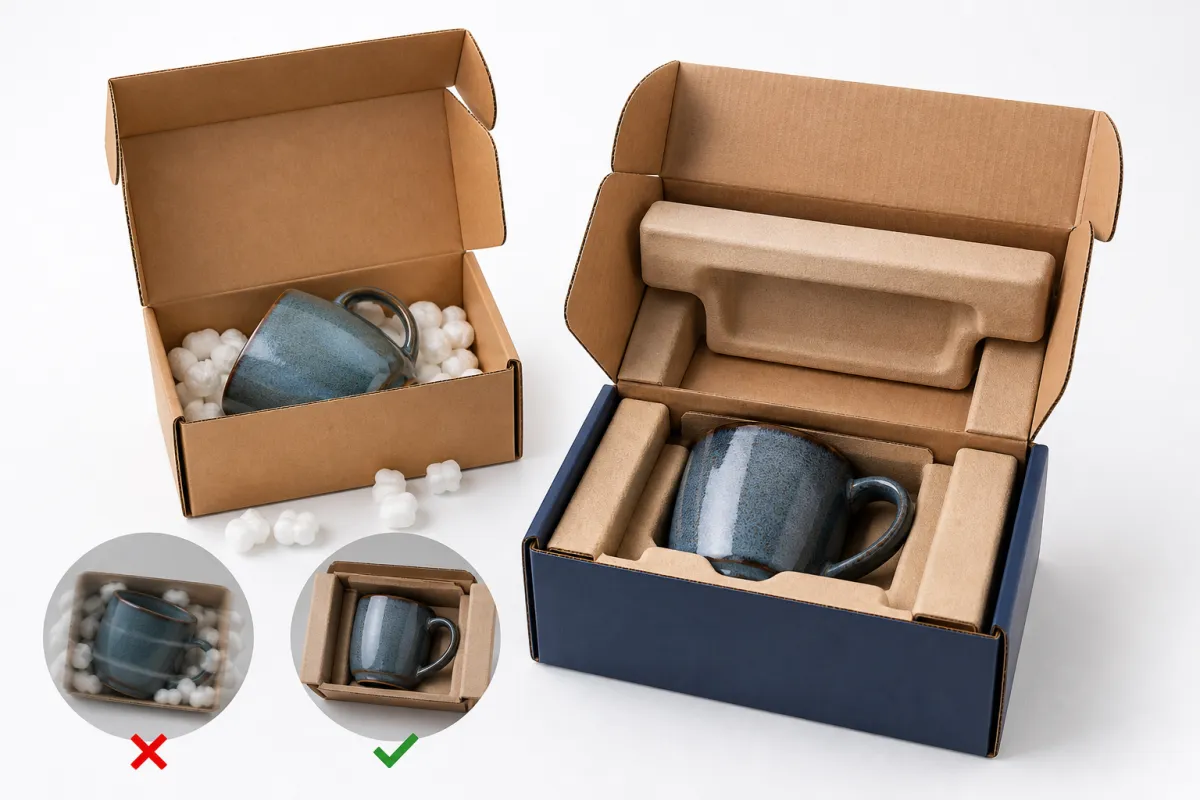
The hard truth is simple: custom gift boxes for shipping fail most often because the product has too much room to move, not because the outer carton is plain or the print missed by a millimeter. If the item can bounce, the corners get punished. If the item can lean, the walls get stressed. If the item can shift in one direction, that motion becomes repeated impact during transit.
Shipping damage usually comes from three things: excess void space, weak corner support, and a poor product-to-box fit. A premium-looking rigid box can still collapse under pressure if the insert does not lock the product in place. A corrugated mailer can outperform a prettier setup box if the board caliper, flute structure, and closure style match the shipping route. That is why custom gift boxes for shipping need to be designed for motion, not just display.
There is also a real difference between retail packaging and packaging meant for direct-to-customer delivery. A display box can tolerate a gentle handoff and a short trip. Custom gift boxes for shipping have to survive carrier sorting, stack pressure, temperature swings, and the occasional drop that nobody wants to talk about. The box does not care that the artwork is elegant. The conveyor does not care either.
That is why custom gift boxes for shipping solve three jobs at once: presentation, protection, and repeatable packout. When those three jobs line up, the fulfillment team can pack faster, the customer gets a nicer unboxing, and the damage rate usually drops. When they do not line up, the project turns into expensive packaging theater.
From a product packaging standpoint, the best box is rarely the fanciest one. It is the one that arrives intact, keeps the product centered, and still looks deliberate when the customer opens it. That is the standard to use for custom gift boxes for shipping. Not cute. Not fragile. Just correct.
How Custom Gift Boxes for Shipping Actually Work
Custom gift boxes for shipping are really a packaging stack, not a single box. The product sits inside an insert or tray, the tray sits inside the gift box, and the gift box may sit inside a shipper if the route or product weight calls for extra protection. That stack is what controls motion. Remove one layer carelessly, and the whole system gets weaker.
The common formats each solve a different problem. Rigid setup boxes feel premium and hold shape well, which makes them popular for gift sets, cosmetics, apparel, and premium accessories. Corrugated mailers are usually better for ecommerce shipping because they offer better crush resistance and can reduce the need for an extra shipper. Folding cartons are useful when the product is lighter and the brand wants compact, efficient retail packaging. Two-piece styles work well for presentation, but they need the right board and fit so the lid does not loosen during transit.
Insert design matters just as much as the outer shell. Dividers keep bottles or jars from colliding. Die-cut paperboard cradles stop movement without adding much bulk. Foam can protect fragile items, but it also adds cost, weight, and sometimes a recycling headache. If the insert is overdesigned, order fulfillment slows down. If it is underdesigned, the product starts tapping the walls like it has somewhere else to be.
Branding is the other half of the equation. Custom printed boxes can use offset print, digital print, foil, embossing, debossing, UV coating, or a printed sleeve over a plain base. For custom gift boxes for shipping, the trick is to put decoration where handling will not destroy it. A soft-touch finish on an outer sleeve can look great, but a high-friction shipper surface may scuff it during transit. Label-friendly zones help too, because fulfillment is always easier when a barcode, shipping label, or compliance sticker has a clean place to live.
If you need another useful benchmark, the industry standards around transit testing are not decorative either. Check the ISTA test procedures if you want a sanity check on drop, vibration, and compression requirements. And if you are choosing paper-based materials for branded packaging, look at FSC options when chain-of-custody matters to your brand story.
Custom gift boxes for shipping work best when the structure does the hard work and the graphics stay out of the way of protection. That balance is what separates a nice box from one that actually earns its keep.
| Format | Typical Unit Cost | Protection Level | Best Use |
|---|---|---|---|
| Rigid setup box | $1.40-$4.50 | Moderate to high, depending on insert | Premium gifting, sets, cosmetics |
| Corrugated mailer | $0.55-$1.80 | High for parcel shipping | Ecommerce shipping, lighter products |
| Folding carton | $0.25-$0.90 | Low to moderate | Light products, retail packaging |
| Box plus outer shipper | $1.80-$5.50+ | Very high | Fragile items, premium kits, long routes |
Custom Gift Boxes for Shipping Cost and Pricing Basics
Custom gift boxes for shipping are priced by more than one variable, and the first mistake buyers make is asking for a single unit price without defining the structure. That is how quotes get compared badly. A rigid box with a printed insert, magnetic closure, and specialty finish is not the same animal as a corrugated mailer with one-color print. Same category. Very different cost behavior.
The main price drivers are straightforward: box style, board grade, print complexity, insert type, finish level, and order quantity. For most projects, quantity has the biggest effect on unit price. A run of 500 custom gift boxes for shipping may sit in a much higher range than 5,000 units because setup and labor get spread across fewer pieces. Small runs often carry extra manual work, and printing multiple colors or adding foil can move pricing fast.
Here is a realistic way to think about it. A simple corrugated mailer with one-color print might land around $0.55-$1.20 per unit at scale. A premium rigid box with a paper-wrapped base, printed lid, and simple insert might sit around $1.40-$3.00, sometimes more if the finish gets fancy. Add magnetic closures, specialty foils, or custom foam, and the number climbs. Custom gift boxes for shipping do not have to be expensive, but they rarely become cheap by accident.
Tooling and setup charges matter too. Dieline creation, plate charges, sample fees, and freight can all change the landed cost. A quote that looks strong on paper can become a headache once the boxes are shipped to your warehouse, repacked, and tested. That is why I usually tell buyers to ask for separate pricing on the box, insert, decoration, and shipping. It keeps the comparison honest and helps with budget planning for product packaging and order fulfillment.
MOQ reality is another thing people pretend not to see. Lower minimums are convenient, but they usually raise the per-unit cost. If a vendor accepts 250 units, expect less pricing efficiency than a 1,000- or 2,500-unit run. That does not make the project bad. It just means the box has to earn more value through branding, protection, or speed.
There is also a difference between unit cost and landed cost. Unit cost is the number on the quote. Landed cost includes freight, warehousing, assembly labor, damage replacements, and the time your team spends fixing poor fit. A cheaper box that adds five seconds per packout can become expensive once the volumes go up. Custom gift boxes for shipping should be judged against the full cost of getting a safe, attractive package to the customer.
For brands that also use Custom Packaging Products across channels, it often helps to compare the shipping box with related items like Custom Poly Mailers and Custom Shipping Boxes. The cheapest-looking line item is not always the best fit for the way the order actually moves.
One more practical point: ask whether the box needs to survive parcel handling by itself or sit inside a master carton. That answer changes the board spec, the insert, and the cost. Custom gift boxes for shipping are a packaging system, not a decorative afterthought.
Custom Gift Boxes for Shipping Process and Timeline
Custom gift boxes for shipping follow a predictable path, but projects still drag when the brief is vague. The usual flow starts with a product spec, then a dieline, then artwork, sampling, approval, production, packing, and delivery. Skip one of those steps, and the timeline stretches. Skip two, and the box may arrive looking fine while failing the actual job.
The biggest delays come from missing dimensions, late artwork changes, and sample revisions that should have been caught earlier. If the product is changing size, the insert needs to be updated before print approval. If the finish is not final, the sample is not final. That sounds obvious until a team approves custom gift boxes for shipping based on a mockup that has never held the real product. Then everyone acts surprised when the lid bows or the insert leaves a gap. Packaging, as ever, is not impressed by assumptions.
Typical timelines are not mysterious. Simple corrugated mailers with plain or digital print can often move in 10-15 business days after artwork approval, depending on the vendor and quantity. A more complex rigid structure with inserts, specialty finishes, or multiple proof rounds may need 3-5 weeks, sometimes longer if materials need to be sourced. Rush orders can happen, but they usually increase cost and limit finish choices. That is the tradeoff, and pretending otherwise is how budgets get wrecked.
Sampling is the step that saves the most pain later. A fit sample tells you whether the product moves, whether the box closes cleanly, and whether the assembly steps make sense for the people packing orders. For custom gift boxes for shipping, I like to see the box pass a simple shake test, a corner check, and at least one real drop simulation before full production. It does not need to be dramatic. It just needs to be honest.
For fragile goods, test the actual packout with carrier-like movement. ASTM D4169 and ISTA-style checks are useful because they push you to think beyond the desktop mockup. Custom gift boxes for shipping are supposed to survive motion, not a photo shoot.
A clean approval process usually shortens turnaround. That means one contact person, one file version, one final dimension set, and one clear standard for acceptable fit. If the team is still debating the opening direction, the closure style, or the insert height, production should not start. Better to delay a day than to burn a week redoing a stack of boxes that were never right.
How to Choose the Right Specs for Custom Gift Boxes for Shipping
Custom gift boxes for shipping live or die on specs. Not vibes. Specs. Start with internal dimensions, product weight, fragility, stackability, and the carrier environment the package will actually face. A box for local courier delivery can be different from one moving through a national ecommerce shipping network. The route matters. The product matters more.
Measuring the product alone is not enough. You also need room for the insert, protective wrap, tissue, closure tolerance, and a little bit of assembly forgiveness. If the product is 8 inches wide and the insert takes half an inch on each side, the internal dimensions must reflect that. Too tight, and packout slows down. Too loose, and movement starts eating the corners. Custom gift boxes for shipping should fit like tailored clothing, not a borrowed jacket.
Material choice depends on the job. Lightweight, high-appearance gift sets can use rigid board or premium folding cartons. Heavier products, fragile glass, or long-distance shipments usually need corrugated structures, maybe even a box-plus-shipper setup. For heavier items, board strength and flute profile matter as much as graphics. A beautiful print on weak material is just expensive paper waiting to fail.
Brand experience and practical constraints need to coexist. Dimensional weight charges can punish oversized boxes. Shelf space can limit how much depth you can use. Packing speed matters because order fulfillment teams have real throughput targets. If the structure takes 40 seconds to assemble, somebody in operations will notice. Usually by the second pallet.
Here are the fit-check questions I recommend before approving custom gift boxes for shipping:
- Can the product pass a shake test without shifting?
- Do the corners stay supported when the box is lifted one-handed?
- Does the closure stay shut without over-taping?
- Can the packout be assembled quickly by someone new?
- Will the box still look good after a short drop or corner impact?
- Does the structure fit inside your shipping method without wasteful empty space?
If you can answer yes to those questions, the spec is probably in the right neighborhood. If not, keep adjusting. A box that needs prayer and fragile-handling stickers to survive is a box that needs redesign.
For custom gift boxes for shipping, one more detail matters more than people expect: closure behavior. Magnetic lids, friction-fit lids, tuck flaps, and sleeve systems all change how the box behaves in transit. The prettier closure is not always the better one. The right closure is the one that stays closed, protects the product, and supports the brand without turning every packout into a small engineering project.
Common Mistakes with Custom Gift Boxes for Shipping
The most common mistake with custom gift boxes for shipping is choosing a box that looks great in photos but bows, crushes, or scuffs during transit. That mistake is expensive because it damages both the product and the brand impression. Customers do not separate those two things. They see a dented box and assume the whole operation is sloppy.
Another classic error is overpacking. More foam, more tissue, more void fill, more paper shreds. It feels safer, and sometimes it is, but a pile of filler can also raise material cost without fixing the actual movement problem. If the product can slide inside the box, stuffing extra paper around it is often a bandage, not a solution. Better fit usually beats more filler.
People also forget about the outer shipper. The gift box may be perfect, but if the master carton is weak, the tape is poor, or the label placement is awkward, the whole system suffers. Custom gift boxes for shipping should be designed with the outer shipper in mind, not treated like they live alone in a vacuum. They do not. They ride with forklift pallets, conveyor belts, and impatient hands.
Artwork approvals cause trouble when the structure is still unresolved. Print area, seam placement, barcode location, and assembly folds can all interfere with the design. A logo can land too close to a lid edge. A pattern can split across a seam. A foil stamp can look great on the proof and ugly once the box is folded. Approving graphics before confirming structure is a quick way to make extra work for everyone involved.
There is also a hidden cost problem. Underestimating freight, labor, and damage replacements can make a seemingly low-cost project much more expensive. A box that saves eight cents but adds a 2% damage rate is not saving money. That is just moving the bill around and pretending not to notice.
One blunt rule: if the packaging team keeps saying "handle with care" during packout discussions, the structure probably needs another round of work. Custom gift boxes for shipping should reduce anxiety, not create it.
For brands trying to build stronger package branding, it helps to test the whole system: box, insert, outer shipper, tape, label placement, and actual carrier route. The weakest link is usually not where people expect it. It is often the little thing nobody wanted to budget for.
Expert Tips for Better Custom Gift Boxes for Shipping
The cleanest way to improve custom gift boxes for shipping is to design around the product first and the branding second. That does not mean the box should look plain. It means protection and fit set the structure, and branding gets added where it will not fight the packout. That order matters. A pretty design on a bad structure is still a bad structure.
I usually recommend a pilot run before scaling. Even 100 to 250 units can expose problems that a mockup will miss: corner wear, lid looseness, insert friction, slow assembly, or a closure that looks smart but behaves badly in real use. Custom gift boxes for shipping are too easy to overestimate from a screen. Real hands catch the details faster than any rendering does.
Another good move is to compare landed cost instead of unit price. Freight, waste, damage rate, and labor often change the economics more than the quote itself. A box that costs twenty cents more but saves thirty seconds per order can be a better deal, especially in order fulfillment environments where volume is steady. The math is not glamorous, but it is honest.
Standardizing insert sizes across product lines is one of the most underrated ways to simplify packaging design. If two or three SKUs can share the same depth or tray format, you reduce changeovers and make reorders easier. That is especially useful for custom gift boxes for shipping that support multiple gift sets, seasonal bundles, or subscription programs. Fewer custom parts usually means fewer mistakes.
It also helps to use material where it matters and skip it where it does not. Reinforce the corners. Support the product. Improve the closure. Do not obsess over a fancy finish if the box is still too loose inside. The customer will notice the damage before they notice the foil.
Here is a rule I use a lot: if a box needs fragile-handling instructions to survive, the structure is probably underbuilt. That does not mean every package must be overengineered. It means the design should do the work before the warning label has to.
For businesses balancing retail packaging and ecommerce shipping, a smart strategy is to separate presentation from protection only when the volume justifies it. A sleeve-over-shipper setup can look polished and protect well, but it adds operations steps. A single custom mailer may be faster and cheaper. The right answer depends on the product, the route, and the amount of hands touching the package before it reaches the customer.
Custom gift boxes for shipping work best when the package feels intentional without being fragile, branded without being busy, and protective without wasting material. That sounds simple. It is not. But it is achievable if the spec is grounded in the actual shipping job.
Next Steps for Custom Gift Boxes for Shipping
If you are planning custom gift boxes for shipping, start with the product in your hand, not the artwork file. Measure the widest points, note the weight, identify fragile areas, and decide whether the package needs a mailer, a rigid box, or a box-plus-shipper setup. That one decision shapes the rest of the project.
Then gather the practical inputs: target quantity, preferred finish, required unboxing steps, and any brand rules around package branding or sustainability. If you want custom gift boxes for shipping to do real work, the supplier needs more than a logo and hope. They need the exact dimensions, the product behavior, and the shipping method.
Ask for two or three sample builds if possible. Compare fit, speed, appearance, and shipping performance side by side. One sample might look nicer. Another might pack faster. A third might survive vibration better. That comparison is worth more than a pretty render, especially if the project will support ecommerce shipping at scale.
Before you place a full order, test the final sample with a real carrier journey or a close simulation. A short route with a controlled drop and stack test can reveal plenty. You do not need theater. You need evidence. Custom gift boxes for shipping should be treated like a production system, not a mood board.
My practical action plan is simple: lock the specs, confirm landed cost, approve artwork, place a pilot order, and then scale only after the packaging survives actual shipping. That process saves money, protects the product, and gives the customer a box that feels premium without being fussy.
The takeaway is straightforward: choose the structure for the route, size it around the real product, and prove the fit with a sample before you buy volume. Custom gift boxes for shipping only work when the box, insert, finish, and carrier reality all line up. Get that part right, and the package does more than look good. It protects the product, supports the brand, and keeps the whole shipping process calmer than it has any right to be.
How do I size custom gift boxes for shipping?
Measure the product at its widest points, then add room for the insert, cushioning, and a little assembly tolerance. If the box will sit inside a master carton, factor that in too, because the usable dimensions change fast. A fit sample is the best check; CAD alone is not enough for custom gift boxes for shipping.
Are custom gift boxes for shipping more expensive than standard boxes?
Usually yes, but not always by much if the structure stays simple and the quantity is healthy. Cost depends on board grade, print coverage, insert complexity, MOQ, and freight. A better box can lower damage and labor, so custom gift boxes for shipping may pay back part of the premium through fewer replacements and cleaner order fulfillment.
What materials work best for custom gift boxes for shipping?
Rigid board works well for premium presentation, while corrugated is usually stronger for parcel handling. Fragile or heavier products often need inserts, dividers, or a box-plus-shipper setup. The best material for custom gift boxes for shipping is the one that protects the product without slowing packing or creating unnecessary waste.
How long does the process take for custom gift boxes for shipping?
Simple projects can move quickly once the dieline and artwork are approved, while complex builds with inserts or specialty finishes need more lead time. Sampling is often the step that saves the most headaches, because it exposes fit issues before production. For custom gift boxes for shipping, a clean approval path usually beats a rushed one.
What is the biggest mistake with custom gift boxes for shipping?
The biggest mistake is designing for looks first and shipping performance second. That usually leads to damage, extra replacement cost, and a box that feels expensive for the wrong reasons. Start with fit, protect the product, then layer in branding for custom gift boxes for shipping.
Custom gift boxes for shipping only work when the box, insert, finish, and carrier reality all line up. Get that part right, and the package does more than look good. It protects the product, supports the brand, and keeps the whole shipping process calmer than it has any right to be.

