Buyer Fit Snapshot
| Best fit | packaging buyers who need clearer specs, stronger internal paths, and repeatable quote decisions where brand print, material, artwork control, and repeat-order consistency matter. |
|---|---|
| Quote inputs | Share finished size, material target, print colors, finish, packing count, annual reorder estimate, and delivery region. |
| Proofing check | Approve dieline scale, logo placement, barcode or warning zones, color tolerance, and any recyclable or compostable wording before bulk production. |
| Main risk | Vague material claims, crowded artwork, or missing packing details can create delays even when the unit price looks attractive. |
Fast answer: Custom Sleeve Boxes with Logo: Design, Cost, and Fit should be specified like a repeatable production item. The safest quote includes material, print method, finish, artwork proof, carton packing, and reorder notes in one written spec.
What to confirm before approving the packaging proof
Check the product dimensions against the actual filled item, not only the sales mockup. Ask for tolerance on folds, seals, hang holes, label areas, and retail display edges. If the package carries a logo, QR code, warning copy, or legal claim, reserve that space before decorative graphics fill the panel.
How to compare quotes without losing quality
Compare board or film grade, print process, finish, sampling route, tooling charges, carton quantity, and freight assumptions side by side. A lower quote is only useful if the supplier can repeat the same color, closure quality, and packing count on the next order.
Custom sleeve Boxes with Logo carry more weight than they first appear to. The sleeve is often the first thing a customer sees, so it has to speak clearly about the brand, the product, and the level of care behind the package while still fitting neatly over the tray or carton underneath. For many brands, custom sleeve boxes with logo offer one of the simplest ways to lift retail packaging without starting over with a new structure.
That explains why this format shows up on candles, skincare kits, tea sets, apparel gifts, and specialty food bundles. A well-built sleeve can turn a plain inner box into branded packaging that feels considered, looks more polished, and stays memorable after the sale. Fit, print quality, structure, Cost, and Lead Time all affect how custom sleeve boxes with logo perform once they leave the mockup stage. I have seen projects where a change of just 2 mm in sleeve depth made the difference between a clean reveal and a box that felt a little off, and those small details matter more than people think.
Why Custom Sleeve Boxes with Logo Stand Out on Shelves
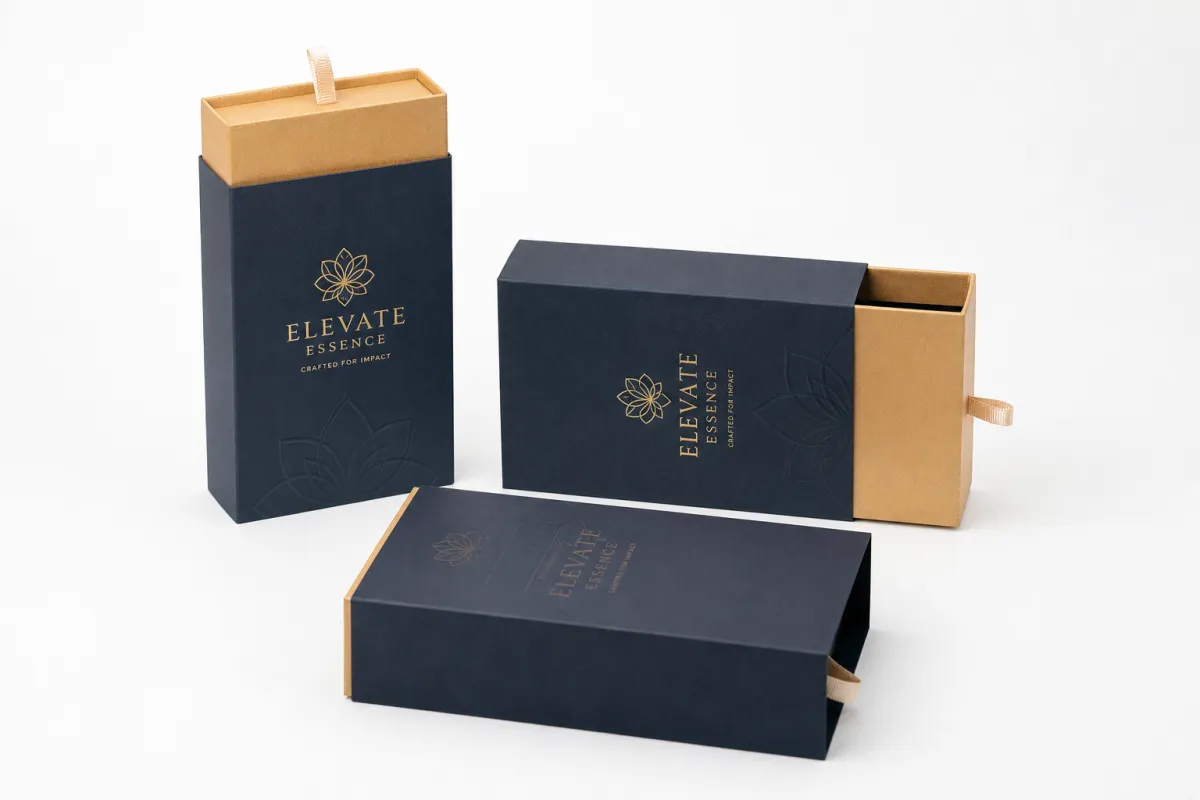
The sleeve usually catches the eye first. That matters because shopping happens quickly; a person glances across a display, compares a few options, and decides in seconds which pack feels worth picking up. Custom sleeve boxes with logo help that first impression land with clarity. Instead of asking the inner carton to do all the visual work, the sleeve becomes the visible face of the package branding.
Updating a sleeve is also far easier than redesigning an entire box system. If the base carton already exists, custom sleeve boxes with logo can introduce a seasonal graphic, a limited release, a gift set, or a retail-only variation without changing the entire build. Buyers often choose this format for that reason alone. It gives them room to create custom printed boxes that feel new while keeping the base structure consistent.
People often group sleeve styles together, yet they behave differently. A sliding sleeve wraps around a carton or tray and moves on and off the product. A wraparound band is usually lighter and simpler, closer to a branded belly band. A rigid presentation sleeve brings more weight and presence, giving the package a premium feel before the box opens. Custom sleeve boxes with logo can be built in each of these formats, but the fit, board choice, and finish will not be the same.
Picture a candle line sitting in a boutique display. The jar may already look attractive, but a plain tuck box can still read as generic. Add custom sleeve boxes with logo in a soft-touch finish, center the logo, keep the color palette restrained, and give the product name some breathing room, and the entire presentation changes. The candle itself did not change. The value the customer feels did.
A giftable tea set or skincare kit follows the same pattern. The inner carton protects the contents, yet the sleeve carries the story. It can introduce the collection name, ingredient line, scent family, or brand promise. In that sense, custom sleeve boxes with logo are not just decoration; they act as a practical branding layer that supports retail packaging, e-commerce unboxing, and shelf merchandising at once.
Production can benefit too. If the sleeve handles the visible branding and the inner carton stays simpler, the project becomes easier to manage and easier to revise. Many teams begin with custom sleeve boxes with logo before moving into more complex packaging changes because the format lets them test structure, visual hierarchy, and market response without committing to extra tooling or complicated print steps.
How Custom Sleeve Boxes with Logo Are Made: Process and Timeline
The work begins with the dieline. That flat template shows the sleeve dimensions, folds, glue area if needed, and the safe zones for artwork. If the sleeve includes a window, thumb cut, lock tab, or internal stop, those details should be mapped before the design stage starts. Careful prepress work saves money later because it lowers the risk of reprints, misalignment, or a logo sitting too close to a fold.
Prepress also checks the file for bleed, safe area, image resolution, color mode, and barcode placement. A standard bleed is often 0.125 inch, while safe area margins may sit around 0.0625 to 0.125 inch depending on the structure. Those numbers affect whether custom sleeve boxes with logo arrive crisp or come back with text pressed against a trim edge. If the box carries a UPC, ingredient panel, or legal copy, those elements need enough room to stay readable.
Color review matters more than many buyers expect. A deep black on screen can print warmer or cooler on board. A bright white on kraft can soften once ink meets the substrate. Proofing helps confirm how custom sleeve boxes with logo will look on the actual material, not just on a monitor. Brands with strict color standards often rely on Pantone targets and drawdowns, especially when the logo serves as the main identity mark.
Once artwork is approved, the job moves into printing, finishing, cutting, and converting. Depending on the build, the sleeve may be printed on SBS, kraft, or coated board, then finished with matte, gloss, soft-touch, spot UV, foil stamping, or embossing. After the sheets dry and pass inspection, they are die-cut, stripped, folded, and glued, or left flat if the design calls for that construction. Smooth production usually comes from strong files and a clean approval process.
Lead time shifts based on a few predictable variables:
- Quantity: larger runs usually take more press time and more finishing time, but unit cost drops as volume rises.
- Board type: premium rigid board and specialty stock can add sourcing and conversion steps.
- Finish complexity: foil, embossing, spot UV, and soft-touch coatings add setup and drying time.
- Proof rounds: every revision adds calendar days, especially when measurements or copy change late.
- Assembly plan: sleeves and inner trays made separately need coordination so one does not wait on the other.
Simple custom sleeve boxes with logo can often move from proof approval to production in about 7 to 12 business days, while more involved jobs with specialty finishes may sit closer to 12 to 18 business days. Sample approval, freight, and receiving add more time. That is normal. A realistic schedule keeps launch dates intact instead of forcing a rushed finish that causes problems later.
When a sleeve needs to handle shipping tests or retail durability checks, ask whether the sample should be evaluated against recognized methods such as those published by ISTA. For branded packaging with sustainability claims, material sourcing may matter as well, which is where certified options from FSC can enter the discussion. Those details do not make the package flashy, but they do make it dependable.
Custom Sleeve Boxes with Logo Pricing: What Changes the Quote
Pricing for custom sleeve boxes with logo comes from a short list of variables, and those variables affect one another more than many buyers expect. Size sits near the top. A sleeve for a lip balm set is a very different piece than a sleeve for a candle trio or a large gift carton. Bigger footprints use more board, larger dies, and often more press time. Even a small change in dimensions can shift the quote in a noticeable way.
Material choice is the next major factor. A clean coated SBS board is often selected for sharp graphics and retail packaging with strong color definition. Kraft board creates a warmer, more natural look, but it changes how ink behaves and usually moves the brand tone toward earthy or handmade. Corrugated stock adds strength, while rigid board brings a more elevated presentation. Each option changes how custom sleeve boxes with logo feel in hand and how much they cost to produce.
| Option | Typical Look | Protection | Best Fit | Relative Cost |
|---|---|---|---|---|
| SBS board | Crisp, bright, retail-ready | Light to moderate | Cosmetics, candles, gift kits | Low to moderate |
| Kraft board | Natural, textured, understated | Light to moderate | Natural brands, food gifts, soaps | Moderate |
| Corrugated sleeve | More rugged, shipping-friendly | Higher | E-commerce, heavier products | Moderate to higher |
| Rigid sleeve | Premium, sturdy, presentation-focused | High | Luxury sets, corporate gifts | Higher |
Print coverage changes the number too. A one-color logo on a plain sleeve is far easier to run than a full-bleed design with heavy background ink, gradients, and multiple image panels. If the sleeve includes inside printing, that adds another cost layer. The same goes for specialty work such as foil stamping, embossing, debossing, or soft-touch lamination. Custom sleeve boxes with logo can stay practical and budget-aware, but the more the design behaves like a premium presentation piece, the more the quote climbs.
Minimum order quantity matters because press setup and die cutting are fixed costs. At 500 units, the per-box price may feel high because the setup is spread across fewer pieces. At 5,000 units, the same setup gets divided across a larger run. For that reason, smaller orders are often 20% to 60% higher per unit than mid-volume runs, even when the artwork is simple. Buyers comparing custom sleeve boxes with logo should look at pricing in tiers rather than judging one line item in isolation.
Here is a practical range that helps frame conversations, assuming standard production on common board stocks:
- Simple sleeve, one or two colors: often around $0.18 to $0.32 per unit at 5,000 pieces.
- Full-color sleeve with matte or gloss finish: often around $0.24 to $0.42 per unit at 5,000 pieces.
- Premium sleeve with foil, embossing, or soft-touch: often around $0.38 to $0.70 per unit at 5,000 pieces.
Those figures are not universal, since product size, board weight, print coverage, and production region all affect the final quote. They still give a workable starting point. If a vendor quotes custom sleeve boxes with logo far below that range, ask what has been left out. Sometimes the answer is perfectly fine. Sometimes the price assumes a lighter stock, a thinner finish, or a slower schedule.
A useful buying habit is to ask for three clear tiers: a basic spec, a mid-tier spec, and a premium spec. That makes it easier to compare the value of custom sleeve boxes with logo across materials and finish levels instead of arguing over vague wording like “better quality” or “more premium.”
Design Factors That Make Custom Sleeve Boxes with Logo Work Harder
Fit comes first. A sleeve that is too tight can scuff the tray, buckle at the corners, or feel rough when the customer opens it. A sleeve that is too loose may drift during handling, which makes the whole package feel less intentional. When custom sleeve boxes with logo are sized correctly, the movement should feel controlled, never sloppy and never sticky. That one detail changes how the customer reads the whole brand.
Material selection shapes both performance and personality. SBS gives a smooth, bright print surface that works well for sharp typography and detailed graphics. Kraft brings a more tactile, organic look that many natural brands prefer. Corrugated board can help when the sleeve needs shipping strength or extra body. Rigid board pushes the presentation further, especially for premium gifting. The choice is not only about cost; it is about how the package needs to behave.
Surface finish adds another layer. Matte feels quieter and more refined. Gloss can make color stronger and help retail packaging stand out under store lighting. Spot UV places shine exactly where the designer wants it, often on the logo or product name. Soft-touch coating creates a velvety feel that many buyers associate with premium custom printed boxes. If the brand story leans natural or handcrafted, a heavy coating may clash with the message instead of supporting it.
Typography and logo scale deserve real attention. A logo that is too small disappears from arm’s length. A logo that is too large can crowd the rest of the artwork. For custom sleeve boxes with logo, the strongest result often comes from one clear hero element, followed by a supporting line such as a collection name or product descriptor. The sleeve should be readable quickly, even in a crowded shelf bay or stacked display.
Contrast matters just as much as size. A dark logo on a light board, a light logo on a dark board, or a high-contrast accent panel can make a package easier to read from several feet away. Minimal design can work beautifully, though it needs discipline. Empty space only helps when it is shaped with care. Otherwise, the sleeve can look unfinished rather than elegant.
Structural details can improve usability and display impact. Thumb notches make opening easier. Lock tabs keep the sleeve aligned. Windows show the product inside, which can be especially useful for cosmetics, tea tins, or gift sets. Internal stops prevent the tray from sliding too far. These are not decorative extras; they are practical features that make custom sleeve boxes with logo work better during real handling, not just in mockups.
If the project is moving toward a more sustainable direction, materials and coatings should be discussed early. A recyclable paperboard sleeve may fit better than a heavily laminated option, depending on the brand goal and the local recovery stream. The best sustainable choice is not always the most expensive one; it is the one that matches the structure, the print requirement, and the disposal path without creating confusion.
Step-by-Step: Ordering Custom Sleeve Boxes with Logo
The cleanest projects start with a measurement checklist. Before asking for a quote, gather the product length, width, and height, plus the reveal you want at the front or side of the pack. If the sleeve sits over a carton, tray, or insert, those dimensions need to be included as well. For custom sleeve boxes with logo, even a small measurement error can affect tension, alignment, and the opening feel.
Next, collect the artwork assets. Vector logos are ideal. Brand colors should be listed in Pantone or another agreed standard if color accuracy matters. If the box needs a barcode, ingredient list, legal statement, QR code, or country-of-origin label, those details should be ready before the layout begins. Missing copy is one of the most common reasons packaging timelines slip.
At this stage, decide whether the project needs a structural sample, a printed sample, or both. A structural sample checks fit and function. A printed sample checks color, finish, and logo placement. For premium launches, fragile items, or color-sensitive products, both are worth requesting if the budget allows. Custom sleeve boxes with logo may look simple at first glance, but the real test is how they behave when someone opens, closes, stacks, or ships them.
Then comes the proofing path. A good workflow looks like this:
- Send measurements and target quantity.
- Review the dieline and confirm all panel placements.
- Check artwork proof for bleed, safe area, and copy accuracy.
- Approve a sample or drawdown if color is critical.
- Release production only after fit and finish are confirmed.
That process may feel slow, yet it avoids expensive rework. A logo placed 3 mm too close to a fold, a barcode printed too near a seam, or a product name hidden under a sleeve edge can turn a promising order into avoidable waste. Custom sleeve boxes with logo reward precision. The stronger the approval path, the cleaner the result.
Freight and receiving should be planned at the same time as production. Sleeves often ship flat, which saves space, but they can still scuff if they are packed too loosely or exposed to moisture. If the boxes will sit in storage before assembly, confirm how many cartons fit on a pallet, what the stacking limit is, and whether the warehouse needs extra wrapping. Those details sound operational, but they are part of packaging design because they affect the condition of the final product.
If your team is still comparing options, review Custom Packaging Products alongside the sleeve project so you can see how the rest of the packaging line supports the same brand story. Sometimes the sleeve is only one part of the system, and aligning it with the inner carton, insert, or mailer improves the entire unboxing flow.
Common Mistakes with Custom Sleeve Boxes with Logo
The first mistake is oversizing the sleeve. It sounds minor, yet a loose sleeve changes the feel immediately. It may drift in transit, open too easily, or leave a reveal that looks accidental instead of intentional. Custom sleeve boxes with logo should feel controlled in the hand. That starts with accurate measurement and a clear sense of how much tension the sleeve should carry.
The second mistake is treating the print area like a poster. Too many words, too many icons, too many competing claims, and the logo loses strength. A sleeve has limited real estate. Good package branding leaves room for the eye to rest. Strong custom sleeve boxes with logo usually rely on one focal point and a disciplined hierarchy, not a crowded wall of information.
A third issue appears when buyers choose stock based only on unit price. Cheap board can fold poorly, crack at the edges, or hold ink in a dull way that undercuts the design. That matters even more when a brand expects retail packaging quality or a premium presentation. The cheapest material on the quote sheet is not always the cheapest outcome once returns, replacements, or customer complaints enter the picture.
Skipping physical samples is another common oversight. A digital proof cannot show how the sleeve feels during opening. It cannot reveal whether a soft-touch coating grabs dust, whether the logo shines too brightly, or whether the sleeve clears the tray without rubbing. For custom sleeve boxes with logo, a sample is often the difference between a decent idea and a dependable pack.
There is also an operational mistake that happens after approval: poor storage. Flat sleeves can warp, scuff, or absorb moisture if they are left unwrapped in the wrong environment. If the product line is seasonal, those boxes may sit longer than expected. That means custom sleeve boxes with logo need a plan for warehouse handling, carton labeling, and transit protection, not just artwork approval.
One more point deserves attention. Some teams focus so hard on the sleeve that they forget how it interacts with the inner structure. A sleeve that looks beautiful on its own may feel awkward on a tray with a tall edge, a hanging tab, or an insert that pushes the artwork out of alignment. The sleeve, tray, and product need to be designed as one system. That is the difference between attractive packaging design and a pack that works in practice.
Expert Tips and Next Steps for Custom Sleeve Boxes with Logo
Start with a short packaging brief that covers the product, the brand goal, the target quantity, the expected budget range, and the launch date. That sounds basic, but it is the fastest way to get quotes that are actually comparable. Custom sleeve boxes with logo can move quickly, yet they are detailed enough that missing one piece of information can change the whole estimate.
Choose one primary hero element. In most cases, that should be the logo or the product name, not both fighting for top billing. If the sleeve needs to say more, let the supporting copy sit lower in the hierarchy. Clean design usually prints better too, especially on smaller sleeves where the customer’s eye moves quickly. Branded packaging does not need to shout to get noticed.
Try to compare a standard sample, a print proof, and a final production sample whenever the project is color sensitive. That gives you three checkpoints: fit, appearance, and production consistency. If the product line is headed into retail packaging, this step is worth the time. Custom sleeve boxes with logo can look nearly identical on screen while still printing differently on paperboard, kraft, or rigid stock.
Think beyond the sleeve itself. Ask how the pack stacks in a warehouse, how it rides in a shipper, how it opens on camera, and how it sits on a shelf under harsh lighting. Good packaging protects the product and supports the brand story, but it also has to survive the trip from production to customer. That practical side is where many packaging decisions prove their value.
If you are comparing custom sleeve boxes with logo across vendors, ask for quote tiers, sample options, and a clear explanation of which finishing choices change the price most. A fair comparison usually includes material, print coverage, quantity, and lead time side by side. That way, you can decide whether the right answer is a basic version, a mid-range version, or a more premium build. A lot of packaging problems get solved just by slowing down long enough to compare the real specs, not the sales language.
"The best sleeve is not the flashiest one. It is the one that fits well, prints cleanly, and makes the product feel more valuable the moment it comes out of the box."
For brands that want a smart starting point, the short version is simple: gather measurements, confirm artwork, request samples, compare pricing tiers, and approve production only after the fit and finish feel right. That sequence keeps custom sleeve boxes with logo grounded in the real world, where product packaging has to look good, move well, and stay on budget. Done carefully, custom sleeve boxes with logo become one of the most efficient ways to strengthen package branding without overcomplicating the build.
What products work best in custom sleeve boxes with logo?
Products that already sit in a tray, carton, or insert beneath the sleeve work especially well. Common examples include candles, soaps, cosmetics, tea sets, gift kits, and specialty food items. If the product can shift inside the pack, add an insert or tray so the sleeve stays aligned and the presentation stays tidy.
How do I choose the right material for custom sleeve boxes with logo?
Use SBS or a similar coated board when you want a clean retail print surface and crisp graphics. Choose kraft when the brand wants a natural, earthy look with less coating. Move to corrugated or rigid structures when the box needs more protection, shipping strength, or a premium presentation.
How long do custom sleeve boxes with logo usually take?
Lead time depends on artwork readiness, proof approval, material availability, and finishing complexity. Simple sleeves can move faster, while foil, embossing, or multiple print passes add time. Build in extra time if you need a sample first or if the packaging must arrive before a launch date.
What affects the price of custom sleeve boxes with logo the most?
Size, material, print coverage, and finish choices are the biggest price drivers. Quantity matters because higher volumes usually lower the unit cost. MOQ, sampling needs, and specialty effects can change the quote more than many buyers expect, especially when the project moves from basic retail packaging to a more premium presentation.
Can I order samples before full production?
Yes, and it is usually the smartest way to check fit, color, and sleeve movement before committing to the full run. Ask for a structural sample if dimensions are still being finalized, or a printed proof if artwork is ready. Use the sample to confirm logo placement, finish quality, and how the sleeve handles during opening and closing of custom sleeve boxes with logo.

