Buyer Fit Snapshot
| Best fit | Custom Gift Card Sleeves projects where brand print, material claims, artwork control, MOQ, and repeat-order consistency need to be specified before quoting. |
|---|---|
| Quote inputs | Share finished size, material target, print colors, finish, packing count, annual reorder estimate, ship-to region, and any compliance wording. |
| Proofing check | Approve dieline scale, logo placement, barcode or warning zones, color tolerance, closure strength, and carton packing before bulk production. |
| Main risk | Vague material claims, crowded artwork, missing packing details, or unclear freight terms can make a low unit price expensive after revisions. |
Fast answer: Custom Gift Card Sleeves: Design, Cost, and Process should be specified like a repeatable production item. The safest quote records material, print method, finish, artwork proof, packing count, and reorder notes in one written spec.
Production checks before approval
Compare the actual filled-product size with the drawing, then confirm tolerance on folds, seals, hang holes, label areas, and retail display edges. Reserve space for logos, QR codes, warning copy, and material claims before decorative graphics fill the panel.
Quote comparison points
Review material grade, print process, finish, sampling route, tooling charges, carton quantity, and freight assumptions side by side. A quote is only useful when the supplier can repeat the same color, closure quality, and packing count on the next order.
A plain gift card can disappear on a crowded counter in seconds, but Custom Gift Card Sleeves turn the same card into a small branded package that feels deliberate, easy to pick up, and more valuable at the point of sale. That difference is subtle on paper and obvious in a store.
For buyers planning seasonal promotions, loyalty rewards, or corporate gifting, the sleeve does more than hold the card. It frames the offer, carries the logo, and gives the presentation a cleaner place inside a broader retail packaging and package branding strategy. For teams already investing in Custom Packaging Products, a sleeve is often the simplest way to extend the same visual language without moving into a rigid box or a more complex carton structure.
A sleeve is a small package, but it has to do real work: protect the card, communicate the brand, and make the purchase feel finished in one glance.
From a packaging buyer’s point of view, the strongest custom gift card sleeves are the ones that look simple because the structure, material, and artwork were planned carefully. The finished piece should feel like part of the store’s branded packaging system, not a last-minute insert added after the promotion was already approved. That kind of polish is usually built, not improvised.
What Are Custom Gift Card Sleeves and Why Retailers Use Them?
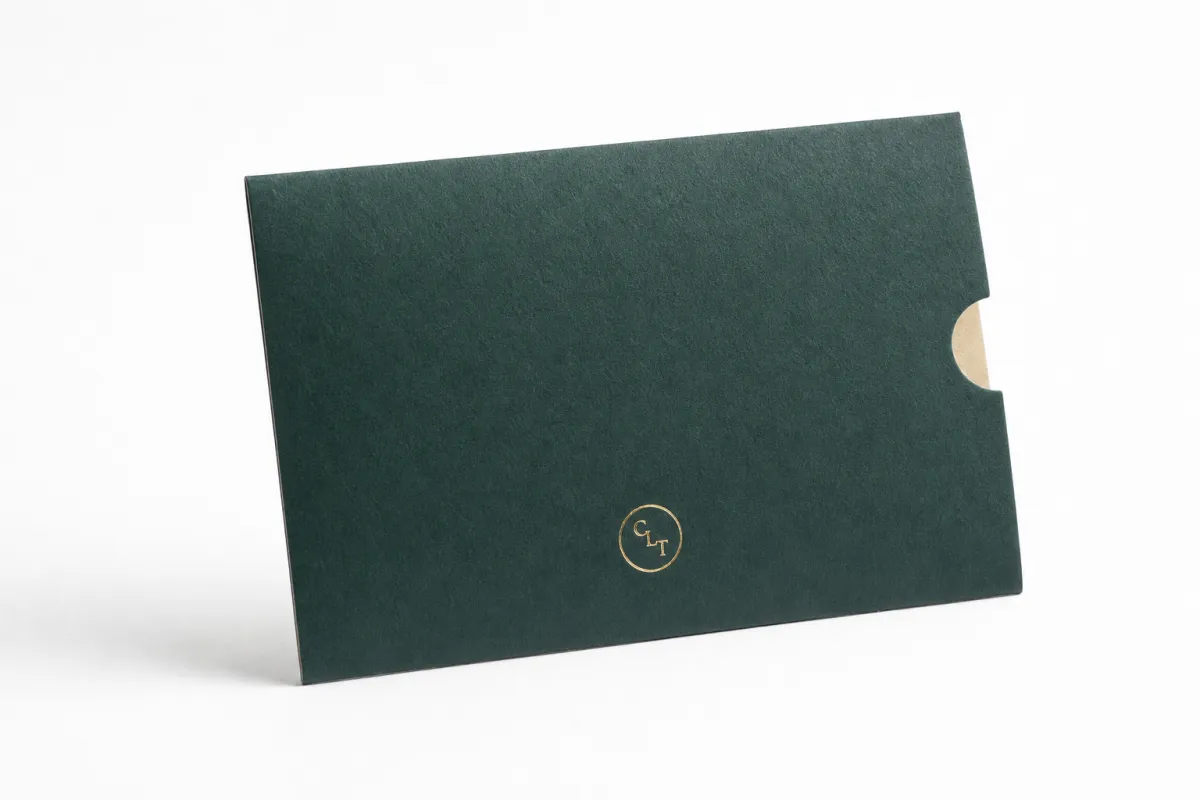
Custom gift card sleeves are printed paperboard or cardstock carriers sized to hold one or more cards, usually with a slit, pocket, tuck flap, or wrap style that keeps the card secure while leaving room for artwork, messaging, and legal copy. In plain language, they are lightweight pieces of product packaging that give a low-cost gift card a more complete retail presentation.
Retailers use custom gift card sleeves for a few practical reasons. First, they help a plain card stand out in a rack, at guest services, or in a holiday display where the buyer is scanning quickly and making a decision in a few seconds. Second, they protect the card from scuffing, bending, and fingerprints during handling. Third, they create a better home for seasonal artwork, loyalty offers, and corporate gifting details without forcing the brand to pay for a larger box when a smaller format will do the job.
In store environments, the sleeve often does more than a standard card carrier because it becomes part of the selling moment. A countertop display with custom gift card sleeves can present a promotion in a clean, organized way, and that matters if the goal is impulse purchase behavior. The package does not need to be elaborate. It needs to look intentional. That is where good packaging design earns its keep.
- Impulse sales: The sleeve makes the card feel giftable at the exact moment a shopper sees it.
- Protection: A properly sized sleeve reduces bending and edge wear during handling and shipping.
- Brand visibility: The front panel gives you a controlled space for logo, color, and offer copy.
- Seasonal flexibility: The same structure can support holiday, event, loyalty, or corporate programs.
Most buyers run into trouble when they treat custom gift card sleeves like a flyer instead of a package. The best versions stay focused: enough room for the logo, enough room for the card, and enough room for one clear message. That balance keeps production efficient and helps the sleeve support the sale instead of fighting for attention with too much information.
I’ve seen beautifully printed sleeves lose their impact because the structure was oversized by just a little. The card rattled inside, the edges caught on the pocket, and suddenly the whole thing felt budget instead of polished. That kind of problem is small on a spec sheet and loud in a customer’s hand.
How Custom Gift Card Sleeves Move Through the Production Process
The production path for custom gift card sleeves usually starts with a dieline, which is the flat template that shows fold lines, cut lines, glue zones, and the exact pocket or slit location. Artwork is built on that template, then proofed for fit, color, and layout before the printer moves into press setup, die cutting, scoring, folding, and any gluing or finishing required for the final structure.
That sequence sounds straightforward, but small differences in card size and board thickness can change the feel of the finished piece. A sleeve for a standard 2.125 x 3.375 inch gift card is not the same as a carrier for a folded certificate or a multi-card program. If the card has a magnetic stripe, QR code, chip, embossed numbers, or a scratch-off panel, the artwork and structure need enough clearance so the card slides in cleanly and nothing gets crushed at the fold. You are gonna want that checked before anyone signs off on artwork.
Most custom gift card sleeves move through production in a few checkpoints:
- Template review: Confirm the exact size, thickness, and insert method for the card.
- Artwork placement: Build logos, text, and codes inside safe zones and away from scores.
- Proof approval: Check spelling, color expectations, barcode readability, and fit.
- Press and finishing: Print, cut, score, fold, glue, and apply any specialty coating or foil.
- Packing and shipment: Bundle the sleeves for store distribution or fulfillment.
Timeline planning matters just as much as structural planning. A clean, single-color sleeve can often move faster than a piece with foil stamping, spot gloss, or multi-panel artwork, because every added finish usually means another setup step. For a simple run, many teams should expect roughly 10 to 15 business days after proof approval, while more decorative custom gift card sleeves can take longer if specialty materials are involved or if the schedule includes reproofs.
For brands that want to align sleeves with broader print and transit requirements, two useful references are FSC for fiber sourcing language and ISTA for shipping test methods. Those references do not make a sleeve better by themselves, of course, but they help buyers document paperboard specs, sustainability claims, and transit expectations more clearly.
When the launch date is tied to a holiday reset, a loyalty campaign, or a corporate gifting calendar, the schedule should include artwork approval, prepress review, and a small buffer for freight. In practice, that cushion matters because delays usually happen before the press run begins, not after the sheets are already on the machine. That is one reason experienced buyers keep the production plan tight before they ask for a quote on custom gift card sleeves.
Custom Gift Card Sleeves Cost, Pricing, and MOQ Factors
Pricing for custom gift card sleeves depends on quantity, stock type, print coverage, die complexity, finishing, and how the final pieces are packed. That last detail is easy to overlook. A sleeve that ships flat in bulk will usually cost less to produce and pack than a version that needs special bundling, kitting, or pre-insertion into retail displays. The cheapest quote is not always the best buy if it forces a compromise in stiffness, color accuracy, or fit.
Minimum order quantity, or MOQ, is usually where the economics become easier to read. Smaller runs are useful for testing a seasonal promotion, a pilot retail rollout, or a new brand program, but setup and make-ready costs have to be spread across fewer units. As quantity goes up, unit cost usually comes down because the press time, die cutting, and scoring are spread across more custom gift card sleeves.
Design choices also influence the quote in ways buyers can control. Full-bleed artwork, heavy ink coverage, and specialty decoration almost always add cost, while a simpler layout on a standard size board can stay leaner and more efficient. If your program needs a higher-end feel, a coated sheet, foil accent, or embossing might be worth it. If the goal is a practical display piece, a clean printed sleeve on a solid paperboard often delivers stronger value.
| Run Size | Typical Stock | Finish Level | Approx. Unit Price | Best Fit |
|---|---|---|---|---|
| 1,000-2,500 | 14pt-16pt cardstock | 1-color or simple 4-color print | $0.32-$0.55 | Testing a new offer or a short seasonal run |
| 5,000-10,000 | 16pt SBS or similar board | Full-color print with standard scoring | $0.14-$0.28 | Most retail programs and repeat campaigns |
| 10,000+ | 16pt-18pt board | Premium finishes such as foil, spot gloss, or embossing | $0.12-$0.24 | High-visibility promotions and multi-location rollouts |
Those are planning ranges, not promises. Actual pricing for custom gift card sleeves changes with artwork coverage, board caliper, fold count, and whether the structure requires a custom pocket, gusset, or tuck. If you are comparing vendors, ask them to quote the exact same size, board thickness, print method, and finishing notes so you are not comparing one supplier’s basic sleeve to another supplier’s premium build.
That apples-to-apples approach matters more than many people expect. A quote that looks higher at first may include a sturdier board, cleaner trim, or better color control, and those details show up immediately in the customer’s hand. For brands comparing sleeves with custom printed boxes or other forms of branded packaging, the real question is not just price per piece; it is what level of presentation the package has to deliver at the counter, in the mail, or on a shelf.
From a buyer’s point of view, the sweet spot is usually a custom gift card sleeves program that balances print coverage, structure, and quantity so the unit cost lands in a range the merchandising team can live with. If the sleeve is part of a larger package branding initiative, it may be worth paying a little more for cleaner registration or a richer board finish, because those visual cues influence whether the piece feels like a retail item or a giveaway.
Step-by-Step: Ordering Custom Gift Card Sleeves Without Delays
The easiest way to keep custom gift card sleeves on schedule is to begin with the card specification, not the artwork. Confirm the exact card dimensions, thickness, and any special features such as magnetic stripes, QR codes, scratch-off areas, or variable numbering before asking for a dieline. If the structure has to accommodate more than one insert, that needs to be known before the first proof is built.
Once the template is in hand, artwork should be laid out with respect for fold lines, glue zones, and the areas where the card actually slides in and out. Keep logos inside safe zones, leave breathing room around the barcode or QR code, and avoid placing copy where a score line will run through the text. A sleeve can look perfect on screen and still fail in production if the insert path was ignored during design.
It also helps to think about load speed. Staff in retail or hospitality do not want a sleeve that fights them during assembly, especially if they are packaging cards at a counter or fulfilling a rush order for a corporate client. Custom gift card sleeves that are easy to fold, easy to load, and easy to stack usually perform better in the real world because they reduce handling time and lower the chance of bent corners or damaged folds.
Before production starts, request and review proofs carefully. The print proof should answer a few basic questions:
- Is the spelling correct everywhere, including small legal text?
- Do the colors look right for the brand and the campaign?
- Is the barcode or QR code readable and placed with enough quiet space?
- Does the card fit the sleeve without excessive friction or looseness?
- Are the finish notes, fold locations, and delivery details written clearly?
That checklist sounds ordinary, but it is where many custom gift card sleeves jobs either stay on track or lose a week to revisions. If the proof is rushed, small issues often surface only after the sheets are printed, and by then the fix is much more expensive. A disciplined prepress review is still one of the most reliable ways to protect both schedule and budget.
Finally, lock the production plan early. Confirm the quantity, shipping address, pack-out style, and the date the sleeves need to be in hand. If the sleeves are going into a holiday reset, a loyalty launch, or a storewide promotion, build a cushion for freight and for any late-stage approval changes. Teams that treat custom gift card sleeves like a real manufacturing item, rather than a quick print job, usually avoid the worst delays.
Common Mistakes That Make Custom Gift Card Sleeves Look Cheap
The first mistake is mismatched sizing. If custom gift card sleeves are too tight, the card can scuff, buckle, or catch on the edge of the pocket. If they are too loose, the package feels flimsy, the card slides around during handling, and the whole piece loses the tidy, finished look that retail buyers expect. A half-millimeter problem can show up as a visible quality issue the moment the customer picks up the sleeve.
The second mistake is overdesigning a very small surface. People often want to fit a logo, a seasonal message, a promo code, legal copy, icons, and multiple calls to action onto the same front panel, but that usually makes the package feel more like a flyer than a sleeve. Strong packaging design uses white space, hierarchy, and one clear priority so the eye knows where to land first.
Another common issue is material compromise. Very thin board, weak scores, or poor ink coverage can make folds crack and edges curl, especially if the sleeves are handled repeatedly by store staff or customers. In custom gift card sleeves, those details matter because the piece is supposed to feel sturdy enough to carry a gift, even if the structure itself is lightweight. A sleeve that wrinkles at the corners or bows in the middle sends the wrong signal immediately.
Proofing mistakes are just as damaging, and they are often preventable. Missing bleed, incorrect trim allowance, and badly positioned barcodes can all pass unnoticed in a quick review, then become obvious once the press run is complete. A clean proof process should also check whether the insert actually slides through the pocket without scraping the print. That is basic, but it saves a lot of rework on custom gift card sleeves.
There is also a broader presentation issue that people overlook: consistency across the line. If the sleeve color does not match the brand palette, or if the typography feels disconnected from the rest of the store graphics, the piece looks improvised. The same thing happens when a sleeve is compared against other product packaging in the same program and the quality gap is obvious. Buyers notice that faster than most marketers expect.
One more thing: do not assume that a decorative feature will rescue a weak build. Foil can improve the first impression, but it will not hide bad die work or a soft substrate. If the base construction is weak, the final impression will still feel off. That is why custom gift card sleeves should be evaluated as a whole package, not as a set of individual effects.
Expert Tips for Better Custom Gift Card Sleeves
Choose material based on the end use, not just the quote. A matte or uncoated stock often feels warmer and more approachable, which can be a strong fit for hospitality, wellness, or artisan brands. A coated sheet gives sharper color and a more polished retail look, which may suit beauty, apparel, or high-traffic checkout programs better. Either way, the board should have enough stiffness that custom gift card sleeves stand up cleanly in display and handle without collapsing.
Use finishes strategically. Spot gloss, foil stamping, or embossing can lift a sleeve without covering the entire piece in decoration, and that helps control cost while still creating a premium cue. A small foil logo can do more for perceived value than a crowded design with too many effects. The goal is not to decorate every square inch; it is to make custom gift card sleeves feel intentional and consistent with the broader brand.
Design for both the shelf and the hand. A shopper should be able to read the offer from a few feet away, but the sleeve also needs to feel good when someone picks it up. Strong contrast, clean typography, and a clear logo placement make that possible. In practical retail packaging, the graphic hierarchy has to work from a distance and at arm’s length, which is why restrained layouts often outperform busy ones.
Operational reality matters too. Staff should be able to load, stack, and merchandise the sleeves without bending the corners or crushing the folds. If the item will sit in a drawer, hang from a peg, or live on a counter display, the structure should support that use case. I have seen plenty of custom gift card sleeves that looked good in a mockup and then became awkward once they were actually used in the store.
For brands building a wider packaging system, it can help to think of the sleeve as one part of a family rather than a stand-alone piece. If the card program may later expand into mailers, inserts, or retail sets, keep color, typography, and paper tone aligned with your other Custom Packaging Products. That kind of consistency strengthens package branding without forcing every format to look identical.
And if you are trying to choose between a few slightly different sleeve builds, ask for a real sample, not just a render. Paperboard thickness, score quality, and fold behavior are much easier to judge in the hand. A screen can flatter almost anything.
Next Steps for Planning Custom Gift Card Sleeves
Start by gathering the basics: card dimensions, quantity goals, brand files, launch date, and any special requirements such as cutouts, inserts, or seasonal copy. That information gives the printer enough detail to recommend the right board, the right structure, and the right finishing level for custom gift card sleeves.
Then ask for a proof plan or sample strategy. A physical or digital proof is the safest way to confirm fit, color, and load behavior before you commit to a full run. If the sleeves will be used across multiple locations, test one or two assembled pieces in the actual store environment so you can see how they behave under real handling conditions. That is still one of the most practical checks for custom gift card sleeves, especially when the program is tied to a retail launch.
Build a simple checklist for the purchase order and approval process:
- Approve the artwork and dieline.
- Confirm the price at the chosen volume.
- Check turnaround time against your launch date.
- Verify the delivery address and pack-out style.
- Allow time for freight and any last-minute corrections.
From there, set a reorder trigger. If the sleeve performs well, it is a lot easier to keep the line in stock when there is already a target quantity and lead time in place. That is especially true for brands that use custom gift card sleeves in holiday, loyalty, or corporate gifting cycles, because those programs tend to spike quickly and then disappear just as fast if the reorder window is missed.
One practical detail: keep your spec sheet in a place the next buyer can find it. The best repeat programs are the ones that do not rely on memory. If the board type, size, finishing note, and fit requirement are documented clearly, the next order moves faster and with fewer mistakes. That is how custom gift card sleeves stay consistent across seasons, store groups, and promotion changes.
The strongest custom gift card sleeves programs respect the small things: the right paperboard, the right fit, the right production window, and the right amount of visual restraint. Treat the sleeve as a real piece of branded packaging, and it will do a lot more than hold a card. It will make the offer feel ready, polished, and worth giving. If you are planning a run, document the card size, board, finish, and launch date first, then quote from that spec so everyone is building from the same starting point.
How many custom gift card sleeves should I order for a first run?
Start with a quantity that matches one promotion cycle plus a small buffer for spoilage, store transfers, and reorders. It also helps to request price breaks at a few volumes so you can compare unit cost against storage space and cash flow before choosing a minimum order quantity for custom gift card sleeves.
What material is best for custom gift card sleeves?
Most programs use cardstock or paperboard in the 14pt to 18pt range, with coated or uncoated options depending on the look you want. Heavier stock usually gives custom gift card sleeves a more premium feel and better protection, while lighter stock can reduce shipping weight and make folding easier.
How long does custom gift card sleeve production usually take?
Timing depends on proof approval, board availability, print complexity, finishing, and freight method, so a simple run usually moves faster than a decorated one. In many cases, custom gift card sleeves can be produced in roughly 10 to 15 business days after approval, but artwork changes can add time before the press run even begins.
Can custom gift card sleeves include barcodes or QR codes?
Yes, as long as the artwork leaves enough quiet space around the code and the printer checks readability during proofing. Keep the code away from fold lines, scores, and busy backgrounds so custom gift card sleeves still scan reliably after assembly and handling.
What makes custom gift card sleeves look more premium without raising cost too much?
A clean layout, a heavier stock, and one focused finish such as spot gloss or foil usually create a stronger premium impression than adding too many effects. Premium feel comes from consistency as much as decoration, so sharp folds, accurate trimming, and solid color coverage matter just as much on custom gift card sleeves as the artwork itself.

