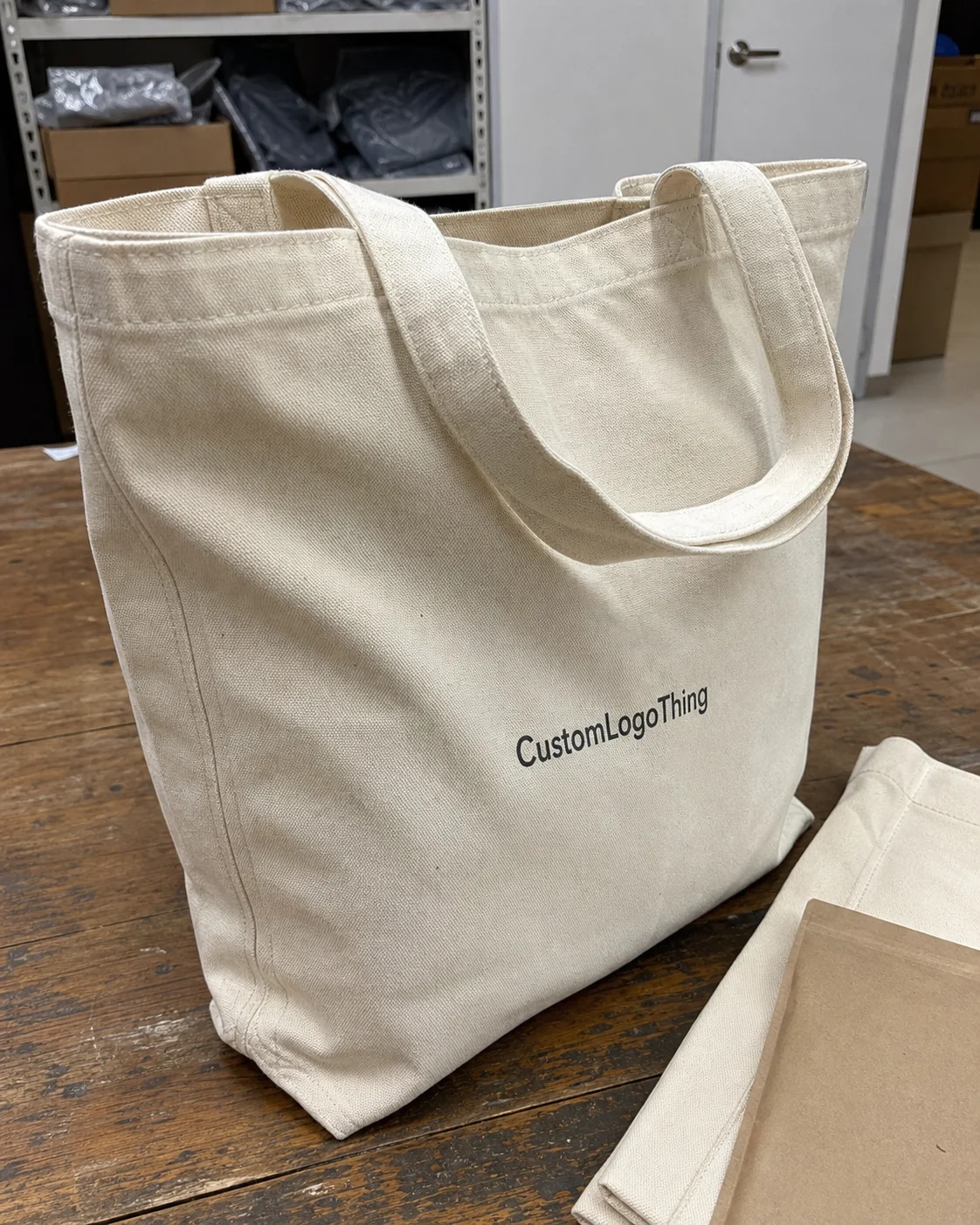
Custom grocery tote bags have one job before they do anything else: carry groceries cleanly, quickly, and without drama. If the bag sags, twists in the hand, or feels flimsy the first time a shopper loads it, the brand takes the hit. People do not separate the package from the product experience. They just remember the bag that failed.
A grocery tote should stay out of the way. The shopper should remember the brand, not the bag fighting the load.
That is why this category is closer to retail packaging than promo merch. A tote gets reused, folded, overstuffed, kicked around in the trunk, and judged in a few seconds at checkout. It needs structure, decent print, and enough durability to survive real use. Pretty is fine. Functional is non-negotiable.
What Custom Grocery Tote Bags Need to Do at Checkout
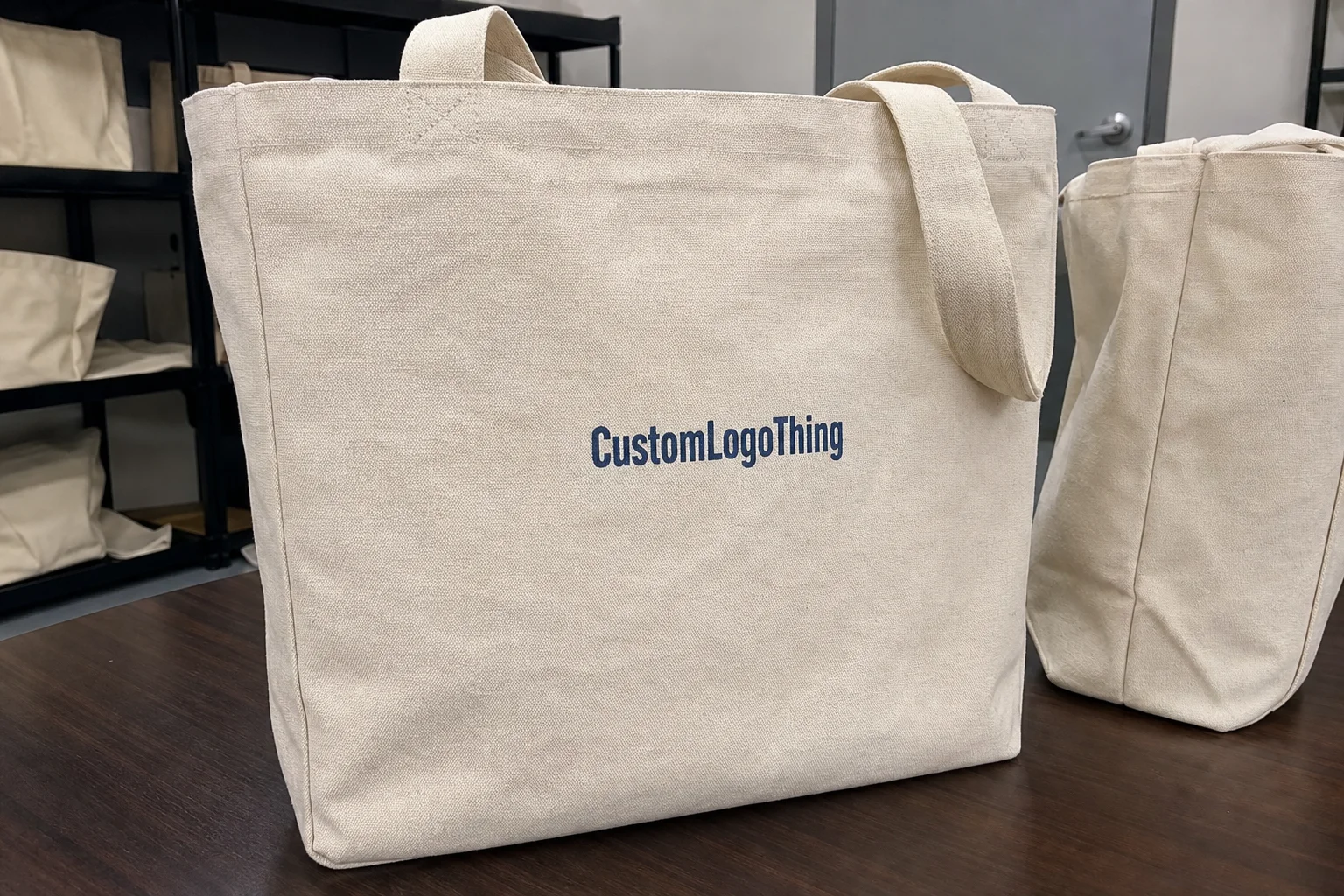
At checkout, the bag has to move fast. Staff want something easy to open and fill. Shoppers want handles that do not bite into the hand when the load gets heavier than expected. Both sides care less about the marketing copy and more about whether the bag behaves like a tool.
Load mix matters more than first-time buyers usually expect. Grocery trips are messy combinations of boxed cereal, paper goods, produce, frozen items, cleaning supplies, and odd-shaped pantry packs. A bag that works for a lightweight giveaway can fail quickly in a grocery setting if the gusset is too shallow, the seams are weak, or the handle attachment points are underbuilt.
The best custom grocery tote bags do three things well:
- Carry a normal grocery load without obvious stretching.
- Stay open enough for fast packing at the register.
- Give the brand a clean surface for logo placement and messaging.
That third point matters, but it is not the whole story. A tote can support branding without becoming a billboard. The bag, the feel, the structure, and the print all contribute to the same impression. If your store already uses Custom Printed Boxes or other branded retail packaging, the tote should feel like it belongs in that system instead of looking borrowed from somewhere else.
A practical checkout-ready tote also needs predictable performance. That means reinforced handles, a balanced body, and enough rigidity to stand on its own for a moment while the cashier loads it. Thin fabric with a nice logo does not count. Neither does a bag that looks large but collapses once the first heavy item goes in.
How the Ordering Process and Timeline Works
Start with a real spec, not a loose idea. If you send quantity, size, material, print colors, handle style, and target delivery date up front, you get cleaner quotes and fewer delays. If you send “need tote bags, maybe green, maybe large,” the quoting process turns into guesswork.
The ordering sequence usually follows the same path:
- Estimate and quote.
- Digital proof.
- Proof approval or sample approval.
- Production.
- Packing and carton labeling.
- Shipping.
For a simple one-color run on a standard size, production can often move in about 12 to 18 business days after proof approval if the material is available and the schedule is not overloaded. Once you add custom dimensions, extra print locations, stitched reinforcement, or specialty materials, the timeline usually stretches by another week or two. Imported production needs more buffer because freight, port timing, and customs all affect the finish date.
Sampling is where a lot of expensive mistakes get caught early. A digital proof is good for spelling, layout, and placement. It will not tell you whether the fabric has the right hand feel, whether the stitch line is clean, or whether the bag sits upright when loaded with actual groceries. A physical sample is the only real check on those things. Skipping it saves time on paper and costs time later.
For programs that ship into warehouses or retail networks, ask how cartons are packed and whether the supplier has any transit test process in place. ISTA standards are useful as a reference for understanding how packaging handles vibration, stacking, and rough handling in transit. That is the difference between a clean arrival and a carton that gives up halfway through delivery.
Quality control should be part of the timeline, not an afterthought. At minimum, the final approval should check print placement, seam quality, handle attachment, dimensions, carton counts, and color consistency against the proof. If the bag has multiple print colors or a complex logo, ask for a pre-production reference so registration issues are caught before a full run starts.
Materials, Sizes, and Print Choices That Matter Most
Material choice sets the tone immediately. Non-woven polypropylene is usually the lowest-cost workhorse. Woven polypropylene is tougher and more structured. Cotton or canvas reads more premium, but the cost and weight rise quickly. The right choice depends on how often the bag will be reused and how much load it needs to carry, not just on the first quote.
Size should follow the contents, not the buyer’s preference for a bigger number. Oversized bags can feel floppy when they are only half full. Bags that are too small fail at the register and create a bad user experience. A practical starting range for many grocery programs is roughly 14 x 10 x 10 inches to 16 x 12 x 6 inches, then adjusted for the actual basket mix. If the average order includes paper towels, boxed goods, or bulk pantry items, wider and deeper usually wins.
Gusset depth matters more than most people think. A deep gusset helps the tote stand open and accept boxy items without bulging at the corners. A shallow gusset can look neat in a mockup and awkward in real life. Handles matter just as much. Wider stitched handles, a comfortable shoulder drop, and reinforced attachment points reduce failure and make reuse more likely.
Print choices affect both cost and durability. A clean one-color screen print is usually the most efficient route. Add more colors, multiple print locations, metallic ink, or heavy ink coverage and the setup gets more expensive. Fine type and thin lines can also get lost if the print method is not matched to the fabric. Tote material is not a coated carton. It has texture, flex, and porosity. The art has to respect that.
If you are comparing a tote program against other Custom Packaging Products, keep the branding logic consistent. Logo scale, color use, and message hierarchy should work across bags, labels, and any related retail packaging. If the tote feels disconnected from the rest of the system, the whole presentation gets weaker.
Here is a practical way to think about the core options: non-woven for budget and volume, woven for better load support and longer service life, cotton or canvas for premium positioning. None of those are universally best. The right answer depends on the use case, the expected reuse rate, and how much the brand needs the bag to do beyond carrying groceries.
| Material | Typical feel | Approx. unit cost at 1,000 | Approx. unit cost at 5,000 | Best fit |
|---|---|---|---|---|
| Non-woven polypropylene | Light, practical, soft-hand promo feel | $0.42-$0.85 | $0.18-$0.32 | Budget grocery programs, frequent giveaways |
| Woven polypropylene | More structured, tougher, better load support | $0.85-$1.60 | $0.34-$0.68 | Reusable supermarket bags, heavier carry loads |
| Cotton or canvas | Premium, more natural, heavier hand feel | $1.60-$3.25 | $0.85-$2.10 | Higher perceived value, premium branded packaging |
Those numbers are directional, not fixed. Fabric weight, stitch count, handle reinforcement, print coverage, carton count, and freight all move the final cost. Still, ranges like these help a buyer set expectations before the first quote lands.
If your packaging program has a sustainability requirement, ask whether any paper components, hang tags, or inserts can use FSC-certified stock. The FSC system is worth understanding when tote bags sit next to printed collateral or retail inserts. Not every order needs that level of documentation, but some brands will ask for it later if the program grows.
What Pricing Depends On for a Tote Run
MOQ is usually the first price lever. Smaller runs cost more per unit because setup, labor, and freight get spread across fewer bags. A 500-piece order will almost always look expensive beside a 5,000-piece order, even if the raw material difference is modest.
Material weight and reinforcement are the next big drivers. A thicker woven tote with stitched handles and a deeper gusset costs more than a thin promotional bag. That is not a markup trick. It is more material and more labor.
Decoration changes pricing faster than many teams expect. More print colors, multiple print locations, metallic ink, and specialty finishes all add setup and production steps. A one-color logo on one side is far cheaper than a two-sided, full-coverage design. If the artwork tries to turn the tote into a full billboard, the quote will behave accordingly.
Freight and packaging can move the landed cost more than people plan for. A quote that looks good at the factory floor can become ordinary once cartons, palletization, domestic trucking, and delivery timing are added. This is where first-time buyers get surprised. They compare one line item and ignore the ship-to-door number.
Compare quotes only when the spec is actually the same. If one supplier offered lighter fabric, fewer stitches, a smaller imprint area, or different carton packing, that is not the same product. It is just a cheaper number attached to a different build.
If the tote needs to fit into a wider packaging program, compare it alongside other Custom Packaging Products instead of treating it in isolation. A strong tote can deliver more brand value than a pile of minor add-ons, but only if the construction and print quality hold up.
A useful buyer habit is to ask for landed cost, not just unit price. That means factoring in sample charges, freight, carton costs, and any setup fees that are not obvious in the first email. A slightly higher unit price can still be the smarter purchase if it ships on time and passes inspection without rework.
Step-by-Step: Building the Right Tote Spec
Start with use case. Grocery carryout, produce bagging, employee giveaway, loyalty reward, and retail merch all need different builds. A tote meant for weekly supermarket trips should not be specced like a trade-show handout. The abuse level is different, so the construction should be different too.
Then set dimensions from the actual load. Measure the tallest carton, the widest box, and the most common basket mix. Decide width, height, and gusset around those numbers. If the bag needs to sit upright in a cart, account for that. A tote that folds inward under pressure slows checkout and frustrates staff.
After that, choose structure. Open-top bags are quick and simple. Zipper tops, insulated linings, and rigid inserts solve specific problems, but each adds cost and complexity. If the tote is doing cold-chain support or holding temperature-sensitive goods, you are no longer buying a basic reusable bag. You are buying a functional packaging tool.
Artwork should be locked early. Ask for print placement guidance before final proof approval. Logos too close to seams look awkward. Logos too low can disappear behind the contents. Fine text that looks fine on a screen often gets muddy on fabric. Good packaging design respects the substrate instead of pretending every material behaves the same.
A solid spec sheet usually includes:
- Exact bag dimensions.
- Material type and thickness or GSM.
- Handle style and stitch reinforcement.
- Print colors, finish, and placement.
- Carton count and shipping destination.
- Target in-hand date, not just the order date.
That level of detail also helps if you are coordinating with Custom Printed Boxes, shelf displays, or other retail packaging. The closer the specs line up, the less likely the brand feels stitched together from unrelated pieces.
If the tote is going into real retail circulation, ask for a pre-production sample or a shipping sample. That is the cheapest way to catch a handle problem, a seam issue, or a logo placement mistake before a full run lands in your warehouse. Once a large batch is packed, fixing small errors gets expensive fast.
Common Mistakes That Create Delays or Waste
The biggest mistake is changing the spec after quoting. Every revision can trigger a new proof, a new price, and a new schedule. One small tweak can turn a clean order into a moving target. Suppliers do not like that. Buyers do not like that. The schedule definitely does not like that.
A second mistake is buying for appearance only. A bag can look polished and still fail at the store if it cannot carry a standard grocery load. Strength and size have to come before decoration. Otherwise you are paying for package branding that irritates the user.
Handle comfort gets ignored too often. If the tote digs into the hand, uses a strap that is too narrow, or sits badly on the shoulder, shoppers stop reusing it. That kills the main business case. A reusable bag that is not reused is just a more expensive bag.
Color expectations need documentation. If brand color matters, say so in the brief and ask for a proof note or Pantone target. Otherwise the printed logo can drift just enough to look wrong next to other branded packaging or on a display that is tightly controlled.
The cheapest quote is often the most expensive mistake once freight, packaging, sampling, and add-on fees show up. A low factory number is not proof of a good deal. It is only one line in the total cost stack.
Another common miss is ignoring the way bags are packed into cartons. Overpacked cartons can deform totes in transit, while underpacked cartons waste freight and increase handling risk. Ask how many pieces per carton, how the cartons are labeled, and whether pallets are part of the plan. Those details sound boring until they save a delivery.
What to Gather Before You Request Quotes
Prepare a quantity range, not just a single number. That lets suppliers show volume breaks and tells you where the real savings start. A 1,000-piece run and a 5,000-piece run rarely land at the same unit cost, and pretending they should wastes time.
Bring dimensions, preferred material, and a reference bag if you have one. If you already use a tote in-store, that sample is better than a paragraph of adjectives. It gives the supplier a physical benchmark instead of a guess.
Have artwork files ready, along with any Pantone targets, print locations, and whether you need one-sided or two-sided decoration. A logo in a low-resolution email attachment is not production art. It is a delay wearing a costume.
Confirm the deadline, delivery location, and shipping method before you ask for a quote. Production time and transit time are not the same thing. If a supplier gives you five business days and forgets to mention ocean freight or cross-country delivery, you do not have a real schedule yet.
For a cleaner sourcing process, compare two or three suppliers against the same brief, then choose the one that matches the bag build, timing, and budget. That is how custom grocery tote bags stop being a guessing game and start behaving like a controlled packaging purchase.
If you expect the bags to be handled often, ask one more question before approving anything: what does the supplier inspect before shipment? Print alignment, stitch strength, handle attachment, carton count, and color consistency are all worth checking. A decent tote run is rarely about one big decision. It is usually the result of a dozen small ones that were handled properly.
FAQ
What size custom grocery tote bags work for standard shopping trips?
A common starting point is around 14 x 10 x 10 inches to 16 x 12 x 6 inches, but the right size depends on what shoppers actually buy. Go wider and deeper if the bags need to handle paper goods, boxed items, or bulk groceries without bulging badly.
Which material is best for custom grocery tote bags?
Non-woven polypropylene is usually the lower-cost option, woven polypropylene is stronger, and cotton or canvas gives a more premium feel. Pick the material based on how often the bag should be reused, not just on the first unit price.
How long do custom grocery tote bags usually take to produce?
Simple printed runs can move quickly, but custom sizes, sample approval, and imported production add time. Ask suppliers for separate production and shipping timelines so you can see where the delay actually is.
What affects the price of custom grocery tote bags most?
Quantity, material weight, reinforcement, print colors, and freight are the biggest drivers of unit cost. Always compare landed cost, not just factory price, because shipping and packaging can swing the final number.
Can I print on both sides of custom grocery tote bags?
Yes, but both sides usually add setup and can increase cost. If you print on the back, use it for something useful like a QR code, store message, or care instruction instead of more clutter.
What should I do before placing the order?
Lock the spec, confirm the proof, and make sure the quote matches the same size, material, and print setup across suppliers. If you want fewer surprises, compare the same build against other Custom Packaging Products, request a real sample when the bag will see daily retail use, and treat custom grocery tote bags like product packaging, not a throwaway promo item.