Buyer Fit Snapshot
| Best fit | Custom Handmade Gift Boxes Wholesale for Premium Brands projects where brand print, material claims, artwork control, MOQ, and repeat-order consistency need to be specified before quoting. |
|---|---|
| Quote inputs | Share finished size, material target, print colors, finish, packing count, annual reorder estimate, ship-to region, and any compliance wording. |
| Proofing check | Approve dieline scale, logo placement, barcode or warning zones, color tolerance, closure strength, and carton packing before bulk production. |
| Main risk | Vague material claims, crowded artwork, missing packing details, or unclear freight terms can make a low unit price expensive after revisions. |
Fast answer: Custom Handmade Gift Boxes Wholesale for Premium Brands should be specified like a repeatable production item. The safest quote records material, print method, finish, artwork proof, packing count, and reorder notes in one written spec.
Production checks before approval
Compare the actual filled-product size with the drawing, then confirm tolerance on folds, seals, hang holes, label areas, and retail display edges. Reserve space for logos, QR codes, warning copy, and material claims before decorative graphics fill the panel.
Quote comparison points
Review material grade, print process, finish, sampling route, tooling charges, carton quantity, and freight assumptions side by side. A quote is only useful when the supplier can repeat the same color, closure quality, and packing count on the next order.
Custom Handmade Gift Boxes Wholesale for Premium Brands
Custom handmade gift boxes wholesale shape the first impression long before a customer touches the item inside. The weight of the lid, the way the closure settles, the stiffness of the walls, and the clean meeting point at each corner all signal whether the packaging belongs to a premium launch or feels like a dressed-up carton. Brands That Sell presentation as much as product cannot treat that difference as decoration. It affects perceived value, the risk of damage in transit, and the memory a buyer keeps after the unboxing moment passes.
Packaging teams usually get better results when they begin with the product itself. Dimensions, unit weight, shipping method, and display setting should define the brief before anyone signs off on a finish sample. That is why custom handmade gift boxes wholesale work so well for gifting programs, retail packaging, subscription kits, seasonal sets, and PR mailers. The box is not an accessory. It is part of the product packaging and part of the promise the brand makes at the shelf, in the mailer, and on camera.
I have seen projects stall for weeks because someone approved a beautiful render before checking whether the lid could actually clear the insert. A two-millimeter miss can turn a polished concept into a costly do-over. That sounds tiny, but in packaging it is usually the tiny stuff that bites.
Why custom handmade gift boxes wholesale change first impressions
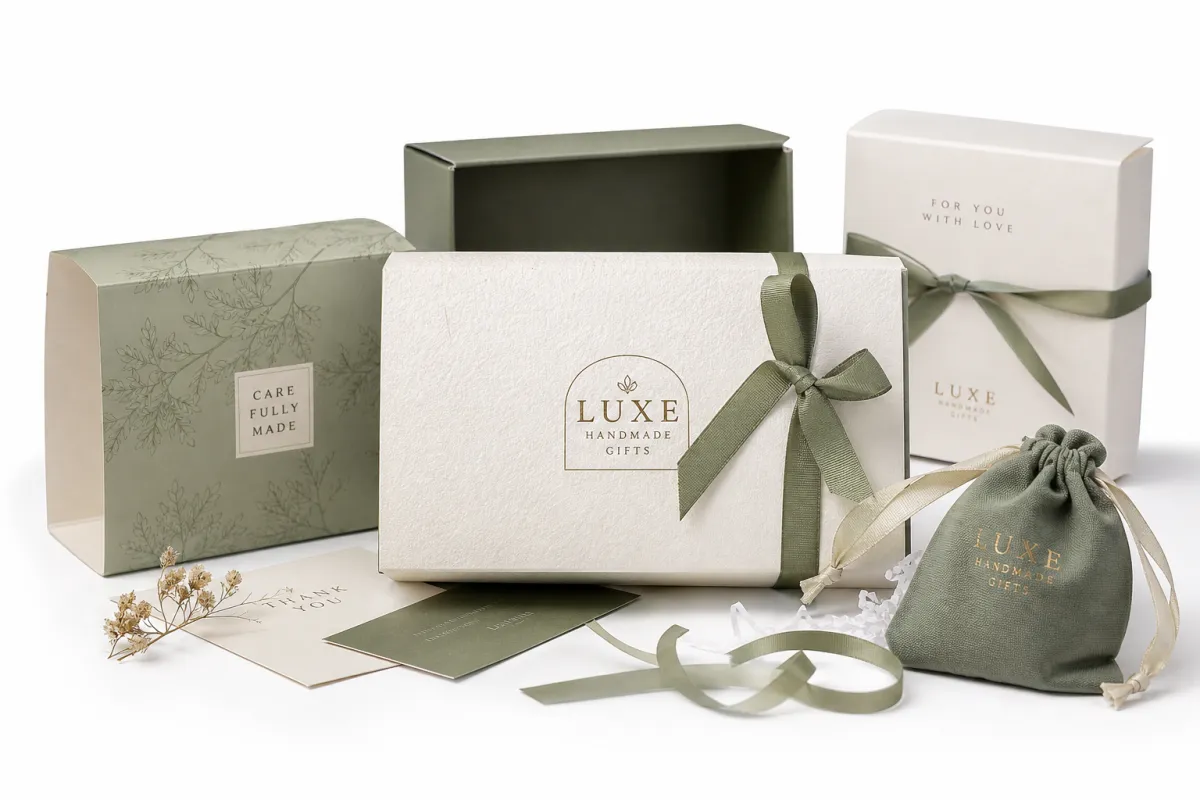
Custom handmade gift boxes wholesale often set the tone of the purchase in a matter of seconds. A rigid lid that closes with a firm, even edge, a drawer box that glides with measured resistance, or a magnetic closure that lands with a crisp click all communicate care and control. Buyers feel those cues before they can explain them. That is why a premium box can raise the perceived value of a fragrance set, a jewelry collection, a confectionery assortment, or a limited-edition branded packaging run.
Stock cartons carry product well enough, but they rarely create an experience. Handmade construction makes the structure answer the item instead of forcing the item into a generic cavity. For custom handmade gift boxes wholesale, that usually means thicker board, tighter corner wraps, better closure control, and inserts that hold the product still during shipping and opening. The box ends up feeling intentional in the hand and steady on the shelf, which matters in retail packaging and direct-to-consumer shipment alike.
A premium box fails quickly if the lid rocks, the insert rattles, or the closure feels weak in hand. Those flaws show up before the logo has a chance to do its job.
Many buyers start with decoration and work backward from there. That order causes problems later. A better path begins with the landed cost, the delivery channel, and the exact product footprint. The format works best when box size, insert depth, and closure style all grow from the real item rather than from a mockup that only succeeds on screen. Careful structure can cut transit damage, support a stronger shelf price, and keep the unboxing from drifting into excess.
Premium launches also benefit from the way custom handmade gift boxes wholesale control pacing. A lift-off lid can slow the reveal. A drawer format can stage the product in layers. A book-style box can carry a strong front panel for brand messaging while leaving enough room inside for accessories, cards, or samples. That kind of timing supports package branding without loud graphics or heavy ornament. A box that fits the product well often does more for the brand than one covered in decoration.
There is also a simple retail truth here: shoppers judge what they can see, but they remember what they handled. A package that opens with a little resistance, then settles flat and square, feels expensive in a way a printed sleeve never quite can. That physical memory matters. It is one reason premium gifting categories keep coming back to rigid handmade formats after trying cheaper alternatives.
Product details for custom handmade gift boxes wholesale orders
Custom handmade gift boxes wholesale come in several core structures, and each one solves a different presentation problem. Lift-off lid rigid boxes remain a familiar choice for premium gifts because they stack cleanly and feel substantial. Magnetic closure boxes suit launch kits and beauty sets because they create a precise closing action. Book-style boxes work well when a brand wants a wider front panel or a side-opening reveal. Drawer boxes fit sets that need a smooth slide and a repeatable cavity layout. Specialty presentation sets can combine compartments, sleeves, or nested trays when a product line calls for more than one opening moment.
If you are comparing box families, the range on our Custom Packaging Products page gives a useful starting point because it shows how structure changes the customer experience before any finish enters the picture. For these wholesale builds, structure affects more than appearance. It changes assembly time, material use, insert design, and even how easily the finished carton can be packed by hand on a fulfillment line. A lighter gift set may fit nicely in a lift-off lid box with a paperboard insert, while a heavier product may need thicker walls and stronger internal support.
Wrapping material matters just as much as structure. Textured paper gives the box a tactile, luxury feel without relying on heavy artwork coverage. Matte lamination can keep a printed wrap calm and controlled, while soft-touch lamination should be specified carefully because it can show scuffing if cartons are packed too tightly. Foil accents, embossing, and debossing add depth to a logo lockup, but They Work Best where the artwork has enough open space to breathe. In premium gift packaging, the wrap is the visible skin of the pack, and it carries most of the visual impression.
Insert selection is where many wholesale orders succeed or fail. Die-cut paperboard inserts are practical and light, especially for cosmetics, tea, candles, and smaller accessory sets. EVA offers firmer support and a cleaner fit for heavier or more fragile items, though it is not always the right choice for sustainability goals. Molded pulp works well when the buyer wants a fiber-based option with a natural feel. Foam still has a place for delicate electronics or high-value components, and fabric-lined cavities can elevate a watch, pen, or jewelry presentation when the product needs a softer stage. The right insert should match the weight, shape, and removal behavior of the item, not just the budget line.
Closures and finishing details complete the presentation. Ribbon pulls can make drawer boxes easier to open, though they need clean anchoring so they do not fray or shift during packing. Small magnets should be placed carefully so the panel edges do not weaken. Window cut-outs can add visibility, but only if the product looks polished enough to be seen through the opening. Internal print areas deserve attention as well, because a message inside the lid, a simple brand pattern, or a product-care note can make the pack feel complete without crowding the exterior. In custom handmade gift boxes wholesale, the mechanical details often matter more than the loudest graphic choice.
One useful way to think about these details is to ask a plain question: what should the buyer notice first, second, and third? If the answer is "the logo," the structure still has to support the rest of the story. If the answer is "the product," then the insert and opening sequence need to carry their weight. A good box directs attention instead of shouting for it.
- Rigid lift-off lid: Best for classic gifting, PR kits, and premium retail packaging with a clean reveal.
- Magnetic closure: Useful for presentation sets that need a firm close and a polished front panel.
- Drawer box: Strong for multi-piece sets, accessories, and repeat opening experiences.
- Specialty set: Ideal when the product line needs sleeves, tiers, or multiple compartments.
Specifications that control quality and protection
Custom handmade gift boxes wholesale should be specified like a production part, not like a mood board. Start with board thickness, wall construction, wrap stock, insert depth, and exact internal dimensions. A common rigid build uses greyboard in the 1.5 mm to 2.5 mm range, though heavier products may call for more structure. Wrap paper often sits in the 120 gsm to 157 gsm range, though specialty stocks can run lighter or heavier depending on fold behavior and finish system. If the box uses lid overlap, measure that overlap clearly because a few millimeters can change the way the lid settles on the base.
Fit tolerance deserves close attention. Handmade boxes are not assembled with the same machine process as a folding carton, so the allowance needs to be understood before approval. If the cavity is too tight, the product can scuff, press against the corner wraps, or force the insert to bow. If it is too loose, the item can rattle, the lid may lift, or the closure force may feel uneven. A tight-looking design that ignores tolerance can create more damage than a simpler box with the right clearance. A good sample should confirm not only that the item fits, but that it can be removed and returned without strain.
Print and finish specs should also be locked early. Color matching should follow approved artwork or a clear Pantone reference, and the print method should suit the box surface. Foil registration matters because even a small shift shows quickly on a rigid panel. Surface resistance matters too, especially if the box will be packed, stacked, and shipped through a fulfillment center before it reaches the buyer. A soft-touch laminate can look elegant, but it should be tested for scuff resistance if the box will ride inside a tight corrugated shipper.
For transit performance, many buyers look at ISTA guidance and use basic drop and vibration checks before a launch goes live. That does not mean every order needs full certification testing, but it does mean the box should be judged under realistic handling. A box that passes on a calm bench and fails in a warehouse is not useful. In wholesale packaging, the most useful questions are simple: does the closure hold after repeated openings, do the corners stay square, does the insert keep the product centered, and does the outer surface resist abrasion from repeated contact?
Material sourcing can matter for brand story and compliance. If the project calls for a paper wrap from a certified source, FSC can serve as a useful reference point for responsible fiber sourcing. That does not solve every sustainability question, since adhesives, magnets, foam, and laminations still need review. It does give the buyer a clearer paper trail. A solid spec sheet should balance appearance, protection, and assembly realities so the final carton does not become fragile in the field.
In practice, the most reliable spec sheets include one more thing: a note about how the box will be handled after packing. Warehouse stacking, courier compression, shelf display, and customer reuse all stress the structure in different ways. A box meant to be kept as a keepsake needs a cleaner edge finish than one that will be opened and discarded the same day. That context matters more than people think.
Custom handmade gift boxes wholesale pricing, MOQ, and value
Custom handmade gift boxes wholesale pricing usually comes down to five moving parts: board grade, wrap material, box style, insert complexity, and the amount of hand assembly required. A lift-off lid box with a simple paperboard insert may stay relatively efficient, while a magnetic closure box with a specialty wrap, foil logo, and multiple cavity layers will add labor and setup time. Labor is easy to underestimate. A box that looks simple in a flat drawing may require careful corner wrapping, magnet placement, insertion, and inspection before it is ready to pack.
MOQ is shaped by setup economics as much as by raw material use. Custom handmade gift boxes wholesale that need special tooling, multiple finishing passes, or custom inserts usually ask for higher minimums than a plain rigid box with one standard size. A buyer comparing quotes should confirm the minimum before artwork approval so design work does not move ahead around a quantity that cannot be produced efficiently. If several SKUs are launching together, it is often worth checking whether the box dimensions can be grouped around a shared base size. That can reduce waste, simplify production, and make replenishment easier to manage.
| Box style | Best use | Typical wholesale cost signal | Practical note |
|---|---|---|---|
| Rigid lift-off lid | Gifts, candles, skincare sets, and premium retail packaging | About $1.80-$3.60 per unit at mid-size runs | Usually the most efficient premium structure when the insert is simple and artwork coverage is moderate. |
| Magnetic closure | Launch kits, PR boxes, and presentation sets | About $2.40-$4.90 per unit depending on wrap and magnet count | More hand assembly is required, so finish complexity has a bigger effect on price. |
| Drawer box | Accessory sets, multi-piece gift packs, and repeat opening experiences | About $2.10-$4.40 per unit with standard inserts | Sliding tolerances and ribbon pulls need close control so the drawer feels smooth, not loose. |
| Specialty presentation set | Tiered kits, nested products, and high-touch branded packaging | About $3.50-$7.50+ per unit, depending on structure and insert build | Best for projects where presentation is part of the product value, not just the outer shell. |
Those numbers are only a starting point, because the real quote depends on exact size, print coverage, and material selection. Even so, the table helps buyers compare custom handmade gift boxes wholesale on equal terms. A low number means little if it excludes prototyping, insert tooling, or freight packing prep. A useful quote should show what is included: structural sample, printing method, insert design, hand assembly, finishing, carton packing, and any special handling needed before shipment. If a quote stays vague, the risk usually shows up later as a change order.
There are practical ways to hold the budget steady without flattening the presentation. Standardizing the box footprint is one of the easiest. Limiting the finish stack is another. Soft-touch laminate, foil edge, and embossing can work beautifully, but using all three on every SKU can add cost fast without delivering much extra value. For custom handmade gift boxes wholesale, one insert design that serves multiple product variations often saves more than designing a new cavity for every item size. A buyer can also save by choosing a wrap stock that runs cleanly and by keeping artwork within a controlled print area instead of covering every surface.
The best value is not the cheapest quote. It is the quote that fits the launch plan, lands inside the target price band, and avoids rework. That is why many brands pair Wholesale Programs with a clear specification sheet early in the process. The supplier can then recommend whether the design should stay simple, move to a sturdier structure, or shift to a different insert material. The most cost-effective orders are the ones where the buyer is honest about the actual use case instead of trying to force a luxury finish into a budget that only supports basic assembly.
I have also found that brands underestimate how much money gets burned on revisions after the first sample. If the team keeps adjusting artwork, cavity depth, or closure strength after proofing, the budget quietly drifts. The cleanest orders are boring in the best possible way: one clear brief, one sample pass, one production run.
Process and timeline for custom handmade gift boxes wholesale
Custom handmade gift boxes wholesale move through a clearer workflow than many first-time buyers expect, but each step depends on accurate information. The process usually starts with product review, where the box maker checks item dimensions, weight, and intended use. From there, the structure is recommended, a dieline or sample build is prepared, artwork is placed, proofs are reviewed, production is approved, and the run moves into hand assembly, finishing, quality control, and shipping prep. Each step looks ordinary on paper. Delays usually come from unclear specs, late changes, or a sample that reveals a fit issue after the design has already moved too far forward.
Lead time should function as a planning tool, not as a sales slogan. For custom handmade gift boxes wholesale, simple rigid builds can move faster than a box with specialty wrap, complex inserts, or multiple finishing passes. A realistic production window often lands around 12 to 20 business days after proof approval for straightforward orders, while more elaborate structures can take longer because hand assembly and inspection take real time. Sampling adds its own clock. If a buyer needs a physical prototype, that sample stage should be scheduled early so the final timeline does not depend on overnight decision-making that never fits real production.
What slows a project down most often is not the press or the assembly table. It is the decision trail. Missing dimension data, artwork changes after proofing, unclear insert placement, and slow approval on sample units can stretch the schedule quickly. For custom handmade gift boxes wholesale, a good brief should include product measurements, unit weight, quantity, delivery destination, and any retailer compliance notes. If the box must fit a shipper, a display tray, or a shelf tray, that should be spelled out too. The more the supplier knows upfront, the less likely the project is to drift into expensive revision territory.
Good scheduling also accounts for shipping method. Production lead time does not include freight transit. If the order is going by ocean, the calendar should absorb port time and inland movement. If the order is flying, the buyer should still plan for customs clearance, warehouse receiving, and line-side staging. Custom handmade gift boxes wholesale can support a launch cleanly, but only if the calendar reflects the real path from proof approval to unpacked cartons on the floor. The most reliable orders are the ones where packaging, freight, and launch timing are treated as one plan.
There is a temptation to treat lead time as a single number. It really is not. Sampling, production, packing, and freight each have their own rhythm, and one delay can ripple through the rest. A supplier who gives a realistic schedule is usually worth more than one who promises a fast turnaround and then has to explain the gap later.
Why choose a manufacturer for custom handmade gift boxes wholesale
Custom handmade gift boxes wholesale are easier to buy from a manufacturer that understands production and presentation together. Capacity matters, but engineering support matters just as much. A good manufacturer can tell you whether a product needs a deeper insert pocket, a stronger board grade, a different closure placement, or a wider lid overlap. That kind of guidance removes guesswork. It also helps the buyer avoid paying for a structure that photographs well but behaves poorly in actual use. A supplier who understands product packaging can often spot the weak point before a sample run turns into a production headache.
Engineering support becomes especially useful when the product has an odd shape, several components, or fragile surfaces. Bottles, dropper sets, glass containers, candle tins, molded accessories, and layered gift assortments all need careful internal planning. The insert is not just a spacer. It is part of the protection system. A proper insert can reduce movement, protect label faces, and create a cleaner removal path. If the supplier can model how the item sits in the box before the full order runs, the final pack is usually more dependable and more refined.
Hand assembly discipline is another reason to work with a manufacturer rather than a general packer. Clean edges, square corners, consistent magnet placement, and even wrap tension do not happen by accident. They come from repeatable assembly steps and a quality check routine that catches problems before cartons are sealed. With custom handmade gift boxes wholesale, small variations become visible quickly because the customer handles the box directly. A slight wrinkle at the corner, a loose ribbon end, or a panel that bows under pressure can weaken the whole presentation. The best manufacturers know where those weak spots usually appear and build controls around them.
The business case is simple. A well-run supplier saves time in sampling, keeps communication clear, and cuts the chance of freight surprises or rework after launch. That matters whether the order is for a retail refresh, a seasonal promotion, or a long-term gifting program. If the supplier can provide mockups, lead-time clarity, and direct answers about MOQ, the buyer can move faster and with less risk. For custom handmade gift boxes wholesale, confidence comes from knowing the box can be produced the same way twice, not just once for a demo.
There is a difference between a supplier that can build a nice sample and one that can repeat that result at scale. Wholesale buyers need the second one. A sample is a promise; the production run is the proof.
What should you check before ordering custom handmade gift boxes wholesale?
Before requesting a quote for custom handmade gift boxes wholesale, gather the product dimensions, unit weight, target quantity, box style, finish preferences, insert needs, and delivery timeline. If the product has multiple versions, list each one separately so the packaging team can see whether a shared structure is possible. It also helps to note whether the box will be used for shelf display, e-commerce shipment, subscription fulfillment, or a one-time event kit, because each channel changes the protection target and the presentation priorities.
Ask for one sample or prototype before full production if the box has any unusual requirement. A sample lets the team verify fit, closure feel, print placement, and the way the handmade box behaves with the actual product inside. That one step can prevent an expensive correction later, especially when the product is heavy or the opening sequence matters to the customer. For custom handmade gift boxes wholesale, a physical sample tells you far more than a rendered image because it reveals tolerance, stiffness, and handling behavior that artwork files cannot show.
When the quote arrives, review it line by line. Check whether the price includes the sample, print plates or tooling, insert construction, hand assembly, packing, and freight prep. Confirm the dieline before artwork is finalized, then approve the sample only after the actual product has been tested inside the box. After that, lock the production schedule and keep changes to a minimum. That is the simplest path to a clean order and a launch that stays on time. If the goal is premium presentation with controlled cost, custom handmade gift boxes wholesale are the right buying target when the structure, materials, and schedule are decided in the right order.
For brands that want the box to support the product rather than compete with it, custom handmade gift boxes wholesale remain one of the most dependable packaging investments available. The right build protects the item, improves the opening moment, and keeps branded packaging aligned with the price point the product deserves.
One final practical check: ask the supplier to show how the box closes after the product is packed, not just before. That small request catches a surprising number of problems, from bowing lids to insert interference. It is a low-cost check that can save a very expensive headache.
Frequently asked questions
What is the usual MOQ for custom handmade gift boxes wholesale?
MOQ depends on the structure, wrap stock, insert type, and finishing steps, so rigid and highly finished boxes usually need higher minimums than simpler builds. Simple projects may start around a few hundred units, while complex presentation sets can require 1,000 pieces or more to keep the run efficient. Confirm MOQ before artwork approval so the design work matches the production plan, and ask whether multiple sizes can be grouped to reduce setup.
How long does custom handmade gift boxes wholesale production usually take?
Lead time normally includes sampling, approval, hand assembly, finishing, quality checks, and packing, so it is longer than standard stock packaging. Straightforward orders may move in roughly 12 to 20 business days after proof approval, while specialty wraps, magnets, or custom inserts can add time. Shipping should be planned separately from production, especially if the launch depends on ocean freight or warehouse receiving.
Which materials work best for premium handmade gift boxes wholesale?
Rigid greyboard with premium wrap paper is the most common choice when buyers want a sturdy, upscale presentation. Textured papers, matte lamination, and selective foil can improve the look without making the box feel overdesigned. The best insert material depends on product weight and fragility, so the material should be chosen around the item rather than the appearance alone. A heavier set may need firmer support, while a lighter gift can do well with paperboard.
Can I request custom inserts with wholesale handmade gift boxes?
Yes, inserts are often built to match exact product dimensions, whether you need a single cavity, a multi-item set, or a nested presentation layout. The safest route is to provide sample products or final dimensions before the insert design is finalized. The insert choice also affects packaging cost, product protection, and how the box feels when it is opened, so it should be treated as part of the structure, not as an accessory.
How can I keep custom handmade gift boxes wholesale pricing under control?
Use a standard box size when possible, limit finish combinations, and avoid unnecessary structural changes between SKUs. Choose one insert design that can work across product variations instead of creating a new layout for every version. Approve the dieline and sample early so revisions do not add labor, delay production, or increase material waste. In practice, these orders stay more economical when the design is disciplined, the dimensions are stable, and the launch team does not keep changing the brief after proofing.

