Buyer Fit Snapshot
| Best fit | Custom Retail Pouches Wholesale for Retail Brands projects where brand print, material claims, artwork control, MOQ, and repeat-order consistency need to be specified before quoting. |
|---|---|
| Quote inputs | Share finished size, material target, print colors, finish, packing count, annual reorder estimate, ship-to region, and any compliance wording. |
| Proofing check | Approve dieline scale, logo placement, barcode or warning zones, color tolerance, closure strength, and carton packing before bulk production. |
| Main risk | Vague material claims, crowded artwork, missing packing details, or unclear freight terms can make a low unit price expensive after revisions. |
Fast answer: Custom Retail Pouches Wholesale for Retail Brands: Film, Print, MOQ, and Carton Packing should be specified like a repeatable production item. The safest quote records material, print method, finish, artwork proof, packing count, and reorder notes in one written spec.
Production checks before approval
Compare the actual filled-product size with the drawing, then confirm tolerance on folds, seals, hang holes, label areas, and retail display edges. Reserve space for logos, QR codes, warning copy, and material claims before decorative graphics fill the panel.
Quote comparison points
Review material grade, print process, finish, sampling route, tooling charges, carton quantity, and freight assumptions side by side. A quote is only useful when the supplier can repeat the same color, closure quality, and packing count on the next order.
Custom retail pouches wholesale is where retail brands either sharpen their shelf presence or quietly burn money on packaging that never had a chance. I have watched good products get dragged down by flimsy stock, oversized bags, and print that looked fine on a monitor but cheap in hand. The product can be strong. The margin can be healthy. Then the pouch shows up like it was designed by committee after lunch. That is how a decent item starts looking forgettable before anyone even picks it up.
Custom retail pouches wholesale fixes that with repeatable specs, cleaner presentation, and lower unit cost once the volume actually makes sense. The point is not to make packaging dramatic for the sake of it. The point is to make the pouch do its job every time: hold the product, sell the product, and survive reorder number four without turning into a puzzle.
For a packaging buyer, the value is consistency. Same size. Same film structure. Same print file. Same finish. That matters because every change creates friction: new proofs, new approvals, new chances for somebody to miss a detail and send the schedule off a cliff. If the goal is retail packaging that earns its space, the pouch has to work as hard as the product inside it.
Snack brands, supplement brands, coffee companies, pet treat lines, beauty products, and small consumer accessories all use custom retail pouches wholesale for a reason. The format stores well. It ships well. It gives you a wide range of finishes without forcing you into rigid packaging that costs more and weighs more. The trick is buying the right spec, not the prettiest one on a screen.
Why custom retail pouches wholesale beat loose packaging
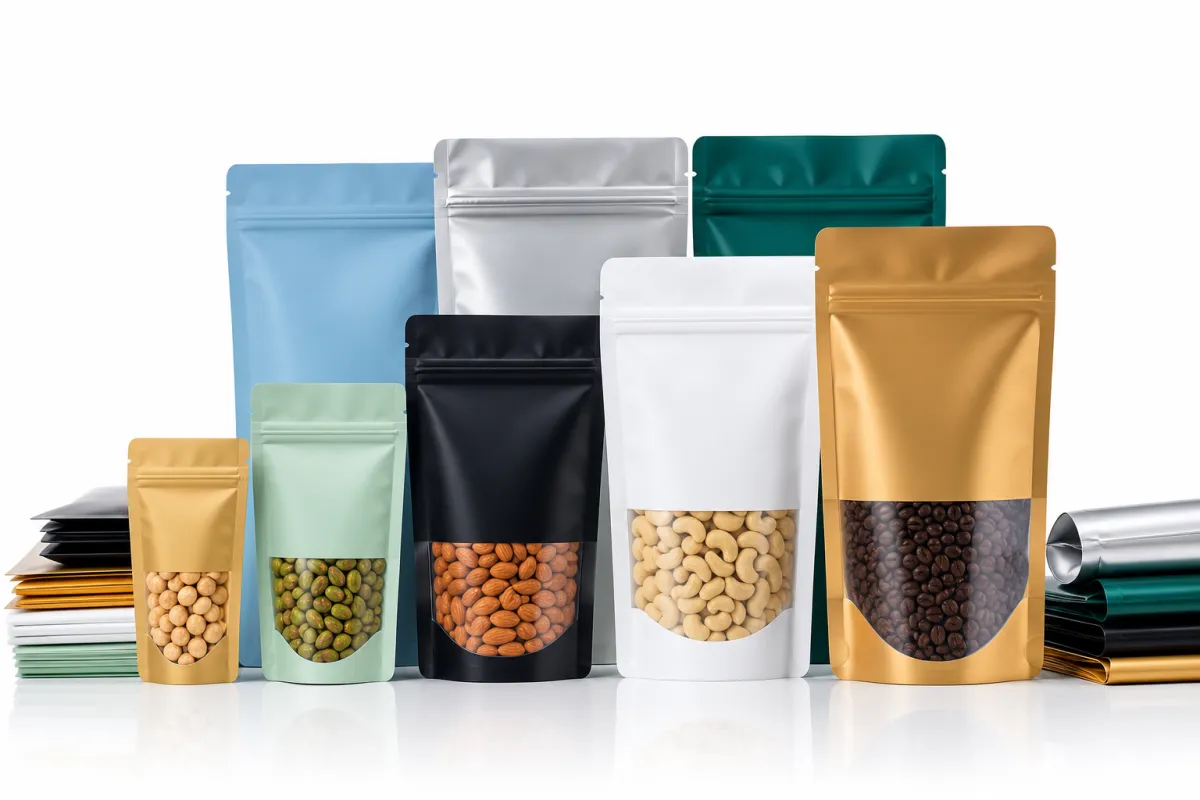
Custom retail pouches wholesale beats loose packaging for one simple reason: it makes the product look intentional. Put the same item in a thin generic pouch and it reads like a commodity. Put it in a well-finished custom pouch with the right size and structure and it reads like a retail brand. That is not magic. That is packaging doing the job it was hired to do.
Loose packaging also creates practical problems that show up fast. Products slide around inside oversized bags. Zippers fail on cheap stock. Shelf facings look messy because every pouch is slightly off. Those issues do not sound dramatic in a spreadsheet, but they show up in stores and fulfillment centers in a hurry. I have seen a whole launch get downgraded by a pouch that bowed on shelf and made the line look half-finished. That kind of thing is annoying, but it is also expensive.
The other reason brands move to custom retail pouches wholesale is cost control. Wholesale pouches reduce per-unit pricing, especially once the order moves past tiny test quantities. They also make reordering easier because you can hold the same spec, keep the same dieline, and avoid re-approving every design detail from scratch. That saves time and keeps small mistakes from becoming expensive reprints. Small mistakes are never actually small once you buy ten thousand of them.
- Oversized pouches waste film and freight.
- Unclear print specs create proof delays.
- Too many pouch sizes make inventory chaotic.
- Generic bags weaken retail packaging before the shopper even sees the product.
A pouch should do three jobs at once: protect the product, present the product, and keep your reorder process from turning into a mess. If it only does one of those things, it is costing you more than you think.
Where do brands usually burn cash? Oversizing. It sounds harmless, but a pouch that is 10 to 20 percent too large pushes up material use, storage volume, and shipping cost. Another common mistake is ordering six sizes because “the line might grow later.” Most brands do not need six sizes. They need one or two structures that cover the bulk of the SKUs, then a clean path for extensions when the product line actually earns them. That is kinda the whole game.
Custom retail pouches wholesale is not about flashy packaging for its own sake. It is about better presentation, better handling, and fewer mistakes at scale. Snack brands want shelf visibility. Coffee brands want barrier protection and a premium feel. Beauty lines want something cleaner than a folded carton. Supplement brands want repeatability. Pet treat brands want a pouch that stands up in the pantry and reseals properly. That is the buying logic, and it usually wins.
For brands comparing formats, it helps to review Custom Packaging Products alongside your pouch options. If you are planning volume, the Wholesale Programs page is the better place to think through unit economics before you lock in a spec.
Custom retail pouches wholesale: product types and use cases
Custom retail pouches wholesale covers more than one pouch style, and the differences matter. A flat pouch is not a stand-up pouch. A gusseted bag is not a zipper pouch. Buyers who treat them as interchangeable usually end up paying for the wrong format and then wondering why the product sits awkwardly on the shelf. The shelf always tells the truth. Rude, but useful.
Here is the practical breakdown. Flat pouches are simple, efficient, and good for lightweight retail items, single-serve portions, refills, and products that do not need much shelf depth. Stand-up pouches are the classic retail choice because they display well and create more face area for branding. Gusseted pouches work for volume and shape retention. Zipper pouches add reseal convenience. Window pouches let the product do some of the selling for you. That is the part many teams miss: custom retail pouches wholesale should support the sales job, not just hold product.
| Style | Best For | Retail Advantage | Common Specs |
|---|---|---|---|
| Flat pouch | Samples, single serves, lightweight items | Low material use, clean presentation | Tear notch, hang hole, gloss or matte print |
| Stand-up pouch | Snacks, coffee, supplements, beauty refills | Strong shelf visibility and stable display | Zipper, bottom gusset, window option |
| Gusseted pouch | Bulkier goods, pantry items, pet treats | Better fill volume and shape retention | Side gusset, heat seal, optional valve |
| Window pouch | Products where visibility drives trust | Lets shoppers inspect texture, color, or form | Clear film panel, reseal, hang hole |
| Zipper pouch | Resealable retail products | Convenience, freshness, repeat use | Press-to-close zipper, tear notch, matte finish |
For food, barrier protection is not optional. Snacks, coffee, dried fruit, powders, and herbs often need moisture, oxygen, or light resistance. That usually means a laminated film or a foil structure. For cosmetics, the buying decision leans harder toward feel and appearance. A soft-touch matte finish can look more premium than a glossy face, even if the contents are simple. For accessories or small consumer goods, clean printing and accurate sizing matter more than a complex structure. Custom retail pouches wholesale works best when the format matches the product category instead of trying to impress every buyer with every feature at once.
Customization options also shape the final decision. A tear notch matters because shoppers hate wrestling with packaging. Hang holes matter if the item goes on a peg wall. Rounded corners can make a pouch feel more finished. Clear windows can improve trust for natural foods or beauty blends. Zippers are useful if the buyer is meant to use the product more than once. None of those details are glamorous, but they directly affect how custom retail pouches wholesale performs in the real market.
There is also a production angle. The more unusual the pouch shape, the more likely you are to add cost and lead time. Most brands do not need a wild structure. They need the right structure. Smart packaging design usually means choosing something that supports shelf impact, shipping, and consumer convenience without making the line miserable.
One thing I tell buyers all the time: if the packaging choice makes your warehouse team mutter under their breath, you probably picked the wrong format. That is not a scientific test, but it is a pretty good one.
Materials, closures, and print specifications that matter
If you are buying custom retail pouches wholesale, the material stack is where the real work happens. Buyers often start with the look and end with the wrong structure. That is backwards. Start with what the product needs, then choose the finish that fits the job. Kraft, PET, PE, foil-laminated structures, and high-barrier films each solve different problems. Some look natural. Some protect better. Some do both, but rarely at the lowest price.
Kraft gives a natural, earthy appearance, which works well for wellness, coffee, and specialty food lines. PET tends to print cleanly and hold a sharper retail look. PE is flexible and common in seal layers. Foil-laminated structures are strong performers for light, moisture, and oxygen protection. High-barrier films are the serious option for longer shelf life or more demanding products. If you want the paper look without giving up too much performance, you are usually looking at a paper-laminate structure rather than plain paper. Plain paper alone is not a miracle barrier. Packaging does not care about wishful thinking.
Closures matter just as much. Zippers help with repeat use. Heat seals protect freshness. Tear notches improve opening. Hang holes help retail display. Tamper-evident features make sense for some food and supplement items. If the product is meant to be opened and closed multiple times, do not skip the reseal feature just to save a few pennies on the quote. Custom retail pouches wholesale gets expensive fast when the spec ignores how the customer actually uses the pouch.
Print specifications are another place where buyers lose money. Spot colors, full-color process printing, artwork resolution, bleed, and finish all affect the outcome. If the artwork is not built correctly, the proof stage drags. If the color count is too complex, the quote climbs. If the finish is mismatched to the product, the branding feels off. The same thing happens in Custom Printed Boxes, by the way: the structure can be fine, but the print file wrecks the job.
If you want one technical checkpoint that catches a lot of avoidable problems, ask for seal strength and barrier targets before approving the structure. Oxygen transmission rate, moisture vapor transmission rate, and heat-seal compatibility are not sexy topics, but they are what keep a pouch from failing once the product leaves your desk.
For terminology and broader packaging references, the resources at packaging.org are useful. They do not replace a proper spec sheet, but they do help buyers and brand teams speak the same language before a quote is requested.
If sustainability matters, ask direct questions. Is there FSC-certified paper available? Is the laminate actually recyclable in your market, or just described that way on a sales page? Is the structure compatible with your retail channel rules? Good branded packaging should not depend on vague claims. It should depend on verifiable construction and a clear use case. That is how custom retail pouches wholesale stays credible with buyers and stores.
- Matte finish feels softer and more premium on many retail lines.
- Gloss finish can sharpen graphics and color contrast.
- Clear windows build trust for visible products.
- Foil layers add protection for shelf-stable goods.
Custom retail pouches wholesale pricing, MOQ, and unit cost
Custom retail pouches wholesale pricing is not one number, and anyone pretending otherwise is skipping the part that matters. Cost depends on size, material structure, print coverage, closure type, finish, and quantity. The more custom the pouch, the more the quote reflects that. The more standardized the pouch, the easier it is to get a useful price and a repeatable reorder.
MOQ, or minimum order quantity, is where a lot of new buyers get surprised. Lower volumes usually carry higher per-unit costs because the setup work is spread across fewer pieces. Larger runs bring down the unit price, but they also require more cash up front and more storage room. That is the tradeoff. There is no free lunch, just packaging math with a cleaner label.
| Order Tier | Typical Unit Range | Best Fit | Main Tradeoff |
|---|---|---|---|
| 2,000-5,000 pieces | $0.22-$0.55 each | Testing a new retail line or a limited release | Higher cost per pouch, less inventory risk |
| 5,000-10,000 pieces | $0.14-$0.38 each | Most growing brands with steady sell-through | Better balance between cost and flexibility |
| 10,000-25,000 pieces | $0.09-$0.28 each | Standard retail programs and repeat SKUs | Lower unit cost, more storage and cash tied up |
| 25,000+ pieces | $0.06-$0.20 each | Established programs with predictable demand | Best unit pricing, least room for design changes |
Those numbers are general ranges, not a promise. A simple flat pouch with light print will sit lower than a foil stand-up pouch with a zipper and matte finish. Add a window, a special die cut, or high-coverage ink and the quote moves. That is normal. Custom retail pouches wholesale is a cost game, but it is not a guessing game if the spec is clear.
Here is where buyers can save without wrecking the result:
- Reduce the pouch size if the fill weight allows it.
- Use one structure across multiple SKUs.
- Cut back on unnecessary print colors.
- Skip add-ons that do not help sales or shelf life.
- Plan artwork around standard sizes instead of forcing the pouch to fit the design.
Compare landed cost, not just factory price. Freight, duties, local delivery, and storage can change the real number quickly. A quote that looks better on paper may not be better once it reaches your warehouse. That is especially true for custom retail pouches wholesale, because lightweight packaging can still rack up cost if the shipment is bulky, the cartons are inefficient, or the reorder plan is messy.
If your retail line also uses custom printed boxes, align the finishes and artwork direction where it makes sense. Consistency across product packaging improves recognition and makes the shelf look organized. No buyer ever complained that their line looked too coherent.
From proof to freight: process and timeline
The ordering process for custom retail pouches wholesale should be boring. Boring is good. A clean process reduces error. It usually starts with an inquiry, then moves to spec confirmation, artwork review, proofing, production, quality check, packing, and shipment. Each step exists because someone, somewhere, learned the hard way that skipping a step gets expensive.
The biggest delays usually come from incomplete artwork, unclear dimensions, late proof approval, or a surprise spec change after production starts. If the pouch size changes after the dieline is approved, the timeline shifts. If the finish changes from matte to gloss, the proof may need another pass. If the closure type changes, the line may need adjustment. None of this is mysterious. It is just manufacturing with a lot of opportunities to make the calendar sulk.
Typical timing depends on the order size and the level of customization, but here is the realistic picture: proofing often takes longer than buyers expect, especially if branding is still being finalized. A simple reorder can move quickly. A new pouch structure with full artwork usually needs more time for sampling and approval. Custom retail pouches wholesale is fastest when the artwork is ready, the fill weight is confirmed, and the product manager is not changing the brief every other day.
To speed things up, send exact pouch dimensions, desired closure, finish, and target volume right away. If you know the retail channel, say so. Grocery, specialty retail, DTC, and club formats can all affect how the packaging should perform. If the pouch will travel in shipper cartons or with inserts, ask about transit testing aligned with ISTA methods. That is not overkill. That is what good buying looks like.
You should also ask about carton packing details and export documentation before the order is placed. How many pieces per carton? What is the carton size and gross weight? Is the shipment labeled for customs cleanly? These details are not glamorous, but they keep the freight stage from turning into a last-minute rescue job. Custom retail pouches wholesale should arrive in a form your warehouse can actually receive.
One more practical point: if the supplier can provide tracked shipping and a plain-language spec sheet, that is worth more than a noisy sales pitch. The goal is not to feel impressed. The goal is to get a production run that matches the approved proof.
A simple timeline checklist looks like this:
- Submit product specs and artwork.
- Confirm material, size, closure, and finish.
- Review proof and request corrections fast.
- Approve production and lock the shipment plan.
- Inspect cartons and compare against the approved sample or proof.
Why choose us for wholesale retail pouches
For custom retail pouches wholesale, the supplier should save you from mistakes, not create them. That sounds obvious, yet a lot of quotes are built around the lowest possible number with very little thought given to fit, print behavior, or reorder stability. A better partner gives you spec guidance, clear proofing, and repeatable production so the next order does not become a fresh negotiation.
At Custom Logo Things, the practical advantage is straightforward: custom sizes, multiple film structures, retail-friendly print finishes, and support for repeat wholesale orders. That matters because the same product can need very different packaging depending on shelf life, channel, and presentation. A pouch for premium coffee is not the same pouch you would use for a sample pack or a beauty refill. Custom retail pouches wholesale works best when the supplier understands those tradeoffs and says so plainly.
Good supplier support also catches expensive problems early. If the artwork bleed is wrong, the proof should flag it. If the closure choice does not fit the fill weight, that should be pointed out before production. If the order quantity is too low to hit the target price, that should be explained in plain English. A slightly lower quote is useless if the vendor disappears after deposit. That is not value. That is trouble with a number attached.
Operational details matter too: quality checks, packing standards, and a stable path from test run to larger wholesale production. If you are building branded packaging across multiple SKUs, consistency becomes the real asset. One pouch that is slightly off is a nuisance. Ten thousand pouches that are slightly off is a problem. That is why custom retail pouches wholesale should be managed like a production system, not a one-off purchase.
What buyers usually want is simple:
- Clear communication.
- Useful proof feedback.
- Reliable reorders.
- Packaging design that fits the product, not just the mood board.
- Retail packaging that looks right on the shelf and holds up in transit.
That is also why package branding should be treated as part of the product, not a decoration added at the end. If the pouch reflects the brand accurately, the product feels more credible. If it looks improvised, the market notices. Shoppers are not subtle about that.
And yes, a supplier should be willing to say, “No, that spec is going to be a problem.” That honesty saves more money than any polished pitch deck ever will.
Next steps to order custom retail pouches wholesale
If you are ready to buy custom retail pouches wholesale, start with the boring checklist. That is the part that saves time. Define the product type, target fill weight, pouch style, closure need, print approach, and expected volume before you request a quote. If you skip that prep, the supplier has to guess, and guesswork is where cost goes sideways.
Have your artwork files ready, preferably in the correct format and with the right bleed. Know your retail channel. Know whether you need barrier protection, a reseal feature, a hang hole, or a window. If compliance matters, say so upfront. Food, supplement, and personal care lines can each bring different expectations, and those details affect the spec. Custom retail pouches wholesale is much easier to price accurately when the brief is complete.
The fastest path is usually this:
- Compare two or three pouch structures.
- Request a sample or proof.
- Review the real shelf impact, not just the mockup.
- Pick the spec that balances presentation with unit cost.
- Place the order with a reorder plan already in mind.
If you are still sorting out the product line, browse the Custom Packaging Products page and compare it with our Wholesale Programs. That will give you a cleaner view of how the numbers work before you commit to a full run.
Here is the part buyers usually regret delaying: asking for a price estimate based on exact specs instead of a rough idea. Rough ideas do not help a sourcing decision. Exact specs do. If you want Better Shelf Impact, cleaner storage, and fewer reorder headaches, custom retail pouches wholesale is the right place to start, but only if the order is quoted with real numbers, not optimism.
What is the usual MOQ for custom retail pouches wholesale?
MOQ depends on size, film structure, print method, and closure type, but smaller runs usually cost more per unit. If you are testing a new item, ask for the lowest practical MOQ and compare that against your expected sell-through. Standardizing one pouch size across multiple products can help you reach a better MOQ faster, which is often the cleaner buying move.
How much do custom retail pouches wholesale orders usually cost?
Price is driven by size, material, print coverage, finish, and order volume. A quote only tells part of the story, so compare landed cost instead of chasing the lowest factory number. Freight, duties, and storage can move the real total more than a tiny unit-price discount. In many cases, simpler specs lower cost faster than arguing over pennies.
How long does production take for custom retail pouches wholesale?
Timeline depends on proof approval, artwork readiness, and the production queue. Clean files save time. Sampling and proofing usually add the most lead time, especially if you are still deciding on finish or barrier level. Ask for a stage-by-stage timeline so delays are visible before they hit your launch date.
Which material is best for retail pouches?
The best material depends on the product. Food often needs barrier protection, while cosmetics may prioritize a premium look. Kraft gives a natural feel, foil offers stronger protection, and clear film helps shoppers see the product. Choose the material based on shelf life, handling, and presentation, not just appearance. That is the difference between good retail packaging and expensive guesswork.
Can I order a sample before placing a wholesale order?
Yes, and you should if the pouch size, print, or closure matters to your launch. A sample helps verify fit, feel, seal strength, and how the branding looks in real light. If you skip sampling, at least request a detailed proof and spec sheet before production. For custom retail pouches wholesale, that small step can prevent a very annoying reprint.
Before you request quotes, build a one-page spec sheet with the product fill weight, pouch style, material preference, closure, finish, artwork notes, carton requirements, and target order quantity. That is the cleanest way to get comparable pricing, fewer surprises, and packaging that actually fits the product instead of just looking nice in a mockup.

