For boutique buyers, a Custom Hang Tags for boutique retailers supplier quote checklist is less about paperwork and more about avoiding the expensive, annoying kind of surprise: tags that arrive on time but feel wrong in the hand, print in the wrong color, or cost far more than the first quote suggested. A hang tag is often the first physical proof of quality a shopper touches. It has to carry branding, price, size, and care information while still looking like it belongs in a thoughtfully merchandised store.
Boutique retail is unforgiving in a small way. Customers notice paper feel, edge finish, and whether the tag looks integrated with the rest of the garment presentation. A tag that is too glossy can cheapen a linen shirt; a tag that is too flimsy can make a premium sweater feel undercut before it is even tried on. That is why the quote process matters. The right supplier should be pricing the actual job, not guessing at the details.
In practice, the best hang tags support brand storytelling, SKU tracking, and shelf presentation, while staying consistent with the wider retail packaging system. If you are comparing vendors, the most useful quote is the one that makes material, print, finish, and lead time visible enough to compare like for like.
Value-Driven First Look: What a Good Hang Tag Actually Does on the Sales Floor
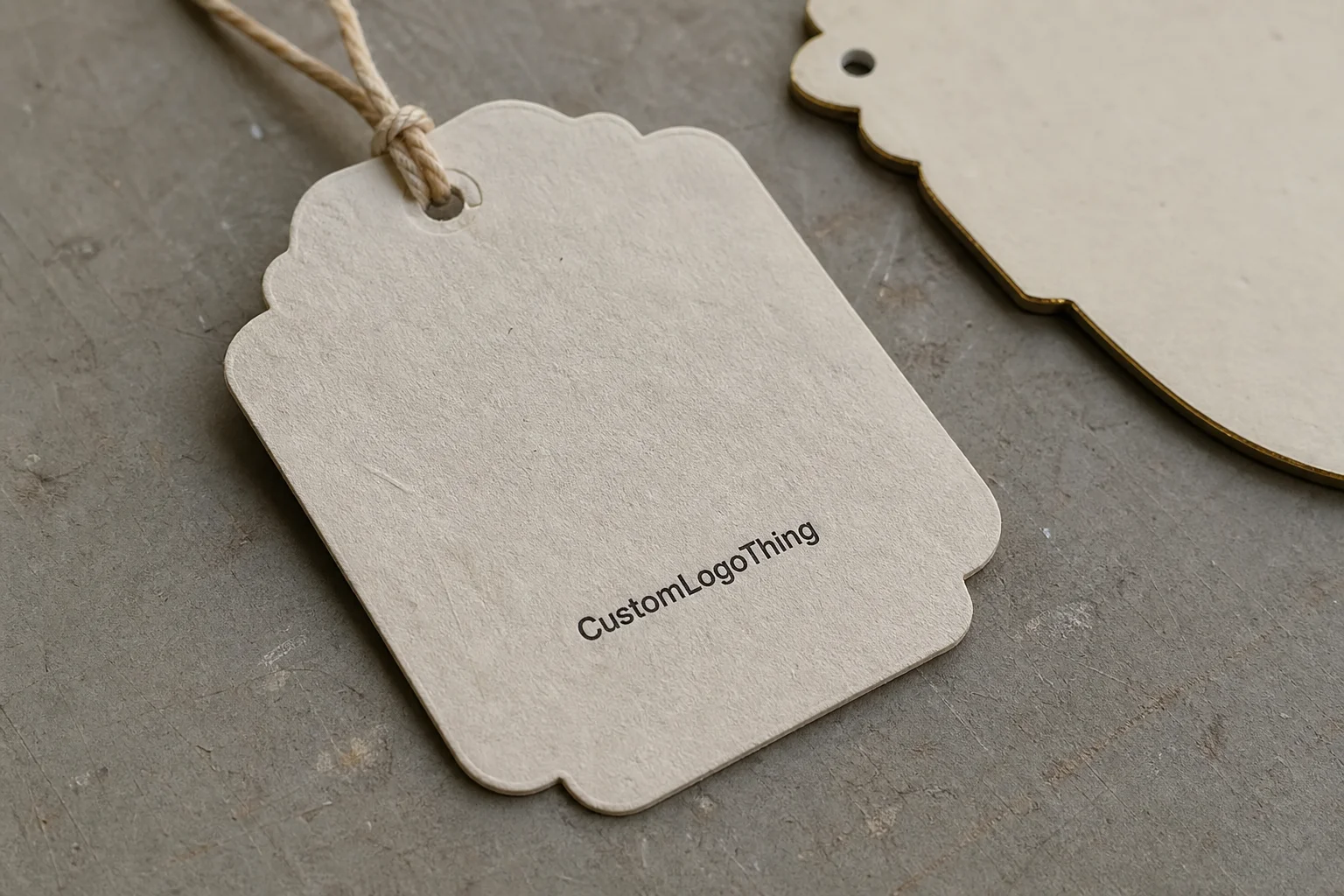
A good hang tag does more than hang from a neckline. It communicates value in seconds. That tiny card tells a shopper whether the brand feels disciplined, whether the item is priced with intention, and whether the retailer pays attention to details that most customers never verbalize but absolutely register.
From a packaging buyer’s perspective, the tag has to do several jobs at once. It carries price, size, SKU, barcode, and care instructions. It can also reinforce brand identity through paper choice, typography, finish, and shape. When those elements work together, the tag supports the garment instead of competing with it.
Boutique retailers usually order in smaller quantities than big chains, and that changes the economics. A mass merchant can absorb a plain stock tag more easily. A boutique collection often needs a more exact fit: better print fidelity, a thicker board, a cleaner edge, or a finish that matches the rest of the packaging program. Per-unit cost matters, but so does perceived value. Those two numbers are not always aligned.
The cheapest quote is often only cheap because it leaves something out. Sometimes it excludes a die charge. Sometimes it assumes a lighter board than the buyer expected. Sometimes it does not include freight, proofing, or the second version of a tag for a different SKU group. The result is familiar: a low headline price that grows as soon as the buyer asks for a spec sheet in plain English.
That is why a Custom Hang Tags for boutique retailers supplier quote checklist should begin with the brand experience you want on the rack, then work backward into the production specs. If the supplier can quote accurately from a complete brief, you are already closer to a reliable order.
Materials, Shapes, and Print Options That Change the Quote
Paper stock is one of the biggest drivers of both appearance and cost. Coated cardstock gives a smoother surface and sharper logo reproduction, which is useful for photography, gradients, or small type. Uncoated textured stock feels softer and more natural, and it often suits boutiques that want a quieter, more tactile presentation. Recycled board can support a sustainability message, while cotton, felt, or laid papers add character but usually push the budget upward.
Thickness changes the feel immediately. A 14 pt or 16 pt card is common for apparel tags. Heavier boards can feel more substantial, but they also need more careful cutting, scoring, and packing. Thin stock can save money, although it may curl, crease, or wear faster in store. A supplier should tell you whether the chosen board will hold up once the tags are punched, threaded, stacked, and shipped.
Shape affects cost in a very direct way. A plain rectangle is generally the most economical. Square tags can look modern and tidy. Rounded corners reduce edge wear. A die-cut custom silhouette can make a tag feel distinctive, but it adds tooling and setup. Folded tags are useful when there is more copy to fit, such as care instructions, multilingual text, or a short brand message that would crowd a single panel.
Print and finish choices create another layer of price movement. CMYK full color works well for most logo-and-copy layouts. PMS spot colors are worth asking for if brand color consistency is strict, especially when a signature tone needs to match seasonal packaging or boxed product lines. Foil stamping, embossing, debossing, spot UV, and soft-touch lamination all increase labor and make-ready time. None of these is “better” in isolation; they serve different brand cues and different budgets.
If the hang tag is part of a broader product packaging system, those finishes should match the rest of the line rather than fight it. A matte uncoated tag next to a high-gloss box can look accidental unless there is a clear reason for the contrast. That kind of mismatch is often missed until the first physical samples arrive.
| Option | Typical Use | Cost Impact | Presentation Impact |
|---|---|---|---|
| Coated cardstock, CMYK | Standard boutique apparel tags | Lower | Clean, bright, practical |
| Uncoated textured stock, PMS | Premium lifestyle or natural brands | Moderate | Soft, refined, tactile |
| Specialty paper, foil stamping | High-end collections, launch pieces | Higher | Distinctive, elevated, memorable |
| Soft-touch lamination, die-cut shape | Signature branded sets | Highest | Luxury feel, strong shelf presence |
For buyers sourcing Custom Labels & Tags as part of the same program, it helps to keep the stock, finish, and tone aligned across hang tags, woven labels, and adhesive labels. A collection feels more intentional when those elements look related without being identical.
Specifications to Confirm Before You Request Samples
The fastest way to avoid quote confusion is to lock down the core specs before you send an inquiry. Start with the finished size, then confirm paper thickness, print sides, corner style, and hole diameter. If you want a square tag with rounded corners, say that directly. If the tag will be folded, note the fold orientation and the final panel dimensions. Vague wording is where pricing goes sideways.
Attachment details matter more than many first-time buyers expect. A string tie works well for apparel. Elastic loops are common for accessories. Safety pins can suit some soft goods, though they usually feel less refined for boutique branding. Pre-installed fasteners can save labor at packing, but they also affect quoting and carton count. The attachment should match the product category, because a leather good, a scarf, and a candle box have very different handling needs.
Variable data is another point that needs a decision early. Barcodes, QR codes, size runs, price fields, and care copy should be planned before artwork is finalized. If you want the tag to support inventory or reordering, ask where the code will sit relative to the trim and the hole so it remains readable after threading. A tag that scans beautifully on screen and fails once it is assembled is a common, preventable mistake.
Artwork readiness affects turnaround more than buyers expect. Suppliers usually want print-ready files in PDF, AI, or EPS format, with bleed included and text outlined or embedded correctly. Ask whether they are working from a dieline template and what safe margins they require around the edge and hole. A layout built on a proper dieline reduces proof rounds and lowers the chance of last-minute corrections.
- Finished size and shape
- Paper stock and thickness
- Single- or double-sided print
- Hole size, corner style, and fold details
- Attachment method such as string, loop, or pin
- Barcode, QR code, and care copy placement
- File format and dieline requirements
Pricing, MOQ, and Quote Variables Buyers Should Compare
Unit cost usually comes down to quantity, stock, print coverage, finishing complexity, die-cutting, and whether the order includes one version or several SKUs. A simple 2" x 3.5" tag on coated board with one-color print is clearly cheaper than a soft-touch, foil-stamped die-cut piece with multiple variants. That distinction sounds obvious, but quote sheets often flatten it into one line and leave the buyer to decode the rest.
MOQ, or minimum order quantity, deserves close attention. Standard rectangle tags on common stock can often run at lower minimums. Custom shapes, specialty finishes, and multi-version collections usually raise the minimum because the supplier has to absorb more setup, tooling, and make-ready time. A useful quote explains this plainly instead of hiding it behind broad pricing bands.
Do not compare a 16 pt uncoated tag with a 12 pt coated tag and treat them as equivalent. Compare line item by line item. If one supplier includes spot color plates, die charges, and freight while another leaves them out, the lower number is not actually lower. In packaging, headline price is only one layer of the calculation.
A realistic budget picture for boutique hang tags often looks like this, though paper and finishing can move the numbers up or down quickly:
- Simple custom tags: often around $0.12-$0.25 per unit at moderate quantities
- Premium printed tags: often around $0.20-$0.45 per unit with better stock or multiple sides
- Specialty finishes: often higher once foil, embossing, or custom dies are added
Ask about setup fees, plate charges for spot colors, sample charges, freight, and rush premiums. A quote can look attractive until those items are added. If a supplier cannot explain how each charge relates to the spec sheet, that is a warning sign. A clear quote should help you estimate total landed cost, not force you to reconstruct it.
Process and Lead Time: From Quote Request to Approved Proof
The workflow is straightforward only when the buyer sends complete information. First comes the spec request. Then the supplier prepares an estimate. After that, the buyer approves a dieline or template, submits artwork, reviews a digital proof, confirms production, and arranges shipping. Each step is simple in theory. Missing one detail can add days in practice.
Missing bleed is a common cause of delay. So is low-resolution artwork, unclear finish naming, or uncertain quantities across multiple SKU versions. A buyer who writes “premium finish” without naming soft-touch lamination, foil, or spot UV is asking the supplier to guess. Those are not interchangeable in production, and they do not carry the same cost or schedule.
For standard hang tags, lead times are usually shorter than buyers fear once proof approval is done. Specialty orders take longer. Foil stamping, embossing, debossing, custom die-cuts, and multi-piece sets need more setup and more inspection. A practical production window is often around 7-12 business days for simpler runs and 12-18 business days or more for more elaborate jobs, depending on order size and workload. Rush orders are possible in some cases, but they tend to be expensive because they compress press time and finishing time at once.
“The best quote is not the lowest number. It is the one that tells you exactly what you are getting, what can change the price, and how long the job really takes.”
Physical samples are useful when deciding between paper stocks, finishes, or attachment styles, especially for a flagship collection. A digital proof is usually enough to confirm copy placement, barcode position, and overall layout. If the tactile feel of the tag will influence the buying experience, ask for a sample before full production. That becomes even more relevant when the tags sit alongside custom printed boxes or other premium packaging elements where the surface feel should stay consistent.
If your order is part of a wider packaging rollout, reviewing Custom Packaging Products can help you keep hang tags, labels, and box presentation aligned before anything goes to press. That avoids a common boutique problem: each item looks fine on its own, but together they feel like three different programs.
Supplier Comparison Checklist for Boutique Retail Quality Control
A strong supplier quote should be easy to read and easy to trust. Start with material options. Does the supplier list stock choices, thickness, and finish clearly? Then check print accuracy. Do they specify CMYK or PMS? If color is critical, the answer should be explicit, not implied.
Finishing consistency matters too. Soft-touch lamination should feel even across the run. Foil should register cleanly. Die cuts should not leave rough edges or weak points around the hole. If a supplier cannot discuss those basics without drifting into generic language, they may not be the best fit for a boutique brand that depends on sharp retail presentation.
Communication quality tells you a lot before production starts. A useful quote should say what it includes, what it excludes, what assumptions were used, and what changes the price if the specs are revised. If revisions are easy to track and the supplier answers questions clearly, the job usually goes better.
A serious supplier should provide these items up front:
- Dieline or template
- Recommended paper stock
- Proofing process
- MOQ by version or finish
- Estimated turnaround
- Freight guidance and packing method
Watch for red flags as well. Vague pricing is one. Unsupported promises about speed are another. So is a quote that leaves out finishing, setup, or shipping until the end of the process. If you are comparing a Custom Hang Tags for boutique retailers supplier quote checklist against several vendors, these details are what separate a real production partner from a low-friction sales response.
For broader packaging quality checks, it can help to align tag requirements with outside material references. The EPA offers useful guidance on paper and paperboard sustainability, and the FSC is a practical reference if recycled or responsibly sourced paper matters to your brand story. For wider transport or distribution resilience, ISTA testing guidance is worth reviewing even if the tag itself is not the item being tested.
Next Steps to Request an Accurate Quote Without Back-and-Forth
If you want a fast, usable price, gather the basics before you reach out: finished size, quantity, paper preference, print sides, finish, attachment style, barcode or QR requirements, and deadline. That one step cuts out a lot of back-and-forth and gives the supplier enough information to price the job properly.
Keep each request focused on one product line or collection. If you need three tag versions, say so clearly, and list which specs stay fixed across versions. Shared stock, shared size, and shared finishing usually keep pricing more efficient, while mixed specs create more setup work and a less stable quote. For seasonal boutiques, that kind of clarity saves time quickly.
Send artwork files and brand references together. If the supplier can see your logo placement, typography, and any existing package branding style, they can catch issues earlier and reduce proof revisions. That matters because revisions take time even when they do not add visible cost. If your line includes apparel, accessories, or gifts, the hang tag should feel like part of the same retail packaging family, not an isolated piece that only matches by accident.
The most practical comparison is still simple: request two or three quotes using the same spec sheet, the same artwork, and the same deadline. Then choose the option that best fits quality, timeline, and total landed cost. If you need a starting point, assemble your spec list carefully and use this Custom Hang Tags for boutique retailers supplier quote checklist to keep every quote comparable.
FAQs
What should I include in a custom hang tags for boutique retailers supplier quote checklist?
Include finished size, quantity, paper stock, print sides, finishes, attachment method, and any barcode or QR code requirements. Artwork file format, approval deadline, and shipping destination should also be included for accurate pricing.
How do I compare custom hang tag quotes without choosing the cheapest one by mistake?
Compare each quote on the same exact specifications, including stock weight, finishing, setup fees, and freight. Check whether the supplier included proofs, revisions, and any specialty decoration charges.
What MOQ is typical for boutique custom hang tags?
MOQ varies by stock, print method, and finishing, but smaller runs are often possible for standard shapes and simpler decoration. Custom dies, foil, embossing, or multiple versions can raise minimum quantities.
How long does production usually take after proof approval?
Standard hang tag jobs are usually faster than specialty jobs, but lead time depends on finishing, quantity, and order complexity. Custom shapes and added decoration generally require more production time and careful inspection.
Can I order different hang tag versions for separate boutique collections?
Yes, many suppliers can price multiple versions in one order if the size, stock, and finishing stay consistent. Shared production specs usually help keep unit cost and setup charges more efficient.


