Custom Hang Tags for retail packaging do more than identify a product. They influence price perception, communicate brand position, and help a shelf-ready item feel complete before a shopper even touches it. In many categories, that first glance is doing real commercial work.
The buyer side of the equation is less glamorous but more revealing. A tag has to survive shipping, read clearly under store lighting, fit the product category, and arrive in counts that line up with packing plans. If it misses any of those basics, the brand pays for it later in time, labor, or reprints. If it gets them right, the rest of the package looks more deliberate without changing the product itself.
That is why Custom Hang Tags for retail packaging sit at the intersection of design and operations. They carry a brand story, but they also need to be printable, scannable, durable enough for handling, and affordable at the right volume. Those are not always the same goals, which is exactly why the details matter.
Why custom hang tags change the first impression at shelf level
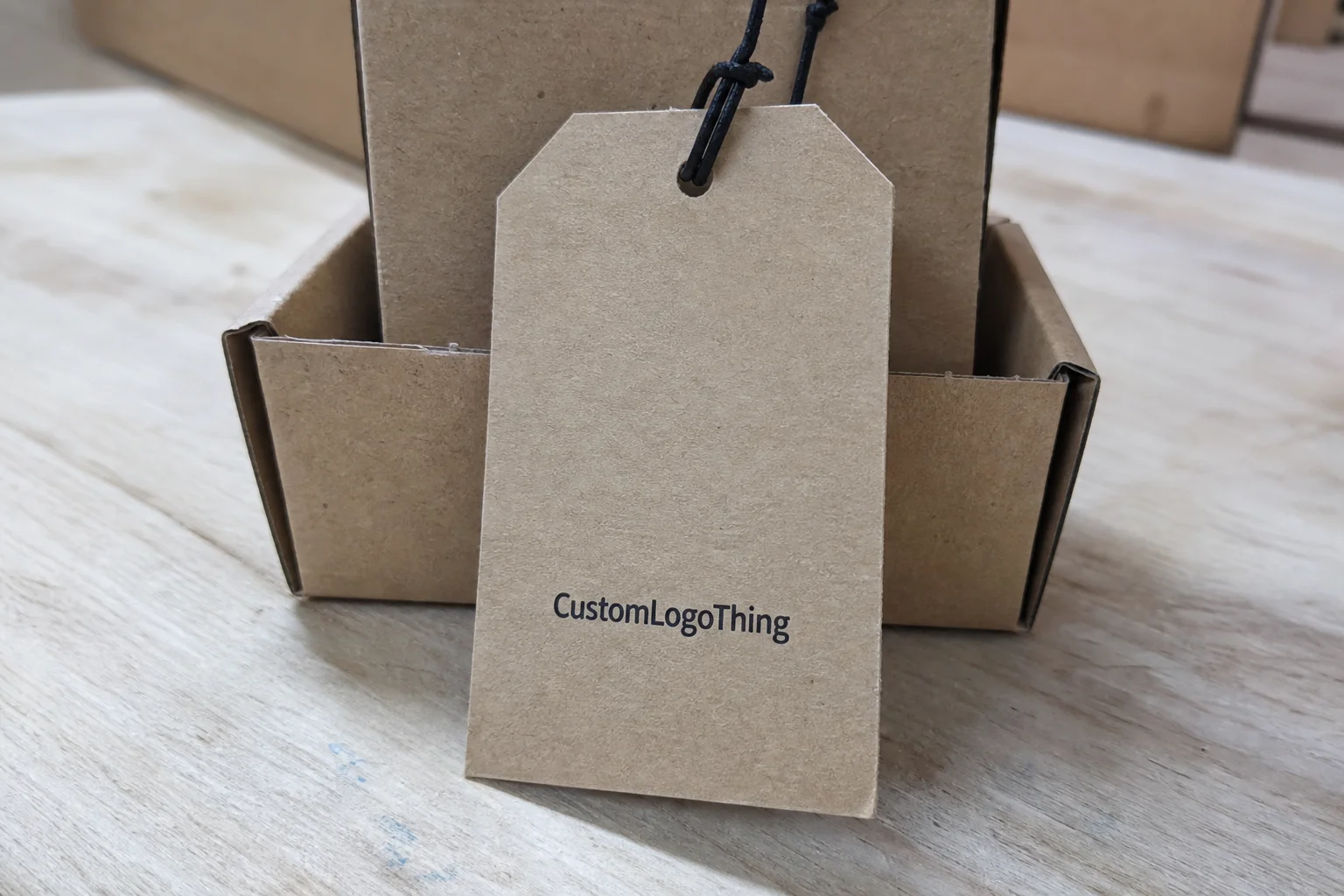
A hang tag is a printed component attached with string, ribbon, a plastic fastener, or a stapled loop. It is meant to be removable, which makes it different from a permanent label. That seems like a small distinction, but it changes the job of the piece. A tag has to speak for the product in the brief moment before purchase.
That brief moment can be decisive. In apparel, cosmetics, candles, accessories, specialty foods, and gift items, the tag often carries the first branded message a shopper sees. It can hold price, size, care instructions, origin details, product benefits, or a compact brand story. All of that has to fit without making the piece feel crowded.
The strongest tags usually do one thing well: they create a cleaner, more confident presentation. A better stock, sharper print, or more disciplined layout can make the same product feel more premium. Not by accident, either. The tag is doing a visual job that the package itself may not be able to do alone.
“The tag is small, but the signal is big. If it feels cheap, the product can feel cheap. If it feels considered, the product gets a better chance to justify its price.”
There is a back-of-house benefit too. Retail teams use hang tags for SKUs, barcodes, merchandising codes, and quick handling cues. When those elements are placed well, the tag helps the store operate more efficiently. When they are placed badly, even a good-looking tag becomes a nuisance.
That is why the best Custom Hang Tags for retail packaging are designed in context. A luxury skincare line, a rugged outdoor accessory, and a handmade candle may all need tags, but they should not look like they came from the same playbook. Materials, shape, and finish should reflect the product category and the shelf environment.
How hang tag production works from file to finished pack
Most hang tag production follows a predictable sequence: artwork review, proofing, material selection, print, finishing, cutting, and final packing. Custom shapes add die-making. Folded formats add another production step. Variable data such as sequential numbering or SKU-specific content may require extra setup as well.
Print method is usually tied to quantity and complexity. Digital printing works well for shorter runs and faster turnarounds because it avoids some of the setup costs of plates. Offset printing becomes more economical at higher volumes, especially when color consistency and fine detail matter. Neither method fixes a weak file. Resolution, bleed, and type handling still decide how clean the tag looks at the end.
Finishing changes the character of the piece fast. Matte coating reduces glare and softens the overall look. Gloss pushes color and contrast. Soft-touch lamination gives a velvet-like feel that can suit premium lines. Foil stamping, embossing, and spot UV add dimension, but they also add cost, setup time, and more points where registration needs to be checked.
Attachment details deserve more attention than they usually get. Pre-strung tags save labor later. Reinforced eyelets help prevent tearing around the hole. Folded tags offer more room for instructions or multilingual copy. If the product will be handled often, hole placement and edge strength should be considered early so the tag does not fail on the sales floor or during transit.
Quality control on this kind of job tends to focus on the practical things buyers notice immediately: color consistency, trim accuracy, registration, hole placement, legibility, and pack-out counts. A tag can look attractive in a mockup and still fail in production if the specs are loose. A reliable order arrives ready to use, not ready for sorting.
For brands building a broader package system, tags should be checked alongside Custom Packaging Products and Custom Labels & Tags. That comparison helps when the hang tag needs to coordinate with cartons, insert cards, or other retail packaging components rather than stand alone.
Material, size, and finish choices that affect performance
Material selection is where many hang tag programs succeed or slip. Coated cardstock is the most common choice because it prints cleanly and has enough stiffness to hold up on hooks and racks. Uncoated text-weight paper works when the brand wants a softer, more writable surface. Kraft stock fits organic or handmade positioning. Recycled paper can support sustainability messaging, though only when the rest of the supply chain can back that claim. Textured premium stocks tend to suit specialty and giftable goods.
Thickness matters as much as stock type. Lighter papers cost less, but they can curl, crease, or tear when products are shipped in bulk or handled frequently. Heavier cards generally feel more substantial and survive retail use better. A common range for retail tags is 14pt to 18pt cardstock, although some premium pieces go thicker if the attachment method and fold structure can support it without making the tag awkward.
Size and shape should follow content, not vanity. A simple rectangle is efficient, easy to read, and easy to package. Rounded corners soften the look without changing the layout much. Circular or custom die-cut shapes can reinforce brand personality, but they work best when the visual hierarchy is already strong. Folded tags are useful for products that need care instructions, sourcing details, or multiple languages. Oversized tags can look excellent on launch pieces, but only if the design leaves enough white space to breathe.
Finish choices affect both appearance and durability. Gloss gives vivid color and strong contrast. Matte feels quieter and often reads as more modern. Uncoated stock is easier to write on if a team needs to mark sizes, prices, or batch notes by hand. Lamination helps protect against moisture, scuffing, and friction, which is useful for apparel, beauty, and shipping-heavy items.
There is also a compliance layer that should be planned early. Barcode placement, care symbols, legal copy, and any required product statements need room. If those elements are forced in late, the layout starts to look compressed and the tag loses clarity. A well-designed retail piece makes room for both branding and the information stores actually need.
| Option | Typical feel | Best use case | Relative cost |
|---|---|---|---|
| Coated cardstock | Crisp, sturdy, printable | Most retail products | Moderate |
| Kraft or recycled stock | Natural, textured, earthy | Eco-focused or handmade brands | Moderate |
| Soft-touch laminated stock | Velvety, premium, tactile | Luxury or giftable products | Higher |
| Folded tag format | More space for copy | Instruction-heavy products | Higher |
For buyers, the practical question is not just which stock looks best in a sample book. It is which one still looks good after shipping, unpacking, and retail handling. That is why a tag that starts with the right material usually ends up saving more than it costs.
Custom hang tags for retail packaging: cost, MOQ, and quote factors
Price is shaped by quantity, size, stock, print coverage, finishing, die-cuts, variable data, assembly, and shipping. That list is long because the job itself has many moving parts. A simple-looking tag can become expensive once specialty paper, foil, embossing, or a custom cut enters the picture.
Minimum order quantity is mostly about setup economics. Press setup, plate work, die creation, and finishing prep create fixed costs that get spread across the run. Smaller orders therefore carry a higher unit cost. A straightforward tag at 500 pieces will usually cost more per unit than a similar tag at 5,000 pieces, even if the artwork barely changes.
For a practical pricing frame, a one- or two-color tag on standard cardstock is usually far more economical than a tag with foil, embossing, or custom die-cut corners. Once specialty finishes are added, unit cost can move sharply. In many buyer discussions, finishing upgrades can shift a quote by 20% to 60% or more, sometimes higher if the order is small or the setup is complex.
Here is a simple comparison of how specs affect a quote:
| Spec combination | Typical setup complexity | Typical unit cost trend |
|---|---|---|
| Standard stock, one-color print, rectangle, flat pack | Low | Lowest |
| Full-color print, matte coating, rounded corners | Moderate | Mid-range |
| Specialty stock, foil, embossing, custom shape | High | Highest |
| Variable data, pre-strung, bundled by SKU | Moderate to high | Depends on assembly labor |
Artwork changes can also affect pricing and timing. Multiple revision rounds, Pantone matching, or dense front-and-back layouts add press and prepress time. A usable quote depends on the final dimensions, material preference, quantity, print method, attachment style, and whether the tags ship flat or pre-assembled. Miss one of those details and the estimate may be cheap for the wrong reasons.
There is also a hidden cost in poor specification. If a brand orders a tag that is too flimsy, too small, or too difficult to assemble, labor costs show up later in the packing room. A slightly better spec can reduce damage, reduce sorting, and make the whole packaging workflow faster. That tradeoff is easy to miss when the unit price is the only thing on the screen.
Production steps, proofing, and lead time planning
A sound timeline starts with quoting and artwork review, then proof approval, scheduling, print, finishing, inspection, and shipping. Custom tooling and specialty finishes add time before production begins. If the stock is already available and the artwork is final, the order can move faster. If not, the calendar stretches.
Lead time varies with press capacity, material availability, and finish complexity. Simple orders often move in roughly 7 to 12 business days after proof approval. More complex Custom Hang Tags for retail packaging can take 12 to 20 business days or longer. That range is not universal, but it is realistic enough for planning launches, seasonal resets, and replenishment orders.
The proof stage is where expensive mistakes get caught early. A barcode that is too small, a hole too near the edge, a line of copy that slips into trim, or a spelling issue that would otherwise go to press can all be fixed before the job becomes waste. Proof review is not busywork. It is the cheapest quality-control step in the process.
Planning buffer time helps more than most teams expect. If tags arrive late, packing schedules tighten and the delay can spill into inventory, merchandising, or store set deadlines. That becomes even more visible when hang tags are one component in a larger package program that also includes inserts, labels, and cartons.
Fast turnaround is easiest when the design is final, specs are locked, and the order is simple. Once custom shapes, special finishes, or variable data enter the mix, the safest path is to plan earlier. It keeps production calmer and the finished piece cleaner.
For brands that use recognized logistics and sustainability standards, it can also help to think about transport and materials in the same way other packaging components are evaluated. References such as the International Safe Transit Association and the FSC are useful when material sourcing and shipping performance need to line up with broader packaging goals.
Common artwork and ordering mistakes that cause reprints
Low-resolution art is still one of the most common file problems. If the image looks soft on screen, it will look worse in print. Missing bleeds create thin white edges. Unoutlined fonts can shift if the printer does not have the exact typeface. Wrong color mode can change the final result, especially when a brand expects a Pantone match but sends only RGB artwork.
Barcode placement needs special care. If the code sits too close to a fold, a hole, or a trim line, scanning problems can show up later in the store. That is an avoidable headache and usually starts with a design file built for appearance instead of function.
Overloading the front panel is another common issue. A hang tag can hold a surprising amount of information, but not all at once. Too much copy flattens the hierarchy and weakens the premium effect. Good packaging design usually gives the brand name room to stand out, then supports it with product details in a clear order.
Stock choice can backfire if it is based on cost alone. If the tag needs to survive humidity, frequent handling, or shipping friction, the cheapest option may not be the best value. A slightly heavier or coated stock often resists wrinkling, tearing, and fading better, which reduces waste and rework.
Rushing proof approval causes its own damage. Teams sometimes approve a proof before checking quantity, spelling, finish choice, SKU details, or whether the front and back copy actually matches the product. That kind of mistake is painful precisely because it is avoidable. A five-minute review can prevent a full reprint.
For companies building broader custom printed boxes and retail collateral programs, consistency matters too. If the tag tone, stock feel, and color range do not match the rest of the line, the shelf presentation starts to look assembled instead of designed.
Expert tips for better-looking retail tags and smoother fulfillment
Start with hierarchy. Brand name first, product information second, practical details after that. That sequence reads quickly, which matters when a shopper is standing in front of a crowded shelf or scanning a hook display in a few seconds.
Design around the attachment method from the start. A hole, eyelet, ribbon, or fold should not interfere with important text or graphics. A beautiful layout can become awkward fast if the attachment point steals the wrong part of the design.
Match the finish to the brand position. Soft-touch or matte usually suits luxury goods and beauty items. Kraft or uncoated stock fits natural brands, handmade products, and goods with an earthy identity. Gloss can be the right choice for bold color, strong imagery, and high-energy displays.
Test the tag against the actual product, not only the file. Place it beside the real packaging, check the lighting, and compare it with the product color. A tag that looks balanced on a monitor can read very differently under store lights, and contrast issues show up quickly once the piece is on a hook or shelf.
On the fulfillment side, bundle tags by SKU, confirm counts, and line up delivery with packing schedules. That keeps assembly efficient and reduces mix-ups when several product variants are being packed together. For brands handling their own kitting, that discipline saves labor in a way that is easy to underestimate before the order lands.
If the program includes other retail packaging components, keep the system aligned. Tags, inserts, and cartons should feel like one family. That kind of consistency is a major reason Custom Hang Tags for retail packaging work so well: they connect the product to the rest of the branded packaging rather than floating as an afterthought.
Next steps for planning your retail tag order
Before requesting samples or quotes, define the product category, tag purpose, quantity, and target retail date. Those four inputs shape nearly every other decision, from stock to finish to lead time.
Then gather the essentials: dimensions, artwork files, paper stock preference, finish preference, attachment style, barcode requirements, and any compliance copy that needs to appear on the piece. A clear spec sheet makes pricing more accurate and keeps revision rounds under control.
It helps to compare two or three material-and-finish combinations side by side. That is often the fastest way to judge feel, readability, and brand fit before locking the final version. What looks polished on screen is not always the best choice in hand.
Use an internal approval checklist before the file goes to press. Confirm spelling, pricing, colors, SKU details, and compatibility with the rest of the product packaging. That extra step keeps production cleaner and protects the launch schedule.
Well-planned custom hang tags for retail packaging should support sales, streamline packing, and strengthen shelf presentation from the first shipment. Treated as part of the packaging system rather than a last-minute add-on, the tag usually pays back in better presentation and fewer production problems.
What information do I need to order custom hang tags for retail packaging?
Have the tag size, quantity, artwork files, stock preference, finish choice, attachment method, and barcode or compliance copy ready before requesting a quote. The more complete the spec sheet, the faster the pricing and production estimate can be.
How do I choose the right material for retail hang tags?
Match the stock to the product and the environment: heavier cardstock for a premium feel, kraft or uncoated stock for natural brands, and coated stock for sharper color reproduction. If the tag will be handled often or exposed to moisture, lamination or a more durable finish is usually worth considering.
Why does the price of custom hang tags vary so much?
Pricing changes with quantity, size, paper stock, finishing, custom shapes, print colors, and whether the tags need special assembly or variable data. Smaller quantities usually cost more per tag because setup work is spread across fewer pieces.
How long does production usually take for retail hang tags?
Lead time depends on artwork readiness, proof approval, stock availability, and finishing complexity. Simple orders can move faster, while specialty finishes or custom tooling need more planning before production begins.
What are the most common mistakes with custom retail hang tags?
The biggest issues are poor file setup, text that is too small, hole placement that interferes with the design, and choosing a stock that does not fit the product environment. A careful proof review helps prevent reprints and keeps the tags ready for retail use.


