Buyer Fit Snapshot
| Best fit | Custom Hang Tags for Apparel projects where brand print, material claims, artwork control, MOQ, and repeat-order consistency need to be specified before quoting. |
|---|---|
| Quote inputs | Share finished size, material target, print colors, finish, packing count, annual reorder estimate, ship-to region, and any compliance wording. |
| Proofing check | Approve dieline scale, logo placement, barcode or warning zones, color tolerance, closure strength, and carton packing before bulk production. |
| Main risk | Vague material claims, crowded artwork, missing packing details, or unclear freight terms can make a low unit price expensive after revisions. |
Fast answer: Custom Hang Tags for Apparel: Material, Adhesive, Artwork, and MOQ should be specified like a repeatable production item. The safest quote records material, print method, finish, artwork proof, packing count, and reorder notes in one written spec.
Production checks before approval
Compare the actual filled-product size with the drawing, then confirm tolerance on folds, seals, hang holes, label areas, and retail display edges. Reserve space for logos, QR codes, warning copy, and material claims before decorative graphics fill the panel.
Quote comparison points
Review material grade, print process, finish, sampling route, tooling charges, carton quantity, and freight assumptions side by side. A quote is only useful when the supplier can repeat the same color, closure quality, and packing count on the next order.
Custom Hang Tags for Apparel: A Practical Brand Guide starts with a plain truth: shoppers touch the tag before they finish judging the garment. They scan the fabric. They check the price. They decide whether the piece feels worth it. That little card is not filler. Custom hang tags for apparel carry brand identity, size, SKU, price, barcode, origin, and sometimes care or compliance details, all packed into a few square inches that have to sell, inform, and survive real retail use.
From a packaging buyer's point of view, Custom Hang Tags for apparel sit right between branding and function. A strong tag can make a tee feel finished, a coat feel premium, and a sample line look ready for a buyer meeting. A weak tag does the opposite. It makes a polished garment feel unfinished, and that is a hard impression to shake once the product is on the rack. If you already spend time on Custom Labels & Tags or broader Custom Packaging Products, the same rule applies here: the presentation has to match the promise.
There is a quiet pricing effect too, and brands ignore it at their own expense. Custom Hang Tags for apparel shape perceived value in seconds, which means they can make a $28 item feel fair or make a $68 item feel oddly underbuilt. The buyer is not just reading information. They are judging fit, quality, and trust. That is why custom hang tags for apparel deserve the same planning you would give branded packaging, product packaging, or custom printed boxes for a launch kit.
What Custom Hang Tags for Apparel Do on the Sales Floor
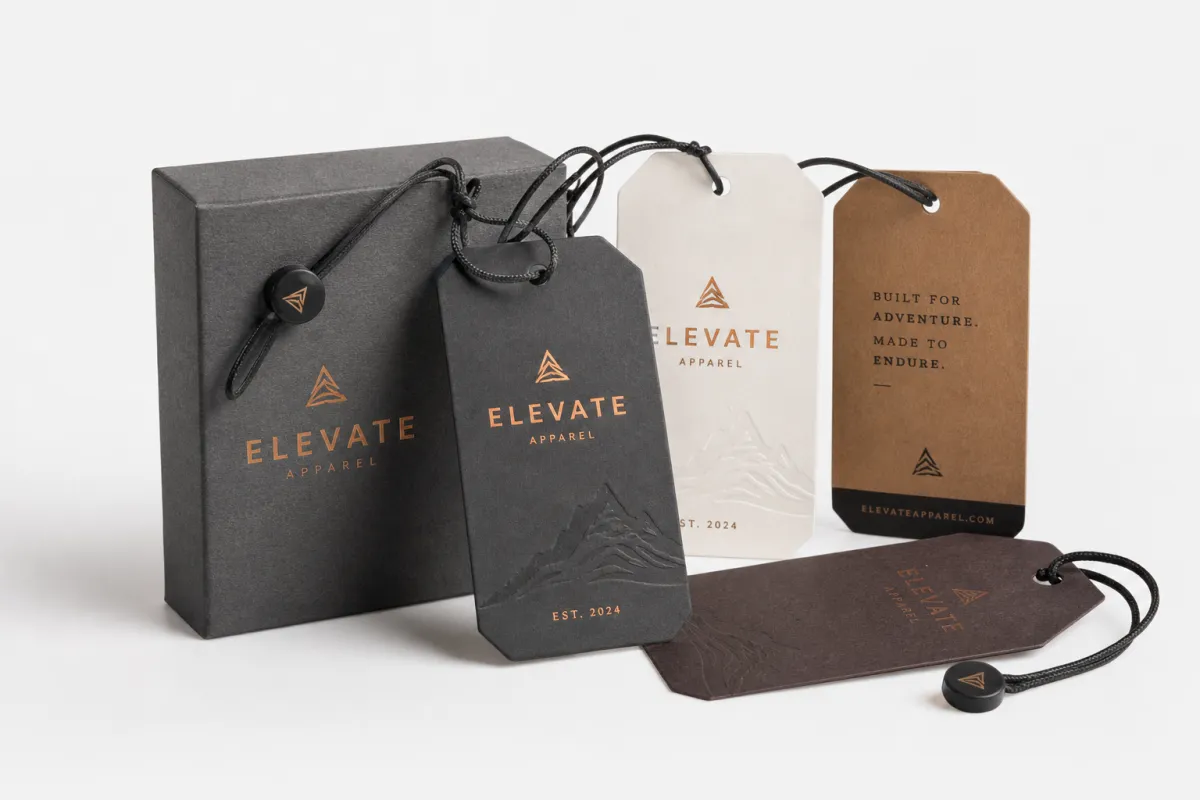
Custom hang tags for apparel do a lot more than hang from a neckline. On the sales floor, they act like a compact brand pitch. The shopper may never say it out loud, but the tag is often the first designed object they handle. That physical contact changes how they judge the garment. A stiff, well-printed tag on heavier stock tends to signal intent. A thin, flimsy tag can make even a good fabric feel generic.
The best custom hang tags for apparel carry the essential retail information without turning into a cluttered mess. That usually means brand name, style name, size, price, and a barcode or SKU system the store team can scan quickly. In some programs, the tag also includes country of origin, fiber content, sustainability messaging, or care instructions. The trick is not cramming in everything. The trick is editing. A clean tag tells the shopper what matters now and leaves the rest to the garment label or digital product page.
There is a real difference between a commodity tag and a branded one. Commodity tags are flat, forgettable rectangles with almost no hierarchy. Custom hang tags for apparel can echo the tone of the line instead. A rugged workwear brand might use kraft stock and a blunt black impression. A premium knitwear brand may choose a soft-touch coat and restrained foil. A children’s line might use brighter color and friendlier shapes. In every case, the tag supports the package branding of the garment itself.
That is why custom hang tags for apparel matter in boutiques, private label lines, trade show samples, and seasonal launches. Those products are usually competing against a wall of similar options, and the tag helps the item stand apart before the customer ever tries it on. If a garment is meant to feel retail-ready, the tag is part of that readiness.
I have seen buyers reject otherwise solid product lines because the hang tag looked like an afterthought. Not because they wanted luxury theater. Because the tag signaled that the brand had not finished the job. Fair or not, that judgment happens fast.
“A tag should do three jobs at once: explain the product, support the price, and make the garment look finished.” That is the standard many apparel buyers use, even when they never say it that cleanly.
From a merchandising angle, custom hang tags for apparel also help organize the floor. When tags are consistent across a collection, staff can sort sizes, compare styles, and spot replenishment needs faster. The tag becomes both a branding tool and an operational one. Good retail packaging often works that way. The nicest piece is also the easiest one to use.
How Custom Hang Tags for Apparel Are Designed and Printed
Most custom hang tags for apparel orders should start with structure, not artwork. Before anyone opens a design file, the buyer should decide the size, shape, copy hierarchy, attachment point, and whether the tag needs one side or two. A square tag feels different from a tall vertical tag. A rounded corner tag reads differently from a sharp-cornered one. Those details matter because the shape affects how the garment hangs, how the tag stacks in packing, and how much room the copy really has.
Artwork needs to be built for print, not just for a screen. That means bleed around the edge, a safe area for text and logos, and a barcode placed where it can scan cleanly after printing and cutting. Custom hang tags for apparel are usually viewed at arm’s length, often under harsh store lighting, so the design needs enough contrast and enough breathing room. Tiny type may look elegant in a mockup. In the hand, it often disappears.
For production, digital printing works well for shorter runs and jobs with variable data. Offset printing usually makes more sense on larger quantities where setup cost can be spread out. Specialty finishing sits on top of either method. That might include foil stamping, embossing, spot UV, die cutting, or soft-touch coating. Custom hang tags for apparel can also include QR codes for product pages, care guides, or campaign landing pages, as long as the code is tested before the run gets the green light.
One practical rule keeps the process sane: design the tag for the actual garment, not the idealized artwork. A light-colored tag may look great on a white background and vanish against a cream sweater. A black tag can look strong on a denim jacket and fight with a busy plaid shirt. Custom hang tags for apparel work best when they are mocked up against real fabric swatches and viewed under normal retail lighting.
Finishing choices change the whole feel. Matte lamination gives a quieter, more refined surface. Gloss adds punch and contrast. Soft-touch coating creates a velvety hand feel that often reads as premium, though it can darken colors a bit. Foil catches light and can elevate a logo or mark, but it should be used with restraint so the tag does not feel overloaded. Embossing and debossing add tactile depth, which can be especially effective on custom hang tags for apparel made for higher-end collections.
For brands that care about certification and sourcing, paper selection can tie into recognized standards such as FSC. The Forest Stewardship Council is a useful reference point for responsible paper choices, and the organization explains its certification system clearly at fsc.org. That does not magically make a tag sustainable, but it helps when the tag itself needs to support a sourcing story.
Key Factors That Shape Custom Hang Tags for Apparel
Stock choice changes how custom hang tags for apparel feel before a shopper reads a single word. Uncoated paper gives a natural, matte look and works well for brands that want a quieter, earthier tone. Coated paper sharpens color and makes photography or bold graphics look more vivid. Kraft stock suggests texture and a less polished aesthetic, which fits heritage workwear, outdoor, or eco-focused lines. Recycled stocks can support a lower-impact message, especially when paired with soy or vegetable-based inks and limited coating.
Weight matters too. A 14 pt tag and a 24 pt tag do not communicate the same thing in hand. Heavier stock usually feels more intentional, and custom hang tags for apparel on thicker cover stock often better match premium pricing. That said, heavier is not always better. If a tag is too stiff for a delicate blouse or knit, it hangs awkwardly and steals attention from the garment.
Size and shape should follow the category. A luxury coat can carry a larger tag without trouble because the garment has room and the price point can support it. An activewear tee may need a smaller footprint so the tag does not interfere with folding or try-on. Kids' apparel often benefits from clear, playful layouts and rounded edges for safety and comfort. Custom hang tags for apparel should fit the product family, not force every SKU into the same template.
Attachment details matter more than many teams expect. String, cotton cord, pin, rivet, and plastic fastener all create a different look and use case. Cotton cord can feel more natural, while a plastic fastener may be more economical for high-volume programs. The hole position changes how the tag hangs on the garment, and that affects both appearance and durability. A tag that twists or flips constantly makes the line look less controlled.
Information density is another pressure point. Crowded custom hang tags for apparel usually fail because the brand tries to say everything at once. A better approach is to choose what the tag must do in the store and what can live elsewhere. That may mean the tag carries brand, price, and barcode while a sewn-in label handles compliance details. It may also mean the back panel carries a short brand story, but no long paragraphs. Nobody wants to squint at a barcode like it owes them money.
Sustainability choices should be specific, not vague. Recycled paper, FSC-certified stock, reduced coatings, and minimal ink coverage are all concrete decisions. They do not automatically make the tag green, but they do reduce material intensity in measurable ways. If the broader apparel line uses branded packaging or coordinated retail packaging, consistency across the full presentation matters more than isolated claims.
If the garment program will move through distribution, think beyond the tag and consider how it will ship with the product. Packaging teams that already review transit durability for boxes know this instinctively. The Institute of Packaging Professionals at packaging.org is a useful general reference for broader packaging design thinking, especially when the apparel launch includes multiple retail packaging components.
Stock and Finish Comparison
| Option | Typical Feel | Best Use | Common Tradeoff | Typical Impact on Cost |
|---|---|---|---|---|
| Uncoated cover stock | Natural, matte, easy to write on | Heritage, eco, and minimalist lines | Less color pop than coated stock | Lowest to moderate |
| Coated paper stock | Smoother, brighter, more vivid print | Fashion-forward or photo-heavy tags | Can feel less tactile | Moderate |
| Kraft stock | Textured, earthy, casual | Workwear, outdoor, sustainable brands | Color accuracy can be less predictable | Moderate |
| Soft-touch laminated stock | Velvety, premium, smooth in hand | Higher-end apparel and giftable launches | More finishing steps, higher spoilage risk | Higher |
| Foil or embossed stock | Tactile, reflective, distinctive | Luxury, limited runs, special editions | Longer lead time and more setup | Highest |
That comparison is the real story behind custom hang tags for apparel: the visual choice always affects production, hand feel, and unit cost. A buyer does not need the most expensive finish. A buyer needs the finish that supports the garment, the price point, and the retail context.
Custom Hang Tags for Apparel Pricing: What Changes the Quote
Pricing for custom hang tags for apparel usually comes down to six main variables: quantity, stock, print method, colors, finishing, and die cutting. Once a quote includes variable data, the order gets even more specific. That is why two tags that look similar on screen can land at very different price points in production.
Quantity is the first driver. Short runs tend to cost more per piece because setup expenses get spread across fewer tags. Larger runs lower the unit cost, often by a noticeable amount. For example, a simple digital tag run might land in the range of $0.18 to $0.35 per unit at lower quantities, while a larger offset run with standard stock may come down meaningfully depending on coverage and finishing. Custom hang tags for apparel with foil, embossing, or custom shapes will usually sit above that baseline.
Finishing changes the quote fast. Spot gloss, soft-touch coating, and foil stamping all add steps, and every step adds time, labor, and scrap risk. Die cutting can also affect cost, especially if the shape is unusual or the tag includes a custom window or fold. If the apparel program needs tear-off coupons, stitched attachments, or sequential numbering, those features should be priced separately so the buyer can see exactly where the increase comes from.
It also helps to separate print from assembly. A quote that bundles everything together can hide where the money goes. For custom hang tags for apparel, ask for line items on printing, finishing, attachment, packing, and freight. That structure makes it easier to compare suppliers and decide where premium spend actually improves the tag. A good vendor should be able to show whether the price difference comes from paper, labor, or special finishing.
Below is a practical pricing snapshot for common custom hang tags for apparel setups. These are working ranges, not promises, because coverage, supply conditions, and finishing choices can move the numbers.
| Program Type | Approximate Quantity | Typical Specs | Usual Unit Range | Notes |
|---|---|---|---|---|
| Basic retail tag | 1,000-2,500 | Standard paper, single or two-color print, no specialty finish | $0.20-$0.45 | Good for simple lines and test launches |
| Mid-tier branded tag | 5,000-10,000 | Thicker stock, full color print, matte or gloss coating | $0.12-$0.28 | Common for seasonal apparel and private label |
| Premium presentation tag | 2,500-5,000 | Soft-touch, foil, embossing, custom die cut | $0.30-$0.75 | Best for luxury or gift-oriented apparel |
| Variable-data tag | Depends on style count | Unique SKU, barcode, QR, or size data | $0.18-$0.60 | More setup and file control required |
For launch planning, the smart move is to request a quote that separates the production elements. That way, if the budget gets tight, you can decide whether to simplify the finish, reduce the quantity, or adjust the stock without guessing. Custom hang tags for apparel should support the margin, not quietly eat into it.
The other hidden cost is bad specification. If the first proof is wrong, the reprint can cost more than the upgrade you were trying to avoid. That is why experienced apparel teams often treat custom hang tags for apparel as part of the full product packaging budget, not as an afterthought. The tag is small. The impact on brand perception is not.
Custom Hang Tags for Apparel Timeline: From Proof to Delivery
A typical custom hang tags for apparel workflow starts with discovery. That is the stage where the buyer shares the quantity, stock preference, size, shape, copy, barcode needs, and launch date. Then comes art setup, which should include the correct dimensions, bleed, safe area, and attachment hole position. Once the design is built, the proofing stage checks layout, spelling, color intent, and scannability before anything goes to press.
Proofing is where many jobs get saved. A digital proof can catch a barcode too close to the edge, a typo in the style name, or a tag that looks fine at 100 percent on a screen but reads too small in hand. For custom hang tags for apparel, this checkpoint matters because the tag usually travels with thousands of garments. A small mistake can become a large, visible problem.
Production time depends on the method and finish. Straightforward digital jobs may move through production in about 7 to 10 business days after proof approval, while larger offset runs often take 10 to 15 business days or more. If the job requires Custom Die Cutting, foil, embossing, or a special coating, the lead time can stretch further. Shipping distance, carton count, and the season also matter. During peak apparel launches, even routine items can slow down.
Custom hang tags for apparel can also be delayed by supply issues. A specific stock may be backordered, or the preferred cord might not be available in the exact color and thickness the brand wants. That is why the schedule should always include margin for approval delays. If the artwork is still changing while the garments are already in transit, the whole launch gets tight very quickly.
From a packaging operations standpoint, the best workflow builds backward from the store date. If the line needs kitting, ticketing, or hang tag application at a warehouse, those steps need time too. A tag that arrives on the same day as the launch is not useful. Custom hang tags for apparel should be in hand early enough for receiving, inspection, and any needed relabeling.
If your launch also involves shipping cartons or retail kits, it helps to think about the bigger logistics picture. Transit protection and labeling are not the same thing, but they touch the same schedule. For distribution-minded teams, ISTA guidance is worth a look; the organization explains packaging test methods and transport performance at ista.org. That mindset keeps custom hang tags for apparel aligned with the rest of the delivery chain.
Here is the practical sequence most teams follow:
- Confirm garment style, quantity, and launch date.
- Choose stock, size, finish, and attachment method.
- Build artwork with barcode and SKU placement locked.
- Review a proof against the actual garment or swatch.
- Approve production and confirm freight timing.
- Inspect sample cartons and prepare for application or kitting.
That sequence keeps custom hang tags for apparel from becoming the last-minute item that holds up the whole program. It also gives the brand room to fix mistakes before they reach the floor.
Common Mistakes When Ordering Custom Hang Tags for Apparel
The most common mistake with custom hang tags for apparel is trying to make the tag do too much visually. Tiny typography, dense blocks of copy, low-contrast colors, and decorative flourishes can look polished in a design file and fail completely under store lighting. A shopper should be able to read the brand and key product details in a second or two. If they have to work for it, the tag is already losing.
Another frequent issue is mismatched tone. A flimsy tag on a premium jacket sends the wrong message. An overly glossy tag on eco-focused apparel can feel off-brand even if the print quality is high. Custom hang tags for apparel work best when the stock and finish fit the garment and the price point. The tag should feel like part of the same family as the garment, not a random accessory.
Barcode and SKU problems create avoidable headaches. If the quiet zone is too tight, if the contrast is weak, or if the data does not match the inventory system, the tags can slow down receiving and checkout. Custom hang tags for apparel should be tested in a real scanning environment before approval, especially when the brand uses QR codes, variable numbering, or style-specific barcodes.
Hole placement and fold direction are easy to overlook, but they matter a lot once the tag is attached. A tag that swings the wrong way or covers a logo on the garment can make the product look poorly considered. This is one of those details that seems small in art review and turns obvious in the warehouse. Good custom hang tags for apparel are checked both flat and attached.
Overprinting is another trap. Brands sometimes load the tag with too much story, too many claims, and too much compliance language. The result is a cluttered object that no one wants to read. A better approach is to keep the tag focused on sale-driving information: brand, style, size, price, and any required legal or origin data. If the brand story matters, one short line usually works better than a paragraph.
There is also a packaging-design mistake that shows up often across apparel lines: the tag does not coordinate with the rest of the presentation. If the box, tissue, and insert card all speak one visual language, but the tag feels unrelated, the collection loses some authority. That is why custom hang tags for apparel should be planned alongside the broader retail packaging and product packaging system, not after the other pieces are already approved.
Expert Tips and Next Steps for Custom Hang Tags for Apparel
Start with a simple spec sheet. It should list quantity, tag size, stock, finish, attachment method, barcode needs, and the exact SKU or style data that must appear on each piece. Custom hang tags for apparel become much easier to manage once the order is documented clearly, because there is less room for interpretation and fewer back-and-forth revisions.
Always ask for a digital proof, and for important launches, compare a printed sample against the actual garment color and texture before approving the full run. That side-by-side check catches problems a screen cannot show, such as finish glare, type size, or how the tag sits against a dark fabric. In practice, custom hang tags for apparel are won or lost in that final review step.
If the brand sells multiple styles or sizes, build a tag system that scales. Keep the master layout stable and only change the fields that need to vary, such as size, color name, SKU, or price. That makes it easier for the apparel team to keep custom hang tags for apparel consistent across seasons, and it lowers the chance of mismatched art across style extensions.
Coordinate the tag order with packing, labeling, and receiving. If the garments are ready but the tags are late, the product sits idle. If the tags arrive first but the inventory data is not final, the result is often rework. The cleanest programs treat custom hang tags for apparel as one part of the launch schedule, tied to production, freight, and kitting rather than left as a separate task.
Here is a practical checklist before you place the order:
- Confirm the exact product name, style number, and size list.
- Choose a stock and finish that match the garment position.
- Approve barcode placement with a scan test on the proof.
- Verify hole position and attachment method against the garment.
- Lock the launch date so production can be scheduled backward.
For brands building a broader package branding system, custom hang tags for apparel should sit comfortably beside labels, mailers, inserts, and any custom printed boxes used for special sets or ecommerce shipments. Consistency matters. Customers notice when every touchpoint feels related, even if they cannot explain why.
One more practical point: do not assume the least expensive tag is the best choice. Sometimes a slightly heavier stock or a cleaner finish lifts the garment enough to justify the extra cost. Other times, a simpler tag is the smarter move because the garment already carries enough visual weight. Honest evaluation is the key. Custom hang tags for apparel should support the product, the margin, and the brand voice without trying to do more than they need to do.
Used well, custom hang tags for apparel help a garment feel complete, retail-ready, and priced with confidence. That is the real value: not just a card tied to fabric, but a small piece of packaging design that works hard at the exact moment a shopper decides whether the product deserves a closer look. When the branding, production plan, and launch timing are aligned before print, custom hang tags for apparel become one of the most efficient tools in the whole apparel packaging mix.
My blunt advice: spec the tag against the real garment, test the barcode, and approve the finish in the same lighting your customer will see it under. Do that, and you avoid the usual nonsense.
How much do custom hang tags for apparel usually cost?
Cost depends on quantity, stock, print method, finishes, and whether the design needs custom cutting or variable data. Larger runs usually lower the per-tag cost, while premium details like foil or embossing raise the price. Ask for a quote that separates printing, finishing, and attachment labor so you can compare options fairly.
What should custom hang tags for apparel include?
At minimum, include the brand name, product name or style, size, and any required SKU or barcode data. Add price, care notes, country of origin, or sustainability messaging only when it supports the sale or compliance needs. Keep the layout readable and avoid squeezing in too many details that reduce the tag’s visual impact.
How long do custom hang tags for apparel take to produce?
Timing depends on proof approval, stock availability, print method, finishing, and shipping distance. Straightforward digital jobs can move quickly, while custom shapes or specialty finishes add time. Build the schedule backward from your launch date so there is room for proof corrections and garment kitting.
Which stock is best for apparel hang tags?
Choose stock based on brand position and garment type, not just price, because the tag should match the product’s perceived value. Heavier cover stock feels more premium, while kraft or recycled paper can support a natural or sustainable brand story. Test the tag on the garment before final approval so the weight and finish feel right in the hand.
Can custom hang tags for apparel include barcodes or QR codes?
Yes, and they are common when the tag needs to support inventory, checkout, or a product landing page. Make sure the code has enough contrast, the quiet zone is preserved, and the size is readable after printing. Always test scan the proof on real devices before the full run is approved.

