Buyer Fit Snapshot
| Best fit | Custom Hang Tags for Branding projects where brand print, material claims, artwork control, MOQ, and repeat-order consistency need to be specified before quoting. |
|---|---|
| Quote inputs | Share finished size, material target, print colors, finish, packing count, annual reorder estimate, ship-to region, and any compliance wording. |
| Proofing check | Approve dieline scale, logo placement, barcode or warning zones, color tolerance, closure strength, and carton packing before bulk production. |
| Main risk | Vague material claims, crowded artwork, missing packing details, or unclear freight terms can make a low unit price expensive after revisions. |
Fast answer: Custom Hang Tags for Branding: Design, Cost, and Use should be specified like a repeatable production item. The safest quote records material, print method, finish, artwork proof, packing count, and reorder notes in one written spec.
Production checks before approval
Compare the actual filled-product size with the drawing, then confirm tolerance on folds, seals, hang holes, label areas, and retail display edges. Reserve space for logos, QR codes, warning copy, and material claims before decorative graphics fill the panel.
Quote comparison points
Review material grade, print process, finish, sampling route, tooling charges, carton quantity, and freight assumptions side by side. A quote is only useful when the supplier can repeat the same color, closure quality, and packing count on the next order.
Custom Hang Tags for branding do a lot of quiet work. On a shelf, in a product photo, or inside a shipping carton that gets opened in a hurry, the tag shapes the first impression before anyone touches the item. That small card can make a product feel considered, finished, and worth a second look. It can also make a good product seem rushed if the material, print quality, or layout misses the mark.
From a packaging buyer's point of view, the hang tag has a narrow job and a wide effect. It needs to carry the right product information, signal brand identity, and stay readable without crowding the item. Used well, Custom Hang Tags for branding help retail packaging feel more intentional, support the unboxing moment, and give ecommerce orders a cleaner finish when the customer opens the box.
Plenty of brands waste money here. They make the tag so plain that nobody notices it, or they load it with so much copy that it starts looking like a folded instruction sheet. The useful middle ground is pretty straightforward: enough structure to sell, enough restraint to feel premium, and enough practical detail to work in real handling conditions.
What custom hang tags for branding do on the shelf
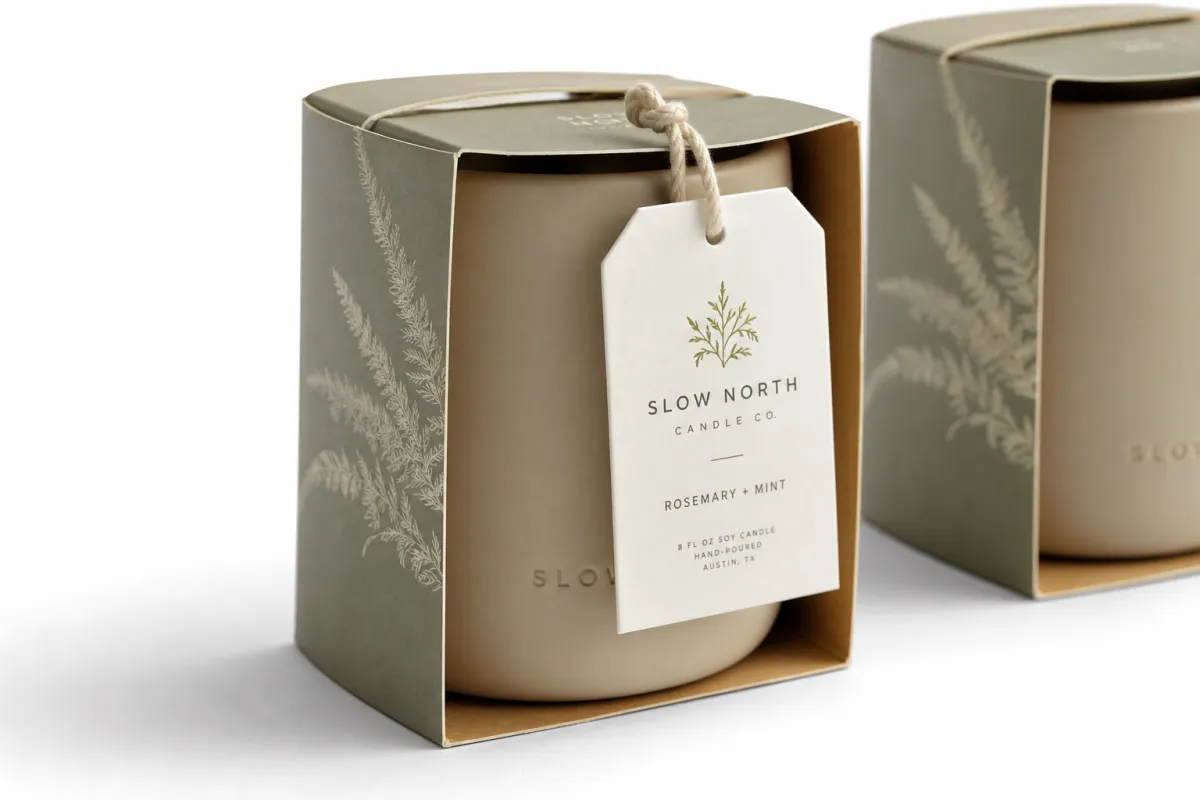
Customers often judge a product from the tag before they touch the fabric, especially in apparel, accessories, and gift items where the merchandise may be folded, sealed, or stacked. Custom Hang Tags for branding act like the first handshake. When the tag feels cheap, the product tends to get downgraded in the buyer's mind, even if the item itself is well made.
A hang tag is a removable printed card or label attached to a product by string, fastener, pin, or loop. It is not the same as a sewn-in care label, a sticker, or outer product packaging. Sewn-in labels stay with the item. Stickers usually serve a temporary or functional purpose. Custom hang tags for branding sit in the middle: visible, tactile, and flexible enough to carry brand language and operational information at the same time.
The tag has several jobs. It signals quality through paper weight, clean typography, and careful spacing. It can tell a short brand story through a line about materials, origin, or values. It can show price, SKU, barcode, or QR information so stores and warehouses move faster. It also supports ecommerce fulfillment, where custom hang tags for branding help teams separate sizes, variants, or collections without opening every package.
Custom hang tags for branding matter most when the product needs a little help selling. That includes apparel, handbags, hats, jewelry, premium stationery, candle lines, seasonal gifts, and launch items where package branding has to work harder than a sales associate. If the item is simple and the margin is healthy, a smart tag can lift perceived value more efficiently than a heavier box.
A hang tag is the smallest billboard on the rack. If it looks generic, the product starts to feel generic too.
Custom hang tags for branding also connect to the rest of the packaging system. They should echo the same visual language used in custom printed boxes, inserts, or branded packaging. A matte, minimal box paired with a glossy neon tag feels disconnected. A luxury product line should never carry a tag that looks like it was punched out in a rush.
For brands building retail packaging from the ground up, the tag can be the easiest place to refine package branding without changing the whole structure. That makes custom hang tags for branding a practical tool: small, visible, and easy to test on one SKU before rolling out across a broader line.
How custom hang tags for branding are made
Custom hang tags for branding usually follow a simple production path, even when the final piece looks polished and minimal. The process starts with a brief: product type, dimensions, quantity, price range, use case, and any required data such as barcode, price, or care notes. Artwork follows, then proofing, printing, finishing, cutting, packing, and delivery. Sequence matters because late changes are what blow up timelines and budgets.
Material choice comes early. Most custom hang tags for branding use paper or paperboard, but the stock changes the feel more than most buyers expect. A 300gsm card stock feels serviceable. A 400gsm or 500gsm board feels sturdier and more premium. Uncoated and textured stocks feel softer and more tactile. Coated stocks feel cleaner and often hold color better. If you want a more elevated result without adding unnecessary complexity, stock selection is usually the first place to pay attention.
Physical construction comes next. Size, shape, hole placement, string style, and finish all influence how the tag behaves on the product. A tall narrow tag can look refined on a bottle or accessory. A square tag can feel modern and compact. Rounded corners reduce edge wear. A hole punched too close to the edge can tear in shipping. String that is too thin can look cheap. Custom hang tags for branding are small, but the details are not small.
Printing and finishing add another layer. Digital printing works well for shorter runs and variable content. Offset printing makes more sense for larger quantities and tighter color control. Foil stamping can highlight a logo or mark, while embossing and debossing create tactile depth. Spot UV adds selective gloss. Matte lamination reduces glare. Soft-touch coating creates a velvety finish that many buyers associate with premium custom hang tags for branding and higher-end retail packaging.
These finishes do not all improve function. They improve perception. That still matters. A basic product can feel expensive if the tag is clean, weighty, and finished well. A premium product can feel underpriced if the tag looks flimsy. Custom hang tags for branding are one of those places where perceived quality can shift faster than cost structure.
Production teams also have to manage packing. Tags may arrive flat, pre-strung, drilled, or bundled by SKU. If the tags are going into a retail rollout, the packing format can save hours downstream. If the order needs to pair with custom packaging products or a specific line of custom printed boxes, the supplier should know the attachment method and the final assembly plan before printing starts. That avoids the familiar mess: beautiful tags, wrong hole size, and a warehouse team staring at a pile of unusable parts.
For brands that want broader packaging context, the Forest Stewardship Council is a useful reference for responsible fiber sourcing, and the International Safe Transit Association outlines transport test methods that matter when tags travel with assembled packaging. Those standards do not design the tag, but they keep the conversation grounded in real material and distribution constraints.
Key design factors that shape a stronger hang tag
Size is the first design decision because it forces discipline. Custom hang tags for branding need enough room for the logo, a short message, and useful product data, but they should not overpower the item. A tiny tag can disappear on a jacket collar or tote handle. A large tag can feel heavy and awkward on a delicate accessory. Common retail sizes often fall around 2 x 3.5 inches, 2.5 x 4 inches, or 3 x 5 inches, though the right choice depends on product scale and the amount of information you need to show.
Shape matters nearly as much. Rectangle tags are efficient and easy to read. Die-cut shapes can create a more distinctive package branding moment, but they cost more and can complicate packing. Rounded corners feel softer and reduce edge wear. A tag for a premium candle may use a different profile than a tag for an outerwear brand. Custom hang tags for branding should fit the silhouette of the product rather than fight it.
Typography is where many brands quietly lose the plot. The logo should lead, but the product name and key information must still be readable at a glance. If the type is too decorative or too small, the tag becomes a mood board instead of a tool. Strong hierarchy usually means one primary message, one secondary line, and a few practical details in a clear supporting size. For custom hang tags for branding, clarity is part of the premium feel. Fancy is not the same thing as good.
Material and finish set the tone immediately. Matte and uncoated stocks communicate restraint and confidence. Textured stocks suggest craft, heritage, or premium handmade positioning. Soft-touch coatings can feel luxurious, though they are not right for every brand because they can mute color slightly and add cost. Glossy finishes can work for bold fashion or youth-focused branding, but they can also clash with natural, minimal, or sustainability-led positioning. The material choice should reinforce brand identity, not borrow one from a different category.
Color needs to work in more than one environment. In hand, under store lighting, and in product photography, colors behave differently. Bright red may look rich in print but aggressive in a retail rack. Dark neutrals can look elegant but lose legibility if the contrast is poor. If the tag will appear in ecommerce imagery, make sure the palette complements both the product and the background. Custom hang tags for branding that photograph well are often the ones that stay simple and hold contrast.
Illustration and photography should earn their space. If the product already carries a lot of visual energy, the tag should not add noise. If the brand story relies on origin, texture, or craft, a small image or icon system may help. Keep it tight. A hang tag is not a brochure, and it is not a flyer trying to win a debate. It has one job: make the product easier to buy.
Sustainability belongs in the conversation only when it is credible. Recycled paper, FSC-certified fiber, soy-based inks, and minimal coatings can support a cleaner story. The tradeoff is real. Some recycled stocks feel rougher, print differently, or reduce color brightness. If the brand promise is premium, the recycled option still needs to look and feel right. A responsible stock should suit the line, not force a virtue signal onto a product that now looks unfinished.
Custom hang tags for branding also need to match the rest of the package ecosystem. If the brand uses uncoated mailers, natural tissue, and simple product packaging, a heavily laminated tag may feel disconnected. If the line includes luxury sleeves, rigid boxes, or custom packaging products, the tag can become a clean extension of that same visual system. That consistency is what makes a collection feel intentional instead of patched together.
Custom hang tags for branding cost and pricing factors
Pricing for custom hang tags for branding is driven by a few levers that matter far more than most buyers expect: quantity, stock, print sides, specialty finishes, custom shape, and packing style. The tag itself may be small, but the setup behind it is not. A one-color, single-sided tag on standard card is usually the budget floor. Add two sides, heavier stock, a custom die, or foil, and the price moves quickly.
Setup costs are the reason small runs feel expensive. If a supplier has to prepare plates, dies, proofing, and finishing tools, that cost gets spread across the order. A 500-piece run can look pricey per tag because the setup burden is concentrated. A 5,000-piece or 10,000-piece run usually drops the unit price sharply because the same setup gets diluted. That is why custom hang tags for branding often make more financial sense when ordered alongside a launch calendar instead of as a last-minute emergency.
Here is a practical pricing snapshot for standard paper-based custom hang tags for branding. Real quotes will vary by region, supplier capability, and shipping, but these ranges are useful for budgeting:
| Tag Type | Typical Specs | Approx. Unit Price at 5,000 pcs | Best For |
|---|---|---|---|
| Budget single-sided | Standard card, one-color print, simple hole punch | $0.08-$0.15 | Basic retail SKUs, promo runs, price-focused lines |
| Mid-range two-sided | 250-350gsm stock, full color, standard finish | $0.14-$0.28 | Most apparel and accessory brands |
| Premium finished | Heavier board, foil, emboss, spot UV, matte or soft-touch | $0.30-$0.75 | Luxury, gift, and elevated retail packaging |
| Die-cut specialty | Custom shape, specialty stock, detailed finishing | $0.40-$1.10 | Launch items, signature collections, brand statements |
Those numbers are not random. They reflect the tradeoff between simplicity and control. If you keep the print flat, use standard sizes, and avoid specialty processes, custom hang tags for branding stay manageable. If you want a soft-touch lamination, foil logo, Custom Die Cut, and carefully packed bundles by SKU, the per-unit price climbs because each step adds labor or tooling.
There is also a premium jump that buyers sometimes underestimate. Foil, embossing, debossing, and custom shapes can make the difference between "nice enough" and clearly premium. That said, not every line needs every finish. A clean board stock with strong typography can outperform an overworked tag that costs twice as much. In practice, custom hang tags for branding should spend money where the customer can actually feel it: paper weight, print clarity, and tactile finish.
Rush fees and shipping can matter a lot if the tags are tied to a seasonal drop, trade show launch, or product packaging release. Short timelines reduce supplier flexibility and often force faster production lanes or split shipments. If the tags need to coordinate with an ecommerce unboxing experience, remember that the "cheap" tag can become expensive once rush freight gets added.
One more thing: the right price target depends on product margin. For a $20 item, a $0.45 premium tag may be too much unless it clearly lifts conversion. For a $120 item, that same tag might fit comfortably. Custom hang tags for branding should be budgeted as part of the sell-through strategy, not as a random print expense.
For brands comparing broader packaging options, it helps to look at the whole stack. A tag may be one line item, but the final feel comes from the relationship between retail packaging, product packaging, inserts, and the outer carton. A tag that supports the rest of the system often does more than a pricier tag that feels visually disconnected. That is also where Custom Labels & Tags can sit alongside Custom Packaging Products in a broader rollout plan, instead of being ordered as isolated pieces.
Step-by-step process and timeline for custom hang tags for branding
Custom hang tags for branding usually move through a very predictable workflow. First, collect the product details: item type, size, quantity, attachment method, print content, and any required codes or compliance information. Then confirm the dimensions, paper stock, and finish. After that, the designer prepares the artwork, the supplier issues a proof, revisions are handled, the final spec is approved, and production begins. Nothing fancy, just a lot of places where a vague brief can waste time.
A realistic timeline helps prevent panic orders. Proofing often takes 1-3 business days if the artwork is ready and the spec is clear. Production commonly takes 5-10 business days for standard custom hang tags for branding. Specialty finishes, die-cut shapes, or complex packing instructions can stretch that to 10-15 business days or more. If the order lands near a peak season, build in extra slack. Holidays and launch periods are where simple jobs suddenly start behaving like difficult ones.
There are a few common bottlenecks. Missing copy is the biggest one. Low-resolution logos are another. Unclear color references create back-and-forth, and every round of questions slows the schedule. Last-minute finish changes are especially costly because they may require a new proof or a different production line. Custom hang tags for branding are easiest to move when the information is locked before the first proof.
Here is the cleanest way to keep the order on schedule:
- Finalize the product name, size, SKU, and pricing details.
- Confirm the desired material, shape, and attachment method.
- Send print-ready artwork or a clear reference layout.
- Review the proof the same day it arrives.
- Limit revisions to actual errors or critical changes.
- Approve the final spec and hold that version.
That process looks simple because it is simple. The hard part is discipline. Teams that treat custom hang tags for branding as a tiny side job usually end up paying later, either through reprints or through packaging that misses the launch window. A clean proof cycle is faster than a rushed rescue.
Sampling is worth the time when the product is premium or the line is visually sensitive. A paper proof shows color and layout, while a physical sample helps with thickness, finish, and attachment behavior. For brands comparing different material directions, order 2-3 sample stocks and check them under actual store lighting, on the actual product, and beside the actual packaging. That tells you more than staring at a PDF and pretending a monitor can judge texture.
There is also a coordination issue with the rest of the package. If the hang tag is supposed to match custom printed boxes, mailers, or inserts, the same color references and finish language should be used across the system. Consistency in package branding matters because buyers notice when one part of the set looks like it came from a different brand entirely. The unboxing experience can feel strong or sloppy, and custom hang tags for branding often tip the balance.
When a product line has to survive shipping as well as retail display, it is worth checking the tag with the whole package under distribution stress. A hanging tag should not snag, peel, or crush against inserts or outer cartons. For lines that ship in larger kits, custom hang tags for branding should be reviewed alongside the carton and insert design so the final assembly does not create friction later. If that sounds obvious, good. It should.
Common mistakes that weaken hang tags
The first mistake is overloading the tag with copy. Custom hang tags for branding are not brochures, and they are not the place for a full brand manifesto. Too much text makes the card feel crowded, which lowers readability and makes the product seem less premium. A tag should present the essentials quickly: brand, product name, one short message, and only the operational details that matter.
The second mistake is bad visual hierarchy. If the logo fights with care text, pricing, or a QR code, the eye has no clear path. Good hierarchy means the shopper knows what to read first, second, and third. In practice, that usually means one dominant element, one supporting message, and a small utility zone. Custom hang tags for branding work best when the structure is obvious even from a few feet away.
The third mistake is using the wrong attachment hardware. A hole punched in the wrong spot can cause tearing. Cheap string can look flimsy and twist the tag into the wrong position. A fold can create awkward bulk that hides the product. Small hardware choices matter because they affect how the tag hangs, how it photographs, and how it survives handling. If the tag rotates constantly or covers the product, it is failing at the shelf job.
The fourth mistake is finish mismatch. A glossy, high-sheen tag on a natural or minimal product line can feel off. A soft-touch finish on a rugged utility item may feel too precious. Material, finish, and brand voice need to agree. Custom hang tags for branding should support the texture language of the product, not contradict it. Buyers may not name that mismatch, but they notice it immediately.
The fifth mistake is forgetting the operational requirements. A beautiful tag that cannot carry a barcode, SKU, or required care note is a problem, not a win. Reprints are expensive, and the cost is rarely just the print cost. They also affect inventory timing, labor, and sometimes compliance. For brands that need both aesthetics and function, custom hang tags for branding should be designed with retail execution in mind from day one.
There is a quieter mistake too: trying to make every SKU unique when a modular system would work better. A reusable template with changeable fields saves time and reduces error across product seasons. That matters for any brand moving from one-off launch pieces to a broader branded packaging system. A good template can protect brand identity while keeping the production process sane.
Where brands usually get this right is by treating the tag as part of a larger packaging design system. The hang tag, label, insert, and outer box should feel related. That is how retail packaging starts to feel intentional instead of improvised. Custom hang tags for branding can carry the look; they just should not be asked to carry the whole business alone.
Expert tips and next steps for custom hang tags for branding
Start with one best-selling SKU instead of redesigning every tag at once. That gives you a clean test case. You can compare how customers respond to the new look, whether the tag improves perceived value, and whether the production workflow stays smooth. Custom hang tags for branding are easier to evaluate when they are tied to a single product with a clear sell-through record.
Order 2-3 sample stocks or finishes before locking the whole run. Compare them under real store lighting and against the actual product texture. A paper that looks perfect on a screen may feel too slick in person. A textured stock may look premium but reduce photo sharpness. That is where the difference between packaging theory and packaging reality shows up. Custom hang tags for branding should be judged in hand, not just in a PDF.
Build a reusable template with modular fields for product name, size, price, care details, QR code, and SKU. That does two useful things. It keeps the brand system consistent, and it makes future reorders much faster. If the line grows, the template can support seasonal color changes or different finish levels without forcing a full redesign every time. That kind of structure is boring in the best way.
Before you place the order, confirm the last-mile details. Exact dimensions. Quantity. Finish. Attachment method. Packing format. Delivery deadline. If the tags need to arrive with other branded packaging, line up the timeline against the box and insert schedule too. For brands that are building a wider system, it helps to review Case Studies and compare the tag with other Custom Packaging Products so the whole presentation stays coherent.
Here is the practical buying advice I give most often: choose one product, gather the copy and measurements, request samples, and treat custom hang tags for branding as a focused sales tool instead of a vague branding exercise. That mindset usually produces better choices, cleaner artwork, and fewer regrets. It also keeps spend under control, which is always helpful.
For brands that want to stay sustainable without getting sloppy, check whether the stock is FSC-certified, whether the ink coverage is sensible, and whether the finish is doing real work or just adding cost. If the tag has to travel with the product through shipping and handling, make sure it is sturdy enough for the route. That is where the ISTA mindset helps. A tag is small, but it still lives inside a packaging system.
Custom hang tags for branding are not magic. They are a small, practical, highly visible piece of product packaging that can improve shelf appeal, simplify retail handling, and sharpen brand identity when the spec is handled properly. That is the whole point. If the tag feels deliberate, the product feels deliberate.
So the best next move is simple: pick one SKU, lock the content, request physical samples, and make the tag earn its place on the product before you scale the format across the line. That keeps the work grounded, the costs honest, and the branding sharp.
FAQ
What do custom hang tags for branding usually include?
Most custom hang tags for branding include the brand name or logo, the product name, and a short positioning line that explains why the item is worth buying. Practical versions also carry size, care, material, price, SKU, barcode, or a QR code when the product line needs it. The more complex the catalog, the more useful the tag becomes as a control point.
How much do custom hang tags for branding cost per piece?
Cost depends on quantity, stock, print coverage, and finish, so a simple tag on standard card is much cheaper than a premium die-cut version. Small runs usually cost more per piece because setup is spread across fewer tags, while larger orders drop the unit price faster. For many brands, custom hang tags for branding land anywhere from under $0.15 to well over $0.50 per unit depending on the spec.
How long does a custom hang tag order take?
Proofing often takes 1-3 business days if the artwork is ready and the specs are clear. Production commonly runs 5-10 business days for standard custom hang tags for branding, but custom shapes, specialty finishes, and busy seasons can extend the timeline. If the order has a hard launch date, build a cushion. Printer optimism is not a plan.
What stock works best for custom hang tags for branding?
Most apparel brands use a sturdy matte or uncoated stock because it feels premium without glare and reads well in hand. Textured or soft-touch stocks work well for higher-end positioning, while flimsy paper usually makes the brand feel cheaper than it is. If the tag has to fit into a broader branded packaging set, the stock should match the rest of the system visually and tactically.
Do custom hang tags for branding need both sides printed?
Use both sides when you need room for branding on the front and care, size, QR, or SKU information on the back. Single-sided tags can save money when the message is simple, but they leave less room for storytelling or operational details. For many custom hang tags for branding projects, two-sided printing is the smarter choice because it keeps the front clean and the back useful.
What is the best way to make custom hang tags for branding feel premium without overspending?
Spend first on stock weight, clean typography, and a finish that fits the brand. Then add one premium detail, not five. A strong paperboard, disciplined layout, and one tactile upgrade usually do more than a pile of decorative effects. That is why custom hang tags for branding should be designed like a buying tool, not a decoration contest.

