Custom Hang Tags for apparel retailers Shipping Durability Checklist decisions start long before cartons leave the dock, because a tag can look perfect on a proof and still arrive bent, scuffed, or torn after palletizing, hub sorting, and store handling. The real task is not to make a tag that prints well. It is to make one that stays legible, keeps its shape, and still looks intentional after bagging, boxing, transit, and merchandising.
Why hang tags fail in shipping before they ever reach the rack
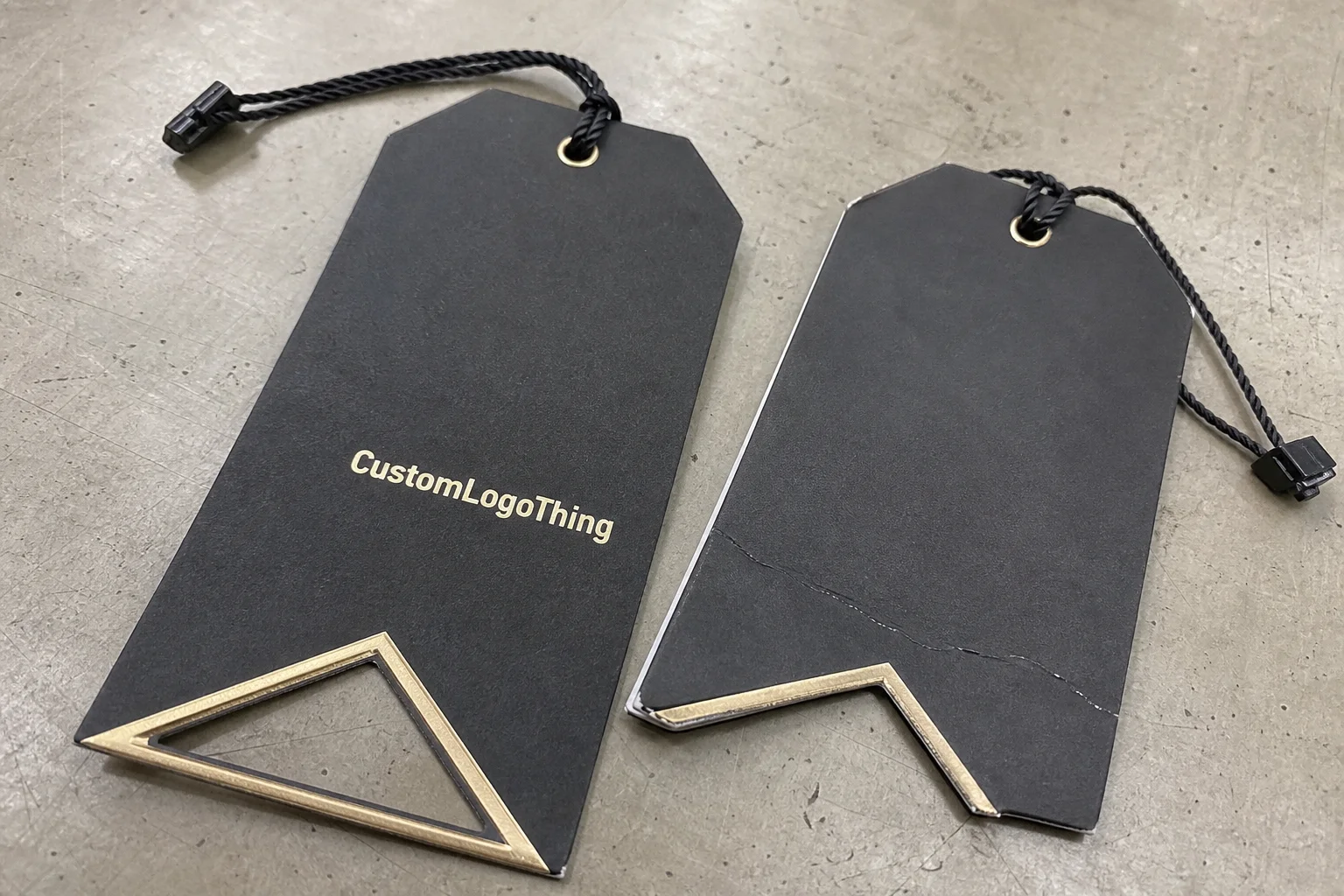
A hang tag can pass press inspection and still fail the trip to retail. The weak point usually shows up after finishing, when tags get bundled, packed into cartons, stacked under other freight, and handled again in the warehouse. That is why shipping durability has to be part of the spec, not a last-minute quality check.
There is a real difference between visual quality and shipping durability. Visual quality is how the tag looks under controlled light on a finishing table. Shipping durability is how it holds up after friction, vibration, compression, and repeated handling. For apparel, that matters because tags are often attached before final packing, then moved through bagging, order fulfillment, and store merchandising before anyone from the brand sees the finished piece again.
Durability does not mean indestructible. It means the tag keeps its readability, hole integrity, edge finish, and color accuracy long enough to do the job. A clean white edge means little if the corners curl. Heavy ink coverage can look premium, but it may show scuffing fast if the stock or coating is wrong. In practice, the strongest programs match stock, coating, and attachment method to the garment category rather than trying to fix everything with more ink or a thicker design.
That is why buyers should make structural decisions before artwork is locked. The board weight, die shape, hole style, and coating all affect the design space. If the spec is not settled early, the final tag can be elegant on screen and fragile in a carton.
How shipping durability works in a hang tag spec
Think of a tag as a small packaging system. It moves through printing, cutting, drilling or slotting, stringing or fastening, bundling, carton packing, transit, and retail handling. Each step creates a different kind of stress. If a tag fails, the failure point usually traces back to one of those stages, not to a single bad press run.
Material choice is the first filter. Coated board usually resists scuffing better than very porous uncoated stock, but the wrong coating can crack on a fold or show rub marks in high-friction cartons. Heavier board adds stiffness, though too much caliper can create a rigid edge that catches during packing. Recycled content can be a smart brand choice, but it should be checked for tear resistance and edge fiber strength, especially on smaller formats with narrow necks.
Finishing changes performance more than many buyers expect. A matte aqueous coating reduces glare and can hide small handling marks. Gloss can brighten color, but it may show rubs faster. Soft-touch lamination feels premium, yet it can reveal fingerprints and show edge wear if the tags are handled roughly. Foil and embossing add visual interest, but they should be used where they will not become abrasion points. If your brand uses certified paper, verify the chain of custody rather than assuming the stock is covered; for that, the FSC system at fsc.org is the right reference point.
Attachment matters just as much. String, loop fasteners, pins, and integrated packaging each place stress differently on the hole or slot. A good-looking tag can tear at the neck if the attachment hole is too close to the edge or if the bundle is packed too tightly. For transit thinking, the distribution tests published by the International Safe Transit Association are a useful reminder that vibration, drops, and compression are not abstract ideas. They are the daily life of packaged goods.
There is also a practical retail wrinkle that buyers miss: tags are not only exposed to shipping forces. They are exposed to human hands. A carton can be gentle and a store associate can still crease a corner during unpacking, or a shopper can bend the tag while checking the price. That is why a tag spec has to survive a sequence, not a single event.
Bottom line: durability is a system issue. Stock, coating, attachment, and pack-out have to be considered together, because changing one without the others usually creates a new problem.
Key specs that protect apparel tags in transit
Start with the garment category. Lightweight fashion tops do not need the same board strength as denim, outerwear, or workwear. A 14pt to 16pt coated board can be enough for many fashion programs, while heavier categories often do better with an 18pt stock that keeps its shape in the carton and on the rack. The point is not to choose the thickest sheet available. The point is to match stiffness, fold resistance, and brand feel to the product.
Shape matters more than buyers expect. Narrow necks, long pointed ends, and sharp corners are more likely to bend or catch during handling. A tag with a wider base and a sensible hole margin usually survives better than a dramatic silhouette that leaves very little material around the attachment point. Sharp corners also show wear sooner, which can make a new garment look tired before it reaches the sales floor.
Hole placement, slot design, and trim distance are critical. If the hole sits too close to the edge, the fiber can split when the tag is strung or when cartons flex in transit. If the hole is too close to a dense ink area or a foil panel, the surrounding board may weaken faster than expected. Keep the attachment zone clean and structurally generous. A 1 to 2 mm change in margin can matter more than a buyer would expect, especially on narrow tags.
Print coverage also affects wear. Large dark solids, rich blacks, and dense backgrounds make scuffs more visible, especially on matte stock. Reverse type can look sharp, but small reversed text loses legibility quickly when the surface rubs. Barcode, SKU, and price fields need enough contrast to stay readable after shipping, because a tag that cannot be scanned cleanly is a failure in retail packaging terms, even if the art looks good.
For most apparel programs, the best durability gains come from ordinary decisions made carefully: avoid overcomplicated silhouettes, use a finish suited to handling conditions, and leave enough structural space around holes and folds. Fancy can work. Fragile fancy does not.
Good package branding is not just about appearance. It is about preserving the parts that support sales and operations: the brand mark, the product details, and the scannable information that keeps the line moving.
Process and lead time: from proof to warehouse
The cleanest programs start with a real production brief. That means tag size, stock, finish, attachment style, quantity, destination, and any retailer compliance rules are all on the table before artwork is finalized. Once that is clear, the supplier can recommend a structure that fits both the look and the shipping conditions.
A normal path looks like this: brief intake, structural recommendation, artwork setup, digital proofing, press approval, finishing, assembly, pack-out, and shipment. The delays usually show up when the barcode is not sized correctly, the color profile is unclear, the copy changes late, or the attachment method requires a new die or a manual stringing step that was never planned into the schedule.
Typical turnaround depends on complexity. A straightforward run with standard coating and no assembly often moves in about 12 to 15 business days after proof approval. Add foil, embossing, specialty lamination, or manual stringing, and the schedule can stretch another several days. Larger runs also need more drying, more finishing time, and more careful carton control. If the order is tied to a retailer launch, count backward from the receiving window, not from the print start date.
For apparel retailers, the real deadline is rarely the press date. It is the point at which tags must already be at the warehouse before garments are sealed, labeled, and staged for shipment. If tags arrive late, the whole system slows down. That is especially true for seasonal goods, split shipments, or programs tied to a fixed retail window.
A practical supplier will usually push for a pre-production proof or sample when the order includes compliance-sensitive elements. That extra step costs time, but it is cheaper than discovering a problem after the garments are packed. It also gives the buyer a chance to test the tag under actual warehouse light, which is where scuffs and contrast issues become easier to spot.
Cost, pricing, MOQ, and quote factors
Pricing is mostly a function of stock, print coverage, finishing, assembly, and quantity. The more custom the structure, the more setup and labor matter. Buyers sometimes focus on print count alone, but the real cost driver is usually the full set of decisions: board weight, die complexity, coating, and whether the tags need stringing or other manual assembly.
MOQ changes the economics because setup cost gets spread across the order. A 5,000-piece run almost always prices differently from a 25,000-piece replenishment order, even if the artwork looks identical. Small orders can still make sense, but the unit price will be higher because the press setup, die cutting, and finishing labor have less volume to absorb them. A standard coating on a standard shape often gives the best price-to-performance balance for day-to-day replenishment.
| Option | Typical spec | Shipping durability | Typical unit cost at 5,000 units |
|---|---|---|---|
| Basic coated tag | 14pt C1S, 1-2 colors, drilled hole | Good for light handling, modest scuff resistance | $0.08-$0.14 |
| Retail-ready tag | 16pt coated board, matte aqueous, full color | Better abrasion control and cleaner edge protection | $0.12-$0.22 |
| Premium tag | 18pt stock, soft-touch lamination, foil or embossing | Strong presentation, good rub resistance if packed well | $0.22-$0.40 |
| Small-run custom | Short quantity, specialty die, manual stringing | Can be durable, but labor raises unit cost | $0.35-$0.90 |
There are ways to control cost without weakening the tag. Standardize the shape where possible. Reduce unnecessary spot colors. Use a finish that improves wear resistance instead of adding decoration that does not help the tag survive. If the retailer does not need foil or embossing, leave it out. If the barcode and price panel are already doing the work, the rest should support them, not compete with them.
The cheapest bid often turns out to be the most expensive option after reprints, inspection failures, or damaged inventory. A proper quote should separate print, finishing, assembly, freight, and any special packaging requirements. That makes it easier to compare suppliers on true landed cost instead of a headline number that hides the real spend.
One more pricing caveat: some suppliers quote the printed tag but not the pack-out format. If you need bundles sorted by size, ship-to location, or SKU, that labor belongs in the estimate. Otherwise the quote looks clean and the invoice does not.
Common mistakes that turn good tags into damaged inventory
The most common failure is simple: the buyer assumes the tag will be treated gently. It will not. Tags get rubbed by garment bags, flexed by carton walls, and handled by more than one person before they ever reach the sales floor. If the spec ignores that reality, damaged inventory is the predictable result.
Artwork mistakes are next. Tiny type, thin rules, weak contrast, and dense backgrounds make wear more visible and make data harder to read. A barcode with poor contrast may scan on a proof sheet and fail after a few rubs. A delicate serif font can look refined on screen and disappear once the tag has been through shipping and merchandising.
Structural mistakes usually show up at the hole or slot. If the attachment area is too narrow, the tag tears during stringing or when a bundle shifts inside the carton. If the board is too thin for the garment weight, the tag curls and looks cheap on the rack. If the shape is overly dramatic, it may catch on neighboring garments during packing. The more aggressive the shape, the more disciplined the structural spec has to be.
If the tag cannot survive the carton, the artwork is premature.
Retailer requirements cause another round of rework when buyers skip them. Barcode placement, price-field format, country-of-origin copy, and compliance notes all need to be verified before release. I have seen teams lose a week because the approved layout did not leave enough space for the required data. That is an avoidable problem.
Skipping a sample test is the easiest way to create a false sense of security. A handful of physical samples can show curl, scuffing, hole stress, and legibility problems that a screen proof will never reveal. If the sample is only perfect under ideal light and gentle handling, it is not a real sample. It is a marketing image.
Another mistake is overpacking the carton. More tags per box can reduce freight cost, but tight pack-outs increase edge wear and corner compression. The savings disappear quickly if the retailer receives a box full of tagged garments that need to be reworked.
Expert tips for stronger results on the next order
Test by garment type
Do not use one tag spec across every category unless the line is truly uniform. Denim, knitwear, outerwear, and accessories all behave differently in transit. A heavier jacket may flatten a light tag, while a soft knit may need a smaller, cleaner tag to avoid overloading the neckline. The right spec for a tee can be the wrong spec for a coat.
Inspect under warehouse light
A finish that looks rich under press-room lighting can read differently under bright warehouse LEDs. Review samples at handling distance, not just at arm’s length. That is where scuffs, edge whitening, and barcode contrast issues become obvious. If possible, look at the sample after it has been flexed a few times. Fresh paper and handled paper do not always read the same way.
Control the pack-out
Ask how the tags will be bundled. Stacked loose in a carton, banded in sets, or separated by protective slip sheets each changes edge wear and curl. Internal pack-out is part of order fulfillment, not an afterthought. If the tags ship with other items, coordinate them with any Custom Labels & Tags or Custom Shipping Boxes used in the same program.
Keep the structure stable
For repeat programs, lock a standard spec and only change the creative layer. That keeps the structure stable, protects durability, and makes reorders easier to quote. It also helps when your team is balancing product packaging, retail compliance, and seasonal branding across multiple launches. A consistent board, coating, and hole placement will usually save more money over a year than a series of one-off design tweaks.
Ask for the right sample
Ask for physical samples whenever the order uses special finishes, complex die cuts, or a strict retailer template. Digital proofs are useful, but they do not tell you how a tag will feel, bend, or wear. If the program is large enough to matter, sample the final structure rather than a close approximation.
One useful internal check is to treat the hang tag like a mini package, not a decoration. Ask whether the tag protects the brand under transit stress, supports scanning, and stays attractive after normal handling. If the answer is no to any of those, the spec still needs work.
Next steps for apparel buyers
Start by auditing the tags you already use. Look at the ones that made it through carton transit, warehouse handling, hanging, and in-store merchandising, then note exactly where wear appears first. Is it the hole? The corners? The barcode? The finish? That answer tells you which part of the spec needs attention.
Then gather the information that affects the quote: size, stock weight, finish, attachment style, quantity, destination, and retailer compliance rules. If the line also includes printed boxes or mailers, align those specs with the tag so the brand look stays consistent across the package stack. That is how package branding stays coherent instead of feeling stitched together from separate purchases.
Ask every supplier for a sample, a clear production timeline, and a line-item quote. If the comparison is only price per thousand, you are not seeing the full picture. A tag that arrives damaged, curls in the carton, or misses a compliance field is not a bargain.
Build a simple approval checklist for art, stock, finish, attachment, and pack-out, then use it on every reorder. That habit protects both quality and schedule. When you treat Custom Hang Tags for apparel retailers shipping durability checklist decisions as a packaging spec instead of a design afterthought, you get cleaner arrivals, fewer reprints, and tags that still look intentional when the customer picks up the garment.
How do I choose durable hang tags for apparel orders shipping through multiple warehouses?
Choose a stock with enough caliper to resist flexing, then pair it with a finish that reduces scuffing. Keep the shape simple and the hole placement generous so the tag can handle repeated movement without tearing. If the order moves through more than one facility, prioritize edge protection over decorative complexity.
What matters most for hang tag pricing on apparel orders?
Stock weight, print coverage, finishing, assembly, and quantity drive the majority of the price. Specialty dies, foil, embossing, and manual stringing usually raise the unit cost. Freight and bundling instructions can matter too when the order is split across locations.
How long should production take for custom apparel hang tags?
Simple runs often move faster than complex ones, but proofing and freight need time too. Standard jobs commonly ship in about 12 to 15 business days after proof approval, while specialty coatings, custom dies, and assembly can add several business days.
Which finish is best for shipping durability on apparel hang tags?
Matte aqueous, varnish, and lamination can all help reduce rub damage. The right choice depends on how much handling the tags will see before they are merchandised. Soft-touch looks strong at first glance, but it should be tested for fingerprints and edge wear.
What is the most common mistake buyers make with tag durability?
They judge the tag by the proof instead of by the shipping path. Skipping physical samples is the fastest way to miss tearing, curling, and scuffing problems. A proof can confirm layout; it cannot prove transit performance.


