Pricing hang tags for a skincare launch is rarely about the tag alone. The unit price sits inside a larger packaging decision: how the set reads on shelf, how the product photographs for a press kit, whether the finish holds up in transit, and how much time the team has before cartons start moving. A tag that looks inexpensive in the quote can become expensive if it misses the brief and has to be reworked.
That is why Custom Hang Tags for skincare launches Unit Cost Breakdown needs a practical lens. The goal is not to chase the lowest printed cost. The goal is to understand which choices affect the quote, which ones affect presentation, and which ones can quietly create delays after approval.
Skincare buyers tend to feel the pressure early. Launch calendars are fixed, formulas are already filled, and the packaging needs to look finished before the first shipment leaves the warehouse. If the hang tag is weak, the whole set can feel underbuilt. That judgment happens quickly, and it is usually fair.
Why Skincare Launches Pay More for Bad Hang Tags
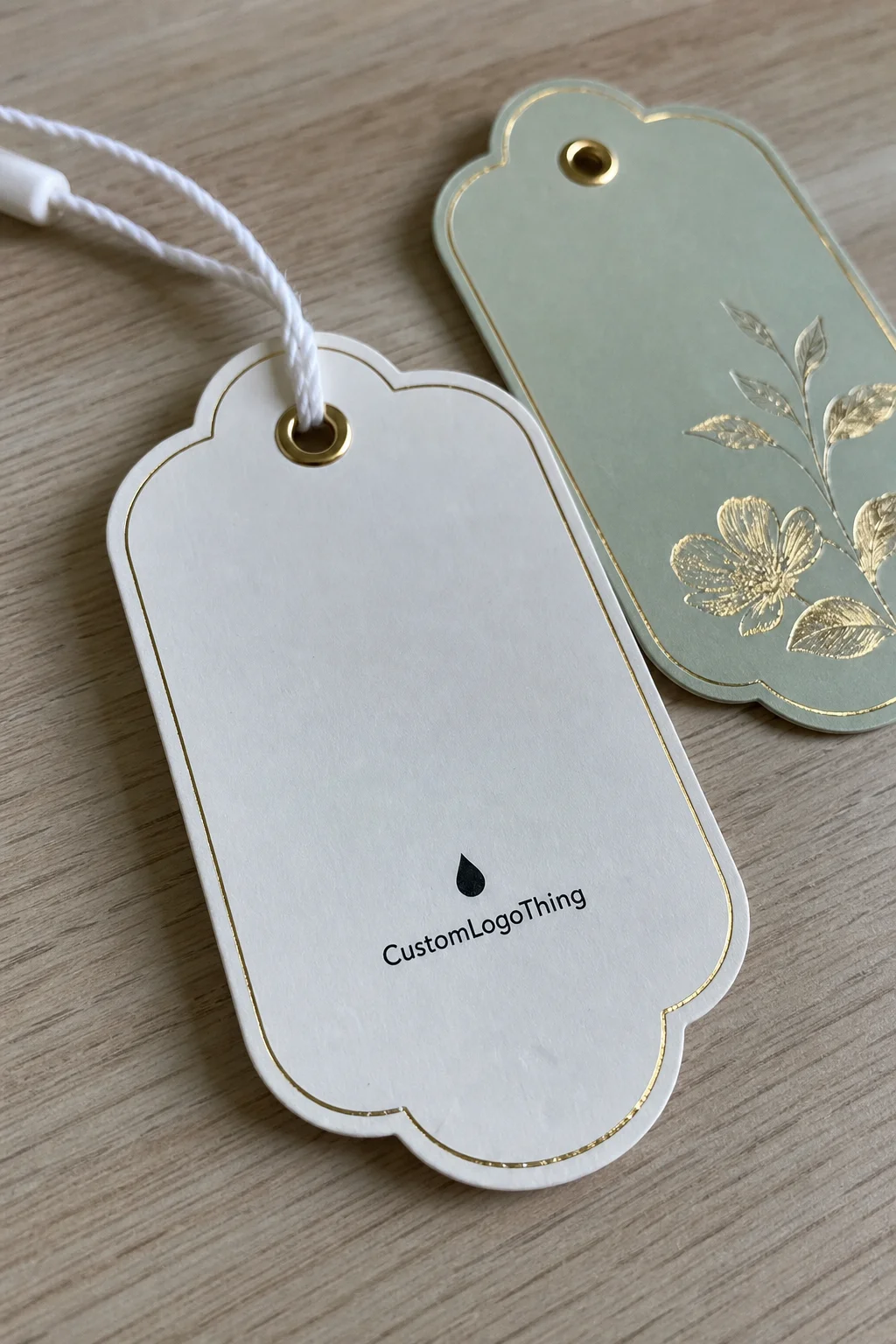
Skincare is judged through packaging before it is judged through performance. A cleanser may sell for $18 or $48, but the customer does not inspect the formula first. They see the bottle, the label, the hang tag, and the way those pieces work together. If the tag feels thin or awkward, the brand loses perceived value before anyone reads the ingredients panel.
The hidden cost is not the print invoice. It is the reprint, the delay, and the internal time spent fixing something that should have been right on the first pass. A hole punched too close to the edge can tear under weight. A color shift can make a coordinated set look like it was sourced from different vendors. A trim that is off by a few millimeters can change the alignment of the entire pack-out.
Retail buyers notice that kind of inconsistency. So do distributors. They may not describe the problem in technical terms, but they can tell when a launch looks finished and when it looks assembled. The gap is often small in cost and large in perception.
“If the tag feels cheap, the launch feels cheap. Buyers rarely separate the two.”
That is why the cheapest quote is not always the best one. A hang tag that supports the line, carries the right information, and survives handling is worth more than one that saves a few cents and creates packaging risk. In a launch environment, predictability has real value.
Hang Tag Formats That Match Bottles, Jars, and Sets
Different skincare formats need different tag structures. A single serum bottle usually needs a compact tag with a clean front, a back panel for details, and enough space for a barcode or QR code if the launch requires it. A jar set or bundled regimen needs more room. There is simply more to say, and cramming it all into a tiny piece makes the pack look crowded.
Rectangular tags are still the most practical option. They are economical to die cut, easy to lay out, and friendly to production schedules. Rounded corners soften the look and fit natural or clean-beauty branding well. Custom silhouettes can work, but they are a design choice with a production cost attached. If the shape is not supporting the brand story, the extra tooling rarely earns its keep.
Common formats that actually work
- Single-panel tags for cleansers, serums, and lightweight bottles
- Folded tags for routines, treatment kits, and launches with more copy
- Set tags for bundles, gift packs, and holiday collections
- Die-cut tags for premium positioning when the shape supports the design
Attachment choice matters as much as shape. Cotton string reads natural and suits botanical or minimalist brands. Elastic loops work well on pumps and slim bottles because they are tidy and fast in pack-out. Ribbon can raise the presentation if the price point supports it. Plastic fasteners are efficient, but they can feel too utilitarian for prestige skincare.
Size is not a cosmetic decision. If the tag must carry claims, legal copy, ingredients highlights, care instructions, or a QR code, the layout needs breathing room. Very small tags often become unreadable once they are attached to the package, especially after the product moves through handling, shipping, and retail stocking. That is a practical production issue, not a design preference.
Stock, Finish, and Print Specs That Change the Quote
The largest price swings usually come from stock, thickness, finish, shape, and artwork complexity. Once those are set, the rest of the quote becomes easier to interpret. Before that, every number is a guess with a margin attached.
Paper choice changes both the look and the handling behavior. Uncoated stock has a dry, natural feel that suits botanical, minimalist, and sustainability-led brands. Coated stock gives sharper text and cleaner imagery. Heavier board feels substantial, but there is a point where extra thickness stops adding value and starts adding cost, weight, and rigidity that may not suit the bottle or jar.
Finishes should be selected with restraint. Matte lamination reduces glare and hides scuffs. Soft-touch adds a velvety feel and can look expensive, but it also pushes unit cost up, especially on larger runs. Foil is effective when it highlights a logo or launch mark. It is far less effective when it is used everywhere simply because the brief wants something that “pops.” That usually reads as clutter, not premium.
Ink coverage affects price more than many buyers expect. Full-bleed art, multiple colors, and heavy solid areas increase press time and can raise the risk of visual inconsistency if the artwork is not clean. Variable data, barcodes, and batch coding add another layer of attention. The more the tag has to do, the more carefully the setup has to be managed.
Paper sourcing and transit behavior are part of the real buying picture, not afterthoughts. If a brand makes a sustainability claim, FSC chain of custody matters, and the certification should be checked against the actual stock being quoted. For shipping performance, packaging teams often refer to transport testing standards from ISTA so finished goods are considered as a system, not just as a printed sheet. Those checks do not make packaging glamorous. They do prevent avoidable mistakes.
For teams comparing material performance across suppliers, the FSC documentation trail and any available testing references are useful because they force the conversation away from vague claims and toward verifiable specs. That is the level of detail serious buyers should expect.
Custom Hang Tags for Skincare Launches Unit Cost Breakdown
The cleanest way to understand Custom Hang Tags for Skincare launches unit cost breakdown is to separate fixed costs from variable costs. Fixed costs are paid once per job: file prep, proofing, die setup, and cutting setup. Variable costs change with quantity: paper, ink, finishing, assembly, and packing. A small order carries a heavier share of fixed cost per unit. A larger order spreads that burden out.
That is why a 500-piece launch can look expensive on a per-piece basis, while a 5,000-piece retail program looks much more reasonable. The materials did not suddenly become cheaper. The setup simply stopped dominating the math.
| Option | Typical Spec | Relative Unit Cost | Best Use |
|---|---|---|---|
| Standard tag | 350gsm C1S, 1-color or 2-color print, rounded corners | $0.12-$0.24 at 5,000 pcs | Simple launches, clean beauty basics, fast production |
| Mid-tier tag | 450gsm coated stock, matte lamination, 4-color print | $0.20-$0.38 at 5,000 pcs | Retail packaging with stronger shelf presence |
| Premium tag | Custom die-cut, soft-touch, foil, specialty string | $0.35-$0.80+ at 5,000 pcs | Prestige skincare, PR kits, higher ticket launches |
Those ranges are directional. They are useful for planning, not for locking a budget line. Quantity, artwork coverage, finish complexity, attachment method, and whether the order is packed flat or kitted all move the number. A quote for 1,000 tags will not behave like a quote for 10,000, even if the spec looks almost identical on paper.
MOQ matters because it changes the burden of setup. Small launch orders usually pay more per unit, and that is normal. Larger orders improve the rate only if the spec is stable. Changing stock after approval, adding foil late in the process, or asking for a shape change after proofing usually adds cost and time. Those changes can be legitimate. They are just not free.
The most useful buyer question is not “What is the cheapest version?” It is “What is the simplest spec that still supports the product’s price point and packaging story?” That question keeps the budget honest. It also prevents the common failure mode where a skincare line spends heavily on the bottle and then underbuilds the piece customers touch first.
If you are comparing packaging across formats, the same logic applies to Custom Labels & Tags and broader Custom Packaging Products. A small savings in one area can disappear if the overall pack no longer looks coherent.
Proofing, Production Steps, and Timeline Before Launch Day
Production is straightforward when the brief is complete. Quote the job, confirm stock, review artwork, approve proof, print, finish, pack, and ship. Most problems show up before production begins, not during it. The issue is usually missing information, not machine failure.
Late artwork changes are the biggest source of friction. Missing bleed, low-resolution logos, barcode issues, and unconfirmed finishes can all slow a job down. Once a proof is approved, every change has a cost. If the launch date is fixed, the tag specification should be fixed too. That is the cleanest way to keep the pack on schedule.
Standard hang tags can move quickly if the shape is simple and the artwork is final. More complex work takes longer. Custom die cuts, foil stamping, embossing, specialty stocks, and high-season print runs all add lead time because each step needs its own setup and inspection. A realistic production window is often 10 to 15 business days after proof approval for straightforward orders, with longer lead times for premium finishes or busy periods.
Quality control should not be treated as a formality. A good check includes trim accuracy, hole placement, color consistency, legibility at arm’s length, and attachment strength. Those details sound minor until a launch arrives with crooked punch holes or a tag that tears during pack-out. Then the details become very visible.
Shipping behavior matters too. A tag that looks fine on a sample table can arrive bent if the carton specification is weak or the packing method is careless. Skincare packaging teams often underestimate this point because they focus on the print finish and overlook the logistics. The launch does not care which part looked best in the mockup. It only cares whether the whole set arrives intact.
That is why the timeline needs a little slack. When several packaging components share one launch, a delay in one item affects the rest. Labels, cartons, inserts, and hang tags are not independent once the product is scheduled. The launch calendar forces them to behave like a single system.
Why Our Hang Tags Fit Fast-Moving Skincare Brands
Fast-moving skincare brands need clear specs, not long explanations. They need to know the stock options, finish options, minimum order quantity, lead time, and what kind of artwork the printer actually needs. Anything less turns the quote process into noise.
Hang tags also have to suit different product weights and bottle styles. A slim serum bottle, a heavy glass jar, a pump dispenser, and a set of holiday minis do not behave the same way once tagged. The attachment has to hold, the size has to read cleanly, and the overall presentation has to fit the price point. That is a production problem as much as a branding one.
Quality control is where a tag either earns its place or exposes weakness. Clean trimming, even hole placement, accurate color, and durable string or loop attachment are the details that keep a launch from looking rushed. None of those details are glamorous. All of them are visible.
Good packaging work is usually invisible because it prevents problems before anyone notices them. That is the standard buyers should expect. A supplier that flags artwork issues early, explains the cost impact of a finish change, and gives a quote that matches the brief is more useful than one that underprices the job and adds surprises later.
There is also a practical advantage to consistency. A supplier who can keep the same stock, the same trim logic, and the same finish behavior across repeated runs reduces the risk of a line drifting from batch to batch. That matters more than a flashy pitch. Repetition, in packaging, is often a sign of control.
What to Do Next Before You Approve the Launch Batch
Start with a real brief. Final tag size, stock preference, finish, quantity, attachment style, and shipping date should all be on the table before quoting starts. Without those pieces, the number is only a placeholder. Placeholders are useful for internal discussion and useless for launch approval.
Send print-ready artwork or the latest dieline before asking for embellishments. It is much easier to price a real file than to estimate a concept that might not fit the product. If the tag needs a barcode, QR code, or batch area, reserve the space early. Crowding those elements in at the end usually creates a layout problem.
Ask for side-by-side pricing if you are comparing standard stock against premium stock. That makes the tradeoff visible. You can see how much soft-touch lamination, foil, or a custom string changes the unit cost. Vague premium language does not help a launch team make a decision. Numbers do.
Then lock the spec and approve the proof. That is the part that keeps Custom Hang Tags for skincare launches unit cost breakdown under control without lowering the quality of the launch. A cleanly specified tag can support retail, PR, and direct-to-consumer packaging without creating noise for the rest of the production schedule.
What affects the unit cost of custom hang tags for skincare launches most?
Quantity, stock thickness, finish, die-cut shape, and attachment style usually have the largest impact. Setup and proofing weigh more heavily on small runs, while material and finishing choices matter more as quantity rises.
What is the typical MOQ for skincare hang tags?
MOQ varies by print method, stock, and finishing, but small launch orders almost always carry a higher unit price than larger retail runs. If you need a lower MOQ, the cleanest way to hold cost down is to keep the shape simple and reduce embellishments.
How long does production take for custom hang tags?
Simple orders can move quickly once artwork is final and the proof is approved. Custom shapes, foil, embossing, and heavy seasonal demand add lead time, so approval speed matters as much as the print schedule.
Which finish works best for skincare hang tags?
Matte and soft-touch are common for clean beauty because they photograph well and feel more refined in hand. Gloss can work if the brand wants stronger color contrast or easier wipe-clean handling.
How do I get an accurate quote for custom hang tags for skincare launches?
Send the final size, quantity, stock, finish, attachment choice, and artwork file. For a fair comparison, request quotes at the actual run size rather than a low teaser quantity that hides the real unit cost.


