Beautiful coffee packaging can still feel unfinished if the hang tag looks flimsy, curls in humidity, or clashes with the rest of the brand story. That is why Custom Hang Tags for coffee roasters sustainable material options matter so much: they sit right at the intersection of package branding, retail packaging, and the practical realities of packing, shipping, and shelf presentation.
A hang tag does more than carry a SKU. In a small, tactile format, it can communicate origin, roast notes, certifications, grind recommendations, brew tips, and sustainability claims without crowding the bag itself. The right material affects print quality, durability, recyclability, and how the tag behaves while it is being handled, kitted, or hung on a gusseted pouch in a retail display. If you are comparing Custom Hang Tags for coffee roasters sustainable material options, the real question is not just “what looks eco-friendly?” It is “what performs well, matches the brand, and still makes operational sense?”
Why coffee roasters are rethinking hang tags
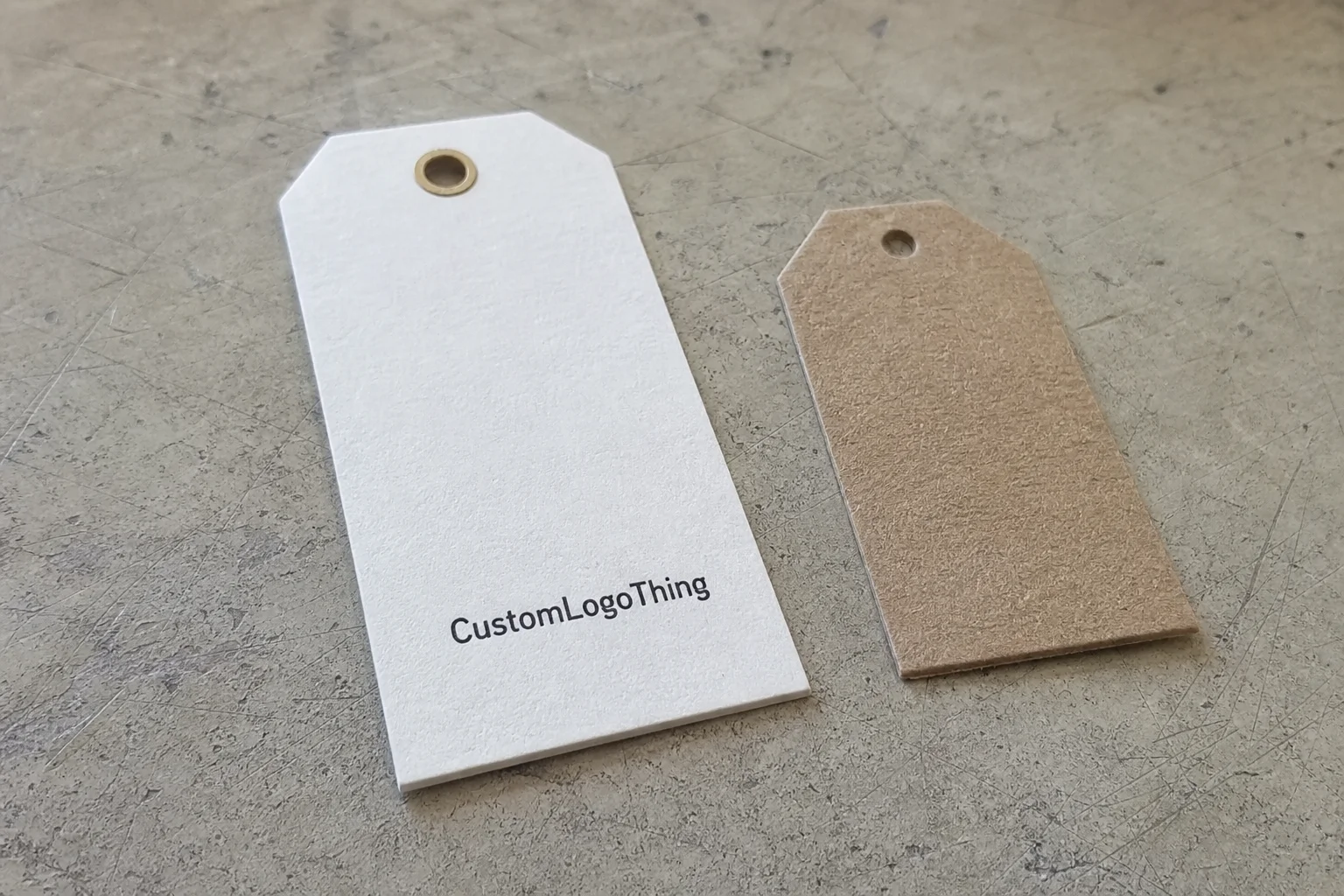
From a packaging buyer’s point of view, a coffee bag is only as polished as its weakest visible component. A premium matte pouch with crisp graphics can still feel underdeveloped if the tag is glossy in the wrong way, printed on stock that bends too easily, or tied on with a bright plastic loop that breaks the visual language of the brand. That disconnect is what pushes more roasters toward Custom Hang Tags for coffee roasters sustainable material options that feel intentional rather than decorative.
Hang tags also solve a very real information problem. Coffee packaging often needs to carry roast level, tasting notes, origin details, farm or cooperative information, processing method, roast date, lot number, brewing guidance, and sometimes certification marks. Trying to force all of that onto the bag face can crowd the design fast. A well-planned tag gives the brand more breathing room and keeps the main package cleaner, which matters in retail packaging where legibility is judged in seconds.
There is also a practical side that buyers sometimes underestimate. Tags move through fulfillment lines, are exposed to warehouse dust, can rub against other bags in shipping cases, and may sit in stores with changing humidity. A good tag stock should hold its shape, accept clean print, and stay readable long enough to do its job. In that sense, material choice is not cosmetic. It shapes how the whole product packaging system feels in the hand.
“A tag should support the bag, not fight it. If it curls, frays, or muddies the print, the customer notices immediately.”
For roasters building out a broader packaging program, hang tags should be considered alongside Custom Labels & Tags and even other branded components such as Custom Packaging Products. The look has to hold together across the shelf, the shipping box, and the unboxing moment.
How sustainable hang tag materials perform in the real world
Sustainable tag materials are not all the same, and that is where a lot of buyers get tripped up. A substrate can be recycled, FSC-certified, or made from agricultural fiber, but that does not automatically make it the best choice for coffee. You still have to think about print sharpness, stiffness, and how the tag will age while attached to the bag.
Recycled kraft is one of the most common starting points. It has a natural texture, a warm visual tone, and a strong fit for earthy or origin-focused brands. It usually prints well for bold graphics and simple typography, though very fine detail can lose a little crispness compared with smoother paperboard. FSC-certified paperboard is another dependable option, especially when a roaster wants a more controlled print surface without giving up responsible sourcing. Uncoated text stocks can feel refined and tactile, but they need thoughtful ink coverage because heavy solids may soak in more than on coated sheets.
Cotton rag papers and bamboo or agricultural-fiber blends sit higher on the premium side. They can Create A Memorable hand-feel and support a strong story, but they often come with higher pricing and, depending on the paper mill, longer lead times. These are the kinds of materials that work well for signature launches, seasonal editions, or retail packaging where the tag itself is part of the brand experience rather than just a carrier of information.
Then there are coatings and inks. Aqueous coating can add smudge resistance with relatively low impact, while heavy film lamination may make a tag tougher but can reduce recyclability. Soy-based or low-VOC inks are often preferred when buyers want to keep the sustainability story cleaner, though the overall environmental profile still depends on the total construction. A “green” paper can lose some of its advantage if it is paired with plastic string, full coverage lamination, or specialty treatments that make separation difficult.
For coffee specifically, the tag has to handle a few annoying realities:
- Bag friction: tags rub against matte pouches, foil-lined bags, and adjacent cartons during transit.
- Moisture exposure: humidity can cause low-stiffness stocks to curl or wave at the edges.
- Warehouse dust: uncoated surfaces may show scuffing more readily than a lightly treated sheet.
- Attachment stress: hole punches and string ties need enough strength to survive packing without tearing.
That is why the word sustainable should mean more than “looks natural.” For many roasters, the best balance is recycled fiber or FSC paperboard, printed with restrained ink coverage and finished as lightly as possible. That tends to deliver the best mix of brand credibility, print quality, and end-of-life practicality.
Key material and print factors to compare before you order
Before you place an order, compare the tag the same way you would compare any other piece of product packaging: by performance, not just by appearance. The first thing to check is thickness, often measured in points or gsm depending on the stock. A tag that is too light can flop against the bag and look cheap, while one that is too thick may feel premium but add cost and create stringing issues if the hole area is not reinforced.
Surface texture matters too. Rough kraft paper gives a handmade, organic impression, but it may soften tiny QR codes or thin serif type. Smooth uncoated paperboard usually offers better legibility for small roast details and batch information. If your design relies on dense blacks, gradients, or very small text, ask for a print proof on the exact stock rather than assuming the digital mockup will match the physical result.
Print method is another major decision. Digital printing works well for shorter runs and variable data, especially if you want unique roast dates or lot codes. Offset is usually stronger for consistent color across larger volumes and gives excellent control for brand colors and fine details. Screen printing can produce rich, tactile solids, but it is usually better suited to simpler layouts. For roasters doing limited editions, the right method often depends on whether the priority is speed, color consistency, or special effects.
Hole placement and shape deserve real attention. A round hole near the top is common, but a reinforced slot or die-cut shape may distribute stress better if the tag hangs from a thicker twine or paper cord. Rounded corners help reduce dog-earing in transit. And if the tag needs to sit flat against a bag neck, it should be sized and weighted with that behavior in mind rather than chosen from a generic catalog shape.
Finishes should support the sustainability story, not undermine it. Uncoated stock gives the most natural feel. Aqueous coating can improve rub resistance without making the tag feel plastic-heavy. Spot gloss or foil can look striking, but those effects should be used sparingly if the brand is trying to project a low-impact position. In most cases, restrained finishing looks more credible than trying to make a sustainability claim while covering half the surface in shiny extras.
For packaging design teams, the best practice is to mock up the tag on the actual pouch, not just on a flat art board. That one step reveals whether the proportions, hole position, and typography still work once the tag is hanging on an actual retail package.
| Material option | Typical feel | Print performance | Best use case |
|---|---|---|---|
| Recycled kraft | Natural, earthy | Good for bold type and simple graphics | Core line branding and origin stories |
| FSC paperboard | Clean, versatile | Strong for color accuracy and legibility | Retail-ready runs with custom shapes |
| Cotton rag paper | Soft, premium, tactile | Excellent for minimal layouts and elegant type | Signature releases and gift-oriented packs |
| Bamboo or fiber blend | Distinctive, specialty-oriented | Varies by mill and surface treatment | Brand storytelling and seasonal launches |
Custom hang tags for coffee roasters sustainable material options: cost, pricing, and MOQ
Pricing depends on the full spec, not just the paper. Size, stock, print coverage, number of colors, die cuts, stringing, and final assembly all move the needle. A simple recycled tag in a straightforward rectangle will usually cost much less than a specialty fiber paper with a custom shape, rounded corners, and hand-attached paper cord. That sounds obvious, but buyers sometimes compare quotes without realizing how much the construction differs.
For smaller roasters, low minimum order quantities can be a smart way to test a new brand direction before committing to a larger run. That matters when you are still refining roast line segmentation or adjusting package branding across a few coffee SKUs. Larger quantities usually bring unit costs down and improve consistency from lot to lot, especially if you are printing spot colors that need close matching.
Here is a practical pricing frame that many buyers can use as a starting point, though actual numbers will vary by size and finish:
- Basic recycled stock: often the most economical for simple branding and short information copy.
- Mid-range FSC paperboard: usually a solid choice for custom shapes, better stiffness, and cleaner print output.
- Premium textured or specialty fiber papers: better for distinctive launches, but they can raise both material and setup cost.
If you are budgeting tightly, watch for hidden costs. Proofing fees, plate or setup charges for offset work, rush surcharges, custom twine, and extra labor for kitting tags with bags can add up faster than expected. For example, a tag order might look attractive at first glance, but if you need manual stringing and bag insertion, labor can become as meaningful as the printed stock itself.
In smaller runs, roasters often see a broader range in unit pricing because setup is spread across fewer pieces. In larger runs, those costs normalize. As a rough planning range, a straightforward recycled hang tag can land in a much lower per-unit zone than a premium specialty stock, but buyers should ask for quotes tied to exact dimensions, print count, and finishing. That is the only way to compare apples to apples.
Process and lead time: from artwork to packed cartons
The production path for hang tags is usually more orderly than people expect, but delays happen when files are not prepared correctly or sustainability claims are vague. A typical job starts with artwork review, then material selection, then proofing, then color approval, followed by printing, die-cutting, finishing, packing, and shipment. Each step can move quickly if the approval loop is tight.
Lead time depends on the spec. Straightforward paper tags with standard shapes can move faster than orders with unusual die lines, variable data, or hand assembly. Specialty papers may also need a longer sourcing window, and seasonal demand around launch periods or holiday runs can stretch schedules. If you need tags tied and bagged as part of the final order, build in extra time for labor.
Good file preparation saves more time than most buyers realize. Use vector logos, include bleed, respect safe zones, and make sure any QR code is tested at the intended size. If your tag includes FSC claims, recycled content percentages, or other environmental statements, spell them out clearly so there is no back-and-forth over wording. A clean file can shave days off the approval process.
Sampling and proof approval are the critical checkpoints. A printed sample lets you judge the actual surface, the real color, and the way the tag feels in hand. That matters because a design that looks good on screen can behave very differently on kraft paper or uncoated board. In practice, this is where waste prevention happens. Approve too fast, and you may trigger a reprint. Approve carefully, and you protect both budget and timeline.
For brands that also use custom printed boxes or corrugated cardboard shipper systems, it makes sense to line up the graphics and material story across every package layer. The tag should feel like part of a larger system, not a separate thought.
Common mistakes roasters make with eco-friendly tags
The most common mistake is choosing a paper that looks sustainable in a sample book but cannot hold crisp typography. The texture may be beautiful, yet the print result can feel muddy, especially for small origin details or thin lettering. That weak contrast affects shelf impression fast, and the tag ends up looking less premium than the more modest stock you almost chose.
Another mistake is finishing the tag in a way that undermines the environmental story. A heavy laminate can block recycling pathways, and some buyers only discover that after the run is already approved. If the brand promise is natural and low-impact, the finish needs to support that message, not contradict it.
Size is another issue. Tags that are too small force legal copy, roast details, and QR codes into a cramped layout. Once that happens, the design starts to feel busy and scanning suffers. A tag should be sized for the information it needs to carry, not for the smallest possible footprint on the bag.
Attachment is where a lot of otherwise good projects go wrong. If the hole punch is too close to the edge, the tag may tear. If the string is too thin, it can twist or break during packing. If the hanging method is not tested on the actual pouch, the tag can sit crooked or snag on warehouse conveyors and shipping cartons. That is frustrating, because none of those problems are about the print itself; they are about the system around it.
One more thing: buyers sometimes treat sustainability as a single-material decision when it is really a whole-package decision. The tag, string, bag substrate, label, and outer shipper all matter. If you are already using a recycled or compostable direction on the bag, the tag should align with that strategy instead of introducing a conflicting material just because it looked nice in a sample kit.
Expert tips for stronger branding and cleaner sustainability claims
Keep the message focused. On a small hang tag, one strong brand statement, one useful data point, and one action often outperform a cluttered layout. A short origin note, a roast profile, and a QR code that leads to brewing instructions usually provide more value than cramming every detail onto the front.
Match the texture to the roast personality. Earthy, small-batch, or origin-forward brands often feel right on rougher uncoated kraft paper. Modern, clean, and technically precise brands may be better served by smoother recycled sheets or FSC board with tighter printing control. That choice affects package branding as much as the logo does.
Color discipline also helps. Limited ink coverage usually keeps costs under control and gives a stronger sustainability signal. That does not mean everything has to be beige or brown. It means the palette should be intentional, with enough restraint to let the stock do some of the work. Some of the best-looking coffee tags are simple because the paper quality and typography carry the design without extra fuss.
When you make environmental claims, make them specific and defensible. “Contains 30% post-consumer recycled fiber” is much more credible than “eco-friendly.” FSC certification is also a meaningful signal for buyers who care about sourcing; you can verify standards and chain-of-custody details through organizations like fsc.org. If you are thinking about broader packaging waste and recycling guidance, the EPA recycling resources are a useful reference point for understanding material end-of-life behavior.
That kind of specificity builds trust. It also helps the tag work as a sales tool rather than just a decorative label. In branded packaging, clarity sells.
Next steps for choosing the right tag spec for your roast line
Start by auditing the current bag and tag combination. What is failing visually, operationally, or environmentally? Maybe the tag looks too glossy against a matte pouch, or the attachment tears during packing, or the current stock cannot hold the small type you need. Separate those issues, because each one points to a different material or production fix.
Then narrow the field to two or three material options and request samples. Compare them under the same lighting, with the same bag, and ideally in the same humidity conditions your tags will actually face. A sheet that looks excellent in a studio can behave differently in a roasting room or warehouse.
Before requesting quotes, lock down the basics: target budget, minimum quantity, attachment method, size, shape, print count, and whether you need any hand assembly. The clearer the brief, the faster a supplier can recommend the right spec and avoid quoting something that looks nice but is wrong for your operation. That applies whether you are ordering hang tags, custom printed boxes, or a broader set of branded packaging components.
Finally, finalize artwork only after checking barcode readability, regulatory text, and any sustainability claims. If you can, proof the tag on the actual bag before full production. For Custom Hang Tags for coffee roasters sustainable material options, that last step is often the difference between a tag that merely fills space and one that strengthens the product packaging story from first glance to checkout.
FAQs
What are the best sustainable material options for custom hang tags for coffee roasters?
Recycled kraft and FSC-certified uncoated paperboard are usually the best balanced choices because they feel natural, print well, and fit a wide range of coffee brands. Cotton rag or specialty fiber papers can elevate the presentation, but they usually cost more and may take longer to source. The best option depends on whether you care most about recyclability, texture, premium feel, or the lowest unit cost.
Do eco-friendly hang tags affect coffee bag recyclability?
They can, depending on the finish and attachment method. Paper tags with paper-based strings are often easier to separate than tags with plastic ties or heavy film lamination. The entire package should be reviewed as a system, because the tag, the bag, the label, and the shipper all influence the end-of-life path.
How much do custom hang tags for coffee roasters usually cost?
Cost depends on size, stock, print colors, finishing, and quantity, so there is no single standard price. Simple recycled tags in larger runs generally cost less per piece than textured specialty stocks or custom die-cut designs. Setup fees and assembly can matter as much as raw material on smaller orders.
What is a typical lead time for sustainable hang tag orders?
Lead time usually includes file review, proofing, printing, finishing, and shipping. Straightforward paper tags move faster than jobs with variable data, special shapes, or hand assembly. Approving artwork quickly is one of the easiest ways to shorten turnaround.
How do I choose the right hang tag size for coffee packaging?
Start with the amount of information you need to include, then check how the tag will sit on the bag or pouch. The tag should leave enough room for readable type, a logo, and any QR code or batch details without feeling crowded. A sample on the actual bag is the safest way to confirm scale and presentation.


