For apparel buyers, Custom Hang Tags for apparel retailers Unit Cost Breakdown is not a narrow pricing question. It is a margin question, a presentation question, and sometimes a rework question. A tag can look premium at 10 cents or look strangely cheap at 40 cents, depending on stock, finish, shape, and how much hand labor it needs before it reaches the garment.
That is why experienced retail packaging teams start with unit cost, not sticker price. A hang tag supports branding, strengthens rack presence, and keeps replenishment predictable. A poor spec does the opposite: it adds friction every time a new style lands, and the waste tends to show up later in proof corrections, damaged stock, or last-minute substitutions.
Why hang tag unit cost matters more than sticker price
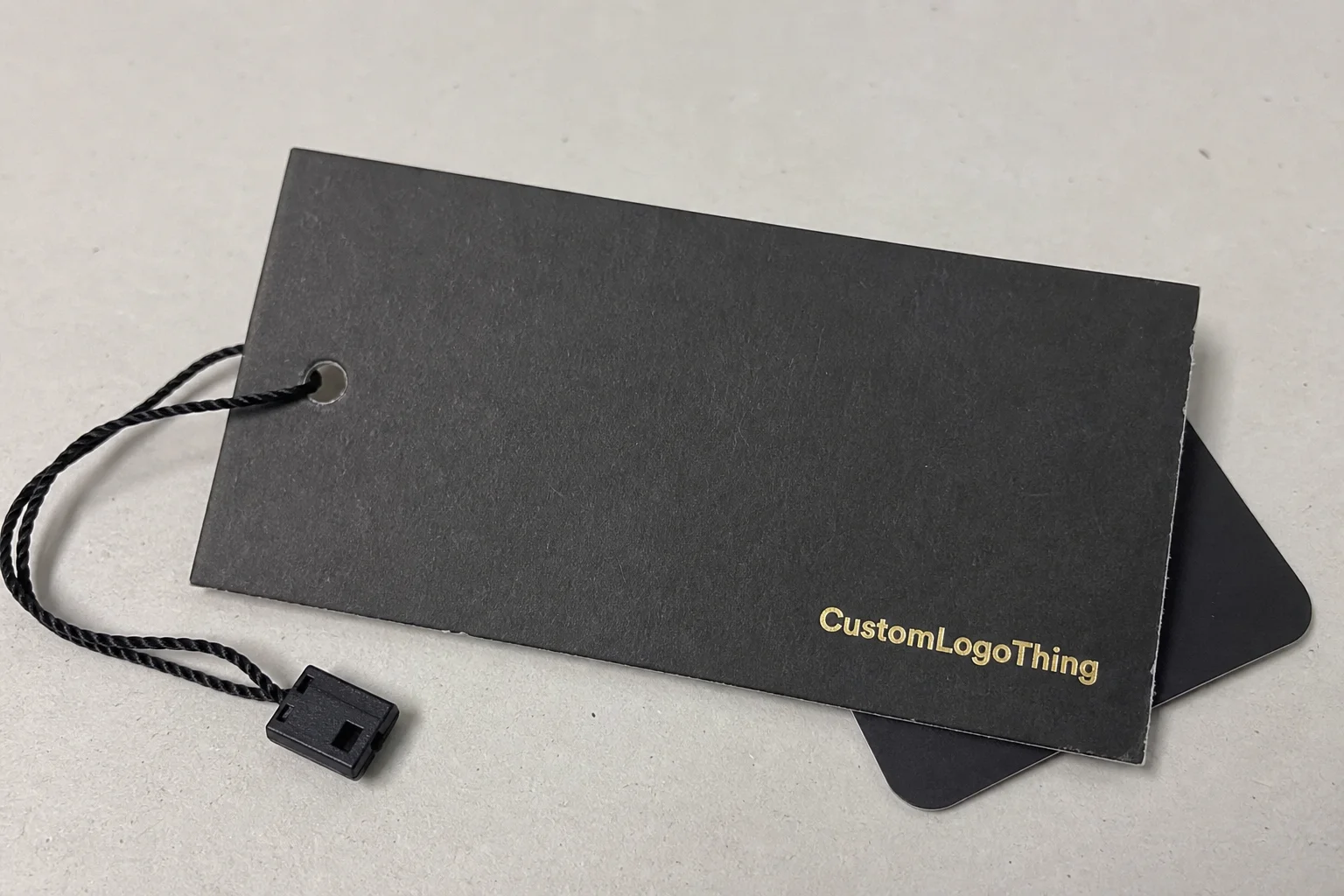
From a packaging buyer’s point of view, the quote line that matters most is the one that survives into landed cost. A low quote can be misleading if it excludes stringing, proofing, or setup. A higher quote can be the better buy if it reduces errors and arrives ready to use. That is the practical lens for evaluating Custom Hang Tags for apparel retailers unit cost breakdown.
Retailers often judge a tag by appearance alone. That is understandable, but incomplete. In practice, a simple 2" x 3.5" tag on 350gsm C1S board with clean typography can support a premium product just as well as a heavier, more decorative tag. The real question is not how expensive it looks. It is how much it costs per impression, per SKU, and per reorder cycle.
Three cost drivers tend to surprise buyers:
- Paper stock — thickness, coating, and recycled content affect print behavior and price.
- Die cutting — standard rectangles are cheaper than custom silhouettes.
- Assembly — stringing, gluing, pinning, or bundling adds labor even when print costs stay stable.
One useful comparison: a tag that is 15% more expensive on paper may still be the better choice if it reduces scuffing, shipping damage, or poor shelf presentation. That is especially true for premium apparel, seasonal launches, and multi-line branding systems that need a consistent look across different collections.
If the tag is part of a larger packaging program, it should match the rest of the system. A tag that feels disconnected from Custom Packaging Products or the main carton design creates a visual mismatch. Buyers notice that faster than most brands expect.
Custom hang tag formats, materials, and finishes for retail
Format changes cost faster than color count in many cases. A flat single-sided tag is the baseline. Folded tags, multi-layer tags, and shaped tags all add paper usage, registration complexity, and finishing time. That does not make them wrong. It just means they should be tied to product value, not habit.
Common formats buyers request
- Single-sided tags for basics, entry-price apparel, and high-volume replenishment.
- Double-sided tags for care data, brand story, or bilingual copy.
- Folded tags when more content is needed without increasing footprint.
- Shaped tags for stronger visual separation on crowded racks.
- Multi-layer tags for promotions, limited editions, or bundled product information.
Material choice matters just as much. Coated paper handles fine type and solid brand colors well. Uncoated stock feels more tactile and often suits natural, premium, or sustainability-led positioning. Recycled board can support a credible environmental message, but print density and color matching can vary more from run to run. That is not a flaw. It is a production reality, and buyers should plan for it rather than discover it during approval.
Finishes are where unit cost starts to separate sharply.
- Matte varnish is usually one of the lowest-cost protective upgrades.
- Gloss coating adds shine and abrasion resistance with modest cost impact.
- Soft-touch lamination feels premium, but it raises cost and often extends lead time.
- Foil stamping adds a strong visual cue and usually increases both setup and per-piece cost.
- Embossing and spot UV are eye-catching, but they belong on higher-ticket products or branded capsule collections.
Attachment method is often underestimated. Cotton string is common and visually soft. Elastic loops are efficient for fast application. Safety pins can work for certain garments but may require more care during handling. Plastic fasteners are economical for large runs, though they can feel less elevated than fiber-based alternatives. Assembly time changes with each option, and labor is part of unit cost whether it appears as a separate line or not.
“The cheapest tag is not the cheapest program if you have to rework 2,000 units or replace damaged stock before launch.”
For high-ticket garments, premium finishes can make sense because they reinforce price perception. For tees, socks, and volume basics, a cleaner, simpler build usually wins. The goal is not to make every tag impressive. The goal is to make the tag fit the product tier without inflating the quote for no operational benefit.
Industry groups such as the Packaging Machinery Manufacturers Institute and certification frameworks like FSC help frame broader material decisions, especially if the retailer is standardizing packaging across multiple lines.
Print specifications that change unit cost
Size is a cost driver because it affects sheet yield. A smaller tag may allow more units per press sheet, which lowers waste and sometimes reduces the effective unit cost. Larger tags can still be efficient, but only if the layout is optimized. Shape complexity changes things even more. A standard rectangle is predictable. A custom die-cut shape adds tooling and can reduce nesting efficiency.
Print sides matter too. One-sided jobs are simpler. Two-sided jobs usually increase press time, ink use, and quality checks. If the back side only needs a barcode, care instructions, or a QR code, the layout should be built around that function rather than treated as an afterthought.
Color count is another major variable.
- One-color print is the most economical for minimal branding.
- Two-color jobs can still be efficient if the brand palette is simple.
- CMYK full-color is common for photo-heavy or lifestyle-led tags.
- Pantone matching supports brand consistency but can add setup complexity.
Variable data also changes the workflow. QR codes, barcodes, and serialized numbering can be added efficiently if the data is clean. If the file set is inconsistent, the project slows down. That matters for apparel retailers using tags for inventory control, product tracing, or omnichannel merchandising. The operational value is real, but only if the artwork and data are accurate.
Bleed and safe area are not glamorous topics, yet they save money. A mislabeled dieline or artwork pushed too close to the edge can trigger reproofing or reprint risk. A precise dieline reduces waste. That sounds basic because it is basic. It also prevents avoidable delays.
| Tag style | Typical cost profile | Best use case | Cost impact |
|---|---|---|---|
| Standard rectangle | Lowest setup and easiest nesting | Basics, volume SKUs | Lower unit cost |
| Folded tag | More material and finishing steps | More copy, care details, bilingual content | Moderate increase |
| Custom die-cut shape | Tooling and waste increase | Premium fashion, distinctive branding | Higher unit cost |
| Multi-layer tag | Assembly and alignment add labor | Campaigns, premium assortments | Highest cost profile |
For apparel brands already investing in custom printed boxes and branded packaging, tags should follow the same logic: spend where customers notice it and simplify where they do not. That is how packaging design stays commercially sane.
Custom hang tags for apparel retailers unit cost breakdown
Here is the cleanest way to think about Custom Hang Tags for apparel retailers unit cost breakdown: every quote is built from a few repeatable components. Base stock, print method, finish, attachment, and assembly are the core cost buckets. Setup sits on top of them. Once setup is spread across a larger quantity, per-piece cost comes down.
A simple example helps. A basic 2" x 3.5" tag on coated board with one- or two-color printing, standard cut, and no special finish can land in a much lower unit-cost band than a foil-stamped, soft-touch, stringed tag with a custom shape and two-sided printing. The gap is not subtle. It is usually material plus labor plus setup, not just a premium look.
For lower quantities, setup has an outsized effect. If a job includes plate creation, die setup, proofing, and hand assembly, a 500-piece run can cost dramatically more per unit than a 5,000-piece run. That is why MOQ matters so much in apparel. The fixed effort does not shrink just because the order is small.
Typical pricing logic often looks like this:
- Test runs cost more per tag because fixed setup is spread over fewer pieces.
- Mid-volume orders usually offer the best balance between cash outlay and unit cost.
- Large replenishment orders cut unit price, but only make sense if sell-through is predictable.
For buyers comparing options, it helps to separate the quote into visible and hidden pieces. Use this as a review checklist rather than a theory exercise:
- Base stock cost
- Printing method and color count
- Finish or coating
- Die cutting or specialty shape
- Attachment method
- Assembly and bundling
- Packaging for shipment
- Freight or expedited delivery
Useful pricing ranges are usually broad because they depend on quantity and spec. For standard paper hang tags, buyers often see lower-volume runs fall into a noticeably higher per-piece range, while mid- to high-volume orders improve quickly as setup is absorbed. Specialty finishes, custom shapes, and hand assembly can push a job into a much higher bracket than the printed board alone would suggest. That variability is normal; the spec sheet is what determines the final number.
The best cost-saving moves are usually boring, which is why they work. Standard sizes reduce waste. Fewer special finishes reduce setup. Consolidating SKUs into one tag layout lowers artwork and press complexity. Ordering in quantities that match seasonal sell-through keeps inventory from sitting idle. That is the actual economics behind Apparel Hang Tags.
For buyers who want a retail-ready bundle, it can be smart to coordinate tag procurement with Custom Labels & Tags so the brand system feels consistent across apparel lines. The unit cost is only part of the story. The visual system matters too, especially when styles are displayed side by side on the same rack.
Pricing, MOQ, and quote variables buyers should check first
An accurate quote starts with a complete brief. If you send dimensions, stock preference, number of print colors, finish, quantity, attachment style, and shipping destination, you get a sharper price. If not, you get a placeholder. Those are rarely useful for budgeting.
MOQ is not just a factory policy. It is a math problem. Some suppliers price aggressively at higher volumes because press time, die setup, and finishing labor are easier to absorb. Short runs usually carry a higher unit cost because the fixed effort does not shrink with the order. That is normal. The buyer’s job is to understand where the breakpoints sit.
Ask every supplier whether the quote includes:
- Artwork review
- Proofing
- Cutting and finishing
- Assembly or stringing
- Packaging by SKU
- Freight charges
If one quote seems lower than the others, look for what is missing. Setup fees sometimes appear later. Proof charges can be separate. Some suppliers quote production only, while others include more of the service layer. Apples-to-apples comparison is the only comparison that matters.
Shipping can materially change landed cost, especially for rush orders or smaller cartons. A low ex-factory price can become less attractive once express freight is added. Packaging format matters too. Flat-packed tags may ship more efficiently than pre-stringed units, though pre-assembly saves in-house labor. There is no universal winner. It depends on staff, receiving flow, and how quickly product must reach the floor.
A practical buying habit: request at least three tiered prices. For example, ask for 1,000, 3,000, and 5,000 pieces. That reveals the cost curve and shows how much you save by moving up a tier. Retailers often find that the middle tier delivers the best balance between cash tied up in inventory and true unit cost.
Production steps, lead time, and approval checkpoints
The production flow is straightforward, but each step can affect timing. It usually goes like this: brief submission, dieline selection, artwork review, proof approval, production, finishing, assembly, and shipment. If any step stalls, the whole order slows down.
Delays usually come from three places. First, late artwork changes. Second, missing barcode or QR data. Third, slow approval cycles. Buyers sometimes assume production will absorb those delays. It will not. The schedule only works if the supplier has clean files and prompt sign-off.
Standard stock tags often move faster than specialty builds. If your hang tag uses a simple board, standard cut, and no premium finish, the lead time may be relatively short once proof approval is complete. Add foil, embossing, laminated surfaces, or custom die cutting, and the timeline extends. That is not a red flag. It is the normal production sequence.
Digital proofs are excellent for layout and text checks. Physical proofs are better for texture, color judgment, and finish verification. If the tag is tied to a premium collection, the physical proof is usually worth the extra step. It reduces the chance that the final job looks technically correct but commercially off.
For quality control and packaging validation, some brands also use standard testing references like ISTA for transit considerations. Hang tags are not shipping cartons, of course, but the mindset is similar: verify before you commit to a full run.
How to order with fewer revisions and a better final cost
Good suppliers do more than print. They reduce friction. That means cleaner artwork checks, clearer pricing, and a practical recommendation when your spec choices are driving the cost higher than needed. For apparel retailers, that support matters because collections move fast and SKU counts can become unwieldy.
Experience lowers total cost in ways buyers can actually feel. A supplier who understands seasonal merchandising will usually spot mismatched quantities, overbuilt finishes, or layout problems before production begins. That prevents reprints. It also avoids the more expensive problem: tags arriving after product is ready to ship.
Before you request a quote, prepare this short checklist:
- Logo files in vector format
- Exact tag dimensions
- Quantity by SKU or style
- Preferred stock or finish
- Attachment method
- Barcode, QR code, or serialization data if needed
- Shipping deadline
There is a bigger benefit here than convenience. A well-managed order gives you repeatability. That matters for branded packaging programs where the hang tag must look identical across replenishment cycles. Retail buyers do not just want a low quote. They want consistency. They want a print standard they can trust when a style sells through and reorders come back months later.
Transparent pricing, proof support, and repeat-order consistency are the trust signals that count. Not inflated language. Not broad claims. Just a clear process and predictable output.
Next steps for a faster quote and cleaner launch
If you want a fast quote, send the specifics up front: exact dimensions, stock preference, print colors, quantity, finish, and whether the tags need stringing or variable data. That alone removes most back-and-forth.
Then ask for two or three pricing tiers so you can compare unit cost at different volumes. If a supplier cannot show the difference between test quantity and replenishment pricing, you are missing part of the decision picture. That is especially true when the order will be used across multiple apparel categories or seasonal drops.
Confirm the proof method, lead time, and shipping timeline before artwork is finalized. A production schedule is only useful if everyone agrees on the approval checkpoints. If the tags need to coordinate with broader product packaging, request a sample or spec sheet so the finish and print style align with the rest of the program.
One final observation: buyers who get the best results usually treat hang tags as part of the retail packaging system, not as an isolated print order. That mindset improves package branding, keeps unit cost under control, and makes replenishment easier. The specs come first, then the proof, then the run. Getting that sequence right usually saves more money than chasing the lowest quote.
FAQ
What affects the unit cost of custom hang tags for apparel retailers?
Material, size, print coverage, finish, quantity, and attachment method are the main drivers. Setup costs matter more on smaller orders, which raises the per-piece price. Specialty shapes and premium finishes usually increase cost faster than standard layouts.
What is the typical MOQ for custom apparel hang tags?
MOQ depends on the print method, stock, and finishing requirements. Standard tags often support lower MOQs than foil, embossing, or custom die-cut jobs. Ask for tiered pricing so you can compare test runs versus replenishment orders.
How do I lower the cost of custom hang tags without making them look cheap?
Use standard sizes, limit finish upgrades, and keep the artwork efficient. Choose a strong stock and clean layout instead of adding multiple premium effects. Order in higher quantities when possible to spread setup costs across more units.
How long does production usually take for custom hang tags?
Standard jobs move faster than custom shapes or specialty finishes. Approval speed is a major factor in total turnaround time. Rush timelines are possible when artwork is final and specifications are clear.
Can custom hang tags include barcodes or QR codes for retail use?
Yes, they can include barcodes, QR codes, and serialized information. These elements help with inventory control, product tracing, and shopper engagement. Provide clean data files to avoid print errors and production delays.


