Buyer Fit Snapshot
| Best fit | Custom Hot Foil Labels projects where brand print, material claims, artwork control, MOQ, and repeat-order consistency need to be specified before quoting. |
|---|---|
| Quote inputs | Share finished size, material target, print colors, finish, packing count, annual reorder estimate, ship-to region, and any compliance wording. |
| Proofing check | Approve dieline scale, logo placement, barcode or warning zones, color tolerance, closure strength, and carton packing before bulk production. |
| Main risk | Vague material claims, crowded artwork, missing packing details, or unclear freight terms can make a low unit price expensive after revisions. |
Fast answer: Custom Hot Foil Labels: Material, Adhesive, Artwork, and MOQ should be specified like a repeatable production item. The safest quote records material, print method, finish, artwork proof, packing count, and reorder notes in one written spec.
Production checks before approval
Compare the actual filled-product size with the drawing, then confirm tolerance on folds, seals, hang holes, label areas, and retail display edges. Reserve space for logos, QR codes, warning copy, and material claims before decorative graphics fill the panel.
Quote comparison points
Review material grade, print process, finish, sampling route, tooling charges, carton quantity, and freight assumptions side by side. A quote is only useful when the supplier can repeat the same color, closure quality, and packing count on the next order.
Custom hot foil labels do a lot with very little. Put the same bottle, jar, or carton next to one with a clean metallic foil hit and the second version looks more deliberate, more premium, and usually more ready for retail. Funny thing. A thin strip of shine can do more work than a long brand story printed in twelve-point type.
People react to them fast because the eye does not wait around for a sales pitch. It catches contrast, crisp edges, and the way light breaks across a surface. A sharp foil line reads as control. A muddy one reads as budget. That is why custom hot foil labels show up so often on cosmetics, spirits, specialty food, gift items, and limited-run product packaging that needs shelf presence without a lot of extra decoration.
The premium effect is real, but it is not some luxury markup fantasy. In many packaging programs, the uplift in perceived value is bigger than the increase in unit cost. If you are deciding between labels, folding cartons, and Custom Printed Boxes, the rule is simple: spend where the buyer looks first. If the product sits in a crowded retail bay, the label is not decoration. It is package branding doing actual work.
There is a catch. Foil does not rescue weak design, crowded copy, or a container that fights the artwork. It can expose bad decisions faster than plain print. So the real question is not, "Can I get foil?" The real question is, "Do custom hot foil labels fit the product, the budget, and the production schedule?"
If the label cannot survive shipping, condensation, handling, and normal shelf life, the shine is just expensive camouflage.
For brands building out Custom Packaging Products, the label is often the quickest place to add perceived value without redesigning the whole package. If you need a broader label system, Custom Labels & Tags helps keep artwork, sizes, and finishing consistent across SKUs without turning the whole line into guesswork.
Custom Hot Foil Labels: The Small Detail That Reads Expensive
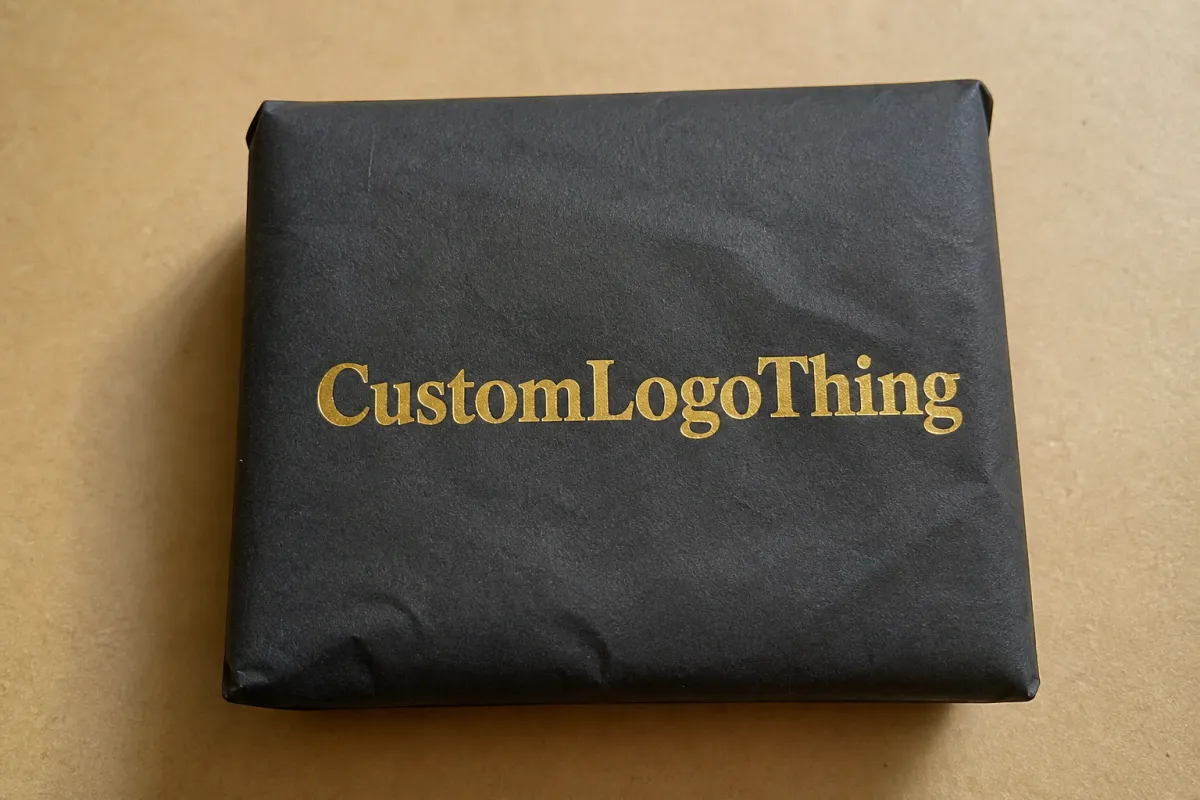
At a basic level, a hot foil label uses heat and pressure to transfer a metallic layer onto the label stock. The base can be paper, film, or a specialty substrate, but the visual punch comes from the foil transferring cleanly under controlled conditions. That is different from metallic ink, which can look shiny in a proof and oddly flat in hand. Real foil catches light at different angles. It has presence.
Buyers often register that feel before they read the brand name. A crisp logo, a reflective edge, or a metallic seal creates a fast premium signal. That is why a plain glass jar with a strong label can outsell a prettier container with a weak one. Packaging lives or dies in the first couple of seconds. Harsh, but accurate.
Custom hot foil labels tend to work best in these situations:
- Cosmetics and skincare where a clean metallic mark makes a small bottle feel more refined.
- Spirits and beverage bottles where foil signals quality, gifting, or a limited release.
- Specialty food like sauces, honey, chocolate, and jars that need retail punch without a full carton upgrade.
- Gift and seasonal packaging where the product needs to read special for a short window.
- Small-batch product packaging where the brand wants impact without printing a mountain of custom printed boxes.
Foil is not the right answer for every job. If the product ships mostly through e-commerce, lives in a plain mailer, or competes on price instead of visual drama, a high-quality digital label or a standard print finish can be the smarter buy. No medal for overspending just because a supplier can quote it.
The best use of custom hot foil labels is specific: put a premium cue where the customer looks first, then keep the rest of the spec clean. That usually delivers strong shelf impact without turning a routine label job into a budget leak.
How Custom Hot Foil Labels Are Made
The production path is not mysterious. It just has a few places where good intentions get flattened. Typical steps include artwork prep, tooling, foil selection, stamping or transfer, finishing, and inspection. Miss one of those pieces and the label can still look fine in a PDF while failing in the real world. Packaging loves that trick.
Hot Foil Stamping Versus Metallic Print
Hot foil stamping uses heat and pressure to transfer metallic material from a carrier film onto the label face. Metallic digital print, by contrast, imitates shine with ink or toner. Both can work. They do not look or feel the same. Hot foil usually has a cleaner edge and a more reflective surface. Metallic print is often faster and cheaper for very small runs or variable artwork, but it can feel flatter and less tactile.
Cold foil sits in the same family, but it uses adhesive and UV curing instead of heat. That can fit certain long-run workflows and print line setups. If a supplier says "foil" and does not explain the process, ask. You are not buying a mood board. You are buying a manufacturing method with real consequences for cost, turnaround, and finish quality.
What Sits Under the Shine
A finished label usually has four parts: the face stock, the adhesive, the liner, and the metallic layer that creates the foil effect. The face stock can be coated paper, uncoated paper, polypropylene, PET, or another specialty material. The adhesive can be permanent, removable, freezer-grade, or high-tack depending on the package and the environment. The liner exists so the label dispenses cleanly during application.
Registration matters more than people expect. A foil logo that lands half a millimeter off can make the whole label feel wrong, even if the rest of the art is solid. Fine type below about 4 pt can also become risky, especially on textured stock or rough papers. If the foil area includes thin lines, ask for a real proof or an exact sample on the actual stock. PDF confidence is cheap.
Supplier workflow can vary a lot. Roll labels are common for automated or semi-automated application. Sheet labels are easier for hand application and small runs. Some suppliers can build specialty shapes with tight radii and custom cutlines, while others prefer simpler dies because they want the line to run cleanly. That is why the same design can quote very differently from one vendor to another.
If you are comparing suppliers, do not stop at "foil available." Ask how they handle die creation, what their minimum line width is, whether the foil is applied before or after die cutting, and how they inspect edge quality. Those are the details that separate a decent label from one that actually looks premium instead of merely expensive.
Custom Hot Foil Labels Pricing, MOQ, and Unit Cost
Pricing on custom hot foil labels depends on more than label size. The biggest drivers are dimensions, foil coverage, color count, shape complexity, substrate choice, finishing steps, and how much setup the supplier needs before the first usable label comes off the press. If you want a realistic quote, price the whole job. Not just the shiny part with the ego boost.
Here is the practical version. A simple one-foil label on a standard stock costs much less than a label with two foil tones, a complex cutline, and a specialty laminate. A small label with a modest foil mark may be efficient, while a large label with full-surface metallic treatment can push the price up fast. The dreaded "it depends" answer is annoying, but in this category it is honest.
MOQ, or minimum order quantity, matters because tooling and setup have to be spread across the run. A first order of 500 labels can carry a painful per-unit cost. The same design at 5,000 pieces usually gets much better economics because the fixed work gets diluted. Reorders are often cheaper still if the die and setup already exist.
Expect setup or tooling fees on many custom hot foil label jobs. A simple die might fall in the $75-$200 range. More complex or larger dies can land around $200-$350 or higher, depending on supplier, material, and stamping method. Unit prices can swing a lot too. For a roughly 2 x 3 inch label on standard stock, ballpark pricing might look like this:
| Run Size | Typical Use Case | Ballpark Unit Cost | Setup / Tooling | What It Means |
|---|---|---|---|---|
| 500-1,000 labels | Test launch, small batch, seasonal run | $0.45-$1.25 | $75-$250+ | Good for sampling, rough for margin |
| 2,500-5,000 labels | Growing SKU, limited retail release | $0.14-$0.40 | $75-$350+ | Usually the sweet spot for many brands |
| 10,000+ labels | Stable volume, multi-store rollout | $0.07-$0.22 | Often lower per piece | Better economics if inventory turns fast |
Those numbers are a working range, not a promise. A label with full foil coverage, specialty paper, or a difficult adhesive can sit higher. A simpler shape on a standard roll can sit lower. Freight, proof charges, and rerun fees can also change the real landed cost, which is the number that matters if you are trying to protect margin on retail packaging.
Compare the economics of two common jobs. A single-foil label with one standard die is often a sensible way to improve package branding without touching the rest of the design. A multi-finish label with foil, embossing, and a specialty laminate may look gorgeous, but it can quickly climb into territory where packaging costs start chewing on product margin. Fine if the SKU supports it. Bad news if it does not.
Ask suppliers for a quote that breaks out the following items:
- Unit price by quantity tier
- Setup charge and tooling fee
- Minimum order quantity
- Freight or shipping estimate
- Proof fees and sampling charges
- Rerun cost for repeat orders
If a vendor gives you one lump number, keep digging. A clean quote is easier to compare, and a bad one usually hides something in the footnotes.
Production Steps, Timeline, and Lead Time
A good order moves through a predictable chain: brief, artwork, proof, approval, production, finishing, packing, and shipment. Trouble starts when one of those steps is vague or rushed. Custom hot foil labels are not unusually slow by packaging standards, but they do have more places to stall than a simple stock label.
First-time jobs almost always take longer than repeat runs. Normal. New artwork may need dieline correction. The foil area may need line weight adjustments. The supplier may need to create or verify tooling. If the label will be applied by hand, they may also need to confirm sheet format rather than roll format. None of this is dramatic. It is just the part of packaging design nobody notices until the deadline is breathing down their neck.
Typical lead times vary, but a practical planning range is often 12-15 business days after proof approval for a straightforward repeat order, and 15-25 business days or more for a new custom run with tooling, special finishes, or sample revisions. Rush work can be shorter, but it usually costs more and leaves less room for corrections. Expedited packaging feels expensive because it is expensive.
The common delay points are boring in the way all expensive mistakes are boring:
- Missing or incorrect dielines
- Late proof approvals
- Changes to foil color after sampling
- Unclear application specs for roll or sheet format
- Artwork revisions after tooling has already started
If the product launch date is fixed, build a buffer. Not a decorative buffer. A real one. Three extra business days can save a launch if the proof comes back with a registration issue. A week is better if the order involves multiple SKUs or a new adhesive. Packaging delays love showing up right before the one day you cannot afford them.
For teams building out broader product packaging, it helps to think about labels and cartons together. A label line and a carton line should not fight each other visually. If the foil treatment is doing the premium work on the bottle, the cartons can stay simpler. If the box already carries the brand story, the label can be more restrained. That coordination usually improves shelf logic and keeps the budget from wandering off.
If you need a transit test benchmark for shipped goods, the testing profiles published by the International Safe Transit Association are a useful reference. The label is only one part of the package system, but shipping can still expose weak adhesive, scuff-prone finishes, or a container that does not fit the label design well.
Key Factors That Change Look, Durability, and Adhesion
The visual result of custom hot foil labels depends heavily on what the label touches. A foil logo on glass behaves differently from the same logo on a textured paper carton. So does a label on a smooth PET bottle versus a curved jar with a seam, a shoulder, or a condensation problem. There is no universal "best" stock. There is only the best stock for the application.
Substrate is the first big variable. Glass gives a clean look and usually allows strong contrast. Coated paper can be economical and holds detail well. Film stocks such as BOPP and PET are often better for moisture resistance, fridge storage, and products that get handled a lot. Textured papers look premium in a very specific way, but they can soften fine foil edges and make tiny typography harder to read.
Foil finish changes the mood of the package. Mirror metallics look bright and sharp. Matte metallics feel more restrained and modern. Gold reads more traditional. Silver is cleaner and tends to work across more categories. Specialty tones, including copper, rose-gold, black metallic, and holographic accents, can work when they support the brand instead of turning the label into a magic trick nobody asked for. The goal is not to show every trick in the drawer. It is to make the package feel intentional.
Adhesive is where a lot of orders quietly go sideways. A permanent adhesive on a dry, flat glass jar can perform well. The same adhesive can struggle on oily surfaces, soft-touch coatings, or cold-pack applications with condensation. Freezer-grade products need different adhesive behavior than room-temperature goods. Curved containers and narrow shoulders can also stress a label if the facestock is too stiff.
Flat Stock Versus Curved Containers
Small containers are unforgiving. A label that looks perfect on a flat proof may wrinkle or lift on a tight curve if the material cannot conform cleanly. That is especially true for thin or highly reflective foil areas, because any wrinkle shows up fast. If the container has a strong radius, ask the supplier whether the stock and adhesive are rated for curved application. A tiny mismatch there can turn a premium label into a return problem.
Environment matters too. Heat in transit can affect adhesive grab. Refrigeration can cause condensation. Frequent handling can scuff foil if the laminate or topcoat is wrong. If the product ships in secondary packaging, the outer package should be considered too. A label that rubs against a liner or another carton in the shipper can lose its edge before it reaches the retailer.
For paper-based stock, ask whether the material is FSC-certified if that matters to your sourcing policy or retailer requirements. The Forest Stewardship Council is a common reference point for responsible paper sourcing. That does not change the visual result, but it matters for procurement teams that track material claims carefully.
One more practical point: the label surface should match the brand story. A luxury cream line might want softer foil, muted contrast, and a cleaner margin. A craft spirit or limited-edition gift item may want stronger shine and more visual drama. Both are valid. Bad results usually come from using the wrong finish for the category, not from the finish itself.
Common Mistakes When Ordering Custom Hot Foil Labels
The first mistake is treating the digital proof like the final product. It is not. A screen proof can show layout, text, and basic foil placement, but it cannot fully show how metallic sheen will shift under room light, store lighting, or a customer's hand. Approving a proof without seeing the stock and foil behavior in person is how buyers get surprised later.
The second mistake is choosing the wrong adhesive for the container and then acting shocked when the label lifts. This happens constantly. The product may be refrigerated, exposed to oil, washed, or stored on a textured surface, yet the spec sheet still says "standard adhesive" because nobody asked better questions. That is not a label failure. That is a buying failure.
Vague specs cause trouble too. If the supplier does not know the exact size, quantity, finish, application method, and substrate, the quote is basically a guess with better formatting. A blurry spec can also create hidden cost later if the first run needs a reprint or rerun. Clarity saves money because it stops the manufacturing team from filling in blanks with their own assumptions.
Overcomplicating the first order is a classic mistake. Too many SKUs. Too many foil colors. Too many variations in size and shape. It looks clever in a deck and painful in production. If the brand is new or the artwork is still settling, keep the first order simple enough to verify. Once the core label works, expand the system. That is a much saner way to build branded packaging.
Rushing without a buffer is the last big one. A tight schedule can force higher freight charges, fewer proof rounds, and less room to catch errors. Buyers sometimes think they are saving time by compressing the timeline, then spend more fixing preventable issues. The cheapest schedule is usually the one that gives production enough breathing room to do its job correctly.
Here is a short rule that saves people money: if you cannot explain the label in one sentence, the supplier probably cannot quote it accurately either. Good packaging design is not about asking for more. It is about asking for the right few things clearly.
Expert Tips and Next Steps Before You Order
Start with samples on the actual stock. Not a generic foil swatch. Not a random sample card that looks vaguely similar. Actual stock. Foil changes character depending on paper tone, coating, texture, and adhesive. A gold foil on bright white paper can feel loud. The same gold on a warm cream stock can feel calmer and more expensive. That difference matters more than many buyers expect.
Standardize wherever you can. If multiple SKUs can share the same label size, do it. If two foil colors are enough, do not invent a third just because the mood board got ambitious. The more a brand can repeat dimensions and finish language, the easier it is to manage cost, forecast inventory, and keep package branding consistent across a line.
Before you contact a supplier, gather the information that actually matters:
- Artwork in a usable file format
- Finished size and cut shape
- Quantity and any tiered forecast
- Foil color and finish preference
- Substrate and adhesive need
- Container surface and application method
- Target ship date and launch date
Compare at least two or three quotes. That is not paranoia. That is buying hygiene. A low quote may be missing setup fees, freight, or proof charges. A higher quote may include better substrate options, cleaner registration, or a realistic timeline. The point is to compare landed cost and not just the headline number.
If you are still choosing between foil labels, a simpler printed label, or a carton-led presentation, look at the full package system. For some brands, a smarter label is enough. For others, the right move is to balance labels with Custom Packaging Products so the whole presentation feels coherent. That can include the label, the box, the insert, and the outer shipper all speaking the same visual language.
One buyer habit pays off over and over: keep a basic spec sheet for every SKU. Record the stock, adhesive, foil color, size, and approved supplier notes. The next reorder will move faster, and the next team member will not have to reverse-engineer what happened last time.
If your launch depends on shelf impact, custom hot foil labels are still one of the cleanest ways to add perceived value without rebuilding the whole package. Get the sample right, lock the spec, and do not let a vague proof talk you into a bad order. Before you place the order, confirm three things in writing: the exact stock, the adhesive choice, and the approval sample on the real container. That one step catches most expensive mistakes.
FAQ
What are custom hot foil labels made of?
They usually combine a printable face stock, a metallic foil layer, an adhesive, and a liner for application. The foil finish is transferred with heat and pressure, which is why it tends to look sharper than a flat metallic print. The final feel depends on the base material, adhesive strength, and how much foil coverage the label uses.
Are custom hot foil labels better than metallic digital labels?
Hot foil usually wins when the goal is a stronger premium feel, crisp shine, and a more tactile finish. Metallic digital labels can be cheaper and faster for very small runs or variable artwork. If shelf impact matters more than pure speed, hot foil is often the better tradeoff.
What details do I need for an accurate quote on custom hot foil labels?
Share the size, shape, quantity, foil color, substrate, adhesive needs, and whether the labels will be roll or sheet applied. Include where the labels will be used, such as glass, plastic, refrigerated packaging, or textured stock. Add your target timeline so the supplier can price standard production versus a rush schedule.
How long do custom hot foil labels usually take?
Lead time depends on whether tooling is already available and how fast proofs are approved. Simple repeat orders move faster than new jobs with custom shapes, new foil colors, or special finishes. If the launch date matters, build in extra time for revisions, sampling, and freight.
What MOQ makes sense for custom hot foil labels?
The right MOQ depends on setup costs, how many SKUs you are running, and how much inventory you can realistically use. Lower MOQs are useful for testing, but the unit cost is usually higher. Ask for tiered pricing so you can compare small-run flexibility against better long-run economics, then choose the order size that fits your cash flow and the product cycle for your custom hot foil labels.

