Buyer Fit Snapshot
| Best fit | Custom Instruction Card Inserts Wholesale for Brands projects where brand print, material claims, artwork control, MOQ, and repeat-order consistency need to be specified before quoting. |
|---|---|
| Quote inputs | Share finished size, material target, print colors, finish, packing count, annual reorder estimate, ship-to region, and any compliance wording. |
| Proofing check | Approve dieline scale, logo placement, barcode or warning zones, color tolerance, closure strength, and carton packing before bulk production. |
| Main risk | Vague material claims, crowded artwork, missing packing details, or unclear freight terms can make a low unit price expensive after revisions. |
Fast answer: Custom Instruction Card Inserts Wholesale for Brands should be specified like a repeatable production item. The safest quote records material, print method, finish, artwork proof, packing count, and reorder notes in one written spec.
Production checks before approval
Compare the actual filled-product size with the drawing, then confirm tolerance on folds, seals, hang holes, label areas, and retail display edges. Reserve space for logos, QR codes, warning copy, and material claims before decorative graphics fill the panel.
Quote comparison points
Review material grade, print process, finish, sampling route, tooling charges, carton quantity, and freight assumptions side by side. A quote is only useful when the supplier can repeat the same color, closure quality, and packing count on the next order.
Custom instruction card inserts wholesale tends to look like a small line item right up until the first shipment reaches a customer and the insert does exactly what it was supposed to do. The product opens cleanly, the steps make sense, the care note is easy to follow, and the buyer moves through the experience without guessing. That kind of clarity matters. A well-made insert sits inside the package, but it also steadies the whole transaction by making the product feel organized, thoughtful, and ready to use.
Most packaging trouble starts with small gaps rather than dramatic failures. A step gets skipped, a diagram is too cramped, a warning note hides in fine print, or a QR code sends the customer to a page that does not answer the question they actually have. Custom instruction card inserts wholesale helps close those gaps before they become returns, complaints, or customer service tickets. A clear card can make assembly easier, care simpler, and product use less stressful, which is why it belongs in the same planning conversation as product packaging and package branding.
Buyers comparing suppliers should look beyond appearance alone. The better question is whether custom instruction card inserts wholesale is sized, printed, and finished around the real life of the product: how it opens, how it is handled, how it is stored, and how the buyer will use it once the box is out of the mailer. That is a practical packaging decision, and it deserves the same attention as the carton, sleeve, or label that carries the rest of the brand.
A good instruction card does one quiet job very well: it keeps the product from turning into a support call.
Why Custom Instruction Card Inserts Wholesale Matter
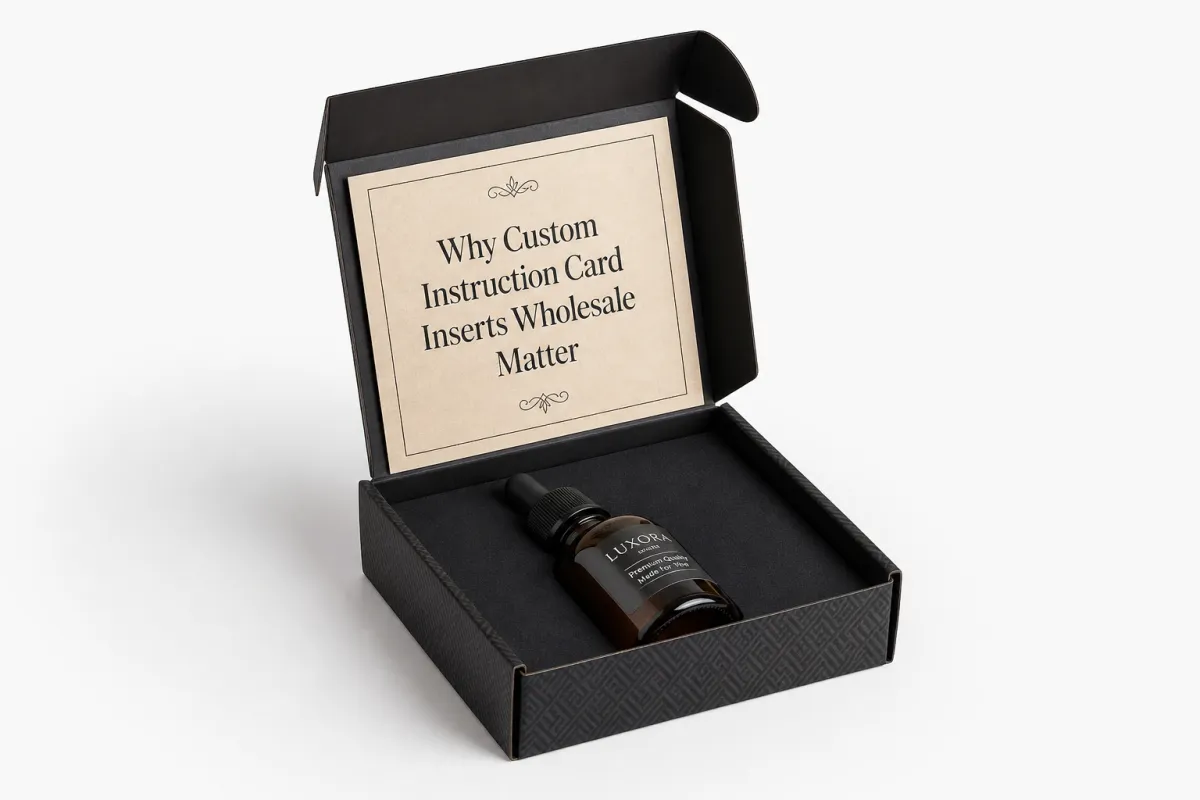
Brands order custom instruction card inserts wholesale for a simple reason: unclear instructions cost money. A well-made product can still create friction if the setup steps are hidden, the care note is hard to read, or the safety information is too small to follow quickly. Those problems do not always show up at the Point of Sale. They surface later as emails, returns, and reviews that blame the packaging experience just as much as the product itself.
For a packaging buyer, custom instruction card inserts wholesale is a useful control point. It gives the customer a clean path through assembly, setup, maintenance, or use. For subscription kits, it can frame the contents and explain the order of the items. For retail packaging, it can reinforce brand voice while giving the buyer something useful to keep nearby. The insert becomes part of the experience, not a loose sheet dropped into the carton at the last second.
There is also a branding layer that gets missed more often than it should. A card that matches the carton, sleeve, or mailer helps the entire package feel like one system instead of a collection of separate parts. That effect is strongest when the insert is built alongside custom printed boxes, labels, and other packaging pieces that share the same color palette, type choices, and visual rhythm. Custom instruction card inserts wholesale can make retail packaging feel more deliberate without adding much cost.
I have seen more than a few brands underprice this component because the paper count looks small. The sheet is light, but the impact can be large. A card that prevents a handful of support conversations already pays for itself in a meaningful way. A card that helps the buyer understand the product on the first read removes friction from the whole journey. That is why custom instruction card inserts wholesale should be planned with the same care as the box and the outer label.
Another practical benefit sits in the content itself. Insert language can hold warnings, warranty notes, assembly order, or care reminders without crowding the exterior design. That lets the front of the package stay clean while the buyer still gets the detail they need. For many brands, that balance is the main reason custom instruction card inserts wholesale stays such a reliable packaging choice.
And honestly, a card that is built well tends to disappear in the best way. Nobody calls to praise an instruction sheet that simply worked, but they will absolutely notice one that was too dense, too flimsy, or missing the one detail they needed. That is the kind of quiet failure you want to avoid in packaging work.
Custom Instruction Card Inserts Wholesale: Formats and Materials
Custom instruction card inserts wholesale comes in a few common formats, and each one fits a different amount of information. Flat cards work well for short setup notes, care reminders, or a single QR code. Folded cards create more space without taking up much more room in the package. Multi-panel inserts suit products that need sequential steps, multiple languages, or separate sections for setup, use, and care.
For larger product systems, a folded sheet or booklet-style insert can sit neatly inside a carton without feeling bulky. That matters in branded packaging programs that already use printed sleeves, tissue, or molded dunnage. The insert should match the rest of the packout. Tight cartons often need a smaller finished size or a lighter sheet. Packages that open wide and are meant to stay in the home may benefit from a heavier stock that feels worth keeping.
Paper choice carries more weight than many buyers expect. Coated stock usually fits inserts that need crisp graphics, strong color, and a polished surface that matches other packaging design elements. Uncoated stock suits inserts that should feel natural or allow handwritten notes. Heavier cover stock adds stiffness and gives the piece a more premium hand feel, which works well for higher-end package branding. Lighter paper can make sense when cost matters most and the card does not need to survive repeated handling.
Finishing should follow function, not just appearance. Matte lamination cuts glare and helps the copy stay readable under bright lighting. Aqueous coating adds protection without giving the card a plastic feel. Rounded corners help when the insert will be handled often or removed from a tray more than once. With custom instruction card inserts wholesale, these small details change how the card feels in the hand and how long it stays useful.
Layout choices matter just as much as stock. Double-sided cards keep the front uncluttered while reserving the back for detailed steps or legal text. A step-by-step sheet works well for assembly. A fold-out card suits a sequence that includes setup, use, care, and storage. The best format is the one that fits the message, the package, and the amount of time a customer is willing to spend reading it. That is the point of custom instruction card inserts wholesale: the printed piece should support the product instead of fighting for space inside the box.
If sustainability sits in the buying brief, ask early about recycled fiber content or FSC-certified paper options. The FSC system is widely recognized for responsible forest sourcing, and it gives brands a clear way to talk about paper origin. Transit performance matters too. Inserts that travel through vibration, compression, and repeated handling need to hold up in the same environment as the rest of the package. That is where structure and material choice meet the practical side of custom instruction card inserts wholesale.
Specifications That Control Fit, Readability, and Cost
The cleanest way to quote custom instruction card inserts wholesale is to define the specs before production begins. Start with finished size, then folded size if the card folds. After that, list stock thickness, print sides, ink colors, coating, and any special cuts or perforations. If the job includes a QR code, language versions, or variable copy for different SKUs, those details need to be settled before proofing because they affect both layout and cost.
Readability deserves just as much attention as physical fit. A card can fit inside the box and still fail if the type is tiny, the contrast is weak, or the paragraphs are packed too tightly. Strong custom instruction card inserts wholesale usually relies on white space, short step lines, and a clear type hierarchy. Numbered steps are easier to scan than dense paragraphs. Icons help when they support the text rather than replace it. For retail use, the hierarchy should stay strong enough to work quickly in a busy setting or under harsh lighting.
Language planning can change the layout more than buyers expect. Some brands use one panel per language. Others use short repeated lines and icons to save space. Products sold into multiple markets may need separate versions instead of one crowded sheet. That is not always necessary, but it is worth checking early. Custom instruction card inserts wholesale should be built around the actual customer base, not a generic template carried over from another job.
Scannable support links are common now. A QR code can lead customers to setup videos, warranty registration, or care pages, which helps when the printed surface has limited space. The code should not replace the essential steps on the card, though. Printed instructions still matter because many buyers want the answer in front of them right away. For custom instruction card inserts wholesale, the safest approach is to treat the QR code as a secondary path, not the main one.
Tighter specs usually raise cost. Heavy ink coverage adds press time. Special folding creates extra finishing steps. A die-cut shape needs tooling. Multiple versions for separate product lines multiply setup work. None of that makes the job unmanageable, but it does mean pricing will reflect complexity. If the card needs a premium feel, exact folds, and strong print coverage, custom instruction card inserts wholesale will cost more than a simple black-and-white sheet on standard stock.
There is a tradeoff here that buyers sometimes underestimate: the most attractive option is not always the best one if the insert has to be handled repeatedly. A soft-touch coating may feel nice, but if it increases glare or muddies a small typeface, it has done the job no favors. The spec needs to match how the customer actually reads and uses the piece, not just how it looks on a sample board.
Pricing and MOQ for Custom Instruction Card Inserts Wholesale
Pricing for custom instruction card inserts wholesale comes down to quantity, size, number of print colors, stock choice, finishing, and whether the order uses one design or several versions. Jobs that stay close to a standard flat sheet with limited coverage are easier to keep efficient. Jobs that need folding, custom die work, or premium coating move higher because every added step takes time and setup.
Setup costs can matter just as much as the paper itself on smaller runs. That is why minimum order quantity often reflects material yield and machine prep rather than an arbitrary sales target. A simple flat card may allow more flexibility. A folded insert or a piece with several SKUs usually carries a higher economic floor because the press and finishing line still need to be prepared. Custom instruction card inserts wholesale tends to reward brands that standardize a few core sizes and artwork structures.
Here is a practical comparison of common order types and what usually pushes cost up or down:
| Insert Type | Typical Use | Common Wholesale Range | Cost Drivers |
|---|---|---|---|
| Flat card, one side | Short setup notes, QR code, care reminder | $0.10-$0.24 per unit at 5,000 pieces | Stock choice, ink coverage, coating |
| Flat card, two sides | Setup on one side, care on the other | $0.14-$0.30 per unit at 5,000 pieces | Print coverage, color count, proofing |
| Folded card | Longer instructions, multi-step use | $0.18-$0.38 per unit at 5,000 pieces | Folding, registration, finish type |
| Multi-panel insert | Multiple languages or detailed product guidance | $0.22-$0.55 per unit at 5,000 pieces | Panel count, layout complexity, finishing |
These figures are planning ranges, not fixed rates, because every job brings its own setup and finishing profile. A buyer requesting custom instruction card inserts wholesale should compare quotes with the same finished size, stock, print coverage, and finishing notes. If one supplier includes proofing, folding, and delivery prep while another quotes print only, the lower number may not be the lower total cost.
A disciplined quote request saves time. Give each supplier the same finished size, folded size, quantity, print side count, and file status. If the artwork is final, say so. If a revised proof will be needed after copy changes, say that too. With custom instruction card inserts wholesale, like-for-like comparisons are the only fair comparisons.
Recurring products often become more efficient because the setup work is already done. If the same insert format supports several products, the long-term cost can stay sensible. Brands that plan ahead often find that custom instruction card inserts wholesale becomes one of the more predictable parts of the packaging budget, especially compared with custom cartons or highly finished outer packaging.
If you are building a broader packaging program, it can make sense to review the assortment on Custom Packaging Products or discuss volume options through the Wholesale Programs page before placing the order. That keeps the insert aligned with the box, label, and other branded packaging pieces instead of treating each item as a separate decision.
Production Process and Timeline for Wholesale Orders
The production path for custom instruction card inserts wholesale is simple on paper, but every step depends on clear communication. It begins with artwork intake and spec confirmation. Then the supplier prepares a proof, the buyer reviews copy and layout, and production starts only after approval. After that comes printing, finishing, cutting or folding, packing, and shipment. Jobs that enter production with final copy and confirmed dimensions usually move faster than ones that need repeated revisions.
Most timeline problems trace back to missing details. A buyer may know the message but not the exact finished size. Artwork may be close but not prepared at final resolution. A QR code may still point to a temporary landing page. Those delays are common, and they can be avoided with a stronger prepress checklist. For custom instruction card inserts wholesale, the smoothest jobs are the ones where layout, dimensions, and copy are settled before the proof is issued.
Timelines also depend on print method and finishing. A simple sheet with limited coverage may move quickly. A folded insert, coated card, or die-cut shape adds time because each added step creates another checkpoint. If the insert needs to coordinate with custom printed boxes, sleeves, or labels, the schedule should leave room for alignment across all of those pieces. Package branding works best when each part arrives together rather than in separate waves.
For planning, many wholesale insert jobs take roughly 10-15 business days after proof approval, while more complex pieces can take longer if they require special finishing or multiple versions. That is a practical range, not a promise. Brands that need custom instruction card inserts wholesale for a launch or seasonal kit should build in extra time for copy review, testing, and shipment padding. The biggest mistake is waiting until the box is already moving.
Transit testing can matter too, especially if the insert must stay readable and intact after shipping. Products that travel long distances or experience rough handling may benefit from a check against packaging and transit standards such as those published by the ISTA community. Not every insert needs heavy engineering, but it helps to know whether the card will survive the same conditions as the rest of the package.
Why Choose Us for Custom Instruction Card Inserts Wholesale
Most buyers want more from a supplier than print capacity. They want someone who understands how the insert will behave once it is inside the package. That is the real value of working with a packaging partner that sees custom instruction card inserts wholesale as part of a larger system instead of a standalone print job. The card has to fit the product, fit the box, fit the fulfillment process, and still read cleanly when the customer opens the package at home.
Consistency matters just as much for reorders. Once a brand settles on an insert size and format that works, they want that same piece to come back the same way on future runs. Strong spec control, careful proofing, and dependable reorders are essential there. For custom instruction card inserts wholesale, the supplier should keep the basics stable so the buyer does not have to rethink layout decisions each time inventory needs to be replenished.
Fact-based guidance matters too. A good packaging partner should not recommend a heavier stock simply because it sounds premium, and should not push a finish that looks attractive but makes the text harder to read. Real packaging advice starts with function. If the customer needs a write-on surface, uncoated stock may be the better choice. If the insert will be scanned under bright light, matte finish may help. If the card belongs in premium retail packaging, a thicker board may make sense. That kind of guidance helps custom instruction card inserts wholesale work in the field, not just on a mockup.
Brands also value having one place where the packaging pieces can be aligned. If the insert needs to match carton color, mirror product naming, or carry compliance language alongside brand copy, it is easier when one supplier understands the full structure. That matters even more for businesses ordering custom instruction card inserts wholesale alongside mailers, labels, wraps, and other custom packaging products. The whole packaging system holds together better when the insert is designed with the rest of the kit.
Trust grows from clear measurements, confirmed artwork, and honest discussion about tradeoffs. If the buyer needs a low-cost sheet for a high-volume SKU, that should be stated plainly. If the product calls for a more substantial card because the instructions are safety-sensitive or the brand wants a richer hand feel, that should be stated too. A straightforward approach is what buyers should expect from custom instruction card inserts wholesale.
In my experience, the best wholesale relationships come from predictable production and plainspoken advice. No drama, no overpromising, just solid execution. That matters especially for inserts, because the work looks simple while the consequences of a bad spec are real. If the card is too small, too dense, or too light for the job, the customer notices right away. A well-planned custom instruction card inserts wholesale program avoids that problem before it starts.
Next Steps for Ordering Custom Instruction Card Inserts Wholesale
The fastest way to move a custom instruction card inserts wholesale order ahead is to gather the essentials before asking for a quote. Start with finished size, quantity, number of printed sides, stock preference, and any folding or coating needs. Then add the final copy, language requirements, and any QR code destinations. The cleaner the brief, the fewer back-and-forth emails you will need later.
It also helps to define the card’s job before choosing the layout. Is it meant to explain assembly, outline care, cover safety, or reinforce retail guidance? That answer should guide the design. A setup sheet should read differently from a warranty note. A care insert should feel different from a product story card. For custom instruction card inserts wholesale, purpose should lead the format, not the other way around.
If possible, send a reference pack or sample unit with the artwork. A physical example tells the supplier how much room the insert has, how it sits inside the box, and whether the folding assumption is correct. That small step can save time and prevent layout changes after proofing. It is one of the most useful habits a buyer can build when ordering custom instruction card inserts wholesale, especially if the product family includes more than one SKU or package size.
Here is a simple checklist that keeps the process tight:
- Finished size and folded size
- Quantity needed for the run
- Stock type and thickness
- Print sides and ink coverage
- Coating, lamination, or rounding needs
- Artwork files and final copy
- Language versions and QR code destination
- Sample pack or box dimensions, if available
That checklist is basic, but it solves a lot. It lets the supplier quote custom instruction card inserts wholesale accurately, match the insert to the package, and catch issues before production begins. It also makes reorders much simpler because the core decisions are already documented.
If your brand is planning a launch, a seasonal refresh, or a broader packaging update, send the specs and sample files together. That gets the quote, proof, and production steps moving without avoidable delays. With the right setup, custom instruction card inserts wholesale becomes a clean, repeatable part of the packaging program instead of a last-minute task that slows everything else down.
Frequently Asked Questions
What information do you need to quote custom instruction card inserts wholesale?
The starting points are finished size, quantity, and the number of printed sides. After that, stock choice, coatings, folding, special cuts, artwork files, and any language or QR code requirements help shape the quote for custom instruction card inserts wholesale and keep a second round of pricing changes from slowing things down.
Which paper stock works best for custom instruction card inserts wholesale?
Coated stock is a strong choice when the insert needs sharp graphics and strong contrast. Uncoated stock works well when the surface should feel natural or allow notes to be written by hand. Heavier cover stock adds stiffness and a more premium hand feel, which is often useful for custom instruction card inserts wholesale in retail or branded packaging programs.
Can custom instruction card inserts wholesale include multiple languages?
Yes, and many brands do exactly that. The layout should be planned early so each language stays readable and the design does not feel crowded. Multiple languages may change the size, folding style, and cost, so it is best to confirm the final copy before proofing your custom instruction card inserts wholesale order.
What affects the minimum order quantity for instruction card inserts?
MOQ is usually tied to setup time, material yield, and finishing requirements. Simple flat cards often allow lower quantities than folded or die-cut inserts. If you expect regular reorders, it can help to choose a quantity that supports the next production cycle for custom instruction card inserts wholesale without creating extra waste.
How long do custom instruction card inserts wholesale orders usually take?
Timelines depend on proof approval, print method, finishing, and order size. Clean files and final copy move the fastest because they reduce back-and-forth before production begins. If the insert has to match other packaging components, build in extra time for coordination and review so your custom instruction card inserts wholesale order stays on schedule.
Custom instruction card inserts wholesale works best when the insert is treated as a functional part of the package, not a decorative leftover. The right size, stock, finish, and wording can save support time, reduce confusion, and make the brand feel more organized from the moment the box opens. The practical takeaway is simple: define the insert’s job first, lock the dimensions and copy before proofing, and choose materials that match how the customer will read and handle the piece. That is how custom instruction card inserts wholesale becomes a dependable part of product packaging and a steady piece of the overall packaging system.

