Buyer Fit Snapshot
| Best fit | Custom Point of Sale Boxes projects where brand print, material claims, artwork control, MOQ, and repeat-order consistency need to be specified before quoting. |
|---|---|
| Quote inputs | Share finished size, material target, print colors, finish, packing count, annual reorder estimate, ship-to region, and any compliance wording. |
| Proofing check | Approve dieline scale, logo placement, barcode or warning zones, color tolerance, closure strength, and carton packing before bulk production. |
| Main risk | Vague material claims, crowded artwork, missing packing details, or unclear freight terms can make a low unit price expensive after revisions. |
Fast answer: Custom Point of Sale Boxes: Design, Cost, and Display should be specified like a repeatable production item. The safest quote records material, print method, finish, artwork proof, packing count, and reorder notes in one written spec.
Production checks before approval
Compare the actual filled-product size with the drawing, then confirm tolerance on folds, seals, hang holes, label areas, and retail display edges. Reserve space for logos, QR codes, warning copy, and material claims before decorative graphics fill the panel.
Quote comparison points
Review material grade, print process, finish, sampling route, tooling charges, carton quantity, and freight assumptions side by side. A quote is only useful when the supplier can repeat the same color, closure quality, and packing count on the next order.
At shelf level, custom point of sale boxes get a tiny window to prove they belong there. They still have to protect the product, survive handling, and look tidy after a cashier or merchandiser has touched them for the third time that day. That is why custom point of sale boxes are never just a print job. They are a packaging design decision, a retail packaging decision, and a brand presentation decision all at once.
From a packaging buyer's point of view, that matters because one weak detail can spoil the whole display. Clean graphics help. So does the tuck style, the board grade, the insert, and the way the box stacks when a store team pulls it out of a case. If the structure fails, the shelf story fails with it. Pretty simple, really.
What Are Custom Point of Sale Boxes?
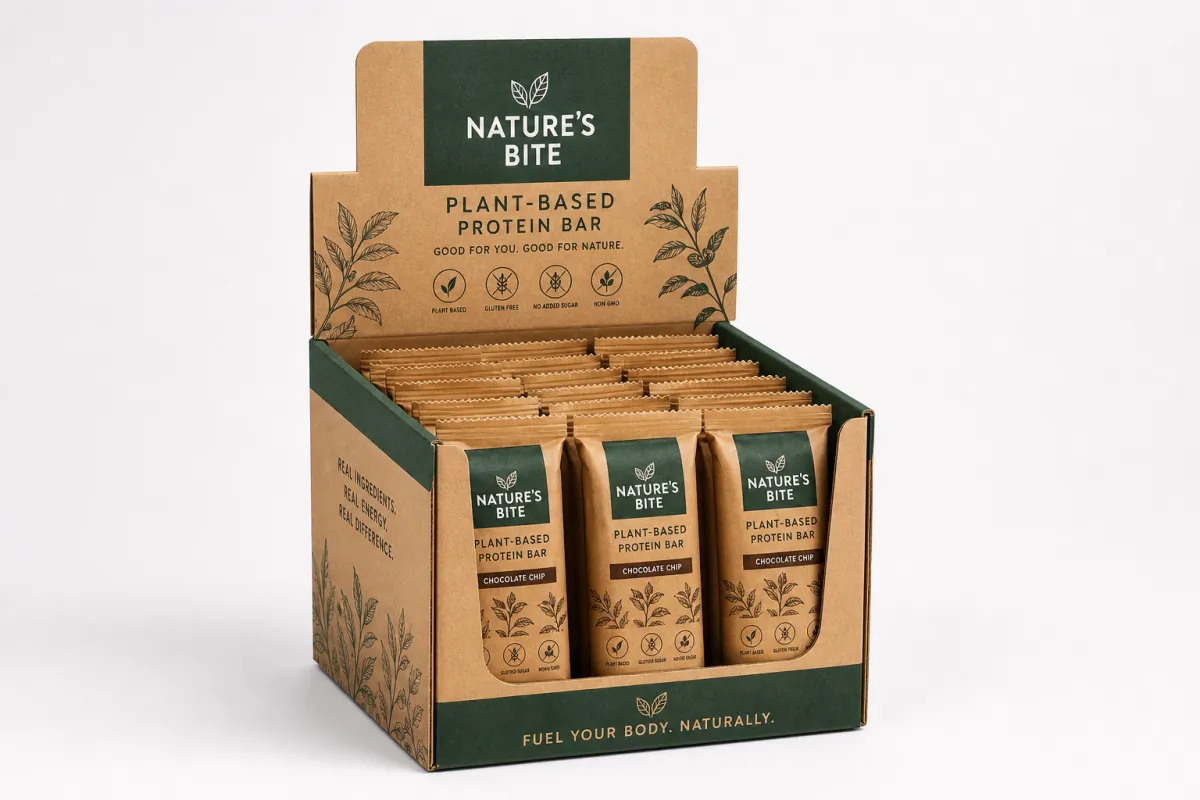
Custom point of sale boxes are packaging formats built for the buying moment, where product visibility and convenience matter as much as protection. Plain English version: they do more than hold an item. They help sell it. That sounds simple enough, but the job is not simple at all. Custom point of sale boxes have to work as product packaging, display packaging, and sometimes shipping packaging at the same time.
The term covers a wide spread of structures. Some custom point of sale boxes are shelf-ready trays that arrive in store, open along a perforated front, and let staff place them directly on a shelf. Others are counter displays that sit beside a register and hold fast-moving items like cosmetics, battery packs, lip balms, or travel-size accessories. The same idea can also show up as compact promotional cartons, clipped-top cartons, or branded tray-and-lid sets that create a clean block of product in a tight retail footprint.
What ties these formats together is the retail function. A standard shipping carton protects a product in transit, but custom point of sale boxes need a stronger visual job. They need to tell the brand story quickly, keep product upright, and make the store look organized instead of cluttered. In that sense, custom point of sale boxes sit at the overlap of Custom Printed Boxes and branded packaging, where structure matters just as much as artwork.
I have seen buyers get pulled in by a mockup that looked perfect on screen and then fall a little in love with the wrong thing. Fluorescent light, narrow aisles, repeated handling, and mixed SKU sets all affect the box. A design that looks polished in a render can turn awkward once it is loaded, stacked, and replenished. That is why custom point of sale boxes need to be planned with the shelf, the staff workflow, and the customer angle in mind from the start.
One useful way to think about them is this: custom point of sale boxes turn a product from inventory into a retail decision. They create a small stage. The stage can be simple, but it has to be deliberate.
How Custom Point of Sale Boxes Work in Retail
In retail, custom point of sale boxes usually move through a chain of events that starts in the warehouse and ends with a shopper making a quick choice. The outer shipper, the opening style, the printed face, and the pack count all affect how fast a store team can get the product onto the floor. If the box opens cleanly and stocks easily, it saves time. If it is awkward, the product may still sell, but the store team will probably dislike it and handle it less carefully.
That workflow is one reason custom point of sale boxes are often built as shelf-ready packaging. The box comes in flat or in a protected master case, then opens into a display that looks intentional instead of temporary. In a busy store, that matters because staff do not want to spend ten minutes repacking a tiny promotion. They want something they can pull, open, place, and face fast.
Different features change the customer experience too. A die-cut window can show the actual product color. A tear-away front can improve access for replenishment. Locking tabs can keep a display tray rigid on the shelf. Internal dividers can stop bottles, tubes, or blister-packed items from leaning. These details may look small on a spec sheet, but custom point of sale boxes live or die by small details.
Common placements include checkout counters, aisle endcaps, pharmacy shelves, gift areas, and seasonal promotions near entrances. That is where custom point of sale boxes do their best work because the shopper is already in decision mode. A bright, well-structured display can lift a product above the noise of the aisle without demanding a huge footprint.
A box that looks good online but slows the store team down is not truly retail-friendly packaging. Good custom point of sale boxes feel almost invisible to staff because the structure supports the workflow instead of fighting it.
There is also a quiet merchandising advantage. When a shelf looks tidy, customers tend to trust the assortment more. That is one reason custom point of sale boxes work so well for smaller promotions. They make a few units look like a proper feature, not leftover stock. That sense of order is often the difference between a product that sits and a product that gets picked up.
Key Factors That Shape the Right Box
The right structure starts with the product itself. Weight, shape, fragility, and pack count all change the design. Lightweight cosmetics may work in 14pt or 16pt paperboard, while heavier multipacks or items that move through harsher handling may need corrugated board, often E-flute for a cleaner retail face or B-flute when more crush resistance is needed. Custom point of sale boxes are only as useful as the load they can carry without bowing, splitting, or leaning.
Size matters just as much. If the box footprint is too wide, it wastes shelf space. If it is too narrow, product can tip or the store team may struggle to stock it cleanly. A good packaging designer will look at the actual retail planogram, not just the product carton dimensions. That matters even more for custom point of sale boxes used beside registers or in narrow aisle fixtures, where every extra inch changes the display's usefulness.
Material choice has to support both print and performance. Paperboard is often the cleanest option for premium graphics, especially when the goal is polished package branding with crisp type, solids, and strong color fields. Corrugated board gives more protection and better rigidity for heavier items or longer distribution chains. Add-ons such as aqueous coating, matte or gloss varnish, soft-touch lamination, and windows can improve durability or presentation, but each one changes cost and finishing time. Custom point of sale boxes should be chosen for the job, not for the catalog photo.
Branding changes the structure too. A natural product line may need muted inks, recyclable paperboard, and a restrained shelf presence. A value-oriented brand may need bold color, larger copy, and a front panel that reads clearly from several feet away. A premium line may need heavier board, foil, embossing, or spot UV, but even then the box still has to serve the store. That balance between shelf appeal and operational fit is where custom point of sale boxes either feel thoughtful or feel overworked.
| Material / Structure | Best Use | Typical Strength | Planning Range Per Unit at Larger Runs |
|---|---|---|---|
| 14pt-16pt paperboard | Light retail items, cosmetics, small accessories | Clean print, light weight, good folding behavior | $0.18-$0.35 |
| 18pt-24pt SBS or C1S board | Premium presentation and stronger shelf presence | Better stiffness, sharper graphics, better feel | $0.28-$0.55 |
| E-flute corrugated | Shelf-ready packaging, heavier contents, display trays | Improved crush resistance with retail-friendly print face | $0.42-$0.95 |
| Rigid board with insert | High-end presentation or gift-style merchandising | Strong structure, premium perception, more assembly | $1.20-$2.80 |
Those numbers are broad planning ranges, not quotes. Still, they help buyers see why custom point of sale boxes can move from manageable to expensive as soon as the design gets more structural, more decorated, or more labor-heavy. If a supplier also has to create custom inserts, special locking features, or a laminated finish, the price will move with it.
For sourcing decisions that involve paper certification, it is worth reviewing FSC certification guidance and confirming what chain-of-custody claims a printer can actually support. For transport and distribution concerns, the ISTA testing framework is useful when the box needs to survive warehouse handling or parcel shipping before it reaches the shelf.
If you are comparing formats and need a practical starting point, our Custom Packaging Products page is a useful place to see how different structures can translate into retail packaging. The point is not to overcomplicate the spec. The point is to match the board, print, and structure to the real environment where the box will live.
Custom Point of Sale Boxes: Cost and Pricing Factors
Pricing for custom point of sale boxes is shaped by several moving parts, not one neat number. The biggest drivers are size, quantity, board thickness, print coverage, finishing, and structure. A small flat carton with one-color print is usually easy to produce. A complex display with a die-cut front, specialty coating, and insert pieces will cost more because it takes more material, more setup, and more labor to finish properly.
Short runs nearly always carry a higher per-unit cost. Press setup, die creation, and prepress work have to be spread across fewer boxes. Larger runs lower the unit cost because those fixed expenses get absorbed more efficiently. For many buyers, the real question is not "How cheap can custom point of sale boxes be?" but "What quantity gives me a fair unit cost without overcommitting inventory?"
Print complexity matters too. Full-coverage graphics, multiple spot colors, foil, embossing, and specialty varnishes all add cost. So do Custom Die Cuts, windows, perforations, and reinforced features that make the display easier to stock. If a design includes a glued insert or a hand-assembled tray, labor becomes part of the conversation very quickly. That is why custom point of sale boxes should be quoted as a system, not as a flat carton with decoration layered on top.
Here is a practical way to compare quotes fairly. Ask what is included in the unit price and what is separate. Some suppliers include design support, dieline creation, proofing, and freight. Others quote the box only and then add plates, tools, shipping, or assembly later. When the numbers look different, custom point of sale boxes may not actually be different at all. The quote may just be structured differently.
It also helps to ask about retail readiness. Are the boxes shipped flat? Are they pre-formed? Do they need manual folding? Are inserts packed separately? Each answer affects both cost and rollout labor. A box that saves a few cents in manufacturing but adds five minutes of store labor is not always the better buy. In practice, the cheapest-looking quote is often the most expensive option once all the work is counted.
For buyers who want a rough planning range, a simple paperboard custom point of sale box run in the low thousands may land around $0.35-$0.85 per unit depending on size and print coverage. A more structured display tray with corrugated board and stronger finishing can sit higher, often in the $0.60-$1.25 range. Premium builds with special finishes can go above that quickly. Custom point of sale boxes are price-sensitive, but they are also performance-sensitive, and those two realities need to be balanced together.
One practical test is to ask whether the added finish changes sales behavior or just improves appearance. If the answer is only appearance, the finish may still be worth it for a premium product. If the answer is both appearance and sell-through, the case gets stronger. If there is no sales or handling benefit, the budget is probably better spent on clearer graphics, better structure, or more units on the floor.
For brands building a broader packaging program, the broader Custom Packaging Products catalog can help you compare how display packaging, shipping packaging, and branded packaging fit together. That matters because custom point of sale boxes should usually sit inside a larger packaging system, not operate as a one-off exception.
Custom Point of Sale Boxes Production Process and Timeline
The production path usually starts with discovery. Someone defines the product dimensions, weight, retail location, target quantity, and display goal. That information becomes the foundation for the dieline, which is the structural map of the box. Without a clear dieline, custom point of sale boxes can drift into guesswork, and guesswork is where most production headaches begin.
After the structure comes artwork prep. Graphics need enough bleed, safe margins, readable type sizes, and correct color expectations for the chosen print method. A box going on a small counter display needs different layout discipline than a larger shelf tray, because the shopper may view it from a very short distance and at a steep angle. Custom point of sale boxes often fail visually not because the art is bad, but because the art was not designed for the real viewing distance.
Proofing and sample approval are the most valuable checkpoints in the process. A digital proof can catch layout issues, but it will not reveal how a tab folds or whether the product sits too high in the tray. A physical sample, especially for structural work, is often worth the extra time. If the box has to fold in a specific way, hold a fragile item, or present a logo perfectly at eye level, a sample makes the difference between confidence and surprise.
Timelines vary, but a simple custom point of sale boxes project often takes around 10-15 business days after artwork approval, with more complex structures moving into the 15-25 business day range or beyond. If the job needs structural revisions, specialty finishes, or multiple approval rounds, that timeline expands. Freight time also matters, especially if the rollout is tied to a store launch or seasonal reset.
It is smart to plan for approval lag too. A clean production schedule can still stall if the brand team, sales team, and retail operations team all need to sign off. That is a common bottleneck. The box might be ready from a production standpoint, but the launch is not ready from a business standpoint. Custom point of sale boxes work best when everyone knows who approves structure, who approves graphics, and who confirms the retail rollout date.
If the box must survive transit through distribution, ask whether the design has been checked against relevant test methods or at least a rough handling plan. ISTA methods are often referenced for that reason. Not every retail box needs a full test program, but the more the box behaves like shipping packaging before it becomes display packaging, the more you should think about handling, compression, and edge crush.
One more thing: the production plan should include assembly. A display that is easy to make in the factory but annoying to set up in store can become a drag on rollout. That is especially true when custom point of sale boxes are used in chain retail, where hundreds of locations may need to set them up on the same day. The better the setup flow, the smoother the launch. Less drama. More product on shelf.
Common Mistakes to Avoid With Custom Point of Sale Boxes
The most common mistake is focusing on the artwork before the structure. A box can have excellent graphics and still fail if the corners crush, the front panel bows, or the product slides around inside it. Custom point of sale boxes should start with physical fit and retail function, then move into print design. That order sounds basic, but in real projects it gets reversed all the time.
Another mistake is designing for the mockup instead of the shelf. Screen renders are useful, but they can hide awkward proportions and poor stocking behavior. A box that looks elegant on a white background may be too deep for a counter, too tall for a shelf rail, or too cramped for the staff member loading it. The best custom point of sale boxes are the ones that look good and also fit the planogram without forcing the store to compromise.
Over-design is a quieter problem. Extra foil, heavy lamination, and a complex insert system can make the box feel premium, but each addition should earn its place. If the premium finish does not strengthen the brand story or improve visibility, it may just increase cost. Custom point of sale boxes do not need to be flashy to work. They need to be clear, sturdy, and easy to shop.
There is also an operational mistake that shows up late in the process: failing to test the box before a full rollout. A sample run can reveal whether the tuck closes properly, whether the product stands upright after the box is opened, and whether the display can be replenished without damage. That small bit of testing saves far more money than it costs. It also reduces the risk of store-level frustration.
Freight and storage get overlooked too. A fragile display that ships assembled may cost more in transportation and take up more warehouse space than a flat-pack design. On the other hand, a flat-pack design that requires too much manual assembly can bog down the store team. Custom point of sale boxes should be judged on total handling cost, not manufacturing cost alone.
Finally, do not forget the retail team. The people who stock the box are often the ones who will tell you whether the design is practical. If they need to tape flaps closed, trim a tab, or squeeze product into a tray that is too tight, the display will not be loved. In retail, unloved packaging is usually underperformed packaging.
Expert Tips and Next Steps for Better Results
Start with the product, then the shelf environment, then the branding layer. That order keeps custom point of sale boxes grounded in reality. A box can always be decorated later, but a box that is the wrong size, wrong strength, or wrong opening style is hard to rescue. I have seen more projects saved by a cleaner structure than by a more elaborate graphic treatment.
Before requesting quotes, pull together a short checklist: product dimensions, unit weight, pack count, shelf or counter location, target finish, quantity, and launch date. If you also know whether the item must ship flat, whether it needs to present front-facing, and whether a store associate will open it, you are already ahead of most briefs. That kind of detail helps suppliers recommend the right custom point of sale boxes instead of just the easiest box to manufacture.
Ask for a prototype whenever the box has to do more than hold a lightweight item. If the display needs to carry weight, angle the front panel a certain way, or fit tightly into a retail fixture, a sample is worth the time. The same is true if you are comparing paperboard versus corrugated board or deciding between matte and gloss finishing. A physical sample answers questions that a PDF never will.
It also helps to think in terms of total retail value. If custom point of sale boxes improve shelf presence, reduce labor, and keep product looking clean, they can justify a higher unit cost. If they only look better on paper, the budget should be pushed back toward structure or quantity. For many brands, the smartest move is to keep the design simple, choose materials that match the load, and reserve premium touches for the places customers actually notice.
For teams that want a straightforward next step, review the current packaging, define the retail goal, gather the measurements, and ask for a structural recommendation before approving artwork. If you need a larger view of how display packaging fits into a brand system, our Custom Packaging Products page can help frame the options. Start with the shelf, the product, and the setup flow. If those three line up, custom point of sale boxes usually do their job without making everyone miserable.
What are custom point of sale boxes used for in retail?
They present product at the shelf, counter, or display area in a way that supports impulse buying and quick recognition. They can also protect product during shipping and make restocking easier for store staff. In practice, custom point of sale boxes are often used for seasonal promotions, small-format launches, and items that need stronger shelf presence.
How much do custom point of sale boxes usually cost?
Cost depends on size, material, print coverage, finish, quantity, and structural complexity. Smaller runs usually cost more per box because setup is spread across fewer units. The best comparison is a quote that clearly shows what is included, such as proofing, tooling, freight, and any assembly work for custom point of sale boxes.
How long does it take to make custom point of sale boxes?
Simple designs can move quickly once artwork and dimensions are approved. More complex boxes take longer because they may need dieline revisions, samples, or multiple proof rounds. Lead time should always include approval time, production time, and shipping time before the retail launch.
What materials work best for custom point of sale boxes?
Paperboard works well for lightweight retail presentation and clean print results. Corrugated board is a stronger choice when the box must hold more weight or travel through rougher handling. Coatings, liners, and inserts can improve durability, moisture resistance, and product fit, which is why the right material choice matters so much in custom point of sale boxes.
Can custom point of sale boxes be both shippable and display-ready?
Yes, many designs are built as shelf-ready packaging so the same unit can move from warehouse to retail floor. The structure must be planned carefully so it opens cleanly, holds product securely, and still looks polished in store. This approach often saves labor and reduces the need for separate shipping and display packaging, which is one reason custom point of sale boxes are so practical.

