Buyer Fit Snapshot
| Best fit | Custom Jewelry Boxes Branding projects where brand print, material claims, artwork control, MOQ, and repeat-order consistency need to be specified before quoting. |
|---|---|
| Quote inputs | Share finished size, material target, print colors, finish, packing count, annual reorder estimate, ship-to region, and any compliance wording. |
| Proofing check | Approve dieline scale, logo placement, barcode or warning zones, color tolerance, closure strength, and carton packing before bulk production. |
| Main risk | Vague material claims, crowded artwork, missing packing details, or unclear freight terms can make a low unit price expensive after revisions. |
Fast answer: Custom Jewelry Boxes Branding: A Practical Playbook should be specified like a repeatable production item. The safest quote records material, print method, finish, artwork proof, packing count, and reorder notes in one written spec.
Production checks before approval
Compare the actual filled-product size with the drawing, then confirm tolerance on folds, seals, hang holes, label areas, and retail display edges. Reserve space for logos, QR codes, warning copy, and material claims before decorative graphics fill the panel.
Quote comparison points
Review material grade, print process, finish, sampling route, tooling charges, carton quantity, and freight assumptions side by side. A quote is only useful when the supplier can repeat the same color, closure quality, and packing count on the next order.
Custom Jewelry Boxes Branding: Why It Wins Fast
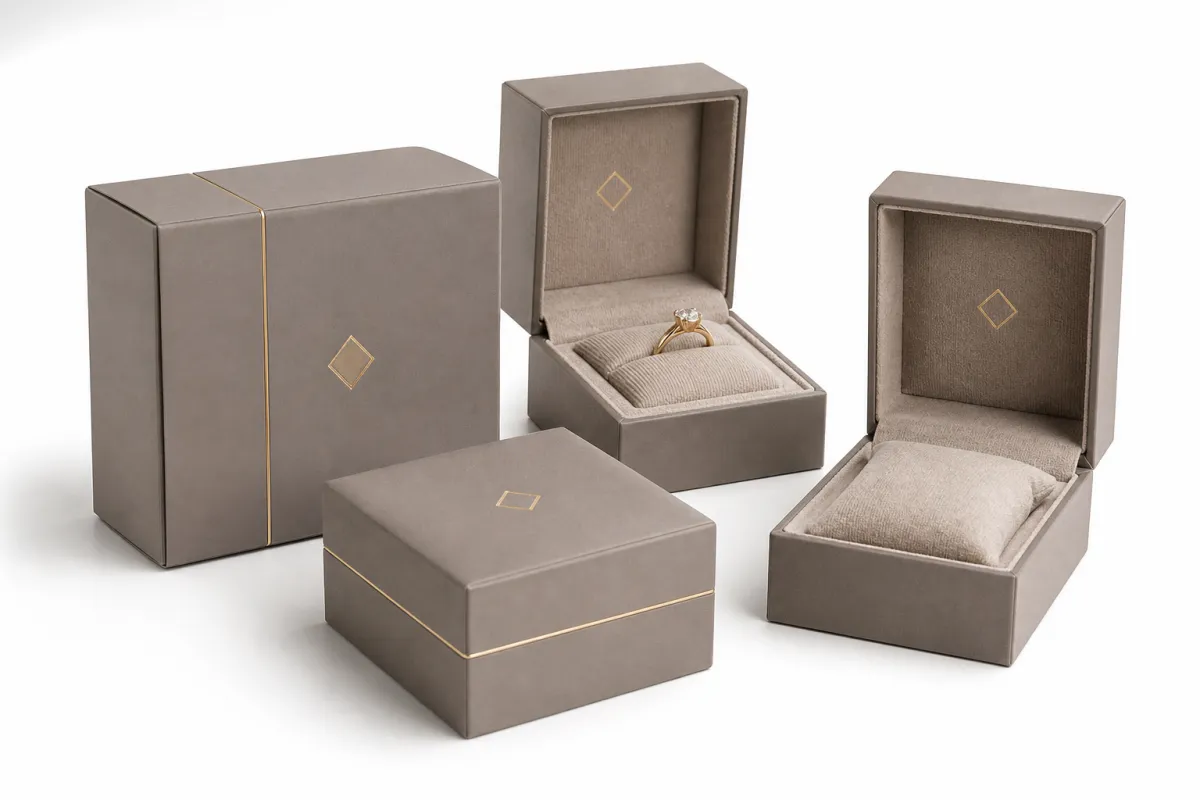
Most jewelry boxes get judged before anyone opens them. That is exactly why custom jewelry boxes branding matters more than plenty of brands want to admit. A customer sees the lid, the logo, the color, and the feel of the box in hand, then makes a quiet call on value before the jewelry gets a chance to speak. That is not vanity. That is packaging doing real work.
From a buyer's point of view, custom jewelry boxes branding separates a basic container from a brand signal. The box carries the logo, sure, but it also carries structure, material weight, finish, insert style, and the unboxing sequence. When those pieces line up, the jewelry feels more thoughtful, more giftable, and usually more expensive than it looked on a screen.
That matters across very different sales channels. In gifting, the box is part of the gift. In e-commerce, it replaces the salesperson and the shelf display. In boutique retail, it helps a small line look established instead of improvised. In premium positioning, it supports the story the brand wants to tell. Strong custom jewelry boxes branding makes each of those jobs easier.
Decoration is not the same thing as branding. A shiny logo slapped on a blank carton is decoration. Custom jewelry boxes branding connects the box to the brand identity so the whole package feels deliberate. That means the paper stock, the closure, the interior insert, the copy inside the lid, and the color system all need to point in the same direction. Pretty packaging can still miss the mark if it does not say anything clear about the brand.
I have seen brands spend real money on a lid that looked great in a mockup and then fall apart in hand because the insert rattled or the closure felt flimsy. That kind of thing is annoying, but it is also fixable if you treat the box like a product, not a decoration.
- Logo placement should feel calm and deliberate, not dumped onto every panel.
- Structure should match the product value and the sales channel.
- Finish should support the price point, not scream for attention.
- Insert style should hold the jewelry securely without looking flimsy.
- Unboxing flow should create one clear, memorable reveal.
Good custom jewelry boxes branding often works because it avoids trying too hard. Jewelry is already emotional. The packaging should frame that feeling, not compete with it. A box that feels clean, tactile, and well-built usually does more for perceived value than one stuffed with extra graphics and empty claims.
That is the part people miss. The box is not there to shout. It is there to make the jewelry look inevitable.
How Custom Jewelry Boxes Branding Works
The process behind custom jewelry boxes branding is not mysterious. It starts with a brand brief, then moves into dieline development, mockups, sampling, approval, and production. The short version is simple: define the brand problem first, then translate it into packaging design. If you pick a random box style and decorate it later, the result usually looks generic with a logo on top.
A good brief should cover the basics: product dimensions, target retail price, sales channel, shipping method, finish preferences, and the mood the box should create. A fine chain necklace sold in boutique retail may need a different structure than a stackable ring set shipped direct to consumer. That is why custom jewelry boxes branding works best when the packaging is built around the actual use case, not just the artwork.
Once the brief is clear, the box structure does a lot of the branding work. A magnetic rigid box usually says premium, gift-ready, and polished. A drawer box can feel more tactile and slightly more collectible. A lift-off lid box often reads traditional and upscale. Foldables can work for tighter budgets or lighter products, but they usually signal less weight and less ceremony. Sleeves can add polish, though They Work Best when they support another box rather than carry everything alone. In practice, custom jewelry boxes branding often starts as a structural decision before it becomes a graphic one.
That first structure choice is also where a lot of teams get honest about budget. If the packaging needs to survive shipping and still feel premium on arrival, the format matters as much as the logo. Otherwise you end up polishing a box that was wrong from the start. Been there, fixed that.
Print and Finish Choices
Print methods change how the brand feels the second the box is touched. Foil stamping creates a sharp light-catching effect and works well for logos or short marks. Embossing raises the surface and adds a quiet tactile cue. Debossing presses the design inward for a more restrained look. Soft-touch coating reduces glare and gives the outer layer a velvety feel that many customers read as premium. These details matter because custom jewelry boxes branding is partly about how the surface behaves in the hand, not just how it photographs.
Artwork should be built for the real box, not a fantasy version of it. Flat mockups make proportions look tidy, but they do not show how edges wrap, how the logo sits near a fold, or how ink behaves on textured board. That is why sampling matters. A physical sample shows whether the closure feels solid, whether the insert grips the jewelry properly, and whether the brand color still looks like the brand color once it hits actual material. With custom jewelry boxes branding, the sample is not a checkbox. It is the first honest review.
For brands that need supporting pieces, it helps to treat the box as part of a larger branded packaging system. A coordinated set can include outer cartons, tissue, inserts, and labels that all work together. If you need to build that system out, our Custom Packaging Products page is a practical place to compare formats, and Custom Labels & Tags can help with secondary branding pieces that keep the presentation clean.
The best results usually come from treating the package like a small product launch. You are not just printing a logo. You are building a sequence: open, reveal, hold, and remember. That sequence is what gives custom jewelry boxes branding its value.
Key Factors That Shape Custom Jewelry Boxes Branding
Several choices decide whether custom jewelry boxes branding feels elevated or forgettable. The main ones are material, structure, print method, finish, insert, color system, and the unboxing sequence. Change one in isolation and the package may still look decent. Put them out of sync and the whole thing starts to feel like a compromise.
Materials set the baseline. A rigid board box wrapped in paper feels very different from a folding carton, even before printing. Heavier board usually communicates more stability and more value. Paper texture matters too. A smooth uncoated stock feels approachable, while a coated or laminated surface can feel sharper and more controlled. In custom jewelry boxes branding, material choice is often the first budget decision that also becomes a brand decision.
Structure matters just as much. Magnetic closures create a satisfying snap and are common in giftable jewelry sets. Drawer formats add movement and a slightly more intimate reveal. Lift-off lid boxes can feel formal and elegant. Foldable rigid boxes save shipping volume and warehouse space, which matters a lot for larger runs. The trick is to match the structure to the audience. A luxury bridal line can support a more ceremonial box. A fast-moving e-commerce line may need lighter, flatter, and easier-to-ship packaging. That is still custom jewelry boxes branding, just with a different operational reality.
Color systems do more work than many brands expect. A deep black box with a metallic mark reads differently from a warm ivory box with a blind deboss. Color should match the broader brand identity, but not be copied blindly from a web palette that may look washed out in print. Good packaging design usually tightens the palette, not expands it. One strong base color plus one accent is often enough.
Inserts can quietly make or break the impression. Foam, EVA, molded pulp, paperboard, velvet-lined trays, and flocked inserts each send a different message. The insert should protect the jewelry without making the box feel bulky or cheap. A sloppy insert can wreck even strong custom jewelry boxes branding because the inside is the first thing customers notice after the reveal.
Luxury cues work best when they are restrained. Too many finishes can turn the box into a sample board. One foil mark, one texture, and one well-placed inside message usually feel more expensive than a lid covered in effects. That is not glamorous advice, but it is true. Buyers trust packaging that looks edited.
Sustainability has become part of the brand signal for many shoppers. Recyclable board, FSC-certified paper, and reduced plastic inserts can support that story if the package still feels deliberate. FSC is a useful reference point for responsibly sourced paper products: FSC. The catch is simple. Sustainability should read as a design choice, not as a compromise dressed up in green. If the box feels flimsy, no certification will save the impression. Strong custom jewelry boxes branding should still look premium first and responsible second.
There is a practical reason I keep coming back to restraint: the nicest boxes I have reviewed were usually the ones with one clear idea and no extra noise. The ugly ones were trying to win a debate nobody had.
Custom Jewelry Boxes Branding Costs and Pricing
Pricing for custom jewelry boxes branding depends on more variables than most buyers expect. Box style, board thickness, dimensions, print coverage, finish, insert material, and order quantity all shape the quote. A tiny box with one-color print can be inexpensive. A large rigid box with foil, embossing, specialty paper, and a custom insert can move into a totally different cost bracket. There is no magic number that works for every project, which is annoying, but still reality.
Unit price drops as quantity rises because setup costs get spread across more pieces. That part is simple. The harder part is that tooling, sample setup, and production prep can make small runs feel expensive. A 250-piece run may carry a much higher per-unit price than a 5,000-piece run even if the box looks nearly identical. With custom jewelry boxes branding, scale matters almost as much as design.
Here is a practical pricing view for common box types. These are broad ranges, not promises. A compact printed tuck box might fall around $0.25-$0.80 per unit at higher quantities, depending on print coverage and board choice. A mid-range rigid jewelry box often lands around $1.20-$3.50 per unit. A premium magnetic closure box with foil and specialty finishing can move to $2.50-$6.50 or more. Add custom inserts, and the range climbs again. For small quantities, expect the upper end of those ranges or beyond. Custom jewelry boxes branding gets expensive when several features stack together, not because of one single choice.
| Box Option | Typical Look | Common Price Range | Best Use |
|---|---|---|---|
| Printed tuck box | Lightweight, clean, simple | $0.25-$0.80 | Entry-level retail packaging and smaller accessories |
| Rigid lift-off lid box | Structured, giftable, stable | $1.20-$3.50 | Core jewelry SKUs and boutique presentation |
| Magnetic rigid box | Premium, polished, high perceived value | $2.50-$6.50+ | Hero products, gifting, and direct-to-consumer orders |
| Rigid box with specialty finishes | High impact, more tactile detail | $3.50-$7.50+ | Launches, seasonal sets, and high-margin collections |
If you need to save money without killing the look, spend on the parts customers actually see and feel first. That usually means the closure, the logo application, and the insert. Save by reducing print coverage, using one strong finish instead of two or three, and choosing a standard structure rather than a fully custom shape. In other words, keep the strongest part of custom jewelry boxes branding and trim the decorative noise.
There is also a practical middle ground. For some brands, a rigid box with a stock insert and one foil hit gives enough premium signal to justify the product price. For other brands, a simpler custom printed carton paired with a well-designed inner card does the job. Here is the boring truth that helps you spend better: the right answer depends on your margin, your channel, and how often the box gets reused. The box does not need to be the most expensive thing in the order. It just needs to support the sale.
If you want a sense of how different packaging choices perform in real projects, our Case Studies page is a good place to compare structure, finish, and presentation results. That kind of comparison helps because custom jewelry boxes branding is easier to judge once you see what different budgets actually buy.
Step-by-Step Process and Timeline for Custom Jewelry Boxes Branding
A realistic timeline keeps custom jewelry boxes branding from turning into a last-minute scramble. Most projects move through briefing, structural development, artwork, sampling, revisions, approval, and production. If the design is simple and the files are ready, the project can move fairly quickly. If the structure is custom, the finish list is long, or the team keeps changing the logo color on Tuesday afternoon, the schedule stretches.
Here is a straightforward timeline many buyers can use as a planning baseline:
- Brief and sizing - 2 to 5 business days for specs, quantity, and use case.
- Dieline and mockup - 2 to 4 business days for layout and structure review.
- Artwork setup - 1 to 3 business days once brand files are clean.
- Sampling - 7 to 14 business days for a physical sample, sometimes longer with specialty finishes.
- Revisions and approval - 3 to 7 business days depending on who signs off.
- Mass production - often 10 to 20 business days after final approval.
- Shipping and receiving - 3 to 10 business days depending on method and location.
Those numbers are planning ranges, not fixed law. Add time if your packaging uses multiple foil colors, custom inserts, or unusually tight color matching. Add more time if you are coordinating several box formats at once. Custom jewelry boxes branding gets delayed most often by artwork changes and late approval, not by the factory forgetting how boxes work.
Approval should be structured, not improvised. The brand team needs to confirm the visual direction. Operations needs to check whether the box can be packed efficiently. Fulfillment should confirm that the carton protects the jewelry through transit and does not slow down picking and packing. Sales or retail needs to confirm the box matches the customer-facing promise. If all of that happens at the end, you will pay for it in time and rework.
A simple production checklist helps. Before requesting quotes, gather the logo in vector format, the target box dimensions, the desired quantity, the preferred closure style, the finish preferences, the insert type, the color references, and the shipping method. If you already know which box family you want, start by narrowing the field with Custom Packaging Products. That makes custom jewelry boxes branding much easier to compare because suppliers can quote the same structure instead of guessing.
Do not let five people change the box for five different reasons. That is how a clean concept turns into a Frankenstein lid full of extra text, weak hierarchy, and a finish list nobody can print cleanly. The best schedule is the one with fewer surprises.
And yes, the approval chain matters more than the mood board. The mood board is cute. The sign-off sheet is what ships.
Common Mistakes in Custom Jewelry Boxes Branding
The biggest mistakes in custom jewelry boxes branding are usually pretty ordinary. Oversized logos. Cheap-feeling paper. Weak closures. Colors that drift far from the brand system. Each one seems small alone, but together they drag the box down fast. If a customer has to wrestle with the package, or if the lid flexes like cardboard from a shipping aisle, the premium story falls apart.
Another common problem is designing for the mockup instead of the real box. Flat artwork can make everything look beautifully centered. Then production starts, the wrap turns a corner, the logo lands too close to a fold, and the crisp layout disappears. That is why physical samples matter so much in custom jewelry boxes branding. The screen can lie politely. The sample tells the truth.
Too many finishes are a trap. A foil logo, embossing, spot UV, textured paper, ribbon, and a printed message inside the lid can sound impressive in a meeting. In production, it usually looks busy and costs more than it should. Jewelry packaging rarely benefits from visual clutter. A clean hierarchy, one tactile cue, and a balanced inside reveal usually feel more premium than a box trying to prove itself from every angle.
Shipping stress is another issue people underestimate. Beautiful boxes still need to survive transport, warehouse handling, and customer delivery. If the outer carton is too soft or the corners are vulnerable, the final result can arrive looking like it lost a fight with a forklift. For direct-to-consumer orders, ask about ship testing aligned with ISTA protocols, especially if the box is going through mail distribution. You do not need to become a test lab. You do need to know whether the box can survive normal abuse. Otherwise you are paying for pretty damage.
- Do not cover every panel with brand copy.
- Do not choose a finish because it looks flashy on a sample board.
- Do not use a flimsy insert for a heavy piece.
- Do not forget the difference between shelf presence and shipping durability.
- Do not let the box color drift away from the rest of the brand identity.
There is also a hidden mistake: ignoring the smaller branded pieces that support the box. If the package needs sealing labels, care cards, or hang tags, those parts should feel like one system. Our Case Studies show how much cleaner a package can feel when the small pieces are handled properly. If you need those secondary elements, Custom Labels & Tags can help keep the presentation tight instead of awkward.
In short, custom jewelry boxes branding fails most often when the box is asked to do too much with too little discipline. Luxury packaging looks easy only after the hard decisions are already made.
Custom Jewelry Boxes Branding: Expert Tips and Next Steps
If you want custom jewelry boxes branding to work without wasting budget, start with one hero box style and one insert system. That gives you a repeatable packaging foundation before you build a full lineup for rings, necklaces, bracelets, and gift sets. Most brands do better when the system is disciplined. Not boring. Disciplined.
A useful way to test the market is to request three sample directions: value-focused, balanced, and premium. The value-focused version keeps the structure simple and the finishes minimal. The balanced version adds one strong tactile or visual detail. The premium version pushes the structure, insert, and finish a step further. When you hold all three in your hand, the right choice becomes much clearer. That comparison is especially useful in custom jewelry boxes branding because digital mockups do not show weight, closure feel, or how the box behaves when opened.
From there, make the decision based on the actual customer journey. If the box ships direct, durability and protection matter more than decorative complexity. If the box is used in a boutique, shelf presence matters more. If the product is a gift, the opening sequence matters most. If the brand sells repeat purchases, consistency matters more than novelty. That is why custom jewelry boxes branding should always be tied to channel and use case.
Here is the shortest useful next-step list I can give you:
- Collect your logo files, brand colors, and product dimensions.
- Set a quantity target before requesting quotes.
- Decide whether the box is for retail, gifting, or shipping.
- Ask for dielines, sample photos, and pricing tiers.
- Compare at least two structure options before signing off.
Check the box in the same context your customer will see it. Under store lighting. On a kitchen table. In a mailer. In a gift bag. That sounds basic because it is basic, and basic is where packaging usually gets exposed. A box can look polished in a studio and awkward in real life. Custom jewelry boxes branding only works if the unboxing feels intentional where it actually happens.
My practical view is simple: spend where the customer touches the package, not where the spreadsheet gets excited. Strong structure, clean print, well-matched color, and a sensible insert will do more than a pile of extra decoration. Build the system that way, and custom jewelry boxes branding becomes a real sales tool instead of a nice-looking expense.
The takeaway is straightforward: pick the box structure first, then build the branding around how the jewelry is sold, shipped, and opened. If that sequence is clear, the rest gets a lot easier.
FAQ
What is custom jewelry boxes branding?
It is the process of turning a plain jewelry box into a branded packaging experience through structure, print, finishes, inserts, and unboxing flow. The goal is to make the box feel like part of the product, not just a container that happens to hold it.
How much do custom jewelry boxes branding projects usually cost?
Cost depends on box style, size, board thickness, print method, and finish. Simple printed cartons can stay in a lower range, while rigid boxes with foil, embossing, and custom inserts cost more. Small runs usually carry higher per-unit pricing because setup and tooling are spread across fewer boxes. If someone gives you a single flat number without asking about quantity or structure, they are guessing.
How long does custom jewelry boxes branding take from idea to delivery?
A straightforward project can move in a few weeks if artwork is ready and the box structure is standard. Custom structures, multiple sample rounds, or specialty finishes add time, so it is smart to build in extra buffer before a launch or seasonal drop.
What should I put on branded jewelry packaging?
Start with the logo, brand color system, and a clear inside message or insert card if the box opens as part of the experience. Keep the design focused. Too many claims or decorative elements usually make luxury packaging feel less refined, not more.
Which box style works best for custom jewelry boxes branding?
Rigid magnetic boxes, drawer boxes, and lift-off lid boxes usually deliver the strongest premium impression. The best choice depends on product size, shipping needs, budget, and whether the box is meant for display or gifting. For most brands, custom jewelry boxes branding works best when the structure fits the product and the customer journey instead of chasing the fanciest option on paper.
Do I really need a sample before production?
Yes. You can get surprisingly far with renders, and then the sample shows every problem those renders politely hid. That is the whole point of the sample stage: it catches awkward folds, weak closures, color drift, and insert issues before you pay for a full run.


