Buyer Fit Snapshot
| Best fit | custom jewelry display boxes with logo what for packaging buyers comparing material specs, print proof, MOQ, unit cost, freight, and repeat-order risk where brand print, material, artwork control, and repeat-order consistency matter. |
|---|---|
| Quote inputs | Share finished size, material target, print colors, finish, packing count, annual reorder estimate, and delivery region. |
| Proofing check | Approve dieline scale, logo placement, barcode or warning zones, color tolerance, and any recyclable or compostable wording before bulk production. |
| Main risk | Vague material claims, crowded artwork, or missing packing details can create delays even when the unit price looks attractive. |
Fast answer: Custom Jewelry Display Boxes with Logo What: Dieline, Finish, Proof, and Buyer Review should be specified like a repeatable production item. The safest quote includes material, print method, finish, artwork proof, carton packing, and reorder notes in one written spec.
What to confirm before approving the packaging proof
Check the product dimensions against the actual filled item, not only the sales mockup. Ask for tolerance on folds, seals, hang holes, label areas, and retail display edges. If the package carries a logo, QR code, warning copy, or legal claim, reserve that space before decorative graphics fill the panel.
How to compare quotes without losing quality
Compare board or film grade, print process, finish, sampling route, tooling charges, carton quantity, and freight assumptions side by side. A lower quote is only useful if the supplier can repeat the same color, closure quality, and packing count on the next order.
Custom jewelry display Boxes with Logo change the way a piece is read before anyone lifts the lid. I have watched buyers do it in real time: a ring on a plain tray feels like stock, while the same ring in a branded box suddenly looks selected, priced, and worth a second look. That shift is small on paper and very large in practice. Packaging does not just carry jewelry. It trains the eye, sets expectations, and quietly tells the buyer how serious the brand is.
Brands that want stronger presentation without turning the process into a logistics headache usually begin with the box. These branded jewelry display boxes can be built as paperboard cartons, rigid presentation boxes, drawer-style cases, or compact display formats with inserts and windows. The structure depends on the jewelry and the sales channel. If you want to compare formats while planning a run, browse our Custom Packaging Products catalog and compare a lighter retail carton with a more premium rigid build.
Jewelry packaging gets more scrutiny than most people expect. Small items carry high margins, emotional weight, and intense visual expectations. A box has to protect delicate surfaces, keep components in place, and create the right first impression before the product is even touched. In a category where a chain can tangle and a polished stone can pick up a scuff from almost nothing, packaging is not decoration. It is part of the product experience.
What Are Custom Jewelry Display Boxes with Logo?
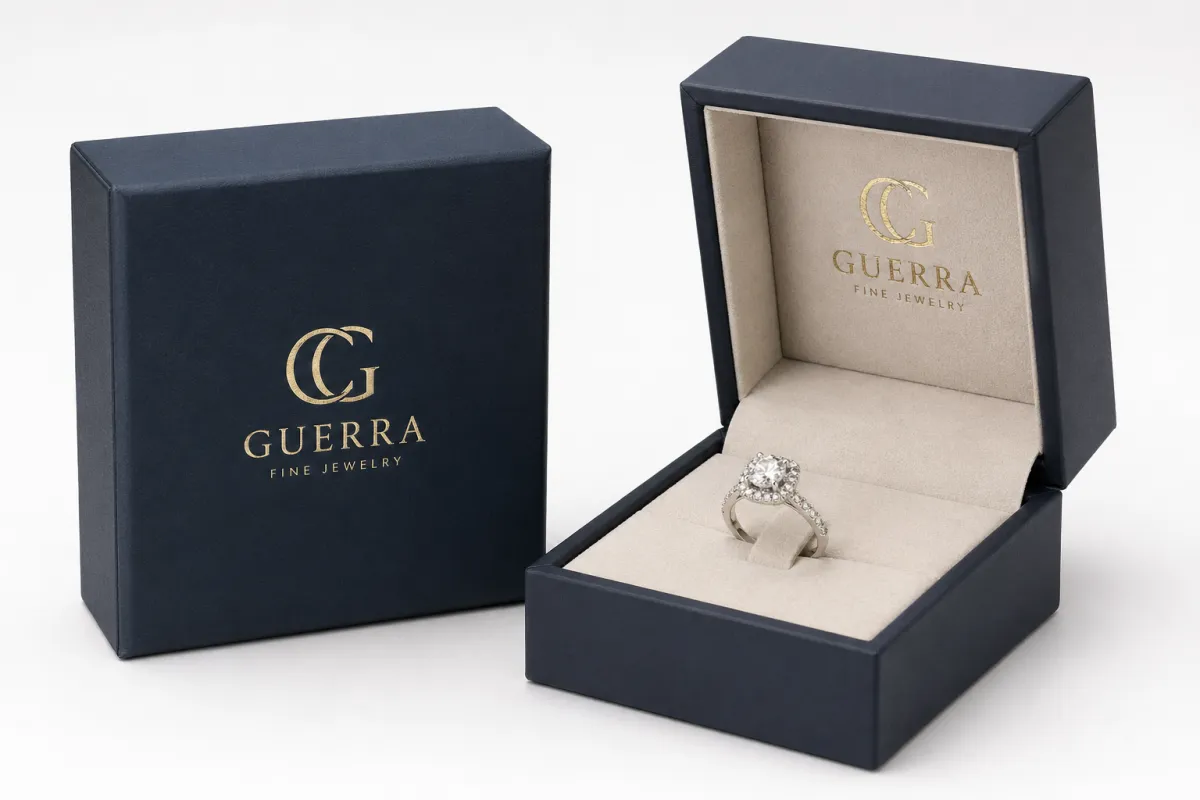
Custom jewelry display Boxes with Logo are retail packaging formats designed to present jewelry neatly while shielding it from scuffs, scratches, and awkward handling. A plain tray can make a beautiful piece look generic in seconds. Put that same piece into Custom Jewelry Display Boxes with logo, and it reads as intentional, gift-ready, and closer to a finished purchase than loose product.
Most versions are built around the jewelry itself. Inserts, die-cut slots, foam or paperboard hold points, ribbon pulls, and small viewing windows all help the item sit correctly and stay stable. Structure matters as much as print. If the jewelry slides around when the lid opens, the box is not doing its job, no matter how polished the artwork looks on a screen.
From a buyer's perspective, these boxes do three jobs at once. They protect the product, organize tiny components, and act like a silent salesperson on a boutique counter, trade-show table, or subscription order. That third function gets ignored too often. Packaging answers questions before a sales associate does. It can also prevent the question entirely.
These boxes fit naturally in boutiques, pop-ups, bridal sets, PR kits, and e-commerce orders that need a stronger opening moment. They also help brands selling across different price points under one label, because the box can signal tier without a loud pitch or oversized tag. The right branded jewelry packaging does that work quietly. Quietly matters.
A jewelry box should frame the piece, not compete with it. Once the packaging steals the scene, the product has already lost some of its value.
Material choice changes the experience in your hand. A 16pt to 24pt paperboard box suits lighter retail use and keeps freight costs down. A 1.5mm to 2mm rigid board box feels sturdier and carries more shelf presence. Add a velvet-textured insert, and custom jewelry display Boxes with Logo move from ordinary retail packaging into something closer to a gift object.
The logo can be restrained or bold, depending on the brand. A small foil mark on the lid signals premium without shouting. A one-color print on a matte carton feels cleaner and more commercial. Full-coverage artwork can work, but only when the brand can support it with discipline. Tiny boxes punish excess. Too much ink, too many effects, and the package starts looking busier than the jewelry it is meant to sell.
Think about how the buyer will encounter the box. Will it be opened on camera? Will it ride inside a shipping carton? Will it sit in a display tray for a week before purchase? Custom jewelry display Boxes with Logo should be designed around those real uses, not around a mockup that looks perfect only because nothing has touched it yet.
How Custom Jewelry Display Boxes with Logo Are Made
The production flow for Custom Jewelry Display boxes with logo starts with measurements, structure, and artwork. It does not start with a logo dropped into a template and crossed fingers. A good supplier asks about jewelry dimensions, weight, closure preferences, and how the product will be sold. That information is not paperwork for the sake of paperwork. It prevents a box that fits on paper but fails in the hand.
After the brief comes the dieline. That flat layout shows cut lines, folds, glue zones, and insert positions. Once the structure is set, the printer checks artwork for bleed, resolution, and color values. In prepress, a surprising number of errors get caught before anything gets cut. A millimeter off in the wrong place becomes expensive very quickly, and in jewelry packaging those small errors are the ones that make the whole project feel off.
Sampling follows. A structural sample checks fit, stiffness, and closure tension. A printed proof checks logo placement, foil alignment, and tone. Delicate jewelry needs this step even more than rugged product categories do. You want to see how the piece sits under real lighting, not under a render that ignores glare, shadows, and the way metal reflects across a tiny surface.
Build type changes the production path. Paperboard boxes are usually folded, glued, and shipped flat to save freight and storage space. Rigid boxes are wrapped over board and assembled into a stronger structure. Specialty formats with windows, magnetic flaps, or fold-out display panels add labor and raise the chance of misalignment. That is why custom jewelry display boxes with logo can move from simple to expensive fast, even when the box looks small on a spreadsheet.
Logo application shapes the workflow as well. Foil stamping produces crisp metallic branding and usually needs a separate die. Embossing and debossing press the logo into the surface for a tactile effect. Spot UV adds gloss to selected areas. One-color offset or digital print is the most direct route, but it will not deliver the same tactile value as foil on a rigid lid. That said, a clean one-color mark can still feel elegant if the structure is doing its job.
Production timing depends on how complex the order is. A straightforward paperboard run with approved artwork can move through production in 10 to 14 business days after proof approval. A rigid box with inserts, foil, and magnet closures can take 14 to 20 business days, sometimes longer if samples need revision. Shipping adds its own clock. These boxes rarely land on the date someone hoped for unless the plan was built with real lead time.
Several delays show up again and again. Magnet alignment can drift. Insert tolerances can be off by a few millimeters and still ruin the fit. Window placement can shift enough to make the piece look off-center. Color matching creates its own trouble, especially when the box has to coordinate with printed cards, tissue, or outer cartons already in use. I have seen one slightly warm black throw off an entire luxury line. It sounds picky, but buyers notice it fast.
- Paperboard: best for lighter retail use, lower freight, and easier replenishment.
- Rigid board: best for premium presentation, stronger crush resistance, and heavier jewelry.
- Special inserts: best for rings, earrings, necklaces, and mixed sets that need a fixed position.
For sustainability claims or sourcing requirements, FSC-certified paperboard is usually the label buyers recognize first. If your brand wants chain-of-custody language on the spec sheet, FSC is the right place to understand what the mark means. When the boxes will move through e-commerce, drop-test expectations are worth checking against ISTA procedures instead of assuming a pretty box can survive a rough route because the mockup looked sturdy. Those standards do not replace real-world testing, but they give you a better starting line.
Custom Jewelry Display Boxes with Logo: Cost and Pricing Factors
Pricing for custom jewelry display boxes with logo depends heavily on quantity because setup drives a large share of the cost. A short run spreads setup across fewer units, which pushes the unit price upward. Larger runs usually bring the per-box cost down because print, cutting, and tooling are divided across more pieces. That is the basic math, and packaging never escapes it.
As a rough guide, simple paperboard versions might fall around $0.18 to $0.45 per unit in larger quantities, while smaller runs can climb closer to $0.65 to $1.20. A rigid box with a printed wrap and insert can run roughly $1.20 to $3.50, and a premium presentation box with magnets, foil, and a custom insert can move into the $3.50 to $8.00 range. Those numbers are estimates, not promises. Region, finish, and freight can move them around, sometimes more than buyers expect.
The biggest cost drivers are easy to name and hard to ignore: board thickness, box style, logo method, insert complexity, and finish quality. A simple one-color print costs less than foil stamping. A flat insert costs less than a molded or layered insert. Soft-touch lamination, textured wrap, and custom windows all add material or labor. That is why custom jewelry display boxes with logo can feel modest in one spec and unexpectedly upscale in another.
Small choices stack up. Magnetic closures are not expensive on their own, but they raise assembly and quality-control demands. Spot UV looks crisp, yet it adds another finishing pass. A ribbon pull feels refined, but it must be glued and aligned correctly. Put three or four premium details into one build and the packaging starts behaving like a second product rather than a simple container. That can be smart if the price point supports it and risky if it does not.
Real cost also includes freight, storage, sample charges, and replenishment planning. A buyer who only looks at unit price tends to get surprised when cartons, pallet freight, or split shipments appear later. For custom jewelry display boxes with logo, landed cost is the number that matters, not the first quote line that looks tidy on the page.
| Box Style | Typical Use | Approx. Unit Cost | Notes |
|---|---|---|---|
| Paperboard tuck box | Entry-level retail, mailers, lightweight sets | $0.18-$0.45 | Best for lean budgets and higher-volume orders |
| Rigid lid-and-base box | Boutiques, gift sets, premium displays | $1.20-$3.50 | Stronger hand feel and better shelf presence |
| Magnetic rigid box with insert | Luxury lines, bridal sets, influencer kits | $3.50-$8.00 | Higher assembly cost, stronger presentation value |
Order tiering helps more than most brands expect. A basic branded carton and a luxury display box should not live in the same pricing conversation. Budgeting in tiers makes more sense: one option for everyday retail, one for premium presentation, and one for special launches. That keeps the packaging aligned with the product margin instead of the mood board.
If you are comparing quotes, ask every supplier to quote the exact same spec. Same board. Same insert. Same finish. Same closure. Change one of those variables and the comparison stops being useful. The cleanest approach is to build the spec first and then request pricing through Custom Packaging Products so the numbers reflect the same structure.
Sample costs are worth taking seriously. A $50 to $200 sample can save a much larger run from going sideways. That is a small expense next to reworking hundreds or thousands of boxes after the fact. One mistake in production can erase the savings from the cheapest quote very quickly, and then some.
Step-by-Step Ordering Process for Custom Jewelry Display Boxes with Logo
Step one is defining the job. Before artwork enters the conversation, decide what the box has to do. Is it meant to sit in a boutique? Travel safely inside an outer carton? Hold a ring, earrings, or a necklace set? These branded boxes work best when the structure follows the product rather than forcing the product to fit a generic shape.
Step two is locking dimensions and insert style. Measure the jewelry and decide how much clearance it needs. A ring slot that is too loose looks careless. A necklace cavity that is too tight can crush the chain. This is the stage where custom jewelry display boxes with logo either become useful tools or turn into expensive annoyances. I have seen a necklace box fail because the insert was beautiful but unforgiving; the chain had nowhere to relax.
Step three is reviewing a structural sample or digital proof. Check the closure tension, hinge line, insert fit, and the way the jewelry sits under real lighting. A design can appear perfect on screen and still fail once the finish catches reflections or the item shifts by a few millimeters. Packaging always exposes what the render hides.
Step four is approving color and finish against the actual jewelry and any existing brand materials. A cool gray box may look elegant in a file and flat beside warm gold pieces. Black foil can feel upscale, but only if the background contrast is strong enough to support it. These boxes should work with the metal, stone, and texture of the product, not fight for attention.
Step five is confirming the timeline, shipping destination, and reorder plan before the order is locked. If the launch date is fixed, work backward from approval and transit time. If the order needs storage, ask about carton pack counts and pallet configuration. Packaging delays usually begin with a plan that never got written down.
- Define the jewelry type and display goal.
- Confirm dimensions, insert format, and closure style.
- Review sample fit, print placement, and finish.
- Approve color against the real product, not a screen.
- Lock the freight, receiving, and reorder details.
A useful shortcut is to keep one spec sheet per collection. Put the dimensions, board choice, insert material, logo method, and approved color values in one place. Then, when the next run of custom jewelry display boxes with logo is due, nobody has to rebuild the project from old emails and half-remembered PDFs. Packaging teams do not need more mystery. They need fewer surprises.
If your line has multiple SKUs, standardize the outer size and vary the insert. That keeps the shelf look consistent and makes storage simpler. The more elements you can repeat across the packaging system, the easier reorders become. Consistency may sound dull. It also saves money and time, which is usually the part nobody brags about until it matters.
Common Mistakes With Custom Jewelry Display Boxes with Logo
The first mistake is buying a box that looks premium in a rendering and falls apart in handling. Thin board, weak folds, or sloppy glue lines can downgrade a good product immediately. These boxes need to survive real handling, not just studio lighting and a clean digital mockup.
The second mistake is cramming too much branding onto a tiny surface. Jewelry packaging is small, so the logo has to earn its space. A clean foil mark or restrained print usually feels stronger than a loud design trying to outshout the product. Good package branding frames the piece and then steps back.
The third mistake is ignoring insert tolerances. Loose rings slide. Earrings tilt. Necklaces tangle. A box can look tidy right until someone opens it and the product shifts. That is not a minor detail. It is the difference between Packaging That Feels polished and packaging that feels rushed.
The fourth mistake is underestimating landed cost. A buyer sees one price, then sample fees, freight, and replenishment charges appear later. Suddenly the packaging budget is upside down. For custom jewelry display boxes with logo, the cheapest quote often becomes the most expensive route once the full order arrives.
The fifth mistake is skipping real-world testing. A shelf photo, a counter display, and a shipping carton each create different stress points. Lighting can flatten a matte finish. A window can catch glare. A rigid lid may open too easily in transit. If the box has never been handled, photographed, and shipped, the approval is incomplete.
- Test the closure with the actual jewelry inside.
- Check how the logo reads at arm's length.
- Review the box under warm and cool lighting.
- Confirm the pack count fits your storage space.
- Check for scuffs after basic handling and transit tests.
Another habit worth dropping is over-focusing on aesthetics while ignoring the sales environment. A boutique counter needs different packaging design than an influencer gift kit. A mailer needs different protection than a display tray. These boxes should match the channel, or the packaging becomes a polished mismatch.
Most bad decisions start with assumption. Someone assumes the insert will fit. Someone assumes the color will match. Someone assumes the box will not matter that much. Those assumptions get expensive fast. In packaging, "pretty close" often means "not usable."
Expert Tips to Make Custom Jewelry Display Boxes with Logo Sell Better
The first tip is to match branding strength to product price. Entry-level jewelry can handle a more visible mark because the box helps establish value. Higher-end pieces often look better with restrained branding and a cleaner lid surface. Custom jewelry display boxes with logo should reinforce the price point, not muddy it.
The second tip is to match the finish to the jewelry itself. Silver pieces often look sharp against cooler, matte interiors. Gold jewelry usually benefits from warmer tones or deeper contrast. Colored stones need enough neutrality inside the box that the piece does not disappear. Good packaging relies on visual balance, not just logo placement.
The third tip is to keep structure consistent across related collections. If one ring line uses a fold-over box and another uses a rigid drawer box, the brand starts to feel split. Keep the outer shape predictable and adjust the insert or print detail instead. That creates a cleaner retail packaging system and makes merchandising easier.
The fourth tip is to design for photography. A large share of jewelry sales now happens through images long before a buyer touches the product. Window placement, lid angle, and interior color all affect how the box photographs. If the packaging casts a strange shadow or reflects light back into the lens, it is working against the sale. These boxes should make the product easier to photograph, not harder.
The fifth tip is to lock the spec sheet and use it for every reorder. Keep the approved logo file, board thickness, finish codes, insert dimensions, and carton counts together. Reorders drift when someone "just updates the file" without checking the last approved version. That is how color slips and closure tolerances start changing without warning.
A smart packaging program does not survive on memory. It survives on a spec sheet, a sample, and one person who keeps asking for the exact same version.
Another useful move is to think in sets, not just single boxes. If you sell necklaces, bracelets, and rings under one label, you can often standardize the outer shell and vary the insert. That keeps the system visually tight while protecting different products correctly. It also helps the packaging feel like part of a real brand rather than a one-off order.
For brands building a fuller packaging line, pairing the display box with inserts, mailers, and exterior cartons through our Custom Packaging Products page keeps the whole program aligned. Consistency matters more than people like to admit. A good box is useful. A consistent system is what makes the brand look established.
Finally, do not ignore the customer's hands. Opening experience matters. If the box feels flimsy, fights the closure, or smudges too easily, perceived value drops. Custom jewelry display boxes with logo should give a clean opening motion, a clean reveal, and a finish that still looks good after a few touches. That is a practical standard, not a luxury fantasy.
Next Steps for Custom Jewelry Display Boxes with Logo
If you are ready to move, gather three basics before asking for quotes: dimensions, jewelry weight, and order quantity. Vague requests produce vague pricing. Concrete specs produce numbers you can actually use. That matters even more for custom jewelry display boxes with logo, where small structural changes can shift both cost and lead time.
Pick one reference for style, one for finish, and one for budget. That gives the supplier a real brief instead of a mood board that says "luxury but not too much" and expects miracles. Better input usually means better packaging design and fewer revision rounds.
Ask for samples that test the actual problem you care about. If the jewelry is delicate, test fit. If the box will be mailed, test closure and crush resistance. If the box will sit on a counter, test the visual read from three feet away. These boxes should be approved against the job they will actually perform.
Compare quotes using the exact same spec. Same size. Same board. Same print method. Same finish. Same insert. Mixed specs make price comparisons useless. If the quotes are not built on the same structure, the numbers are telling different stories.
Set a reorder trigger now. Do not wait until stock is almost gone. Lead times, freight schedules, and holiday surges have a way of turning "we still have some left" into "we are out by Friday." For custom jewelry display boxes with logo, a safe buffer is usually cheaper than a last-minute panic order.
A backup option helps too. Maybe the premium rigid version is for launches and the paperboard version is for steady retail replenishment. That keeps the brand flexible without forcing every order into the most expensive format. It also makes your custom packaging products planning easier when demand changes without warning.
The short version is simple: start with the product, then the structure, then the finish. Not the other way around. Pretty packaging that ignores the jewelry is just decoration. Custom jewelry display boxes with logo should protect the product, support the sale, and make the brand look like it knows exactly what it is doing. If you remember one thing, make it this: the best box is the one that disappears at the right moment and leaves the jewelry doing the talking.
Frequently Asked Questions
What are custom jewelry display boxes with logo used for?
They present jewelry in a branded, retail-ready way instead of a plain storage box. They also protect delicate items, improve perceived value, and help the product stand out on shelves, in mailers, and in unboxing videos. Boutiques, trade shows, bridal sets, and direct-to-consumer orders all use custom jewelry display boxes with logo for that reason.
How much do custom jewelry display boxes with logo usually cost?
Price depends on quantity, material, print coverage, finish, and insert complexity. Small runs cost more per box because setup is spread across fewer units. Rigid structures, foil, magnets, and custom inserts push pricing up faster than simple paperboard styles, which is why these boxes can range from budget-friendly to surprisingly premium. The only honest way to compare is by quoting the same specification across suppliers.
What is the production time for custom jewelry display boxes with logo?
Timeline depends on whether you need a sample, how complex the structure is, and how many finish steps are involved. A simple project can move faster if artwork is approved early and no structural changes are needed. Delays usually come from sample revisions, color corrections, or changes to insert size and closure style. If the launch date is fixed, build in a buffer. Printing rarely cares about optimism.
Which materials work best for custom jewelry display boxes with logo?
Paperboard works well for lighter, lower-cost retail packaging. Rigid board is a better fit when the box needs a premium feel or better protection. The best choice depends on the jewelry weight, target price point, and how the box will be used, which is why the packaging should be matched to the product instead of guessed at.
Can custom jewelry display boxes with logo improve online sales?
Yes, because packaging affects first impression, perceived value, and repeat brand recognition. Clean structure, good interior contrast, and strong logo placement also help product photos look more polished. The box will not fix weak jewelry, but custom jewelry display boxes with logo can absolutely stop good jewelry from looking forgettable.

