Buyer Fit Snapshot
| Best fit | Custom Shipping Boxes with Logo Design projects where brand print, material claims, artwork control, MOQ, and repeat-order consistency need to be specified before quoting. |
|---|---|
| Quote inputs | Share finished size, material target, print colors, finish, packing count, annual reorder estimate, ship-to region, and any compliance wording. |
| Proofing check | Approve dieline scale, logo placement, barcode or warning zones, color tolerance, closure strength, and carton packing before bulk production. |
| Main risk | Vague material claims, crowded artwork, missing packing details, or unclear freight terms can make a low unit price expensive after revisions. |
Fast answer: Custom Shipping Boxes with Logo Design: What Works should be specified like a repeatable production item. The safest quote records material, print method, finish, artwork proof, packing count, and reorder notes in one written spec.
Production checks before approval
Compare the actual filled-product size with the drawing, then confirm tolerance on folds, seals, hang holes, label areas, and retail display edges. Reserve space for logos, QR codes, warning copy, and material claims before decorative graphics fill the panel.
Quote comparison points
Review material grade, print process, finish, sampling route, tooling charges, carton quantity, and freight assumptions side by side. A quote is only useful when the supplier can repeat the same color, closure quality, and packing count on the next order.
Custom Shipping Boxes with Logo Design: What Works in Practice
Custom Shipping Boxes with logo design has two jobs, and neither one is optional: protect the product and make the brand look intentional. That sounds straightforward until a carton shows up with a skewed print, crushed corners, or tape running across the face like someone lost patience halfway through packing. A plain brown box is not a failure. A printed box is not a victory either. The result depends on fit, board strength, print quality, and whether the package survives the real route, not the mockup on a screen.
The best Branded Shipping Cartons rarely scream for attention. They look measured. A logo lands in the right place. The board holds its shape. The print stays readable after handling, stacking, and a few ugly miles in a truck. That quiet confidence is often what makes Custom Shipping Boxes with Logo design feel premium. Not glitter. Not clutter. Control.
In my experience, brands overestimate how much design flair they need and underestimate how much abuse a shipping box takes. I have seen a one-color carton with a crisp mark feel more expensive than a busy, full-bleed box that arrived dented and rubbed off at the seams. Packaging is a funny little contradiction like that. The more work it does, the less it should look like it is trying.
If you are comparing structural formats, the difference between a mailer, a corrugated shipping carton, and a retail-style box affects price, transit performance, and even brand perception. That means custom shipping Boxes with Logo design is not one fixed product; it is a set of choices that shape the whole customer experience from warehouse to doorstep.
A box can be understated and still carry real brand weight. A box can be loud and still look cheap. Material quality, fold accuracy, and print placement decide that long before the customer sees the logo.
If you want to compare formats, review Custom Shipping Boxes alongside the broader Custom Packaging Products catalog. The structure you choose changes everything downstream, from print method to freight cost to how much abuse the carton can take before it starts looking tired.
What Custom Shipping Boxes with Logo Design Actually Are
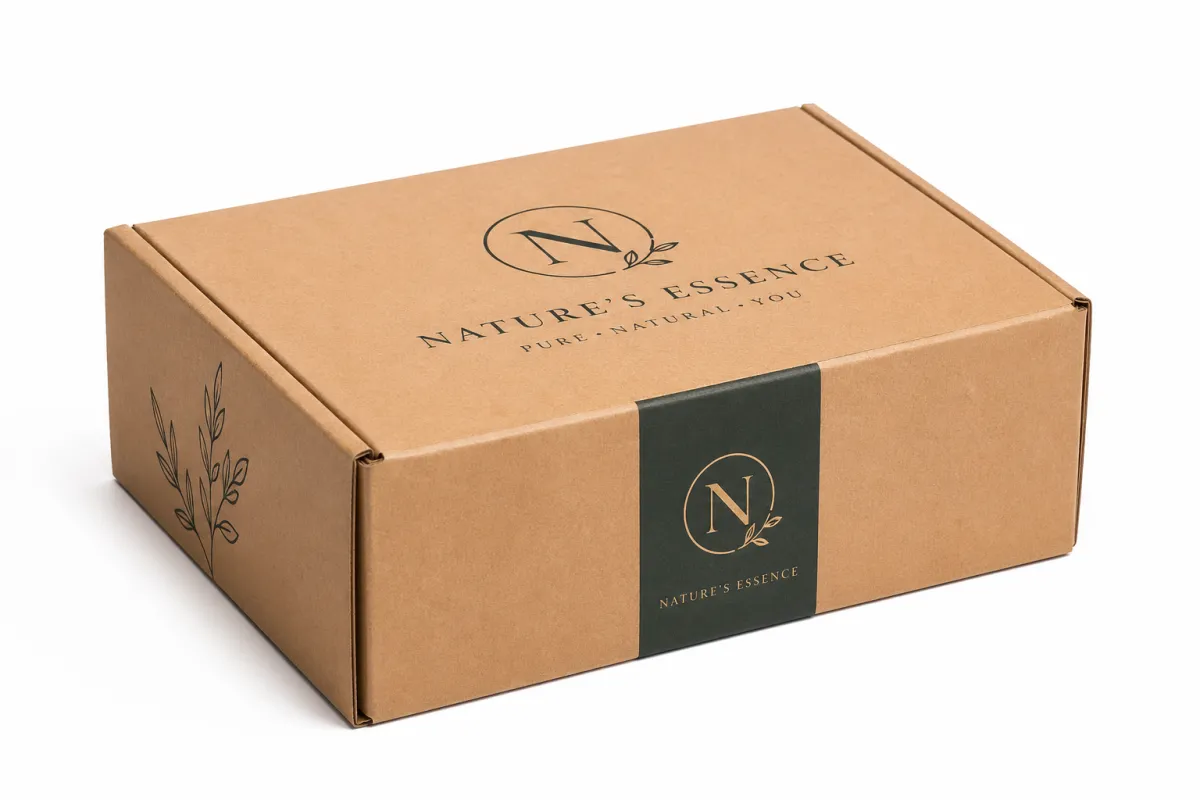
Custom Shipping Boxes with logo design is a corrugated carton, mailer, or similar ship-ready package that carries branding without giving up protection. That branding can be as simple as a one-color logo on kraft board, or as layered as inside printing, panel art, and a specialty finish on the outside. The box becomes part of the product story instead of just the thing holding the product.
The details matter. A plain corrugated carton is built primarily for structure and transport. A branded shipping box adds logo placement, color decisions, and sometimes a coating such as aqueous or varnish. A retail-style mailer gives a more polished opening moment, but it is not always the smartest fit for heavier goods or shipments that need extra compression resistance. Custom Shipping Boxes with Logo design sits somewhere in the middle. It needs to look deliberate without becoming delicate.
That distinction matters for ecommerce brands, subscription programs, influencer kits, B2B samples, and premium direct-to-consumer packaging. A headphone company, a candle brand, and a skincare label may all need branded shipping cartons, but they do not need the same board grade or the same print coverage. One ships light but delicate. Another ships heavy and breakable. Another wants a clean presentation that still holds up under layered fulfillment. Same phrase. Very different specs.
The smartest packaging buyers I have worked with think about the whole route, not just the unboxing photo. They ask how many times the box will be handled, whether it will be stacked in a warehouse, whether it needs to ride in a master carton, and how much damage one failed shipment would create. That kind of thinking saves money later. Usually a lot of it.
How Does Custom Shipping Boxes with Logo Design Work?
The process starts with the packed size, not the naked product. That sounds obvious, yet it gets missed constantly. Product dimensions, inserts, wrap, void fill, and the clearance needed for a clean closure all belong in the measurement. A carton that is even a little too tight can crush a corner or scuff a printed surface. A carton that is too loose invites movement, which means abrasion and a worse unboxing. Packaging is kinda unforgiving that way.
Material selection comes next. Most custom shipping Boxes with Logo design uses corrugated board, often single-wall for everyday ecommerce shipments. Common specs include 32 ECT for many light-to-moderate applications, while heavier products may call for stronger board, a different flute profile, or double-wall construction. Some suppliers still quote 200# test, though board strength specs can vary by region and manufacturer. The key is matching strength to product weight, route length, and the kind of damage the box is likely to face.
Then comes artwork placement. The logo can sit on the top panel, one side panel, or both. But flaps, seams, and manufacturer joints are not usable design space, and that matters more than people expect. Custom shipping boxes with logo design works best when the mark lands on a flat panel with enough breathing room around it. Too much crowding makes even a good logo look rushed.
Print Methods in Plain English
There are three common print paths for custom shipping boxes with logo design: digital, flexographic, and litho-lam. Digital printing is useful for shorter runs, samples, and designs that may still change, because setup is lighter and revisions are easier to absorb. Flexographic printing is often the workhorse for larger quantities and simpler graphics, especially when the brand wants one or two colors and a lower unit cost. Litho-lam uses a printed sheet laminated to corrugated board, which can produce the sharpest image and the richest coverage, but it also brings more setup, more lead time, and more expense.
That tradeoff is real. A test run of 300 boxes for a launch usually points toward digital or flexo. A 10,000-unit reorder with a fixed design and a premium presentation goal may justify litho-lam. The right choice depends on quantity, timing, and how much of the carton the customer will actually notice. If the box is going to be seen once on a doorstep and then tossed, you probably do not need to overspend. If the carton is part of a subscription reveal or a high-margin product experience, the visual standard rises fast.
Most buyers should review a sample or proof in this order: dimensions, board grade, print coverage, finish, and any insert or void-fill plan. A proof will not tell you everything about board feel, but it will catch the annoying failures: a mirrored panel, a typo, a color shift, or a bleed that gets trimmed too close. That is the sort of mistake that can eat a week if it sneaks into production.
For shipment validation, some suppliers can reference familiar tests such as ISTA 3A or ASTM D4169. Those standards are not magic, and they are not a guarantee that nothing will ever break. They are simply a practical way to compare how custom shipping boxes with logo design behaves under vibration, drop, and compression. In packaging work, that kind of evidence is better than wishful thinking.
Pricing Factors for Custom Shipping Boxes with Logo Design
Pricing for custom shipping boxes with logo design usually comes down to size, board strength, print coverage, number of colors, coating, and quantity. That is the clean answer. The messy answer is that each of those variables interacts with the others, which is why two boxes that look similar on paper can land at very different prices.
Small orders tend to cost more per unit because setup costs do not disappear. Plates, dies, proofing, machine setup, and labor are still there whether you order 250 boxes or 25,000. Spread across a small run, those costs sting. Spread across a larger run, they soften. That is one reason custom shipping boxes with logo design often becomes far more affordable once volume passes a certain threshold.
Board grade changes the equation too. A weaker carton may look cheaper up front, but if the product comes back damaged, the saving was fake. Returns, replacements, and customer service time have real cost. In a lot of categories, a slightly stronger board is actually the more economical choice because it prevents loss. That is not theory. It shows up on the balance sheet.
Print coverage matters as well. One logo on one panel costs less than a fully wrapped exterior. Coatings add cost. Specialty finishes add more. If the carton only needs to carry brand recognition, a strong logo placement and clean typography may do more than a heavily printed surface. Custom shipping boxes with logo design does not need to look busy to feel premium. A restrained layout often does the opposite: it reads as more confident.
Rough Cost Bands That Make Sense
These are practical ballparks, not promises. Exact pricing shifts with box size, production region, paper costs, and print method, but the ranges help buyers stop guessing:
| Option | Typical Use | Relative Unit Cost | Rough Price Range | Main Tradeoff |
|---|---|---|---|---|
| Plain corrugated carton with one-color logo | Starter ecommerce shipping, simple branded packaging | Lowest | $0.60-$1.80 | Limited visual impact |
| Two-color flexographic print | Mid-volume custom printed boxes | Low to mid | $0.85-$2.25 | Best with clean, simple artwork |
| Digital short-run print | Launches, samples, seasonal runs | Mid | $1.20-$3.50 | Higher per-unit cost at scale |
| Litho-lam premium finish | High-end product packaging and retail packaging | High | $1.80-$4.50+ | Sharper graphics, more setup |
There are smart ways to keep costs down without making the carton look undercooked. Put the print on one or two panels instead of covering every surface. Use one strong logo treatment rather than a full wrap if the brand does not need that much real estate. Choose a standard structure instead of inventing a custom box style that adds die cost and slows fulfillment. Skip specialty finishes unless they are pulling actual weight. Custom shipping boxes with logo design gets cheaper when the design stays disciplined.
One thing buyers overlook: compare the full packaging system, not just the box price. A slightly more expensive carton can reduce the need for void fill, custom tape, or extra protective inserts. That can push the total spend back in your favor. For lighter shipments, it may even make sense to compare a branded corrugated carton against Custom Poly Mailers if freight and handling are part of the equation.
For sourcing and sustainability, industry guidance from organizations such as the International Safe Transit Association and the Forest Stewardship Council can help set expectations. If you make recyclability claims, keep them accurate. If the board is FSC-certified, say that clearly and only when the paperwork supports it. Customers notice sloppy claims almost as fast as they notice sloppy print.
Step-by-Step Timeline for Custom Shipping Boxes with Logo Design
Custom shipping boxes with logo design moves faster when the approval chain is clean. The project usually starts with a brief that includes product dimensions, target quantity, shipping weight, print style, and any special handling needs. If those details are fuzzy, every later step slows down. Suppliers cannot quote a box properly if the size is still under debate in three different spreadsheets.
Step one is quote and spec review. The supplier checks dimensions, board grade, print coverage, and likely production method. Step two is artwork proofing. Vector files make life easier. Low-resolution logos make life harder, and a request to “just sharpen it up” usually means the job is about to slip. Step three is sample approval when needed. Step four is production. Step five is freight planning and delivery.
A realistic timeline for custom shipping boxes with logo design is often 10 to 15 business days after proof approval for straightforward runs, then a few more days for shipping. Larger orders, heavier coverage, or custom inserts can take longer. If a physical sample is required, add time for sample creation, review, and any revision rounds. That is normal, not a red flag. It is just production math doing its thing.
The delays usually come from missing measurements, late decisions on coatings or finishes, and repeated design changes after the proof is already moving. Another common slowdown is a logo file that looks fine on a monitor but falls apart at full size. Custom shipping boxes with logo design rewards buyers who lock the spec early and stop tinkering every afternoon because someone had a new idea after lunch.
The fastest project is the one with the fewest surprises. Good planning saves more lead time than pressure ever will.
Here is a practical checkpoint list:
- Day 1-2: confirm dimensions, board grade, and quantity
- Day 2-4: review quote, dieline, and print method
- Day 4-7: approve proof or request one sample
- Day 7-15: production, depending on print complexity
- Final mile: freight booking and delivery buffer
If the launch date is fixed, build a little buffer into the schedule. Freight has a habit of taking its sweet time without asking. A smart buyer plans for that instead of discovering it the week the boxes are supposed to arrive. Custom shipping boxes with logo design is easier to manage when the timeline is treated like a real supply chain, not a hopeful guess.
Common Mistakes With Custom Shipping Boxes with Logo Design
The biggest mistake is measuring the product instead of the packed shipment. People measure the item itself, order a carton to match that number, and then wonder why the box feels too tight once inserts, tissue, or protective wrap are added. Custom shipping boxes with logo design has to be sized for the entire packed unit, not the bare product sitting on a desk.
Another mistake is designing for appearance only. A carton with glossy coverage, thin board, and too much artwork can still fail in transit. A box that cannot survive stacking, compression, or a corner drop is not premium. It is expensive waste with nice printing. If the carton ships regularly, function has to win first. Pretty comes second.
Overprinting causes trouble too. Brands often assume more ink means more recognition, so they add every possible surface, icon, tagline, and social handle they can fit. Usually that means more cost and less clarity. A strong logo on the right panel often does more than a crowded carton full of visual noise. Custom shipping boxes with logo design should create recognition, not a brochure no one asked for.
Artwork mistakes are just as common. Low-resolution logos get stretched. Bleeds are set wrong. Pantone colors are not translated carefully. Black text is built in four-color process and comes out softer than expected. These are small errors with surprisingly large consequences. A proof can catch many of them, but only if someone actually checks it line by line instead of giving it a quick glance and moving on.
Skipping samples is another expensive habit. No sample means no real check on board thickness, seam strength, logo clarity, or how the box behaves under load. That can lead to damaged goods, wasted inventory, and a second order nobody budgeted for. If the product is fragile, high-value, or awkwardly shaped, test first. That is not overcautious. That is basic risk control.
A few warning signs should make buyers pause:
- The box is measured from the product only, not the full packed unit
- The logo file is a screenshot instead of a vector file
- The design uses too many print colors for a small run
- No one has asked how the carton will be stacked or shipped
- There is no sample approval before production
Custom shipping boxes with logo design works best when the buyer remembers that the carton is part of a shipping system. It is not just a print surface. It is part of the protection plan, the warehouse workflow, and the customer’s first impression. Ignore any one of those and the box starts costing more than it should.
Expert Tips to Improve Custom Shipping Boxes with Logo Design
The cleanest designs usually start with one clear visual idea. A centered logo, a small side mark, or a simple repeat pattern can do more than a crowded surface full of brand copy. Custom shipping boxes with logo design does not need to shout to be remembered. A little restraint makes the carton feel more deliberate and, frankly, more expensive.
Think of the shipping box as a protection system first and a marketing surface second. That order matters. If a box arrives crushed, wet, or split at the seam, the branding has already failed. Better board, better closure, and better fit should come before visual flourishes. A pretty box that protects badly is just decorative damage.
If budget is tight, choose upgrades that actually pull weight instead of trying to buy the whole premium package at once. Inside print can create a strong opening moment without covering every exterior panel. Spot color can highlight the logo without forcing full-coverage art. Custom tape can extend the look of the carton without changing the structure. A label-and-box hybrid can work well for smaller runs where fully printed cartons would be too expensive.
Material samples matter too. Ask for the board sample, the printed swatch, or a physical prototype if the shipment is important. Texture changes how color reads. A matte kraft surface will not behave like coated white corrugate. A soft-touch finish feels different from aqueous coating. Custom shipping boxes with logo design should be judged in the hand, not only on a screen. Screens lie a little.
There is also a scaling trick that saves a lot of grief. Start with a cleaner, lower-risk design, then expand after the first run proves the spec. That might mean one-color branding for the first launch, followed by a more complex finish once you know the carton fits, survives transit, and photographs well. Brands love to upgrade packaging after they stop fixing avoidable shipping issues. Sensible timing. Rare, but useful.
A few upgrades worth considering, depending on the product:
- Inside print for unboxing value without changing the outer shipping profile
- Spot color or single-color branding for clean, readable package branding
- Custom inserts to reduce movement and protect fragile items
- Paper tape or branded labels for transitional budgets or test runs
- FSC-certified board when sourcing and claims matter to customers
Custom shipping boxes with logo design also works better when the brand thinks in systems. That means the carton, insert, label, ship weight, outer case pack, and fulfillment workflow all match. The fewer handoffs your warehouse team has to improvise, the better the packaging performs. A box that is easy to pack is worth real money, especially when order volume starts climbing.
If your product mix changes often, keep the structure simple and the print adaptable. That makes reorders easier and lowers the risk of dead inventory. For many brands, the sweet spot is a sturdy stock-style carton with custom print rather than a brand-new structural invention every season.
Next Steps for Custom Shipping Boxes with Logo Design
Before you contact suppliers, gather the basics: product dimensions, target quantity, shipping weight, print style, budget range, and whether you need inserts or void fill. Custom shipping boxes with logo design moves faster when the spec is clear. It also gets quoted more honestly, which helps a lot when you are comparing vendors instead of guessing.
Get at least two or three quotes. Otherwise you are not comparing options. You are accepting whatever number showed up first. Ask each supplier how material grade changes the price, how finish options affect lead time, and whether they can provide a dieline and proof before you approve production. A good supplier should be willing to explain the tradeoffs without hiding behind jargon.
Request a sample box if the product is fragile, valuable, or expensive to replace. Request a proof even if the design feels simple. One logo file and a few words on a carton can still fail if the dimensions are wrong or the layout ignores seams and folds. Custom shipping boxes with logo design works best when the buyer treats the proof like a production document, not a suggestion.
There is a clear order of operations that keeps mistakes down: measure the packed shipment, choose the board grade, confirm the print method, review the dieline, approve the sample, then move into production. That sequence is not glamorous. It is the reason custom shipping boxes with logo design avoids wasting money on cartons nobody can use.
Need a broader view of formats and materials? Review Custom Packaging Products, compare Custom Shipping Boxes, and check whether Custom Poly Mailers are a better fit for lighter shipments. The right choice depends on product weight, brand goals, and how the order moves through fulfillment. Not every shipment needs the same tool.
The cleanest result comes from treating custom shipping boxes with logo design as a system, not just a logo print. Gather the specs, request samples, and approve the simplest design that still protects the product and reflects the brand well. That is usually the carton that ships best, costs less to manage, and looks the most intentional when it lands at the customer’s door.
How much do custom shipping boxes with logo design usually cost per box?
Price depends most on quantity, board strength, print coverage, and finish. Small runs usually cost more per unit because setup costs are spread across fewer boxes. Simple one-color branding on standard corrugated board is usually the lowest-cost path, while full-coverage printing, special coatings, and short runs can push the price up fast. Custom shipping boxes with logo design often lands in the low single-digit range per box, but the exact number changes with size and spec.
What file format is best for custom shipping boxes with logo design artwork?
Vector files like AI, EPS, or PDF are preferred because they keep logo edges sharp at any size. High-resolution PNG or JPG files can work as references, but they are not ideal for final production. If brand color accuracy matters, send Pantone or CMYK targets too. Custom shipping boxes with logo design gets much cleaner results when the artwork is built for print instead of screen use.
How long does custom shipping boxes with logo design take from proof to delivery?
Proofing can take a few days if the artwork and dimensions are ready. Production timing depends on print method and quantity, but simple runs are usually faster than complex full-color jobs. Freight can add several more days, so build in buffer if the boxes support a launch or promotion. Custom shipping boxes with logo design is usually easiest to manage when the timeline is locked before production starts.
Are custom shipping boxes with logo design better than stickers on plain boxes?
Branded boxes usually look cleaner and feel more premium at unboxing. Stickers are cheaper for very small runs or temporary campaigns, and they can be a sensible bridge if volume is still uncertain. If the box ships often and brand presentation matters, printed cartons usually make more sense. Custom shipping boxes with logo design tends to win once repeat orders and customer experience become part of the equation.
Can I order custom shipping boxes with logo design in small quantities?
Yes, but the per-box cost will usually be higher because setup costs are spread across fewer units. Small runs work well for testing packaging, launching limited batches, or handling seasonal drops. If the design performs well, larger reorders usually reduce the unit price. Custom shipping boxes with logo design is absolutely possible in small quantities; it just needs realistic expectations on pricing and lead time.