Buyer Fit Snapshot
| Best fit | Custom Kraft Corrugated Boxes with Logo projects where brand print, material claims, artwork control, MOQ, and repeat-order consistency need to be specified before quoting. |
|---|---|
| Quote inputs | Share finished size, material target, print colors, finish, packing count, annual reorder estimate, ship-to region, and any compliance wording. |
| Proofing check | Approve dieline scale, logo placement, barcode or warning zones, color tolerance, closure strength, and carton packing before bulk production. |
| Main risk | Vague material claims, crowded artwork, missing packing details, or unclear freight terms can make a low unit price expensive after revisions. |
Fast answer: Custom Kraft Corrugated Boxes with Logo: Board, Finish, Dieline, and Unit Cost should be specified like a repeatable production item. The safest quote records material, print method, finish, artwork proof, packing count, and reorder notes in one written spec.
Production checks before approval
Compare the actual filled-product size with the drawing, then confirm tolerance on folds, seals, hang holes, label areas, and retail display edges. Reserve space for logos, QR codes, warning copy, and material claims before decorative graphics fill the panel.
Quote comparison points
Review material grade, print process, finish, sampling route, tooling charges, carton quantity, and freight assumptions side by side. A quote is only useful when the supplier can repeat the same color, closure quality, and packing count on the next order.
A plain shipper can look fine on a screen and still fail the job once it hits a dock, a truck, or a sorting belt. I have seen that gap more than once, usually right after someone said the box looked “good enough.” That is the hard truth behind Custom Kraft Corrugated boxes with logo: the carton either earns its keep or it becomes expensive cardboard with a nice mark on it.
The buyer’s real goal is not decoration. It is protection, freight control, and a branded unboxing moment that feels deliberate instead of padded on at the last second. Built well, custom kraft corrugated Boxes with Logo can handle product packaging, retail packaging, and e-commerce fulfillment without forcing the carton to do more than the structure can support.
That sounds straightforward, but the math is rarely polite. Material spec, print method, board grade, and carton size pull cost and performance in different directions. A box that looks cheap can be costly in damage claims. A box that looks premium can quietly inflate freight. The trick is knowing which tradeoff matters most for the lane the product actually travels.
Custom Kraft Corrugated Boxes with Logo: What They Really Are
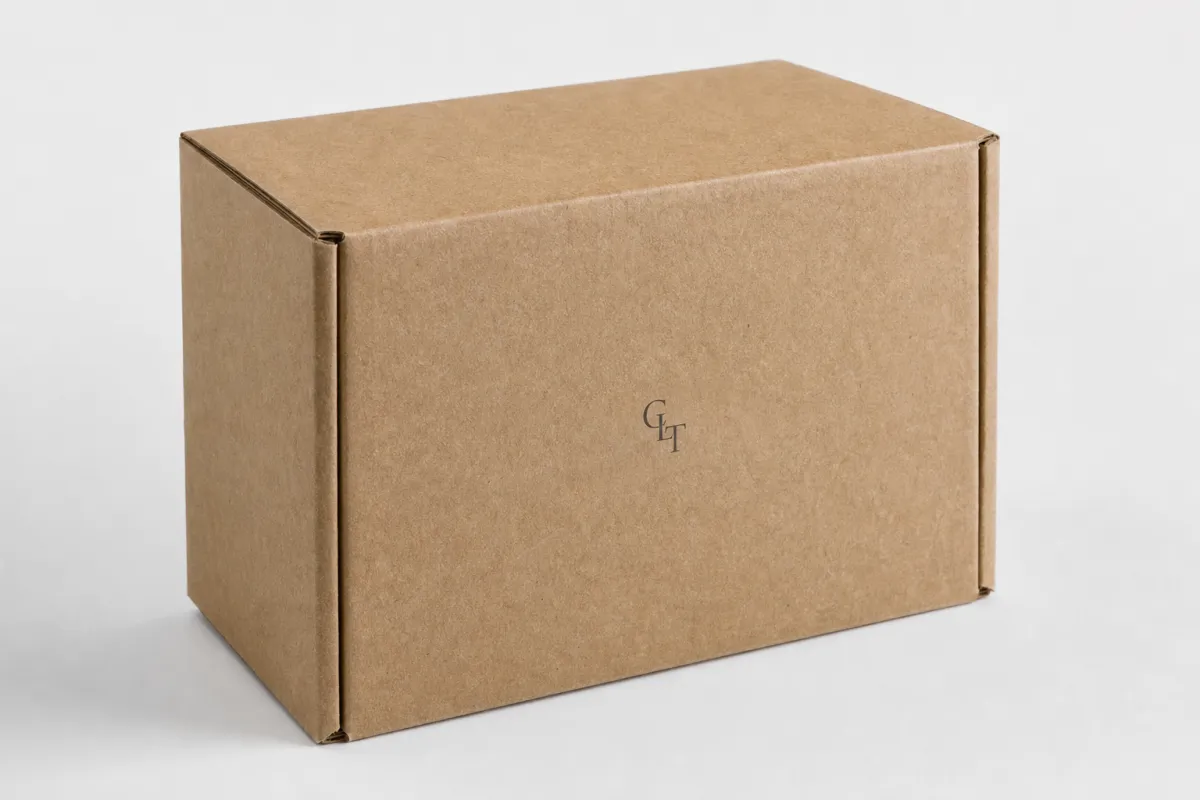
Start with the materials, because the terminology gets muddled fast. Kraft is the outer liner, usually brown, uncoated, and visibly fibrous. Corrugated board is the structure beneath it: one or more fluted mediums sandwiched between liners. Put the two together and you get a carton that can resist crush, stack, and rough handling far better than a folding carton or a plain mailer.
Then comes the logo. That may mean a one-color flexographic print, a multicolor digital print, a litho-laminated face sheet, or even a simple label applied to a stock box. Custom kraft Corrugated Boxes with Logo are not one fixed product. They are a set of choices, and the difference between them is where buyers either save money or waste it without noticing until the invoices arrive.
From a packaging buyer’s point of view, these boxes solve two problems at once. One is protection. The other is presentation. In e-commerce and B2B shipping, that pairing often beats “luxury” packaging that looks polished but arrives dented, split, or oversized. If the product moves in bulk, the carton also has to stack cleanly on a pallet and survive warehouse handling without the edges turning ragged after two trips through receiving.
The smartest way to think about custom kraft corrugated boxes with logo is simple: protection first, branding second, cost control last. If the box is too heavy, too thin, too large, or too decorative for the route it travels through, the math gets ugly quickly. One extra inch of cube can raise freight. One extra print color can lift the unit price. One underbuilt board can create damage claims, and damage claims have a way of appearing precisely where everyone said they would not.
There is a brand dimension too. Brown corrugated once meant “plain shipping.” That is no longer the full story. A clean kraft box with a restrained logo, good typography, and enough breathing room around the mark can look more credible than a loud carton trying too hard. That holds especially true for subscription kits, direct-to-consumer orders, replacement parts, and retail replenishment, where clarity tends to outperform visual noise.
A box should earn its space. If custom kraft corrugated boxes with logo cannot protect the product, hold the shipping load, and carry the brand clearly, the spec is trying to do too much in the wrong order.
A fast gut check helps before anyone approves art or tooling. Ask three questions: how much does the product weigh, how rough is the shipping path, and how much does unboxing matter relative to damage prevention? The answers usually point to a simple flexo-printed shipper, a stronger mailer with inserts, or a more finished retail-style carton. That one decision can save a surprising amount of money later, and it keeps the project from wandering into the kind of overdesign that looks clever in a meeting but feels kinda silly in a warehouse.
How Custom Kraft Corrugated Boxes with Logo Are Made
Production usually starts with a dieline. That is the flat layout showing score lines, panels, flaps, glue areas, and print zones. If the dieline is off, everything downstream starts bleeding time. A logo too close to a fold will crack. A dimension that ignores product clearance will either crush the contents or waste cube. A buyer who skips this stage is not simplifying the process; they are just gonna pay for the mistake later.
Artwork setup comes next. Good files are usually vector-based, ideally AI, EPS, or PDF with outlined fonts or correctly embedded text. With custom kraft corrugated boxes with logo, contrast matters more than people expect because kraft paper is not a white canvas. Dark inks read best. Fine lines can disappear. Small type can break apart. If the logo depends on gradients, reversed microtext, or hairline strokes, the screen preview may flatter the design far more than the carton will.
After artwork, the box moves through cutting, scoring, folding, and gluing. A manufacturer may use rotary die-cutting for faster output or flatbed die-cutting for more complex shapes and tighter tolerances. The carton is then packed flat, bundled, and shipped in master cartons or on pallets depending on the order size and the warehouse plan behind it.
Print methods that actually make sense
Three routes show up most often for custom kraft corrugated boxes with logo, and each one brings a different cost curve and quality result.
| Print method | Best for | Typical strengths | Tradeoffs |
|---|---|---|---|
| Flexographic print | High-volume shipping boxes, one- to two-color graphics | Low unit cost, fast production, good for simple logos and text | Less detail, plate setup cost, color limitations on kraft surfaces |
| Digital print | Lower MOQ orders, seasonal launches, multiple SKUs | No plates, easy artwork changes, strong for short runs | Higher unit cost at scale, may not be ideal for large solid coverage |
| Litho-lam | Retail packaging, premium presentation, photo-heavy branding | Sharp graphics, rich detail, polished shelf appearance | Usually higher cost, more setup, not the most economical shipping choice |
Flexo is the workhorse. It is usually the right answer for custom kraft corrugated boxes with logo that need a clean mark, a product code, and basic branding without turning the carton into a billboard. Digital printing helps when runs are short or artwork changes often. Litho-lam fits better when the box is part of the retail experience and the visual finish needs a more polished look.
Board choice changes both strength and appearance. A single-wall B flute or C flute may work for light to medium product loads. Double-wall board makes sense for heavier contents, longer shipping lanes, or warehouse stacking where the carton sits under pressure for days. The flute also affects print quality, because rougher board can make fine detail look less crisp than the proof suggests. In practice, a strong image on the mockup means very little if the liner grade is fighting the ink.
Proofing saves money, usually by catching avoidable mistakes early. Digital proofs help catch placement issues. Hard samples help catch structural issues. A simple compression test, plus a pilot shipment, shows whether the carton survives real handling. That matters with custom kraft corrugated boxes with logo because print and structure interact. A box can look perfect and still fail once it is taped, stacked, wrapped, or dropped on a corner during receiving.
For buyers who want standards-based checks, common references include compression and transit testing under ASTM methods, plus shipment simulation through organizations such as the International Safe Transit Association. On the packaging side, the Institute of Packaging Professionals is a useful source for industry education and packaging fundamentals. Standards do not design the box for you, but they prevent a lot of bad assumptions from slipping into production.
Cost, Pricing, MOQ, and Quote Factors for Custom Orders
Price is where solid packaging decisions often get derailed. Buyers ask for “a custom box” as if that phrase means anything useful, then compare three quotes built on different board grades, different print methods, different carton counts, and different freight assumptions. That is not a comparison. It is a trap wearing neat formatting.
For custom kraft corrugated boxes with logo, the main price drivers are easy to name: size, board thickness, print complexity, quantity, inserts, finishing, and freight. Large cartons cost more because they use more material and take up more space. Thicker board costs more because it performs better under load. More colors usually mean more setup and more waste. Special coatings, die cuts, and inserts add cost. Freight can sting hard if the carton is bulky but not dense.
Here are realistic budget ranges buyers often see on standard shipping formats, assuming a decent production run and no unusual extras:
- Simple flexo-printed RSC or mailer: roughly $0.35-$1.10 per unit at mid-scale quantities, depending on size and board grade.
- Digital-printed short run: often $0.90-$2.50 per unit, with the unit cost falling as volume rises.
- Litho-lam or presentation-heavy carton: commonly $1.20-$3.50+ per unit, especially if the print coverage is large.
- Inserts or dividers: add anywhere from a few cents to well over $1.00 per set, depending on complexity and quantity.
Those figures are working ranges, not promises. A tiny carton and a heavy shipping case do not obey the same pricing logic. They are still useful because they stop someone from assuming every low quote is a bargain. With custom kraft corrugated boxes with logo, the first line item is rarely the whole story. Landed cost tells the truth; unit price alone usually tells a nicer version of it.
Where MOQ changes the math
MOQ, or minimum order quantity, is where small businesses feel the squeeze first. Digital printing can sometimes support lower quantities because there are no plates. Flexo and litho usually push MOQ higher because setup costs have to be spread over more units. For many buyers, the jump from 500 units to 5,000 units is not just a matter of scale. It is a different pricing structure altogether.
Lower MOQ orders typically carry higher per-unit pricing. That is not a supplier being difficult. It is setup, material handling, and machine time. The press still has to be readied, the art still has to be proofed, and the packaging still has to be cut, stacked, and shipped. If the run is small, those fixed costs have nowhere to disappear.
Sometimes the better move is not to force custom kraft corrugated boxes with logo into a tiny custom run at all. A stock kraft box with a high-quality label or a single-color stamp can be a smarter test-market choice. It gets the product moving without burying cash in a carton spec that may change after the first sales cycle. That is a practical decision, not a compromise.
| Order approach | Typical MOQ pressure | Approximate cost behavior | Best use case |
|---|---|---|---|
| Fully custom printed box | Higher | Better unit economics at scale, higher setup burden | Stable product line, repeated replenishment |
| Stock box + label | Lower | Lower setup, usually higher labor per unit | Launches, short runs, SKU testing |
| Simple one-color flexo box | Middle | Good balance of brand impact and price | Most e-commerce and shipping needs |
Comparing quotes apples-to-apples means lining up the spec sheet first. Ask for the same internal dimensions, the same board grade, the same print coverage, the same ink count, the same master pack count, and the same freight term. Otherwise one supplier is quoting a car and another is quoting the wheels.
For custom kraft corrugated boxes with logo, it helps to ask for pricing at three quantity bands: low, target, and scale. If the unit cost drops sharply at the target band, a larger first order may be worth it. If the savings are tiny, a smaller pilot can be the safer cash decision. Buyers often miss that distinction and end up with a warehouse full of boxes they outgrew or redesigned three weeks later.
If the product is simple and the logo is small, the cheapest choice is not always the plainest box. Sometimes a clean custom printed box is cheaper than a stock box plus label plus labor plus misapplication risk. That is especially true in fulfillment environments where every extra touchpoint adds time and creates room for error.
Process and Timeline: From Artwork to Delivery
The workflow is not mysterious. It gets messy when nobody owns the decisions. A clean process for custom kraft corrugated boxes with logo usually runs through brief, spec sheet, artwork prep, digital proof, sample approval, production, packing, and freight booking. Skip one of those steps and the project starts bending back on itself.
First comes the brief. That should include product dimensions, product weight, inserts, shipping method, warehouse environment, and whether the box must also serve as retail packaging. If the carton is heading to a distributor, stacking in a warehouse, or shipping direct to consumers, say so early. Those details change the spec in ways that are easy to miss if everyone is only talking about the logo.
Then comes artwork. Clean files shorten lead time. If the logo is already vector and the dimensions are settled, proofing can move quickly. If the art needs rebuilding, the logo is low-resolution, or the placement is unclear, the job stalls. That is why one decision-maker matters. Ten half-approvals are slower than one person who knows exactly what they want and can sign off without a chain of guesses.
Typical timing for custom kraft corrugated boxes with logo depends on the print method and whether samples are needed. A simple digital proof may happen in one to three business days. A physical sample or prototype can take about five to ten business days, sometimes longer if the structure is complex. Production for a standard run often lands in the 12-20 business day range after approval, plus freight. Rush orders are possible, and they usually cost more while leaving less room for correction.
Common delays are usually boring, which is exactly why they are expensive. Bad artwork files. Ambiguous dimensions. Late approvals. A missing shipping address. A pallet quote that appears only after production starts. None of those are dramatic. All of them can throw a launch off course.
There is also a difference between production lead time and total lead time. Buyers often hear “two weeks” and assume boxes will arrive in two weeks. They will not. The cartons still need to be printed, cured if needed, packed, and freighted. If the shipment moves by ocean, rail, or a crowded ground lane, the transport leg can become the longest part of the order.
custom kraft corrugated boxes with logo move faster when the buyer prepares the basics early:
- Use vector artwork and name files clearly.
- Confirm the internal dimensions, not just the outer size.
- Pick one person to approve proofs.
- Decide whether the carton needs inserts, dividers, or tape print zones.
- Ask for a sample before the full run if the product is fragile, heavy, or new.
That is the part people skip because it feels administrative. Then the project slips, and everyone points at the supplier. Usually the spec was still floating around in an inbox, and nobody wanted to be the person who made a decision too early.
Choosing Specs for Shipping and Logistics
Good packaging design is not about making the box look large on a mockup. It is about matching the carton to the product and the route. A strong box that is too big wastes freight. A tidy-looking box that is too light can collapse under stacking load. Custom kraft corrugated boxes with logo should be selected with logistics in mind, not only the branding deck.
Start with product weight. Light apparel can often live in lighter board. Dense hardware, glass, supplements, and electronics usually need more structure. Then consider stacking pressure. A carton sitting at the bottom of a pallet needs a different spec than a box that ships one unit at a time. Finally, factor in transit distance. Local delivery, regional freight, and long-haul distribution all treat packaging a little differently, and the box has to survive the worst version of that path.
Internal fit matters more than many teams want to admit. Too much empty space means more void fill, more movement, and more chance of corner damage. Too little clearance means the product rubs, compresses, or tears the board during insertion. For custom kraft corrugated boxes with logo, the right dimension is usually the one that balances protection and cube efficiency, not the one that simply looks tidy on paper.
Moisture is another practical issue. Kraft liners handle normal shipping well, but humid warehouses, cold-chain condensation, or damp loading docks can reduce performance. If the box will live in a harsh environment, ask about board treatment, liner quality, and whether the spec needs to move up a grade. A slightly stronger board can be cheaper than a damage problem that keeps repeating.
Logo placement is not just branding. It is also risk management. Put the mark where tape will not cover it, where pallet wrap will not blur it, and where corner scuffs are less likely to erase the design. A centered logo can look perfect in a render and then get chopped by handling. A more disciplined layout usually survives better in the real world.
That is why custom kraft corrugated boxes with logo should be designed around the actual warehouse flow. Ask where the tape gun lands, how pallets are wrapped, whether the box gets label-applied on one panel, and whether automated packing equipment will crush the panel seams. Packaging design that ignores those realities usually pays for itself through a series of small failures that add up into one large invoice.
For more shipping-specific options, the simplest path may be a box from Custom Shipping Boxes, especially if your brand only needs a clean logo and a reliable transit spec. If the project needs a broader mix of structural and branded formats, the catalog at Custom Packaging Products is a better starting point.
Common Mistakes with Custom Kraft Corrugated Boxes with Logo
The mistakes are predictable, which is what makes them frustrating. Buyers repeat them because they are easy to miss during quoting and expensive to fix after production. Custom kraft corrugated boxes with logo are not hard to buy, but they do punish sloppy specs.
One common error is overdesigning the artwork. Tiny text, thin line art, and crowded elements tend to fail on kraft surfaces. Another is assuming every print method will reproduce the logo equally well. That is wishful thinking. A detailed gradient that looks sharp in digital may look weak in flexo. A buyer who does not ask how the design will be printed is gambling with the result.
Another mistake is choosing the wrong board grade. A heavy product in a lightweight single-wall box is a damage report waiting to happen. The opposite mistake is just as expensive: overbuilding the board for a light item makes the box more costly and often increases shipping cube for no useful gain. The smartest custom kraft corrugated boxes with logo are sized to the product load, not to the instinct that “thicker must be better.” That instinct has burned more budgets than it has saved.
Dimension errors are especially common. A buyer measures the product itself, forgets the insert, forgets the flap thickness, and ends up with a carton that is too tight. Or they overcorrect and create a box with too much empty space. Both are bad. One damages the product. The other raises freight and increases void fill.
Another miss is not thinking about palletization and storage. A carton that looks efficient in a small run can be terrible on a pallet. A shape that nests badly may waste warehouse space. If the boxes are coming in bulk, ask how many units fit per master carton and how many master cartons fit per pallet layer. Those numbers affect receiving, storage, and freight more than most spec sheets admit.
- Bad artwork: logos too small, lines too thin, text too close to folds.
- Wrong board: underbuilt for weight, overbuilt for light products.
- Poor sizing: too much void fill or too little clearance.
- No testing: no pilot run, no ship test, no compression check.
- Unclear quotes: freight, inserts, and setup fees left out of the comparison.
Testing is the safety valve. A small ship test on real routes tells you more than a polished sample ever will. If the product is fragile, request a drop test, vibration check, or compression check that matches the use case. custom kraft corrugated boxes with logo should survive actual logistics, not only a photo shoot.
Another underrated issue is tape visibility. Some teams print huge logos right where tape, labels, and barcodes need to go. Then the box looks messy in fulfillment because the operations team has no usable space. Good packaging design leaves practical room for the people actually handling the carton.
The fastest way to make a packaging project expensive is to revise it after the proof has been approved. That is where change fees, delays, and reruns show up. Before signing off on custom kraft corrugated boxes with logo, check the print position, board grade, inner fit, shipping zone, and pallet count one more time. Fifteen careful minutes beats waiting another two weeks for a corrected run.
Expert Tips and Next Steps for Better Ordering
If you want a cleaner buying process, build the spec before you request quotes. Do not just ask for “a kraft box with a logo.” Give the supplier enough information to quote something real. For custom kraft corrugated boxes with logo, that means dimensions, product weight, desired board grade, print method, quantity bands, and whether you need inserts or retail-ready presentation.
Request a proper spec sheet. It should list outer and inner dimensions, flute type, board construction, logo placement, ink count, carton count per master case, and pallet count if applicable. That sheet becomes your comparison tool. Without it, every quote shifts under your feet, and the cheapest number usually turns out to be the least relevant one.
Order one sample or a short pilot run if the product is fragile, expensive, or new. Sampling can feel like a delay. It is cheaper than a warehouse full of wrong boxes. A pilot also reveals whether the logo survives handling. That is a different question from whether it looks attractive on a PDF, and the two answers are often not the same.
Ask suppliers to quote three volumes: a low run, a target run, and a scale run. That comparison shows the real MOQ tradeoff and helps you decide whether to commit or test demand first. For many custom kraft corrugated boxes with logo projects, the price break at the middle band is the sweet spot. Sometimes it is not. Let the numbers make that case, not habit.
Keep the logo simple if the box is doing shipping duty. A strong mark, clean typography, and enough negative space usually age better than a crowded design. Simple also travels better. It prints cleaner, reads faster, and survives rough handling with less visual damage.
Use standards as a filter, not a marketing line. If a supplier talks about compression, ask whether the spec aligns with ASTM-style testing. If the carton will move through parcel networks, ask about ISTA transit simulation. If you need sustainable fiber, ask for FSC-certified paper where available and verify the claim. Those checks are not glamorous. They are how you avoid the “trust me” packaging pitch.
My practical advice is simple: measure the product, decide the shipping path, pick the print method, sample the box, then place the order. Do those five things and custom kraft corrugated boxes with logo stop being a vague buying problem and become a controlled part of the packaging system.
If you are comparing structures, get a sample in hand before you scale, because a carton can look right and still feel wrong once tape, stacking, and freight get involved. The actionable move is to build one spec sheet, request pricing at three volume tiers, and test the box on the same route it will actually travel. That is the shortest route to a durable order decision.
FAQ
What products fit best in custom kraft corrugated boxes with logo?
They fit products that need crush resistance and a clean branded look. E-commerce orders, subscription kits, spare parts, and retail replenishment are common fits for custom kraft corrugated boxes with logo. If the item is fragile or heavy, specify inserts or a stronger board grade so the carton does not carry more risk than it should.
How much do custom kraft corrugated boxes with logo cost per unit?
Unit cost drops as quantity rises, but print method and board grade matter a lot. Setup fees and freight can change the total more than people expect on custom kraft corrugated boxes with logo. Ask for pricing at low, mid, and target volume so the comparison is real and not just a nice-looking quote.
What is a normal MOQ for custom kraft corrugated boxes with logo?
It depends on the print method: digital can be lower, flexo and litho usually need higher runs. MOQ may also be tied to board size, color count, or tooling requirements for custom kraft corrugated boxes with logo. If you are testing demand, ask about a pilot run or a label-on-stock-box option before you commit to a big order.
How long does production take for custom kraft corrugated boxes with logo?
Proofing and sampling can be fast if your files are clean and specs are clear. Production and freight are the real timeline drivers for custom kraft corrugated boxes with logo, especially during busy periods. Build in buffer for revisions, approvals, and any rush-related premium so the schedule does not fall apart at the end.
What file format is best for the logo on custom kraft corrugated boxes with logo?
Vector files like AI, EPS, or PDF are usually the safest choice. Keep text bold, lines simple, and colors limited if you want sharp print on custom kraft corrugated boxes with logo. Always request a digital proof before signing off on production, because a clean file still needs correct placement and sizing.

