Buyer Fit Snapshot
| Best fit | Custom Kraft Folding Cartons Bulk Order Pricing projects where brand print, material claims, artwork control, MOQ, and repeat-order consistency need to be specified before quoting. |
|---|---|
| Quote inputs | Share finished size, material target, print colors, finish, packing count, annual reorder estimate, ship-to region, and any compliance wording. |
| Proofing check | Approve dieline scale, logo placement, barcode or warning zones, color tolerance, closure strength, and carton packing before bulk production. |
| Main risk | Vague material claims, crowded artwork, missing packing details, or unclear freight terms can make a low unit price expensive after revisions. |
Fast answer: Custom Kraft Folding Cartons Bulk Order Pricing: Board, Finish, Dieline, and Unit Cost should be specified like a repeatable production item. The safest quote records material, print method, finish, artwork proof, packing count, and reorder notes in one written spec.
Production checks before approval
Compare the actual filled-product size with the drawing, then confirm tolerance on folds, seals, hang holes, label areas, and retail display edges. Reserve space for logos, QR codes, warning copy, and material claims before decorative graphics fill the panel.
Quote comparison points
Review material grade, print process, finish, sampling route, tooling charges, carton quantity, and freight assumptions side by side. A quote is only useful when the supplier can repeat the same color, closure quality, and packing count on the next order.
Custom Kraft Folding Cartons Bulk Order Pricing Guide
If you are comparing a custom kraft folding cartons bulk order against a lower-looking quote from a lighter spec, pause and look at landed cost, not just the unit price. A carton that saves two cents on paper but triggers a reprint, a freight penalty, or a line jam is not the cheaper carton. For repeat product packaging, the real savings show up when the dimensions stay fixed, the artwork stays stable, and the order quantity is large enough to absorb setup costs cleanly.
Kraft works well for a lot of brands because it gives you straightforward branded packaging without pushing the program into unnecessary ornament. It also tends to keep retail packaging consistent across replenishment cycles, which matters more than people admit once a product line starts growing. The result is a program that is easier to buy, easier to store, and easier to explain to finance.
Why Custom Kraft Folding Cartons Bulk Order Lowers True Cost
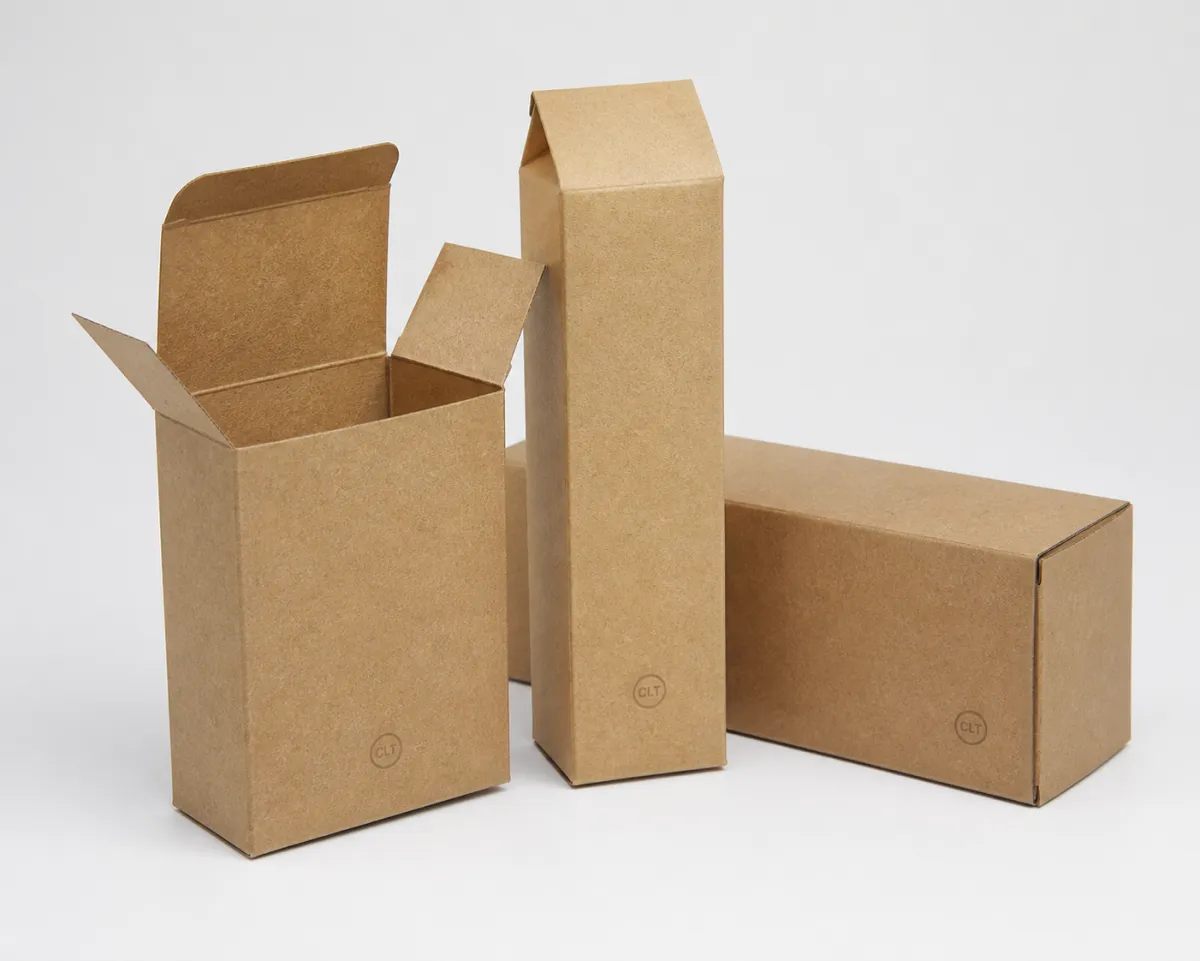
Custom kraft folding cartons bulk order pricing works best when the SKU is stable and demand is repeatable. That sounds simple, yet many buyers still compare carton quotes one line at a time. In practice, the cheapest carton quote can lose once freight, repacking, damage, and the cost of reworking artwork or dielines after launch are added in. A custom kraft folding cartons bulk order is not just a purchase; it is a supply choice that affects the rest of the packaging program.
I have seen teams get burned by a spec that looked fine on paper but was a little too loose on the fill line. The flat sample passed, the press proof looked clean, and then production started slipping because the product shifted more than expected. That kind of miss is common enough that it is worth slowing down before approval. A carton only looks cheap until it starts making extra work for operations.
Think about a brand shipping 8,000 units per month. A carton spec that is slightly oversized may add void fill, increase pallet count, and push freight into a higher bracket. A spec that is too loose may look fine on a flat sample but fail on the filling line. The apparent savings disappear fast. That is why experienced buyers compare unit price against total program cost, including storage, handling, and replacement risk. In a well-run custom kraft folding cartons bulk order, those secondary costs matter as much as paperboard cost.
Bulk buying also gives procurement teams something very practical: fewer changeovers. Instead of issuing small purchase orders every few weeks, the team can plan one larger run, align inventory windows, and simplify reorder approval. For product packaging programs with stable dimensions, that lowers administrative time and reduces the chance of mismatched lots sitting in the warehouse. It also keeps package branding more consistent because the same board, the same ink load, and the same die stay in play.
There is another angle buyers sometimes miss. Kraft has a natural look that works well for brands trying to signal restraint, material honesty, or sustainability without overdesigning the carton. That can help a product line feel coherent across sizes and scents, especially in retail packaging where shelf presentation has to hold up across multiple SKUs. A custom kraft folding cartons bulk order can therefore support both cost discipline and visual discipline.
A carton is only cheap if it arrives flat, prints cleanly, and runs without jams. Once those three things break, the unit price stops telling the real story.
From a buyer's point of view, bulk works best when three conditions are true: the product size is locked, the annual demand is predictable, and the carton will stay in service long enough to justify tooling. If those conditions are weak, the order can still work, but the math changes. That is why a custom kraft folding cartons bulk order should be planned as a program, not a one-off transaction.
For companies comparing channels, it helps to look at related packaging structures too. Some programs may shift into Custom Packaging Products with inserts, trays, or secondary cartons. Others may pair cartons with Wholesale Programs to stabilize long-run supply. The key is to choose a structure that lowers total cost without weakening the product experience.
Sustainability claims should stay grounded. Kraft board can support waste reduction goals because it often uses less ink coverage, simpler finishes, and more straightforward recycling pathways, but the outcome depends on the full spec. If you need environmental documentation, ask for FSC-certified options and confirm what the supplier can document. For broader packaging context, the ISTA resource library is useful for transport testing, and the FSC site explains chain-of-custody basics.
Custom Kraft Folding Cartons Bulk Order Product Details
A custom kraft folding cartons bulk order can be built in several structures, and the right choice depends on the product, the fill line, and the shelf story. The most common styles are tuck end, reverse tuck, auto-lock bottom, and custom die-cut variations. Tuck end styles are often the most economical because they are simple to convert and stack flat well. Auto-lock bottoms cost more, but they reduce assembly time and improve bottom strength for heavier fills. That matters in a custom kraft folding cartons bulk order where labor efficiency can be as important as paper cost.
Board selection is the next decision. Natural brown kraft gives a raw, earthy look and tends to suit brands that want a simple, honest presentation. Coated kraft is better when artwork needs sharper contrast, cleaner typography, or a more polished retail finish. Recycled-content board may support procurement goals, but buyers should ask about stiffness, crush performance, and print behavior. Not every recycled option behaves the same in a custom kraft folding cartons bulk order, and that difference shows up fast in the real world.
Print coverage changes the look of kraft stock more than many buyers expect. One-color black or deep green can look crisp and premium because the brown substrate stays visible. Full-coverage art can work too, but it increases ink usage, may require more careful color management, and can mute the natural kraft character that makes the material appealing in the first place. For branded packaging, restraint often wins. Honestly, sometimes the cleaner job is the one that feels less like it is trying too hard.
| Board / Style | Best Fit | Relative Cost | Practical Notes |
|---|---|---|---|
| Natural brown kraft, tuck end | Light retail goods, simple product packaging | Lowest | Good for clean typography and lower ink coverage |
| Coated kraft, reverse tuck | Retail packaging with tighter visual requirements | Mid | Sharper print, better contrast, still cost-aware |
| Recycled-content board, auto-lock bottom | Heavier fills, subscription packs, e-commerce support | Mid to higher | More assembly efficiency and better base support |
| Custom die-cut kraft with window | Display-led package branding | Higher | Adds shelf visibility but increases tooling and conversion complexity |
Optional features can help, but each one should earn its place. Windows help shoppers see the product; perforations can make opening easier; tear strips improve access in subscription packaging; inserts stabilize fragile contents; specialty closures help with repeated opening. Each add-on also adds tooling, setup, or assembly time. A focused custom kraft folding cartons bulk order keeps only the features that support performance.
These cartons suit a wide range of uses: cosmetics, candles, supplements, apparel accessories, small hardware, and light food-adjacent products where the regulatory details are already handled elsewhere. They are not a universal answer for heavy industrial use. If the product is dense, sharp-edged, or subject to significant compression, a different board grade or structure may be better. A responsible supplier should say that clearly before quoting a custom kraft folding cartons bulk order.
For brands building a packaging line with more than one box size, the value is in the system. A stable dieline family can reduce artwork variation, simplify purchasing, and support better retail packaging consistency across a whole product family. That is often more useful than chasing a slightly lower unit price on a single carton size.
Specifications That Keep Reorders Consistent
A custom kraft folding cartons bulk order only stays efficient if the spec is locked before production starts. The most important dimensions are internal length, width, and depth. Internal size matters more than external size because it tells you whether the carton will actually fit the product, the insert, or the wrapped unit. Buyers should also confirm board caliper, panel layout, score locations, and the finished flat size. Those details determine how the carton folds, stacks, and ships.
Tolerances are where repeatability lives or dies. A carton that is technically within range but varies too much from batch to batch can cause line stoppages or uneven stacking. For most programs, buyers should ask how the supplier controls dimension variation and what inspection happens at conversion. In a large custom kraft folding cartons bulk order, even a small variation can show up as wasted labor when cartons do not feed cleanly.
Structural fit matters too. If the product uses an insert, sleeve, or wrapped component, the carton should be designed around that final configuration rather than the bare item. Weight support is another point many teams under-specify. A carton that is fine for 3 ounces may be poor at 8 ounces if the bottom panel or side seam is not designed properly. That is why a custom kraft folding cartons bulk order should include product weight, not just dimensions.
Artwork setup should be treated as a production task, not a design afterthought. The file should include the approved dieline, bleed, safe zones, barcode placement, and clear notes on ink density or special varnish needs. If the carton uses only one or two colors, the print file can be simple. If the design includes full coverage, fine line art, or dense type, the proofing stage becomes more important. That is standard packaging design discipline, not a nice-to-have.
Storage and shipping details matter before the first carton is printed. Ask how many cartons come per bundle, how many bundles per master case, and how many cases fit per pallet. Flat-packed cartons can be surprisingly efficient, but only if the pallet configuration is planned around your warehouse footprint. A custom kraft folding cartons bulk order that looks inexpensive per unit can become expensive if it creates awkward receiving or repacking work.
For teams operating with formal testing expectations, transport testing standards can help. Some buyers reference ISTA procedures for distribution simulation, especially if the package must survive parcel networks or stacked pallet loads. The idea is not to over-test every carton, but to verify that the structure matches the route it will travel. That is a practical safeguard, not a theoretical one.
One useful habit is to keep a master spec sheet. Include carton style, board grade, caliper, internal dimensions, print method, finish, inserts, barcode position, pallet configuration, and approved tolerances. That document becomes the anchor for every repeat custom kraft folding cartons bulk order. Without it, reorders slowly drift, and drift is where small packaging problems get expensive.
Custom Kraft Folding Cartons Bulk Order Pricing, MOQ, and Quote Drivers
The price of a custom kraft folding cartons bulk order is driven by five main variables: size, board grade, print complexity, finishing, and quantity. Size affects material use and press efficiency. Board grade influences stiffness, print behavior, and cost per sheet. Print complexity changes setup time and ink consumption. Finishing adds conversion steps. Quantity spreads setup costs across more units. If a quote does not explain those five items, the buyer is not seeing the whole picture.
MOQ is not a single universal number. It changes with board type, carton dimensions, and print setup. A small one-color job may start lower than a multi-color carton with a custom die. In many programs, the real cost break happens when the run is large enough to absorb plates, dieline work, and machine setup. That is why a custom kraft folding cartons bulk order often looks expensive at 1,000 units but becomes far more efficient at 5,000 or 10,000 units.
As a general planning range, a simple kraft folding carton might land around $0.18-$0.35 per unit at mid-volume, while more complex builds with windows, heavier board, or higher print coverage can move into the $0.30-$0.65 range or above. Tooling and plates can add $250-$1,200, depending on complexity. Freight is separate. Those numbers are directional, not universal, but they are realistic enough to help a buyer evaluate a custom kraft folding cartons bulk order without guessing.
Comparing quotes on an equal basis is where many teams lose money. One supplier may bundle tooling into the unit price. Another may leave it out and add it later. One may quote delivered pricing; another may quote ex-works. One may include samples and proofing; another may charge separately. For a fair comparison, line up all four elements: tooling, unit cost, freight, and sample/proof charges. A custom kraft folding cartons bulk order should be judged on total cost, not on the boldest number on page one.
There are real ways to save without hurting quality. Standardizing size across related SKUs can reduce dieline complexity. Limiting ink coverage preserves the kraft look and lowers print cost. Choosing a common carton style across a product family can cut setup time. Avoiding unnecessary coatings can also help, provided the carton still protects the product and survives handling. In practice, the smartest custom kraft folding cartons bulk order is usually the one with the fewest unnecessary variables.
Here is a simple checklist to send with your RFQ:
- Internal dimensions and product weight
- Carton style such as tuck end, reverse tuck, or auto-lock bottom
- Board preference and target look
- Artwork files with dieline, barcode, and bleed
- Quantity and reorder expectations
- Delivery address and preferred shipping method
- Any add-ons like windows, inserts, tear strips, or coatings
That list shortens the quote cycle and makes the numbers more trustworthy. It also helps the supplier spot problems early. A clear brief is one of the fastest ways to turn a custom kraft folding cartons bulk order from a vague inquiry into a workable production quote.
Process, Timeline, and Lead Time for Production
A custom kraft folding cartons bulk order usually moves through six steps: inquiry, specs review, quote approval, dieline setup, proofing or sampling, production, and shipment. Teams that arrive with complete information move faster because the supplier can focus on execution instead of chasing missing details. That is especially true for repeat orders, where the dieline and artwork may already be approved.
In a clean workflow, the spec review and quote stage can be quick. The longer steps are usually proofing and sampling. A digital proof might turn around in a day or two, but a physical sample can take longer if the carton has a complex die line or a specialty closure. Once approval is complete, production often runs in a predictable window, especially for a custom kraft folding cartons bulk order with standard print and no unusual finishing.
Common delay points are easy to predict. Late file changes are the biggest one. Unclear measurements come next, especially when buyers measure the product instead of the final packed unit. Approval loops on typography, barcode placement, or color density can also stall the schedule. If the team wants a smooth custom kraft folding cartons bulk order, it should lock the artwork and dimensions before asking for a hard date.
Lead time depends on order size, print complexity, and freight method. A repeat run with approved artwork may move in 10-15 business days after proof approval. More complex jobs, or orders needing a fresh sample, can take longer. Sea freight lowers transport cost but adds calendar time. Air freight is faster but more expensive. Buyers planning a custom kraft folding cartons bulk order should map lead time against actual stock levels, not just the supplier's promised production window.
Inventory planning matters more than many teams admit. If your carton stock drops too low before the reorder lands, the production line absorbs the delay. A better approach is to reorder before the warehouse hits the danger zone, then maintain a buffer based on actual consumption. For seasonal brands, the buffer should be larger because demand spikes can be hard to recover from. A disciplined custom kraft folding cartons bulk order is part of supply planning, not just print buying.
One practical rule helps here: the more repeatable the program, the more you should standardize documentation. Keep one master proof, one approved sample reference, one spec sheet, and one freight profile. That makes every future custom kraft folding cartons bulk order faster, cheaper to approve, and less likely to drift off spec.
Packaging teams often compare lead times across different structures. If you are evaluating carton options alongside trays, sleeves, or Custom Printed Boxes, ask which format gives the best balance of speed and line efficiency. Sometimes the fastest structure is not the cheapest, but it may still reduce total project risk.
Why Choose Us for Custom Kraft Folding Cartons Bulk Order
A dependable custom kraft folding cartons bulk order partner should do more than quote a price. The real value is accuracy, repeatability, and communication that reduces surprise. Buyers need a supplier that can translate a packaging brief into a production-ready carton without turning every decision into a debate. That matters more as order size grows, because mistakes scale quickly.
Quality control should be visible, not hidden. The strongest programs check dimensions, scoring, fold consistency, print alignment, and carton performance before shipping. That protects the buyer from receiving a pallet of cartons that look fine in a sample but behave differently in production. In a custom kraft folding cartons bulk order, consistency is worth more than a fancy sales pitch.
Practical guidance is another reason buyers stay with a good supplier. A team that understands packaging design can recommend a smaller ink area, a stronger bottom structure, or a simpler closure when that keeps the carton running better on the line. That kind of advice can save money without flattening the brand story. It also helps retail packaging look intentional instead of overdesigned.
Documentation is part of the service. Clean proof notes, approved dielines, pallet counts, and reorder records make future runs easier. That is especially helpful for companies buying through Wholesale Programs, where the supply schedule has to stay stable across multiple launches. A well-managed custom kraft folding cartons bulk order should feel controlled from quote to receipt.
Compare that with a supplier that replies slowly, leaves specs vague, or treats every reorder like a fresh start. The hidden cost is not just time. It is also rework, delay, and the pressure that lands on procurement, operations, and sales when the carton supply slips. For package branding programs, that instability can be more expensive than a slightly higher quote from a responsive partner.
We also see value in giving buyers the right level of trade-off information. If a design choice will raise cost, the buyer should know the range. If a carton style is better for shelf impact but weaker for freight, that should be said plainly. That kind of honesty helps brands build packaging that fits the business instead of just the mood board. For teams comparing structural options, our Custom Packaging Products pages can help frame the decision before the RFQ goes out.
In short, the best custom kraft folding cartons bulk order partner is one that helps you protect margins, control quality, and keep replenishment orderly. That is not hype. It is basic operating discipline, and it shows up in every reorder.
Next Steps to Start Your Custom Kraft Folding Cartons Bulk Order
The fastest way to move a custom kraft folding cartons bulk order forward is to confirm four things first: carton dimensions, product weight, print coverage, and estimated annual volume. Those four inputs drive most of the quote. If they are missing, the supplier can only guess, and guessing is expensive once production starts.
From there, prepare a clean RFQ package. Include dieline files, artwork, quantity, delivery address, preferred timeline, and any special requirements such as inserts, coatings, or barcode placement. If the product fit is not fully locked, request a sample or prototype before approving full production. A prototype may add time, but it can prevent a bad fit that would hurt the whole custom kraft folding cartons bulk order.
It also helps to request two or three production scenarios. For example, compare one option with minimal print, one with a coated surface, and one with a window or insert. That side-by-side view shows how quantity, finish, and freight alter the final price. For a lot of buyers, that comparison is more useful than a single quote because it reveals where the savings really sit in a custom kraft folding cartons bulk order.
If your product line is still evolving, keep the carton family simple. Standardized dimensions, a stable board choice, and a restrained print system make future reorders easier. If you need to tighten the brief, review the resources in our FAQ and then move toward a quote-ready package. That is usually the cleanest path from planning to production.
Custom kraft folding cartons bulk order buying works best when the program is treated as a repeatable system, not a one-time print job. Lock the spec, compare total landed cost, and Choose the Right carton structure up front, and the order becomes easier to manage and easier to scale. The practical takeaway is simple: a good bulk carton program should reduce waste, hold its print quality, and keep reorders predictable even when demand shifts.
What is the usual MOQ for a custom kraft folding cartons bulk order?
MOQ depends on board type, print method, and carton size rather than a single universal number. Higher quantities usually lower the per-carton cost because setup and tooling are spread across more units. If you need a lower MOQ for a custom kraft folding cartons bulk order, expect a higher unit price or fewer customization options.
What information should I send for a custom kraft folding cartons bulk order quote?
Send internal dimensions, product weight, closure style, artwork files, quantity, and target delivery date. Include any special requirements such as inserts, coatings, barcode placement, or retail shelf constraints. The more complete the brief, the faster the quote and proofing process for a custom kraft folding cartons bulk order.
How long does a custom kraft folding cartons bulk order usually take?
Lead time is usually driven by proof approval, sampling needs, and production volume. Repeat orders move faster when the dieline and artwork are already approved. Rush schedules are possible, but they depend on file readiness and factory capacity for the custom kraft folding cartons bulk order.
Can custom kraft folding cartons bulk order packaging still look premium?
Yes, premium presentation can come from clean graphics, sharp typography, and the right board finish. Kraft stock often looks stronger when the design uses contrast well and does not overcrowd the panel. Simple embellishments like spot inks or a matte finish can elevate the package without overcomplicating a custom kraft folding cartons bulk order.
What affects shipping cost on a custom kraft folding cartons bulk order?
Freight is influenced by carton count, pallet count, box size, and how tightly the cartons stack flat. Larger cartons and higher pallet volume usually raise shipping cost even if the unit price looks attractive. Packaging the order efficiently can reduce freight waste and simplify warehouse handling for a custom kraft folding cartons bulk order.

