When a parcel reaches a customer, the outer pack has already shaped part of the brand impression. That is why custom kraft mailers with logo matter: they signal care, consistency, and a deliberate packaging system before the product is even opened. For ecommerce brands, the value is not just visual. The mailer has to protect the product, pack efficiently, and stay within budget.
Mailers are often treated as a simple supply item, but they behave more like a compact packaging structure. The substrate, closure, print method, and dimensions all affect shipping performance and presentation. When those pieces are aligned, the mailer feels intentional rather than decorative.
Kraft works because it is straightforward. It can look earthy, premium, or utilitarian depending on the print and construction, which makes it a practical choice for apparel, accessories, subscription kits, and other lightweight goods. The goal is not to make the mailer the hero. It is to make sure the package supports the product and the brand without adding avoidable cost.
What Custom Kraft Mailers with Logo Actually Signal
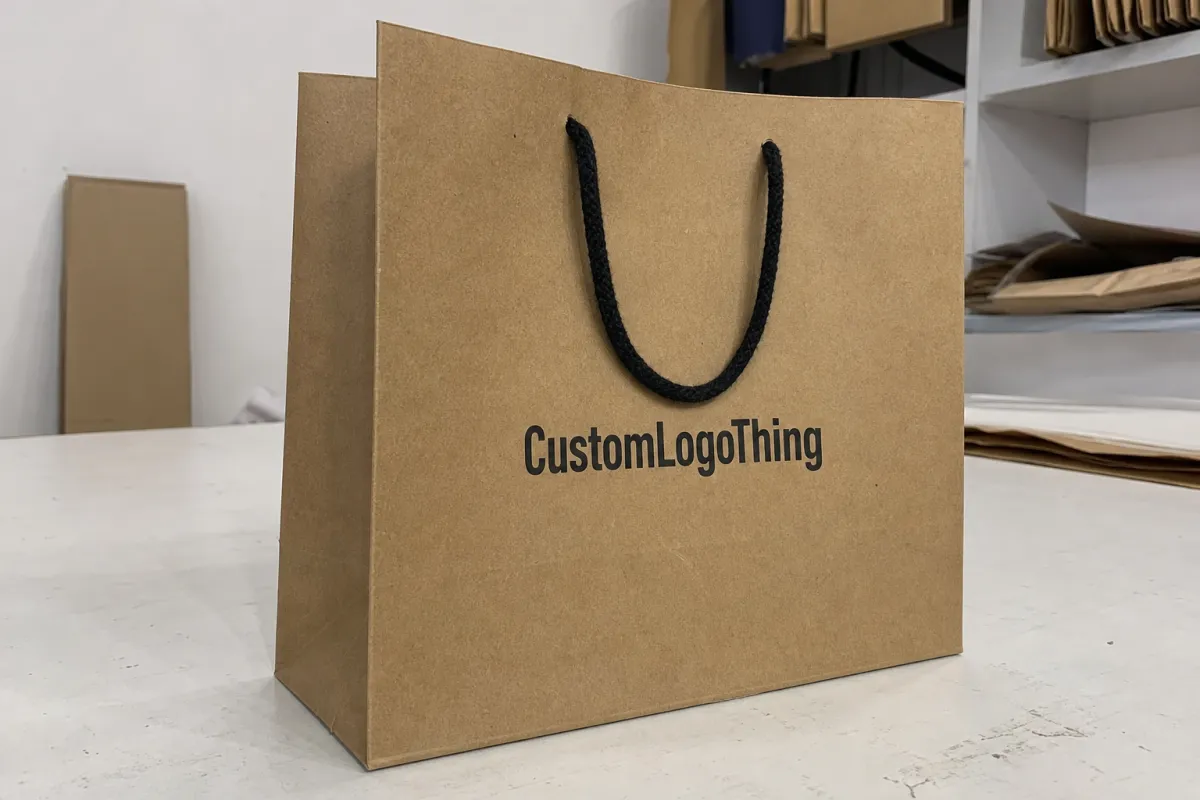
A kraft mailer is often the first physical touchpoint a buyer sees, so even a simple logo placement carries weight. With custom kraft mailers with logo, the outer surface tells the customer the order was planned, not improvised. That matters for brands trying to look established without moving into expensive presentation packaging.
The format can vary: folded paperboard mailers, semi-rigid paper mailers, or pouch-style structures with a peel-and-seal strip. The right choice depends on the product. A soft garment does not need the same build as a small rigid item, and forcing the wrong structure into service usually creates waste or damage.
The kraft finish adds useful texture and visual restraint. A centered mark, a corner logo, or a light repeat pattern often reads cleaner than a full-coverage design. For many buyers, the best result is a mailer that looks branded from a distance but still feels practical when handled.
From a purchasing standpoint, the main question is not whether the mockup looks attractive. It is whether the pack fits the product, closes correctly, and survives transit. Size, stiffness, print area, and seal style determine whether the mailer works as shipping packaging or just looks good in approval files.
Good branding here is quiet and functional. The logo does not have to dominate the panel to do its job. In fact, simpler placement often improves readability and keeps the design clear when folds, seams, and handling come into play.
How the Material, Seal, and Print Layers Work
Material choice drives most of the performance. Kraft mailers are commonly made from paperboard or multi-layer paper constructions, and board weight is one of the most important specs. Lighter builds can work for soft goods, while heavier or awkward products usually need more stiffness to resist bending, puncture, and corner crush.
Recycled content should be reviewed alongside fiber quality and structure. A mailer can contain recycled fiber and still perform well if the build is right. The real question is what the mailer must survive: stacking pressure, conveyor friction, parcel drops, and the occasional rough sort. For teams that want a shipping-focused reference point, the ISTA test standards are useful because they address transit conditions directly.
Print method changes both cost and finish. Flexographic printing is often the best fit for simple logos and repeat volumes. Digital printing works well for lower quantities, more color variation, or faster setup. Litho-lam style builds can deliver a premium look, but they usually raise cost and tighten requirements around artwork prep and converting tolerance.
- Flexo suits one-color logos, clean line work, and larger runs.
- Digital is useful for shorter runs and quicker proof cycles.
- Litho-lam style builds fit premium presentation, but they increase budget pressure.
Closure details are just as important as the print. A peel-and-seal strip speeds packing and keeps the closure more consistent. A tear-open feature improves the unboxing experience when the brand wants a neat reveal. The fold geometry also matters, because a logo placed too close to a seam or stress point can shift, warp, or disappear once the mailer is assembled.
Artwork placement needs the same discipline. Safe zones, bleed, and seal-clear areas should be checked on the dieline before approval. A logo can look balanced on screen and still land awkwardly in production if it sits too close to a fold or edge. That is one of the easiest ways to turn a clean spec into a rework problem.
For sourcing language, the FSC framework is helpful when buyers want to understand certified paper options and chain-of-custody claims. It does not replace testing, but it gives a clearer way to compare responsible sourcing statements.
Pricing, MOQ, and Unit Cost Drivers
Mailer pricing is driven by a few predictable variables. Size comes first. Smaller formats use less board and usually run more efficiently through printing and converting. Larger mailers cost more in material, and they also increase freight volume, which can matter more than buyers expect.
Board weight is the next major factor. Stiffer builds require more fiber and can be more demanding to convert. Print coverage also affects cost. A single-color logo is far cheaper to produce than a full-panel design with multiple placements or multiple ink colors. More colors usually mean more setup, more inspection, and more opportunity for variation.
Minimum Order Quantity is where first-time buyers often see the biggest jump. Custom setup costs have to be spread across the run, so smaller quantities tend to carry a higher unit price. As volume rises, the per-piece cost usually improves because the fixed work is distributed over more mailers. A 3,000-piece run and a 10,000-piece run can look very different even if the spec is similar.
| Mailer Type | Typical Qty | Approx. Unit Cost | Best Fit |
|---|---|---|---|
| Plain kraft mailer | 5,000+ | $0.22-$0.34 | Basic shipping with minimal branding |
| Single-color logo mailer | 3,000-10,000 | $0.28-$0.45 | Lean branded packaging for repeat shipments |
| Custom-sized printed mailer | 5,000-20,000 | $0.36-$0.62 | Fit-critical packaging with tighter presentation goals |
| Premium laminated mailer | 10,000+ | $0.55-$0.90 | Retail packaging look with stronger visual finish |
Those prices are directional, not fixed. Freight, storage, carton count, spoilage allowance, and delivery terms can all change landed cost. The cleanest quote comparison uses the same dimensions, same board spec, same print method, and same delivery assumption. A lower piece price can become the more expensive option once freight or rework is included.
Under-specifying the mailer is another hidden cost. If the board is too soft or the format is too loose, damaged shipments quickly erase any savings. That risk is highest for heavier accessories, small hard goods, and products with corners that can stress the structure. Saving a few cents per unit is not helpful if replacement orders and support issues consume the margin later.
If you are comparing packaging types, it helps to look at the broader system. Our Custom Packaging Products page is useful when you want to compare mailers with other structures, and Custom Poly Mailers are worth reviewing if moisture resistance and lower weight matter more than a kraft look. The best choice is the one that fits both the product and the budget.
Production Process and Lead Time Planning
The production path is straightforward, but timing depends on how clean the inputs are. It starts with the brief: product size, quantity, artwork, and shipping environment. Then comes the dieline, which shows the actual folded geometry of the mailer. After that, the art team checks placement, bleed, seal zones, and any copy that needs to stay clear of folds.
Once the proof is approved, the plant prepares the material, prints the design, converts the blanks, and packs the finished mailers. Even a simple order moves through several steps before it ships. That is why approval speed matters. Every revision after proof approval can push the schedule, and custom board sourcing or unusual finishing can extend lead time further.
For a standard run, many teams see roughly 12-15 business days from final proof approval, but the actual timing depends on plant load, print method, and revision speed. Smaller digital runs can move faster. Heavier coverage, special finishes, or custom formats usually add time. Peak selling seasons can also stretch production queues even when the spec itself is simple.
Before release, four approvals should be locked:
- Logo placement on the actual dieline, not just a flat mockup.
- Color expectation, including Pantone references if brand color control matters.
- Closure function, so the peel-and-seal strip or tear-open feature works as intended.
- Pack-out dimensions, so the item fits without forcing or excess void space.
Quality checks should continue after proof approval. A first-run sample should be tested under real handling conditions. Look for seal strength, print rub resistance, corner crush, panel scuffing, and whether the mailer still closes cleanly after the product is inserted. If the design uses dark ink on kraft, check for coverage consistency and fiber show-through.
Lead time planning should also include a reorder window. If a launch performs well, stock can disappear faster than forecast. Keeping a buffer avoids emergency freight, rushed approvals, and last-minute substitutions. That is especially useful when custom kraft mailers with logo support a launch campaign, subscription drop, or seasonal product line.
Common Mistakes That Make Mailers Fail
The most common mistake is sizing the mailer to the product’s outside dimensions and ignoring inserts, wrap, labels, and void space. If the item is forced in, the seal can fail or the panel can bow. If the mailer is too loose, the product shifts and the pack looks sloppy before it even reaches the customer.
Another frequent problem is choosing a print treatment that looks good on screen but does not survive transit. Some inks and finishes scuff, crack, or rub off when mailers move through sorting equipment or stack against other parcels. The proof image is not enough. Sample testing should include rough handling, not just visual review.
Heavy or awkward products need stronger construction, not just better graphics. A logo cannot make up for weak board, poor seal design, or the wrong mailer format. If the product has corners, weight concentration, or a rigid insert, the structure has to be engineered for that load.
There is also a line between retail packaging and shipping packaging. A mailer can feel premium, but it still has to survive the parcel network. If the goal is a shelf-forward look, the spec may need to move closer to presentation packaging. If the main job is shipping protection, durability should come first.
Test samples on the actual packing line. A mockup on a desk will not show how fast the seal closes, whether the flap catches, how the logo lands when folded, or whether the operator needs two hands where one would do. Real handling reveals the problems early.
"The best mailer is the one that fits the product, packs cleanly, and still looks intentional when it reaches the customer."
Expert Tips for a Cleaner First Run
Keep the logo system simple at the start. One strong placement on the front panel or flap is usually enough, especially when the kraft texture already carries part of the design. A second placement can work if it has a clear reason, but too many marks can crowd the fold lines and weaken the layout.
Check an unprinted sample beside the product before locking artwork. That makes scale issues obvious right away. Teams often find that a logo which looked fine on screen is either too small to read at distance or too large for the panel once the fold geometry is real. A physical check prevents avoidable revisions.
Use the same supplier checklist every time:
- Material: board weight, recycled content, and stiffness.
- Print method: flexo, digital, or laminated presentation build.
- MOQ: the actual minimum tied to setup economics.
- Lead time: from proof approval, not from first inquiry.
- Freight: carton count, palletization, and landed cost.
- Support: proofing help, dieline checks, and revision clarity.
That checklist keeps the conversation focused on procurement, which is where mailer buying succeeds or fails. Even though the structure is simpler than a folding carton, the decision logic is the same: fit, finish, cost, and delivery timing all have to work together.
For brands building a wider packaging line, it helps to think of the mailer as part of a system. A kraft mailer can echo shipping cartons, inserts, labels, and even retail-ready packaging. That consistency makes the brand feel more stable and easier to trust. It is one reason buyers return to custom kraft mailers with logo after the first run instead of treating them as a one-time experiment.
A strong first order is narrow enough to control and honest enough to reveal weak points. If the logo is readable, the seal holds, the product fits without force, and the landed cost still works, the mailer is doing its job. After that, scaling is mostly a repeatability problem.
Are custom kraft mailers with logo strong enough for ecommerce shipping?
Yes, if the board weight and closure style match the product weight and pack-out. Light apparel and small soft goods usually fit well, while heavier items may need a stiffer construction or a different mailer format. Sample testing is the safest way to confirm crush resistance, seal performance, and presentation.
What drives custom kraft mailer pricing the most?
Size, board weight, print coverage, color count, and quantity are usually the biggest cost factors. Custom sizing and special finishing increase setup work, which raises the unit price at lower volumes. Freight and storage can matter as much as the printed piece price, especially for larger runs.
How long does the production process usually take?
Lead time depends on artwork approval, material availability, and the complexity of the print and converting steps. Simple runs move faster when the dieline is already approved and the proof is signed quickly. Build in buffer time for revisions, shipping, and a first-run sample check before launch.
What file format should I send for logo printing on kraft mailers?
Vector files such as AI, EPS, or PDF are usually preferred because they keep edges sharp at production size. Include Pantone references or clear color targets if exact brand color matching matters. Provide clear placement notes so the printer knows how the logo should sit relative to folds and seals.
Should I choose printed kraft mailers or use labels instead?
Printed mailers create a cleaner, more consistent brand presentation when the design will be reused often. Labels can work for smaller tests or short promotions, but they usually look less integrated and may add handling time. If the design is stable and the order will repeat, printing directly on the mailer is often the stronger long-term choice for custom kraft mailers with logo.

