Custom label makers do more than print a brand name on fabric. They define the first tactile impression a shopper gets, and in apparel that matters more than many buyers expect. A label can suggest quality, comfort, and compliance before the garment has even been worn. In practice, the right choice is usually the one that balances feel, wash performance, and budget rather than the one that looks strongest on a mockup.
That is why packaging buyers and apparel brands should treat labels the same way they treat Custom Labels & Tags or broader Custom Packaging Products: as part of package branding, not as a side purchase. A label sits in the same system as retail packaging and product packaging. If it is hard to read, itchy, or slow to source, the brand pays later through rework, returns, or delayed launches.
What Custom Label Makers Actually Do for Clothing Labels
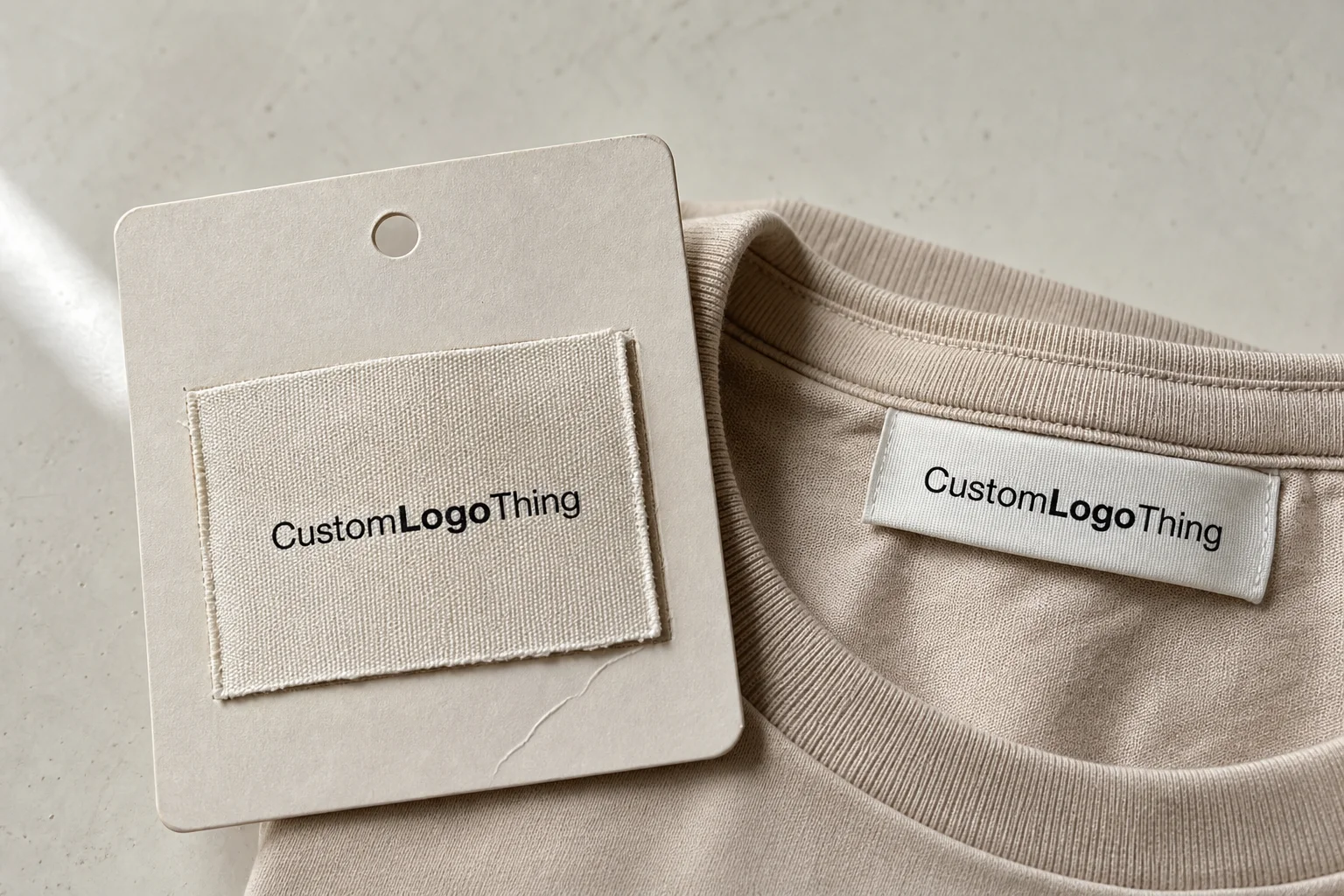
In practical terms, custom label makers turn a brand brief into a durable garment identifier. That brief usually includes the logo, size system, fiber content, care instructions, country of origin, and sometimes a QR code or SKU reference. The vendor then translates those details into a label format that fits the fabric, the application method, and the production run.
The category is broader than many buyers assume. It includes woven labels, printed labels, satin labels, cotton labels, heat transfer labels, hang tags, and care Labels for Apparel and accessories. A luxury knit may need a soft satin sew-in because a coarse woven edge would scratch the neck. A sports top may be better served by a heat transfer label because the brand wants a cleaner interior finish with no separate sewn piece. That is the real job here: turning brand information into something wearable, readable, and production-ready.
The fanciest label is not always the best label. A high-thread-count woven label can look premium, but if it adds friction inside a baby bodysuit or stretches poorly on activewear, it becomes a liability. The best specification is the one that fits the garment and the end user. That sounds basic, but it is where many buyers overspend.
For apparel, the label is a small component with a disproportionate effect. It can influence perceived quality, wash survivability, and whether a customer remembers the garment as comfortable or irritating.
From a buyer's point of view, this also affects repeat order economics. If the label fails, the garment often does not get a second chance. That is why many brands treat labels as part of the same decision set as branded packaging, print finishes, and retail packaging details. The label is tiny; the impact is not.
How the Label Production Process Works
The process usually starts with a brief, not a file upload. Good custom label makers will ask for label size, application method, garment type, color count, quantity, and any compliance text before they quote. If a vendor skips those questions, the quote may look fast, but it is often not reliable.
From there, the production flow is fairly consistent: artwork intake, specification review, digital mockup, proof approval, bulk production, and shipping. For woven labels, the proof stage may include stitch density or weave rendering. For printed labels, it often includes line weight, contrast, and legibility at final size. If you are ordering care labels, expect the vendor to verify the copy as well, because a typo in fiber content or washing instructions can create a real problem later.
The buyer can keep the process moving by sending a clean package up front:
- Label dimensions in millimeters or inches
- Placement, such as neckline, side seam, waistband, or outer tag
- Material preference, such as woven damask, satin, cotton, or heat transfer
- Quantity and target re-order volume
- Color count and Pantone references if needed
- Garment type and fabric stretch level
- Compliance text, including care symbols and fiber content
Delays usually come from missing copy or repeated proof changes. A single unclear line, such as whether the size should read "M" or "Medium," can stall the job. So can last-minute changes to fold type or material after the quote is approved. In the label world, clarity saves days.
Timeline depends on complexity. Simple printed labels can move faster than detailed woven labels, but a rush order may still take longer if the proof has to be reworked. Shipping distance matters too. For some brands, proof approval can happen within a few business days; for others, a detailed woven run stretches longer because the artwork contains small text or multiple color corrections. Standards such as those discussed by the ISTA community matter here because packaging and label programs should survive handling, transit, and storage without degrading.
Cost, Pricing, and MOQ: What Changes the Quote
Pricing is usually a mix of setup cost, unit cost, material choice, and finishing. The main levers are straightforward, but the quote can still be misleading if you do not know what is buried inside it. A low per-label price may hide a higher setup fee. A low setup fee may hide expensive freight or sample charges.
Quantity is the biggest driver. Minimum order quantities, or MOQs, exist because production has fixed prep costs: artwork conversion, loom setup, plate preparation, or print calibration. A small launch order might carry a higher per-unit cost because those fixed costs are spread over fewer labels. Once the volume rises, unit price usually drops sharply.
For common label types, the economics often look like this:
| Label Type | Typical Strength | Typical Tradeoff | Indicative Buyer Range |
|---|---|---|---|
| Woven label | Premium look, good durability | Higher setup effort for detailed art | $0.08-$0.20 per unit at larger runs |
| Printed satin label | Soft hand feel, good for neckwear | Less texture than woven construction | $0.05-$0.16 per unit at larger runs |
| Heat transfer label | No sewn edge, clean interior finish | Application process must match fabric | $0.06-$0.18 per unit depending on coverage |
| Custom care label | Legibility and compliance | Can become costly with tiny text and multiple languages | $0.04-$0.12 per unit in volume |
These are directional ranges, not fixed quotes. A 5,000-piece order with simple one-color copy will price differently from a multi-color woven label with a folded finish and specialty thread. The cleanest way to compare custom label makers is to compare setup fees, sample charges, freight, and reprint terms separately, then calculate the true landed unit cost.
That distinction matters because two quotes can look similar and still be very different in practice. One may include artwork correction and shipping, while the other excludes both. If the brand also needs custom printed boxes or other branded packaging elements for the same launch, it makes sense to price the whole package together instead of treating every component as an isolated purchase.
Key Specs That Decide Comfort, Durability, and Compliance
Comfort starts with material feel. Satin labels are usually softer against skin than a stiff woven edge, which is why they show up often in children’s wear and premium basics. Heat transfer labels can feel even lighter because there is no sewn-in fabric panel at all. Woven labels can look the most premium to the eye, but the construction has to be right or the edge can feel rough.
Durability is the next filter. Wash cycles, dryer heat, abrasion, and detergent all change label performance. A label that looks perfect at packing can still fail after repeated laundering if the ink, thread density, or adhesive system was not matched to the garment. For workwear or activewear, that point is not theoretical. The label has to survive use, not just inspection.
Compliance is where brands need discipline. Fiber content, care symbols, size information, and country of origin often need to be placed correctly for the target market. This is especially sensitive for export programs or retail packaging linked to regulated categories. The exact legal requirement depends on the product and destination, so the vendor should not guess. They should ask the right questions and leave room for verification.
For sustainability claims, there is another layer. If a label or hang tag references FSC-certified paper for packaging materials, the brand should be sure the claim is accurate and supported. The FSC framework is useful, but only if the supply chain documentation is real. Packaging design should never outrun evidence.
Different product types call for different tradeoffs:
- Children's wear: prioritize softness, low irritation, and clear care text
- Activewear: prioritize stretch compatibility and wash resistance
- Luxury basics: prioritize finish quality and brand presentation
- Workwear: prioritize legibility and long-term durability
If you are sourcing for a broader product packaging program, the label spec should be reviewed alongside hang tags, polybags, and carton markings. Brands that think in systems usually make fewer rework mistakes than brands that buy each item separately.
Step-by-Step: From Artwork to Approved Sample
Start with the artwork. Clean vector files are the safest starting point because they preserve line quality at small sizes. If the logo contains tiny type or fine details, simplify it before production. A label is not a billboard. Details that look elegant on screen can disappear once the artwork is reduced to a few centimeters.
Next comes spec selection. Choose the label type, size, fold, attachment method, and color count based on the garment fabric and end use. If the garment is a soft knit, a smooth satin or heat transfer option may be better than a rougher woven structure. If the brand wants a stronger tactile identity, a woven damask label can be worth the extra cost. The right answer depends on the product, not on a generic preference for one material over another.
The proof is where most production problems are caught. Check spelling, stitch density, contrast, fold style, and whether the label remains readable after it is sewn into the garment. Also check how the label sits against the fabric edge. Some labels look fine when flat on a proof sheet and then become awkward once attached to a curved seam or stretch zone.
A useful approval checklist looks like this:
- Confirm final wording, including fiber content and care instructions
- Verify dimensions and placement
- Review the material and finish against the garment type
- Check visibility after fold or sew-in application
- Approve only after the sample reflects the real product, not a generic mockup
At this stage, many buyers also ask for a photo of the actual label construction, not just a digital render. That is a smart move. The image can reveal edge finish, color contrast, and fold geometry in ways a screen mockup cannot. For brands building a coordinated package branding system, this is also the point to align labels with tags, cartons, and any branded packaging graphics so everything feels intentional.
If the label is part of a regulated retail launch, treat the sample as a gate, not a courtesy. Small problems in the proof stage are cheap to fix. Small problems after bulk production are not.
Common Mistakes Buyers Make When Ordering Labels
The most expensive mistake is approving artwork before the copy is final. That includes care text, size callouts, fiber content, and regional compliance language. If the target market changes, the label text may need to change too. A pretty design is irrelevant if the legal content is wrong.
Another common error is buying on unit price alone. The cheapest quote can turn into the costliest order if the label scratches, fades, or causes returns. That is especially true for garments sold direct to consumer, where one bad hand feel can create a negative review that costs more than the label itself ever did.
There is also a packaging mismatch problem. A label can look excellent in isolation and still fail in context. A thick woven label may be fine on a jacket but awful on a lightweight tee. A glossy printed label may clash with understated retail packaging. A heat transfer label may perform well on one fabric and poorly on another with more stretch. Good packaging design always considers the end use, not just the artwork.
Skipping the sample is the last big mistake. It is tempting on small launches, especially when the order feels simple. But a sample is the fastest way to catch color shifts, fold issues, and poor hand feel before production scales. If a vendor cannot provide a proof or sample path, that is a signal to slow down.
For buyers used to custom printed boxes or other packaging purchases, this part should feel familiar. The same rule applies: if the proof is wrong, the bulk order will repeat the error at scale.
Expert Tips for Cleaner Orders
The cleanest order starts with a one-page spec sheet. Put every requirement in one place so every custom label maker is quoting the same job. Include label size, material, color count, fold, attachment method, quantity, garment type, and all compliance text. That alone reduces quote drift.
Ask for two versions if the product line is not fully settled. One option can be optimized for lower unit cost. The other can be optimized for premium feel or faster turnaround. That gives the buyer a useful comparison instead of a single quote that may or may not fit the line economics.
Request a proof photo or sample of the exact construction before approving the bulk run. If the label is going into a delicate knit or a high-touch neckline, test it on the actual fabric. The label can feel different once it is sewn in, and that difference matters to the customer.
For brands building a bigger launch, align labels with other packaging decisions early. It is cheaper to coordinate Custom Packaging Products, care labels, and retail packaging at the same time than to discover a mismatch after artwork has already been approved. The brands that move cleanly usually treat these items as one system, not three separate orders.
If you are comparing custom label makers, judge them on material options, MOQ, turnaround, proof process, and how they handle corrections. Then place the order only after the sample matches the garment, the copy is final, and the label supports the brand instead of fighting it. That is the difference between a decorative detail and a production asset. For most apparel lines, custom label makers are part of the quality control chain, not just a line item on a purchase order.
What should I ask custom label makers before placing a clothing order?
Ask about MOQ, unit cost, turnaround, sample policy, and whether the quote includes setup, shipping, and proofing. Also confirm what file format they need and whether they will check your care text, fiber content, and size details before production starts.
How long do custom label makers usually take for clothing labels?
Timelines depend on proof approval, quantity, and label construction. Faster turnaround usually costs more, especially if the artwork needs correction or the label uses a more complex weave or finish. Ask where delays usually happen: artwork changes, color matching, sampling, or shipping.
Which clothing label material is best for sensitive skin?
Soft printed satin or heat transfer labels are often a better choice for garments worn directly against the skin. Test the label on the actual fabric, though, because the feel can change once it is sewn into a seam, waistband, or neckline.
How can I compare custom label makers on price without cutting quality?
Compare the full quote, not just the unit price. Check setup fees, sample charges, freight, and reprint terms, then make sure every vendor is quoting the same size, material, color count, and finish so you are comparing like for like.
Can custom label makers handle small MOQ orders for a new clothing line?
Yes, but smaller runs usually carry higher unit costs because setup is spread across fewer labels. If you are testing a launch, prioritize proof quality and label feel first, then scale volume after the design is validated.