Buyer Fit Snapshot
| Best fit | Custom Labels Bulk Order projects where brand print, material claims, artwork control, MOQ, and repeat-order consistency need to be specified before quoting. |
|---|---|
| Quote inputs | Share finished size, material target, print colors, finish, packing count, annual reorder estimate, ship-to region, and any compliance wording. |
| Proofing check | Approve dieline scale, logo placement, barcode or warning zones, color tolerance, closure strength, and carton packing before bulk production. |
| Main risk | Vague material claims, crowded artwork, missing packing details, or unclear freight terms can make a low unit price expensive after revisions. |
Fast answer: Custom Labels Bulk Order: Pricing, Specs, and Process should be specified like a repeatable production item. The safest quote records material, print method, finish, artwork proof, packing count, and reorder notes in one written spec.
Production checks before approval
Compare the actual filled-product size with the drawing, then confirm tolerance on folds, seals, hang holes, label areas, and retail display edges. Reserve space for logos, QR codes, warning copy, and material claims before decorative graphics fill the panel.
Quote comparison points
Review material grade, print process, finish, sampling route, tooling charges, carton quantity, and freight assumptions side by side. A quote is only useful when the supplier can repeat the same color, closure quality, and packing count on the next order.
A custom labels bulk order is where packaging starts paying for itself. Not in theory. On the invoice. If you are moving thousands of units, one label spec can support a second SKU, a seasonal update, or a warehouse relabel job without sending you back to the drawing board. The label usually costs less than the mess created by ordering too little, then rushing the second run.
Handled well, a custom labels bulk order lowers unit cost, trims repeat setup work, and keeps branding tight across product lines. That matters whether you are building retail packaging, juggling multiple SKUs, or matching labels to Custom Printed Boxes so the whole thing looks planned instead of assembled in a hurry.
I have seen brands save real money by moving from small, repeated label buys to one larger run. I have also seen the opposite: a cheap-looking reorder that ate up the savings because the artwork had to be reworked, the adhesive was wrong, and the customer wanted the same color match for a third time. That second scenario is common enough to be annoying. It is also avoidable.
Custom Labels Bulk Order: Why Buying in Volume Pays Off
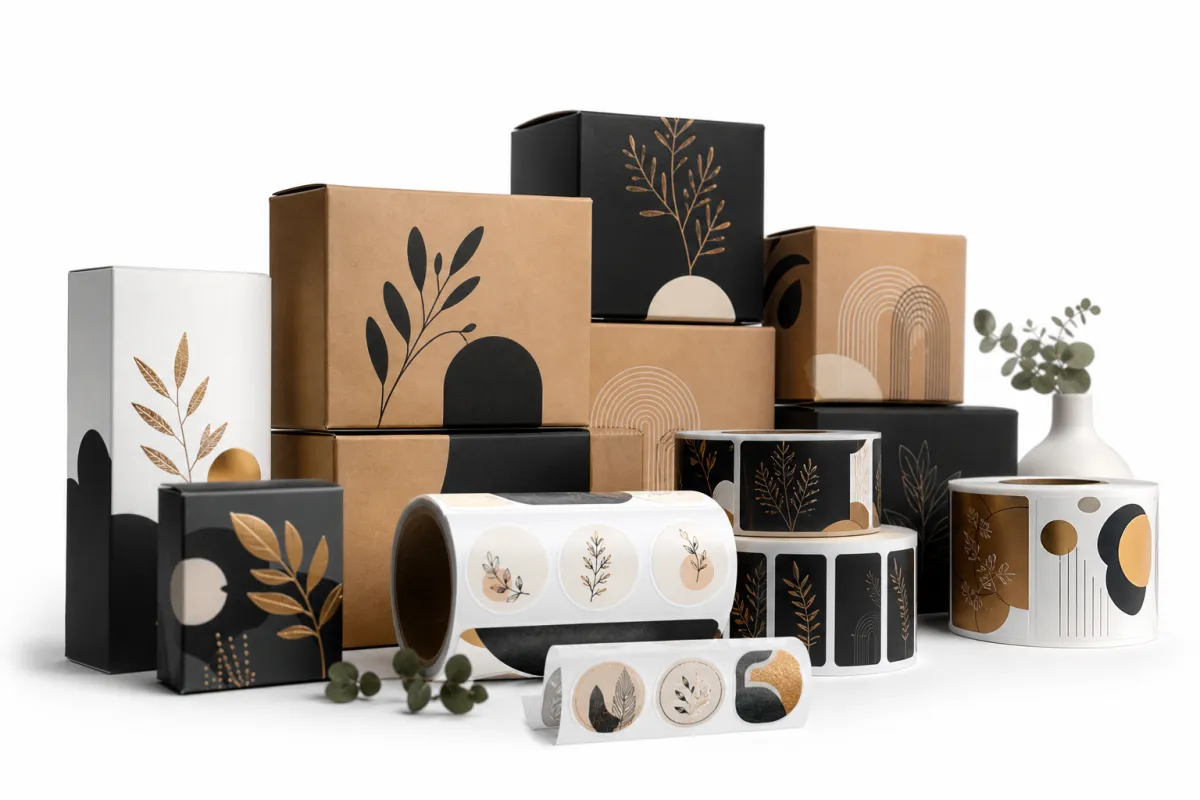
Most buyers only notice the problem after the second or third reorder. The first run feels manageable. Then production speeds up, someone wants a copy change, and suddenly you are paying to reproof the same label, recheck the same color, and reset the same job again. A custom labels bulk order takes some of that drag out of the process because the setup work gets spread across more units. The savings show up in a way that is hard to argue with.
There is another upside people miss: consistency. A custom labels bulk order keeps the same substrate, adhesive, finish, and print standard across the run, which means fewer color shifts and fewer almost-right reprints. That matters for package branding, especially if your product sits next to a dozen competitors and one sloppy shade makes the whole line look off.
The big savings usually hide in the unglamorous parts. Fewer reorder headaches. Less time digging through old files. Fewer approval loops. Fewer panic calls because someone discovered the label shelf was empty two days before launch. A well-run custom labels bulk order is not just cheaper per piece. It cuts the hidden work that slows down the rest of the operation.
The people who feel that most are easy to spot. New brands moving past test batches. Private label sellers with recurring SKUs. Subscription businesses that ship on a schedule. Manufacturers who need compliance labels, inventory stickers, or seasonal relabeling without rebuilding the job every time. For them, a custom labels bulk order is not a luxury. It is how production stays predictable.
Frankly, the label is a terrible place to gamble. If the run is large enough to justify a launch, it is large enough to justify a custom labels bulk order that protects margin and keeps the shelf presentation clean. And yes, that sounds boring. It is kinda the whole point.
Custom Labels Bulk Order Options: Materials, Shapes, and Finishes
The right material depends on where the label lives. A custom labels bulk order for a dry carton is not the same job as one that has to survive condensation on a refrigerated jar or oil on a candle tin. Buying in volume does not forgive the wrong spec. It just makes the wrong spec more expensive.
Here is the short version of the main material choices:
- Paper works well for dry indoor use, short shelf life, and lower-cost retail packaging. It is economical, but moisture can wreck it fast.
- BOPP handles water, oils, and day-to-day handling better. It is common for cosmetics, food jars, and product packaging that needs a cleaner finish.
- Vinyl is tougher and better for curved or heavily handled surfaces. It is not the first choice for every brand, but it can save headaches on demanding applications.
- Clear film creates a no-label look. It can look sharp, but the artwork has to be built for transparency instead of pretending transparency is a bonus effect.
- Thermal is the practical choice for variable data, shipping, and operational labeling where speed matters more than decoration.
- Removable adhesive is useful for promotions, temporary instructions, and short-term inventory work when the label should peel off cleanly.
Shape matters too. A custom labels bulk order can be cut as rectangles, squares, circles, ovals, or fully custom die-cuts. Roll labels are the usual pick for machine application or high-volume hand application. Sheet labels make more sense for smaller runs, manual use, or mixed designs. Kiss-cut options help when a label needs to peel cleanly without wasting liner space.
Finish is not decoration for its own sake. Matte gives a calmer premium look. Gloss pushes color harder. Soft-touch adds a smoother, more expensive feel. Spot UV and foil work well if the buyer wants to emphasize a logo or one design element without covering every square inch. In a custom labels bulk order, finish should support the brand story, not drown it.
For some projects, the label is the star. For others, it should sit back and support the package branding while the product does the talking. Both are fine. The bad choice is picking a finish because it looked good on a mockup and then discovering it fights the actual use case.
If the order needs certified paper, ask whether the paper stock is FSC-certified and whether the supplier can document chain of custody through FSC. If the labels need to survive rough shipping, ask whether the package should be judged against transit handling expectations from ISTA instead of gut feel. That is the difference between a pretty sample and a label that behaves in the real world.
Specifications That Matter in a Custom Labels Bulk Order
This is where buyers either save money or create avoidable noise. A custom labels bulk order should start with a clean spec sheet, not a guess and crossed fingers. The more precise the input, the fewer revisions, and the fewer surprises once the order hits production.
Before quoting, confirm these basics: label size, bleed, corner radius, adhesive type, core size, roll direction, roll count, finish, and color mode. If the label has to fit an applicator, the roll OD and winding direction matter just as much as the artwork. A custom labels bulk order can look perfect on screen and still jam a line if the roll is wound the wrong way or the core size does not match the machine.
Artwork quality matters too. Use vector files for logos when possible. Keep raster art at 300 dpi. If brand color accuracy matters, specify Pantone values instead of hoping CMYK lands somewhere nearby. And yes, approve a proof before the press starts. Skipping proofing to save a day is how buyers end up spending a week fixing a color that was never going to match the brand standard in the first place.
Durability is where the real-world test shows up. A custom labels bulk order may need water resistance, oil resistance, freezer-safe adhesive, UV protection, scratch resistance, or the ability to stay legible after condensation. Food labels, candle labels, cosmetic labels, shipping labels, and industrial labels all behave differently. The label that works on a dry carton may fail on a chilled bottle within hours.
If the label touches liquid, heat, or constant handling, pick the stock for the environment first and the finish second. That rule saves more money than most discount quotes.
For compliance-heavy product packaging, do not treat specs as decoration. A custom labels bulk order can carry ingredient lists, warnings, batch codes, and barcodes that need exact placement and readability. Small errors on a label stop being small the minute the order reaches the floor.
I usually tell buyers to look at the applicator, the storage environment, and the shelf life before they look at the finish menu. That order matters. If the label has to survive refrigeration, transport, and hand packing, the pretty option can wait.
Custom Labels Bulk Order Pricing, MOQ, and Cost Drivers
Pricing gets easier once you stop asking for a magic number. A custom labels bulk order is priced from the inside out: material, print complexity, finish, quantity, die cutting, adhesive, and roll configuration all affect the final number. If one variable changes, the quote changes too. That is normal. Pretending otherwise is how people get burned.
The biggest cost driver is usually quantity. Low quantities carry more setup cost per piece because the press time, tooling, and proofing do not shrink just because the run is small. A custom labels bulk order at 1,000 pieces usually costs more per unit than one at 10,000 pieces, even if the artwork is identical. That is not a penalty. It is math.
For a typical job using standard sizes and common materials, buyers often see something like the ranges below. These are illustrative, not a promise, because shape, coverage, and finish can shift the number fast.
| Quantity tier | Typical unit cost trend | Best fit | What changes the price most |
|---|---|---|---|
| 1,000-2,499 | $0.18-$0.42 | Test runs, short launches, small product packaging jobs | Setup cost spread across fewer units |
| 2,500-4,999 | $0.12-$0.30 | Growing brands, first repeat order, seasonal SKUs | Material choice and print coverage |
| 5,000-9,999 | $0.08-$0.22 | Recurring retail packaging and steady replenishment | Finish, die shape, and adhesive type |
| 10,000+ | $0.05-$0.16 | High-volume programs and stable demand | Storage, logistics, and repeat accuracy |
MOQ is not a trap. It is the point where the economics start making sense. A custom labels bulk order with a higher MOQ usually brings better unit pricing, but only if the brand can actually use the inventory before specs change. If the formula, legal copy, or packaging design is still moving, a huge run can create dead stock faster than it creates savings.
Compare quotes on the same terms. Match size to size. Stock to stock. Finish to finish. Ask whether shipping is included. Ask whether proofing, plates, or dies are extra. And if one quote is much cheaper than the rest, check what got left out. The cheapest custom labels bulk order is often the one that quietly excludes testing, special stock, or proper finishing. That is not a bargain. That is deferred disappointment.
If you want a useful benchmark, think in terms of total landed cost, not just the unit line. A low per-label price can disappear once freight, setup, and rework land on the invoice. In packaging, hidden cost has a way of finding the buyer later.
One more thing: if a quote looks almost too tidy, ask what assumptions sit underneath it. I have watched more than one buyer get surprised by a low number that only worked if the artwork stayed flat, the stock stayed standard, and the quantity never changed. That is a lot of ifs.
Process and Timeline for a Custom Labels Bulk Order
The workflow is straightforward if the files are ready. A custom labels bulk order usually moves through inquiry, quote, artwork review, proofing, approval, production, finishing, packing, and shipping. The process is simple. The delays are usually not.
Timing depends on how organized the buyer is. For clean files and standard specs, proofing can happen quickly, sometimes within 1-2 business days. A standard custom labels bulk order often takes roughly 7-12 business days after proof approval. Specialty stock, custom finishes, or larger runs can stretch that to 12-18 business days, sometimes more if the run needs extra checks or unusual materials.
Most delays are paperwork wearing a production costume. Missing dielines. Low-resolution art. Unclear Pantone references. Late approval responses. A custom labels bulk order moves faster when the buyer sends usable files the first time and answers proof questions quickly.
That is also why planning matters. If the labels are tied to a launch date, a regulatory deadline, or a seasonal retail packaging window, the order should be placed before inventory becomes critical. Do not wait until the pallets are nearly empty and then act surprised that custom work takes time. It does. That is the whole point of custom work.
Here is the practical timeline I would use as a buyer:
- Day 1-2: Send size, quantity, material preference, and artwork files.
- Day 2-4: Review quote and proof, then approve or correct the layout.
- Day 5-15: Standard production for a normal custom labels bulk order.
- Day 15+: Specialty runs, complex finishes, or large-scale replenishment.
That schedule is not universal, but it is a sane planning baseline. If someone promises a fast turnaround without asking about file quality or applicator requirements, they are gonna miss something. Probably more than one thing.
What a Good Supplier Should Bring to a Custom Labels Bulk Order
Buyers do not need theater. They need straight answers. A custom labels bulk order should come with practical spec guidance, clear quoting, honest MOQ advice, and proofing that does not waste time. That is the baseline I would expect from any supplier worth using.
What matters most is control. A good custom labels bulk order gives you color management, stable specs for repeat orders, and a clean record of what was approved last time. That way the second run looks like the first one, not like a distant relative of it. Consistency is not flashy, but it is what keeps a shelf line from looking sloppy.
For buyers who need more than one packaging element, keeping the system aligned matters. If the label has to work with cartons, inserts, or mailers, pair it with Custom Packaging Products so the brand language stays coherent. If the order is recurring and the numbers are stable, our Wholesale Programs are usually the cleaner route. If you are still narrowing the brief, start with Custom Labels & Tags and lock the spec before the run gets larger.
A supplier should also say no when the request is built on a bad assumption. If the finish will fight the artwork, if the adhesive will fail on the surface, or if the label size will crowd the legal copy, the right move is to flag it early. That is trust, not attitude. A custom labels bulk order should protect margin, not create a stack of avoidable reprints.
The result is simple: fewer surprises, cleaner shelves, fewer reworks, and packaging that looks intentional instead of improvised. For brand owners, that is the real value. Not hype. Not buzzwords. Just a label that does its job in production and on the shelf.
And if the supplier cannot explain the tradeoff between stock, finish, and application, that is a problem. The job is not just printing. It is making sure the label survives the way your product actually gets handled.
Custom Labels Bulk Order: What to Do Before You Request Quotes
Before you ask for numbers, get your inputs in order. A custom labels bulk order quotes best when the supplier can see the real job, not a vague placeholder. Measure the label area. Decide whether you need roll labels or sheet labels. Gather artwork files. Confirm the quantity by SKU. Note whether the label will face moisture, heat, refrigeration, abrasion, or frequent handling.
When you send the request, include dimensions, substrate, finish preference, intended use, application method, and deadline. That does two things. First, it makes the quote more accurate. Second, it makes the supplier smarter about the job, which usually means fewer revisions and less wasted time. A custom labels bulk order is much easier to price when the brief is specific enough to avoid guesswork.
If durability is non-negotiable, start with the material. If budget is tight, trim the finish choices next. If speed matters more than decoration, ask which options shorten lead time. That is the order I would use in practice: performance first, cost second, finish third. A custom labels bulk order should be built around the actual use case, not the prettiest sample on the screen.
One more buying habit saves time: compare a few quantity tiers. Do not stop at the first number. A custom labels bulk order at 2,500 pieces may not be much more expensive than 1,000, and 5,000 may be the point where unit cost finally drops enough to justify the space. If the order is close to a production schedule, lock the quantity before the window gets tight. Waiting for the perfect moment usually means paying more for the rushed one.
And yes, if you want a more useful quote, send clean files. Vector artwork when possible. Pantone references if color matters. Dieline notes if the layout is unusual. A quote built on good inputs is faster, cleaner, and less likely to surprise you later.
The shortest path to a decent price is not haggling blind. It is giving the supplier enough detail to quote the real job the first time.
What is the minimum quantity for a custom labels bulk order?
MOQ varies by material, size, and finish, but a custom labels bulk order usually gets noticeably better pricing once setup costs are spread across a larger run. Ask for tiered pricing at several quantities so you can see the real break point instead of guessing.
How much does a custom labels bulk order cost per label?
There is no honest one-price answer. A custom labels bulk order depends on substrate, print method, die cutting, finish, and quantity. The most useful comparison is unit cost at each quantity tier plus any setup, proofing, or shipping charges.
How long does a custom labels bulk order take to produce?
Timeline depends on artwork readiness, proof approval, and whether the labels use standard or specialty materials. A custom labels bulk order with clean files and clear specs moves much faster than one that still needs file fixes or color decisions.
Can I order different sizes in one custom labels bulk order?
Yes, but pricing usually changes because each size may need its own setup or die. If multiple SKUs share artwork elements, ask whether the supplier can streamline production across versions inside the same custom labels bulk order.
What files should I send for a custom labels bulk order?
Send vector artwork when possible, plus size specs, color references, and any dieline or layout notes. If the design is not final, share the brand assets anyway so the custom labels bulk order quote reflects the real job instead of a placeholder.
If you do one thing before requesting quotes, send the full spec set: size, material, finish, quantity, surface type, and application method. That single step usually cuts the most back-and-forth, and it is the cleanest way to get a custom labels bulk order that fits the job instead of forcing the job to fit the label.


