A small, tight embroidery hit can look more expensive than a giant printed graphic. Annoying but true. For custom Embroidered Baseball Caps for boutique retail drops, the smart move is usually not “make the logo bigger.” It is choosing the right cap body, thread finish, placement, and packaging so the piece feels like retail product, not leftover event merch.
Boutique retail is unforgiving. A cap has to photograph well, sit cleanly on a shelf, survive try-ons, and still look desirable after five shoppers have handled it. If the crown caves in, the stitching looks fuzzy, or the hangtag feels like an afterthought, buyers notice fast. They may not say, “The stitch density is wrong.” They just put it back.
Why custom embroidered baseball caps for boutique retail drops work
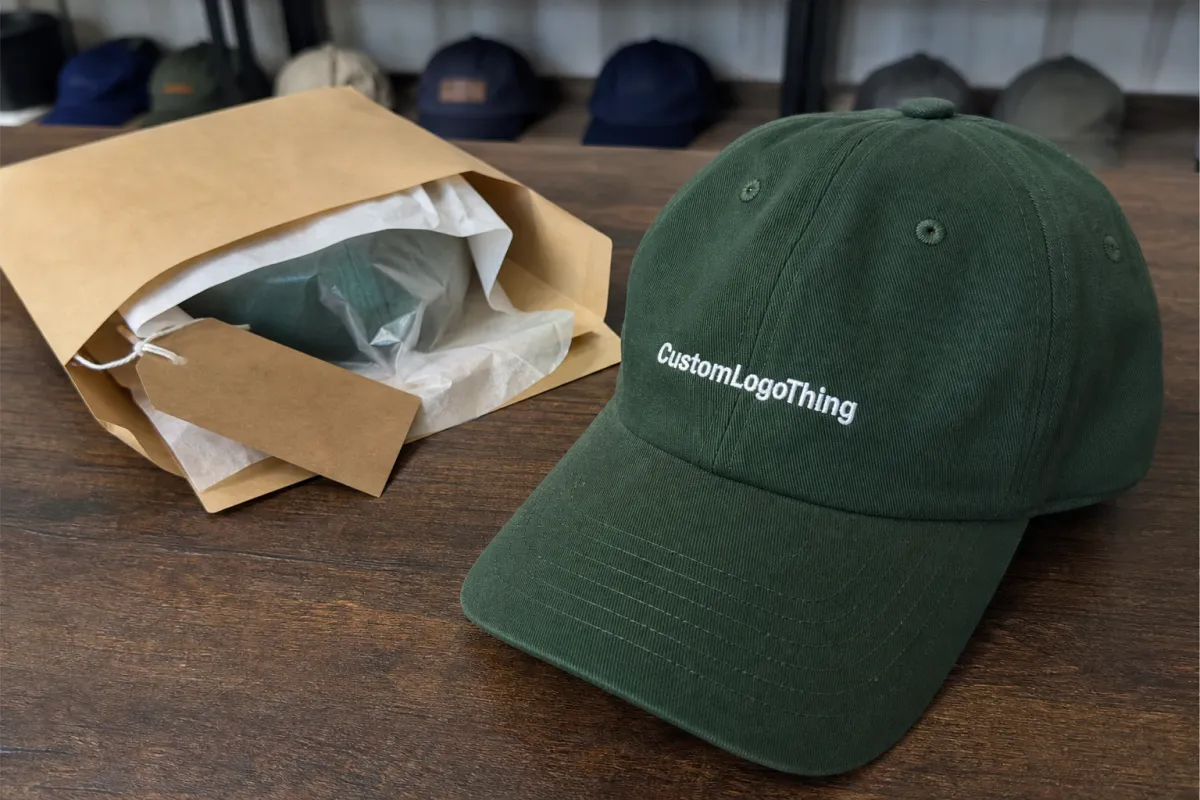
Caps work because they sit in a useful middle zone: low enough in price for impulse buying, visible enough for brand exposure, and collectible enough to support repeat drops. A boutique can often sell a cap for $28 to $58, depending on brand position, fabric, embellishment, and finishing. Production cost may land far below that, but only if the product actually sells. Tiny detail. People forget that part.
Embroidery often beats a larger print on a cap because shoppers read texture as value. A clean 2.25-inch front embroidery with balanced spacing can look more premium than a 5-inch graphic fighting the curve of the crown. On a rack, shoppers scan in seconds. They do not study your brand manifesto. They see silhouette, color, texture, and whether the cap feels intentional.
The goal is not to slap a logo onto whatever blank is cheapest. The goal is to create a retail-ready SKU. That means the cap body, embroidery size, inside label, hangtag, folding, and outer packaging all support the same price point. If you sell candles in rigid boxes, skin care in clean retail packaging, or apparel with sharp branding, a limp promo cap feels off immediately.
Sell-through matters more than ego. A cap that looks cool in a mockup but dies on the rack is not branding. It is inventory with a brim. Better to run 96 units of a proven colorway than 288 units split across six colors nobody understands.
Buyer rule: if the cap cannot sell from three feet away and still look good in an Instagram grid, tighten the spec before you approve production.
What embroidery changes on shelf, online, and in hand
Embroidery changes how a cap reads before anyone tries it on. Flat embroidery feels clean and versatile. It is the safest choice for logos with small type, simple icons, or stacked lockups. 3D puff gives height and streetwear energy, but it needs bold shapes and enough surface area. Fine serif type in puff? Usually a mess.
Mixed stitch styles can add depth, especially when satin stitches outline a filled center. Patch-style embellishment gives a more constructed look, but it adds cost and can feel heavy on low-profile crowns. A leather patch, woven patch, or merrowed edge can work beautifully if the rest of the cap supports it. On the wrong body, it looks like a souvenir.
Stitch density matters more than most first-time buyers expect. Too light, and the cap fabric shows through the logo. Too dense, and the front panel can pucker. A typical front logo might run 4,000 to 9,000 stitches. Bigger marks, filled icons, and multiple colors can push that higher. Thread sheen also changes the mood. Standard polyester thread has a clean retail shine. Matte thread looks softer but may not pop as hard in product photos.
Cap structure is the other half of the equation. A structured front panel gives embroidery a flatter canvas, which helps the logo sit crisp. An unstructured dad cap has a softer fashion feel, but the crown can fold under heavier embroidery. Neither is automatically better. That would be too convenient. The right answer depends on your store identity, logo style, and expected retail price.
Legibility is where many boutique drops get into trouble. Small logos, thin lines, serif fonts, and multi-line slogans do not always translate cleanly into thread. A 0.75-inch tall wordmark may look elegant on screen and then turn into alphabet soup after digitizing. If your logo has tiny interior gaps, ask for an embroidery proof and, ideally, a stitched sample before bulk production.
The tactile feel matters too. Shoppers judge caps with their hands. If the crown collapses, the brim feels flimsy, or the embroidery scratches from the inside, they assume the product is cheap before checking the price tag.
Choosing the right cap profile, fabric, and closure
Start with the profile. Dad caps are relaxed, low-risk, and friendly for lifestyle brands. Structured snapbacks give a cleaner front panel and stronger shelf presence. Trucker caps work for outdoor, beverage, motorsport, and casual retail concepts, but mesh backs are not for every audience. Washed cotton caps feel broken-in from day one. Premium twill silhouettes land somewhere between fashion and classic sportswear.
Panel count changes both fit and decoration. Six-panel caps are the standard retail choice. Five-panel caps offer a cleaner uninterrupted front, useful for centered embroidery or patches. Crown depth affects who can wear the cap comfortably. Low-profile caps suit a softer lifestyle look but can feel shallow on larger heads. Mid-profile caps are usually the safer retail bet. High-profile caps create bold shelf shape, though some shoppers hate tall crowns with real passion.
Fabric has tradeoffs. Cotton twill feels familiar and breathable. Brushed cotton feels softer but can show lint and handling marks. Polyester blends hold shape better and often resist moisture, which helps with active or outdoor positioning. Washed finishes skew more lifestyle than sporty. If your boutique sells elevated basics, a washed cotton cap with tonal embroidery may fit better than a glossy structured snapback.
Closures affect gender appeal, perceived value, and fit range. Adjustable fabric straps feel classic and understated. Metal buckles read more premium than plastic slides. Snapbacks give easy sizing and strong streetwear cues. Hook-and-loop closures are practical but rarely feel boutique unless the audience is heavily outdoor or utility-focused.
Placement needs discipline. Front center embroidery is the default for a reason. Side embroidery can work for a small icon or wordmark, usually 1 to 2 inches wide. Back-arch embroidery above the closure adds polish, but tiny type can get lost. Avoid fighting seams, eyelets, and the top button. A design that crosses a center seam needs proper digitizing or it will drift. Then everyone acts surprised. Do not be everyone.
- Dad cap: best for relaxed lifestyle drops, small front logos, tonal thread, and lower crown profiles.
- Structured snapback: best for bold marks, 3D puff, sharper shelf shape, and streetwear pricing.
- Trucker cap: best for outdoor or casual brands, but mesh and foam fronts must match the store vibe.
- Washed cotton cap: best for soft retail stories, vintage styling, and understated embroidery.
Custom cap pricing, MOQ, and margin math
Pricing usually has five parts: the blank cap, embroidery setup or digitizing, stitch count, thread colors, and finishing or packaging. A basic blank may cost less than a premium twill cap, but the blank is not the whole quote. A dense 8,000-stitch logo costs more than a tiny 2,500-stitch icon. More thread colors can add handling time. Custom labels, hangtags, barcode stickers, individual polybags, or custom printed boxes add cost too.
MOQ drives unit economics. Smaller boutique runs often start around 48 to 144 units. Some suppliers will go lower, but the unit price climbs because setup, proofing, machine time, and packing are spread across fewer pieces. A 48-unit run may feel financially safe, but each cap carries more fixed cost. A 288-unit run usually prices better per cap, though it also creates more inventory risk. Pick your poison, preferably with a calculator.
| Run size | Typical use | Estimated unit range | Buyer tradeoff |
|---|---|---|---|
| 48-72 caps | Test drop or VIP release | $11-$22 per cap | Lower inventory risk, higher unit cost |
| 96-144 caps | Small boutique launch | $8-$17 per cap | Better cost balance, still manageable stock |
| 288-576 caps | Multi-store or repeat program | $6-$14 per cap | Stronger margin, more cash tied in inventory |
These ranges depend on cap quality, stitch count, supplier location, timeline, and finishing. Rush orders can add 15% to 35%, depending on capacity and shipping. Digitizing may run $35 to $95 for a standard logo. Special woven labels, custom hangtags, or branded packaging can add $0.25 to $2.50 per unit depending on materials and quantity.
Margin should be calculated against expected retail price, not just production cost. If a cap costs $10 landed and retails for $38, the math looks healthy. If the cap looks cheap and only sells after markdown to $18, that “cheap” production decision got expensive.
For related launch materials, review Custom Packaging Products early so cap packaging, hangtags, mailers, and product packaging do not feel like separate planets. Matching materials does not mean everything needs the same logo pasted everywhere. It means the customer should understand the brand before reading the receipt.
Sampling, approval, and production timeline
A normal cap project moves through artwork review, digitizing, sample approval, bulk production, finishing, packing, and shipping. Skip one step and you save time right up until you lose more time fixing it. Great strategy, if chaos is the brand.
Artwork review can take 1 to 3 business days if files are clean. Vector files such as AI, EPS, or clean PDF formats are best. Low-resolution PNGs pulled from a website create back-and-forth because embroidery needs shape data, not wishful thinking. Digitizing commonly takes 2 to 5 business days, depending on complexity and revision queue.
Sampling often takes 5 to 10 business days after digitizing approval. Bulk production can run 7 to 20 business days for many boutique quantities after the sample is approved. Shipping may take 2 to 7 business days domestically, longer for import programs. For custom Embroidered Baseball Caps for boutique retail drops tied to a launch event, plan backward from the must-arrive date, not the day you feel like ordering.
Delays usually come from messy artwork, unconfirmed thread colors, changing cap styles after digitizing, or approving a digital mockup without understanding how the stitch will behave. Pantone references help, but thread has its own sheen and available color library. Ask for the closest thread match rather than assuming a screen color will translate perfectly.
A sample is not busywork. It catches thread color problems, off-center placement, crown puckering, logo scale issues, and fit complaints before the full run exists. If the sample reveals that your beautiful thin-line logo looks weak at 2 inches wide, you still have time to adjust. If you discover that after 144 units are packed, congratulations, you now own a lesson.
Planning rule: if the caps must arrive before a retail launch, build time for approvals and transit, not just embroidery production.
Quality control should happen before caps leave production, not after customers start sending photos. Check embroidery alignment, loose threads, skipped stitches, thread color, crown shape, brim curve, closure function, label placement, and carton packing. For a small run, inspect every piece if practical. For larger runs, use an agreed sampling method and photograph defects clearly before accepting the shipment.
Packaging standards matter when caps ship in cartons or go through parcel networks. If you are packing higher-value retail goods with caps, review testing concepts from ISTA and sustainability guidance from FSC for paper-based components. You do not need a laboratory plan for every small cap drop, but crushed brims and weak cartons are avoidable problems.
Common mistakes that wreck boutique cap drops
The first mistake is choosing a trendy shape that fits badly. A tall crown might look strong in a flat lay and ridiculous on half your customers. A shallow dad cap may fit your model perfectly and sit like a bottle cap on everyone else. If possible, test physical samples on several head sizes before locking the body.
The second mistake is overcomplicated embroidery. Tiny taglines, hairline illustrations, distressed textures, and gradients do not magically become clean thread. Embroidery is physical. It has thickness. It has limits. For boutique baseball caps, bold shapes and controlled detail usually win. Use print for complex art; use embroidery for marks that need texture and permanence.
Weak artwork files create the third problem. A supplier can redraw a logo, but that adds cost and time. It can also introduce small differences that brand owners catch late, usually after everyone is irritated. Send vector files, Pantone or thread color direction, placement notes, and desired embroidery size in inches.
Under-ordering is another quiet margin killer. A sold-out drop sounds cute for about 20 minutes. Then the best color is gone, social posts keep driving demand, and the reorder takes two or three weeks. If your audience is proven, order a little deeper on the safest colorway and keep the experimental color tighter.
Over-ordering has teeth too. Caps are not milk, but dead stock still takes space and cash. Do not build a rainbow assortment because the mockups looked fun in a deck. A tighter run with cleaner merchandising usually beats a confusing wall of options.
Packaging is the last mistake, and it is weirdly common. Brands spend on premium stitching, then ship the cap crushed in a thin mailer with no shape protection. That kills perceived value at the exact moment the customer opens the order. Use a right-sized box, tissue, a clean sticker, or a simple insert. Branded packaging does not need to be elaborate, but it should look intentional. If you already use custom printed boxes for other products, keep the cap experience in the same visual family.
Expert tips to improve sell-through and repeat orders
Start with one hero colorway and one backup. That is usually smarter than spreading 144 units across six colors. Black, washed navy, forest, stone, and khaki are common safe bets, but store identity matters. A coastal boutique and a skate shop should not buy the same cap just because a supplier called it popular.
Keep the embroidery bold, legible, and slightly oversized. Not huge. Just readable from arm’s length and in a product photo. For many front placements, 2 to 2.75 inches wide works well for wordmarks, while compact icons may sit nicely between 1.25 and 2 inches. Test the logo on the actual cap curve, not only on a flat mockup.
Premium finishing touches can lift perceived value quickly. A clean inside woven label, a small back embroidery, a sturdy hangtag, and tidy folding can make a $12 landed cap feel retail-ready at $38 or more. Poor finishing does the opposite. It makes even good embroidery feel like a giveaway.
Match the cap to your store identity. If your boutique is minimal and natural, a washed cotton cap with tonal or low-contrast embroidery may sell better than bright puff embroidery. If your shop is graphic, loud, and youth-driven, a structured cap with heavier stitch presence might make sense. Trends are useful input, not a purchase order.
Plan photography before the caps arrive. Caps need shape. Stuff the crown lightly, shoot the front straight-on, capture the side and back details, and show the cap on a real head if fit matters to your audience. Flat lays alone can hide crown height and brim shape. Then customers receive the cap and learn the truth. Not ideal.
For repeat orders, keep the same cap body when possible. Changing blanks between runs can create fit differences, color shifts, and customer complaints. If a style sells, document the cap model, fabric, color, thread colors, embroidery size, placement, label, hangtag, and carton pack. Boring documentation makes replenishment easier. Beautiful chaos does not.
Retail teams planning adjacent launch materials can also map cap presentation alongside Custom Packaging Products, especially if the drop includes apparel, accessories, gift sets, or mailer kits. Strong packaging design supports the whole launch, not just the box.
Next steps for quoting and launching your drop
Before asking for a quote, gather three things: logo files, target quantity, and the retail date you cannot miss. Add your preferred cap style, cap color, closure, embroidery placement, and packaging needs. The more complete the brief, the faster the quote. Vague requests get vague numbers. Shocking, I know.
Choose the cap profile before comparing suppliers. A quote for a washed cotton dad cap is not comparable to a quote for a structured snapback with puff embroidery and a custom inside label. Ask for a line-by-line breakdown showing blank cap cost, digitizing, embroidery, sample cost, finishing, packaging, shipping, and rush fees if relevant.
Check unit economics against the intended retail price. If the cap needs to retail at $34, a $19 landed cost leaves little room for markdowns, wholesale, influencer gifting, or damaged units. Trim extras that do not help the cap sell faster. Keep the details that shoppers actually feel: cap shape, stitch quality, color, fit, and unboxing.
Approve a physical sample before bulk production whenever the schedule allows. Confirm artwork size, thread color, placement, crown structure, closure feel, label details, and packing method. Then freeze the spec. Constant midstream changes are how simple cap programs become expensive little fires.
For custom embroidered baseball caps for boutique retail drops, the best projects are rarely the loudest. They are specific. One good body. One strong mark. A sane quantity. Clean packaging. Clear pricing. That is the unglamorous formula behind cap drops that actually sell instead of haunting the stockroom.
FAQ
What is a good minimum order quantity for a boutique cap drop?
For most small retail launches, 96 to 144 caps is a practical starting point. It gives enough inventory to merchandise the drop, cover online orders, and avoid selling out instantly, without tying up too much cash. A 48-unit run can work for a test or VIP release, but the unit cost will usually be higher.
How much should boutique embroidered caps cost to produce?
Many boutique runs land between $8 and $17 per cap for 96 to 144 units, depending on blank quality, stitch count, packaging, and timeline. Smaller or more complex orders can run higher. Add digitizing, sampling, shipping, and any custom labels or hangtags before judging margin.
What embroidery size works best on the front of a baseball cap?
Most front embroidery works well between 2 and 2.75 inches wide for wordmarks. Small icons may work between 1.25 and 2 inches. The final size depends on logo detail, crown shape, and whether the cap is structured or unstructured. Always proof the art on the actual cap style if possible.
Is flat embroidery or 3D puff better for boutique caps?
Flat embroidery is safer for detailed logos, small type, and cleaner lifestyle styling. 3D puff works best for bold letters or simple icons on structured caps. Puff is not kind to thin lines, tiny counters, or delicate serif type. It has one job: look bold. Let it do that job.
How long does a custom embroidered cap order take?
A typical project can take 3 to 6 weeks from artwork review to delivery, depending on sample approval, production queue, packaging, and shipping. Rush timelines may be possible, but they cost more and leave less room for correcting mistakes. If the caps are tied to a launch date, build the schedule backward and include approval time.
What files are needed for embroidery production?
Vector artwork is best: AI, EPS, or a clean PDF. Include the desired embroidery size in inches, placement, cap color, thread color direction, and any Pantone references. Do not rely on a tiny web PNG unless you enjoy paying someone to rebuild your logo under deadline pressure.
How can I tell if the sample is production-ready?
Check logo scale, thread color, stitch density, alignment, crown puckering, loose threads, closure feel, inside comfort, label placement, and packing method. Put the cap on more than one head size. Photograph it under normal retail lighting. If it looks weak in a quick phone photo, it probably will not carry the drop online.
Should caps be individually bagged for boutique retail?
Not always. Individual polybags can protect caps during shipping and storage, but they may feel wasteful or unnecessary for in-store merchandising. Tissue, a structured carton, a hangtag, and clean folding may be enough. The right answer depends on how the caps ship, where they are stored, and how they will be displayed.

