Buyer Fit Snapshot
| Best fit | Custom Labels Supplier projects where brand print, material claims, artwork control, MOQ, and repeat-order consistency need to be specified before quoting. |
|---|---|
| Quote inputs | Share finished size, material target, print colors, finish, packing count, annual reorder estimate, ship-to region, and any compliance wording. |
| Proofing check | Approve dieline scale, logo placement, barcode or warning zones, color tolerance, closure strength, and carton packing before bulk production. |
| Main risk | Vague material claims, crowded artwork, missing packing details, or unclear freight terms can make a low unit price expensive after revisions. |
Fast answer: Custom Labels Supplier: Material, Print, Proofing, and Reorder Risk should be specified like a repeatable production item. The safest quote records material, print method, finish, artwork proof, packing count, and reorder notes in one written spec.
Production checks before approval
Compare the actual filled-product size with the drawing, then confirm tolerance on folds, seals, hang holes, label areas, and retail display edges. Reserve space for logos, QR codes, warning copy, and material claims before decorative graphics fill the panel.
Quote comparison points
Review material grade, print process, finish, sampling route, tooling charges, carton quantity, and freight assumptions side by side. A quote is only useful when the supplier can repeat the same color, closure quality, and packing count on the next order.
What should a custom labels supplier guide include?
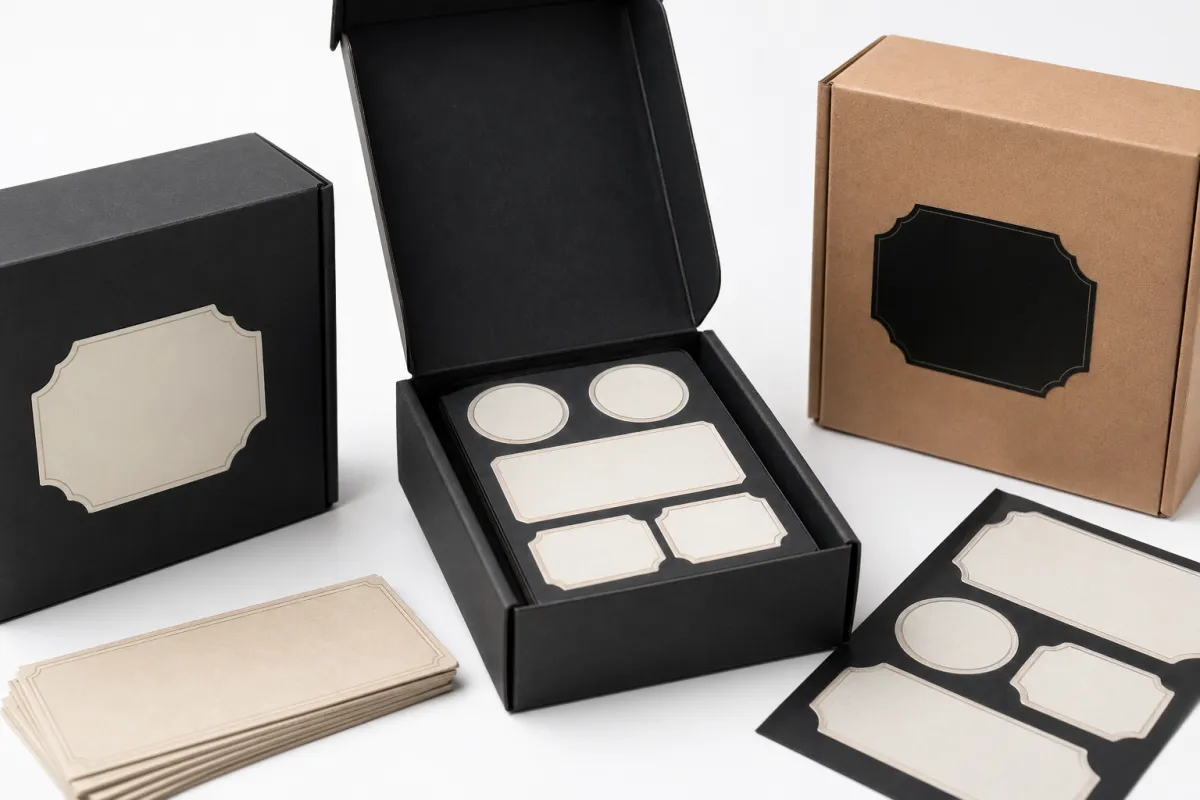
A useful custom labels supplier guide should cover the label stock, adhesive, print method, finish, proofing, and lead time before anyone starts talking about artwork. It should also account for roll labels, die-cut labels, barcode labels, and the application surface so the quote reflects the real job instead of a neat little fiction. If the supplier cannot explain how the label will perform on glass, film, corrugated board, or a cold package, the guide is already doing its job by flagging the risk.
That is the part a lot of buyers skip. They open with design preferences and only later discover that the label has to survive moisture, friction, or a temperature swing that would embarrass a flimsy construction. The best custom labels supplier guide starts with performance because looks are easy. Sticking to the package is the harder job.
It also helps to define what success actually means. Some labels need shelf appeal. Others need barcode readability, tamper evidence, or plain old durability. A few need all four. If you don’t spell that out early, the conversation drifts into color swatches and finishes while the actual packaging problem sits quietly in the corner waiting to wreck the order.
What a custom labels supplier guide should cover first
A useful custom labels supplier guide does not begin with foil, font pairings, or whether the logo sits three millimeters higher than the last version. It starts with the part that quietly wrecks budgets: how the label behaves on the actual package, under actual handling, in the actual environment. That sounds obvious after the invoice arrives. Before that, people get distracted by the pretty stuff and miss the basics that decide whether the label stays put or turns into a peeling mess.
The first thing a strong custom labels supplier guide should do is force the conversation onto performance. A label can look sharp on a screen and fail the second it meets condensation, a cold room, a shipping lane, or a humid shelf. Adhesive, substrate, and application method matter more than most buyers want to admit. The artwork is just one layer. The package is the real test.
From a packaging buyer's point of view, the starting question is use case, not decoration. What is the surface? How cold does it get? Will the package be handled by hand, packed by machine, shipped across the country, or stored somewhere damp enough to grow a small ecosystem? Those answers shape the label build. A practical custom labels supplier guide keeps the focus on those realities instead of letting the project drift into design trivia.
Think about it in four parts:
- Surface: glass, PET, HDPE, corrugated board, coated paper, and flexible film all behave differently.
- Environment: room temperature, refrigeration, freezer storage, outdoor exposure, and humidity change the job.
- Application: hand-applied, wipe-on, tamp-applied, or machine-applied labels need different formats.
- Outcome: the label may need shelf appeal, tamper evidence, barcode readability, durability, or all four.
A solid custom labels supplier guide also sets expectations for the rest of the process. The quote matters, sure. So do materials, print method, finishing, lead time, proofing, and reorder consistency. For brands working on retail packaging or broader branded packaging programs, those details decide whether the label system supports growth or keeps generating avoidable headaches.
I’ve seen teams spend weeks perfecting a visual concept, only to realize the label won’t hold on a chilled bottle or a slightly textured carton. That part is annoying, but it’s also fixable if you catch it early. The guide should save you from the avoidable stuff, not just describe the fun stuff.
How a custom labels supplier guide maps the ordering process
The ordering path looks simple on paper: brief, quote, proof, production, delivery. The traps sit between those steps. Someone assumes a detail is obvious. The supplier assumes the detail was supposed to be spelled out. The result is delay, revision, and a lot of unnecessary back-and-forth. A practical custom labels supplier guide closes those gaps before the job reaches a press or finishing table.
Start with the brief. A supplier cannot quote accurately without dimensions, quantity, application method, substrate, finish, and environment. If the barcode must scan at Point of Sale, say so. If the label goes onto a freezer pack or a bottle that sweats in transit, say that too. If the artwork includes compliance copy, lot codes, or variable data, the workflow needs to account for it from day one.
The most useful brief usually includes these items:
- Label size and shape: finished dimensions, corner radius, and any die-cut needs.
- Quantity: the first run plus expected reorder volume.
- Material and finish: paper, BOPP, vinyl, matte, gloss, soft-touch, or laminated.
- Adhesive requirement: permanent, removable, freezer-grade, high-tack, or repositionable.
- Application surface: glass, plastic, corrugated, metal, or flexible packaging.
- Environment: indoor, refrigerated, frozen, outdoor, high-humidity, or shipping abuse.
- Regulatory or scan needs: ingredients, warnings, barcode quality, lot coding, or traceability.
Proofing is the next place where a custom labels supplier guide earns its keep. A digital proof catches spelling, layout, and dieline problems. A physical sample tells you more when you need to judge adhesion, finish, ink density, or how the die cut behaves in the hand. If the label will wrap a curved bottle, sit on a textured carton, or stick to a chilled container, testing on the actual surface is not extra caution. It is basic competence.
I use one simple rule: the more expensive the reprint, the more serious the proofing needs to be. A one-color promo label may only need a clean digital proof. A program tied to compliance text, retail packaging launch timing, or a multi-SKU rollout usually deserves a sample, a test roll, or a small pilot run before full approval. A good custom labels supplier guide should make that tradeoff plain instead of pretending proofing is optional decoration.
Timeline is another place where expectations drift. A realistic production window covers artwork review, material sourcing, setup, press scheduling, curing or finishing, packing, and freight transit. Digital work often moves faster than flexographic printing, but faster still means measured in days, not magic. Specialty films and freezer adhesives can add several business days if the supplier has to source them. For a standard order, 7-15 business days after proof approval is a reasonable starting point, with extra time for specialty finishing or complex variable data. A thoughtful custom labels supplier guide helps buyers ask for the full timeline, not just the press time.
For teams building a broader package branding program, the same discipline applies to Custom Packaging Products and to label-led assortments that may also use Custom Labels & Tags. A label is rarely a standalone object. It is part of the package system, whether the team likes that or not.
"The fastest label is not the best label if it fails on the package. The cheapest quote can become the most expensive mistake when the adhesive or material was wrong for the job."
Key factors every custom labels supplier guide should compare
This is where a custom labels supplier guide becomes useful for real buyers, because the differences between label builds are not theoretical. They show up on the line, on the shelf, and in the customer's hand. Materials, adhesives, print methods, and finishing choices all affect durability, appearance, and cost. Good vendors will explain those tradeoffs in plain language and recommend a construction that fits the package instead of forcing a generic option onto every job.
Substrate choices
Paper labels are often the lowest-cost option and can still look excellent on dry products, boxes, jars, and many indoor retail packaging applications. They also accept ink and toner well, which helps with crisp type and a clean branded look. BOPP, a biaxially oriented polypropylene film, is a common choice when moisture resistance and tear resistance matter. Vinyl and specialty films show up when flexibility, durability, or outdoor exposure enter the picture. A strong custom labels supplier guide should make one thing clear: paper is not "cheap" by default and film is not "better" by default. Each one fits a different packaging condition.
If the product may see condensation, oil, refrigeration, or rough handling, ask specifically about film stock and whether lamination makes sense. For food, beverage, cosmetics, and household items, BOPP often wins because it resists scuffing and keeps color stable. For kraft or artisan-style product packaging, uncoated or textured paper can reinforce the look, as long as the environment is gentle enough to let it survive. I’m not gonna pretend those decisions are glamorous. They’re just the ones that keep the label from turning into a regret.
Adhesive selection
Adhesive choice is where a lot of label failures begin. Permanent adhesive means stay there. Removable adhesive means come off more cleanly. Freezer-grade adhesives are built for low temperatures, while high-tack options help on textured or low-energy surfaces. A custom labels supplier guide should push buyers to match adhesive to the surface and environment instead of defaulting to whatever was used last time.
On glass, many standard permanent adhesives perform well. On polypropylene or polyethylene containers, you usually need an adhesive formulated for low surface energy plastics. On frozen packaging, the adhesive must bond in cold conditions, not just at room temperature. That distinction matters. A label can look fine at packing and still fail after a cold chain leg or an overnight stay in storage.
When in doubt, ask for sample strips and test them on the actual package. For anything that has to survive transport vibration, cold storage, or repeated hand contact, I want to see a 24-hour adhesion check and, if possible, a rub test after the package has sat in the same environment it will face in the real world. If a vendor cannot explain how the adhesive behaves, the custom labels supplier guide should point the buyer toward someone who can.
Print methods
Digital printing is ideal for short runs, many SKUs, and jobs that need fast setup with variable artwork. It can deliver sharp detail and strong color, especially when the design changes often. Flexographic printing usually becomes more economical as volume rises, and it is a strong option for long, repeatable runs with consistent artwork. Thermal transfer is common for variable labels, logistics labels, and applications where barcodes or serial information get added later. A complete custom labels supplier guide should compare these methods by quantity economics, image quality, and process flexibility.
Color consistency matters too. If your brand depends on exact shade matching across product packaging, ask how the supplier handles calibration, press checks, and repeat orders. A reprint six months later should not drift so far that it looks like it belongs to another company. For beverage, health, and beauty programs, that consistency is part of package branding, not a decorative extra.
Finishing details
Finishing sounds minor until the label is already on the package. Matte gives a softer, quieter look. Gloss makes color pop and boosts contrast. Soft-touch creates a tactile feel, though it is not right for every surface or environment. Varnish and lamination add protection and can improve scuff resistance and moisture performance. A die-cut shape changes the visual language of the label, while roll direction affects automated application and machine throughput. A thorough custom labels supplier guide should treat finishing as performance, not just decoration.
For a cleaner comparison, here is a practical view of common material options:
| Material | Best For | Typical Strengths | Watch Outs | Relative Cost |
|---|---|---|---|---|
| Paper | Dry retail goods, cartons, jars | Good print clarity, economical, natural look | Lower moisture resistance, easier to tear | Low |
| BOPP | Bottles, cosmetics, chilled goods | Moisture resistance, durability, clean finish | May need specific adhesive for low-energy plastics | Moderate |
| Vinyl | Outdoor use, flexible surfaces, durable IDs | High flexibility, strong durability | Can cost more than paper or standard film | Moderate to high |
| Specialty film | Premium branded packaging, harsh handling | Strong appearance, performance-focused builds | Longer sourcing times, higher pricing | High |
For buyers comparing label suppliers against broader packaging design goals, it helps to remember that the label is one part of a larger visual system. The same brand may use Custom Printed Boxes, inserts, and a label roll program, so finish choices should support the full shelf story instead of fighting it. A strong custom labels supplier guide keeps that bigger picture in view.
For technical context on package testing and handling, the ISTA testing standards are a useful reference when labels need to survive shipment, vibration, or temperature swings. That outside discipline helps buyers ask better questions and set tighter requirements.
Custom labels supplier guide to pricing, quotes, and total cost
Price is where many buying conversations begin, but a good custom labels supplier guide shows why unit price is only one number in the decision. The real cost of a label program includes material, print process, size, quantity, finishing, tooling, proofing, shipping, and the risk of rework if the first run does not perform. On small runs, setup charges can matter more than the per-piece price. On larger runs, press efficiency and material yield can change the economics fast.
The biggest cost drivers are usually straightforward. Specialty films cost more than basic paper. Lamination adds cost, as does a high-performance adhesive. Complex die cuts, flood coating, foil, embossing, or variable data can increase setup and run time. Short runs spread setup costs across fewer units, so the per-label price rises. That does not make a short run bad. It just means the buyer should compare total order cost, not only the unit line item. A useful custom labels supplier guide should push that kind of math from the start.
It helps to ask every supplier the same set of questions so the quotes can be compared on equal footing:
- Does the quote include artwork review and standard proofing?
- Is shipping included, estimated, or billed separately?
- Are plates, dies, or tooling charges one-time or repeated?
- What is the minimum order quantity?
- Are reorders priced at the same spec, and how is consistency controlled?
A custom labels supplier guide should also warn against the "lowest quote wins" trap. If a label saves two cents per unit but causes a 4% application failure rate, the savings disappear fast. If it arrives late and forces a line stop, the damage gets bigger. If the supplier cannot hold color across reorder lots, the cost is not only financial; it is brand damage. That matters even more for retail packaging, where the label is often the first thing a shopper notices.
Here is a clean way to compare quotes without getting fooled by formatting differences:
- Normalize the specs first: same size, material, finish, adhesive, and quantity.
- Separate one-time charges from recurring charges.
- Ask whether freight, taxes, and proofing are included.
- Check whether the supplier supports future reorder consistency with written specs.
- Estimate the cost of waste, reprints, and delays if the label fails in use.
Seasonal products and changing SKUs add another wrinkle. A low per-label price can still be expensive if it forces you to carry too much stock or reorder too late. A practical custom labels supplier guide should help buyers balance price, lead time, and inventory holding cost in a way that fits the business, not just the invoice.
Step-by-step custom labels supplier guide for choosing a vendor
Choosing the Right vendor gets much easier once the job is described in plain language. Do not start with "we need a label." Start with what the product is, where it will live, how it will be handled, and what the label has to accomplish. A custom labels supplier guide works best when it turns a vague request into a concrete job description.
Once the job is clear, shortlist suppliers based on fit. Does the vendor offer the substrate you need? Can they handle the print method that matches your volume? Do they understand the environment your package will face? Can they meet the turnaround you actually have? If the project includes labels plus broader Custom Packaging Products, the supplier should also be able to talk about consistency across the full package family, not just a single label run.
Then request samples. A lot of buyers skip that part and regret it later. A digital proof helps, but a sample on the actual package tells you far more. Test it under realistic conditions: condensation, rubbing, bending, stacking, refrigeration, or brief heat exposure. A custom labels supplier guide should treat that as non-negotiable for anything that needs real-world durability.
Communication quality matters just as much as technical capability. A responsive supplier will ask follow-up questions, catch missing details, and point out risk before production starts. A supplier who answers quickly but vaguely is not always the better partner. In packaging work, speed without precision gets expensive. A practical custom labels supplier guide should reward clear, specific communication because that usually means fewer surprises.
One simple way to choose a vendor is to use a scorecard:
- Materials: Do they offer the right stock and adhesive for your surface?
- Print quality: Can they hold fine type, solid color, and barcode clarity?
- Price clarity: Is the quote easy to compare and free of hidden charges?
- Lead time: Can they meet your schedule with room for proofing?
- Communication: Do they answer in specifics or in generalities?
- Flexibility: Can they support reorders, changes, or pilot runs without chaos?
For many programs, the best next step is a pilot order. A pilot order gives you one controlled chance to check performance, color, placement, and workflow before you commit to a long-term run. That approach is common in package branding because it reduces the risk of scaling a bad assumption. A smart custom labels supplier guide will choose a small, deliberate first run over a large assumption every time.
Common mistakes buyers make with a custom labels supplier guide
The biggest mistake is treating labels like artwork only. A nice design does not matter much if the adhesive fails in moisture or the material wrinkles on the package. A custom labels supplier guide exists because surface chemistry, temperature range, and handling conditions are often the real deciding factors. The design sits on top of the system. It does not replace it.
Another mistake is comparing vendors only on unit price. That is a shallow comparison. Two quotes can look similar while one includes proofing, better material, tighter color control, and stronger reorder support. The other may be cheaper on paper but more expensive after freight, rework, and delays. A custom labels supplier guide should push buyers to compare consistency, responsiveness, and production reliability right alongside price.
Skipping samples or proofs is another frequent failure point. Color shifts are obvious, but the less obvious problems are often worse: a barcode that scans inconsistently, a label edge that lifts after refrigeration, a die cut that is too tight for the package curve, or a finish that looks great in the office and wrong under store lighting. A solid custom labels supplier guide makes sample testing part of the normal process, not a special exception.
People also forget to document reorders. That is a quiet source of trouble. If the approved version is not recorded, a future order can drift on material, adhesive, color, or dieline. The problem gets bigger when multiple departments place orders or when product packaging expands into new variants. The best safeguard is a written spec sheet that records the exact construction and the approved version. A custom labels supplier guide should make that step feel routine.
Here are the mistakes I see most often in practice:
- Choosing a paper stock for a wet environment because it looked nicer in the proof.
- Using the same adhesive for glass and low-energy plastic without testing both.
- Assuming a digital proof proves performance on the package.
- Not planning enough time for proofing, revision, and freight transit.
- Forgetting to check whether labels will be hand-applied or machine-applied.
For buyers interested in sustainability claims or recycled fiber content, there is another layer to check. Paper can be FSC-certified, but the label construction still needs to fit the package and the use case. The FSC site is a useful reference if your sourcing decisions include certified fiber. A custom labels supplier guide should keep material claims separate from performance claims, because both matter and they are not the same thing.
If your label program supports a larger packaging launch, the same caution applies across the system. A label that looks perfect on one container may not translate to a pouch, a carton, or a corrugated shipper without adjustment. That is why a custom labels supplier guide is really a guide to process discipline, not just a buying checklist.
Expert tips and next steps for your custom labels supplier guide
If you want fewer surprises, keep the vendor selection process simple and documented. A custom labels supplier guide works best when it turns your needs into a short, repeatable checklist. The more the team relies on memory, the more likely a future reorder will drift. The more the team writes down, the easier it is to keep quality stable across seasons, SKUs, and personnel changes.
My first recommendation is to build a scorecard before you request quotes. Give each vendor a rating for materials, print quality, price clarity, communication, lead time, and flexibility. That keeps the conversation focused on the whole job instead of whichever line item happens to be cheapest. A good custom labels supplier guide should help the buyer see which vendor can actually support the program over time.
My second recommendation is to request a written spec sheet after approval. That sheet should include the exact material, adhesive, finish, print process, size, and any special handling details. If you reprint six months later, that document is what keeps the second run aligned with the first. In packaging operations, written specs prevent a lot of expensive "I thought we were using the other version" mistakes. A custom labels supplier guide should make written control feel normal, not bureaucratic.
My third recommendation is to build inventory around the full timeline, not just press time. Include proofing, possible revisions, production, finishing, packing, and transit. Add a small buffer for approvals or material delays. That buffer matters more than most teams realize, especially when a launch date is fixed or a promo window cannot move. A practical custom labels supplier guide respects calendar reality.
Here is a clean final workflow you can use right away:
- Gather package specs, surface details, and environmental conditions.
- Decide whether the job needs paper, film, or a specialty construction.
- Request two or three comparable quotes with identical specifications.
- Ask for proofing or samples and test them on the actual package.
- Record the approved version and use it for future reorders.
If the project touches multiple package types, keep the label decision aligned with the rest of the package system. The label should work with the carton, the shipper, the pouch, and the shelf display, not fight them. That is where strong packaging design and practical production thinking meet. A well-run custom labels supplier guide does not just get you labels; it helps you build a repeatable sourcing process that supports product packaging, retail packaging, and package branding with fewer expensive surprises.
The clearest takeaway is simple: define the surface, environment, adhesive, and print method before you compare prices. Test the label on the actual package, record the approved spec, and treat reorder control like part of the job, not admin fluff. Do that, and the next order is a lot less likely to turn into a fire drill.
What should I ask in a custom labels supplier guide before requesting a quote?
Ask about material options, adhesive types, print method, and finishing so the quote reflects the actual label construction you need. Share dimensions, quantity, application surface, and environment details up front to avoid vague pricing or surprise add-ons. Confirm whether proofing, shipping, and reorders are included so you can compare suppliers on the same basis; that is the practical starting point for any custom labels supplier guide.
How long does custom label production usually take?
Typical timelines depend on artwork approval, material availability, finishing, and shipping distance, so ask for a full start-to-finish estimate. Digital jobs often move faster than flexographic runs, but a faster process still needs time for proofing and approval. Build in buffer time for revisions, especially when the label has compliance text, variable data, or a new die shape; a good custom labels supplier guide always accounts for that.
What affects custom label pricing the most?
The biggest drivers are material, print process, quantity, label size, finishing, and any special adhesive or durability requirement. Setup charges and minimum order quantities can matter more than unit price on small runs, so look at total order cost. Freight, proofing, and future reorder consistency can change the true long-term price of a supplier choice, which is why a custom labels supplier guide should compare the full picture.
Do I need a proof or sample before ordering custom labels?
Yes, especially if the label must stick to a tricky surface, survive moisture, or match a specific brand color closely. A sample or proof helps catch cut size issues, barcode readability problems, and finish choices that look different in real light. Testing on the actual package is the best way to confirm performance before a full production run, and it is one of the most useful habits in any custom labels supplier guide.
How do I know a label will stick to my package?
Match the adhesive to the surface, such as glass, plastic, refrigerated packaging, or corrugated board. Share the product's temperature range, moisture exposure, and handling conditions so the supplier can recommend the right construction. Request sample testing and check adhesion after exposure to the same environment your finished product will face; that is the real test point in a custom labels supplier guide, not the digital proof.

