Buyer Fit Snapshot
| Best fit | Custom Laminated Labels Quote projects where brand print, material claims, artwork control, MOQ, and repeat-order consistency need to be specified before quoting. |
|---|---|
| Quote inputs | Share finished size, material target, print colors, finish, packing count, annual reorder estimate, ship-to region, and any compliance wording. |
| Proofing check | Approve dieline scale, logo placement, barcode or warning zones, color tolerance, closure strength, and carton packing before bulk production. |
| Main risk | Vague material claims, crowded artwork, missing packing details, or unclear freight terms can make a low unit price expensive after revisions. |
Fast answer: Custom Laminated Labels Quote: Pricing, Specs, and Lead Time should be specified like a repeatable production item. The safest quote records material, print method, finish, artwork proof, packing count, and reorder notes in one written spec.
Production checks before approval
Compare the actual filled-product size with the drawing, then confirm tolerance on folds, seals, hang holes, label areas, and retail display edges. Reserve space for logos, QR codes, warning copy, and material claims before decorative graphics fill the panel.
Quote comparison points
Review material grade, print process, finish, sampling route, tooling charges, carton quantity, and freight assumptions side by side. A quote is only useful when the supplier can repeat the same color, closure quality, and packing count on the next order.
Custom laminated labels quote requests go better when the first conversation is about the actual product, not the wish list version of it. A label that looks polished on a proof can still fail after a trip through a cooler, a pallet run, or a carton rubbing against carton in transit. Pretty is nice. Functional pays the bills. If the quote does not account for moisture, abrasion, temperature, and handling, it is not doing its job.
That matters for bottled beverages, frozen foods, health and beauty products, industrial containers, and branded packaging that has to stay consistent across multiple SKUs. A useful estimate is more than a price. It should map out material, finish, adhesive, format, and lead time in plain language. If you are also comparing Custom Printed Boxes, inserts, or other product packaging pieces, the same rule applies: the build has to fit the use case first, then the design.
Buyers get the most value from a well-built quote when it shows whether the label can handle scuff resistance, condensation, oils, repeated handling, and barcode readability without drama. It should also clarify whether the order needs paper, BOPP, polyester, gloss laminate, matte laminate, or a specific adhesive before production starts. That kind of clarity saves money. It also saves the kind of cleanup nobody wants to explain to operations.
A useful label quote does more than list a number. It tells you whether the label will still look clean after shipping, storage, and customer handling.
Why a Custom Laminated Labels Quote Starts With Real-World Use
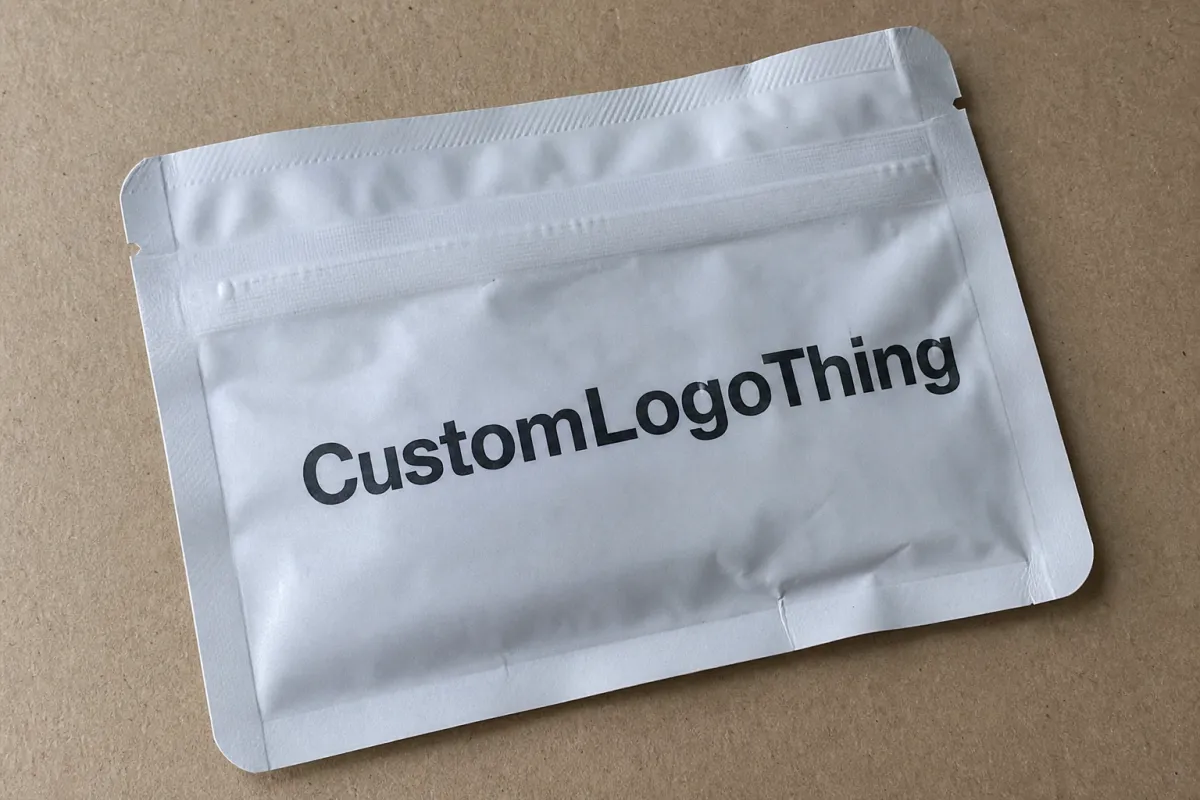
Labels are small. Their working lives are not.
A jar label may rub against a case divider. A bottle label may pick up condensation after refrigeration. A health and beauty label may be touched by shoppers a dozen times before the product leaves the shelf. A shipping label can look crisp on day one and still scuff badly after enough contact with corrugate, shrink wrap, or pallet movement. That is why a custom laminated labels quote should begin with the environment, not just the artwork.
From a packaging buyer's point of view, the first question is not, "What finish do we want?" It is, "What does the label need to survive?" Lamination helps protect print from abrasion, fingerprints, moisture, and the general abuse that comes with distribution. It also helps preserve contrast so small type, ingredient panels, legal copy, and barcodes stay legible longer. On a crowded shelf, that is not decoration. That is risk control.
Retail packaging makes the tradeoffs obvious fast. A matte surface can cut glare under bright store lighting, while gloss can deepen color and create a sharper shelf presence. Soft-touch laminate adds a premium feel, but it should be chosen carefully if the design depends on very fine type or if the product gets handled constantly. A good quote spells out those choices plainly so you can decide whether the finish earns its cost.
The budget side matters too. The best custom laminated labels quote is often the one that prevents rework. If a label fails in cold storage or on an oily surface, the replacement cost rarely stops at the label itself. You can be looking at relabeling labor, scrap, delayed shipments, and a second run. That is why a supplier who asks about use conditions early is doing you a favor. A buyer who says "room temperature, indoor use, hand applied" will get a very different recommendation than one who says "refrigerated, condensation, machine applied, palletized cartons."
If you need help narrowing those variables, review the product range on our Custom Labels & Tags page or reach out through Contact Us. A short, specific conversation upfront usually avoids several rounds of revision later.
Label Construction: Materials, Lamination, and Adhesive Choices
The structure of the label drives both performance and price. Facestock, laminate, adhesive, and conversion method all affect how the final label behaves once it is on the package. Three facestock families cover most laminated label work: paper, BOPP, and polyester.
Paper is the simplest and often the most economical choice. It works well for dry products, short distribution routes, and cartons that are not exposed to moisture or frequent rubbing. Paper paired with lamination can still look sharp, especially for branded packaging that needs a cleaner retail presentation. It is not the strongest option for wet or refrigerated environments, but for the right application, it delivers a solid appearance at a reasonable cost.
BOPP, short for biaxially oriented polypropylene, is one of the most common choices for laminated pressure-sensitive labels. It resists moisture well, handles a wider range of environments, and gives you more protection than standard paper. For food, beverage, personal care, and many household products, BOPP is often the practical middle ground between cost and durability.
Polyester is the tougher route. It is used when the label needs better resistance to heat, chemicals, abrasion, or outdoor exposure. It usually costs more, and not every product needs it, but when the packaging environment is demanding, polyester can be the smarter long-term decision.
Lamination changes the final behavior again. A gloss laminate creates a brighter, more reflective surface with stronger color pop. A matte laminate lowers glare and can improve readability in harsh lighting. Soft-touch laminate adds a tactile finish that feels more premium in hand and can support high-end package branding, though it should be matched carefully to the artwork and product category.
Adhesive selection is just as important. Permanent adhesive is common for products that should not be removed once applied. High-tack adhesive is useful for textured cartons or surfaces that are difficult to bond. Freezer-grade or cold-temperature adhesives are designed to stay put in refrigeration or low-temperature storage. Removable adhesives can help when the label must come off cleanly, though they are not the right fit for every package.
Then there are the production details that buyers often miss. Kiss-cutting, matrix removal, core size, unwind direction, and label spacing all affect whether the labels will run smoothly on the application line. A hand-applied roll can tolerate different specs than a machine-applied roll, and a label that looks simple on screen may still need a die shape that handles corners, curved bottles, or edge lift better than a basic rectangle.
That is exactly why a packaging-focused quote matters. A small change in material or adhesive can improve shelf life, reduce waste, and make application easier. It can also move the final price, sometimes a little and sometimes a lot.
Custom Laminated Labels Quote: Cost, MOQ, and Unit Price
Cost is usually the first number buyers want. Fair enough. But the smarter comparison starts with the spec sheet. A custom laminated labels quote is shaped by label size, shape, print coverage, laminate choice, quantity, finishing method, and how the labels are packed for shipment. A larger label with full-color coverage, specialty laminate, and a custom die will not price the same way as a small one-color label on a standard roll.
Minimum order quantity, or MOQ, is another part of the picture. Small runs often carry a higher unit price because the die, setup, proofing, and press time are spread across fewer pieces. That does not make small runs a bad idea. It just means the math changes. Buyers launching a new product, testing seasonal SKUs, or running a limited promotion may care more about flexibility than the lowest possible unit cost.
For a practical comparison, the table below shows typical market behavior for laminated label projects. These are illustrative ranges, not fixed pricing, because artwork coverage, finishing, and supplier capacity can move the numbers.
| Construction | Best Fit | Typical MOQ Tendency | Indicative Unit Price at 5,000 | Notes |
|---|---|---|---|---|
| Paper with gloss laminate | Dry goods, cartons, short-run retail packaging | Lower to moderate | $0.08-$0.16 | Good appearance, less moisture resistance than film facestocks |
| BOPP with gloss laminate | Food, beverage, personal care, general branded packaging | Moderate | $0.11-$0.22 | Common balance of durability and cost |
| BOPP with matte or soft-touch laminate | Premium retail packaging, glare-sensitive artwork | Moderate | $0.13-$0.26 | Finish affects look, readability, and price |
| Polyester with protective laminate | Durable labels, harsher handling, longer wear | Higher | $0.18-$0.34 | Chosen for tougher environments and more demanding product packaging |
Those numbers show the shape of the market. They are not a promise. A complex die cut, multiple artwork versions, heavier ink coverage, a special adhesive, or a machine-compatible roll spec can move the final quote. If you want a cleaner comparison, ask for two quote tiers with everything held constant except one variable, such as gloss versus matte or paper versus BOPP. That makes the decision less messy.
Buyers sometimes compare two quotes that only look similar. One uses a different material. One has a tighter tolerance. One includes a custom roll format. That is not a true price comparison. To judge pricing properly, the quote should match on facestock, laminate, adhesive, dimensions, quantity, and finished format. Then you can decide whether the extra cost is justified by the performance gain.
If two quotes are not built from the same specs, they are not competing on price alone. They are competing on different constructions.
For larger packaging programs, it also helps to review label pricing alongside the rest of the package branding plan. A full product launch might include labels, inserts, cartons, or a broader set of Custom Packaging Products. That wider view often changes how buyers set budgets, especially when the label has to stay visually aligned across several SKUs.
Process and Lead Time: From Quote to Shipment
The cleanest orders usually follow a predictable path. It starts with the request, then the supplier reviews your size, material, finish, quantity, and application method. After that comes artwork proofing, approval, production, inspection, and shipment. If every detail is ready at the start, the order can move quickly. If the specs are incomplete, lead time stretches almost immediately.
For simple laminated label jobs, proofing may take a business day or two, and production often begins soon after approval. Straightforward orders can frequently ship within about 7 to 12 business days after proof approval, depending on quantity and the current queue. More complex work, including special adhesives, multiple versions, or unusual die shapes, can take longer. Freight time is separate, so the full timeline matters, not just the press schedule.
Several issues slow orders down more than buyers expect. Missing dielines are common. Low-resolution artwork can also cause delays, especially if logos or small text need cleanup. Late proof changes are another frequent source of schedule drift. Even a minor wording change can require a fresh proof, and if the change affects the die or layout, the production window may need to shift.
Ordering labels gets easier when the buyer has already decided how the product will be applied. Hand-applied rolls, machine-applied rolls, and sheeted labels each work differently. Roll direction, core size, and roll diameter all matter if the labels are going through equipment. If the labels are going onto a jar or bottle by hand, the spec can be more flexible, but it still needs to be clear so the production team does not have to guess.
It also helps to confirm the shipping destination before approval. A palletized freight shipment to a warehouse needs different planning than a small carton shipment to a small business. That matters for inventory timing, especially if the labels are supporting a launch date, a promotional window, or a changeover in branded packaging. A two-day freight delay can matter more than a one-day shift in press time if the product is waiting on the dock.
For buyers who want to keep the process simple, the fastest path is usually the one with complete information from the start. Good specs reduce back-and-forth. Good artwork reduces proof revisions. Clear communication around volume and application method reduces surprises. That is how a quote turns into a shipment without a pile of avoidable friction.
In packaging testing discussions, many teams also reference industry guidance such as ISTA transport testing standards for shipment durability and FSC certification for responsibly sourced paper materials. Those standards do not replace a label spec sheet, but they help buyers think clearly about performance and sourcing expectations.
Print Quality and Performance Specifications That Affect the Result
Artwork quality affects both appearance and production speed. A label file should include bleed, trim, and safe area correctly so text and graphics do not land too close to the edge. Vector logos are better than low-resolution images because they hold up at print size. If photography is part of the design, the image resolution should match the final label dimensions rather than the screen preview.
Color consistency matters too. Some brands are fine with standard CMYK reproduction. Others need tighter color control because the label sits beside custom printed boxes, cartons, or a wider family of product packaging that has to read as one system on the shelf. In those cases, spot colors or a more controlled print approach may be worth the added cost.
The application environment can matter just as much as the artwork. Refrigeration, condensation, oils, moisture, and repeated handling all put stress on the label face and adhesive. A laminated label for dry carton use has a very different job from a label on a chilled bottle or a cosmetic container that gets handled many times each day. If the label will face chemicals or outdoor exposure, the substrate and laminate need more care.
Functional specs deserve attention too. Roll length influences how often operators have to stop and change rolls. Core size determines compatibility with applicators. Unwind direction matters for machine application. Label spacing and matrix removal affect how cleanly the roll feeds. A label that looks fine as a flat proof can still cause production interruptions if the conversion details were not thought through early.
That is why laminated labels should be treated as part of the packaging system, not as a decorative afterthought. Good packaging design respects the way the label will move through the line, survive transit, and present on the shelf. If any one of those steps is ignored, the result can be slower production, more scrap, or a package that does not carry the same finish from sample to shipment.
A few specifications are especially useful to confirm before approval:
- Dimensions: finished size, corner radius, and whether there is a custom contour cut.
- Material: paper, BOPP, or polyester, plus any special face stock requirement.
- Laminate: gloss, matte, or soft-touch, with any durability goal spelled out.
- Adhesive: permanent, removable, freezer-grade, or high-tack.
- Format: roll, sheet, core size, unwind direction, and label spacing.
- Use case: hand applied, machine applied, refrigerated, outdoor, or chemical exposure.
Those details may feel technical, but they are exactly what protects the finished order. The clearer the specification, the fewer surprises later.
Why Custom Logo Things Is a Practical Partner for Laminated Labels
Custom Logo Things fits buyers who want practical guidance instead of a sales pitch. A laminated label order should be matched to the actual job, not forced into a one-size-fits-all answer. That means asking useful questions about temperature, handling, surface type, and run quantity before locking in the build. It also means being honest about tradeoffs: a premium laminate may improve appearance, while a simpler spec may protect the budget better.
That kind of support matters because labels are often one part of a larger packaging program. A company may be refreshing retail packaging, updating package branding across several SKUs, or coordinating labels with cartons and inserts. In those situations, the quote needs to fit the full product story, not just one line item. A label that looks outstanding but fails in application is not a win. A sturdy label that prints cleanly and applies reliably usually is.
Another advantage of working with a packaging-focused team is that the conversation stays grounded in production reality. Clear proofing, clear timeline estimates, and clear spec confirmation reduce the chance of misunderstandings. If you need a lower-cost alternate, a different laminate, or a second quantity break, that can usually be discussed before the order is final. That kind of flexibility is useful for launches, seasonal promotions, and smaller inventory programs where cash flow matters.
For buyers comparing options, it is also useful to think about how the label fits with the rest of the project. If the rest of the line uses Custom Packaging Products that carry a strong brand look, the label should hold its own visually. If the product line is simple and functional, the label should still read cleanly and survive the environment without pushing the cost beyond reason. Good suppliers understand both sides of that equation.
From a packaging buyer's point of view, the best outcome is simple: the quote arrives with enough detail to make a confident decision. You can see what the label is made of, how it will be finished, what it will cost at your quantity, and how long it will take. That clarity is what makes a custom laminated labels quote useful.
If you want a quote based on actual use conditions, not guesswork, send the complete spec set and ask for the best-fit construction. The more specific the input, the more useful the recommendation becomes, and the easier it is to compare one option against another for branded packaging, retail packaging, and broader product packaging programs.
What to Send Before You Request a Quote
A strong request saves time on both sides. Before you ask for pricing, gather the basics: size, shape, quantity, and whether the label will be applied by hand or by machine. Then add the material preference, laminate preference, and any special adhesive requirement. If you already have artwork, send the file in a production-friendly format so the quote can reflect the real build instead of a placeholder estimate.
It also helps to describe the product environment clearly. Mention refrigeration, moisture, condensation, oil exposure, abrasion, or outdoor storage if any of those apply. A label on a dry box has one set of needs. A label on a chilled bottle has another. A label on a product that travels through distribution, sits in retail, and gets handled by consumers repeatedly has another still. Those conditions shape the right choice of facestock, laminate, and adhesive more than the artwork does.
If you want a more flexible comparison, ask for one or two alternates. For example, you might request a gloss version and a matte version, or a paper build and a BOPP build at the same size. That gives you a clearer view of how much durability costs and whether the appearance change is worth it. It also helps you make better decisions if the budget is tight but the performance requirement is not negotiable.
Confirm the practical details before approval: proof timing, production window, shipping destination, and whether the labels are going to a warehouse, production floor, or office address. Those steps may seem small, but they keep the order aligned with your inventory plan. A quote is only useful if it reflects both the label and the timeline around it.
Use this quick checklist before you send the request:
- Finished dimensions and shape
- Quantity needed and any quantity break targets
- Preferred facestock and laminate finish
- Adhesive requirement
- Artwork files and any brand color references
- Application method and surface type
- Environmental conditions such as refrigeration, oil, moisture, or abrasion
- Shipping destination and target in-hand date
Send that information once, and the quote process becomes much cleaner. You will get a better price comparison, fewer revisions, and a more accurate sense of how the label will behave in the real package environment. If you are ready to move, reach out through Contact Us with the complete spec set and ask for a custom laminated labels quote that reflects your product, your quantity, and the conditions the label has to survive.
What do you need to prepare a custom laminated labels quote?
The starting points are label size, shape, and quantity. From there, material, laminate finish, and application method help narrow the construction. Artwork files and product conditions make the quote more reliable and reduce the chance of revisions after the first proof.
How much does a custom laminated labels quote usually vary by quantity?
Unit price usually drops as quantity rises because setup costs are spread over more labels. Small runs can cost more per label if the die, proofing, or press setup is the same. Tiered pricing is the best way to see where the breakpoints are.
What is the usual MOQ for laminated labels?
MOQ depends on the print method, die size, material, and whether the labels are rolled or sheeted. Some standard constructions can support lower quantities, while custom sizes may need higher minimums. Asking for alternate sizes or finishes can sometimes reduce MOQ pressure.
How long does production take after I request a custom laminated labels quote?
Proofing often happens first, and production begins after artwork approval. Lead time changes with quantity, complexity, and the current schedule. The fastest orders are the ones where specs and files are complete from the start.
Can laminated labels handle cold storage, moisture, or oily products?
Yes, if the facestock, laminate, and adhesive are selected for the environment. BOPP and polyester are common choices when durability matters more than paper texture. It helps to share the exact use case so the label can be matched to the conditions it will face.

