Buyer Fit Snapshot
| Best fit | Custom Laminated Mailer Boxes projects where brand print, material claims, artwork control, MOQ, and repeat-order consistency need to be specified before quoting. |
|---|---|
| Quote inputs | Share finished size, material target, print colors, finish, packing count, annual reorder estimate, ship-to region, and any compliance wording. |
| Proofing check | Approve dieline scale, logo placement, barcode or warning zones, color tolerance, closure strength, and carton packing before bulk production. |
| Main risk | Vague material claims, crowded artwork, missing packing details, or unclear freight terms can make a low unit price expensive after revisions. |
Fast answer: Custom Laminated Mailer Boxes: Film, Print, MOQ, and Carton Packing should be specified like a repeatable production item. The safest quote records material, print method, finish, artwork proof, packing count, and reorder notes in one written spec.
Production checks before approval
Compare the actual filled-product size with the drawing, then confirm tolerance on folds, seals, hang holes, label areas, and retail display edges. Reserve space for logos, QR codes, warning copy, and material claims before decorative graphics fill the panel.
Quote comparison points
Review material grade, print process, finish, sampling route, tooling charges, carton quantity, and freight assumptions side by side. A quote is only useful when the supplier can repeat the same color, closure quality, and packing count on the next order.
Custom laminated mailer boxes do one thing very well: they make a package feel worth opening before the lid even lifts. A plain corrugated mailer can protect the product, sure. But wrap that same shipment in a laminated shell and the whole thing starts looking more deliberate, more polished, and a lot less like something tossed into a van at the last second. That shift matters for product packaging, especially when repeat orders, unboxing videos, and first impressions all carry real weight.
For brands that care about presentation, the conversation around custom laminated mailer boxes should go past finish selection. Board strength matters. Print coverage matters. Shipping conditions matter. So does the annoying little detail everyone likes to ignore until it becomes a problem: whether the box actually supports branded packaging without turning into an overpriced decoration. The best results usually come from packaging design that keeps presentation and function in the same room. Not glamorous. Usually effective. That is the point.
If you ship apparel, cosmetics, gifts, subscription kits, or premium DTC products, custom laminated mailer boxes often land in the sweet spot between retail packaging and transport packaging. They look designed, but they still fold flat, stack cleanly, and ship without drama. That is why a lot of teams treat them as custom printed boxes with a stronger brand role, not just another outer carton.
Custom laminated mailer boxes: what they are and why they stand out
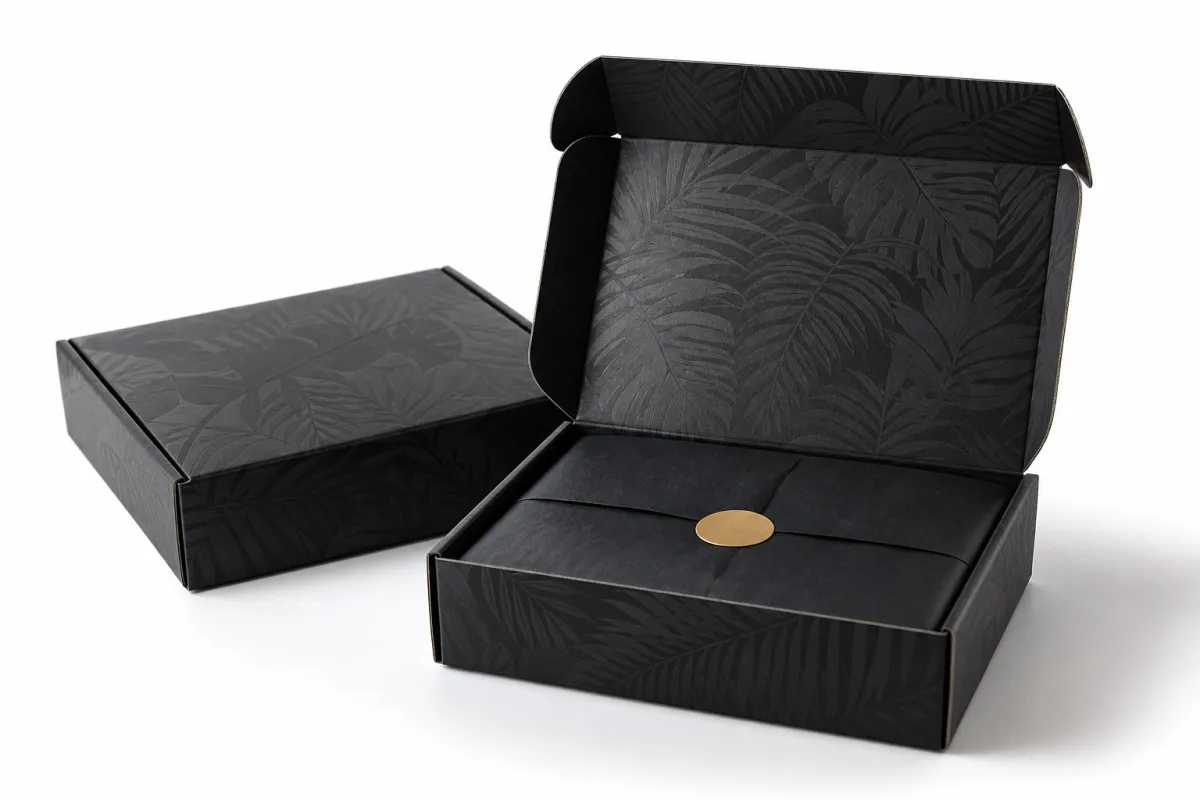
At the simplest level, custom laminated mailer boxes are structural mailer boxes made from corrugated board or heavy paperboard, then printed and finished with a lamination film. The shape stays familiar: top flap, side walls, front tuck, closure points that keep the contents in place. What changes is the surface. Lamination adds a protective layer that can improve abrasion resistance, tighten up color, and make the box feel more finished the moment someone touches it.
That is not a tiny upgrade. A mailer can pass through hands, carts, conveyors, storage shelves, and delivery trucks before it ever reaches a customer. Uncoated surfaces show wear fast. Corners rub. Dark colors start looking tired. Custom laminated mailer boxes help hold the line, which is why they show up so often in branded packaging for products that need to arrive looking fresh, not merely intact.
The appeal is strongest where presentation and durability both matter. Subscription kits use them because the unboxing sequence is part of the product. Beauty brands use them because color accuracy and surface finish influence perceived value. Apparel brands use custom laminated mailer boxes because a folded tee or hoodie should feel like a considered purchase, not a bulk shipment. Gift brands and event kits get the same benefit. The box becomes part of the product packaging story instead of a disposable shell around it.
People underestimate how much finish changes perceived quality. Same structure. Same artwork. Same dimensions. Switch to matte or gloss lamination and the box can feel like a different product. That is package branding doing its job quietly, which is usually how good branding works anyway.
There is also a practical reason these boxes stand out. They can deliver a premium look without forcing a brand into rigid-box pricing. For many teams, custom laminated mailer boxes offer a middle path: stronger visual impact than plain kraft, lower material cost than Luxury Rigid Packaging, and better scuff resistance than plenty of uncoated alternatives. That trade-off is useful when the box has to survive e-commerce shipping and still look polished on arrival.
One more thing people forget: the surface finish changes photography. Customers post unboxing content constantly. A laminated box that reflects light cleanly or holds color consistently shows up better on camera. In a lot of categories, that matters almost as much as the product itself. Maybe more. The internet is shallow like that.
How custom laminated mailer boxes are made
The build starts with the structure. Most custom laminated mailer boxes use corrugated board for crush resistance, though heavier paperboard can work for lighter products or shorter shipping routes. Once the structure is chosen, the supplier creates a dieline. That file controls panel dimensions, flap widths, fold positions, score lines, glue zones, and the way artwork wraps around the finished box. If the dieline is wrong, everything downstream gets messy fast.
Artwork setup comes next. Logos, product messaging, pattern work, and any interior print all need to fit the template exactly. Packaging design meets structural design here, and the result only works if both sides are paying attention. A nice concept can still fail if a barcode lands on a fold or a headline vanishes into a tuck flap. The strongest custom laminated mailer boxes are built around the structure, not slapped onto it after the fact.
The finishing sequence sounds simple: print, laminate, die-cut, crease, fold, glue, inspect. In real production, it is less forgiving. Lamination film is added over the printed sheet before or during finishing, depending on the process. Gloss film creates shine and contrast. Matte film softens reflections and gives the box a calmer look. Soft-touch film adds a velvety feel that many buyers read as premium, although it behaves differently under handling and may not fit every budget or product type.
From a technical standpoint, these boxes are usually judged against shipping realities instead of showroom fantasies. Standards help with that. ISTA testing protocols give brands a repeatable way to think about drop, vibration, and compression. The broader packaging community around packaging standards and education is also useful when you need a baseline for board and print discussions. If a supplier can explain how a structure performs under actual transit conditions, pay attention. They probably know what they are doing.
Quality control is what separates a decent box from a reliable one. Edges should align. Scores should open cleanly. Lamination should stay put at the corners. Glue should not ooze into visible areas. Color should stay consistent across runs. The tighter the manufacturing sequence, the more predictable the unboxing experience. Customers notice the small failures first, not the heroic things you did behind the scenes.
Timing affects quality more than people like to admit. Rush a proof. Change dimensions late. Keep tweaking artwork after approval. That is how registration issues show up. A stable spec usually gives you cleaner results: fewer scuffs, more accurate folds, and less variation from unit to unit. The difference between “looks premium” and “looks expensive but unfinished” is often just a week of discipline. I have seen one bad dimension change create a chain reaction that chewed up an entire launch week. Nobody enjoyed that meeting.
Choosing the right structure, finish, and board
Three choices do most of the work here: structure, board grade, and finish. The structure controls how the box opens and closes. The board controls how much abuse it can take. The finish controls what the customer feels before the product is even visible. Custom laminated mailer boxes work best when those three pieces support each other instead of fighting for attention.
Structure should follow the packing method and the opening experience. A snug mailer with a clean front lock is often enough for apparel and lightweight accessories. Fragile products may need inserts, cradles, or dividers. If the box has to survive longer shipping routes, a stronger flute profile can make sense. If the main goal is presentation, a lighter structure may be fine as long as the product is not getting crushed inside.
Finish choice is where a lot of brands overthink and underthink at the same time. Gloss is the loud option. It boosts contrast, pushes saturated colors harder, and tends to feel more retail than understated gift packaging. Matte is calmer. It cuts glare, supports minimalist graphics, and usually feels more modern. Soft-touch sits in its own lane: tactile, velvety, and appealing, but not right for every product or budget. Custom laminated mailer boxes do not need the fanciest finish available. They need the finish that fits the product and the audience.
Print coverage changes the behavior of every finish. Full-bleed artwork, dark backgrounds, and heavy solids make lamination effects much more obvious than simple line art. A matte film on deep navy can look elegant. The same design under gloss can feel brighter and more commercial. That is why samples matter. A rendering on a screen cannot tell you how the surface behaves under warehouse light, office light, or a customer’s phone camera.
Here is a practical comparison that helps a lot of buyers sort through the options:
| Finish | Visual effect | Best use case | Trade-off |
|---|---|---|---|
| Gloss lamination | High shine, strong contrast | Bold retail-style branding, bright graphics | Shows fingerprints and glare more easily |
| Matte lamination | Soft, low-reflection surface | Minimal branding, modern presentation | Can mute subtle artwork if the design is too quiet |
| Soft-touch lamination | Velvety tactile finish | Premium beauty, gift, and subscription packaging | Often costs more and needs careful handling |
| Specialty film | Distinct texture or visual effect | Limited editions and brand differentiation | Higher minimums and narrower availability |
Sustainability deserves a real conversation, not a brochure line. Many buyers want recyclable packaging, and they should ask exactly what the board, ink, adhesive, and lamination are made of. The EPA has practical guidance on waste and recovery at EPA recycling resources, but local rules still vary. Fiber-based mailers with certain films may be recyclable in one market and annoying in another. If end-of-life handling matters to your brand promise, compare laminated and unlaminated versions before you lock the spec.
Board choice should follow product weight and shipping risk, not habit. A lightweight apparel brand does not need the same compression resistance as a glass skincare kit. A fragile item may justify inserts and thicker board, while a presentation-led box can use a leaner structure. The safest move is usually to test with the real product weight, not the number that looked nice in a spreadsheet.
Interior treatment is another decision worth making early. A restrained exterior paired with a printed interior can create a stronger reveal than printing every panel with loud graphics. That approach works especially well for custom laminated mailer boxes because the outside stays polished and the brand story lands at the moment of opening, which is when customers are actually paying attention.
Custom laminated mailer boxes cost: what drives pricing
Pricing for custom laminated mailer boxes usually comes from several moving parts, and the quote on its own does not always tell the full story. Size is the first driver. Larger formats use more board and more print area. Board type is next. Heavier or more specialized stock increases material cost. Finish choice matters too, because lamination adds a production step and usually calls for more careful handling.
Quantity changes the math quickly. Setup costs for plates, cutting dies, proofing, and production get spread across the run, which is why unit cost often drops at higher volumes. A small run may carry a steep per-box premium. A larger run can make the same design far more efficient. Nothing mysterious there. Fixed costs are just doing fixed-cost things.
Print coverage is another cost lever. A simple one-color logo on kraft-style stock may land near the low end. Full-bleed artwork, multiple print passes, special inks, or interior printing can push the number up fast. Complex die cuts, embossing, foil, or insert work add even more. For custom laminated mailer boxes, the cheapest-looking quote is not always the cheapest project. Sampling, freight, storage, and revisions can quietly move the total higher than expected.
Here is a practical pricing lens that helps buyers avoid fake comparisons:
| Cost factor | What it changes | Typical impact on quote |
|---|---|---|
| Size and board strength | Material usage and crush performance | Moderate to high |
| Print coverage | Ink use, setup complexity, color matching | Moderate to high |
| Lamination type | Surface finish and protection level | Moderate |
| Quantity | How spread out the setup costs become | Often the biggest unit-price change |
| Inserts or dividers | Fit, protection, and assembly time | Moderate |
| Rush production | Scheduling priority and handling stress | Can be significant |
Value is where smart buyers separate themselves. A better-looking box can raise perceived product value, lower damage complaints, and reduce the need for extra tissue, outer wrap, or filler. If custom laminated mailer boxes help your brand skip a second layer of packaging or cut down on customer disappointment, then a slightly higher unit cost may actually improve margins.
I would also watch the minimum order quantity. Some suppliers quote a pretty unit price, then bury a minimum that ties up cash or inventory for months. Others quote a slightly higher unit rate but offer a production floor that fits reality. The right answer depends on sales velocity, launch timing, and storage costs. For many brands, especially those using Custom Packaging Products as part of a wider lineup, flexibility matters just as much as raw price.
Freight deserves its own line item in your brain, even if it does not get its own line in the proposal. Custom laminated mailer boxes can be compact, but volume adds up quickly. When you compare suppliers, compare delivered cost, not just factory cost. That distinction is easy to ignore and expensive to rediscover later.
Step-by-step process and timeline for custom laminated mailer boxes
The ordering process for custom laminated mailer boxes looks simple on paper and gets detail-heavy very quickly. Start with dimensions. Not just product dimensions, either. Measure the packed product, including inserts, tissue, and protective wrap. Then choose the structure, finish, and board. After that, the supplier confirms or creates the dieline, and artwork is built to fit it. Proofing comes after that, not before.
That sequence matters because late changes trigger redesigns. If the closure changes, the artwork moves. If the depth changes, the insert may no longer fit. If the finish changes, the color may need adjustment. Good packaging workflow is less about moving fast and more about avoiding preventable rework. Custom laminated mailer boxes reward teams that get the spec right early and stop fiddling with it every twenty minutes.
A typical timeline includes several stages. Artwork setup and dieline review may take only a few days if the files are clean. Proofing can be quick or slow depending on how many people need to weigh in. Sampling adds time but usually saves headaches. Production covers printing, lamination, cutting, folding, and inspection, which is usually the longest lead-time window. Shipping adds another layer depending on origin and destination.
Most delays come from the same places: unclear dimensions, low-resolution files, color changes after proof approval, and structural edits made too late. The fix is boring and effective. Assign one decision-maker. Lock dimensions before the artwork is final. Review the dieline carefully. Request a physical sample when the launch date matters. That last one is especially useful for custom laminated mailer boxes because finish, fold behavior, and color all interact in annoying ways that mockups rarely reveal.
Here is the workflow that tends to keep things moving:
- Measure the product and the packed product.
- Choose the mailer structure and board spec.
- Confirm the laminate finish.
- Review the dieline and place artwork correctly.
- Check the proof for folds, flap alignment, and color expectations.
- Approve sampling if the launch requires it.
- Move into production and final inspection.
That process sounds plain, but it prevents the mistakes that eat time and money. It also gives you a clear record if something needs correction. A supplier that can walk you through each stage without vague promises is usually a better long-term fit than one offering “fast turnaround” and “premium quality” with no details behind either phrase.
When the project is complex, I like to ask one blunt question: what would make this box fail in the field? Weak corners? Poor scuff resistance? Loose inserts? A closure that pops open too easily? Those are not theoretical concerns. They are shipping problems waiting for a tracking number. Custom laminated mailer boxes should be designed to avoid them.
Common mistakes with custom laminated mailer boxes
The first mistake is measuring only the product and ignoring the full packed unit. A candle, bottle, garment stack, or skincare set can sound simple on its own. Add tissue paper, inserts, void fill, and tolerances, and the packed size changes fast. Custom laminated mailer boxes need room for the actual shipping configuration, not just the item size on a spec sheet.
The second mistake is choosing a finish without thinking through the artwork. Gloss lamination can make bold colors feel alive, but it can also create glare and fingerprints. Matte can look elegant, but it may flatten subtle shades if the design depends on delicate contrast. Soft-touch feels great in hand, yet it is not the right fit for every product or every budget. The finish should support the visual language, not wrestle it into submission.
Branding mistakes show up a lot too. Too many messages on one panel. Font sizes that shrink under legal copy. Color palettes that fight each other once they are printed on a laminated surface. Custom laminated mailer boxes work best when the hierarchy is obvious. One strong logo treatment, one clear message, and controlled use of color usually beat a crowded surface trying to say everything at once.
Structural mistakes can get expensive. Weak scoring leads to misfolding. Poor closure design creates shipping irritation. Skipping a sample often means finding fit problems after the full order is already in motion. That is one reason professional buyers test custom printed boxes before the main run. A sample costs less than a warehouse full of cartons that do not close right.
The last mistake is chasing the lowest unit price without checking what is missing from the quote. Are samples included? What about freight? Are inserts extra? Is the MOQ practical for your sales pace? A low number on paper can become the highest total project cost once extras show up. That is especially true with custom laminated mailer boxes, where finish, setup, and packaging design changes all affect the final invoice.
“The box looked great on screen, but the sample told us the truth. The matte finish was right; the closure was not. That one sample saved the whole launch.”
That kind of feedback comes up often because the sample is where theory meets reality. You can see whether the box folds cleanly, whether the inside feels cramped, and whether the finish actually suits the brand. Small step. Big consequences. Packaging likes to punish shortcuts.
It is also worth remembering that packaging is not just a branding tool. It is a logistics tool. A beautiful package that fails in transit is not premium; it is a return. Custom laminated mailer boxes should therefore be judged as both brand assets and shipping components.
Expert tips for better performance and higher perceived value
Design for the first three seconds. That is usually enough time for a customer to decide whether the box feels premium, ordinary, or cheap. The exterior lid, the opening edge, and the first interior reveal do more work than most buyers realize. If those moments are strong, the product underneath does not have to carry the entire experience alone. Custom laminated mailer boxes are especially good at this because lamination makes the opening sequence feel more deliberate.
One of the smartest tactics is contrast control. Keep the outside clean and restrained, then use the inside for a stronger reveal. That works well for custom laminated mailer boxes because the customer sees one message on arrival and a second, more emotional layer after opening. The effect often feels more premium than printing every panel with loud graphics and hoping volume counts as design.
Test the box in real conditions. Stack it. Drop it from a normal handling height. Leave it in a warm warehouse area for a few days. Pack and unpack it with gloved hands and bare hands. Watch what happens to corners, printed areas, and closures. If the box is going to live in e-commerce, it should survive e-commerce behavior, not an idealized lab version of it. For brands that treat product packaging as part of the buying experience, that testing pays off fast. I learned that the hard way years ago on a beauty launch where the box survived every mockup and failed the first real transit test. Cute in the sample room. Useless in a delivery van.
I also recommend asking suppliers a few pointed questions before you commit:
- What board strength do you recommend for this product weight?
- How does the laminate affect color, sheen, and scuff resistance?
- Can you provide a sample close to the final specification?
- What tolerances should I expect on folds, scores, and closure fit?
- How do you handle recycled content or FSC-related requests?
If a supplier answers those questions clearly, the project usually runs more smoothly. If the answers drift into vague optimism, that is your warning sign. Good custom laminated mailer boxes come from controlled production, not luck and a nice sales email.
Brand visibility is another advantage worth using carefully. A laminated mailer can work like a mini billboard traveling through warehouses, onto doorsteps, and into social feeds. Billboard-style packaging is not automatically better packaging, though. The best examples combine memorable exterior branding with disciplined design. That matters especially for custom laminated mailer boxes used in premium e-commerce, where the box has to look strong in person and on camera.
For material and sustainability conversations, it helps to look at broader guidance from organizations like FSC if you want a clearer picture of responsible fiber sourcing. Certification does not solve every packaging question, but it gives buyers a concrete way to compare board choices and claims. Concrete beats vague almost every time.
Finally, remember that custom laminated mailer boxes are not only about the outside. Interior print, insert logic, and opening order all shape the customer’s impression. The strongest projects usually feel simple to the end user because the complexity happened upstream, where it belongs.
Next steps for custom laminated mailer boxes
Start with the product itself. Write down the exact packed dimensions, product weight, shipping method, and any fragility concerns. If the item needs protection, note where that protection comes from: board strength, inserts, or both. If the box is more about presentation, decide how much premium feel you want from the outside and where you want the reveal to happen. Those details narrow the field quickly.
Then collect references. Three samples is enough for most teams. Compare them against your brand colors, audience expectations, and budget ceiling. You may find that the finish you thought you wanted is not the finish that best supports the product. That is normal. Good packaging design often changes once the box is in hand instead of on a screen.
Ask for quotes using identical specifications. If one supplier quotes custom laminated mailer boxes with inserts and another leaves inserts out, the comparison is meaningless. Match size, board grade, finish, artwork coverage, and shipping terms before you compare numbers. That is the only fair way to judge pricing across custom printed boxes.
Build a simple launch checklist:
- Approve dimensions.
- Confirm finish.
- Review the dieline.
- Check color and fold placement.
- Test one physical sample.
- Then place the production order.
If you are building a broader packaging system, it may also make sense to compare custom laminated mailer boxes with other formats from Custom Packaging Products or with a lighter shipping option such as Custom Poly Mailers. Sometimes the better answer is not “more premium.” Sometimes it is simply “better matched to the order type.”
That is the core lesson: custom laminated mailer boxes work best when they are designed as part of the whole customer journey, from warehouse packing to doorstep reveal. Get the dimensions, finish, and production details right, and the box can do three jobs at once: protect the product, support package branding, and make the shipment feel more valuable than its contents alone. Put bluntly, the box should earn its keep. If it only looks pretty, it is doing half the job.
FAQ
How much do custom laminated mailer boxes usually cost?
Price usually depends on size, board thickness, print coverage, finish type, and order quantity. Small runs cost more per box because setup fees are spread across fewer units. Ask for quotes that separate the box, lamination, inserts, and freight so you can compare true total cost for custom laminated mailer boxes.
Are custom laminated mailer boxes recyclable?
Many are recyclable if the board is fiber-based, but the lamination film can affect local recycling rules. Ask the supplier what materials are used and whether the finish changes end-of-life handling. If recyclability is a priority, compare laminated and unlaminated options for your specific market before ordering custom laminated mailer boxes.
How long does it take to produce custom laminated mailer boxes?
Timing usually includes artwork setup, proof approval, sampling, production, and shipping. Delays often come from file revisions, color changes, or structural changes after the dieline is approved. Plan extra time if you need a physical sample before launch, especially for custom laminated mailer boxes with detailed artwork.
What artwork files do I need for custom laminated mailer boxes?
Use the supplier's dieline and place artwork in the correct template so folds and flaps line up properly. Vector files are usually best for logos and type, while images should be high resolution for print clarity. Include color references and finish notes so the print and lamination match your expectations for custom laminated mailer boxes.
Which finish is best for custom laminated mailer boxes: matte or gloss?
Gloss usually creates stronger contrast and a brighter, more retail-style look. Matte often feels more modern and premium, especially for minimalist branding. Choose based on your product, audience, and how you want the box to photograph in real-world unboxing content. For many brands, custom laminated mailer boxes are best judged by samples rather than mockups.

