Buyer Fit Snapshot
| Best fit | Custom Lamination for Folding Cartons projects where brand print, material claims, artwork control, MOQ, and repeat-order consistency need to be specified before quoting. |
|---|---|
| Quote inputs | Share finished size, material target, print colors, finish, packing count, annual reorder estimate, ship-to region, and any compliance wording. |
| Proofing check | Approve dieline scale, logo placement, barcode or warning zones, color tolerance, closure strength, and carton packing before bulk production. |
| Main risk | Vague material claims, crowded artwork, missing packing details, or unclear freight terms can make a low unit price expensive after revisions. |
Fast answer: Custom Lamination for Folding Cartons: Board, Finish, Dieline, and Unit Cost should be specified like a repeatable production item. The safest quote records material, print method, finish, artwork proof, packing count, and reorder notes in one written spec.
Production checks before approval
Compare the actual filled-product size with the drawing, then confirm tolerance on folds, seals, hang holes, label areas, and retail display edges. Reserve space for logos, QR codes, warning copy, and material claims before decorative graphics fill the panel.
Quote comparison points
Review material grade, print process, finish, sampling route, tooling charges, carton quantity, and freight assumptions side by side. A quote is only useful when the supplier can repeat the same color, closure quality, and packing count on the next order.
Custom lamination for folding cartons is one of those finishing choices that looks minor on a spec sheet and major on a sales floor. A carton can come off press with crisp color, clean typography, and perfect registration, then pick up scuffs, fingerprints, and corner wear after a short trip through fulfillment. That practical gap is the whole reason custom lamination for folding cartons exists: it changes how the pack survives handling, how it photographs, and how it reads from arm's length under harsh retail lighting.
For a packaging buyer, the decision is rarely only about shine or texture. It is about product packaging performance, brand perception, and whether the carton still looks like it belongs in a premium lineup after it has been stacked, packed, shipped, and opened by a distributor. In branded packaging, those details carry outsized weight because a single rub mark can make a polished design feel discounted. A $2.99 item and a $29.99 item can share the same board; they do not share the same tolerance for visual damage.
That is why custom lamination for folding cartons sits at the intersection of packaging design, print protection, and production planning. The right finish can deepen color, reduce glare, and improve handling. The wrong one can crack at score lines, slow down die cutting, or create a recycling conversation nobody wanted to have. If you need a broader starting point for structure, materials, or related formats, the Custom Packaging Products page is a useful reference.
A carton is not just a printed rectangle. It is a marketing piece that travels, gets touched, stacked, slid, and judged under bad light.
What Custom Lamination for Folding Cartons Really Changes
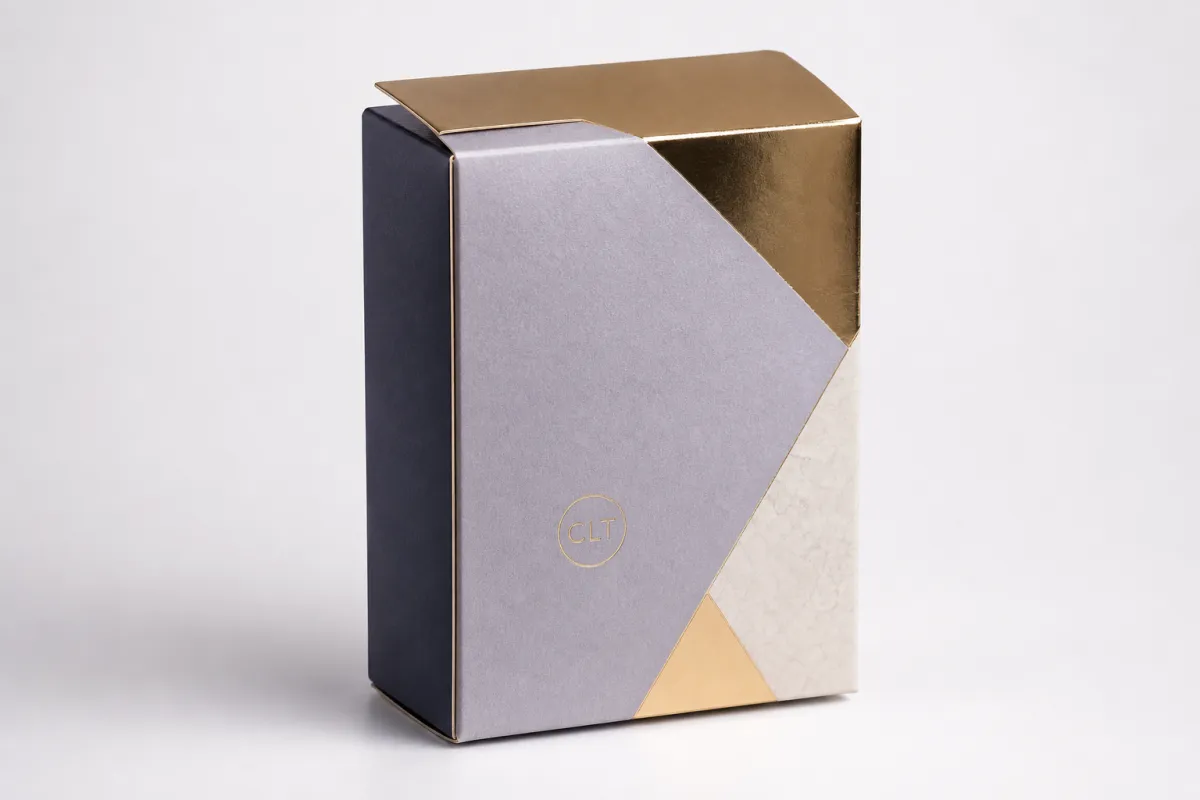
At its simplest, custom lamination for folding cartons is a protective film or coating layer applied over printed board. That layer does two jobs at once. First, it protects the surface from abrasion, fingerprints, and light moisture exposure. Second, it changes the visual character of the pack, sometimes dramatically. Gloss can make inks feel denser and more saturated. Matte can calm a design down and make type feel more deliberate. Soft-touch can turn ordinary retail packaging into something that feels closer to a prestige item.
In practice, custom lamination for folding cartons matters because cartons are judged in motion. They are handled by operators, packed into cases, moved through warehouses, and unpacked by store staff long before a shopper ever sees them. I have watched a run that looked perfect on press develop dull rub marks after one warehouse turn and a cross-dock transfer. It was not the artwork that failed. It was the surface. A carton that looked flawless at press check can arrive with edge wear or faint scuff trails after a single supply chain cycle. That is not a design failure. It is a durability problem, and durability is usually what gets exposed first.
Here is the part buyers sometimes underestimate: shelf viewing is ruthless. A consumer may not be able to name the finish, but they will absolutely register a dull-looking face panel, a cloudy fold, or a set of shiny scuff marks catching the overhead lights. Custom lamination for folding cartons protects the branding work already paid for. That matters whether the carton holds cosmetics, supplements, specialty foods, or a limited-edition gift item. Retail shelves are not kind to weak surfaces; they magnify them.
The tradeoff is real. More protection usually means more cost, more setup, and more attention to substrate compatibility. Custom lamination for folding cartons can change how the board scores, folds, and glues. So the question is not whether to laminate in the abstract. The question is whether the added performance is worth the extra process and whether the board, ink, and adhesive stack can support it cleanly. A finish that looks elegant but splits on the fold is a bad bargain.
One useful way to think about it is this: custom lamination for folding cartons is not just a finish. It is a production decision with commercial consequences. It can support package branding, elevate retail packaging, and reduce damage claims, but only if the converter, board, and artwork are aligned before the run starts. The strongest carton work usually looks simple because the decision-making behind it was not.
How Custom Lamination for Folding Cartons Is Applied
Custom lamination for folding cartons usually enters the workflow after printing and before die cutting or final converting, although exact sequencing depends on the plant and the construction. Film lamination is common because it gives a consistent layer of protection and predictable appearance. In-line finishing can speed things up on some jobs, while offline lamination gives more control when the run needs testing or a specialty film. The plant may make it look routine, but the sequence matters a lot more than most spec sheets admit.
The finish choice changes more than look. Gloss boosts reflectivity and can make full-coverage color feel brighter, which is useful for food, beauty, and impulse retail packaging. Matte cuts glare and can make high-end Custom Printed Boxes read more quietly and deliberately. Satin sits between the two, giving some sheen without a mirror effect. Soft-touch adds a velvety feel, but it can also hold fingerprints more visibly if the surface chemistry is not well matched to the ink and board. That is one of those annoying little truths that does not show up in a render.
Behind the scenes, heat, pressure, adhesive chemistry, and cure time all determine whether the bond stays flat or starts to fail at the edges. Custom lamination for folding cartons has to survive not only a visual inspection but also scoring, folding, and gluing. If the film is too stiff for the board, cracking at the score line can show up fast. If the adhesive is off, edge lift or localized delamination can appear during conversion. A laminated sheet that behaves beautifully before scoring can become less cooperative the moment it hits a crease.
There is also a difference between lamination and other finishing options. Aqueous coating is often lighter, faster, and easier on cost, but it does not deliver the same surface barrier. UV coating can create intense gloss and scratch resistance on certain jobs, though it is not always the best fit for folding behavior. Custom lamination for folding cartons usually offers the strongest surface protection of the common options, but the laminate layer may affect recyclability and add material expense. For some brands, that tradeoff is perfectly acceptable. For others, it is the first issue on the table.
If your team is comparing finish types for retail packaging, a simple trial helps. Run the same artwork in gloss, matte, and soft-touch. Hold the samples under office light and warehouse light. Then fold and inspect them after scoring. That small exercise often tells you more than a glossy mockup ever will. For technical context on transport performance, the International Safe Transit Association has useful standards and testing references at ISTA.
Custom Lamination for Folding Cartons Cost and Pricing Factors
Cost is where many packaging conversations get vague, and vagueness gets expensive. Custom lamination for folding cartons is priced from a mix of film type, board size, coverage, quantity, and production complexity. A small run with full-coverage soft-touch lamination will not price like a larger gloss job on standard board. Coverage alone can move the needle because larger sheets mean more film, more handling, and more waste. Even a clean run usually carries setup waste in the low single digits, and short-run jobs can feel that waste much harder.
For planning, many converters think in terms of a per-unit add-on rather than a single flat fee. On a modest run, custom lamination for folding cartons may add roughly $0.04-$0.18 per unit for conventional films, with specialty soft-touch or heavy-coverage work moving higher, sometimes into the $0.08-$0.25 per unit range depending on quantity and construction. Those numbers are directional, not a promise. A 5,000-piece run and a 50,000-piece run sit in very different economics because make-ready, waste, and setup are spread across different volumes. The same job can look inexpensive in one order and kinda stubborn in another.
Minimum order quantity matters just as much as finish. Lower quantities tend to carry a higher unit cost because the same setup time has fewer cartons to absorb it. That is why custom lamination for folding cartons can look economical at scale and surprisingly expensive at pilot size. If the order is tied to a launch, a seasonal campaign, or a retailer test, it is smart to ask whether the MOQ is a hard limit or whether a short prototype run is possible first.
What should go into a quote request? At minimum, include board spec, print coverage, carton dimensions, quantity, target finish, expected ship date, and whether you need single-sided or double-sided lamination. If sustainability is part of the brief, say that directly. A converter can only price the right combination if the question is specific. A request for custom lamination for folding cartons that just says "premium finish" will almost always come back with assumptions attached.
The business case changes by category. Premium cosmetics, high-margin supplements, and specialty foods often tolerate a higher lamination budget because shelf appeal and scuff resistance support the product's perceived value. In lower-margin categories, the same finish may only make sense on a hero SKU or a promotional run. That is not a failure of the idea. It is a sign that packaging design should follow the economics of the product. A finish that pays for itself on a prestige serum may never make sense on a low-margin trial pack.
| Finish | Visual Effect | Practical Upside | Typical Cost Impact | Best Fit |
|---|---|---|---|---|
| Gloss | High shine, strong contrast | Improves color density and surface wipeability | Low to moderate | Mass retail, food, bright branded packaging |
| Matte | Low glare, softer look | Reduces reflections and supports premium restraint | Moderate | Luxury goods, wellness, clean design systems |
| Satin | Balanced sheen | Middle ground for visibility and texture | Moderate | General retail packaging, multiproduct lines |
| Soft-touch | Velvety, muted finish | Strong tactile premium cue | Moderate to high | Prestige cosmetics, giftable custom printed boxes |
For sustainability-sensitive sourcing, ask whether the board and finish combination aligns with current fiber recovery guidance. FSC-certified board can support responsible sourcing claims, but the laminate layer still needs to be evaluated in context. The Forest Stewardship Council provides a useful framework for certified paper-based materials, though final recyclability still depends on the local recovery stream and the exact film used. A carton can be paper-based and still be complicated by the wrong surface treatment.
Custom Lamination for Folding Cartons Process and Timeline
Custom lamination for folding cartons moves through a sequence that is easy to underestimate if you only look at the final press run. The usual path starts with artwork approval, then proofing, then material selection, then lamination, and finally die cutting, folding, gluing, and inspection. Each step has a small opportunity to delay the whole order. The schedule is often less about the machine and more about the decisions surrounding it.
Artwork approval is not just a design formality. If the finish changes how blacks sit, how metallics reflect, or how fine type reads, the proof has to be checked with that finish in mind. Custom lamination for folding cartons can alter apparent color density, especially on saturated backgrounds. A buyer who approves a paper proof without seeing the laminated version is making a comparison that does not fully match the finished pack. A matte film can mute a palette that looked electric on screen; gloss can push the same layout into a different emotional register.
Lead time usually depends on three things: press availability, substrate testing, and whether specialty materials are involved. A standard job may move from proof approval to completed cartons in roughly 12-15 business days, but that is only a planning range, not a guarantee. If the job needs a specialty soft-touch film, a difficult board, or a second finishing pass, the timeline stretches. Custom lamination for folding cartons can still move quickly, but only when the inputs are already stable. Variability in the build is what slows it down.
One scheduling detail gets missed often: turnaround time is not the same as production time. A plant may be able to laminate the work in a few days, but waiting on sign-off, board arrival, or art corrections can take longer than the physical run. That is why custom lamination for folding cartons should be managed as a full project, not just as a machine operation. The carton is not late when the press is done; it is late when the package is not approved.
Late structural changes create another risk. If the carton dimensions change after the lamination plan is set, the converter may need to requalify the board or adjust the die lines. That sounds minor. It is not. A shift in board thickness can change score behavior, crack resistance, and glue performance. If the carton also uses embossing or a deep die cut, the rework risk climbs again. Even a small spec change can ripple through the entire setup.
Practical takeaway: build the finish decision into the schedule early. Custom lamination for folding cartons works best when the team locks the board spec, finish, carton style, and target ship date before production starts. A rushed decision often creates the very delay the rush was supposed to avoid.
Choosing the Right Finish, Board, and Adhesive
The best finish is the one that matches the product story and the physical environment. Gloss can sharpen contrast and make colors pop. Matte can support a more controlled, high-end look. Soft-touch creates a tactile cue that often feels premium before the shopper even reads the label. Custom lamination for folding cartons should support the brand position, not fight it.
Board choice matters just as much. Thicker boards can hold up well, but they also change fold memory and score behavior. Recycled fiber content can affect surface smoothness and bond consistency. Textured stocks can look beautiful in the right build, yet they can complicate adhesion if the film needs a very smooth base. Custom lamination for folding cartons is more forgiving on some boards than others, and a converter should be able to tell you where those edges are. What works on a clay-coated SBS sheet may fail on a rougher, high-recycled-content board.
Adhesive compatibility deserves real attention. If the chemistry is wrong, you may see curling, edge lift, or delamination at the score lines. That is especially important on cartons that must ship flat, then be folded automatically later. Custom lamination for folding cartons should be tested with the actual score pattern and the real glue line, not a generic sample that never goes through the line. A sample that looks clean in the lab can misbehave the moment it sees production speeds.
A practical decision framework helps narrow the options:
- Choose gloss when the brand wants energy, contrast, and visible color depth.
- Choose matte when glare control and quiet premium cues matter more than shine.
- Choose soft-touch when tactile impact is part of the product packaging story and the handling path is controlled.
- Choose satin when the team wants a middle ground with fewer extreme reflections.
Not every carton needs the highest barrier finish. A display box that stays on a shelf may need less protection than a mailer that slides through a fulfillment center. Custom lamination for folding cartons should reflect the route the carton actually travels. A pack that will be hand-packed into a luxury set has different demands than one that will be corner-stacked on a pallet. A box built for a boutique counter does not live the same life as a box built for national distribution.
Testing should include more than looks. Use real samples in store-like lighting. Bend them. Touch the corners. Check readability after handling. If your brief depends on regulatory copy staying legible, avoid a finish that turns the fine print into a dull gray block. A good finish supports package branding, but it should never bury the information the shopper needs.
Common Mistakes With Custom Lamination for Folding Cartons
The first mistake is choosing by appearance alone. A sample can look beautiful on a table and still fail in the line or in transit. Custom lamination for folding cartons has to work with the board, score, and glue path. If the structure is only tested visually, the production risk stays hidden until it is expensive.
The second mistake is over-specifying the finish. Some teams want the highest gloss possible or the softest tactile feel possible without asking what those choices do to fingerprints, glare, or fold performance. That is how custom lamination for folding cartons ends up looking great in a mockup and awkward in a warehouse. Soft-touch, for example, can feel exceptional, but it can also show handling marks if the supply chain is rough. The finish has to fit the route, not just the render.
The third mistake is skipping press and conversion tests. Folding cartons do not end at print. They are scored, folded, cut, glued, packed, and shipped. If custom lamination for folding cartons has not been checked after die cutting and before full production, the team may miss cracking at the creases or edge lift at the flaps. In carton work, most failures show up at the edges, not in the center of the panel. That is where stress gathers, and that is where weak choices reveal themselves.
Another common issue is the quote brief. A vague request leads to assumptions, and assumptions lead to pricing surprises. If the quantity is not clear, if the board is not defined, or if the timeline is aspirational rather than real, the quote for custom lamination for folding cartons will be less reliable. A converter can only estimate accurately when the brief covers the real production constraints. Clear input saves both time and money.
The cheapest carton is rarely the one with the lowest unit price. It is the one that reaches the shelf without reprints, rework, or avoidable claims.
There is a final trap that deserves mention: ignoring the rest of the pack system. If the carton includes embossing, foil, or a complex die cut, the lamination choice becomes more sensitive. The finish should be reviewed alongside the full packaging design, not in isolation. Custom lamination for folding cartons is one piece of the structure, and the structure has to behave as a whole. A beautiful face panel cannot rescue a weak construction.
Expert Tips for Better Shelf Performance and Print Protection
Test in the same light the shopper sees. That sounds basic, but it is still one of the most overlooked steps in custom lamination for folding cartons. A finish can look smooth in a studio and too reflective under LED aisle lighting. It can also look subdued on a desk and exactly right under shelf lighting. The environment changes the result more than teams expect.
Think about the handling path first, not last. A carton for direct retail display needs different protection than a carton that will be warehoused, shipped in master cases, and opened repeatedly by staff. Custom lamination for folding cartons should be matched to that path. If the pack will see repeated friction, a tougher film may be worth the extra cost. If it will live mostly in a secondary display, appearance may matter more than abrasion resistance.
Ask for edge and score performance data when it is available. Scuff resistance is useful, but real damage often appears where the board bends. Custom lamination for folding cartons can hide weaknesses for a while, then reveal them at the fold after the first automated setup run. A simple fold test on the actual board is often more informative than a pretty sample in isolation. A pack that survives the first 20 folds is more persuasive than one that only photographs well.
Use a finish ladder. Put two or three options on the same artwork and compare them side by side. That gives marketing, procurement, and operations a shared reference. Custom lamination for folding cartons is easier to choose when everyone can see the tradeoff between tactility, brightness, and handling resistance. The conversation becomes specific instead of emotional, which is usually a sign the team is close to the right decision.
It also helps to align the finish with the product promise. Clean, clinical categories often do better with matte or satin. Fun, vivid categories may benefit from gloss. Premium gift sets often gain value from soft-touch plus selective print effects. The goal is not to pick the most expensive option. The goal is to pick the one that makes the carton feel honest to the product inside. Buyers can tell when the package promises one thing and the finish whispers another.
For teams that need to validate distribution performance, look at standards rather than guesswork. ISTA testing helps simulate shipment conditions, and packaging buyers often use that language to align expectations with converters. That does not replace real-world trials, but it does give the evaluation a common framework. Custom lamination for folding cartons is easier to defend when the test plan is tied to actual handling risks.
If the run involves a certification claim or an eco label, verify the substrate story early. Not every laminate and board combination fits every recovery stream. If the carton needs to support recycled content messaging, fiber sourcing, or another sustainability claim, the details should be checked before the final sign-off. That is especially true for custom printed boxes used in regulated categories or by retailers with strict packaging rules. A finish can be technically acceptable and still be a poor fit for the claim strategy.
Next Steps for Custom Lamination for Folding Cartons
If you are preparing a quote request, gather the basics first: board spec, target quantity, carton dimensions, finish preference, and required delivery date. Then add the details that usually get missed: whether the carton will be touched often, whether it must survive humid storage, whether the artwork includes fine type, and whether the brand expects recyclable paper-based recovery. That level of clarity makes custom lamination for folding cartons far easier to price and produce well.
A physical prototype is worth the effort. Printed samples show how the color, texture, and fold behavior work together. They also reveal whether the finish supports the story the brand wants to tell. For a lot of teams, the difference between two finishes only becomes obvious once they are held next to each other. Custom lamination for folding cartons is one of those choices where touch matters almost as much as sight. A matte sheet can feel expensive in a way that a digital image never can; gloss can look louder in person than it did on screen.
Before you release the job, confirm who owns which approval. Design, operations, procurement, and production should all be looking at the same spec sheet. If the carton uses custom lamination for folding cartons alongside embossing, foil, or a complex structural fold, write those requirements down in one place and keep the proof trail organized. Small documentation gaps create big delays later. The handoff between teams is usually where packaging schedules slip.
Finally, keep the sustainability discussion early and direct. If FSC-certified board, local recyclability, or a lower-material option matters, say so before quoting. That gives the converter a chance to suggest the right material stack instead of forcing a retrofit later. In a lot of packaging programs, the cheapest way to buy a carton is to decide the build before the launch clock starts. Late changes almost always cost more than honest planning.
Custom lamination for folding cartons is not a decorative extra. It is a practical tool for print protection, shelf appeal, and handling performance, and it works best when the finish, board, adhesive, and timeline are chosen together. Get that combination right, and custom lamination for folding cartons can lift the entire package. Get it wrong, and even strong artwork will feel unfinished. The difference shows up on the shelf, in transit, and in the buyer's confidence. The actionable step is simple: request a laminated prototype on the actual board, run it through scoring and folding, and approve only after it survives the same handling path the finished carton will face.
What finish is best for custom lamination for folding cartons?
Gloss is best when you want stronger color contrast and a polished retail look. Matte is better for a softer, lower-glare presentation and a more restrained premium feel. Soft-touch works well for tactile luxury, but it should be tested for fingerprinting and scuff visibility before you approve it. The right choice depends on how the carton will be handled and how close the shopper will stand to it.
Does custom lamination for folding cartons affect recyclability?
Yes, many lamination films can make recovery more complicated than an unlaminated paperboard carton. If recyclability is a priority, ask for finish options and board combinations that fit local recovery rules. Always confirm the sustainability tradeoff before approving the final structure. A paperboard carton can still create recovery issues if the surface layer is not suited to the collection stream.
How much does custom lamination for folding cartons usually cost?
Cost depends on film type, coverage, board size, run length, and whether the carton is laminated on one side or both. Smaller orders usually carry a higher unit cost because setup is spread over fewer cartons. The most accurate pricing comes from a quote that includes quantity, board spec, finish, and turnaround needs. Specialty films and complicated coverage patterns usually push the number higher, so the quote should be detailed rather than broad.
How long is the lead time for custom lamination for folding cartons?
Lead time usually includes proof approval, material sourcing, lamination, die cutting, and final inspection. Simple jobs move faster; specialty finishes, unusual board stocks, or added testing extend the schedule. If you need a rush turnaround, confirm what can actually be compressed before you promise a delivery date. The fastest way to lose time is to assume every step can be shortened equally.
Can small orders use custom lamination for folding cartons?
Yes, but small runs usually cost more per unit because setup and waste are harder to spread out. Ask whether your quantity meets the converter's MOQ or whether a pilot run makes more sense. A sample order can be useful if you need to evaluate finish, fold performance, or shelf impact first. Small runs are often the smartest way to test a premium finish before committing to volume.

