Buyer Fit Snapshot
| Best fit | Custom Lid and Tray Boxes Wholesale projects where brand print, material claims, artwork control, MOQ, and repeat-order consistency need to be specified before quoting. |
|---|---|
| Quote inputs | Share finished size, material target, print colors, finish, packing count, annual reorder estimate, ship-to region, and any compliance wording. |
| Proofing check | Approve dieline scale, logo placement, barcode or warning zones, color tolerance, closure strength, and carton packing before bulk production. |
| Main risk | Vague material claims, crowded artwork, missing packing details, or unclear freight terms can make a low unit price expensive after revisions. |
Fast answer: Custom Lid and Tray Boxes Wholesale: Pricing & Specs should be specified like a repeatable production item. The safest quote records material, print method, finish, artwork proof, packing count, and reorder notes in one written spec.
Production checks before approval
Compare the actual filled-product size with the drawing, then confirm tolerance on folds, seals, hang holes, label areas, and retail display edges. Reserve space for logos, QR codes, warning copy, and material claims before decorative graphics fill the panel.
Quote comparison points
Review material grade, print process, finish, sampling route, tooling charges, carton quantity, and freight assumptions side by side. A quote is only useful when the supplier can repeat the same color, closure quality, and packing count on the next order.
For brands that need presentation and protection in the same package, custom lid and tray boxes wholesale often turns out to be the structure that makes the most practical sense. It changes the way a product feels before anyone even lifts the lid, and that first impression can carry real weight in categories where texture, finish, and presentation shape the buying decision. A rigid lid-and-tray box can turn a compact cosmetic set, an apparel accessory, or a launch kit into something that looks deliberate, organized, and ready for a premium shelf.
That perceived value matters in a crowded market. In retail, the box often does part of the selling before the product is touched, and in direct-to-consumer shipping it can define the unboxing moment as much as the product itself. Buyers comparing custom lid and tray boxes wholesale with folding cartons or mailer boxes are usually looking past the unit price and weighing how well the structure supports brand positioning, repeat ordering, and product protection across the full run.
Custom Logo Things works with packaging buyers who want practical guidance instead of polished slogans. The aim here is to walk through structure, materials, Pricing, Lead Times, and quote factors in plain language so you can specify custom lid and tray boxes wholesale with confidence and avoid the mistakes that usually cause delays or surprise charges. I have seen a lot of otherwise solid launches get tripped up by a lid that was too snug, a tray that was cut a touch shallow, or a quote that left out insert costs. Those little misses add up fast.
Why custom lid and tray boxes wholesale can lift shelf appeal fast
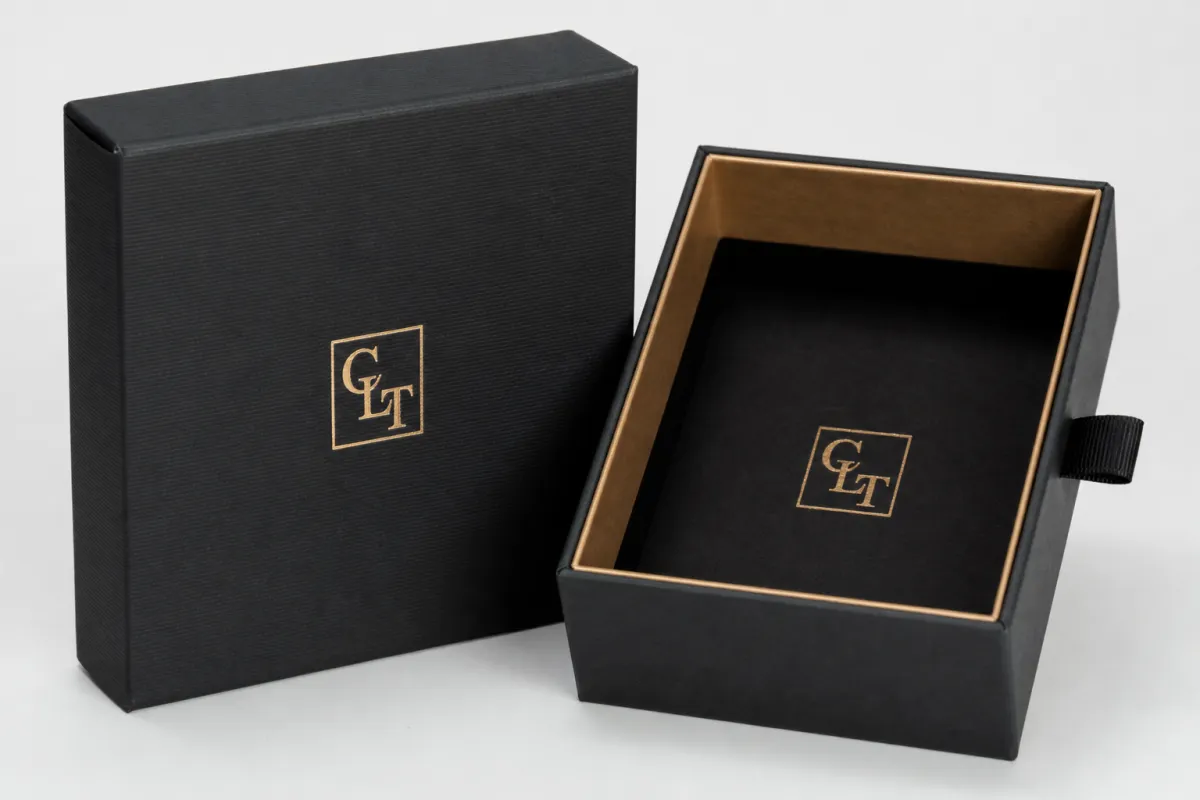
A rigid lid-and-tray box has a simple job, and it does that job well: it creates instant visual weight. Before the product is even lifted out, the box signals that the contents were handled with care. That is why brands use custom lid and tray boxes wholesale for cosmetics, candles, premium apparel, jewelry, subscription bundles, corporate gift sets, and accessory kits where the first impression carries real commercial value.
The structure helps because it brings order to the shelf. The lid gives the box a clean exterior face for brand marks, foil detail, or a restrained print treatment, while the tray provides a stable base that can hold the product with inserts or tissue. In packaging design terms, the box is doing two jobs at once: branded packaging on the outside and controlled presentation on the inside. That combination works especially well for retail packaging when the product is small, light, or easy to lose in a crowded display.
Wholesale ordering makes the format far more practical for growing brands. A single custom run gives you consistent dimensions across SKUs, cleaner package branding, and a lower unit cost once setup is spread across the order. For product lines that restock regularly, custom lid and tray boxes wholesale also makes reordering easier because the box becomes part of the line item, not a one-off project that needs to be requalified every time inventory comes back in.
There is a subtle commercial effect here that people sometimes overlook. The box often influences perceived value before the product is handled, and that is especially true in categories where shoppers compare multiple items in seconds. A tidy, rigid lid-and-tray format can make a modest product feel more deliberate. That does not mean the pack should look crowded with decoration. The strongest designs usually rely on proportion, material choice, and print restraint to do the heavy lifting.
A good lid-and-tray box does not just protect the product. It tells the buyer, in one glance, that the contents were worth building a proper presentation around.
For businesses evaluating custom lid and tray boxes wholesale, the real question is not whether the structure looks premium. It does. The more useful question is whether the structure fits the product, the order volume, and the margin target. If those three pieces line up, this is one of the most dependable ways to improve shelf appeal without changing the product itself.
Custom lid and tray boxes wholesale: product structure and use cases
The structure is straightforward, which is part of why it works so well. A lid-and-tray box has a base tray that holds the product and a separate lift-off lid that covers the tray from the top. In rigid packaging, the board is typically much thicker than a folding carton, so the box keeps its shape, feels substantial in hand, and resists crush better than lightweight retail packaging.
Most custom lid and tray boxes wholesale builds use greyboard or chipboard in the range of 1000gsm to 1500gsm, depending on the box size and product weight. That board is then wrapped in printed paper, specialty paper, or a laminated stock. If the pack needs a finer reveal, foil stamping, embossing, debossing, matte lamination, gloss lamination, or soft-touch film can all be added. Inside printing is also common when the unboxing experience matters and the buyer wants the inside to carry the same branded packaging language as the exterior.
The product range is broad. This structure shows up often for cosmetics kits, fragrance sets, luxury apparel accessories, electronics accessories, premium stationery, wellness bundles, and gift packaging where the unboxing moment matters as much as the contents. For custom lid and tray boxes wholesale, the tray can also be adapted with inserts to hold bottles, jars, earbuds, watches, scarves, or multi-piece sets that would otherwise shift in transit.
There are a few structural choices buyers should think through early:
- Snug fit or looser lift: a tighter lid gives a sharper presentation, while a slightly looser fit makes opening easier for retail use.
- Thumb cuts or ribbon lifts: useful when the lid is deep and customers need a clean way to open the box.
- Corner reinforcement: important for larger boxes that carry heavier contents or stack in transit.
- Custom inserts: paperboard, EVA foam, molded pulp, or specialty die-cuts can keep multiple items centered and protected.
- Interior finish: plain board is fine for some jobs, but a printed or color-wrapped tray can improve the reveal dramatically.
For product packaging buyers, the lid-and-tray format sits in a useful middle ground. It is more premium than a standard folding carton, yet usually simpler than a fully collapsible rigid gift box with a complex magnetic closure. That makes custom lid and tray boxes wholesale a smart fit for brands that want custom printed boxes with a strong presence without overbuilding the structure.
The opening and closing action matters more than people expect. If the lid is too tight, the opening can feel kinda fussy on the shelf or in the customer’s hand. If it is too loose, the presentation loses precision. Good packaging design balances friction, visual reveal, and product protection. That is one reason sample approval matters so much on these orders.
In practical use, the box should match the job. A cosmetics kit with a fragile glass component may need a molded pulp or EVA insert, while a lightweight apparel accessory may only need a simple paperboard cradle. Custom lid and tray boxes wholesale works best when the structure reflects the weight, fragility, and brand position of the product instead of being treated as a generic container. If the pack is being asked to do more than it was built to do, the weakness usually shows up in transit first and in customer feedback right after that.
Specifications for custom lid and tray boxes wholesale
Good quoting starts with good measurements. For custom lid and tray boxes wholesale, the finished dimensions should always be based on the product itself, not on a guessed carton size. Measure the product length, width, and height, then decide how much clearance is needed for opening, tissue, protective wrap, or an insert. A product that fits too tightly may be damaged during packing, while a box that is too loose can let the contents move and look undersized.
As a rule of thumb, the inner tray should allow just enough space for the item and any insert to sit naturally without forcing the lid. If the product is fragile, the clearance may need to be a bit more generous so the insert can absorb movement. For tight presentation work, sample review or a dieline check is worth the time because the real-world fit can differ from the drawing by a few millimeters, and a few millimeters matter in rigid packaging.
The main quote fields should include:
- Finished dimensions of the box and the product dimensions it must hold.
- Board caliper or thickness, usually specified by gsm or point equivalent.
- Wrap stock, such as C1S, C2S, art paper, specialty textured paper, or kraft.
- Print coverage, including full bleed, spot color, inside print, or no print.
- Finish type, including matte, gloss, soft-touch, foil, embossing, or debossing.
- Insert material and whether compartments, cutouts, or cavities are needed.
- Pack-out requirements, such as master carton counts, retail labeling, or pallet preferences.
For many custom lid and tray boxes wholesale orders, the board itself is only part of the spec. The wrap stock changes the final look, feel, and print performance. A 157gsm art paper wrap can hold fine print detail well, while a textured stock may give the box more character but slightly soften the print edges. Soft-touch film adds a velvety finish that reads as premium, though it can raise the cost and may show handling marks differently than a standard matte lamination.
Insert choice matters more than some buyers realize. Paperboard inserts are usually the most cost-sensitive and work well for lighter products. EVA foam gives a cleaner cut and stronger holding power for delicate items. Molded pulp can be a good fit if the buyer wants a more fiber-based presentation and a lower-plastic profile. For custom lid and tray boxes wholesale, the insert should be chosen based on product weight, fragility, and the exact reveal the brand wants at opening.
Shipping and storage details belong in the quote too. Most rigid boxes are built as set-up packaging, so they do not behave like flat folding cartons. That means carton pack-out, stacking efficiency, and pallet configuration all matter. If the box is going to retail stores, the outer shipper should be practical for shelf replenishment. If it is going direct to consumers, the pack must survive conveyor handling, parcel drops, and repeated movement through a fulfillment line.
For transit testing, brands often reference standards from organizations like ISTA, especially if the box is part of e-commerce fulfillment. If the material story matters, recycled content and chain-of-custody questions may lead a buyer to FSC-certified paper options. Those standards do not replace practical sample testing, but they help set a clear expectation for product packaging decisions.
One more practical point: tolerance. A rigid box is a hand-built structure in many production environments, and even with good controls there is always some allowance around the finished size. That is why I like to see one approved sample or at least a proofed dieline before bulk production on custom lid and tray boxes wholesale. If the insert is off by a few millimeters or the lid wall is too shallow, the mistake becomes expensive very quickly once the run is underway. You are gonna save yourself a lot of trouble by locking the fit early rather than trying to fix it on the back end.
Cost, pricing, MOQ, and quote factors for custom lid and tray boxes wholesale
Pricing for custom lid and tray boxes wholesale is driven by a handful of variables, and the fastest way to control cost is to understand which of those variables are actually necessary. Size is the first one. A larger box uses more board and more wrap, and it often takes longer to assemble. Board thickness comes next. Heavier board gives better rigidity, but it raises material cost and can increase production labor.
Print coverage changes the number as well. A plain wrap, a one-color logo, and a fully printed box are three very different jobs. Finishes such as foil stamping, embossing, and soft-touch lamination add setup and run cost. Inserts can also move the price quite a bit, especially if they are multi-cavity, deeply cut, or made from a premium material. For custom lid and tray boxes wholesale, quantity is the biggest multiplier because setup cost gets spread over more units as volume rises.
MOQ is not an arbitrary penalty. It exists because rigid packaging has setup steps: die cutting, wrap printing, board cutting, wrapping, gluing, and quality checks. A smaller order still requires many of the same steps, so the unit cost is higher. Many suppliers will quote a practical floor somewhere around 500 to 1000 pieces for a standard rigid lid-and-tray box, though that number can shift depending on size, finish complexity, and the number of print colors. For some simpler builds, lower counts can work; for more complex branded packaging, the minimum may be higher.
Here is a practical way to think about cost bands. These are illustrative wholesale ranges for standard builds, not fixed pricing, because actual numbers change with materials, print coverage, finish selection, insert design, and freight.
| Order Level | Typical Build | Illustrative Unit Range | Best Use |
|---|---|---|---|
| 500 units | Rigid board, printed wrap, simple lid-and-tray construction | $2.80-$6.50 | Pilot launches, seasonal tests, limited product drops |
| 1,000 units | Rigid board, printed wrap, basic insert or no insert | $1.90-$4.20 | Core retail packaging runs and first wholesale programs |
| 5,000 units | Standardized size, controlled print coverage, efficient finishing | $0.95-$2.50 | Repeat SKUs, broader distribution, lower unit economics |
The best quote request is the one that removes guesswork. If you want accurate pricing for custom lid and tray boxes wholesale, send exact dimensions, artwork status, finish choice, insert details, shipping destination, and the quantity tier you actually expect to buy. A vague request can look cheaper at first and then turn expensive once the missing details surface during proofing. I have seen that happen more than once, and it is rarely a pleasant phone call.
I also recommend asking for pricing at more than one quantity. If you suspect the box may repeat across a product family or restock cycle, tiered pricing can show how much the unit cost falls at 1,000, 3,000, or 5,000 pieces. That matters because a modest increase in order size can sometimes improve the economics enough to justify holding a little more inventory.
Cost control does not mean lowering standards across the board. Usually the smartest savings come from reducing unnecessary complexity: standardize dimensions across several SKUs, simplify the finish, choose a more efficient insert material, or avoid a second print pass unless the brand story truly needs it. For custom lid and tray boxes wholesale, a disciplined spec often looks more premium than an overloaded one.
Buyers should also compare the full landed cost, not just the headline box price. Tooling, sampling, freight, and any special packing or assembly charges can change the real spend more than expected. A quote that looks low on the front page may not be the best value if the finish, sample, or shipping assumptions are vague. Good procurement practice is to compare the same board thickness, finish, insert type, quantity, and delivery terms across every proposal.
Process, timeline, and production steps for custom lid and tray boxes wholesale
The cleanest production runs follow a predictable path. For custom lid and tray boxes wholesale, the usual workflow starts with a brief or quote request, moves into dieline development, then proceeds to artwork placement, proof approval, sample review if needed, bulk production, and final packing. If everyone stays aligned at each step, the order moves much faster and the chance of rework drops sharply.
Timeline depends on how complex the box is. A simple rigid lid-and-tray box with one print treatment and no insert is easier to move through production than a heavily finished box with multiple foils, embossing, inside print, and a custom cut insert. Artwork status matters too. Final files that are already set up to the dieline usually save days, while files that still need edits, image replacements, or regulatory copy changes can slow the entire schedule.
Most delays in custom lid and tray boxes wholesale orders come from a short list of avoidable problems:
- Dimensions are incomplete or based on the wrong product sample.
- Artwork is not final when proofing starts.
- Color adjustments are requested after approval.
- Insert cavities are still changing while the box is already moving forward.
- Freight destination or delivery timing is not confirmed early enough.
In practical terms, a well-run order often takes about 12 to 15 business days after proof approval for a straightforward job, while more detailed projects can take longer because of sampling, finishing, or multi-step inserts. That is not a guarantee, of course, because production queues, material availability, and shipping method all influence the schedule. Still, the faster the buyer can lock the specification, the easier it is to protect the launch date.
Sampling is worth discussing separately. A prototype or preproduction sample helps verify the fit, the opening resistance, the lid depth, and the way the box feels in hand. That is especially true for custom lid and tray boxes wholesale orders used for premium retail packaging or a product launch, where a bad opening experience can undercut the whole package. If the product is fragile, long, or unusually weighted, sample testing is not optional in my view; it is part of responsible packaging design.
For shipping-focused programs, some brands like to line up their box validation with transit testing from ISTA methods or comparable distribution tests. That is a sensible habit for e-commerce and subscription products because a box can look perfect on the table and still fail in parcel handling. A quick sample round before bulk production is usually far cheaper than reworking a large run after the fact.
One more thing I tell buyers: confirm the pack-out sequence. If the product goes inside tissue, then a tray, then an insert, then a lid, the order matters for labor. A great-looking box can still be a poor production choice if the assembly takes too long. For custom lid and tray boxes wholesale, the packaging structure should be judged as part of the full operation, not as an isolated carton sitting in a vacuum.
When the schedule matters, clarity helps more than pressure. Send final artwork early, confirm the quantity and finish before proofing, answer sample questions quickly, and keep the shipping destination fixed while the order is in motion. That is the simplest path to a clean delivery on custom lid and tray boxes wholesale projects.
Why choose Custom Logo Things for wholesale lid and tray packaging
Custom Logo Things is a strong fit for buyers who want practical packaging support and a wholesale process that stays organized from quote to shipment. The value is not just in producing custom lid and tray boxes wholesale; it is in helping you specify the box correctly so the size, materials, and finish match the product and the selling channel.
That matters because a rigid box is not forgiving. If the insert is wrong, the tray is too shallow, or the lid wall is off, the whole presentation suffers. Good packaging support means reading the job from a production point of view: board thickness that suits the load, wrap material that prints cleanly, insert design that holds the product, and a structure that supports the brand without wasting budget. That is the difference between generic product packaging and packaging that feels intentionally built.
If you are comparing formats, the broader Custom Packaging Products page can help you place lid-and-tray boxes against other custom printed boxes and retail packaging styles. If you are planning repeated orders or multiple SKUs, the Wholesale Programs page is useful because the economics of a repeat run are often very different from a first-time pilot.
What buyers usually want is simple: clear specification handling, dependable build quality, and a quote that reflects the real job. That is especially true for custom lid and tray boxes wholesale orders where the box is part of a premium launch, a seasonal drop, or a branded bundle. The box has to look right, fit right, and ship right. If any one of those three fails, the value of the pack drops fast.
For brands that care about material sourcing, we can also help you think through paper options that align with FSC preferences or similar procurement requirements. For those that need a more disciplined transit profile, we can discuss structure choices that are more suitable for parcel handling, stack pressure, and repeated warehouse movement. The goal is not to oversell the box; it is to make sure the box performs the way a wholesale packaging buyer expects it to perform.
That is the kind of support that tends to save time later. A cleaner spec means fewer revisions, fewer sampling surprises, and fewer rushed decisions when the goods are already moving toward launch. If you are shopping custom lid and tray boxes wholesale, that kind of production realism matters more than flashy language.
Next steps: measure, specify, and request your quote
The quickest way to move a custom lid and tray boxes wholesale project forward is to gather the right information before asking for pricing. Start with the product dimensions, then choose the box style, decide whether the pack needs an insert, gather your artwork files, and confirm the quantity tier you want quoted. Once those pieces are clear, the quote gets much more accurate and the proofing stage usually moves faster.
If the product needs a tight fit, ask for a sample or digital proof before bulk production. If the box is for a premium retail presentation, confirm how the lid should open, how deep the tray should be, and whether the inside needs print or a special wrap. If the order is tied to a launch date, give the shipping destination and desired delivery window up front so the schedule can be planned honestly.
Here is a simple checklist to send first:
- Product length, width, and height
- Target box style: rigid lid and tray
- Artwork status and print coverage
- Insert requirement and material preference
- Quantity target and likely reorder volume
- Shipping destination and delivery window
For custom lid and tray boxes wholesale, that checklist is usually enough to get a serious starting quote without a lot of back-and-forth. From there, the packaging can be tuned around the real business goal: shelf appeal, product protection, retail packaging consistency, or a sharper unboxing moment. If the spec is clean, the order usually is too.
My practical advice is to treat the quote as the start of the process, not the end of it. Confirm the dimensions, review the dieline, check the insert, and approve the sample only when the fit and finish are right. That approach protects the run, the launch date, and the brand image at the same time. If you are ready to move forward with custom lid and tray boxes wholesale, send the measurements first, then the artwork, then the quantity, and the rest of the production path becomes much easier to manage.
What should I know before ordering custom lid and tray boxes wholesale?
Measure the product first, then add clearance only where opening and insert fit require it. Decide whether the box needs rigid board, paper wrap, or a custom insert before you ask for pricing. Have artwork, quantity, and shipping details ready so the quote reflects the real job.
What is a typical MOQ for custom lid and tray box wholesale orders?
MOQ depends on size, print coverage, and finishing complexity rather than one fixed number. Larger runs usually lower unit cost because setup is spread across more boxes. Ask for tiered pricing if you expect repeat orders or multiple SKUs.
How long does production usually take for custom lid and tray boxes wholesale?
Timeline usually includes proofing, possible sampling, bulk production, and final packing. Simple orders move faster than Boxes With Inserts, heavy finishing, or multiple print passes. Final artwork and fast approval are the easiest ways to protect the schedule.
Can custom lid and tray boxes wholesale include inserts or compartments?
Yes, inserts can be made from paperboard, EVA, molded pulp, or other suitable materials. The insert should match product weight, fragility, and the reveal you want at unboxing. Provide exact product dimensions if you need compartment spacing or a tight presentation fit.
How do I compare quotes for custom lid and tray boxes wholesale fairly?
Compare the same board thickness, finish, insert type, and quantity across every quote. Check whether sampling, tooling, and freight are included or billed separately. Use unit cost at the same quantity, not a low headline price with missing details.

